Secondary tabs
Submission information
Submission Number: 201
Submission ID: 257
Submission UUID: 2ded3486-29c2-4726-89f2-33e3c130548a
Submission URI: /form/submit-contribution
Created: Fri, 27 Feb 2026 - 07:54
Completed: Fri, 27 Feb 2026 - 08:39
Changed: Wed, 13 May 2026 - 08:45
Remote IP address: 81.152.25.223
Submitted by: Anonymous
Language: English
Is draft: No
Current page: webform_confirmation
Flagged: Yes
| Given name | Rita |
|---|---|
| Surname | Sebestyen |
| rita.julia.sebestyen@gmail.com | |
| I understand that by submitting this form, I consent to the use of my data for the purposes of the 2026 Forum on Artistic Research'. | Yes |
| I agree to the terms of service. | Yes |
| Title | Working in Languages Spoken by Fewer: An Aesthetics of Non-Alignment |
| Format | Project presentation |
| Main language | English |
| Abstract | This exposition examines how structural non-alignment between language, aesthetic form, and cultural centre generates distinctive performative strategies. Drawing on work across Romania, Hungary, Denmark, and the UK, it explores three pillars of practice preceding Embodied Artistic Research, a Co-Creative Inquiry (EAR): Romanian theatre language, Ancient Greek tragedy as deliberate difficulty, and Hungarian folk tradition. Working in languages spoken by fewer, the inquiry avoids hierarchical or deficit-based framings, recognising these languages as generative and experimental. These conditions shaped an aesthetics of non-alignment that crystallised into EAR, a co-creative, iterative methodology integrating artistic practice and research. The work demonstrates how linguistic, cultural, and institutional tensions can catalyse innovation, relational co-creation, and ethical knowledge-making, highlighting the active role of languages spoken by fewer in sustaining plural, hybrid, and experimental cultural practices. |
| Link to the Exposition | https://www.researchcatalogue.net/view/4202694/4202695 |
| Image |
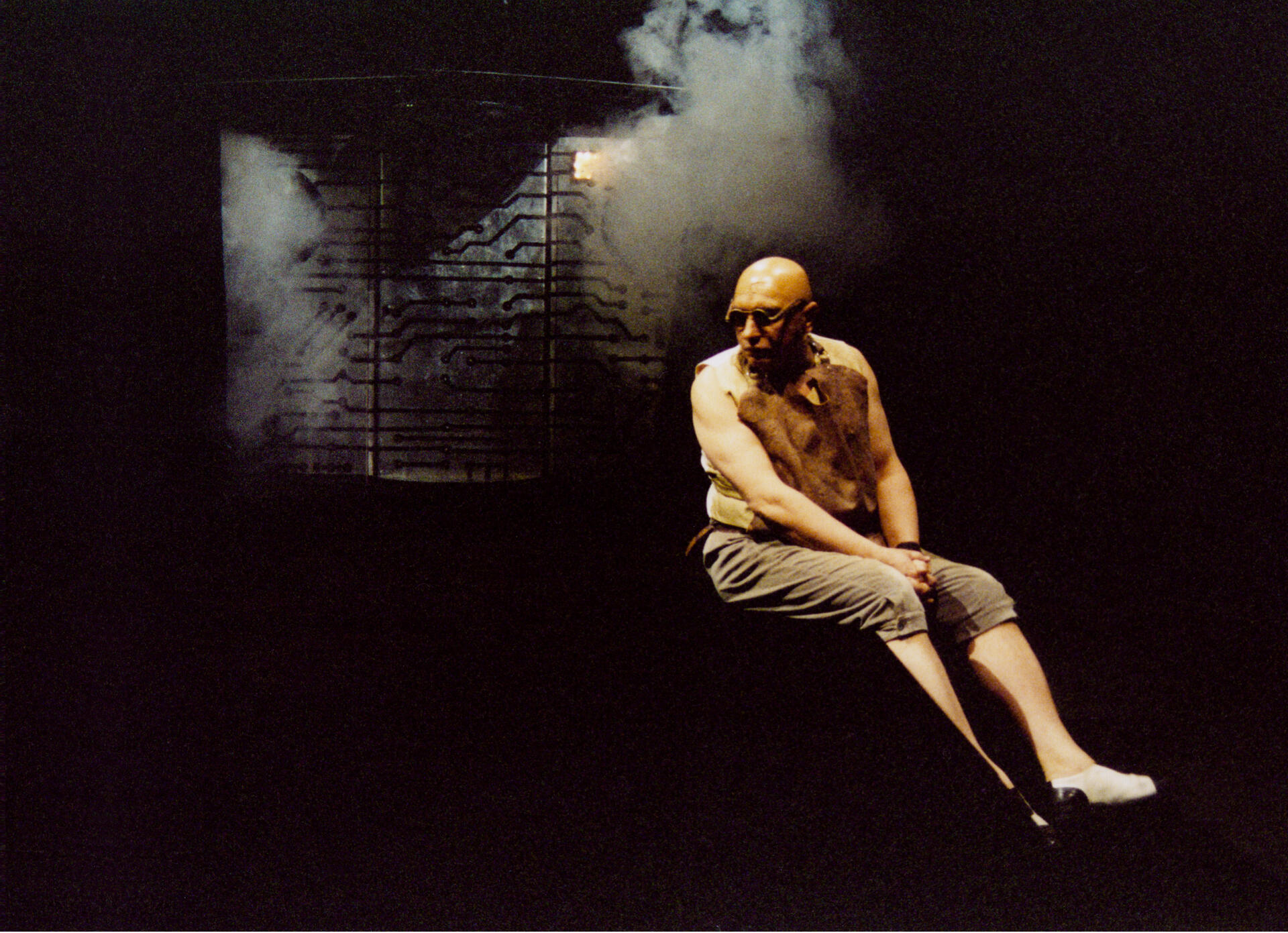
|
| Short biographies of the presenter(s) |
|
| Previous presentations or iterations of the research | This contribution presents Embodied Artistic Research™ (EAR), an original multimodal practice and method developed by the author. While parts of the method have been explored in workshops, discussions, and publications, the integration of languages spoken by few and the language-based pillars of EAR are presented here for the first time. The work is intended for future publication, further elaborating examples and applications. |
| Additional information | Project presentation of Embodied Artistic Research™ (EAR), focusing on its emergence from languages spoken by few and the resulting aesthetic-productive tension. Designed to be equally accessible to academics, practitioners, and artists. |
| Spatial and technical requirements | Projector and screen. |
| Potential risks or ethical concerns | Minimal: discussion-based, non-contact, respecting participants’ linguistic and cultural differences. |
| Create a user account for SAR 2026 | Yes |
| Create new user |