253 submissions
| Starred Sort descending | User | Given name | Surname | Title | Format | Main language | Abstract | Link to the Exposition | Link to the Exposition : Link URL | Image | Short biographies of the presenter(s) | Previous presentations or iterations of the research | Additional information | Spatial and technical requirements | Potential risks or ethical concerns | Create a user account for SAR 2026 | Create new user | Operations | |
|---|---|---|---|---|---|---|---|---|---|---|---|---|---|---|---|---|---|---|---|
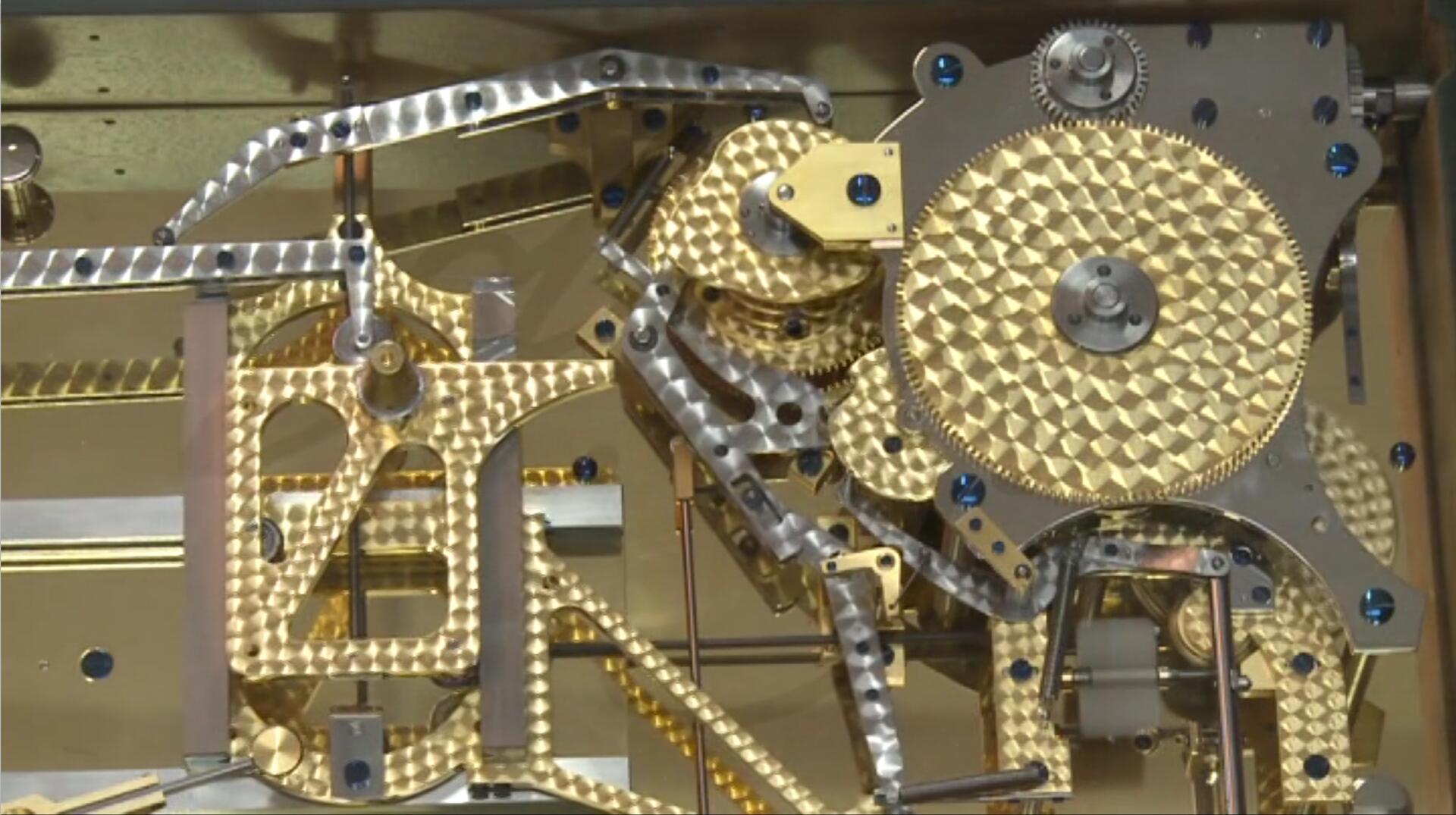
| Unstar/Unflag Submit a contribution to the 2026 Forum on Artistic Research: Submission #237 | Anonymous | Serge | Goriely | serge.goriely@gmail.com | Automata: Creation, Interpretation, and Human Freedom in the Age of Intelligent Machines | Project presentation | English | "Automata" is a research-creation project that examines how the delegation of interpretation and creative agency to intelligent machines transforms the conditions of human freedom and judgment. Rather than asking whether machines “think,” the project investigates a structural shift: the relocation of interpretative authority from visible human construction to opaque algorithmic inference. Through a reflexive documentary centered on Swiss automata-maker François Junod, internationally recognized for his mechanical automata, the film contrasts two regimes of intelligibility. On one side, a historically sedimented conceptual world grounded in visible causality, repairability, and embodied expertise; on the other, contemporary generative AI systems operating through large-scale statistical architectures whose internal processes remain inaccessible to users. By integrating a generative language model directly into the filmmaking process—inviting it to produce its own portrait of the protagonist, to propose alternative framings, and at times to narrate from a machinic perspective—the project stages an experimental confrontation between human and algorithmic interpretation within the cinematic apparatus itself. Engaging the SAR 2026 theme of endangered conceptual worlds, "Automata" treats embodied mechanical intelligence as an epistemic counter-model to algorithmic flattening, while testing whether materially grounded expertise can remain a viable locus of meaning when confronted by a persuasive, and potentially rival, algorithmic imagination. |
https://www.researchcatalogue.net/view/4211128/4211127 | https://www.researchcatalogue.net/view/4211128/4211127 |
|
|
A preliminary version of the project was presented in October 2025 at Musashi University (Tokyo) in a short format. The presentation focused primarily on the portrait of François Junod and the historical dimension of mechanical automata. The current exposition significantly develops the methodological and conceptual framework, particularly the integration of generative AI as interpretative co-agent. A recording of the Tokyo presentation (in Japanese) is available upon request. | The presentation is conceived as a 20-minute lecture-performance combining theoretical framing and selected audiovisual excerpts from the film in progress. Short clips (2–3 minutes each) will be used to illustrate the confrontation between mechanical intelligibility and generative AI integration within the editing process. The session is designed to foreground the methodological dimension of the project and to open a discussion on artistic research as epistemic experimentation. | Standard lecture room with video projection (HDMI), sound system, and internet connection (optional, for brief demonstration of AI interaction if relevant). No special spatial installation required. | The project involves no vulnerable participants and is conducted in sustained collaboration with François Junod, with full consent. Methodological uncertainty related to the integration of generative AI is acknowledged as part of the research design. AI outputs are explicitly identified as generated material to avoid misrepresentation. | Yes | ||
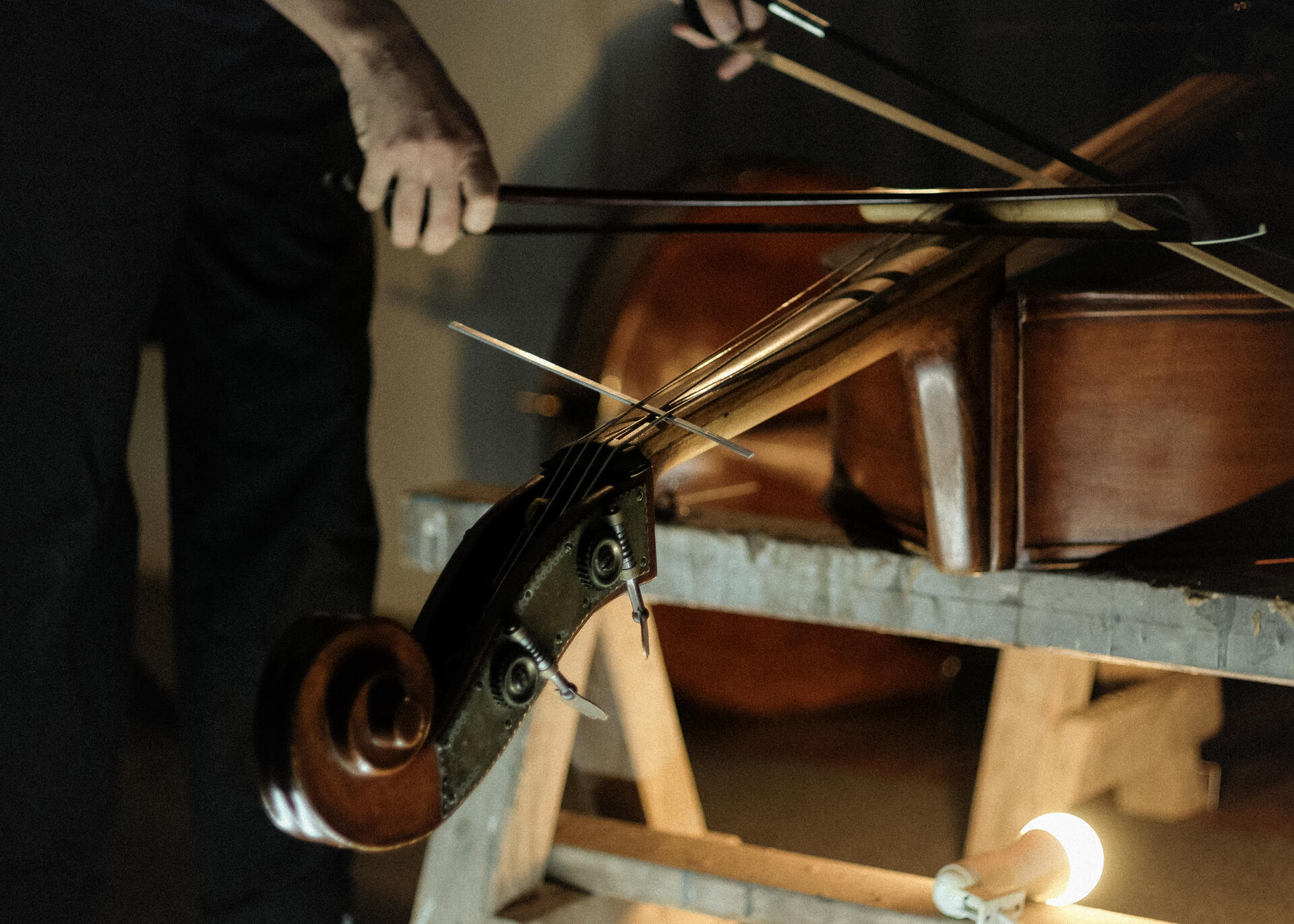
| Unstar/Unflag Submit a contribution to the 2026 Forum on Artistic Research: Submission #235 | Pietro Pancella | Pietro | Pancella | pietropancella@hotmail.it | A Vuoto: Gesture, Non-Dualism and Inoperativity in Musical Improvisation | Project presentation | English | In this presentation I introduce my PhD project A Vuoto, which reconsiders musical improvisation through the lens of non-dual philosophies developed outside the Western canon. As a double bass player and improviser, I explore presence and gesture beyond functional logics, questioning interpretations of embodiment that emphasise the body as the site of artistic production. First, I outline how non-dual philosophies such as Advaita Vedānta and Taoism make it possible to question distinctions between subject and object, performer and instrument, approaching music as an ontological experience rather than an act centred on an individual agent. In this framework, non-dual thought offers a counterpoint to dominant Western approaches to corporeality and experience, opening space for ways of knowing that tend to remain overlooked. I then explore the concept of inoperativity, as conceived by Giorgio Agamben, as a practical and epistemic principle grounded in the suspension of productive function. Through the practice of “suonare a vuoto” — literally “playing into the void”, an Italian expression denoting an action deliberately without a direct result — the body is withdrawn from the role of producing sound and allowed to appear in its potentiality and availability to what happens. Finally, I focus on gesture as the site where theory and practice converge. I analyse liminal zones emerging in two performative contexts: Muta, for three double basses and two performers, where awkward configurations foreground bodies beyond instrumental efficiency; and a practice of conducted improvisation, in which gesture does not directly govern sound but suspends will, activating unpredictable relations between bodies, instruments, and listening. In this way, gesture and inoperativity do not simply negate production, but shift attention toward forms of improvisation that resist complete reduction to functionality, opening space for fragile, often ineffable modes of experience. |
https://www.researchcatalogue.net/shared/4f8950fda58befe15731291b62e15478 | https://www.researchcatalogue.net/shared/4f8950fda58befe15731291b62e15478 |
|
|
LabRAM (Orpheus Institute / Conservatorio di Pescara, 2023–24); RAMI – Ravenna (2023); WARM – Firenze (2024); Accademia di Belle Arti dell’Aquila (2025); Royal Conservatoire Antwerp (2026). Earlier presentations introduced the theoretical framework of the project. The SAR 2026 contribution will focus on recent performative experiments and on how practice has reshaped the research, particularly through the concepts of gesture, inoperativity, and liminal zones. |
To align with SAR's emphasis on practice-based knowledge, I propose to integrate a brief performative demonstration (3-4 minutes) within the talk, demonstrating my practice on double bass. This would replace part of the theoretical exposition, making the presentation more experiential and less frontal. Given the challenges of air travel with a double bass (size and logistics), I would request to borrow an instrument from University of Galway's College of Arts music facilities. If this is not feasible due to availability or timing, I am fully prepared and happy to deliver a standard lecture presentation using slides and video examples. |
The presentation requires a standard lecture room equipped with a projector and screen (HDMI connection). High-quality stereo sound system for the screening of performance videos. A stable Wi-Fi connection should be available. Should a presentation-performance format be feasible, the availability of a double bass (any model) would be required. Access to a rehearsal space from the previous day would also be appreciated. These arrangements may be discussed and confirmed subject to feasibility. |
The proposed presentation does not entail direct ethical risks, since it draws on my own artistic practice and documented collaborations carried out with consent. At a more general level, the research remains attentive to questions such as cultural appropriation, power asymmetries in collaborative performance, and the environmental impact of instrumental preparations, which are mitigated through contextualisation, dialogue, consent, and low-impact material choices. | Yes | Pietro Pancella | |
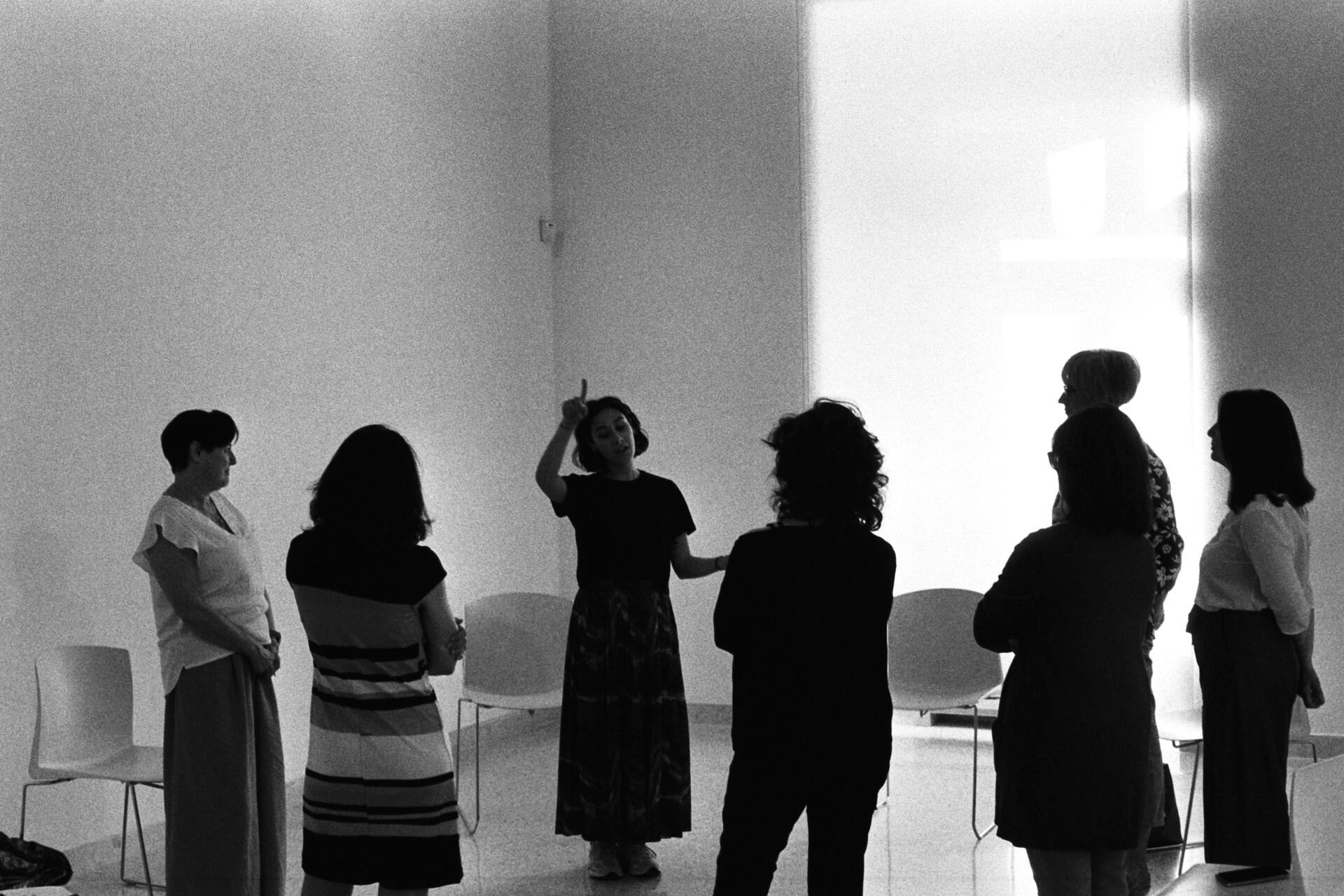
| Unstar/Unflag Submit a contribution to the 2026 Forum on Artistic Research: Submission #234 | Miriana Faieta | Miriana | Faieta | miriana.faieta@gmail.com | Between Song and Speech: The Mother Tongue as Musical and Epistemic Practice | Experimental format | English | What happens when participants in an academic context are invited to speak in their mother tongues, even when no one else understands them? Departing from a critique of English hegemony in international conference settings, in this 90-minute laboratory participants are invited to resist the pressure of universal translatability and instead inhabit the particular sonic, rhythmic, and conceptual textures of their own native languages. The practice draws on a series of workshops in which specific grammatical features of participants’ languages (for example, the different ways languages express temporal relations) function as operative principles shaping a shared musical and conversational event. Grammar is not treated as a neutral container for meaning but as a generative force: a set of constraints and affordances that conditions how we think, listen, and relate to one another. The laboratory engages three productive tensions. First, between the desire to be understood and the musical qualities of speech (intonation, stress, rhythm) which remain communicative even when semantic content is opaque. Second, between the individual mother tongue as an irreducible epistemic resource and the collective space of a multilingual encounter. Third, between misunderstanding as failure and misunderstanding as opening — a site where new forms of meaning and new modes of listening can emerge. The laboratory emerges from my artistic research as a singer and improviser on the relationship between song and speech, and on how their interplay shapes processes of meaning-making in collective vocal practices. By privileging mother tongues over a shared lingua franca, the workshop enacts rather than merely discusses the conference’s concern with minoritised language and the interplay of power and language. |
|
|
This laboratory builds on over fifteen artistic experiments presented in artistic research contexts across Europe (SAR, EPARM, Forum Artistic Research). It operates as a serial methodology: a research device continuously reconfigured in response to context and emerging questions in my research. While the inquiry into song and speech remains central, each workshop functions as a site-specific experiment. The SAR 2026 version will extend this evolving investigation. | The workshop alternates one-to-one encounters and collective reflection. It opens with a brief introduction to the conceptual and artistic framework, grounded in participants’ reflections on their mother tongues. A guided performance-conversation follows: in pairs, participants speak in their own languages in response to a shared prompt. As semantic access may be limited, attention shifts to prosodic and vocal features — rhythm, intonation, timbre — listening for meaning in the musicality of language. The session concludes with a discussion on language, music, and knowledge production in artistic research. Designed for 8–40 participants; no musical training required. Further background and documentation (including photos and videos) can be found here: https://www.researchcatalogue.net/shared/8204d27541759a8da33d58add308b558 |
A flexible room allowing participants to sit in a circle or semicircle, without fixed lecture-style seating. No additional technical requirements. | Participants will be invited but never compelled to speak in their mother tongue. The session acknowledges that for some, the mother tongue may carry painful or ambivalent associations, and space will be held for those who prefer to listen. As a facilitator, I will make clear at the outset that participation is fully voluntary and that no linguistic performance will be evaluated. | Yes | Miriana Faieta | |||
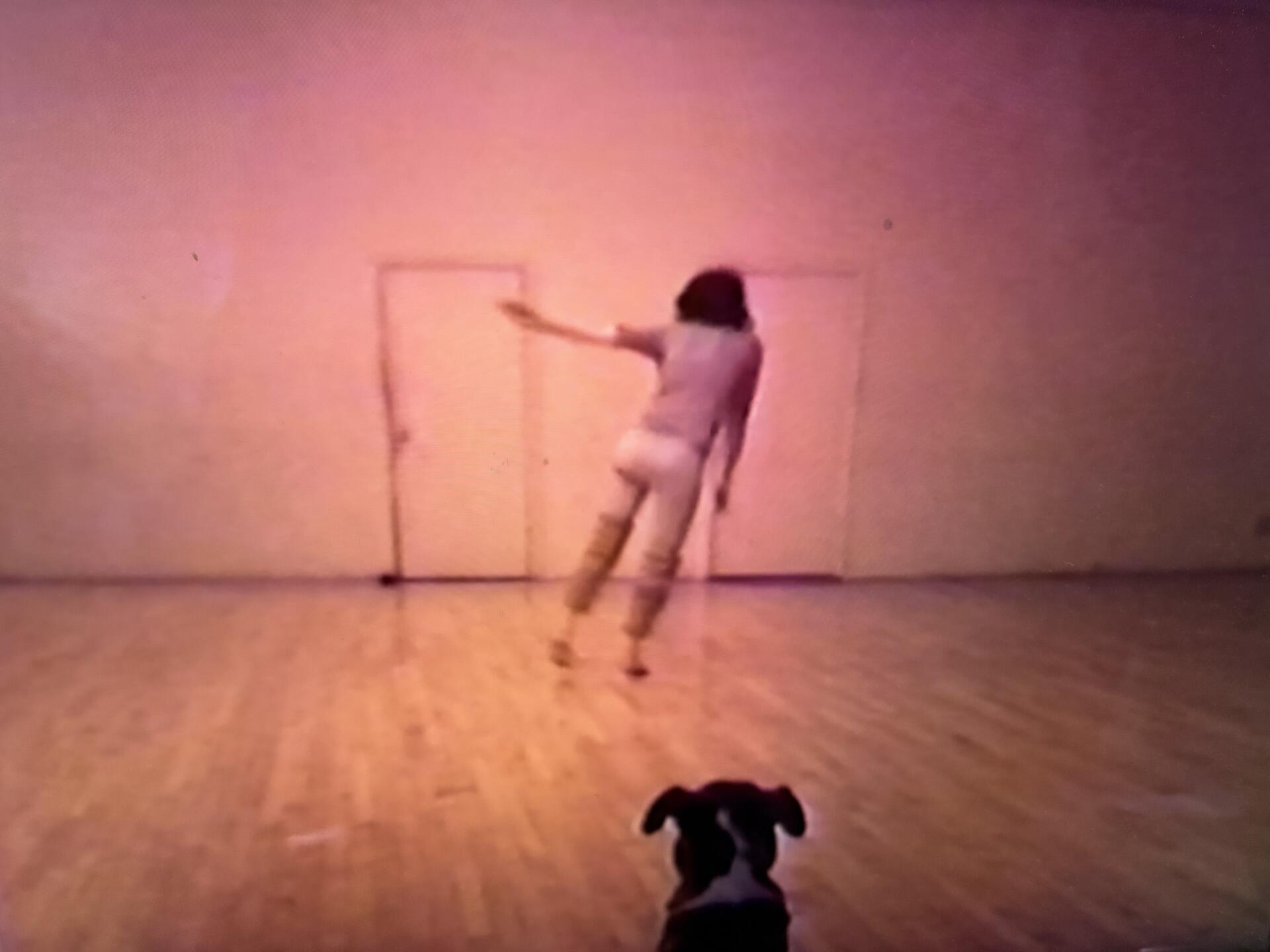
| Unstar/Unflag Submit a contribution to the 2026 Forum on Artistic Research: Submission #232 | Gwen Welliver | Gwen | Welliver | gwelliver@fsu.edu | Unidentified Rehearsals | Project presentation | English | This project begins with Trisha Brown (1936-2017), a groundbreaking choreographer, often seen as dance’s equivalent of better-known (male) contemporaries in other media — John Cage’s experimentalism, Sol Lewitt‘s minimalism, or the chaotic collages of Robert Rauschenberg, with whom she often collaborated. After years of institutional processing, her archives — notebooks, videos, drawings — are becoming available to researchers. But the fact that we have access doesn’t mean we know how to look at them. The aim of "Unidentified Rehearsals", a phrase taken from a label on one of her early rehearsal videos, is twofold: to learn how to work with her archives, and to teach how those lessons can inform artistic research more broadly. Today we take a woman choreographer in her studio working with video for granted, but when Trisha began doing this every aspect of it was radical. Dancers might be women but (with few exceptions) choreographers were men; lofts were rough alternatives not lifestyle choices; and video was a cheap, reusable tool dismissed by cinema, museums, and academics. So it comes as no surprise that her videos blur the boundaries around artmaking: a dog walks by, someone pops in for a hug, the camera moves out of focus, then reframes to show dance through a new window. This kind of material is typically ignored as incidental; on the contrary, I will show how it was central to how she developed her work on every level, from fine-grained vocabulary to stage composition to, ultimately, the poetics of her bodies — as collages of limbs, as site-specific experiments, as polyrhythmic beings. These observations are specific to Trisha’s work, but the lessons are broadly relevant. In speculative contexts — artistic and scientific — it’s far from clear what a “document” actually documents. With this project, I invite others to consider examples or parallels in their own domains and research — and why it’s essential to the questions posed by artistic research |
https://www.researchcatalogue.net/shared/c9d8f5a996d623ee9cb83a587407643e | https://www.researchcatalogue.net/shared/c9d8f5a996d623ee9cb83a587407643e |
|
|
N/A | This project presentation will involve an oral presentation accompanied with slides, video examples, and live gestural demonstration. | technical requirements: I plan to project video excerpts and images from a 2024 MacBook Pro, via the built-in HDMI port, a USB-C (Thunderbolt) to HDMI/DisplayPort cable, or potentially wirelessly using AirPlay. Spatial requirements: Physical demonstrations may occur during my talk but I will need no special requirements for this. |
N/A | Yes | Gwen Welliver | |
| Unstar/Unflag Submit a contribution to the 2026 Forum on Artistic Research: Submission #230 | Anna Püschel | Anna | Püschel | anna.pueschel@kuleuven.be | Stimming a Space - Stimming as Circling, Looping, Emergent Communication | Project presentation | English | Stimming a Space explores stimming, neurodivergent self-regulation, as an access tool. The physical needs of neurodivergent individuals (grouping neurodevelopmental conditions such as ADHD, dyspraxia or autism), often navigating comorbidities, are usually not taken into consideration. Many neurodivergent artists struggle to maintain sustainable careers. Stimming a Space draws from the emic perspective of a neurodivergent artist and embraces stimming not as a pathological or disruptive trait but as a natural form of self-expression. Stimming is the neurodivergent bodymind soothing itself in an overwhelming world, it is nervous system regulation drawing from embodied knowledge. Embracing stimming not just as a tool to feel better, but as a language and means of expression, Püschel proposes that exploring stimming can offer access to the accommodation of psychological as well as physical needs and therefore contribute to current efforts of institutions to become more inclusive. By exploring what is expressed and transmitted through stimming, and how it can form and facilitate community, this research aims to re-claim narratives away from stigmatized ableist projections on marginalized neurodivergent bodies towards the joyful and proud expression of neurodivergent culture. Drawing from her proposition that stimming is a radical gesture of selfcare, Püschel presents her concept of Neurodivergent Cosmology, dreaming a neurodivergent world as an alternative to the current late-stage capitalist environment that crushes able-bodied and disabled individuals alike. If we embrace different ways of moving through space, if we accept languages beyond words, what concepts for accessibility and inclusion come up, and what do these concepts offer to society as a whole? Püschel proposes to turn to the embodied knowledge of neurodivergent individuals to imagine an entirely different society, a utopian meditation on re-thinking and re-shaping concepts of living together. |
https://www.researchcatalogue.net/shared/6e6aee020c1f66feb854d5ab054b0210 | https://www.researchcatalogue.net/shared/6e6aee020c1f66feb854d5ab054b0210 |
|
|
2023 CA²RE Conference Aarhus - presentation of Stimming a Space research 2024 Subject, Object, Practice, Place conference Valletta - presentation of Stimming a Space research I briefly mention the concept of the Neurodivergent Cosmology - that I would like to carve out in more detail for this SAR conference presentation - in an article for Cogitatio Press (2025) and elaborate in more detail on it in an article for Cosmos Magazine that is currently under revision. |
For this presentation, I would like to focus in more detail on the language aspect of the neurodivergent cosmology that I mention in the abstract. As the cosmology maps time, space and language as three major pillars of orientation, I would like to present stimming as a non-verbal means of communication of commonly marginalized individuals. The cosmology is itself not under threat but dwells at the margin of a society that has become increasingly hostile to neurodivergent individuals. I hope that this topic is still relevant for this conference as stimming is still hugely misunderstood while being a core element of neurodivergent culture(s) and employed by many individuals as a preferred way of engaging with the world around them. I wouldelaborate on my proposition that engaging with the world around us through stimming can be relevant in unexpected ways, I would e.g. talk about autistic hyper-empathy in relation to multi-species thinking, extractivism, and ecological crises. | If possible, it would be helpful for me to have a photograph of the conference room beforehand to prepare my presentation. If possible, it would be great if it could be a space in which people can get up easily and move a little bit next to their chair (no worries if not, then I´ll do a quick somatic breathing exercise). I would need a laptop and projector for the presentation. | None | Yes | Anna Püschel | |
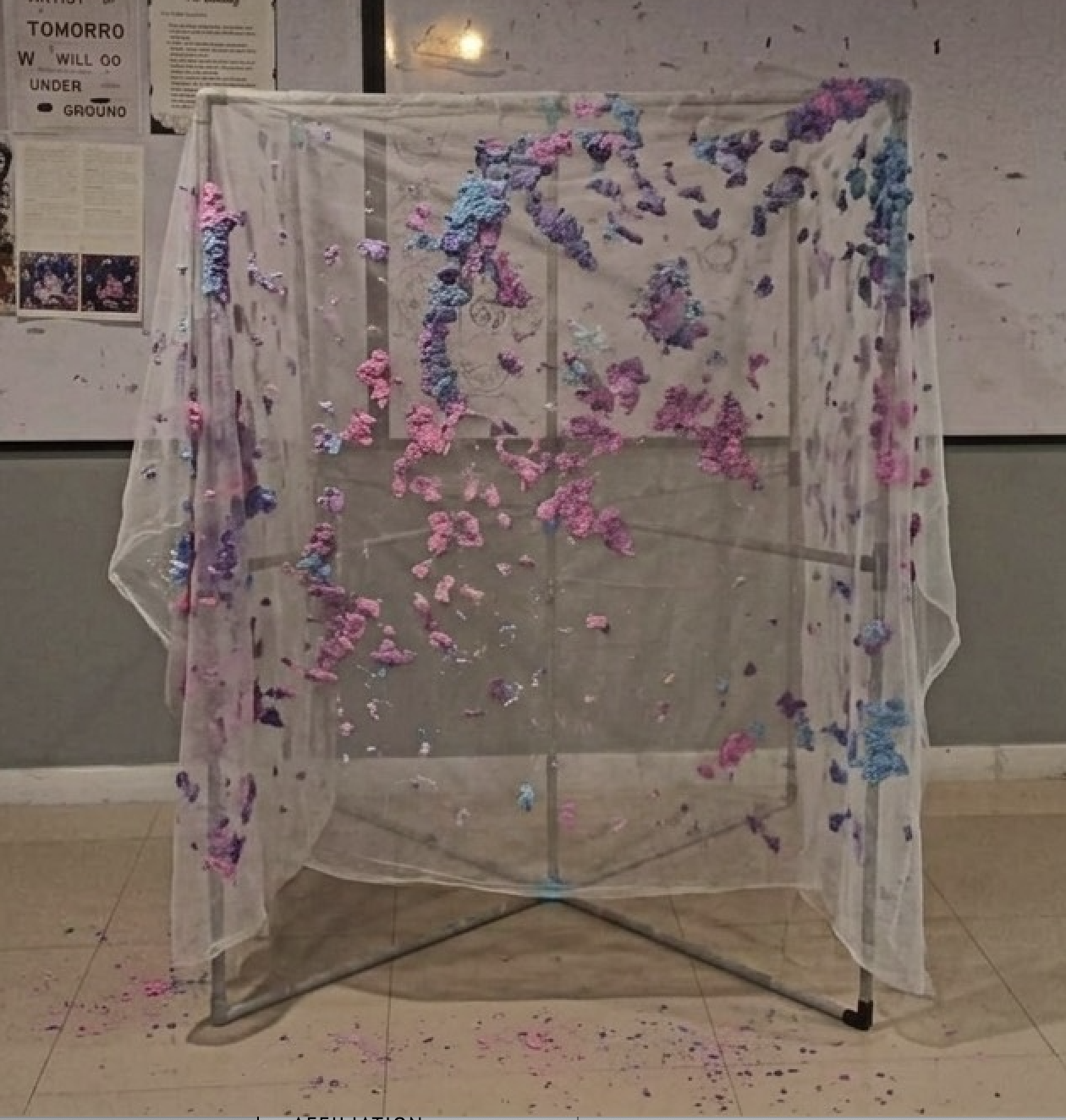
| Unstar/Unflag Submit a contribution to the 2026 Forum on Artistic Research: Submission #229 | Papattaranan Kunphunsup | Papattaranan | Kunphunsup | papattaranan.k@gmail.com | Tistou’s Tea Party Preparation: An Artistic Inquiry into Material Transformation and Internal Growth | Project presentation | English | Tistou's Tea Party is a symbolic intervention which is taking place during the Gallery Bangsaen Festival (March 6-15, 2026). During the intervention, participants will be invited to write down their grievances, then process the paper into a collective sculpture. After ten days, the art will be dismantled and converted into RDF. It’s a recurring ritual: whenever negative emotions pile up, we can transform them into art, and eventually, into energy. This exposition details the preparation phase — testing the feasibility of the symbolic act, refining it, and observing its effects through self-experimentation. The method of study is practice-as-research. Data collection involves intermittent photography and field notes. I found that it is possible to shred the papers, soak in hot water, blend into pulp, and mix with tapioca starch, joint compound, water, food color, and scent (if desire). The processed paper pulp, which feels like very thick cream soup, can be squeezed on nylon mosquito net to evoke the feeling of a flowering tree. During the whole experiment, I also experienced a profound sense of “Quirky Euphoria” and a sense of agency, that it is possible to process my negative emotions into a creative act. | https://www.researchcatalogue.net/view/4217005/4217006 | https://www.researchcatalogue.net/view/4217005/4217006 |
|
|
- | If selected, the presentation will feature the Documentary Film captured during the festival, accompanied by an exhibition of Material Specimens resulting from the research experiments. |
The full public sculpture can be reconstruct within 2 x 2 square metres. However, if the space is limited, I can bring just some part of the specimens for display. For the documentary film, a tv screen and a headphone would be required. |
non | Yes | Papattaranan Kunphunsup | |
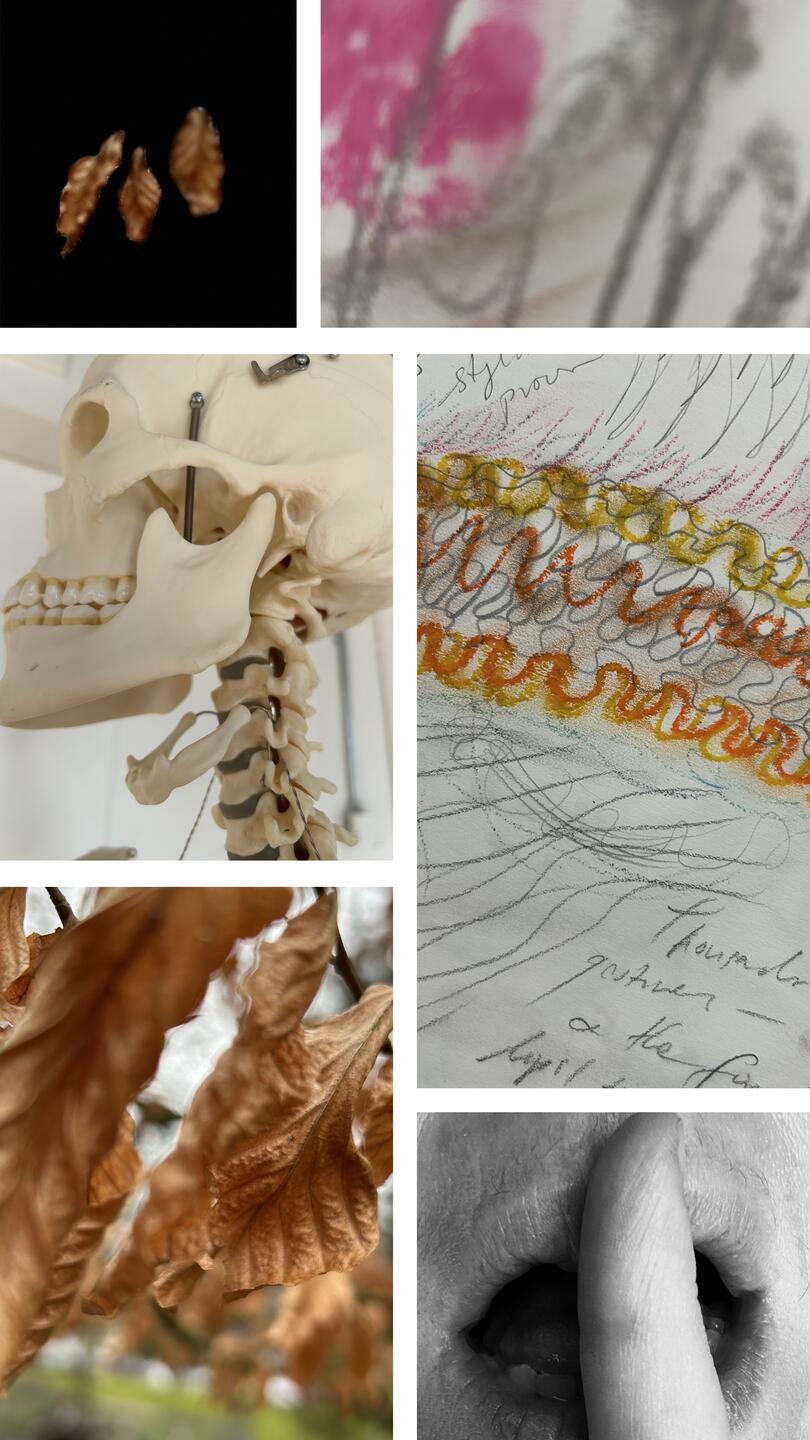
| Unstar/Unflag Submit a contribution to the 2026 Forum on Artistic Research: Submission #225 | Anonymous | Róisín | O'Gorman | r.ogorman@ucc.ie | Between the tongue (lingua) and the finger (digitus): moving between language and writing. | Workshop | English | Following the distinctions made by ceramicist Tom Kemp, between language (lingua: tongue) and writing (digitus: finger), this workshop will offer somatic explorations of the the physical structures of tongue and fingers to play with the ways writing moves and moving writes. Attending to the material structures supports playful ways of listening to the fine motor dance and sensory possibilities of language and writing in embodied ways. This workshop emerges from a sustained practice in exploring ways of moving into and out of writing finding pathways and possibilities within the limits and of each modality. The on-going loops of attending to both the movement in writing and how writing can bring us into moving counters hegemonic use of writing as law, authority, or as a fixing in place. How then can we set writing in motion? How can we attend to the somatic, bodily textures within writing and expand writing’s vitality? How can this writing in turn help us to attend to mirco and everyday movement as significant and signifying beyond the heightened attention to virtuosic movement? The workshop explores asemic writing, attending to the peripheral and tangential murmurations where movement and language loop in meaning making. We will move and write together and see what emerges from our shared experiences and approaches to speaking and mark making, moving and di/stilling. |
|
|
I have an ongoing somatic practice and have offered a range of what I call 'move into writing' workshops. This theme has developed from that ongoing practice but this is a new development in the work. | . I have proposed this as a workshop to more experientially share the work. However, I also can present a more regular conference paper with samples of the work if that is more feasible in the conference programming. | I have proposed to offer a movement based workshop. This works best in a studio type space where is more comfortable to move freely if that is possible. I would also like to be able to share some images and play some music (but can bring a bluetooth speaker and give handouts if needs be.) | Yes | Róisín O'Gorman | ||||
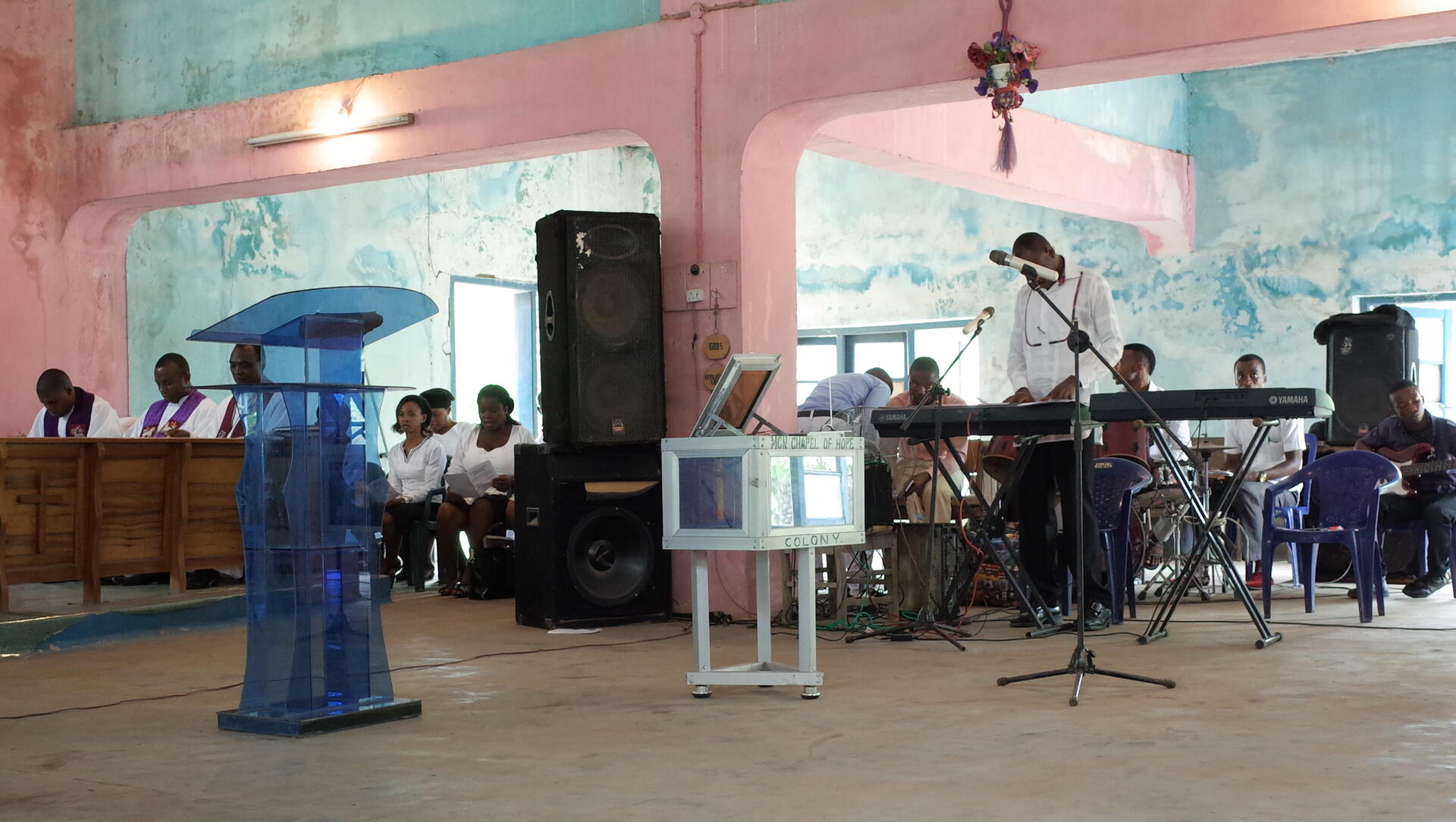
| Unstar/Unflag Submit a contribution to the 2026 Forum on Artistic Research: Submission #223 | Anonymous | John | Manton | 19179495@brookes.ac.uk | Conceptualising painting as a research intervention into commoning endangered choral performance archives | Poster presentation | English | This presentation centres around the performance history of the choral work of Nigerian composer and leprosy patient activist Ikoli Harcourt Whyte (1905-1977). Harcourt Whyte wrote a huge number of hymns in the Igbo language, fusing Nigerian and UK Methodist musical modes, for performance by patients and fellow former patients at the Uzuakoli Leprosy Centre in southeastern Nigeria. Here, I develop a conceptual armature for the deployment of a research painting practice, in revisiting documentary and artist collaborations around Harcourt Whyte’s work. The painting practice in question uses a mix of physical and digital processes to interrogate the role of machine learning algorithms in knowledge production, preservation and storage in relation to artistic performance practices, and in mediating access to, and custody and legibility of archives of practice. I investigate how we can use such practices, deriving from relations around painting, to prospect for ways to insinuate minoritised histories/heritage, community practices, and archives-at-risk into the evolving algorithmic landscape, without reinforcing existing harms or rendering new axes of vulnerability. To evidence this potential, I revisit my own collaborative work with composers, academics, medical workers, and patient activists to recover, reinterpret, perform, and share the work of Harcourt Whyte. |
|
|
For the SAR Conference, this is envisaged as a poster presentation, but if it's possible to play some relevant music/sound in accompaniment when I am in the space (quietly, so hopefully not disruptive in the space) that would be great. It's not essential to the intellectual case being presented, but it usually helps engagement with specific endangered conceptual dimensions of the world my research engages. | I can provide my own accompanying equipment. If posters cannot be printed on site, I will need to know in advance, as I would be travelling internationally. | The Nigerian component of my research work has been covered by ethical review and consent agreements for both academic and broadcast purposes. Any outputs will be shared with original research participants and communities. | Yes | |||||
| Unstar/Unflag Submit a contribution to the 2026 Forum on Artistic Research: Submission #220 | Anonymous | Janine | Davidson | davidsonj@staff.ncad.ie | Study in Grey | Experimental format | English | My exploration of utopian ideals and speculative futures, in my work ‘Study in Grey’ examines the intersections of language, landscape, and environmental decline. Created during a residency at the Caribbean Marine Biological Institute (Carmabi) in Curaçao, funded by the Arts Council of Ireland. ‘Study in Grey’ is a film-poem that explores the duality and multiplicity of language in relation to place, and how these elements shape our understanding of the natural world. The incorporated images were shot at sites of preservation and conservation on a customised full spectrum camera that had been modified for spectrographic work on corals. It is a juxtaposition of landscape and language, and seeks to explore constructs of strata and stratum. The audio narration recites the poem ‘Kuadro na Shinishi’ which translates in English to ‘Study in Grey’, originally written in Papiamento by Pierre A. Lauffer. The production of ‘Study in Grey’, involved the recording of multi-channel audio narration, and the integration of digital still imagery. I collaborated with students and academics from the University College Dublin community, to record audio narration in Dutch, English, Portuguese, Spanish and Papiamento. The narrative of the poem is a reflection on climate catastrophe. The work offers a speculative view of a future where the loss of language, culture, and environmental integrity are deeply intertwined. |
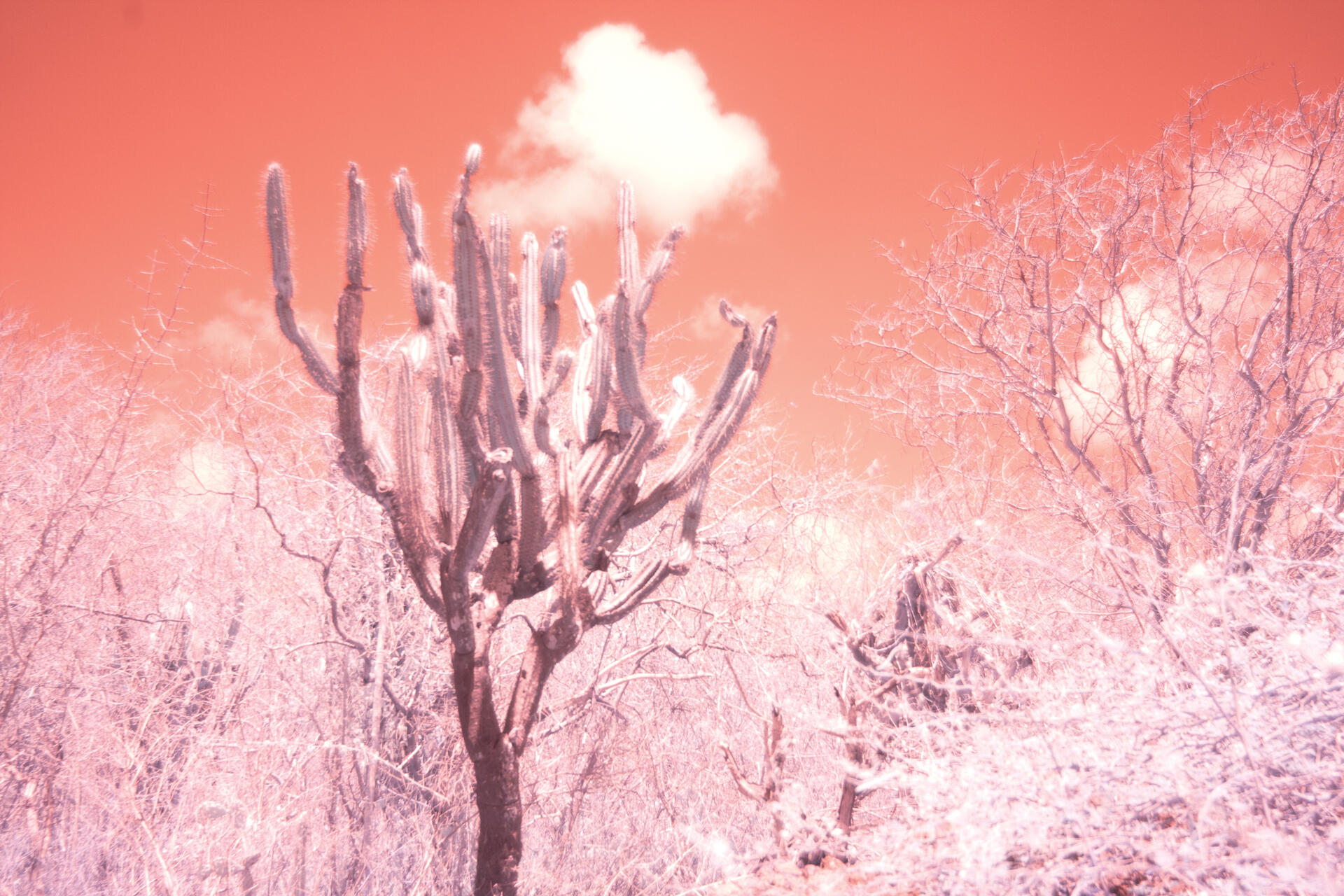
|
|
‘Study in Grey’, was exhibited at the Pumphouse, in Dublin Port, 2023, launched by a panel discussion with Marta Dijkhoff, linguist, educator and Bettina Migge, Full Professor of Linguistics at UCD. The film 'Study in Grey', was screened at IMMA Earth Rising, September, 2023. 'Study in Grey' presented at National College of Art and Design, Dublin Research Exhibition & Programme, 19 Mar - 17 Apr 2026. Research will be presented in solo show: ‘Study in Grey’, Súil Gallery, Ennis, 2027. |
Link to film on youtube: https://youtu.be/kdW9jCNCJrQ Study in Grey - 10:23 mins duration, played on a loop or with other films in a film program. The film will be projected onto a large format screen or suitable wall, with sound. A folded A3 riso-printed booklet accompanies the film, listing contributors and the poem text 'Study in Grey' in the five languages explored in the film, (number of copies to be determined). Alternatively or including the information from booklet in poster format, installed beside projection to contextualise the work. |
A darkened space is preferred to create in immersive experience. A high quality HD projector is required. Film displayed at Aspect ratio 16:9. Film can be projected onto a screen (freestanding or dropdown) or a suitable wall surface. Projection wall size or projection screen requested, minimum 330cm wide by 187cm high. Stereo sound system independent from projector, with two speakers and an amp. I will provide the digital file for the film on memory stick. |
None at this point. | No | ||||
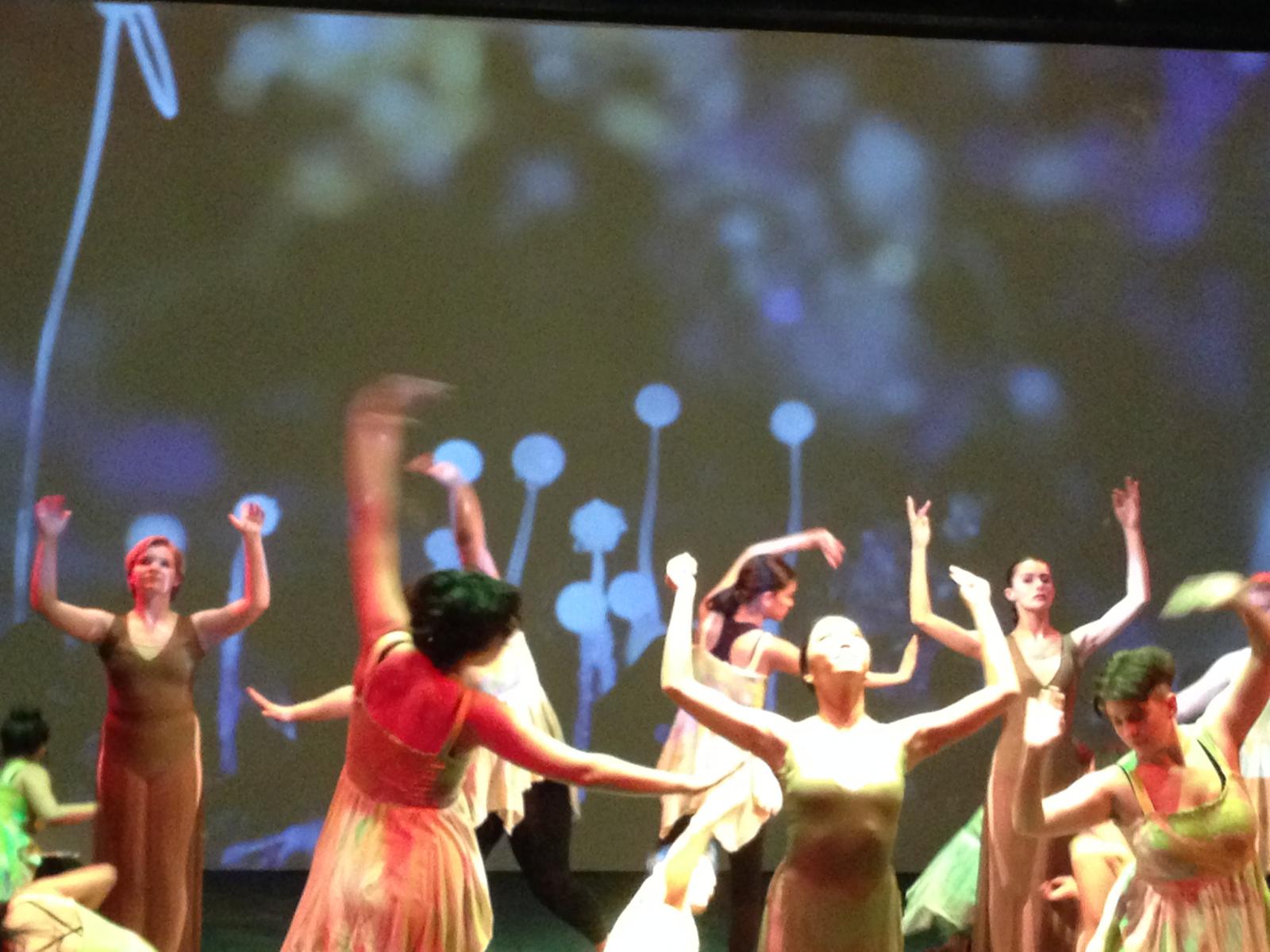
| Unstar/Unflag Submit a contribution to the 2026 Forum on Artistic Research: Submission #219 | Anonymous | Jessamyn | Fairfield | jessamyn.fairfield@universityofgalway.ie | ROOTED | Performance | English | ROOTED is a co-created dance theatre piece which explores ecology and the climate crisis with communities in the west of Ireland. The project comprises both workshops and live performances, in collaboration with the public, scientists, dancers, students, and those who may identify with multiple categories, culminating in a dance theatre production devised from emergent workshop themes, data from scientific collaborators, and the stories and perspectives of project performers. By taking a collaborative and transdisciplinary approach, this work avoids the trap of art/science interactions that are either overly literal or hyperstylized (Coates 2017), allowing themes and meaning to emerge in the overlap between ecology, the body, and community (Bentz et al., 2022). The movement vocabulary, score and script for ROOTED are developed from co-creation workshops and exploration of ecological data, and also includes improvised components that vary in response to audience interaction with climate data at the event. The embodiment of scientific concepts is both science communication and a shared multisensory experiment (Myers, 2012), enabling new collaborative sensemaking methods not traditionally associated with scientific data and analysis (Vogelstein 2022). The performance will begin with a short talk about the environment and climate change, followed by an interactive data visualization allowing the audience to explore local human impact through live web-based input and projections. This will be followed by an abstract dance theatre piece, which creatively interprets concepts and interactions from the natural environment using physical movement, projections, patterning and text in a stage performance. This lateral approach to our local ecologies, at the intersection of science, performance, and collective agency, encourages new ways of thinking about the world around us and our place in it. ROOTED is supported by the Research Ireland Discover programme. |
|
|
If there are any previous performances they will be in the week leading up to the conference (matinee performances and a preview, specifically inviting co-creation workshop participants as described above). | The themes of the performance have been developed through co-creation workshops with communities in Galway and Mayo, as well as Transition Year students. In addition to the performance at SAR, we plan to hold matinee performances and an evening preview to invite workshop participants. This work is embedded specifically in the west of Ireland and its communities, and aims to empower youth alongside adults, rural residents alongside city dwellers, to move through climate anxiety toward justice. The artistic development of the project is in dialogue with community voices as well as data from the National Biodiversity Data Centre, bringing scientific research together with practice-as-research. The translation of data and community input into a theatrical vocabulary, including text, images and movement will contribute to a planned publication on interdisciplinary exploration of climate themes and collaborations between artists, scientists and the public in the development of new works. |
This dance theatre production requires a large stage, sound desk and lights. The interactive data visualisation section of the performance necessitates a projector with the widest possible projection space at the back of the stage. We will also borrow a motion capture suit and associated hardware from the Centre for Creative Technologies. Finally, we request use of one of the ODC studios for a pre-show interactive digital display with the audience, which ties into part of the show. | The probability and magnitude of any discomfort or harm anticipated from this performance is not greater than what might be experienced in daily life. There is potential for minor distress to audience members as well as performers due to climate anxiety, hence resources will be provided on the project website and supported in depth during the rehearsal process. Research planned as part of this performance has been approved by the University of Galway Research Ethics Committee (2025.05.017). | No | ||||
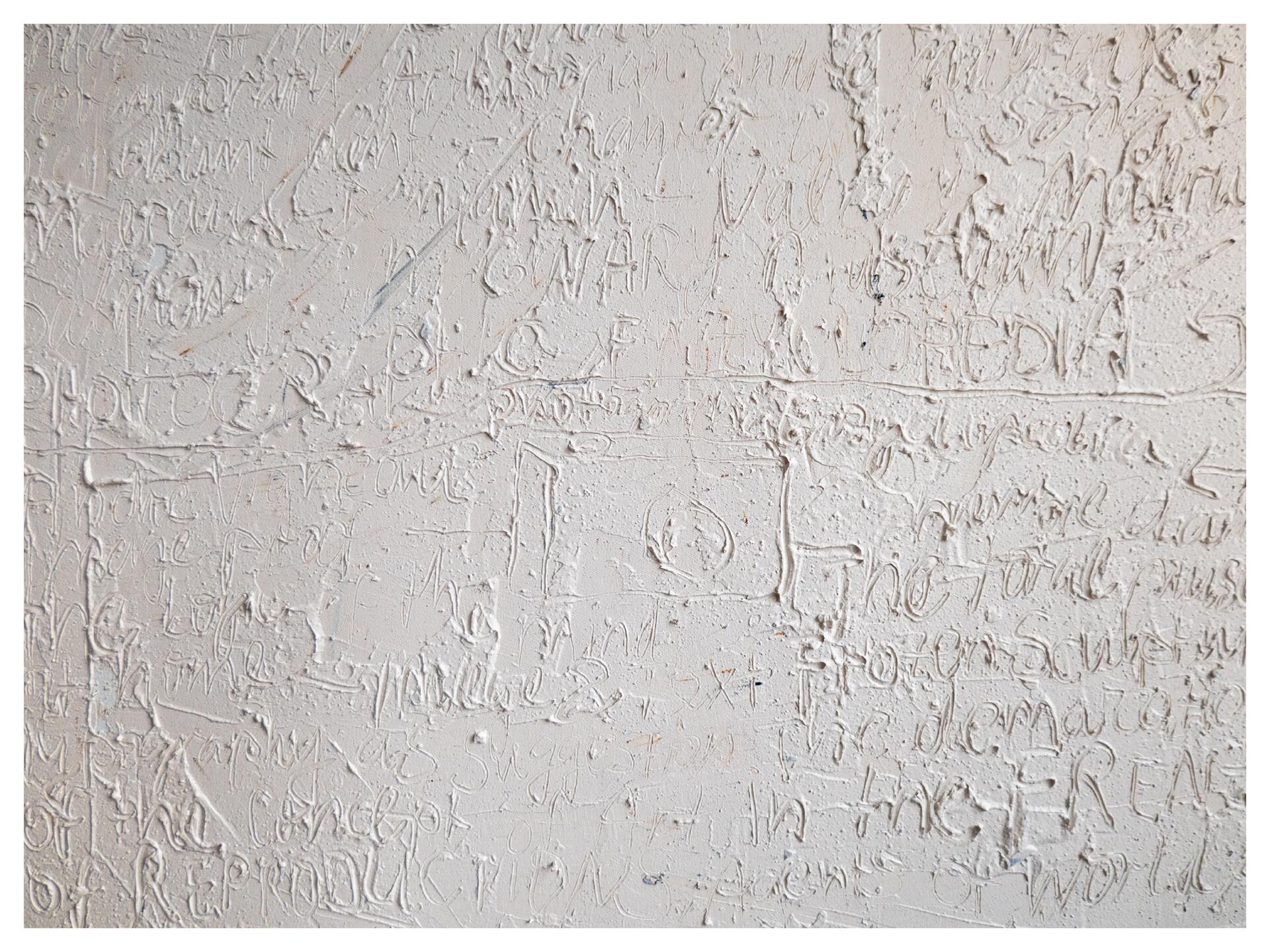
| Unstar/Unflag Submit a contribution to the 2026 Forum on Artistic Research: Submission #216 | Anonymous | Julius | Voigt | julius.voigt@kh-berlin.de | Epipoetic Un-Deception: AesthEtics of Reproduction and Kinship Rupture | Poster presentation | English | This practice-based (PhD) project connects art-historical research on a UNESCO colour-reproduction project in painting with an auto-ethnographic archaeology of my own reproductive history. The latter is the focus of the presentation, which reflects on the relationship between original and reproduction in a biological-biographical exploration. After 33 years, the revelation that my presumed father is not biological—my actual father a bisexual friend and former lover of my parents—acts as an epistemic rupture that unsettles genealogical, bodily and narrative models of the self. My parents relied on what we would today call a queer relational constellation to overcome infertility and conceive a child, yet could or would not speak about it openly—silenced by muteness around reproduction and by a secrecy regime of a prudish GDR society. The proposal explores how a family secret and its late disclosure produce endangered conceptual worlds of kinship, inheritance and identity, shaped by shame, secrecy and heteronormative expectations. The project asks how situated knowledges and minoritised life and love stories become speakable in artistic research and how autotheory and autoethnography can reframe such experiences as sources of insight rather than deficit. The German term „Ent‑täuschung“ (un‑deception) becomes a conceptual tool for thinking transformation and liberation together with loss and disorientation. The presentation aligns with language-based artistic research and concept‑mapping practices. The poster operates as a poetic concept map at the threshold of image and text, (in)visibility and (un)readability, blending essayistic and poetic writing with diagrammatic, painterly and possibly wall-based marks. A brief live writing/mapping sequence will activate this material on site, inviting participants to share processes of making seeable and sayable what has (long) remained unsaid. |
|
|
Presentations of individual parts of the research were given as part of the Collaborative Research Centre “Transformations of the Popular” (University of Siegen, Germany) and as part of the structured doctoral programme “Art and Design Research” at the Bauhaus University Weimar. In this form and with its current focus, the proposed presentation will be shown for the first time at the SAR Conference 2026. | During the poster presentations, I would like to activate the poster further by adding slight live writing, drawing and gestural markings to transform the experience. This fosters audience interaction: together, we reflect on the performativity of image-text constellations, exchange thoughts on 'making visible and audible', and expand the map performatively. Through dialogue, we translate the personal dramas and circumstances described into broader contexts. |
A wall or stand would be needed to hang the poster. I can bring equipment for hanging it up if necessary. It would be ideal if there were some opportunities for movement and interaction with the audience in the room. If possible and technically feasible, the poster could also be activated and developed into a mural (using graphite/pencil or similar). In general, I like to respond flexibly to the given possibilities in a site-specific manner. | As the topic touches on sensitive and highly personal issues relating to birth, sexuality, relationships, family dynamics and power, I would issue a trigger warning if necessary. While there will be no highly sensitive or explicit elements in the presentation/performance, I would like to request that it be handled with sensitivity. | No | ||||
| Unstar/Unflag Submit a contribution to the 2026 Forum on Artistic Research: Submission #215 | Anonymous | Falk | Hübner | ulla.havenga@fontys.nl | Towards Circular Communities | Workshop | English | For this edition of the SAR conference, Falk Hübner will introduce the new research project Towards Circular Communities. This project has recently kicked off in collaboration with Next Nature, situated in the iconic 'Evoluon' building in Eindhoven, the Netherlands. During this 2-year research project, Fontys Academy of the Arts and Next Nature are collaborating to explore how we as a society can integrate circularity into our lives—together with people, nature, and technology such as artificial intelligence (AI). Five artist-researchers are asked to imagine new perspectives on circular communities through artistic research and speculative design. They will be working in residency at the Next Nature Museum. The residencies will partially overlap, creating opportunities for exchange, reflection, and public presentations. In parallel, we are developing a custom-made "Circular AI" that not only supports the artists but can also be used by the wider public. The project will culminate in an exhibition where visitors are invited to contribute their ideas, experience, and participate in speculative proposals for a circular society. The goal is to view circularity not only as an economic or technical issue, but primarily as a socio-cultural challenge: how can we live, share, collaborate, and care together—with each other, with nature, and with technology? The project brings together a wealth of (research) expertise, also from Circular and Sustainable Transitions, with other Fontys research groups such as Transforming the Economy and Moral Design Strategy. AI specialists are also involved in the project. . During this initial phase of the project, the SAR conference offers the perfect frame to open up and co-think the topics and methods of this research project beyond the core group in a more diverse setting. The input we will generate here will nurture the core of the project. We also want to find new researchers and collaborators for the project. |
|
|
none | We would like to host a 180 min session which includes three main modes: 1.) Brief project introduction & overall urgency of the integral topics: Circularity, Community, AI 2.) Outline the applied research methodology (activating artist researchers as core investigators reflecting on the research through their individual practices (review their practices in relation to the core themes - provocations by professors from circular economy and green AI) 3.) Break-out session in smaller groups reflecting on speculative questions designed by Falk Hübner |
A generous round table setting that allows switching from presentation to an open group discussion, ideally with enough space to also host break-out sessions. | none | No | ||||
| Unstar/Unflag Submit a contribution to the 2026 Forum on Artistic Research: Submission #214 | Anonymous | Nancy | Couling | nancycouling@hotmail.com | Workshop Diaries: Three seasons in Sápmi | Project presentation | English | Sápmi is a world of deep belonging and reciprocity to the land and sea. Sámi practices and beliefs transgress this western colonial binary of states of matter as well as the binaries nature culture, animate and inanimate, physical and spiritual, and the temporalities of past, present and future. This makes Sápmi a fully real and tangible place, but unrecognised by the colonising nation states of Norway, Finnland, Sweden and Russia. The Sámi are a minority in their own lands and all Sámi languages are still considered endangered. Although endangered, this world is never purely conceptual, but alive through embedded practices, expressions and ways of being. Through the open research format of interdisciplinary workshops, this collective project explored alternative knowledge systems, and asked how aspects of intangible cultural heritage can be integrated, amplified or echoed through artistic and spatial practices and how to develop ethical, reciprocal, and relational ways of working with places as guests on /in indigenous land. We prioritised listening, sensing, being in the local seasons and landscapes, and sharing over individual artistic work. The project presentation aims to capture and communicate the essence of engaging with Sápmi as ongoing artistic research, based on three meetings and examples from a selected interdisciplinary group working in arts and culture– some with Sámi heritage. It offers tentative proposals on negotiating site specific work in indigenous contexts. The spatial and temporal frameworks of artistic research are questioned as participants demonstrate that alternative spaces enabling rituals, offer more fruitful contexts for cultural conversations. Research here is engagement in building relationships over time. Inherited knowledge hierarchies, ideas of representation and performer/audience relations are inverted. The yoiker does not “yoik someone”, rather the yoik is that someone, just as a dance is that something. |
https://www.researchcatalogue.net/view/4215702/4215703 | https://www.researchcatalogue.net/view/4215702/4215703 |
|
|
The research has not previously been presented. | Spoken presentation with images and sound. | Projector plus sound system. | So far no foreseeable ethical concerns. The content will be fully developed with the workshop participants. | Yes | ||
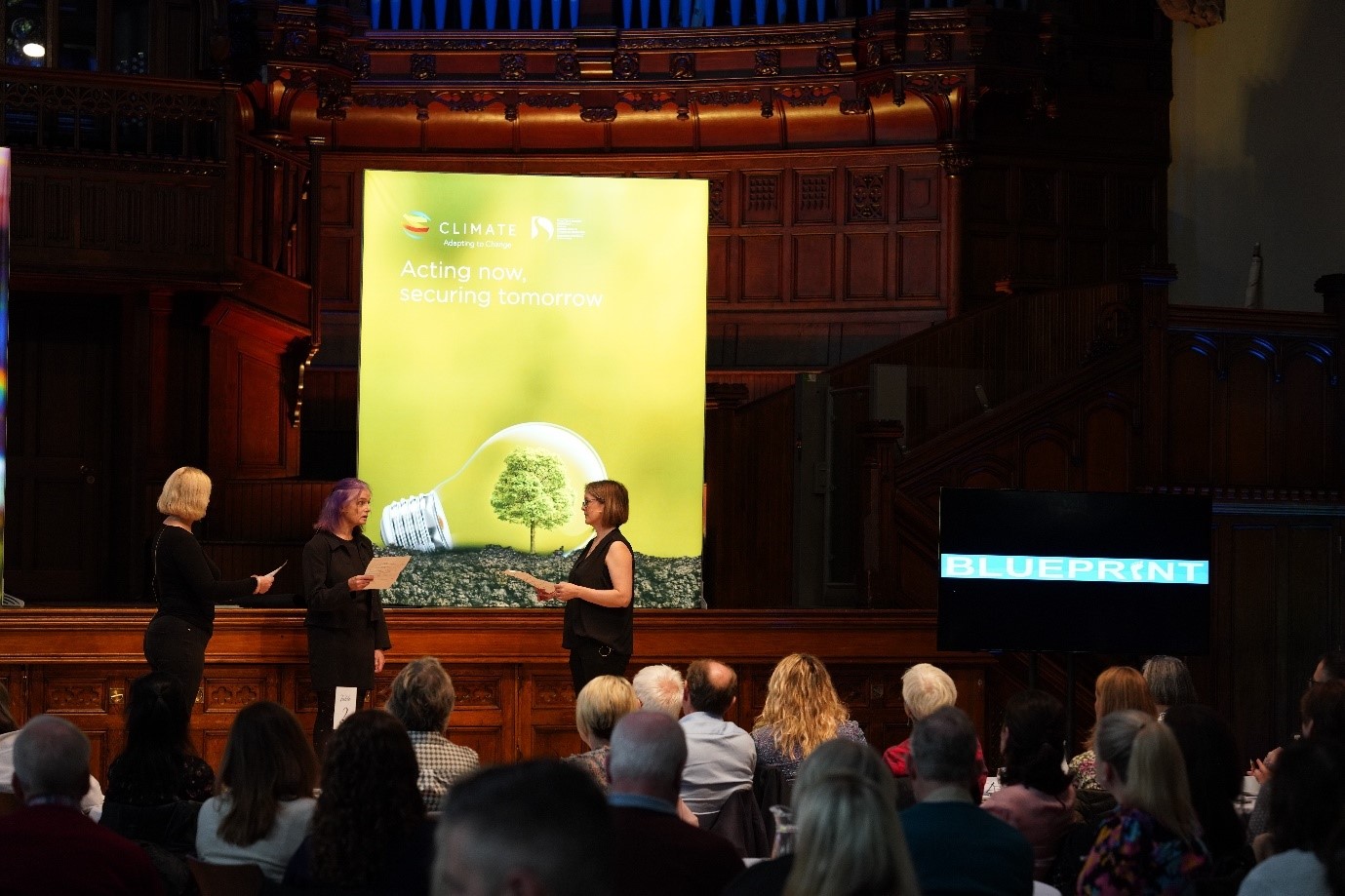
| Unstar/Unflag Submit a contribution to the 2026 Forum on Artistic Research: Submission #207 | Anonymous | Lydia | Cumiskey | lcumiskey@ucc.ie | Who Gets to Speak about Climate Risk & Resilience?: Artistic Practice as Epistemic Intervention | Workshop | English | The climate crisis necessitates engagement across diverse backgrounds, cultures, and disciplines, each shaped by distinct linguistic and experiential contexts. However, language is frequently homogenised in pursuit of improved collaboration, marginalising lived experience and cultural nuance, and reinforcing power structures. This workshop draws on interdisciplinary projects (BluePrint and DIRECTED), reflecting on challenges in climate risk communication to surface, recognise and integrate diverse knowledge across policy, science and communities. Jointly led by a climate adaptation scientist, design researcher and a facilitator with a background in anthropology and artistic practice, the workshop foregrounds different situated perspectives, revealing how knowledge is created, interpreted, and experienced. Artistic practice is treated as a diagnostic method rather than a tool for engagement or delivery. Ethnographic and arts-based approaches produce and hold situated, embodied knowledge and reveal why unstructured dialogue often fails in complex governance settings. The workshop invites participants to engage with the challenges of socially engaged art–science collaboration through creative and playful exercises using case studies from shared practice, a performance poetry process and facilitated reflection. This co-production process makes conceptual framing of responsibility, uncertainty and possibility less abstract and reveals the disconnect between technical language and lived experience. Facilitated reflection considers how certain forms of knowledge gain recognition, shaping interpretations and responses. The workshop becomes a shared inquiry into how climate risk and resilience is understood and how alternative ways of knowing can reconfigure dialogue and emerging solutions. Impact is epistemic: it makes power in language visible and sayable, while recognising marginalised knowledge as legitimate in climate risk governance. |
|
|
Walmsley, S., Cumiskey, L., et al. (2024). Extract from BluePrint sound installation "In at Midnight and Away by Morning: The Uninvited Guest". Zenodo. https://doi.org/10.5281/zenodo.14036832 Walmsley. S., Cumiskey. L., et al (forthcoming). Strengthening Active Citizenship for Climate Resilience through Artistic Co-Creation. In S.Flood et al (Eds), Community Climate Justice: Building on equitable adaptation practices and the implications for policy, science and leadership. Palgrave Macmillan. |
This 180-minute participatory art–science workshop combines short case studies, creative exercises and structured reflection. After a brief introduction and warm-up, participants work through themed activities using images, voice, tableau and movement. A guided performance poetry process moves from individual writing to group composition and sharing. The session concludes with facilitated plenary discussion linking insights to climate risk and resilience practice. | • max 20 participants • room for movement and group work • tables and chairs for group • workshop to be in non-public area with suitable acoustics for group work • Audio/Visual for sharing short extracts |
n/a | Yes | ||||
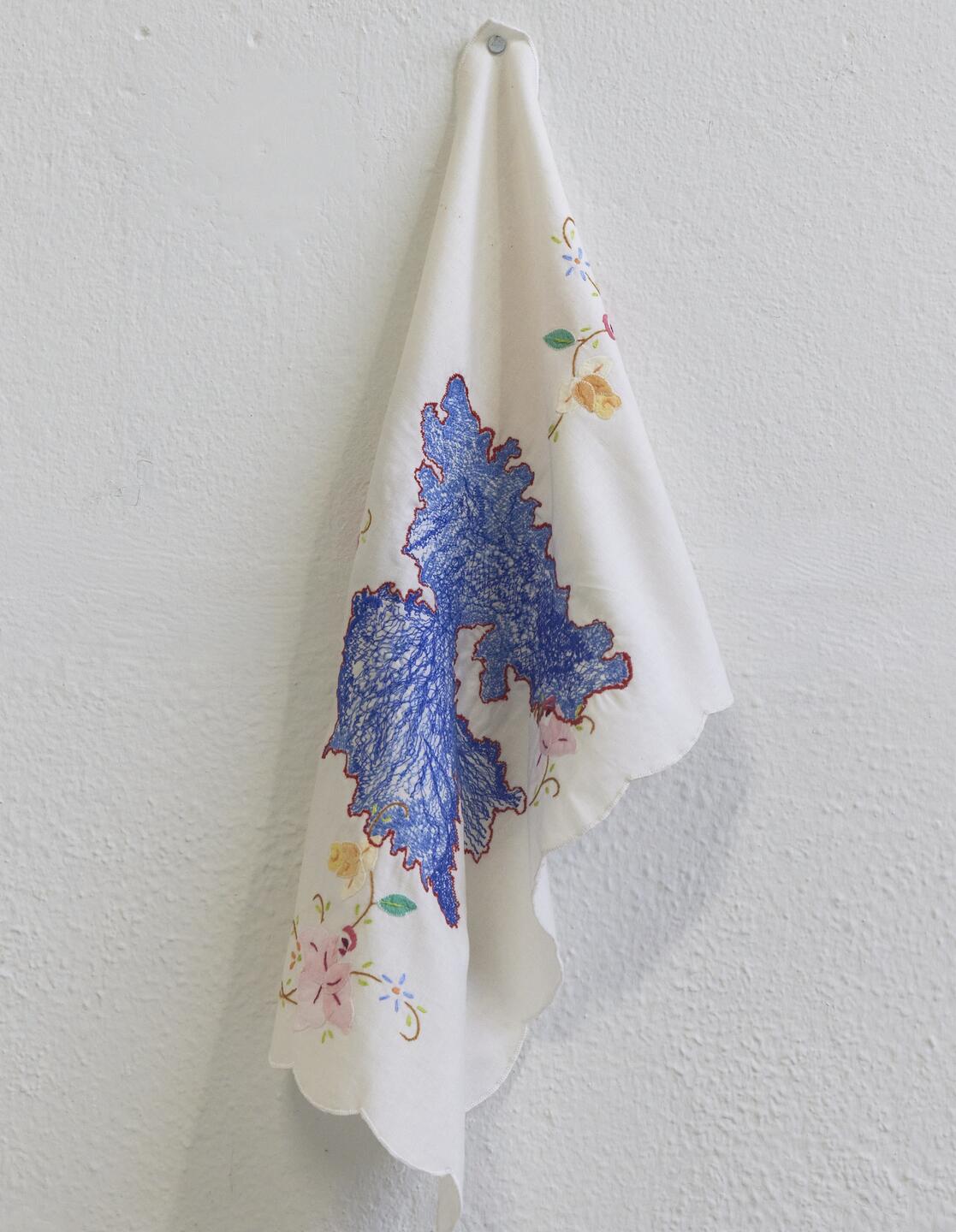
| Unstar/Unflag Submit a contribution to the 2026 Forum on Artistic Research: Submission #205 | Anonymous | Vasiliki | Stasinaki | vstasinaki@gmail.com | Resisting Through the Minor Gesture of the Hand: Learning, Preserving, Remembering and Retelling the Stories of the Political Exiles on the Islands of the Aegean Sea, Through their Making Traditions. | Project presentation | English | The neoliberal capitalist nation-state, as a hegemonic structure, constructs its narrative by sidelining stories of resistance and refusal, relying on monumental aesthetics, grand gestures, and rigid binaries. Yet these suppressed narratives persist at the margins retaining their counter-hegemonic potential. They endure in acts of making, in the subtle gestures of political dissidents, in craft languages developed for survival under persecution, and in the material remnants of prison life dispersed at the edges of official archives. This raises the question: how can artistic research trace these minor gestures to recover and retell marginalised histories of resistance? This paper examines how my artistic practice engages with the material culture and craft traditions of exiled citizens on Aegean islands during the Greek Civil War (1946–1950) aiming to revisit and reframe their overlooked histories. I explore how embroidery and carving function as quiet yet powerful modes of preservation and commemoration. Drawing on Mika Hannula’s notion of the small gesture and Erin Manning’s concept of the minor gesture, I consider how such practices disrupt dominant structures and suggest alternative political possibilities. I argue that the collective, everyday development of craft practices in exile operated as resistance, survival, and documentation. Through my own process I learn and embody these traditional techniques, engaging in repetitive, hand-based making to sustain their language while re-contextualising it. These acts become methods of remembering, transmitting histories through embodied practice. The repetition of these gestures produces a counter-narrative that honours enduring, everyday resistance. I conclude by proposing a fictional archive that foregrounds these subtle acts of defiance. By extending exile embroidery and carving practices, I construct a narrative of resilience rooted in quiet persistence, weaving connections between past, present, and future. |
https://www.researchcatalogue.net/view/4211561/4211562 | https://www.researchcatalogue.net/view/4211561/4211562 |
|
|
An iteration of this presentation occurred as a paper delivery during the 'Stitching Solidarity, Activism in Textile Art' symposium, February 2025, Ulster University-Queen's University Belfast. Another iteration of this presentation took place at the 'Performativity(ies) of Memory(ies)' conference in October 2025, Polytechnic Institute of Viana do Castelo, again as a paper presentation. I presented an iteration of this research in the form of exhibition at Fisga Space Porto, February 2026. |
I have no additional information. | The only technical requirement is a projector or a screen to present the work/research | There are no risks of ethical concerns foreseeable at this stage. | Yes | Vasiliki Stasinaki | |
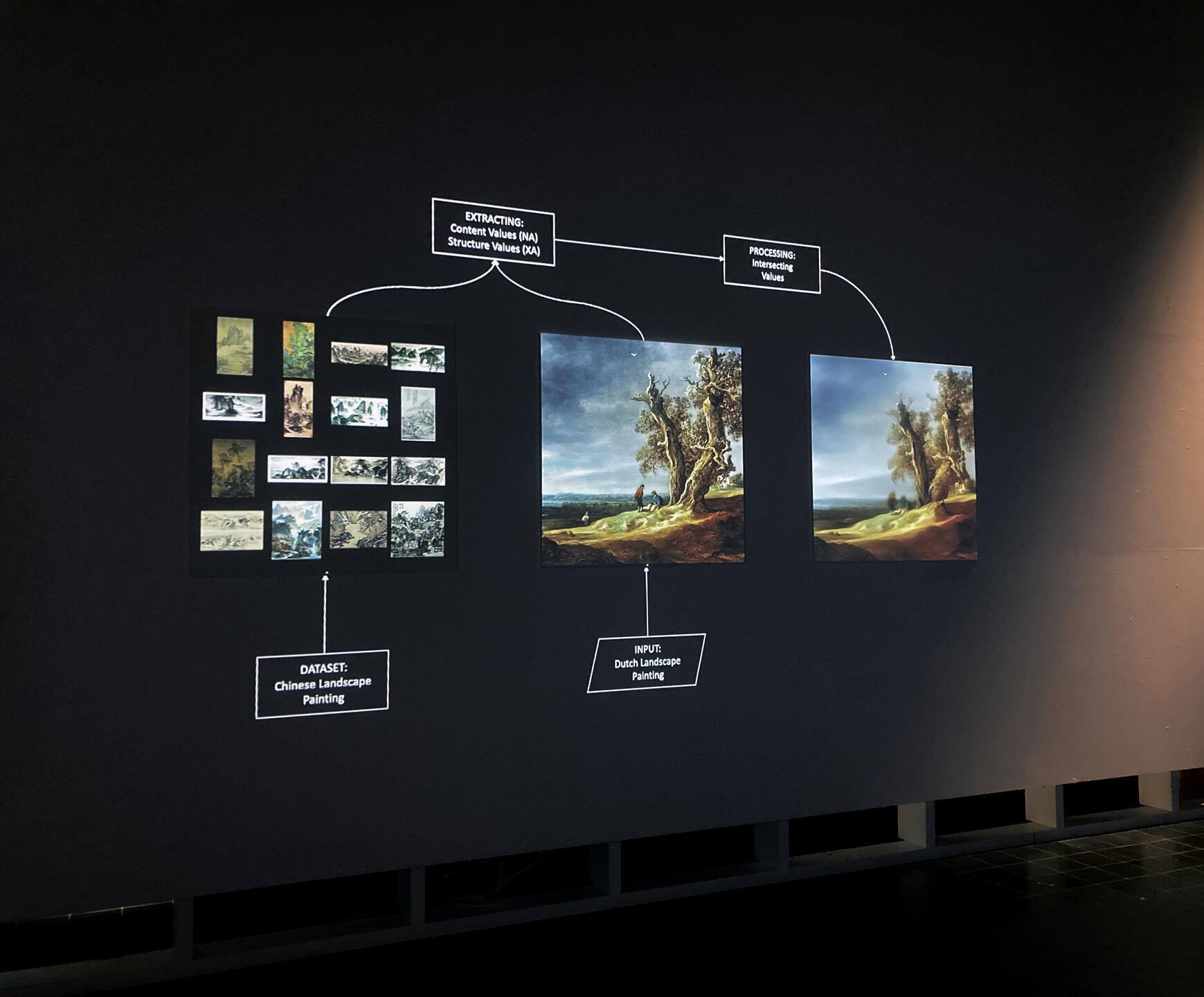
| Unstar/Unflag Submit a contribution to the 2026 Forum on Artistic Research: Submission #204 | Anonymous | Vincent | Thornhill | vincent.thornhill@gmail.com | Land/scraping - Algorithmic Alternatives in Landscape Photography | Poster presentation | English | For the 2026 International Forum on Artistic Research, I will present a poster that describes an artistic reinterpration of a machine learning algorithm that engages with cultural and ideological framing of landscape photography in smartphone camera systems. ‘Land/scraping’ is a custom-designed generative image algorithm that explores how the concept of landscape is developed within generative image optimisation processes. In 2021, Google introduced Magic Eraser to its Pixel line of smartphones, enabling users to alter images with machine learning. With generative AI, editing possibilities include swapping clouds for a clear blue sky or a night sky, repositioning objects and people, or removing them altogether. To achieve this, a machine learning model infers what is in an image, what is behind an object when it is removed, or what the user would prefer the image to look like, i.e., a ‘better’ sky or a ‘better’ composition. Land/scraping questions how user experience is mediated, or ‘trained’ through generative image optimisation technology. To experiment with the boundary between algorithmic and cultural training, Land/scraping restages generative AI optimisation tools through training an algorithm to optimise according to contrasting ‘cultural’ understandings of landscapes. By presenting this research as a process diagram, Land/scraping makes visible the influence of ‘cultural atoms’ on conceptions of landscapes and proposes alternative optimisation practices. To achieve this comparison and tension, six ‘alternative image datasets’ of landscapes were created for this art experiment from different cultural, commercial, and time-specific contexts. The diagram provides an overview of how image data was processed in this art experiment, which aims to open up space for speculation on alternative forms of optimisation that can either disrupt dominant conceptions of landscape or reinforce cross-cultural or personal visual experiences through generative AI systems. |
|
|
A video projection of this algorithm was presented at an internal exhibition and seminar at LUCA School of Arts. The poster explanation of the Land/scraping algorithm is made specifically for the 2026 International Forum on Artistic Research. | Designed as a standard poster presentation | No special requirements | No ethical concerns | Yes | Vincent Thornhill | |||
| Unstar/Unflag Submit a contribution to the 2026 Forum on Artistic Research: Submission #201 | Anonymous | Rita | Sebestyen | rita.julia.sebestyen@gmail.com | Working in Languages Spoken by Fewer: An Aesthetics of Non-Alignment | Project presentation | English | This exposition examines how structural non-alignment between language, aesthetic form, and cultural centre generates distinctive performative strategies. Drawing on work across Romania, Hungary, Denmark, and the UK, it explores three pillars of practice preceding Embodied Artistic Research, a Co-Creative Inquiry (EAR): Romanian theatre language, Ancient Greek tragedy as deliberate difficulty, and Hungarian folk tradition. Working in languages spoken by fewer, the inquiry avoids hierarchical or deficit-based framings, recognising these languages as generative and experimental. These conditions shaped an aesthetics of non-alignment that crystallised into EAR, a co-creative, iterative methodology integrating artistic practice and research. The work demonstrates how linguistic, cultural, and institutional tensions can catalyse innovation, relational co-creation, and ethical knowledge-making, highlighting the active role of languages spoken by fewer in sustaining plural, hybrid, and experimental cultural practices. | https://www.researchcatalogue.net/view/4202694/4202695 | https://www.researchcatalogue.net/view/4202694/4202695 |
|
|
This contribution presents Embodied Artistic Research™ (EAR), an original multimodal practice and method developed by the author. While parts of the method have been explored in workshops, discussions, and publications, the integration of languages spoken by few and the language-based pillars of EAR are presented here for the first time. The work is intended for future publication, further elaborating examples and applications. | Project presentation of Embodied Artistic Research™ (EAR), focusing on its emergence from languages spoken by few and the resulting aesthetic-productive tension. Designed to be equally accessible to academics, practitioners, and artists. | Projector and screen. | Minimal: discussion-based, non-contact, respecting participants’ linguistic and cultural differences. | Yes | ||
| Unstar/Unflag Submit a contribution to the 2026 Forum on Artistic Research: Submission #200 | Anonymous | Din | Heagney | din@dinheagney.com | Designing Ritual: The Oracle as Embodied Artistic Research in Diasporic Context | Project presentation | English | This presentation introduces An Fios Dorcha: The Dark Knowing, a 90-card oracle deck and guidebook, structured as a ritualised card-based interpretive system, developed through practice-led doctoral research. The work functions as a design system grounded in folkloric epistemologies for activating fragmentary cultural knowledges within the Irish diaspora. Emerging from conditions of genealogical rupture and archival absence, the project treats minoritised language (Gaeilge) and folklore as endangered conceptual worlds best engaged through co-participatory enactment, not static documentation. Drawing on the National Folklore Collection (Dúchas.ie), site-based field research in Ireland (2024), iterative design prototyping, reflexive journaling, and experimental AI-assisted visualisation, the project reframes archival fragments as mobilised epistemic resources. The oracle operates as a performative research apparatus. Through structured ritual encounters (drawing, sequencing, relational interpretation) knowledge is co-produced, embodied and situated, rather than merely represented. Operating at the intersection of language, rituality and artistic intelligence, the project reconnects minoritised linguistic worlds to embodied experience and creative agency. Privileging Gaeilge in card naming and conceptual framing, while engaging ritual as method, it responds to extractivist and algorithmic homogenisation by staging participatory systems of meaning-making. The project proposes that artistic research can enact endangered knowledges by re-activating archival folkloric inscriptions through creative writing, reflexive practice, and machine-assisted visual ideation, through a ritualised design methodology. Rather than reproducing folklore as representation or romanticism, the work stages fragmentary materials as participatory, embodied events in contemporary transnational contexts. |
https://www.researchcatalogue.net/view/4213145/4213146 | https://www.researchcatalogue.net/view/4213145/4213146 |

|
|
RMIT Practice Research Symposium: https://practice-research.com/candidates/din-heagney | I am happy to make changes or discuss better options. | A screen with a Mac laptop input. | N/A | Yes | ||
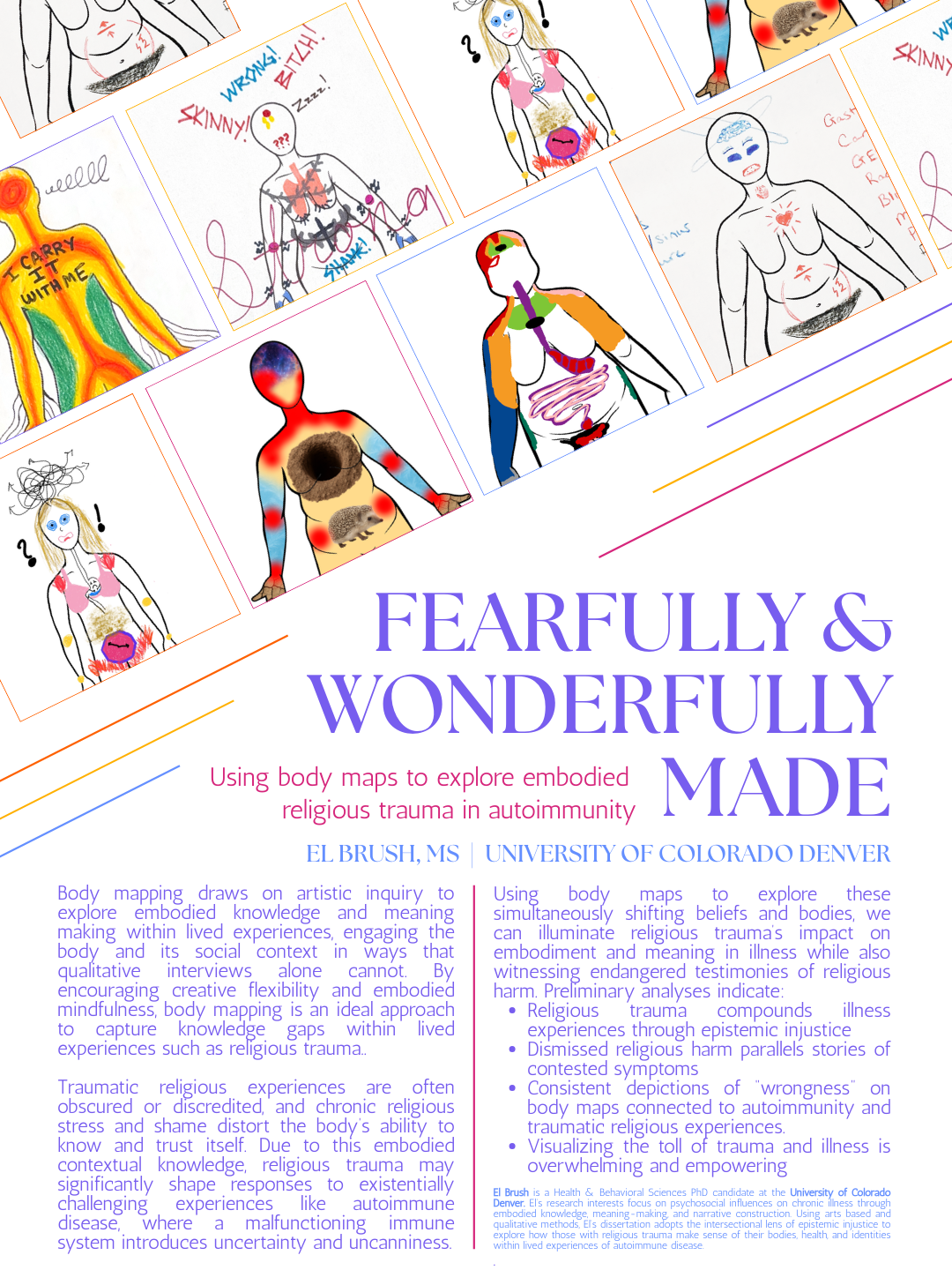
| Unstar/Unflag Submit a contribution to the 2026 Forum on Artistic Research: Submission #198 | El Brush | El | Brush | elizabeth.brush@ucdenver.edu | Fearfully and wonderfully made: Using body maps to explore embodied religious trauma in autoimmunity | Poster presentation | English | Body mapping draws on artistic inquiry to explore embodied knowledge and meaning making within lived experiences, engaging the body and its social context in ways that qualitative interviews alone cannot. In body maps, story-tellers visually represent their experiences with unique colors, symbols, and words drawn on a body outline, and co-constructed interpretive keys support data analysis. By encouraging creative flexibility and embodied mindfulness, body mapping is an ideal approach to capture knowledge gaps within lived experiences such as religious trauma. Traumatic religious experiences are often obscured or discredited, creating an epistemic vacuum around religious harm. Chronic religious stress and shame also embed themselves within the flesh, distorting the body’s ability to know and trust itself. Due to this embodied contextual knowledge, religious trauma may significantly shape responses to existentially challenging experiences like autoimmune disease, where a malfunctioning immune system introduces uncertainty and uncanniness. Using body maps to explore these simultaneously shifting beliefs and bodies, we can illuminate religious trauma’s impact on embodiment and meaning in illness while also witnessing endangered testimonies of religious harm. Beginning in January 2025, this ongoing research study includes eight story-tellers who created body maps following semi-structured interviews on religious and health histories. Preliminary analyses indicate religious trauma compounds illness experiences through epistemic injustice. Dismissed religious harm parallels stories of contested symptoms, and body maps consistently depict “wrongness” connected to autoimmunity and traumatic religious experiences. Visualizing the toll of trauma and illness overwhelmed many story-tellers, but acknowledging their experienced reality with art also increased bodily connection and acceptance, indicating the value of body maps as a research method and an embodied exercise. |
|
|
Previous presentations of this research were held at the Society for Applied Anthropology’s 2025 Annual Meeting for a panel titled Contested Illness: (Not) Suffering in Silence. This research was also presented at the 2025 American Anthropological Association Annual Meeting for a panel titled “Other” Worldly Methodologies: Queer and Crip Embodied Methods. | In addition to the poster for my presentation, printed zines will be provided including participant body maps and quotes from their spoken testimonios. This zine will also include a blank body outline for interested individuals to create their own body maps. Providing physical materials in conjunction with the poster presentation will hopefully add to the tangibility and embodied nature of this artistic research. | Poster will be approximately 36x42 inches in landscape orientation, supplemented by printed zine containing particpant body maps and testimonio quotes. | To protect participant anonymity, this study uses pseudonyms for participants unless requested otherwise, and any names, locations, or identifying details are removed from interview transcripts. Participants can pause or stop interviews at any point, because speaking about trauma should be a choice where participants can exercise agency. As of December 2024, the Colorado Multiple Institutional Review Board approved this study (COMIRB #24-2126), with a following amendment approved in July 2025. | Yes | El Brush | |||
| Unstar/Unflag Submit a contribution to the 2026 Forum on Artistic Research: Submission #194 | Anonymous | Fiona | Woods | woods.fiona@gmail.com | Epistemologies in a Minor Key: Theorizing Creative Artefacts as Knowledge Entities | Other format | English | This paper examines creative artefacts as knowledge entities in practice-centred research, exploring their ontological status and epistemological function within academia. It investigates how theoretical frameworks of material agency, performative research, embodied cognition and visual thinking enable analysis of these artefacts as knowledge carriers and epistemological interventions. The paper addresses a critical problem: the distinctive knowledge forms embedded in creative artefacts (material, visual, embodied, performative) communicate not only intellectually but also bodily, engaging kinaesthetic, spatial and sensory understanding; however, these epistemological languages are minoritized in academic discourse and policy. Within academia, the artefact must exist simultaneously in multiple registers - material, conceptual, social, temporal, performative - generating epistemological complexity that exceeds textual representation. While existing scholarship addresses methodological challenges in practice-based research, a gap remains in theorizing the creative artefact as a conjunction of minor epistemologies. The paper addresses this by positioning creative artefacts' ontological and epistemological frameworks as distinct conceptual languages, and framing practice-based knowledge systems as epistemologies in a minor key. The material examined emerges from the design of a postgraduate course, ‘The Creative Artefact in Practice-Centred Research.’ This course explores how creative artefacts can become legible to academic institutions while maintaining an apartness from interpretive structures, and how their knowledge modes, irreducible to textual forms, can be elucidated without epistemological distortion or aesthetic over-determination. The paper contributes to the argument that critical thinking necessarily includes multiple, incommensurable ways of knowing that cannot be subordinated to any single epistemological paradigm. |
|
|
I propose a standard paper presentation format, with slides. | As above. | No foreseen risks. | No | |||||
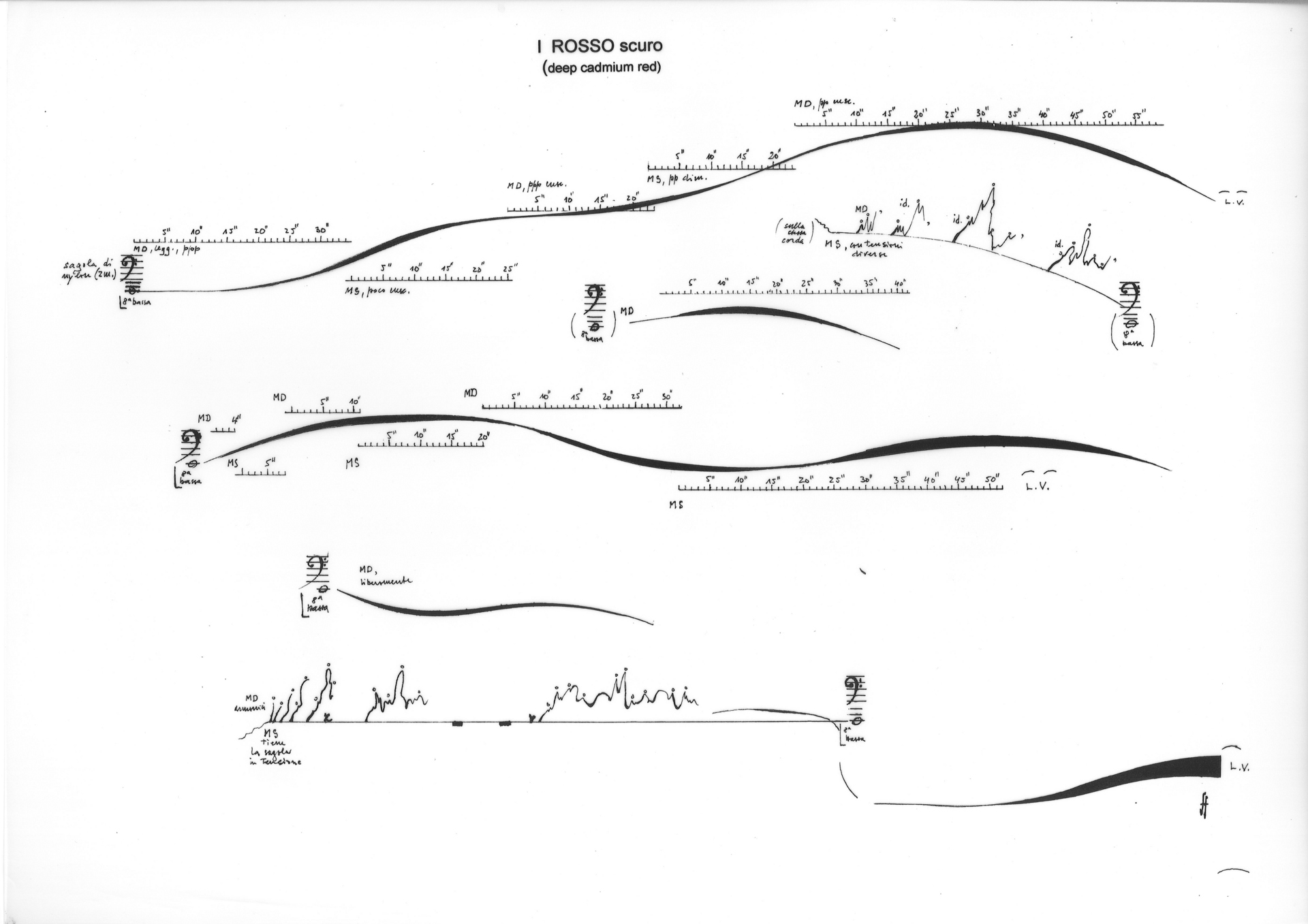
| Unstar/Unflag Submit a contribution to the 2026 Forum on Artistic Research: Submission #190 | Anonymous | Jacopo | Petrucci | jacopo.petrucci@icloud.com | Embodied music | Performance | English | The notion of gestural notation refers to those semiographic systems that encode physical action as a primary musical parameter, foregrounding the performer’s embodied engagement with the instrument. This approach responded to the growing exploration of extended techniques and experimental art practices that exceeded the descriptive capacity of traditional notation. Mario Bertoncini’s artistic research originates in the exploration of unconventional physical interactions with the piano, transforming the instrument into a resonant field of spatial actions. He expanded the concept of prepared piano as it was intended by John Cage: his preparations included nylon cords knotted between the lid and the strings, DC motors and many other self-made artifacts. In his works, gesture is not merely a means of sound production but becomes the primary carrier of a musical thought. The graphic layout of Bertoncini’s scores reveals how embodied experimentation is translated into visual form. In works like Cifre or Suite “colori” the concept of composition itself is questioned: composing, in a post-serial point of view, doesn’t imply anymore a process of structurization of pre-determined materials but, rather, it means shaping an innovative gesture. By examining the relationship between this experimental approach and Bertoncini’s usage of the magnetic tape as a type of fixed media, this paper wants to present my own ongoing research project as both a pianist and a composer on “piano-transduced feedback”. Moreover, this paper frames gestural notation as an example of an experimental artistic practice that foregrounds minoritized and potentially endangered forms of knowledge transmission. In an era of increasing digital uniformity, his work asserts the centrality of corporeality and material interaction. Gesture emerges as both a symbolic and practical device: a trace of research, a tool of resistance, and a medium through which musical knowledge is enacted, preserved, |
|
|
Link RC: https://www.researchcatalogue.net/shared/d9dd52f7e2eb4e37c42a96d29f9ccd05 The ideal setting for this performance requires the presence of a grand piano, which will be suitably prepared through the application of a system of multiple acoustic transducers provided by the performer. The installation of the devices is entirely non-invasive and does not compromise the instrument’s structural or acoustic integrity. In the absence of a piano, the performance may be realised using any large resonant surface of comparable dimensions, preferably made of solid wood. The acoustic outcome of the transduced-feedback system is inherently responsive to the characteristics of the performance space. In the piano version, the performance alternates between sections for piano and live electronics and sections dedicated exclusively to transduced feedback, with a total duration of approximately 30 minutes. In the alternative versionthe duration is reduced to approximately 15 minutes. |
Spatial: Any kind of performance space wider than 2m x 2m Technical: All electronic equipment is easily transportable and provided by the performer |
The installation of the devices is entirely non-invasive and does not compromise the instrument’s (ar any surface) structural or acoustic integrity. The performance doesn't collide with any ethical concern. |
Yes | |||||
| Unstar/Unflag Submit a contribution to the 2026 Forum on Artistic Research: Submission #183 | Anonymous | Martina | Raponi | martina.raponi@noiserr.xyz | Listening and Sounding at an Angle | Poster presentation | English | Sound is immersive and distributed. In distinction from visual stimuli, it works on us through a range of sensorial channels. In its rich vibrational embodiment it affords the construction of unique epistemologies (acoustemologies). What methods do we have with which to develop these ways of knowing through sound? What happens when our strategies fail us, when we encounter only silence? What can such moments of sound’s apparent failure teach us about relationality and coexistence? Our poster visualizes and sonifies our complementary projects: listening with other-than-human entities, and acknowledging Deaf sound practices within sonic discourses. We each find ourselves at an angle to norms of listening, because we meet silence, or an unheard. How can sonic practices test the elasticity of perceptual and conceptual frameworks, how can we create a critical vocabulary that acknowledges the language of ecosystems and sign languages as generative of new relational spaces of non-cochlear attunement? We investigate the value of vegetal silence for confounding listening assumptions. Plants do not communicate with sound that we can hear, and sound artists often resort to translating other data into sound. But what if we work instead with the interspecies silence as an active presence and allow it to be a paradoxical catalyst for more complex co-creation? Could it help us attune more deeply to an ethics of care, restraint, and multimodal responsiveness to ecological contexts? Deaf sonic practices challenge the presumed cochlearity of listening and sounding; they call for the widening of our analytical and sensorial tools to describe and appreciate the sonic knowledge that is produced outside the thresholds of audibility. How to account for sound practices that preferentially utilize language as a basic compositional tool? How can we redirect the “negative potential” of sound as “what is known by exclusion”, without reaffirfirming normative and audist epistemes? |
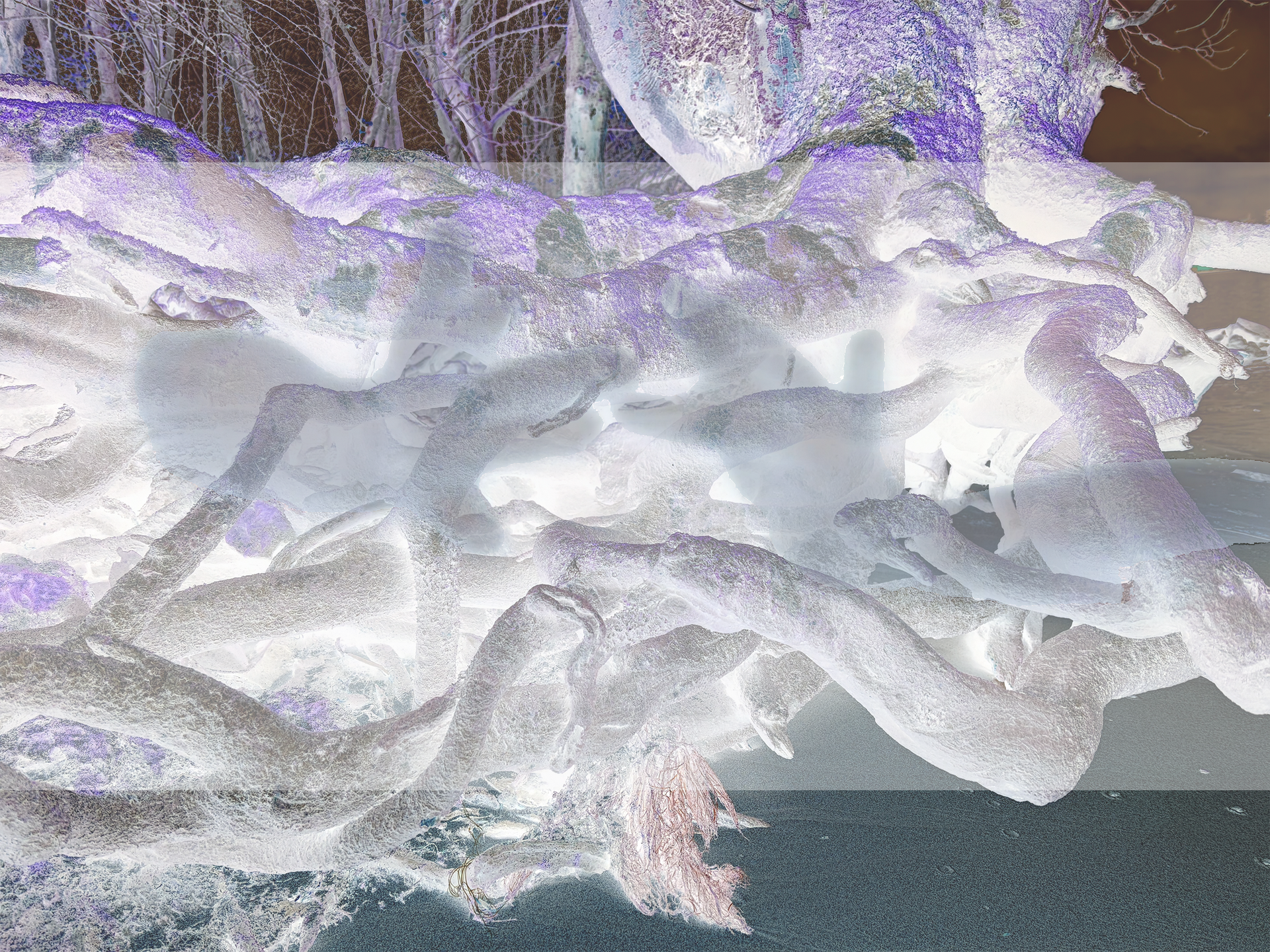
|
|
We are currently developing the content of the proposal into a poster visualization connecting our two lines of artistic research, alsongside the development of a lecture performance. | The poster will be accompanied by a soundscape that will be accessible via QR code, unless the opportunity of installing a small speaker is granted. | The poster will be A1 (around 60x85cm), unless there are specific guidelines that should be followed--in which case, we are happy to resize the print. |
Yes | |||||
| Unstar/Unflag Submit a contribution to the 2026 Forum on Artistic Research: Submission #181 | Anonymous | Alex | Arteaga | alex.arteaga@uniarts.fi | Sensing poetic sense-making. Exploring Catalan contemporary poetry through an artistic research dispositive | Experimental format | English | Although spoken by approximately 10 million people, Catalan is a minoritized language. Similarly, poetry is an endangered conceptual world. Catalan poetry, thus, is a threatened form of “knowing-in-connection” (De Jaegher 2019) that expresses a relationship of “precariousness” understood as mutual dependency (Di Paolo 2005, 2008). This proposal consists in developing a collective and experimental methodology in form of artistic research dispositives for investigating Catalan contemporary poetry. This methodology will be tested here in a experimental laboratory. The dispositive, conceived for non-Catalan speakers, invites to face a form of radical otherness by inhabiting a linguistic sphere whose meaning is not (directly) accessible. It offers conditions for exploring signlessness within a sign-based medium—as poetry does—by focusing on the emergence of sense rather than on consolidated meanings. It enables to collectively sense the flow of sense co-constituted by the interaction of sensitive listening bodies. The dispositive consists in an empty space in twilight, including only few loudspeakers, in which a score will be voiced to facilitate the performance of four varieties of action. First, the participant co-researchers will be invited to move in ways that establish and sustained patterns of “interactional coordination” and thus enable “participatory sense-making” (De Jaegher and Di Palo 2007). Then, they will be asked to listen to organized fragments of pre-recorded Catalan contemporary poetry, focussing on the aural-sensitive dimension. Thereafter, the co-researchers will be request to write spontaneously poetic fragments in the languages of their choice. These practices of writing will be understood as forms of “reflective notation” (Arteaga 2025) of the emerging sense, and, furthermore, as processes of collective sensitive translation. Then, the participants will be invited to share their poetic findings by voicing them. |
|
|
The proposed project has not been previously presented. | The exposition on the Research Catalogue linked to this proposal is accessible here: https://www.researchcatalogue.net/shared/d664b5fbfe80aeeb895a1694fbcca1e6 |
The proposal only requires an empty space in twilight and 2 to 4 loudspeakers (depending on the dimensions and acoustics of the space) for its realizations. | No potential risks or ethical concerns. | Yes | ||||
| Unstar/Unflag Submit a contribution to the 2026 Forum on Artistic Research: Submission #169 | Anonymous | Maarit | Magga | outimsm@samas.no | From the Earth I Have Come – Duodji Art Textile, Decolonisation and Language Revitalisation | Project presentation | Northern Sami | Artistic research in Sámi craft and design—duodji—opens perspectives on resilience, resistance, and renewal within the worlds of minoritized languages. In my artistic research practice, stories and language often form the point of departure for creative production. I interpret stories and oral traditions through duodji. Words do not live only in speech; they breathe through the work of the hands, in materials, in embodied knowledge, and in the land to which they are rooted. The connection and interdependence between the Sámi language and duodji form a woven structure in which history is not a relic of the past, but a continuously renewing, living culture. Oral tradition brings forth the community’s strategies for maintaining linguistic autonomy and cultural distinctiveness despite headwinds. The research draws on experimental art practices and methodologies of artistic research, through which Sámi craft and design unfold not only as processes of material making but also as forms of knowledge, world making, and quiet resistance. Each stitch, material, and instance of embodied knowledge carries within it the rhythm of language—not merely through names, but as a way of perceiving, sensing, and shaping relationality. In the research, language, craft, and culture emerge like a three part breathing pathway: none can live without the others. In this context, artistic research becomes a space of recovery, where even fragile linguistic threads can strengthen, and where making generates new possibilities for imagination. The research shows that material practices, linguistic meanings, and communal memories form a space and place where tradition can move, transform, and continue to breathe. I interpret duodji within its own context. I have developed a theoretical approach for interpreting duodji. The structure of the gákti opens a linguistic and cultural standpoint from which duodji can be examined, enabling a decolonial rethinking of design and craft research traditions. |
https://www.researchcatalogue.net/view/4209594/4209595 | https://www.researchcatalogue.net/view/4209594/4209595 |
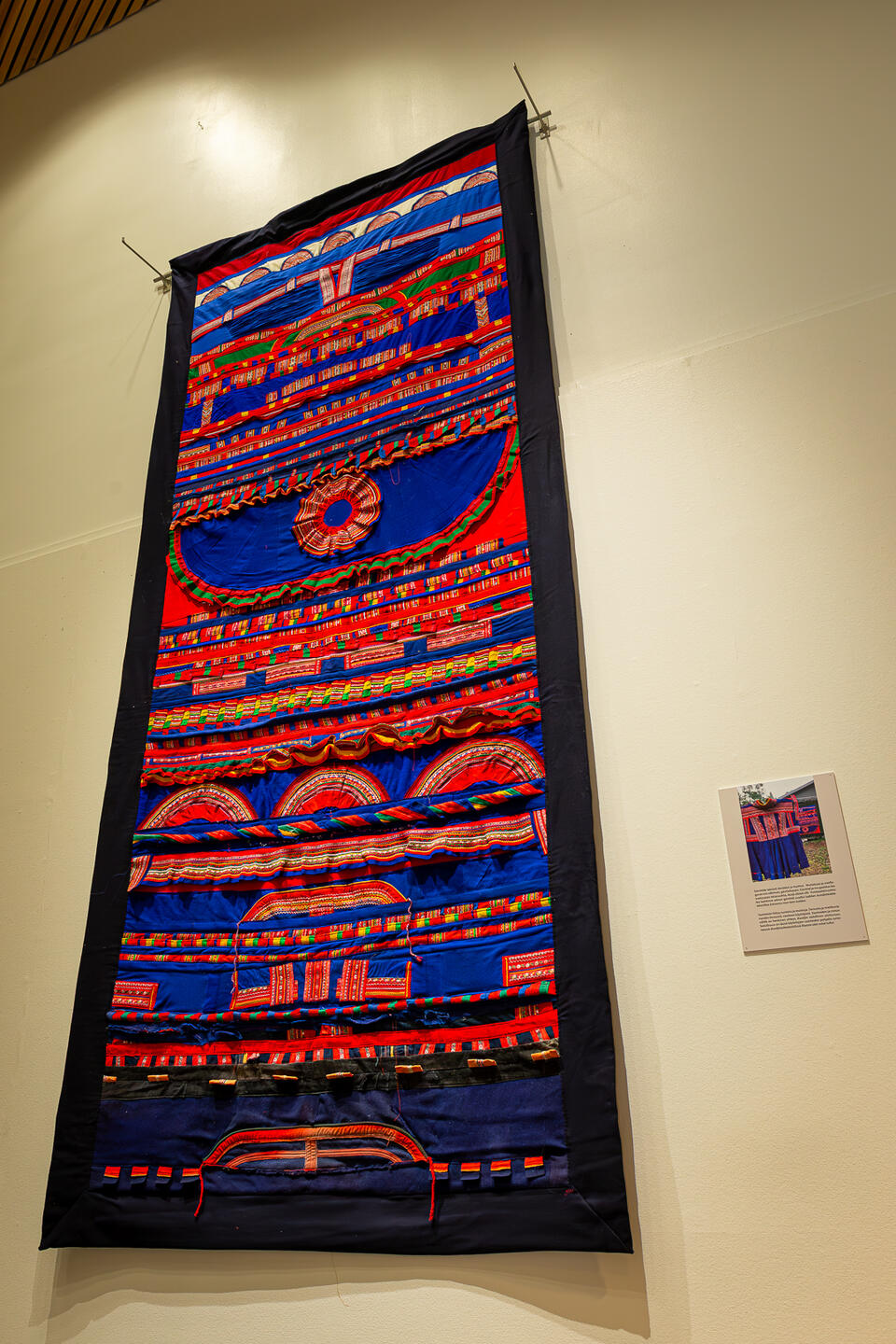
|
|
I could present my reflections theoretically, for example, as a PowerPoint presentation, while also bringing the art and crafts I have made. In that way, my way of understanding the world and interpreting it through duodji becomes evident. In practice, all I need is a computer to present the theoretical part. | Laptop | Ethical action and thinking involve maintaining balance and are grounded in key features of the worldview — such as the agency of nature, the continuity between generations, and the internal responsibilities within the community. The relationship with nature is both practical and symbolic: natural resources are not used wastefully or beyond one’s needs. Within the community, people act reciprocally. Traditional knowledge includes values, skills, and a worldview. As a people, we hold the right to | Yes | Maarit Magga | ||
| Unstar/Unflag Submit a contribution to the 2026 Forum on Artistic Research: Submission #168 | Anonymous | Jozef Eduard | Masarik | masarik@vsvu.sk | Qivittoq: Subjugated Knowledge in Colonialist Contexts | Project presentation | English | Research on Greenlandic mythological beings populating the remote and uninhabited areas of the country - qivittoq - leads to a deep dive into the dynamics between colonizers and the colonized. Through interviews with both Greenlanders and non-Greenlanders the research prepared its ground for further investigation through artistic means. Listening after centuries of silencing and then reporting on it turning it into a productive mechanism testifying to the repressed. Qivittoq as a topic surrounded by various kinds of silences is scrutinized through auto-ethnographic and visual means which converge in a vision of a constantly evolving and resisting phenomenon of qivittut. The Western rationalist perspective on qivittut (plural of qivittoq) risks categorizing encoutners with these beings as disruptions in bodily self-perception as a result of a prolonged exposure to either extreme or montonous conditions. It is, thus, using science to present qivittut as mere halluciantions. The Greenlandic narratives explain qivittut as former humans who escaped their community after a severe rupture (anger, shame, disagreement etc.) In isolation they turned into immortal beings endowed with superpowers. Encounters with them are to be avoided. The concept of qivittoq is a persisting element of Greenlandic culture, it is still being preserved in the consciousness of Greenlanders, although, going qivittoq is an extinct practice. With colonization it has been prohibited. However, the contemporary schisms in societies give rise to new qivittut not only from Greenland, populating the conutry's remote areas. In the context of current attempts to colonize Greenland qivittoq - "a state that constantly changes with time and place" in the words of the Greenlandic artist Jessie Kleemann - seems to take on new forms. |
https://www.researchcatalogue.net/view/4217777/4217778 | https://www.researchcatalogue.net/view/4217777/4217778 |
|
|
Yes | Jozef Eduard Masarik | |||||
| Unstar/Unflag Submit a contribution to the 2026 Forum on Artistic Research: Submission #167 | Anonymous | Francesca | Hawker | francesca.hawker@luca-arts.be | Talking Outside The Boundaries | Performance | English | A lecture performance from a peripheral ‘fan’ or ‘fantasist’ position, in relation to the live art scene centred in New York between the late 1950s and 1970s. I explore the creative potential of this orientation and the feelings of embarrassment, inferiority, and pleasure it generates. I work atop feminist strategies of re-contextualisation developed from within and after the aforementioned scene by figures like Yvonne Rainer, Kathy Acker, and Marie de Brugerolle. The form that defined this scene was the ‘Happening’, coined by Allen Kaprow, who also claimed, “the history of art is not in books but in gossip” (Post-Performance Future Method, 2024). Though presumably this statement was meant to valorise the ephemeral and anti-canonical, it is through gossip that the scene he helped found is now arguably the least ‘endangered conceptual world’ imaginable, thanks to the mythologisation of its leading figures. My gossip-heavy presentation highlights its ambiguous status: as a countercultural tactic and as a mechanism that maintains American anglophone cultural hegemony. I weave together my imperfect historical knowledge with anecdotes in which I try to consummate my yearning by travelling to the US. I draw on Argentinian artist Oscar Masotta’s text I Committed a Happening (1966), reflecting on his first-hand experiences of happenings, and his own produced in Argentina’s repressive political climate. I consider how Masotta and I each metabolise conflicting desires for another scene—mine from boredom, his from political necessity. My methodology stems from the ‘talk poems’ of David Antin, culturally adjacent to Kaprow, in which he discussed a range of subjects in front of live audiences, thereby bringing “a private occasion to a public place” (Talking at the Boundaries, 1976). Unlike Antin, I record the text and receive it via headphones. By inevitably revealing its artifice, I perform a re-animation of a ‘dead’ scene into a ‘living’ present through language. |
|
|
I was invited by Alicja Melzacka to interpret and perform her exhibition text for the exhibition HOLE, 8'30" (https://sb34.org/HOLE-8-30 ) by Steve Van den Bosch and Marc Behrens at SB34 Concorde, Brussels, 2025. In conversation with Alicja, I developed a performance framework in which I would recite parts of the text by reading a printout, and other parts I would appear to speak spontaneously, but with a recorded audio version feeding me lines via a Bluetooth headset. Following on from this performance, I will adapt this method to the conference setting and perform my lecture in a similar manner. |
The lecture performance would work in any spatial layout in which rows of chairs (or a standing audience) face a microphone + stand. I can supply my own headphones and would therefore only need access to a microphone, microphone stand and PA system. | No | ||||||
| Unstar/Unflag Submit a contribution to the 2026 Forum on Artistic Research: Submission #164 | Anonymous | Anna Carolina | Jensen | annacarolinajensen@gmail.com | City Is the Thing Bodies, Languages and Time Move Through: Concrete Structures of In-Betweenness | Project presentation | English | In my postdoctoral research project 'City Is the Thing Bodies and Time Move Through: Concrete Structures of In-Betweenness' I study the city of Narva, an Estonian post-industrial border town, partly together with a multilingual working group. I approach the city as a concrete yet fantasmatic structure that bodies, languages, ideologies, and temporalities move through. Drawing on hauntology as a methodological orientation and using it metaphorically, site-specific, collective artistic processes and events that engage memories, spatial layers, suppressed narratives, and non-verbal experience are used as a method. Languages are part of haunting: they are shapeshifting and embedded in power structures. The context reveals how languages move between dominance and marginality, and how English today functions as a global mediator and gatekeeper in artistic research. The experience of growing up in bilingual families, working in multilingual environments, forgetting one’s mother tongue and facing the conflicted language situation in Narva—where Russian remains the lived language while political pressure to Estonianize the region intensifies—reveals the shifting ontologies of language, identity, and the architectural structures that both shape and are shaped by them. “Minority” and “majority” are not fixed categories but relational positions that change as power relations and geopolitical contexts shift. Concept of in-betweenness remains central: how thinking and practicing take place in spaces that resist conceptual closure. Narva is geographically, temporally, and politically in-between: post-Soviet yet European, industrial yet post-industrial, nostalgic yet future-oriented. By creating collective research situations I propose in-betweenness as an epistemic and methodological condition for artistic research: a way of working with uncertainty, translation, and relationality in contexts where linguistic, spatial, and political structures intersect. |
https://www.researchcatalogue.net/view/4208754/4208755 | https://www.researchcatalogue.net/view/4208754/4208755 |
|
|
The research will be be presented at EKA Doctoral Conference in April, but the presentation will concentrate on the development from my doctoral thesis to the postdoctoral research. | In case the project presentation is not possible, a poster presentation could also be an option, and I am also open for other alternative suggestions! | If possible, I'll probably make a PP presentation, but this is not necessary | Yes | Anna Carolina Jensen | ||
| Unstar/Unflag Submit a contribution to the 2026 Forum on Artistic Research: Submission #163 | Anonymous | Vytautas | Michelkevicius | vytautas.michelkevicius@vda.lt | Sauna as Epistemic Device: heated discussions and circulation of minoritised knowledges, languages, steam and sweat | Experimental format | English | I propose to approach the sauna not as wellness, but as an epistemic device — a space where knowledge is enacted rather than communicated. Alongside my work in artistic research as a researcher, educator, practitioner, and administrator, I practice as a certified sauna master trained at the Lithuanian Bath Academy. I propose small-group sauna rituals as situations of knowledge production. Within intensified sensory conditions — heat, breath, rhythm, bodily proximity — language gradually loses its regulatory authority. Meaning emerges through embodied negotiation, attention, and affective attunement. Rather than speaking about knowledge, participants inhabit its formation. The sauna becomes a temporary epistemic infrastructure exposing the limits of discursive regimes dominant in academia. It asks whether artistic research can exist as an event rather than representation, and whether knowledge may circulate without stabilising into language (5G metaphor). The proposal also engages traditional knowledge embedded in bathing cultures across Northeastern Europe, where collective sauna practices remain alive from Lithuania to Finland and from Eastern Poland to Ukraine. In much of the Western world, such traditions have largely vanished, historically displaced by religious and scientific rationalities. Situated conceptually between Lithuania and Ireland — two small-language cultures marked by histories of linguistic marginalisation and asymmetrical power relations — the proposal reflects on the fragility and politics of language itself. Against this backdrop, the sauna ritual operates as a micro-political experiment: a setting in which minoritised, embodied, and often delegitimised forms of knowledge can surface without being immediately captured by explanatory frameworks. The sauna thus operates as a laboratory for epistemic disorientation, where knowledge appears as process: circulating, dissolving, reconfiguring — contingent, sensory, and shared. |
|
|
One of the sauna sessions in the art conference iterations were made in umede.lt post-media art festival in 2025. However, it was tested only as a format but not a container of artistic research project. Some of the starting thoughts were published in my recent book “Songs of the Cuckoo. On Knowledge, Practice and Impact of Artistic Research” (with Aldis Gedutis, 2025, VDA Press). This proposal is going to be premiere of its kind. |
I have organized a dozen artistic and academic conferences and symposia and I have learned that during them there is always energy to exchange informally on conference topics but at the same time the programme is so dense that we stay locked inside conference venues and loose ability to interact. During some of them I have already tested my method and it had very impressive outcomes. You need a special dedication to dare to escape the “main conference programme” (also due to FOMO) and gather in sauna to engage in deep and heated informal discussion on conflicting questions. I will also use old technique of whisking (moving hot steam and massaging with branches of trees and herbal bouquets). I have gathered herbs since childhood, influenced by my mother, a herbal pharmacist, and integrate these practices into sauna rituals. The sessions are conceived as sites where suppressed, vernacular, and experiential knowledges may surface without immediate translation into institutional discourse. | I have come across Powersaunas https://powersaunas.ie on Silverstand beach which is around 6.5 km walk from the Galway university. They offer 55 min sauna sessions and we can accommodate up to 12 persons in one session for accessible price (17 Euros). I would love to extend this session twice as long and have 110 min sessions for discussions on conference topics. I will forage alone or with participants needed herbs. These sessions could be scheduled both as evening or parallel programme. | People will sign in with their own will, knowing that event will happen inside sauna and they have to wear either towels or bathing suites. Everytime before sauna sessions I ask if people have any difficulties staying in hot environments and give advice how to do it safely. | Yes | Vytautas Michelkevicius | |||
| Unstar/Unflag Submit a contribution to the 2026 Forum on Artistic Research: Submission #162 | Anonymous | Nada | Ní Chuirrín | n.nichuirrin@gmail.com | Gaeltacht Epistemologies: Exploring the Knowing of Dance at the Intersection of Embodiment and Endangered Language Practice | Project presentation | English | This paper centres on the performing body as an interpretative tool, utilising traditional dance and music performance to explore the intricate symbiosis between embodiment and musicality. Responding to Downey’s theorisation of listening as a whole-body act, in which movement is considered a crucial element of hearing music (2002: 498-499), and drawing on a range of interdisciplinary works across Artistic Research, Oral Theory, Ethnochoreology, and Choreomusicology, this performance-based theorisation will problematise the perceived dichotomy between music and dance, purposefully blurring conceptual boundaries between the two, and allowing instead a renewed engagement in the multifaceted meanings inherent in the Irish-language concept of 'ceol' for Gaeltacht communities of practice. In combining ethnographic and Artistic Research methods, this reflective performance will combine theoretical analysis with a focus on performance practices and socio-cultural discourse (through the medium of Irish) that surround traditional sean-nós dance in the Connemara Gaeltacht region. Sean-nós dance practice is further conceptualised as 'composition in performance' (Lord 1960) that draws on embodied formulaic structures in response to live music performance, and which recombine and regenerate to create a distinctive sense of style, either individual or regional, or a blend of both. Through a combination of theory and practice, this paper will therefore provide an insight into the dancer’s embodied understanding of music and composition, from within the aesthetic conceptual world of Connemara sean-nós dance. |
https://www.researchcatalogue.net/view/4208148/4208149 | https://www.researchcatalogue.net/view/4208148/4208149 |
|
|
Ní Chuirrín, N., 2025. Blurring Boundaries: A Performance-based Exploration of Embodiment and Musicality in Sean-nós dance. Performance paper, inaugural Danijela Kulezic-Wilson Memorial Postgraduate Symposium, Department of Music, UCC. Ní Shíocháin, T. and Ní Chuirrín, N.,2025. Dance Dreaming and Musical Techniques of Self: a collaborative exploration of embodiment, musicality, and selfhood in Irish traditional music, song and dance. Research seminar, Drama and Theatre Studies, UG. |
This presentation will comprise a paper presentation with live sean-nós dance performance intertwined throughout.This paper will be carried out bilingually, through the medium of Gaeilge (Irish) and English. Note: My proposed submission will take the form of a project presentation, however this work can be adapted to a live performance format should the conference committee deem such a format to be more suitable. |
Equipment: -Dance space/dance floor -Access to monitor and projector - Chair for potential accompanying musician (to be confirmed). |
Every effort has been made to ensure that this research is carried out to the highest ethical standards. The findings I intend to share as part of this project presentation have stemmed from my current doctoral research at Maynooth University, for which I have received ethical approval from Maynooth University Social Research Ethics committee. Consent has been obtained by all research participants and permission has been sought to share any fieldwork excerpts. | Yes | ||
| Unstar/Unflag Submit a contribution to the 2026 Forum on Artistic Research: Submission #161 | Alan Magee | Alan | Magee | alanmagee@gmail.com | Process Art as Methodological Innovation: From University Studios to Digital Practice | Project presentation | English | This article examines Process Art - an artistic movement that emerged from United States university art programs in the 1960s - as a viable methodological framework for contemporary practice-based research. While Process Art is typically understood as a historical movement characterised by its emphasis on making over outcome, this study argues that its pedagogical foundations and core principles position it as a rigorous, autonomous arts-based research methodology. Drawing on the movement's key characteristics - foregrounding labour, valuing process over product, non-skilled execution, and treating the body as both subject and object - the article demonstrates how Process Art methods evolved within educational contexts that prioritised theory-practice integration and systematic inquiry. Through analysis of seminal works by Robert Morris, Eva Hesse, Richard Serra, and contemporary practitioner Elizabeth Price, this research establishes Process Art's capacity to address questions of artistic labour, embodied knowledge, and the visibility of making processes. The article contributes to ongoing discussions about practice-based research methodologies by proposing that Process Art offers an internally generated framework - born within art education rather than borrowed from other disciplines - uniquely suited to investigating the corporeal dimensions of artistic production. This has particular potential for understanding digital sculpture, where computational smoothness threatens to efface indexical traces of the artist's hand. | https://www.researchcatalogue.net/view/4207787/4207786 | https://www.researchcatalogue.net/view/4207787/4207786 |
|
|
Exhibitions: • Ode to the soft centre, Courthouse Gallery, Ennistymon (2021). • Among the dregs of daily toil, LAB Gallery, Dublin (2020). Panel Discussion: ‘The Future of Work’ featuring Dr Dave Beech, Dr Barbara Cueto, Dr Rachel O'Dwyer, Dr. Glenn Loughran & Dr Alan Magee (2020) Publications: • Doctoral thesis: Agency, Index & Process: Investigating the role of the artist's body in digital sculpture production (TU Dublin, 2025). Online: Arrow@TU Dublin |
Structure (20 min): Endangered Knowledge in Digital Practice (3 min) • Computational smoothness as a threat to embodied knowing • Digital materialisation - effacing gesture, irregularity, trace • Why Process Art methodology matters today Process Art's Historical Emergence (7 min) • 1960s US university art education transformation • Artist-as-researcher: autonomy from co-opted methodologies • Six key characteristics as a methodological framework Case Studies (6 min) • Robert Morris's Box with the Sound of Its Own Making: foregrounding labour • Eva Hesse's serial work: systematic, body-centred procedures • Elizabeth Price's boulder & sidekick: ongoing doctoral research demonstrating methodology Summation & Contemporary Relevance (4 min) • Digital sculpture's effacement challenges • Process Art as counter-model Visual documentation throughout, including historical works, Price's ongoing practice, and theoretical frameworks. 10-minute Q&A follows |
No special requirements | No significant risks or ethical concerns | Yes | Alan Magee | |
| Unstar/Unflag Submit a contribution to the 2026 Forum on Artistic Research: Submission #152 | Saoirse Higgins | Saoirse | Higgins | higginss@staff.ncad.ie | Where we are is here...(after Orkney filmmaker and poet Margaret Tait) | Project presentation | English | This project explores the human relationship with glaciers from the perspective of a non-expert like myself. Glaciers are macro scale icey breathing entities retreating, contracting and disappearing, together with their ‘glacio-script’ language and tools that describe and map them. The project is viewed through my long-term collaboration and interactions with renowned Icelandic glaciologist Oddur Sigurðsson and his extensive 3D stereoscopic slide collection. Oddur mapped all the glaciers in Iceland from a plane at 10,000ft and developed a large collection of 3D stereoscopic images taken from the 1960s to 2000s. I have been collaborating with Oddur at the Icelandic Meteorological Office since 2016 throughout my creative practice on the ‘Papay Probe’ project, where Orkney islanders sent a glacier testing probe to the Myrdalsjökull glacier: https://www.saoirsehiggins.org/art-projects/papayprobe, and my documentation film work with the Icelandic Glaciological Society - scientists and volunteers taking care of glacier monitoring with annual field expeditions taking core samples of ice and snow. According to Oddur, Iceland acts as a smaller-scale benchmark of future changes that will take place in larger Arctic-Antarctic ice. My research in this project investigates this inter-scalar positioning and benchmarking, the ‘overview’ image looking down to earth from distant satellites, the stereoscopic photo taken from a plane, and the ‘ground truthing’ view up close on the land with these different narratives echo-locating with each other. The technological viewpoint presented by experts minus people, versus what we see, feel, and touch with our senses. It is particularly focused on community-expert-non-experts, who understand and build knowledge and ‘data’ over time relating to the environment surrounding them. | https://www.researchcatalogue.net/view/4203970/4203971 | https://www.researchcatalogue.net/view/4203970/4203971 |
|
|
This presentation shows a new iteration of the project showing the most recent creative developments. An earlier work in progress presentation was discussed with other projects in the Nordic Summer University Circle 10 in Helsinki 2025 and in Gothenburg. | I will show a slide presentation with images and text, together with excerpts from this year's fieldwork in the form of audio and film. I will invite Oddur to either appear live on Zoom or record a short conversation with me for this presentation. If this is not possible, I can show some of our dialogue work from this year. | preferably a projector and a good sound system. | nothing at this stage. | Yes | Saoirse Higgins | |
| Unstar/Unflag Submit a contribution to the 2026 Forum on Artistic Research: Submission #151 | Anonymous | Savas | Boyraz | savasboyraz@gmail.com | BLOCK LETTERS and Cursive Mountains: State-Writing, Sonic Mimesis, and the Virtual Topographies of the Dengbêj | Project presentation | English | “If we call freedom not only the capacity to escape power but also and especially the capacity to subjugate no one, then freedom can exist only outside language.” Roland Barthes Abstract: This artistic research project investigates the relationship between landscape, language, and power in Northern Kurdistan through a practice-based inquiry into what I term state-writing—the convergence of sovereign law and spatial inscription. Beginning with the colossal nationalist slogans carved into Kurdish mountains after the 1980 military coup, the research examines how writing operates as a territorial technology that fixes language onto land. In contrast, the Kurdish Dengbêj tradition offers a sonic mode of inhabiting territory that resists inscription. Working with archival recordings of Dengbêj performances, I focus on non-verbal vocal ornamentations that echo avian calls and landscape acoustics. Through spectrographic analysis and 3D modelling, these sonic traces are translated into virtual terrains, generating topographies sculpted by frequency, amplitude, and duration. This process—conceived as a deliberate act of mistranslation—proposes an alternative epistemological pathway for territorialization beyond writing and statehood. Rather than overwriting the mountain slogans, the project explores how mountains can be reimagined through resonance. The resulting virtual landscapes articulate a fluid, non-cartographic territory: a moving sphere of sound that cannot be occupied, fixed, or policed. Keywords: Sonic Visualization, State-Writing, Dengbêj, Virtual Topography, Orality, Counter-Territorialization, Sonic Mimesis, Acoustic Archaeology, Rancière, Epistemic Violence. |
https://www.researchcatalogue.net/shared/fde231a4eaf15c690bf3d5017193c845 | https://www.researchcatalogue.net/shared/fde231a4eaf15c690bf3d5017193c845 |
|
|
https://carrier-bag.net/verbal-bombs-and-sonic-memory-of-the-mountains/ https://generativemedia.net/event/dronomation/ https://events.ceu.edu/2023-05-30/cems-graduate-conference-humans-and-nature-mediterranean-landscape |
Yes | Savas Boyraz | ||||
| Unstar/Unflag Submit a contribution to the 2026 Forum on Artistic Research: Submission #148 | Darshana Devarajan | Darshana | Devarajan | darshana.devarajan@gmail.com | (Re)Searching Rupture and Repair: An Artistic Inquiry on Decolonial Education | Workshop | English | French filmmaker and essayist, Georges Perec (1973), argues that the media often frames strikes or protests as extraordinary events. However, Perec reminds us that the conditions that bring us to challenge the status quo are intolerable 24 hours a day, 7 days a week. He calls on us to pay attention to the habitual, everyday occurrences—the stuff we believe is of no consequence. Once we pay attention to our quotidian world, we realize that the impact of patriarchal, imperial, and neoliberal systems dictates what languages we speak and how we speak them; what food we eat and how we procure it; and what clothes we wear and how they are made. Māori scholar, Linda Tuhiwai Smith (2021), highlights how schools reproduce hierarchized knowledge for uncritical consumption, and how any attempt to “indigenize” colonial academic practices have been fraught with major struggles over what counted as knowledge, as literature, and as research. Given this history and impact of colonial powers, it becomes important for us to examine the scholarly world we occupy through non-traditional methods. In this roundtable presentation, I practice artistic inquiry to make the impact of colonialism on our everyday lives both seeable and sayable. Inspired by Jim Melchert’s (2004) Feathers of the Pheonix, where he drops prefabricated tiles and reassembles them, I explore the impact of rupture on the clay body. I expose unfired clay and fired ceramic tiles to the elements like fire, water, and air, and materials like porcelain and sand to posit how our lives are constantly impacted by systemic injustices. Keeping with the idea of the phoenix—something rises from the destruction—these ruptured ceramic pieces not only display the ever-lasting impact of rupture, but also how the clay body heals itself after the damage. This artistic inquiry asks us to pause, process, and take in the destruction we live with every day, reminding us that the resistance against oppression is on the horizon. |
|
|
This research was presented as a part of a solo ceramics exhibition in Michigan State University, U.S.A. It was also a part of my public dissertation defense. | I submitted to the roundtable because I thought it was appropriate for works-in-progress, since this work has not been published anywhere yet. If the workshop is a more appropriate format, I would appreciate if I was considered for that instead. https://www.researchcatalogue.net/view/4207019/4207020 |
Video and audio display to share videos of the ceramic experiments. Table to display ceramic tiles. | N/A | Yes | Darshana Devarajan | |||
| Unstar/Unflag Submit a contribution to the 2026 Forum on Artistic Research: Submission #147 | ehill | Erin | Hill | erin.lamontagne@pm.me | Deep Gazing | Performance | English | The Sisters of the Celestial Order of Nephology is an interdisciplinary performance project by Horizon Factory (Erin Hill and Nina Vroemen). Formed in 2019 during a dance residency at Studio 303 (Montreal), the project takes the shape of a fictive religious order: two blue-cloaked atmospheric nuns devoted to the study of clouds and the ephemeral narratives they generate. Through this speculative framework, the Sisters engage with uncertainty, attunement, and ecological interdependence. Central to the project are the practices of Deep Gazing and Scrying. Deep Gazing, a term coined by the Sisters and inspired by Pauline Oliveros’ Deep Listening, invites participants to attune to their environments through attention to the sky, bridging cloud identification and forecasting with embodied, sensorial, and intuitive modes of knowing. Complementing this, the Sisters practice Scrying—the art of prophesying through gazing—with the sky, identifying messages and meanings in the clouds beyond the art of forecasting. A storm does not end, but continues to move, to shift, and influence other systems. Together, these practices treat weather as a relational network, offering tools for cultivating intimate, personal connections to climate, community, and place. Working across performance, installation, workshops, and writing, Deep Gazing and Scrying are both artistic and pedagogical tools for thinking through life within complex, interconnected systems. The 45 minute performance takes place outdoors beneath the celestial sphere. The Sisters will have scouted a path with specific viewpoints, and will guide audience members between the chosen landmarks. The performance is accompanied by an audio piece (English, French) and the audience listen through headphones, allowing audience to move or lay down, stay close or stray far from the performers. The experience ends with a collective Scrying practice and participants are invited to share what they've gleaned from the clouds. |
|
|
Deep Gazing has been presented in Canada (Ontario, Quebec, New Brunswick), France and Australia in both its performance and exhibition formats. We have also published a book and been published in Bodies of Sound: Becoming a Feminist Ear (Silver Press 2024). We will present the performance as usual, responding to the specific landscape. We see this as an opportunity to present within an artistic research context, receive feedback and create links with people sharing similar research interests. | In 2024, we published Deep Gazing, a book of embodied scores and meteorological texts. We will bring a couple copies for people to look at after the performance and during the forum. | We require an outdoor space with a view of the sky. We will take a moment ourselves to do location scouting upon arrival. In the past, parks or beaches have been good locations for the performance. Participants are requested to bring headphones and to download or stream the audio track from a device such as a smartphone. |
One risk might be accessibility: people need headphones and a listening device. However, these days, most people have these things on hand. It is possible to have a couple people listen together on a bluetooth speaker or use the speaker on their phone. However, this is not ideal for the experience or fellow participants because of the sound leakage. This IS a good option for young children, if parents do not want them to listen through headphones. | Yes | Erin Hill | |||
| Unstar/Unflag Submit a contribution to the 2026 Forum on Artistic Research: Submission #146 | ehill | Erin | Hill | erin.lamontagne@pm.me | Scoring the Ineffable | Project presentation | English | I am a second-year PhD student in Interdisciplinary Humanities at Concordia University (CA), researching nonverbal communication and consent in interspecies relationships, with particular attention to the co-languages that emerge between humans and nonhuman animals. My work investigates the relational and material poetics of the ineffable—forms of communication that exceed language yet shape everyday experience and bind humans to the more-than-human world. Animal studies and dance studies are two fields that hold expertise in forms of relationality and non-verbal expression. My research will bring these fields together, with the aim of contributing methodologies towards more responsible forms of communication between humans and nonhumans, including whom and what is listened to as a valid source of knowledge. With this presentation, I will explore a key precursor to my doctoral research: 'Telepathic Landscapes', a two-person visualization score exploring the embodied, sensorial aspects of telepathy. Initially conceived as a choreographic tool, the practice shifted my focus towards the qualities of relation generated between participants. How is communication occurring within the oblique territories of the unknowable? What happens in the field that speaks? From this field of research I became drawn to horsemanship as a practice in which the application of telepathic communication is a given. Drawing on over a decade of experience in contemporary dance and somatic practice, I am developing relational scores based on what emerges in my field work with horses. Through these scores I am interested in the power dynamics at play and I wonder how research in non-verbal forms of communication might shift relational dynamics towards care and consent oriented relationships. | https://www.researchcatalogue.net/view/4212868/4219299 | https://www.researchcatalogue.net/view/4212868/4219299 |
|
|
This will be my first presentation of the project | n/a | I would use audiovisual support such as a projection screen and PA system, for playing documentation of the practices described in my presentation. | no | No | ||
| Unstar/Unflag Submit a contribution to the 2026 Forum on Artistic Research: Submission #145 | ehill | Erin | Hill | erin.lamontagne@pm.me | Sunrise Commitment | Workshop | English | From April 17 2017 to April 16 2018 I told myself I would watch the sun rise every day; I called this decision Sunrise Commitment. For one year I woke up an hour before the sun was set to cross the horizon. During this hour I recorded my heart beat, photographed the horizon's shifting light and wrote on the state of my body and the state of the sky. Out of this practice came the book 'O' and the performance 'Sunrise Commitment', both presented in the context of my Masters at DAS Theatre (formerly DasArts, NL). 'O' is a self-published book and brings together the daily sunrise texts I wrote between 2017 and 2018, alongside lists of what I came to call Real Life Magic. Real Life Magic is a way of looking at the world and noticing those things that strike awe. Whether that awe appears out of a gap of understanding, from a moment of incomprehensibility, or a feeling of awe despite fully understanding what you're seeing. The lists of Real Life Magic were written both by myself and with my Master's colleagues through collective dreaming sessions that I facilitated. For the International Forum on Artistic Research I propose to share my sunrise writing practice as a workshop. The 90 minute workshop will begin 45 minutes before the sun is set to cross the horizon and will end with a Real Life Magic collective dreaming session. With participants, we will create a collective chapbook that archives the state of our bodies and of the Galway sky on one morning between the 23rd and 26th of June 2026. Sunrise Commitment negotiates the themes of 'making seable and sayable' & 'exploring the ineffable'. It is a practice of looking and looking again at the same horizon--looking again at the same to notice transitions, gradients and slippage. What comes through is sensuous indeterminacy, through sleepy yet granular attention ones internal sensations and external experience simultaneously. |
|
|
I have shared Real Life Magic as a collective dreaming workshop in the Netherlands at DAS Theatre (2017, 2018), Festival for Live Arts Amsterdam (FLAM, 2019) and 4Bid Gallery (NL, 2019). However, I have never combined that workshop with the sunrise writing practice, so this would be a first for the International Forum on Artistic Research. | This will be a very early workshop. The sun is set to rise at 5:08am in Galway on June 23rd. The workshop begins 15-20 minutes before sunrise, so around 4:25am. It might be quite cold outside, so there are two options: we do the workshop in an indoor space with a window that provides a good view of the horizon, or we do the workshop outdoors and request participants to dress warmly and provide cushions and blankets. In either case, providing tea, coffee and biscuits would be cozy. | One accessibility issue is that this is a very early workshop and some people will need to sleep. When I have presented the dance performance 'Sunrise Commitment', this is always a factor. However, it is also hard to anticipate who will join and who will sleep, and we usually have a pretty good turnout. | No | |||||
| Unstar/Unflag Submit a contribution to the 2026 Forum on Artistic Research: Submission #143 | Cathy Paton | Cathy | Paton | cathyjoypaton@gmail.com | Art-Shaped Analysis: Visual and Improvisational Practices as Sites of Inquiry | Experimental format | English | This project explores how qualitative analysis can be shaped through artistic practice, foregrounding visual and improvisational approaches as sites where knowledge is generated rather than represented. Emerging from a collaborative study with professional artists, the project investigates how artistic ways of knowing—often embodied, tacit, relational, and resistant to full verbalisation—can be sustained within research contexts without being flattened for clarity. The inquiry unfolded through two intertwined analytic practices. One researcher engaged in improvisational listening and reflexive response, approaching analysis as an extension of the research encounter through attunement to tone, rhythm, affect, and relational shifts. In parallel, a visual artist-researcher developed image-based analytic works in response to the artists’ narratives. These visual works functioned not as illustrations of findings, but as analytic events—material processes through which relationships, tensions, and conceptual movements became perceptible. Rather than extracting themes, the project remained in relation with uncertainty, allowing meaning to emerge through making, sensing, and collaborative attention. The resulting visual works hold endangered conceptual worlds—forms of knowledge that resist immediate legibility yet carry epistemic force through material, affective, and relational engagement. The session will centre these visual analytic works, accompanied by improvisational exercises that draw participants into direct experience of attunement, relational attention, and in-the-moment responsiveness as epistemic orientations. This project contributes to artistic research by demonstrating how art-shaped analysis can sustain complexity, protect minoritised ways of knowing, and resist extractive logics in qualitative research. |
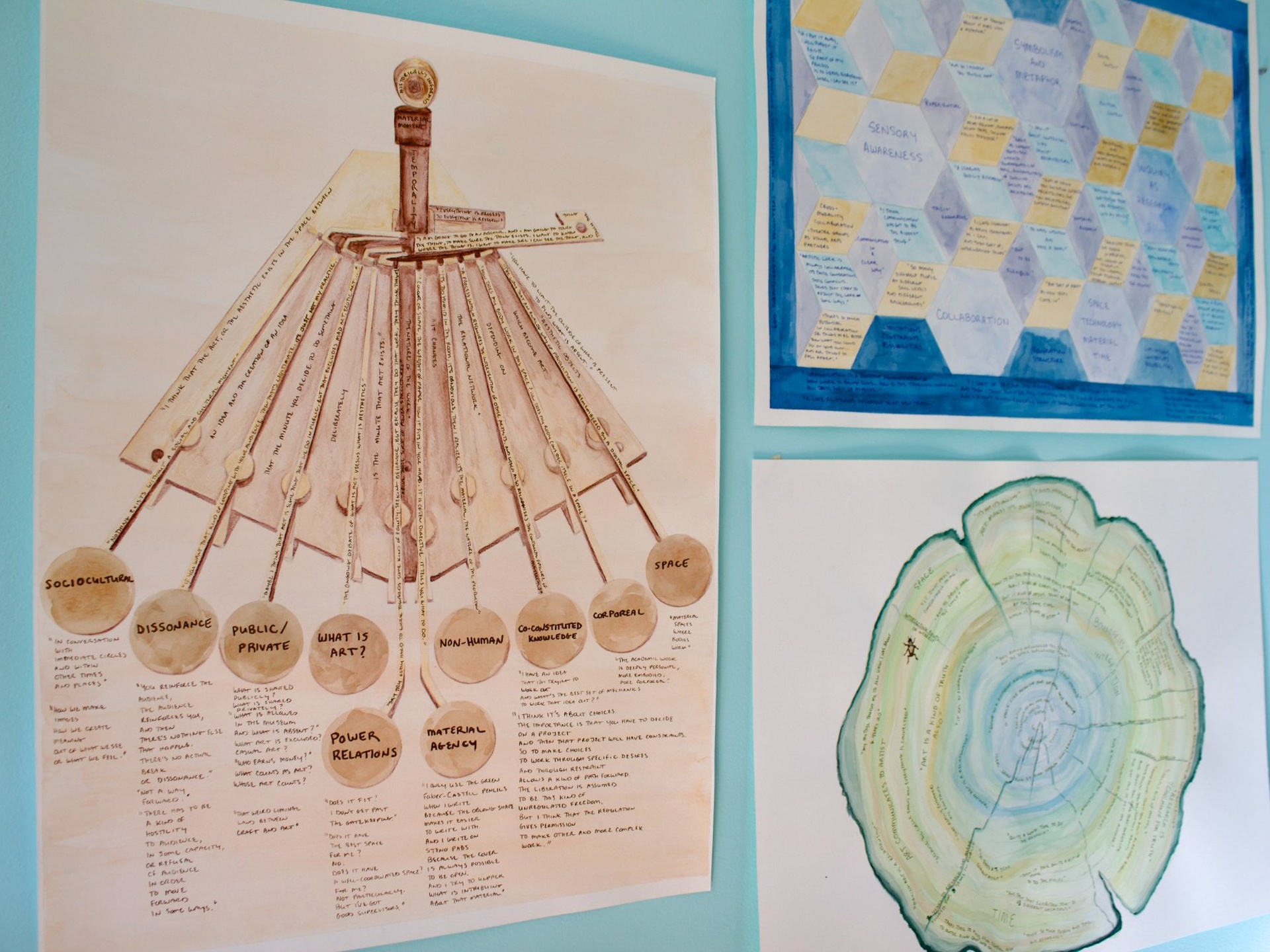
|
|
Portions of this research have informed ongoing manuscript development. The visual and improvisational analytic practices presented here have not previously been presented in this form at a conference. An image from this project was displayed at the Art of Research Competition at McMaster University (June 2025), a showcase of creative research methods. A graphic illustration developed from the research analysis has been shared informally outside of conference contexts. | This laboratory session brings together physical art display, discussion of what research is and can be, and participatory improvisational experience. Three large-format watercolour analytic works will be displayed on the wall for close, in-person viewing — shared as primary research material rather than illustrations. The session will move through: an opening framing of the research and its analytic practices; time for participants to engage directly with the visual works; an improvisational exercise involving standing, gentle movement, and structured reflection to attune participants to in-the-moment responsiveness and relational attention; and open discussion. The exercise is invitational and requires no prior experience. | I will display three large-format watercolour works (approx. 1m × 70cm each) on the wall for close viewing; works will be mounted on backing boards. Wall space at eye level for three works is required; I will confirm mounting options with organizers closer to the date. The session includes an improvisational exercise involving standing and gentle movement; open floor space for participants is needed. Room size and participant numbers will inform the exercise design. No screens needed. | This session includes no sensitive personal data. Research participants consented to their participation in the study; the visual artist-researcher has consented to the display and discussion of her works. The improvisational exercise is low-risk, non-performative, with gentle and minimal physical movement; participants may opt out without explanation. | Yes | Cathy Paton | |||
| Unstar/Unflag Submit a contribution to the 2026 Forum on Artistic Research: Submission #139 | Anonymous | Matt | Parker | matt.parker@nottingham.edu.cn | Listening with crystals | Project presentation | English | This artistic research project revisits the history and material life of Rochelle salt, a synthetic crystal first produced in seventeenth-century La Rochelle from wine lees and salt-marsh residues, and reanimates it through contemporary practice. Born under siege conditions during the French Reformation, Rochelle salt travelled from persecuted Huguenot apothecaries into colonial trade routes, later becoming one of the most powerful early piezoelectric materials used in sonar and crystal microphones. Today, it survives largely as a forgotten precursor, replaced by more stable industrial ceramics. Through laboratory crystal-growing, archival research, and experimental sound practice, I treat Rochelle salt as an endangered conceptual world: a minor material language embedded within dominant technological histories. Growing crystals by hand using early twentieth-century methods, I engage transduction not only as a technical principle—the conversion of pressure into signal—but as an epistemic practice. The crystal becomes both sensor and teacher, revealing how landscapes, persecution, trade, and war sediment into the infrastructures of listening. Against the homogenising tendencies of platform capitalism and algorithmic optimisation, this project foregrounds fragile, situated material knowledges. It asks what forms of innovation emerge when we attend to obsolete or minor technologies rather than maximised systems. By transposing a seventeenth-century salt into contemporary artistic and scientific contexts, Listening with Crystals demonstrates how artistic research can translate subjugated material histories into new sensory and conceptual capacities. In doing so, the project explores how artistic research makes seeable and hearable the sedimented politics of media, offering transduction as a method for working across endangered conceptual worlds. |
https://www.researchcatalogue.net/view/4208192/4208193 | https://www.researchcatalogue.net/view/4208192/4208193 |

|
|
This work is in progress as part of a multimodal monograph project and as an ongoing artistic project with no concrete outcomes published to date. An article was published at an earlier date which briefly discusses the history of rochelle salt can be found at https://arowoftrees.co.uk/article/matt-parker-crystal-clear/. | This will be a research presentation where I tell this story interweaving media content, narrative, and archival materials to describe my practice methodology. | Traditional presentation. | none | Yes | Matt Parker | |
| Unstar/Unflag Submit a contribution to the 2026 Forum on Artistic Research: Submission #136 | Janet Mazenier | Janet | Mazenier | janet.mazenier@gmail.com | Ancient Futures | Project presentation | English | Ancient Futures: Connecting Home, Spirit and Heritage Through Painting My creative practice research investigates anam áite (the Irish concept of “soul-place”) through a painting-based, practice-led inquiry grounded in phenomenology, materiality, and the affective dimensions of place. It asks how contemporary painting can evoke the spirit of place and engage environmental, ancestral, and emotional resonances. Situated between Aotearoa New Zealand and Ireland, the research positions painting as a means of articulating lived relationships to land, memory, and heritage. The inquiry is materially driven and process-based, foregrounding the agency of matter and the reciprocal relationship between artist, medium, and method. Cold wax medium is central for its capacity to hold uncertainty, flux, and transformation. Wax, pigment, and surface operate beyond intention: they crack, absorb, resist, and reconfigure. These material behaviours generate their own methodologies, shaping the work through collaboration rather than control. This approach aligns with phenomenological and new materialist perspectives, where matter is understood as an active participant in meaning-making. The resulting artworks function as durational artefacts that hold traces of ecological, ancestral, and perceptual time. Through material transformation, painting becomes an attentive practice of worlding in which spirit, matter, and memory converge to evoke the complexity of place. I propose to exhibit work that has been created in Aotearoa New Zealand - depending on the size of the exhibition space I will bring large unstretched canvases that can either be wall-hung or draped. In addition, I can offer a workshop (1-2 days) introducing people to cold wax medium - a beautiful, transparent medium that, when combined with oil paint and other media can be excavated, accreted and scraped. Its transformative qualities seduce and concurrently, hold sediments of time and place. |
https://www.researchcatalogue.net/profile/show-exposition?exposition=4202198 | https://www.researchcatalogue.net/profile/show-exposition?exposition=4202198 |
|
|
In May 2026 my PhD candidature exhibition will be held at Auckland University of Technology. This includes two large paintings that have been created from the research conducted in Aotearoa New Zealand and Ireland throughout the research period. Until 26 May this work is embargoed. | I propose to install the works in the exposition in a space allocated at the Forum. Upon receipt of advice of acceptance I will work with the Forum organisers to confirm the space and therefore the logistics of travelling with the work and other equipment needed. As well, I can offer a 1-2 day workshop introducing people to using cold wax medium. | Wall space for work, and/or floor space for draping work over freestanding frames. | None | Yes | Janet Mazenier | |
| Unstar/Unflag Submit a contribution to the 2026 Forum on Artistic Research: Submission #132 | Costanza Julia Bani | Costanza Julia | Bani | costanzajulia.bani@uniarts.se | Measuring a Nation / Unstable Grounds | Roundtable contribution | English | Measuring a Nation wants to investigate how climate-driven transformations of Alpine landscapes unsettle established notions of national borders and identity, nation building processes, sovereignty, land ownership, its consequent reshuffling, human migration routes, wildlife corridors and the sense of belonging, and how artistic practice can produce situated knowledge about these interconnected instabilities. With Measuring a Nation we will not just be documenting these issues but treat the filming process itself as part of the research. We want to work creatively with juxtapositions, where the cinematic devices and creative mapping will be used as measuring instruments themselves to create knowledge about the medium and the environments portrayed. The project departs from the observation that, in high-mountain environments, political borders are materially and lawfully anchored to natural formations such as glaciers, ridges, and watersheds. As glaciers retreat , landslides increase , and watersheds shift, these formations no longer function as stable reference points. Borders are dynamic, they move, creating legal, political, and symbolic uncertainty. While such processes are documented within geosciences, their broader geopolitical, cultural, and experiential implications remain under-explored, particularly through artistic research. Using the Alpine Arc as a case study, and the controversy surrounding the national responsibilities for its renovation of the Rifugio CAI Guide del Cervino on the Italian–Swiss border, as a central entry point, the project examines how borders are negotiated, measured, and experienced when the landscape itself is in flux. The Theodul glacier next to the Rifugio is melting, pushing borders along with it. As long as it shifted a dozen meters no one cared, but recent shifts moved the border by more than 150 meters on a lucrative spot, igniting an ownership conflict between Italy and Switzerland. |
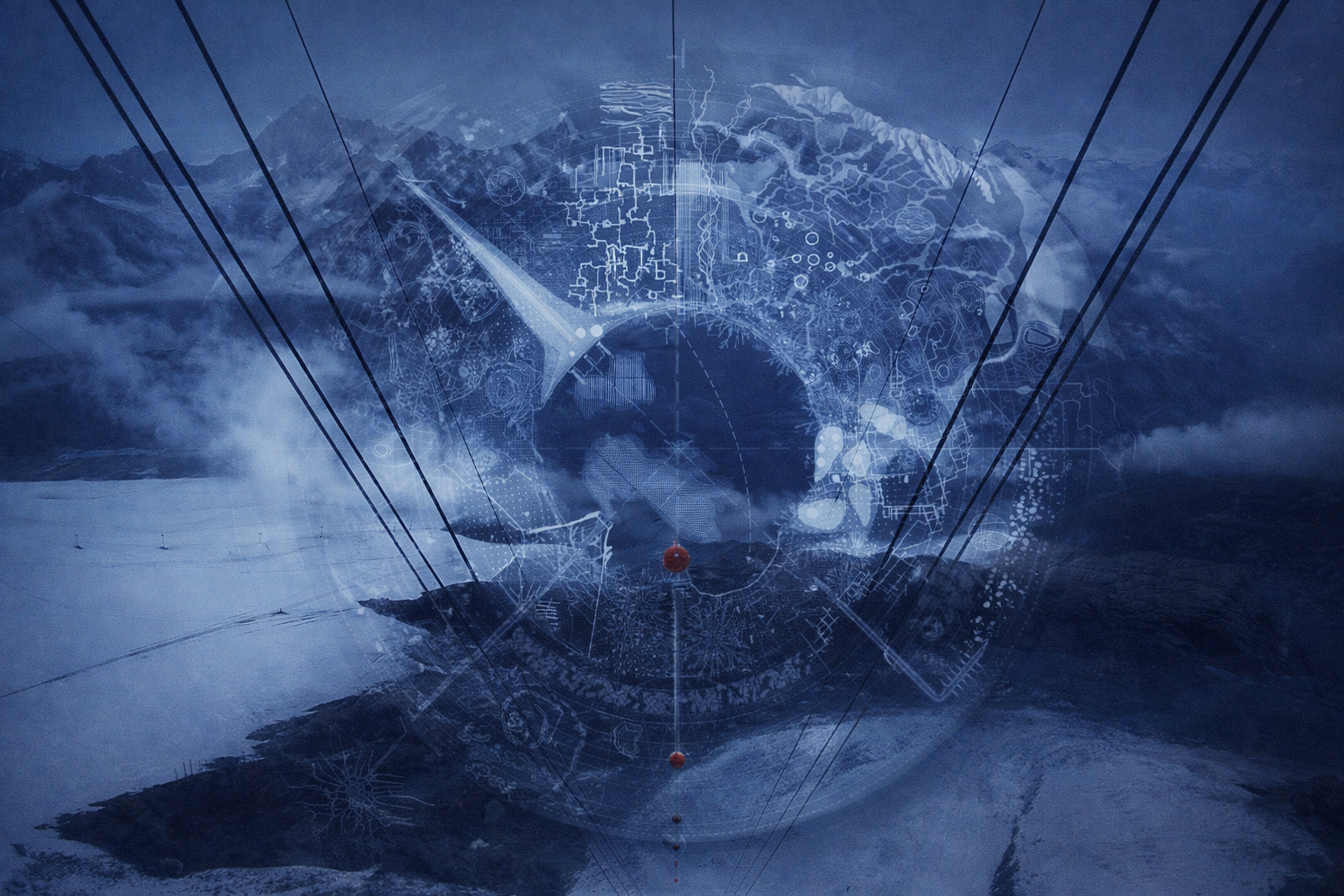
|
|
Measuring a Nation was presented in its first development stages at the Parse Conference in Gothenburg in November 2025, at the research week of my own University (Stockholm University of the Arts) in January 2026 and through my first fund to move forward through NAVET at the Reactor Hall at the Royal Institute of Technology in Stockholm and at the artistic research week at Konstfack in Stockholm | I would like to have a roundtable as a format to be able to gather as much feedback as possible from interested peers | I just need a room with interested participants who might want to contribute to the growth of the artistic research project with their insights and expertise | NA | Yes | Costanza Julia Bani | |||
| Unstar/Unflag Submit a contribution to the 2026 Forum on Artistic Research: Submission #122 | Anonymous | Manuela | Rosso - Brugnach | manuela.rossobrugnach@ubc.ca | Between Wor(l)ds: Translingual Methods for Reimagining Water | Workshop | English | As border-crossing entities, both language and water are polylocal. As languages migrate, travel, mobilize, and transform, speech communities sedimenting voices across environments, waters surge, seep, re-route and cycle, crossing hydrosocial territories and jurisdictional partitions. Yet the governance of transboundary waters, paradoxically, also requires levels of agreement on what makes up a better way forward in the face of increasing scarcity, language loss, pollution, and uneven water realities—one of the most urgent challenges of the twenty first century (Castro 2007; Norman & Bakker 2015). While water governance approaches such as Integrated Water Resource Governance (IWRG) and Adaptive Water Resource Governance (AWRG) offer important groundwork, less attention has been paid to language practices that navigate the ongoing translations at the interplay between fluidity, flux, fixity, and the situated, ontological legibility of the hydrocommons (Neimanis, 2018; Buenafe et al 2024): what much artistic commons research has called ‘emplaced relational translation’ (Imhoff and Quirós 2015; De Carli et al 2025). Thinking with these challenges, this workshop—inspired by Franch I Gilabert, Luzárraga, and Muiño’s 100 Words for Water (2025) and by Simon on translation’s border-work (2019)—invites participants to choose a water body, write from their embodied relation to it, and translate it through a quick collective assemblage (re-voicing across languages and senses) before coining a new “water word” for a shared mini-glossary by the end. Sharing is optional; no recording; any traces enter a consent-based ethical archive by explicit choice. |
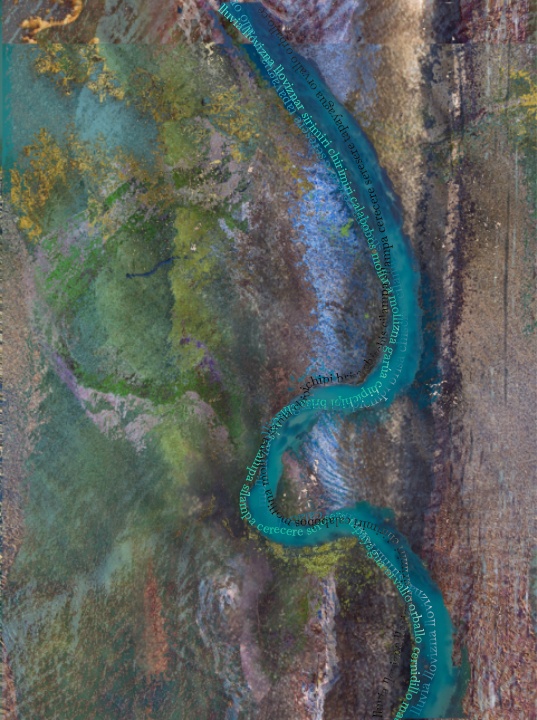
|
|
Builds from the project’s planned workshop with multilingual water researchers and the proposal’s theoretical and methodological framework; This workshop will have been piloted in a peer-reviewed rendition as part of my PhD comprehensive examinations, workshopped with Dr. Christine Schreyer, Dr. Denise Kenney, Dr. Leila Harris, and Dr. Astrida Neimanis at the University of British Columbia in April 2026. Feedback from this committee-supported iteration will inform the SAR2026 version. | This 90-minute workshop is practice-based and participant-led. After a brief framing, participants will (1) select a specific water body, (2) write a short “water note” grounded in embodied and situated experience, (3) have the note re-voiced by others through a rapid translation-as-assemblage exercise (across languages and/or registers such as memo/poem/testimony), and (4) coin and define one new “water word.” The session culminates in a collectively produced mini-water glossary. No specialist water knowledge is required. Participants do not need to be multilingual: translation can be interlingual where possible, or intra-lingual through register shifts and re-voicing within the same language. Sharing is optional throughout; quiet participation is supported. Ethical protocol: no recording/photography; paper traces are retained only by explicit opt-in consent and otherwise collected and destroyed after the session. Scales from 4–6 participants up to ~20. | Seminar room with movable seating, suitable for groups from 4–6 up to ~30. Setup: circle for opening/closing + small-group clusters. 1–6 tables/desks (depending on group size) for writing/assemblage. Materials: A4/letter paper and pens; optional simple collage supplies (sticky notes, tape/glue sticks, markers; scissors optional). Accessibility: all activities can be done seated. Internet preferred; no recording equipment used. | Foreseeable risks are low but include participants sharing sensitive experiences linked to water, or inadvertently naming identifiable people/communities in contested contexts. Sharing is voluntary; participants may write abstractly and are asked to avoid identifying details. No recording/photography. Any paper traces are kept only by explicit opt-in consent; otherwise collected and destroyed. | Yes | ||||
| Unstar/Unflag Submit a contribution to the 2026 Forum on Artistic Research: Submission #114 | Anonymous | Vannie Aurin | Pavelski da Gama | vanniegama.vyslab@gmail.com | " Ai mona ! " Dimensions of Pop Queer in Brazil through Drag Queen Art, Pajuba and the embodiment of DIY. | Project presentation | English | The delegitimization of the human condition is conditioned by attempts to dissolve cultural bonds between corporeality and language, the very substance of human expression, while simultaneously repositioning codes and agents within artificial environments of repression and surveillance operated by one or more social groups. This coercive dynamic assumes different forms and is, historically, responsible for technical evasion and technical apprehension, for the dissociation of territoriality and identity, and for reframings of violence, subordination, and obedience, from soft to necropolitical hard power. In Brazil, contemporary Drag Art occupies a hybrid landscape between the digital and online communities, and the tradition of the stage, the bate-cabelo, the lecadas, the Ballrooms, the humor of the Drag host, and above all the linguistic interplay between Brazilian Portuguese, pajubá, and the gestures inseparable from verbal expression that reiterate the foundational signs of the Brazilian queer community: such as the use of feminine grammatical gender even for masculine identities as a form of fraternity and affection, and the use of neutral gender as a stylistic variation made possible by the cultural heritages of the Northeast, the South, and the Southeast of the country. Through my theory of technological ecosystems, presented in the book Sociedade Tecnológica (2025), I observe the phenomenon of Brazilian Queer Pop, highlighting the importance of cultural diversity as political resistance in critical times of repression and violence against the LGBT+ community in Brazil and in the contemporary world, both in the digital, DIY community dimension and in the dimension of events and the culture of material presence, considering the sedimentations and historicity of this artistic form as well as the delicacy and linguistic robustness that make Drag Art a centra |
https://www.researchcatalogue.net/profile/show-exposition?exposition=4195813 | https://www.researchcatalogue.net/profile/show-exposition?exposition=4195813 |
|
|
The present research line on technological ecosystems applied to contemporary art has been developed since 2022, as it forms the basis of my interdisciplinary master’s degree in human and applied social sciences. The proposal was presented within a framework of democratic health debates between 2022 and 2024 (UERJ, UFPI, University of Coimbra), through both publications and presentations. In those same years, the project was also presented strictly from the perspective of technological‑nature re | N/A. | Only standard support for PowerPoint presentations is required, such as microphones (for interaction with participants), good speakers for sharing multimedia material, and a table to place items. Any intervention during the presentation will unfold organically and will not require technical resources beyond those mentioned. Spatially, there must be enough room to walk through different areas of the room. If black or white board are available, those would be used as well. | The presentation uses only public material and therefore involves no collection of raw or sensitive field data. It includes quantitative data analysis based on national and likewise public reports, freely accessible. However, because it contains such data and discussions, it may not be recommended for audiences sensitive to topics such as violence and discrimination. | No | ||
| Unstar/Unflag Submit a contribution to the 2026 Forum on Artistic Research: Submission #111 | Claude Draude | Claude | Draude | claude.draude@uni-kassel.de | Echoes Beyond the Prompt: Embodied Intervention in Generative AI | Experimental format | English | Human–AI interaction is typically organized as a conversational loop: humans formulate natural-language prompts, which are tokenized and encoded as numerical inputs to a machine learning model. While input and output appear as symbolic exchange, the model’s internal processing is subsymbolic, relying on embeddings, attention mechanisms, and distributed representations across a neural network. The system produces a response that humans assess and iteratively refine, enacting a paradigm in which meaning-making is organized around human semantic control and evaluation. This contribution intervenes in that loop by foregrounding the body as an epistemic site and shifting interaction from prompting to parametric modulation. Drawing on the Japanese dance practice of Butoh, it proposes a lecture-performance in which bodily states—breath, stillness, tension, balance—are sensed and used to modulate generative parameters of a large language model. Rather than altering semantic content, these signals influence conditions of generation (e.g., temperature, latency, output length, memory decay), reshaping the model’s distribution of possible outputs while leaving the prompt unchanged. Informed by new materialism, the experiment reframes human–AI interaction as embodied co-becoming rather than transparent tool use. The body is neither reduced to an input device nor positioned as commanding the system; instead, interaction unfolds through delay, uncertainty, and partial responsiveness. Attending to pre-reflective sensation and indeterminacy, the work values fragmented or unstable outputs not as errors but as traces of subsymbolic dynamics. It thus demonstrates how parametric modulation can engage generative AI beyond language, opening space for affective, non-verbal forms of knowing within and alongside computational systems. |

|
|
This is original research which has not been shown previously except in our own research lab. | The lecture-performance is conceived as an experimental, hybrid format combining spoken lecture, live demonstration, and performance elements. It explores embodied interaction with generative AI systems through real-time modulation, oscillating between theoretical reflection and situated practice. The format is deliberately flexible and can be adapted to the conference planning. Its duration is scalable, ranging from a short intervention to a full-length lecture-performance, depending on the program structure. Audience interaction is not required. The work does not rely on a fixed script but rather follows a structured conceptual trajectory, which makes it adaptable if need be. |
The presentation requires a standard lecture or performance space with projection (screen or wall), audio output, a stable power supply and Internet access, a couple of outlets, and a table or small setup area for the performer. All specialized hardware, sensors, and computing equipment are provided and operated by the performer. No technical intervention by the venue beyond basic AV support is necessary. | The project does not pose significant ethical or other risks. Audience participation is not required. In case people want to try the experiment this could be made possible. Physiological data are used only transiently, processed in real time, and are neither stored nor linked to identifiable individuals. No medical claims or interpretations are made; bodily signals function solely as performance parameters. | Yes | Claude Draude | |||
| Unstar/Unflag Submit a contribution to the 2026 Forum on Artistic Research: Submission #108 | Anonymous | Martin | Potter | martin.potter@deakin.edu.au | Working with Deep Time: The Earth Above and Storying Country through Fulldome Cinema | Project presentation | English | "The Earth Above: A Deep Time View of Australia's Epic History" is a fulldome planetarium film developed through long-term collaboration with First Nations knowledge holders, artists, and researchers. Spanning 140,000 years of human and environmental history, the project works with deep time as a living, relational knowledge system grounded in Country. Country is understood here as a living presence through which land, sea, sky, beings, story, and law are known in relation, holding people within ongoing obligations of care, responsibility, and intergenerational continuity. This presentation positions "The Earth Above" as a co-created artistic research project that entangles Indigenous knowledges with emerging archaeological research to re-frame perceptions of place that exist under conditions of colonial extraction, epistemic marginalisation, and narrative homogenisation. Working within the immersive setting of fulldome cinema, the project brings archaeological traces, scientific research, and living cultural knowledge into relation, positioning viewers and makers within a shared field of attention shaped by responsibility, care, and deep listening. Against dominant screen cultures of speed and spectacle, "The Earth Above" foregrounds attentiveness. It re-frames deep time as something felt rather than observed, positioning ancient traces (such as fossilised footprints, shell middens and stone arrangements) as living presences. The fulldome acts as a collective shelter for thinking, feeling, and imagining futures grounded in care, sovereignty, and environmental justice. The films distribution and outreach strategy - from on-Country premieres and community-led screenings to international fulldome festivals, the World Expo, and national educational curricula - also demonstrates how cinema can operate as a collective stronghold: a space for ethical relation, historical repair, and future-making at a moment when crisis has become a condition of the present. |
https://www.researchcatalogue.net/view/2420504/2420503 | https://www.researchcatalogue.net/view/2420504/2420503 |
|
|
The film has been presented at Wildscreen Film Festival, UK; DomeFestWest, USA; Australia Pavilion, World Expo, Osaka, Japan; Society for Visual Anthropology Film Festival, USA; PFCAT, USA; Sci-On, USA; World Science Festival, Brisbane; ISEA, Brisbane; Adelaide Festival; Australian Association for Research in Education Conference, Sydney, 2025; ASPERA, Wollongong, 2025; Transdisciplinary Environmental Humanities Symposium, Melbourne, 2025. However this presentation is original to SAR. |
The Earth Above fulldome film has been widely presented internationally. In terms of academic presentations it has been presented in a variety of forums however this proposed presentation is focussed on the co-creation process element of the artistic research and represents a culmination of the development, production and outreach process. | Screen and audio for powerpoint and video playback. If there is space and it's of interest for conference organisers & attendees I'd be happy to hire a small portable planetarium to show the full film (explorationdome.ie/). |
None | Yes | Martin Potter | |
| Unstar/Unflag Submit a contribution to the 2026 Forum on Artistic Research: Submission #98 | Neil Mulholland | Neil | Mulholland | n.mulholland@ed.ac.uk | Joots Suite | Workshop | English | ‘… at the core of a magic performance is interaction: it cannot be performed alone.’ (Nardi 1984, 26) Situated rites are based on an awareness of the interrelatedness of everything; they operate in specifically defined fields of action and concern effect. Designing artistic research can be understood as a practice of effecting actions by situating rites. Joots Suite is an artistic workshop that enables players to co-construct epistemic worlds within which they may situate the actions they desire. Groups of players modify a blank Paris Pattern deck, using it as an independent infrastructure for establishing and practising their conceptual world (“worlding”). Before play begins, each group designs a local suit system wherein Minor Arcana stand for key dimensions of artistic research practice. This foregrounds polylocal knowledge systems: each group devises a minor research language of its own, enacting how concepts may be standardised or marginalised. Players then create Major Arcana cards that enact meta-method moves such as forbidding particular methods or enforcing stakeholder co-design. Major Arcana function as tools for establishing epistemic sovereignty over what counts as legitimate knowledge. Play proceeds through dealing, bidding, and narrating melds (artistic research designs) that must withstand adversarial peer review. Review criteria are collectively negotiated, dramatising how such evaluative regimes are socially constructed. A forced jootsing phase, where players must swap cards and redesign their methods, explores how conceptual worlds are altered by shifts in infrastructure, access, and control. The game ends with a house-rule negotiation: each group writes one new rule designed to joots the game itself. If two or more groups play simultaneously, Joots Suite concludes with a brief exposition of the cards and house rules jootsed into existence by each group. |
|
|
https://gitlab.com/neil-mulholland/joots-cards | The structure of the game is an open research object first published here https://gitlab.com/neil-mulholland/joots-cards This structure is by-nc-sa 4.0 licensed and can be modded accordingly. The version of Joots Suite proposed for the 17th SAR Conference is a mod of this open research object. Participants in the 17th SAR Conference version of Joots Suite are very welcome to mod or fork the open research object after the event. Prof Neil Mulholland 2026 Attribution-NonCommercial-ShareAlike 4.0 International https://creativecommons.org/licenses/by-nc-sa/4.0/ |
Each group should be 3-5 players (min/max). Subject to spatial restrictions, any number of groups can play simultaneously. However, to be able to provide jootsing cards for players, and to facilitate play across several groups, it would help to restrict the game to 12 players. Each group of players needs a chair and a table. Tables can be shared between groups. Otherwise there are no requirements. | This is a game that asks players to jump-out-of-the-system ("joots"). Players need to be willing and prepared to jump-out-of-the-system and engage with whatever that form of gameplay entails. | Yes | Neil Mulholland | |||
| Unstar/Unflag Submit a contribution to the 2026 Forum on Artistic Research: Submission #89 | Anonymous | Sara | Vermeylen | vermeylensara@gmail.com | IKKE NI (Sit Down, Stand Up) | Performance | English | Sitting down and standing up are such elementary gestures that we forget they perform a social choreography. Depending on context, these actions can signify obedience, resistance, attention, solidarity, threat, humility, rest or elimination. During a residency in Berlin (2024), I started exploring how sitting down and standing up operate in my cultural context, from the commands I internalised as a child to displays of dominance. This pre-verbal language of power plays out in institutional rituals (“All rise", "You may be seated", "Please stand for the national anthem”), in playground elimination games (musical chairs, last one down is out) but also in acts of care (sitting at someone’s bedside, rising to embrace, crouching to meet a dog’s eyes). Every time we sit or stand, we reposition ourselves in relation to others. My research aims to articulate the language embedded in this vertical movement, and to disrupt its automaticity. When the automatic grows strange, things become interesting. I propose to share my practice through a 15-20 minute lecture-performance in which spoken word alternates with instructions. The audience will be asked to sit and stand repeatedly, under different verbal framing. I unpack the choreography of sitting and standing as a social script, while simultaneously demonstrating it. The format is experimental, simple, and politically urgent. |
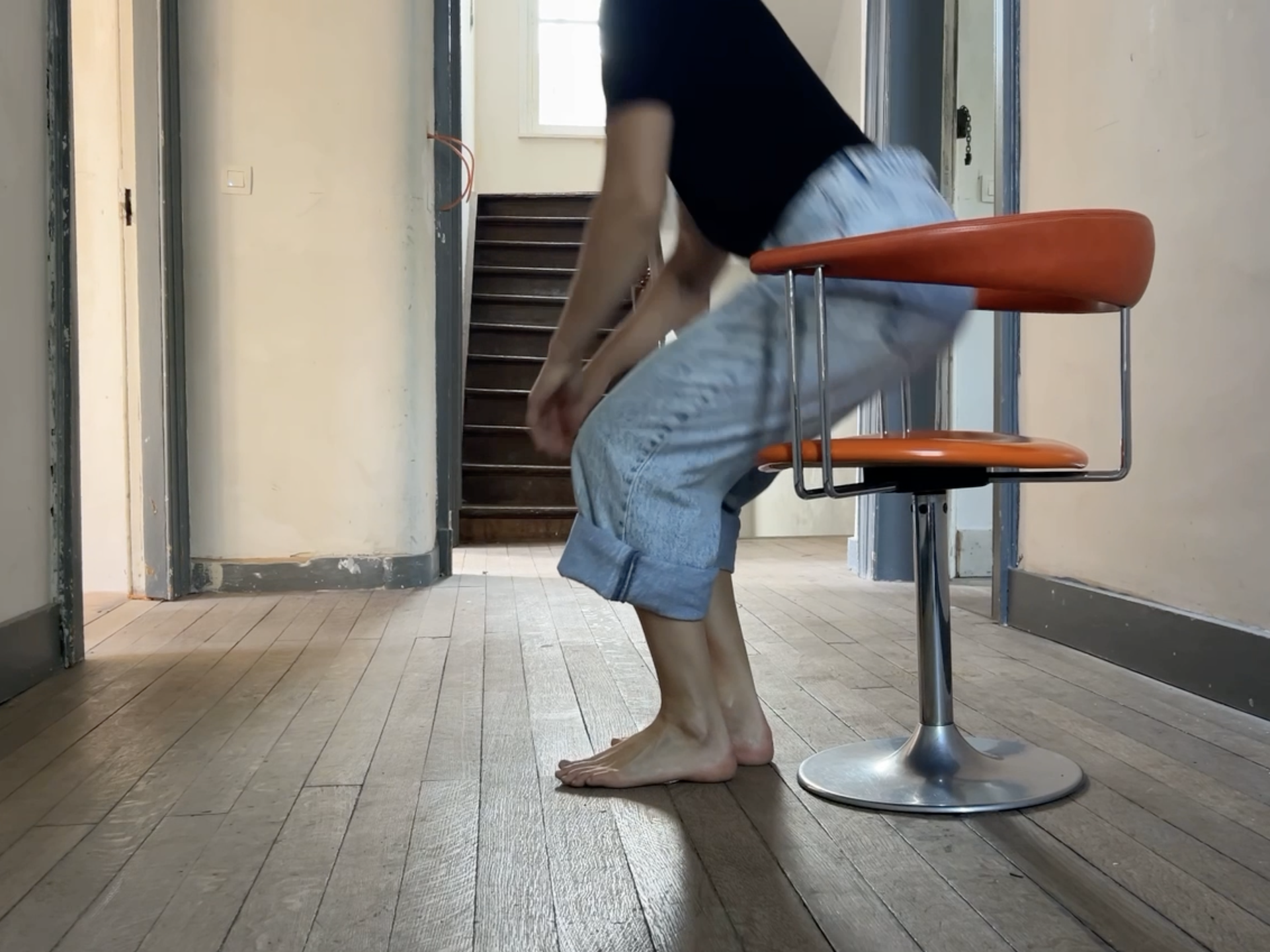
|
|
Spring 2024: Durational pieces in which I sat down and stood up for hours on end, aiming to empty the gesture of meaning. August 2024: Improvisation during "Mäandern:::meander" residency at Flux I Bell (https://fluxibell-structurs.org/). This improvisation marked a turning point, I began examining how verbal framing activates the power embedded in these gestures. This 2026 contribution will be the first iteration that explicitly stages sitting and standing as a language of power. | a chair per person | Yes | Sara Vermeylen | |||||
| Unstar/Unflag Submit a contribution to the 2026 Forum on Artistic Research: Submission #75 | Gerard Ryan | Gerard | Ryan | gerard.ryan@urv.cat | The Unhearable Market: Electromagnetic Soundwalks as Artistic Research | Workshop | English | This workshop introduces electromagnetic listening as artistic research into an endangered perceptual realm: infrastructural signals that shape consumer environments while remaining largely unavailable to ordinary hearing and description. Using handheld electromagnetic detectors as audio instruments, participants take part in a single guided electromagnetic soundwalk (9 participants) that converts emissions from retail and urban systems into audible sound. The workshop treats these signal worlds as conceptually endangered because interface design and platform logics make them operationally central yet perceptually absent, and because they resist stable verbalisation. Rather than decoding signals into fixed meanings, the workshop develops a repeatable protocol for attentive listening, annotation, and comparative description. Participants work with a small set of descriptive operators (for example: pulse, drift, density, saturation, interference) to compare what is heard across different moments on the same route without forcing interpretive closure. The accompanying Research Catalogue exposition provides the protocol, a minimal route diagram, short audio excerpts, and a documentation template designed to be readable in fifteen minutes. The outcome is a systematic and transferable artistic research procedure for listening past the interface and making otherwise unhearable infrastructures discussable. |
|
|
This workshop develops from ongoing artistic research on electromagnetic listening in consumer environments. Elements of the method have been tested through pilot electromagnetic soundwalks and audio experiments, but this specific 9-participant workshop format and its accompanying Research Catalogue exposition have been created specifically for the SAR 2026 submission | Additional information on the presentation format (max 1,000 characters) Structure (120 minutes). 1) Orientation and ethics (10). 2) Demonstration and calibration of devices (15). 3) Guided listening to a short curated excerpt and introduction of the descriptive operators (15). 4) Single guided electromagnetic soundwalk (45): one route near the venue with 9 participants using the detectors; live outcomes are treated as contingent. 5) Return and debrief (25): compare observations using the operator set and discuss what becomes sayable and what remains resistant. |
Seminar room for 9 participants plus facilitator, with projector and screen, and audio playback (speakers). Table space for devices and note-taking. A nearby walkable route (approximately 20 to 30 minutes total walking time) starting and ending at the venue. I will provide electromagnetic listening devices for up to 9 participants. | Public-space component: participants will be instructed not to record intelligible speech, personal conversations, names, faces, or identifying details. The workshop is not aimed at surveillance of people or devices; it focuses on non-identifying signal textures and infrastructural emissions. Safety: the route will avoid hazardous crossings where possible; participants may opt out. Accessibility and weather contingencies are included, with an indoor-only alternative. | Yes | ||||
| Unstar/Unflag Submit a contribution to the 2026 Forum on Artistic Research: Submission #63 | ANGELA FRAGKOU | ANGELA | FRAGKOU | fragkou.angela@gmail.com | A colourless colour | Poster presentation | English | This poster presents A Colourless Colour, an artistic research project developed within the Computer Sculpture Lab, Athens School of Fine Arts that investigates how structural colour-produced by nano-scale organization of matter rather than pigments—can reframe artistic materiality and ecological responsibility. The project emerges from the experimental 3D Biohub, an interdisciplinary platform connecting digital sculpture, biotechnology and genetics, in collaboration with the iGEM Athens Team and the Agricultural University of Athens. It explores how living systems that naturally exhibit structural colour, such as colonies of Flavobacterium IR1, may inform the development of non-toxic, bio-derived materials for 3D printing and sculptural practice. Unlike chemical colour, dependent on pigments and toxic dyes, structural colour arises from the self-organization of micro- and nano-structures that refract light. Certain bacterial biofilms display vivid iridescence through this mechanism. By studying genetic pathways enabling cellulose secretion as an extracellular matrix, the research examines whether this colour phenomenon can be imprinted onto a printable biomaterial. The poster documents the methodological pathway—interdisciplinary workshops, artistic archiving, digital modelling and laboratory observation—through which biological self-assembly becomes both a conceptual and material model for artistic production. Structural colour is approached not simply as an optical effect, but as a paradigm for re-imagining how matter organizes itself, how colour can exist without pigment, and how art can mediate biotechnological knowledge in the public sphere. A Colourless Colour addresses ecological concerns linked to the paint and textile industries and proposes colour as an emergent property of living matter, opening a dialogue between art, science and environmental ethics. |
|
|
Earlier iterations were presented through the 3D Biohub workshop & exhibition (2020–21) at the Computer Sculpture Lab, Athens School of Fine Arts with the iGEM Athens Team, Creator Doctus doctoral presentations, a 2022 lecture at the National and Kapodistrian University of Athens, a talk at Onassis Stegi, and related publications (2025) and conference presentations (2021–23). | Supporting material, documentation of previous iterations, publications and the 3D Biohub project can be accessed here: [publication links] https://www.hilarispublisher.com/open-access/reimagine-the-behavior-of-living-matter-the-colorless-color-and-an-artificial-nanostructure-in-contemporary-art-113726.html https://daysofart.gr/wp-content/uploads/2022/02/%CE%A0%CE%B5%CF%81%CE%B9%CE%B5%CF%87%CF%8C%CE%BC%CE%B5%CE%BD%CE%B1-Contents-13.pdf [3D Biohub / project link] https://2020.igem.org/Team:Athens/Collaborations http://www.sculpture.asfa.gr/Lectures/3dBIOHUB.pdf [personal website] https://www.angelafragkou.org/3d-biohub |
Poster presentation requirements | No ethical concerns are anticipated. The presentation includes only a poster and visual documentation of laboratory-prepared biomaterials. No live organisms, hazardous chemicals, physical samples, or participant interaction are involved. All referenced materials follow standard laboratory safety practices and are presented purely as documented research. | Yes | ||||
| Unstar/Unflag Submit a contribution to the 2026 Forum on Artistic Research: Submission #47 | AnnB | Ann | Burns | carriestudios20@gmail.com | Living Rhythms: An Artistic Enquiry into Island Life Beyond Language | Project presentation | English | Living Rhythms presents Rhythmanalysis+, an artistic research project that investigates how everyday sensory rhythms support regulation, care, and connection under conditions of disruption. The project emerged during the COVID-19 pandemic from a concern with how the breakdown of routine and predictability affected mental health, particularly in contexts where regulation depends on repetition and embodied familiarity. Grounded in lived experience of neurodivergence and informed by island life on Sherkin Island, the research treats everyday sensory rhythms — wind, salt air, tides, birds, movement — as forms of situated knowledge that often remain marginal to language-centred enquiry. Working collaboratively with four island residents during periods of enforced isolation, the project gathered sensory accounts of daily life through phone calls, Zoom conversations, sound recordings, photographs, and drawings. Rather than treating these materials as data to be analysed, they were translated through drawing, sound composition, and virtual reality into an immersive environment that operates beyond language. Spoken voices and environmental sounds are present within the work, but meaning emerges through rhythm, spatial sound, and embodied attention rather than explanation or narrative. Virtual reality functioned not as spectacle or representation, but as an ethical mediator, allowing sensory, emotional, and relational information to be held together without exposing participants or requiring physical proximity The research demonstrates how artistic practice can function as a mode of enquiry into minoritised, embodied knowledges that resist standardisation and extraction. What emerged was not a fixed outcome, but an ongoing process in which rhythm became both method and material. Through reflection and writing, the project continues to evolve, raising open questions about care, technology, and how sensory life and forms of regulation have shifted in the aftermath of COVID. |
https://researchcatalogue.net/view/4186797/4186798 | https://researchcatalogue.net/view/4186797/4186798 |
|
|
The initial iteration of Rhythmanalysis+ was developed during a practice-led master’s project developed during the COVID-19 pandemic, resulting in a VR installation created through remote collaboration with island residents and exhibited in 2022. Since then, the research has evolved through critical reflection and writing, including a journal publication, and is currently being reframed through digital upskilling and renewed attention to post-COVID sensory life, regulation, and care. | The presentation will take the form of a live, reflective talk (approximately 20 minutes), supported by projected images and short sound excerpts drawn from the research exposition. Rather than presenting a finished outcome, it will focus on process - tracing how drawing, listening, and immersive environments have developed over time. The session will open space for conversation around return, situated practice, and the role of rhythm and attention in artistic research. | Standard conference presentation setup: projector, screen, laptop connection (HDMI), and audio playback capability for short sound excerpts. No special spatial configuration required. | The research involves prior remote engagement with island community participants. All material shared in the presentation respects participant confidentiality and consent agreements established during the research process. No sensitive personal data will be disclosed. The work reflects critically on relational and situated methods, but presents no foreseeable physical, psychological, or environmental risks. | No | ||
| Unstar/Unflag Submit a contribution to the 2026 Forum on Artistic Research: Submission #40 | Egle Pociuipaite | Eglė | Počiuipaitė | egle.pociuipaite@gmail.com | Making the Novelty Myth Sayable: Language, Power, and the Conditions of Design Practice | Project presentation | English | This contribution presents Unagency, a parafictional design agency, created within PhD studies at Vilnius Academy of Arts and used as a practice-based artistic research framework. It investigates the myth of novelty in contemporary graphic design culture. Within commercial design environments, innovation, speed, progress and constant renewal are framed as unquestionable values; whereas doubt, slowness, hesitation, and other less productive states become difficult to articulate from professional discourse, thus remains largely invisible, even to those experiencing it. Unagency operates through a parafictional institutional frame that imitates the language, structures, and procedural formats of commercial design agencies: briefs, deadlines, reports, and productivity rituals, while consciously deforming them. They are transformed to un-brief (assignment without requiring a resolution), un-deliverable (insight without outcome) among the others, for the purpose of un-mything (unravelling of progress and innovation narratives), and function as interventions enabling critical gaze of how novelty imperatives organise everyday design work and produce the belief that novelty equals value, and designers can be agents of change even when structural conditions limit meaningful transformation. Methodologically, the project combines parafictional institutional modelling, hermeneutic-critical design analysis, and reflexive auto-ethnography grounded in long-term professional experience within creative advertising and communication agencies, as well as technology companies. Through different experiments Unagency investigates forms of design experience that have become increasingly unsayable. By attending to doubt, slowness, hesitation, fear of failure, withholding or hoarding of ideas it looks for space for thinking and working modes that resist acceleration, optimisation, and narrative simplification within contemporary creative economies. |
https://www.researchcatalogue.net/shared/4cb7d9629526f56b8fd5e451d5ba8270 | https://www.researchcatalogue.net/shared/4cb7d9629526f56b8fd5e451d5ba8270 |
|
|
Elements of this research have been developed through doctoral work at the Vilnius Academy of Arts and through internal academic presentations within the PhD programme. Individual experiments have been exhibited in group exhibitions and workshops in Lithuania (2022–2024), but the proposed contribution has not previously been presented in its current form. | The contribution is presented as an artistic research project combining parafictional structures, written protocols, visual documentation, and practice-based experiments. The presentation focuses on how design myths operate rather than on showcasing finished artifacts. The format is adaptable to both presentation and discussion-based contexts. | The contribution can be presented using a standard conference setup. Requirements include a projector or screen for images and text. The work can also be presented entirely digitally if needed. | The research does not involve human subjects, sensitive data, or vulnerable populations. It draws on auto-reflexive professional experience and publicly presentable design materials. Any personal reflection is limited to the researcher’s own experience and does not disclose confidential or identifiable information. | Yes | ||
| Unstar/Unflag Submit a contribution to the 2026 Forum on Artistic Research: Submission #28 | Henk Borgdorff | Henk | Borgdorff | borgdorff@freedom.nl | Artistic Research and the Lingering Gaze of Thought | Other format | English | I will start with addressing so-called ’non-traditional research outputs’. That will be an entry to say something more in general about the place of artistic research in academia and its possible alignments with other research fields. I then want to highlight four aspects of artistic research: the agency of practices and things; the importance of practice-based methods; the condition of knowledge, specifically 4E-cognition; and the articulation and publication of artistic research. I need those aspects in order to say something about discursivity and the role of language. |
|
|
No | ||||||||
| Unstar/Unflag Submit a contribution to the 2026 Forum on Artistic Research: Submission #10 | Anonymous | Oguzhan | Baran | oguzbaran27@gmail.com | When “Essay” Becomes a Template: The Endangered Conceptual World of Essayistic Research | Project presentation | English | In current academic and cultural circulation, the term “video essay” has become a dominant label for short-form audiovisual scholarship. Yet many works that circulate under this name reproduce the architecture of the academic paper: a pre-scripted thesis, linear argumentation, signposted claims, and conclusory takeaways in which images primarily function as illustration. This paper argues that such practices do not simply represent a stylistic variation of the essay. They constitute a methodological displacement. What is increasingly produced is an audiovisual paper rather than an essay in the philosophical sense. Here the essay is understood as a non-identitarian mode of inquiry that proceeds through constellation, montage, and problematisation, refuses final definitions, and treats concepts as provisional in relation to the object. I propose that this terminological drift is not neutral. Under conditions of platform optimisation and institutional evaluation regimes, essayistic inquiry becomes difficult to recognise and therefore difficult to sustain. The essay’s capacity to hold uncertainty, to think by juxtaposition rather than deduction, and to generate knowledge without closure is flattened into standardised templates of “explain, prove, conclude.” Framed through the conference theme of endangered conceptual worlds, I treat “the essay” as a fragile conceptual practice whose specificity is pressured by academic instrumentalisation and narrative standardisation. Methodologically, the presentation develops a compact typology distinguishing audiovisual papers from essayistic audiovisual research. It also proposes criteria for evaluation that protect essayistic method within artistic research contexts. The aim is not to police a genre. It is to clarify terms, recover methodological possibilities lost in current usage, and reopen space for essayistic practices that can function as genuine research without being forced into the paper’s demonstrative logic. |
https://houseofasterion.de | https://houseofasterion.de |
|
|
-IKF 33rd Transdisciplinary Colloquium (25 Nov 2025): The Essay in Artistic Research Strategies (discussion/moderation). -Catalyst Postgraduate Symposium 2025 (Berlin): “The House of Asterion: Rhizomatic Mapping for Tracing Affective Intensities in Space” -ZeM Forum 2025 (Potsdam): “The House of Asterion: Rhizomatic Mapping as Method” -P+ARTS 2025 (Naples): PhD Forum poster/proceedings “The House of Asterion: Rhizomatic Mapping as Method” |
My contribution will be a 20-minute peer-reviewed presentation with a short guided walkthrough of a newly created Research Catalogue exposition (approx. 15 minutes to navigate). I will introduce a distinction between “audiovisual papers” and essayistic audiovisual research and propose practical criteria for evaluation that protect essayistic method (constellation/montage, non-closure, problematisation, and the productive role of uncertainty). The presentation will include 1–2 brief audiovisual excerpts (under 2 minutes total) and will conclude with questions for collective discussion (10 minutes). | Standard lecture room setup • Projector or large display + HDMI/USB-C connection • Audio playback via room speakers (stereo) • Internet/Wi-Fi access (for Research Catalogue exposition) • Presenter laptop (can be own) |
• The project draws on autoethnographic memory, including family histories and potentially sensitive biographical material. • Some media (photos/video/voice) may include identifiable individuals; where needed, consent will be obtained, identities anonymised/blurred, and private details withheld. • References to politically and socially sensitive contexts (e.g., migration, class, conflict) will be handled with care to avoid harm, stereotyping, or unintended exposure. |
Yes | Oguzhan Baran | |
| Unstar/Unflag Submit a contribution to the 2026 Forum on Artistic Research: Submission #7 | Anonymous | Hamze | Bytyci | hamzebytyci@gmail.com | Constitutional Commitment, Anti‑Fascism, and Solidarity in Contemporary Artistic Research | Experimental format | English | Constitutional Commitment, Anti‑Fascism and Solidarity in Transnational Youth Artistic Research “Darius & Shahmaran – Ritual, Knowledge and Resistance” is a transnational youth exchange between Germany and Türkiye that uses the Kurdish‑Anatolian Shahmaran narrative and the figure of Darius to explore democracy as a historically and culturally contested practice. The project examines how ritual operates ambivalently as an instrument of state legitimation and as a medium of cultural resistance, linking Kurdish experiences of repression and survival in places such as Dersim, Mardin and Diyarbakır with Roma histories of exclusion, knowledge transmission and cultural self‑assertion. RomaTrial e.V. contributes long‑term experience in minority rights education, international youth work and participatory artistic formats, embedding the Berlin phase in existing political education infrastructures and collaborations with local partners. Young people from both contexts work collectively on questions of democracy, cultural rights, international law and memory politics, and use performance, film and installation to develop situated readings of ritual as political practice and to articulate counter‑narratives to dominant European self‑images. The project strengthens critical thinking, intercultural competence and democratic agency, while proposing minority knowledges as epistemic resources for a European democracy education attentive to power, violence and resistance. Against this backdrop, the contribution asks to what extent artistic research with and from minoritised positions can materially unsettle the aesthetic regimes of constitutional democracy, rather than being recoded as a culturally valuable but ultimately cosmetic supplement to existing institutional orders. |
|
|
Previous iterations draw on long-term artistic and educational work by RomaTrial e.V. and the Children’s Biennial Group led by Ender Açar, including participatory youth projects, festival formats and exhibition programmes in Germany and Türkiye. These formats explored ritual, minority knowledge and democratic participation with young people, but the specific configuration of “Darius & Shahmaran – Ritual, Knowledge and Resistance” and its artistic research has not yet been presented at an ICSAR. | The contribution is conceived as a research-creation format that combines lecture-performance, situated storytelling and dialogical discussion rather than a conventional paper. The focus is on collectively unpacking “Darius & Shahmaran – Ritual, Knowledge and Resistance” as an ongoing artistic research process, including work-in-progress material from youth exchanges in Germany and Türkiye (performance sketches, video fragments, ritual scores). The session invites participants to reflect on how minority epistemologies enter artistic research infrastructures and what is at stake when youth-focused, community-based practices are translated into the aesthetics and temporalities of an international conference setting. | The contribution requires a flexible seminar or studio space that allows for circle seating and small group work, with blackout option if possible. Technically, it needs a projector and screen, sound system with speakers, HDMI connection, and the possibility to play audio/video from a laptop. For the performative elements, movable chairs, some open floor space and basic lighting control (dimming) are sufficient. | The project engages with contexts of Kurdish and Roma marginalisation, experiences of state violence and contested memories, which may trigger participants or reproduce asymmetrical speaking positions. It also works with youth material that can contain sensitive biographical references. Care will be taken to ensure informed consent, anonymisation where requested, clear facilitation of power-sensitive discussions and the possibility for participants to withdraw or step back at any time. | Yes | Hamze Bytyci |