253 submissions
| Starred Sort descending | User | Given name | Surname | Title | Format | Main language | Abstract | Link to the Exposition | Link to the Exposition : Link URL | Image | Short biographies of the presenter(s) | Previous presentations or iterations of the research | Additional information | Spatial and technical requirements | Potential risks or ethical concerns | Create a user account for SAR 2026 | Create new user | Operations | |
|---|---|---|---|---|---|---|---|---|---|---|---|---|---|---|---|---|---|---|---|
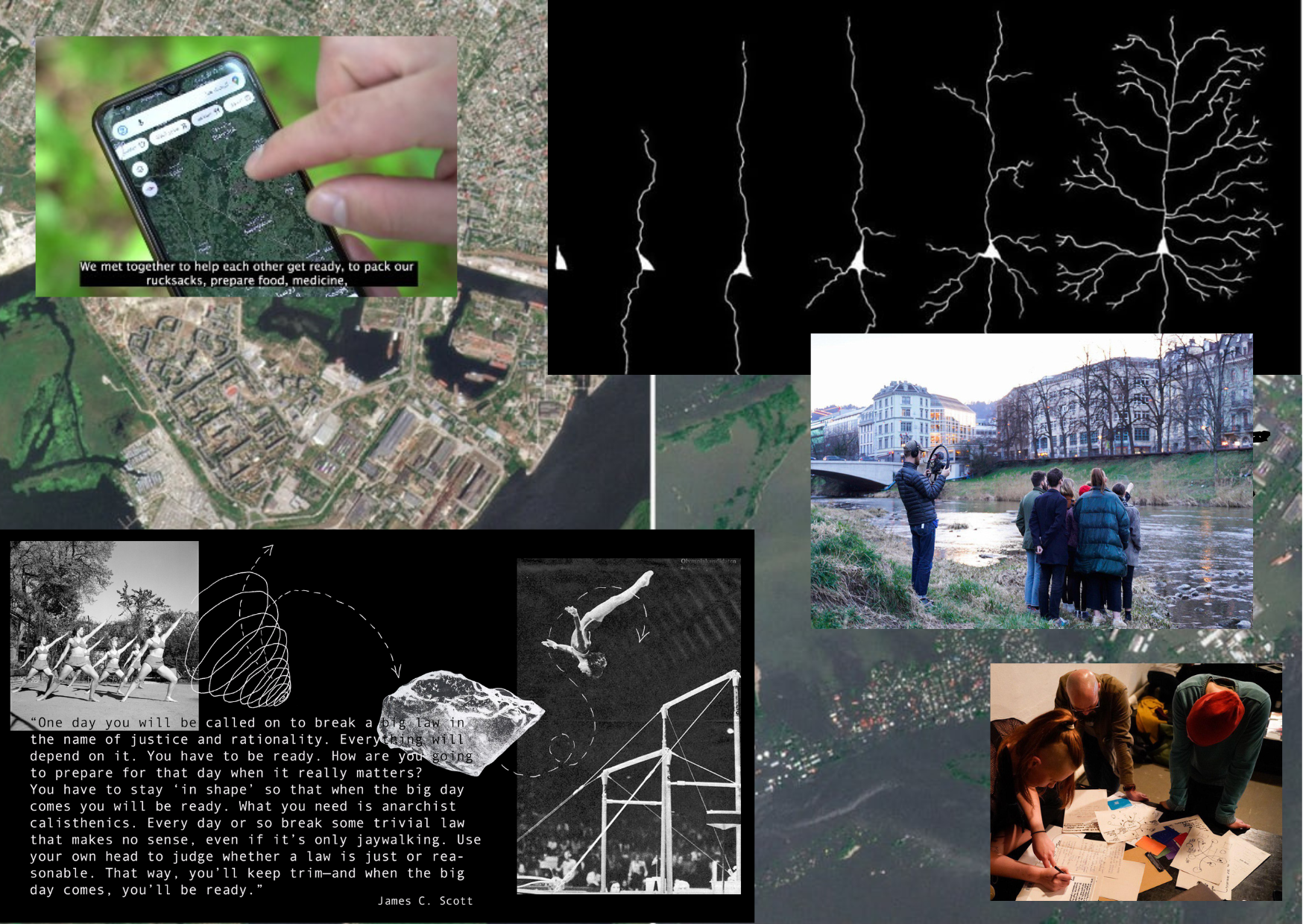
| Star/flag Submit a contribution to the 2026 Forum on Artistic Research: Submission #393 | Anonymous | Sarah J. M. | Wenzinger | s.wenzinger@udk-berlin.de | Social Prepper: Forking Survival Epistemologies as an Artistic Research Laboratory | Experimental format | English | Concepts of crisis preparedness, like the prepper are driven by fear. They frame crisis as future rupture, preparedness as isolation or delegation, privatizing survival and shifting responsibility while systemic causes persist. Yet crisis is already ongoing, and survival knowledge and collective skills shaped by political violence, ecological breakdown, and precarity exist. Social Prepper asks instead: how can artistic research mobilize these survival knowledges to generate counter-narratives? It is an artistic research project that collects and activates these practices of survival through conversations, field research, and collaborations with artists and activists across uneven crisis contexts. Artistic practice functions as infrastructure for tracing and transmitting embodied knowledge. Borrowing the open-source principle of forking, the project follows how practices—mutual aid protocols, repair techniques, communication strategies, speculative storytelling—circulate and transform. Forking retains origin and consent, allows refusal and differential visibility, and produces recursive publics structured around responsibility. Drawing on feminist technoscience, speculative pragmatism, and anthropologies of precarity, the laboratory positions artistic research as a cosmopolitical method that slows crisis narratives and makes fragile survival infrastructures perceptible. Scores, archives, and participatory exercises function as epistemic devices through which survival knowledge is enacted and examined. Crisis becomes legible as an uneven present shaped by cognitive injustice and erasure. At the conference, the Social Prepper Archive will be activated as a research environment of protocols and testimonies. Participants will fork practices and examine how survival knowledge transforms across contexts, framing artistic research as a non-extractive method for engaging endangered epistemologies and cultivating collective survival beyond imaginaries of isolation. |
|
|
Social Prepper consolidates years of artistic and activist research into crisis imaginaries and survival practices. Earlier investigations addressed dystopian fear narratives; subsequent fieldwork included a documentary on solidarity networks at the Polish–Belarusian border and interviews with artists in Ukraine working under war conditions. Related workshops explored art under unstable contexts. This laboratory marks its first presentation as a coherent research framework. | The laboratory combines a concise exposition of the Social Prepper research trajectory with a multiperspectival research environment. The session begins with a presentation of the project’s conceptual framework, field research, and archive structure, followed by a participatory forking process. Practices are introduced from the archive and collectively examined, translated, and re-situated while retaining origin, contextual specificity, and the right to refuse. Forking requires plurality; participants test how selected survival protocols transform across contexts. The format foregrounds epistemic accountability, consent layers, and differential visibility. Knowledge remains co-produced and provisional. The laboratory sustains tension and situated responsibility as necessary conditions for collective artistic research. | - Projector (HDMI connection) for short presentation and image display - one large table or several movable tables for archival materials, collective work, temporary mapping - document camera (if available) for close-up display of scores and protocols - I will bring self-developed materials, printed protocols, and archival objects - Standard seating arrangement that can be reconfigured for small-group work preferred. |
The laboratory engages lived experiences of crisis, which are subjective and may evoke difficult emotions. Participation is voluntary and non-disclosive; no personal testimony is required. The project follows non-extractive artistic research ethics grounded in epistemic accountability: contextual integrity, layered consent, right to refuse, and differential visibility. No participant is exposed, fixed, or documented without explicit agreement. | Yes | ||||
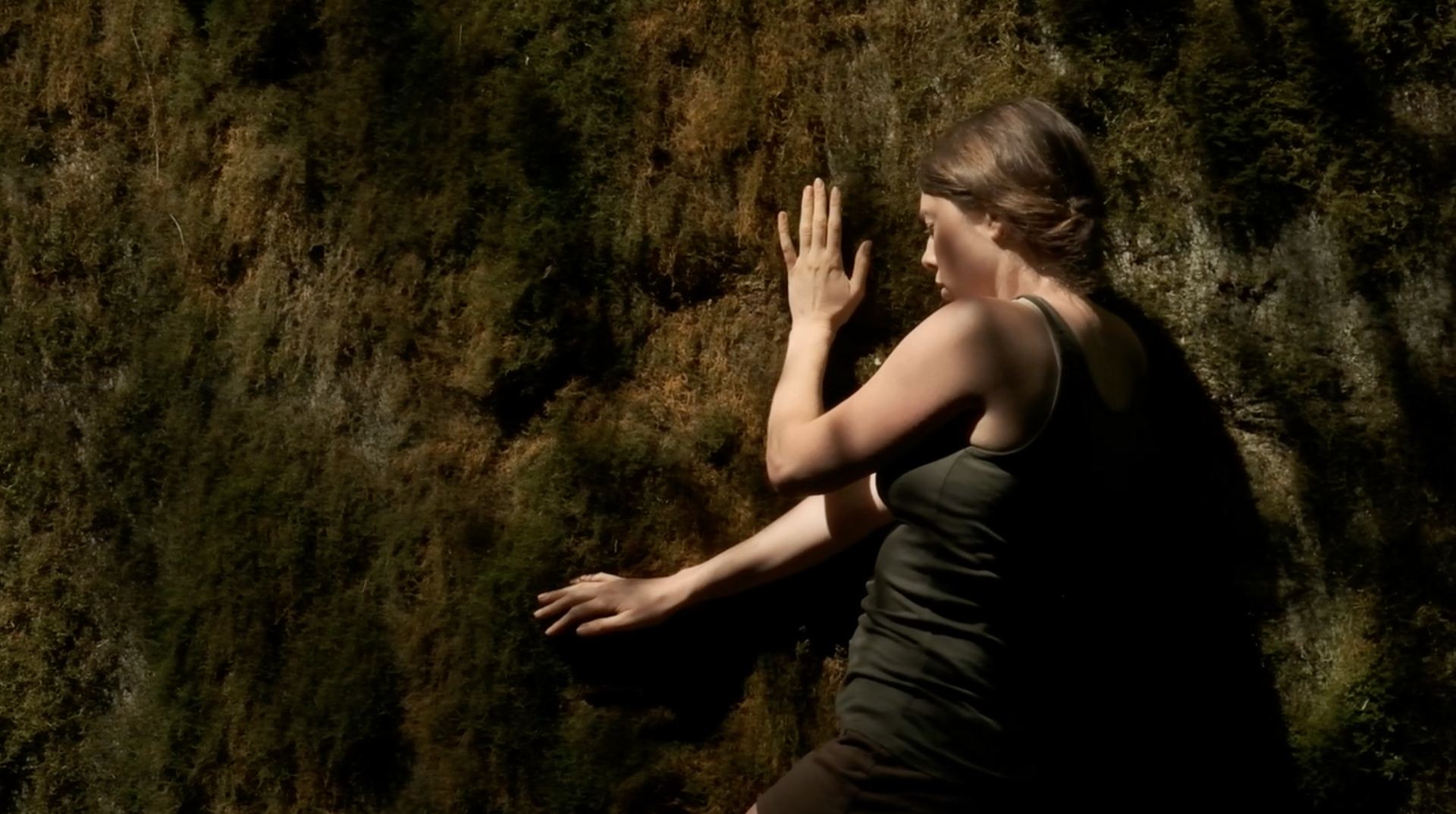
| Star/flag Submit a contribution to the 2026 Forum on Artistic Research: Submission #392 | Anonymous | Alyssa | Coffin | alyssa.coffin11@gmail.com | Parallel Movements: sensory embodied inscription practices | Experimental format | English | This experimental sharing invites collective practice in the land. It opens along a continuum where there are no knowledge holders, where knowledge lives between all bodies, and human bodies are just one point in the passing between un-knowings. The practices explore three epistemological resistances as parallel movements: the sensory embodied inscription of dialogically relating to the earth as a parallel movement to the encoding of knowledge into Artificial Intelligences; inscribing “images” in the living archive of the mindbodyspirit as opposed to digital files; and “languaging back” as a form of re-inscribing the native language of the land back into the elements from which language emerged. “Inscription” occurs through an intimate process of sensory embodiment– our flesh in contact with the flesh of the earth. It requires no devices, only attention and bodily presence. “Inscription” is an ever-evolving method for cultivating a loving knowing of living land. The practice approaches inner artefacts as light and energy transmuted into a well of memory, forming a rich inner archive. It invites participants to encounter their environment through playing with different qualities of sensory perception. In inner darkness, the light of our surroundings is burned in us. “Languaging-back” is a re-textured and land-tethered way of learning (Finnish) language. As knowledge is increasingly extracted/abstracted away from its source, this practice approaches earth as sacred text that we “read” and speak back. Learners encounter place through its natural elements as a kind of primary language– the texture of a rock, the voice of a bird etc. In this way, they become archivists with a responsibility to keep alive the embodied experience of the primary language. Learners experience how the native language of the region is sonically textured– how it tastes in their mouth and resonates in their lungs, revealing how native language is emergent from and still alive in the land. |
|
|
2025: A theology of artistic practice, lecture and workshop for ITIA at St. Andrews University in Scotland; Learning Finnish as Artistic Practice: Narrative Walking, courses at Uniarts, Helsinki, Finland; Sensory Embodied Capture workshop for Quaker gathering, Brittebo Lägergård, Sweden; 2024: workshop at Monserrat College of Art, Beverly, MA, USA; Sensory Ideation and Embodied Capture workshop and artist talk, Furman University; Body as Receptor, practice sharing workshops, Helsinki, Finland. | This is a practice sharing that will take place somewhere secluded outdoors in the land (in any weather that permits). It can work with a group up to about 30 participants. | none | This practice can be physically demanding (depends on how they wish to engage) and it is generally not suitable for those with physical mobility impairments, but all embodiments are welcome. | Yes | Alyssa Coffin | |||
| Star/flag Submit a contribution to the 2026 Forum on Artistic Research: Submission #386 | Anonymous | Dominique | Lämmli | sar2026.fading355@passinbox.com | From Foundation to Orientation: Theory as a Situated Tool in Art in Action Research (AiAR) | Project presentation | English | In artistic research, theory is often caught between institutional necessity and creative constraint. This paper proposes a shift: viewing theory not as a fixed foundation, but as a set of orientation points that guide practice without controlling it. Drawing on the Art in Action Research (AiAR) paradigm (Lämmli, 2021), I argue that researchers should abandon pre-established universalist art concepts in favour of setting-responsive methodologies. AiAR functions as a meta-framework that elicits project-specific understandings of art, knowledge, and theory directly from the conditions of the work, e.g., materials, sites, and collaborators. By treating theory as an active lens rather than a detached abstraction, artists can make implicit choices visible and operationalise epistemic pluralism. This approach is critical in an era where globalisation and algorithmic standardisation threaten minoritised languages and local knowledges. AiAR’s emphasis on glocal rootings and the pluriverse allows artistic research to engage these endangered conceptual worlds not as objects of study nor as mere documentation of practice, but as living resources for resistance and innovation. Ultimately, framing theory as orientation transforms tacit, relational practices into a reflective, accountable, and transferable epistemological stance, aligning with the SAR 2026 call for anti-hegemonic knowledge production. |
https://www.researchcatalogue.net/view/4228562/4228563 | https://www.researchcatalogue.net/view/4228562/4228563 |
|
|
See the ‘Chronology of AiAR Development’ in the exposition for a comprehensive list of previous presentations and research iterations. | Talk | Beamer and sound | No risks and ethical concerns | Yes | Dominique Lämmli | |
| Star/flag Submit a contribution to the 2026 Forum on Artistic Research: Submission #384 | Anonymous | Swantje Julia Maike | Lichtenstein | swanlich@gmail.com | Conceptual Cycles. Processing Sounds | Experimental format | English | Conceptual Frequencies and Loops. A Feminist Approach Conceptual Frequencies and Loops is a feminist conceptual performance that treats frequency and repetition not as sonic effects but as structures of power, memory, and embodied labor. The work situates itself within the lineage of conceptual art in which the idea constitutes the primary artwork, drawing from practices associated with Yoko Ono, Adrian Piper, and Mierle Laderman Ukeles. In this tradition, the performance is governed by a proposition: repetition isWhat I mean with tis that the performance makes something perceptible that normally remains concealed. Structures—whether musical, social, or institutional—tend to appear stable and self-sustaining. A loop seems to run by itself. A rhythm seems continuous. A system appears coherent. We rarely perceive the effort required to keep it from collapsing. In this performance, the repetition is not automated. It must be manually sustained. The performer must continuously re-initiate the tone, the breath, or the gesture. Over time, strain, instability, and deviation become audible. The sound no longer signifies only frequency; it carries the trace of effort. What the audience hears is not just repetition, but the labor of maintaining repetition. To say that the work “renders audible the maintenance of structure itself” means that it shifts attention away from the product—the loop—and toward the ongoing work that keeps the loop intact. The structure does not exist independently; it is upheld moment by moment by a body. When fatigue alters the sound, the listener becomes aware that continuity was never natural or automatic. It was sustained. Within a feminist conceptual framework, this matters because many social structures persist through forms of labor that remain unseen and undervalued. By making maintenance audible, the performance transforms repetition into evidence of work. The sound becomes a record of endurance rather than an aesthetic surface. |
|
|
the performance is not finished yet | projector, loudspeakers | none | No | |||||
| Star/flag Submit a contribution to the 2026 Forum on Artistic Research: Submission #380 | Anonymous | Simona | ZEMAITYTE | s.zemaityte@gmail.com | Moving Landscapes | Project presentation | English | This postdoctoral research brings together Campi Flegrei volcanic caldera's geological history and human histories, challenging knowledge hierarchies and advocating historical awareness and curiosity as survival tools amid unrest. Movement here is a tool for investigation, and gaze created using various cameras - a way to rethink time through visual textures. Drawing on mythology and volcanology's sonic investigations, Uran Apak's improvised voice compositions underscore the soundscape. Resonance in this project is not a metaphor, but a physical experience and a tool of investigation. Acknowledging artists' predecessors like Pietro Fabris's volcanic watercolors, Benjamin and Lācis's yellow tuff essay, Gaudino's bradyseismic films, this project positions art as a source of knowledge that does not outdate. | https://www.researchcatalogue.net/view/4228524/4228525 | https://www.researchcatalogue.net/view/4228524/4228525 |
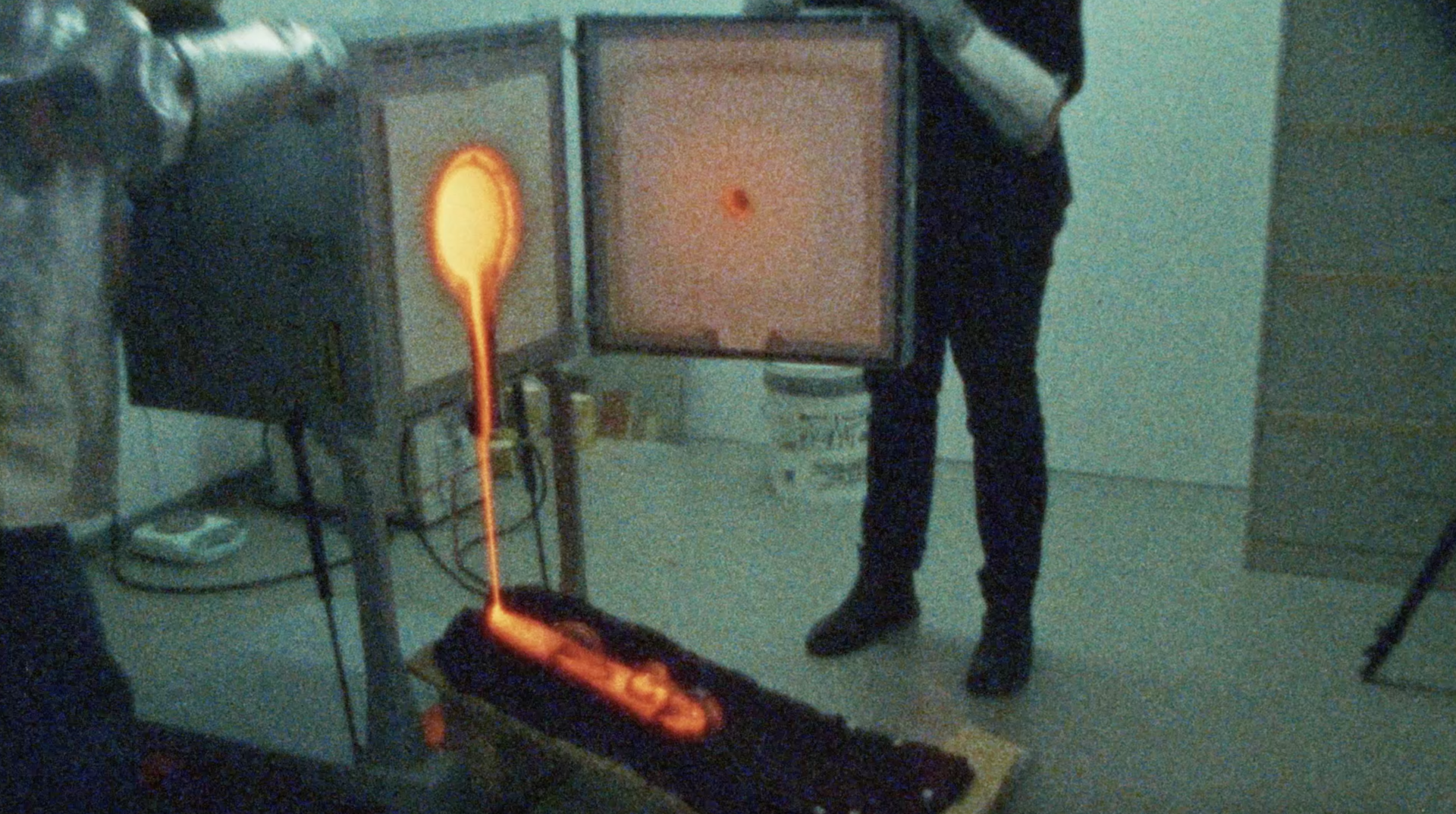
|
|
https://www.researchcatalogue.net/profile/show-exposition?exposition=3115266 This presentation was made while the research was still ongoing. Now I am proposing to present the outcomes of the completed artistic research, mostly focusing on a film "Seismic". |
I would like to present the project and to show some excerpts from the film "Seismic". | Projector and screen | No | |||
| Star/flag Submit a contribution to the 2026 Forum on Artistic Research: Submission #378 | Anonymous | Alex | Gaja Ortega | alex.g@buv.edu.vn | Constructing Situated Creative Agency: Context-Driven Conceptualisation in Artistic Research | Workshop | English | This training explores how situated creative agency emerges through context-driven and practice-led conceptualisation processes in artistic research. Drawing on case studies from Vietnamese art and design education (including projects engaging with ethnic minority cultures, heritage practices, and hybrid visual identities) the workshop reframes conceptualisation not as idea generation, but as epistemic positioning. Through guided exercises, participants contrast decontextualised project framing with context-embedded approaches, map their own cultural and methodological positioning, and examine how visual, material, and embodied knowledges shape artistic stance. The session foregrounds cultural hybridity as both tension and resource, highlighting how agency is negotiated across local traditions, globalised aesthetics, and institutional research frameworks. Participants produce a visual conceptual map linking context, method, and agency, generating transferable models for artistic research across diverse cultural settings. Keywords: Situated Creative Agency, Context-Driven Conceptualisation, Artistic Research Pedagogy, Cultural Hybridity, Practice-Led Methodologies Structure (~90 minutes) 1. Introduction: Framing, Case studies, Key terms clarified 2. Contrast Exercise: Participants contextually reframe a project twice 3. Positioning Mapping: Guided scaffold to map context, influences, methods, and agency. 4. Sharing & Reflection Alignment with SAR Conference: This workshop responds directly to themes of endangered conceptual worlds and minoritised knowledges by examining how artistic conceptualisation processes sustain culturally situated forms of visual and material knowledge production. Through cases from Vietnam (particularly projects engaging in minorities’ contexts and hybrid visual cultures) the session highlights how agency is constructed within layered social, historical, and institutional conditions. |
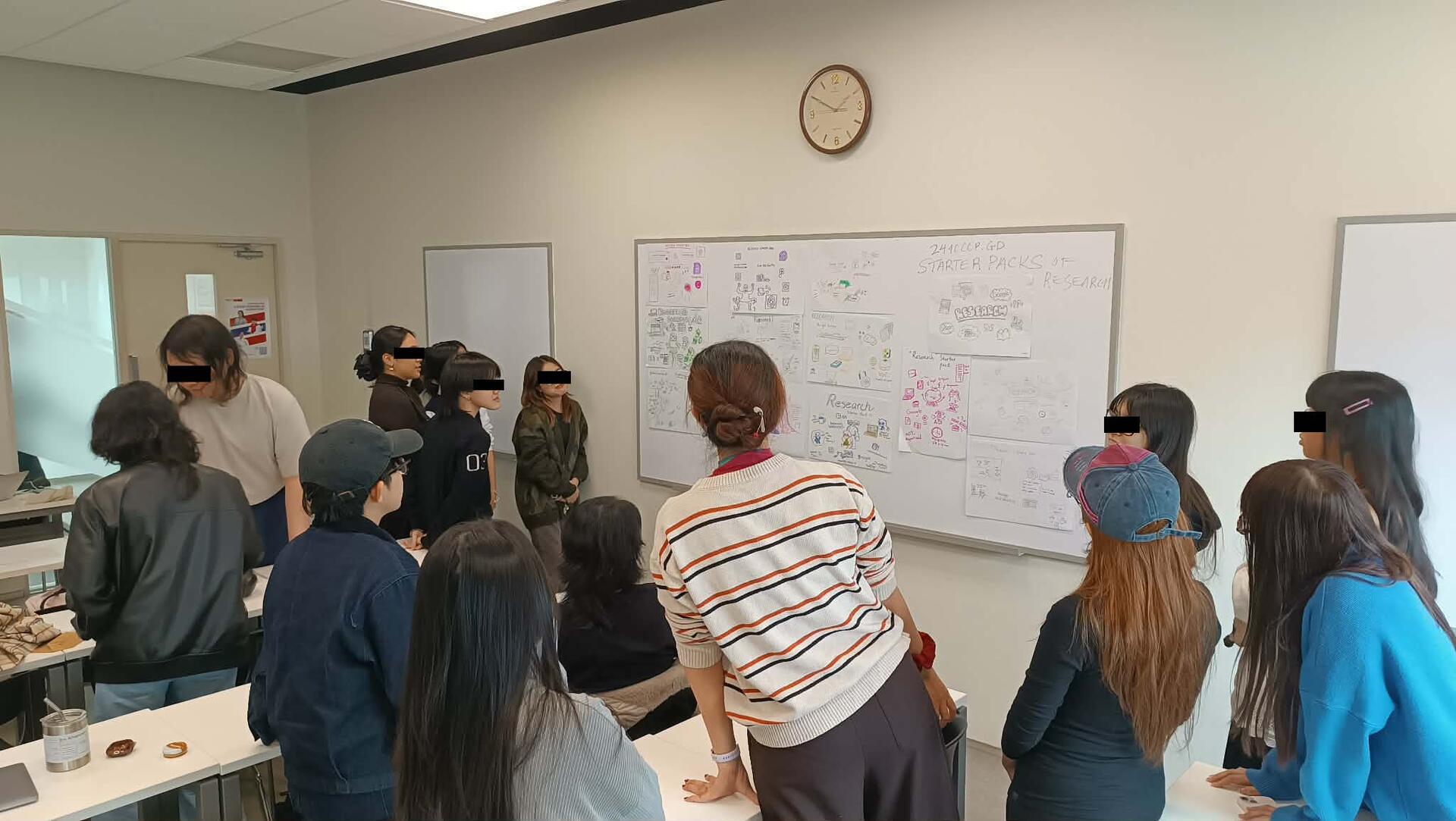
|
|
This training is based in five deliveries a core research module of the Contemporary Creative Practices degree (British University Vietnam), where the strategies have been systematically developed. Related research was presented at: University of Stirling Teaching and Learning Conference 2025 (“Redefining Creative Inquiry”) 2025 Communities of Practice Conference at BUV (“Reshaping a Research-based Module”) Asia Pacific Artistic Research Network Conference in Thailand (“Beyond the Classroom”) |
This is a structured, participatory training designed for approximately 20 participants. It combines a short conceptual framing with guided individual and small-group exercises leading to a visual conceptual map. The session draws on documented classroom practice and prior conference research. Participants may optionally share digital copies of their maps for comparative reflection and potential future research, subject to informed consent. Outline 1. Introduction: Framing, Case studies, Key terms clarified 2. Contrast Exercise: Participants reframe a project twice (Decontextualised and Context-embedded versions) 3. Positioning Mapping: Guided scaffold to map context, influences, methods, and agency. 4. Sharing & Reflection |
Flexible room layout with movable chairs and tables to enable small-group work. Projector and screen for short visual presentation (slides + case examples). Whiteboard. Participants will require paper (A3 preferred), markers, and pens for conceptual mapping. No specialised software or devices required. I can bring my laptop and other necessary printed materials. | The workshop includes discussion of projects engaging with minoritised communities and cultural contexts. Ethical considerations will be explicitly addressed, including respectful representation, informed consent, and avoidance of extractive research practices. Participation in sharing outputs is voluntary. Any documentation collected for future research will be anonymised and used only with explicit consent. No sensitive personal data will be required. | Yes | Alex Gaja Ortega | |||
| Star/flag Submit a contribution to the 2026 Forum on Artistic Research: Submission #375 | Anonymous | Barbara | Neves Alves | barbara@barbaranevesalves.net | Disquietudes: The Entrails & Hummings | Project presentation | English | Disquietudes: The Entrails & Hummings is an ongoing artistic research project developed in collaboration with Barcelos-based ceramist António Ramalho. Since 2023, our dialogue has unfolded through drawing, clay, etching, short stories and expanded footnotes, generating a constellation of ceramic figures—Entrails (Longing, Trauma, Denial, Implicated) and Hummings (Rhetoric, Lament, Fable, Silence). Emerging from the figurative clay tradition of northern Portugal—historically intertwined with folklore, markets and narratives of national identity—these works reorient a vernacular language toward questions of colonial memory and its afterlives. Traditionally inhabiting domestic interiors and circulating through local markets, such figures carry stories of saints, professions and popular myth; here, they hold other narratives. The project approaches this material tradition as a site of inquiry into how colonial memory lingers—in gestures, domestic objects, pedagogical repetition and half-forgotten stories. Etchings and short texts, accompany each figures, while expanded notes trace historical frameworks running beneath them. As the ceramic figures become integrated into Ramalho’s repertoire and circulate through local markets, they enter domestic space, generating intimate conversations about difficult and often silenced pasts. The research unfolds through what I call material fabulation: working with clay, drawing and narrative as sites where inherited histories are tested, displaced and reconfigured. Through this process, historical narratives are not described but physically unsettled, allowing affect, hesitation and contradiction to surface. For the SAR Forum, I propose an in-person presentation introducing context and methodology, followed by readings of Longing and Lament, engaging the theme of “Endangered Conceptual Worlds” by reflecting on how inherited histories persist and can be reworked through vernacular material practice. |
https://www.researchcatalogue.net/view/4228467/4228468 | https://www.researchcatalogue.net/view/4228467/4228468 |
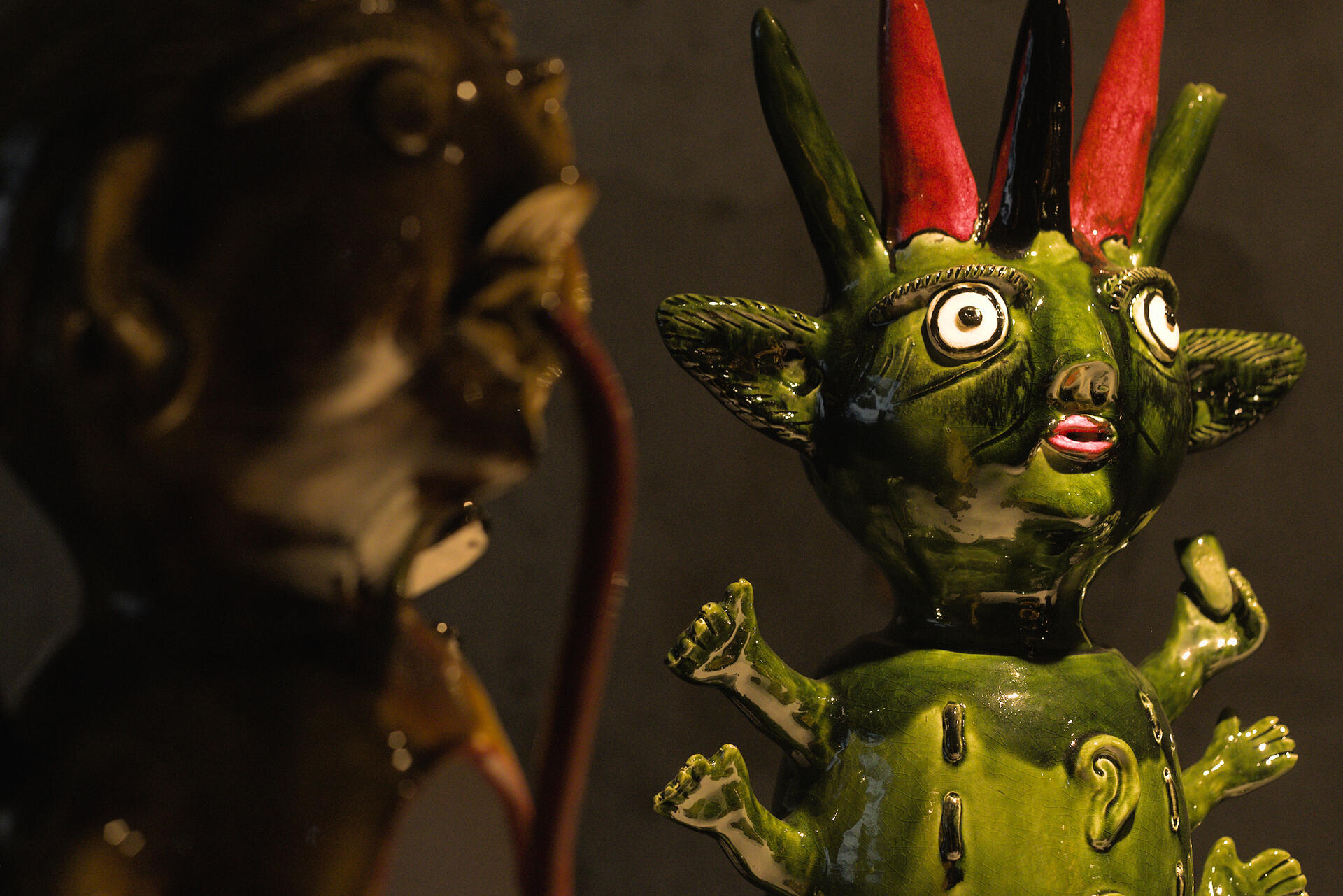
|
|
Earlier iterations have been presented in exhibition and public talk formats. A first constellation of ceramic works developed in collaboration with António Ramalho was exhibited at RAMPA, Porto (2023–24), and presented at the Faculty of Fine Arts Univeristy of Porto (2023). The research has been shared through readings and work-in-progress presentations at Manifold Books Amsterdam (2025) and Gerrit Rietveld Academy. The publication is currently in development, with Clare Butcher as editor. | The presentation builds on earlier exhibition and work-in-progress iterations, shifting from display to live articulation of the research process. At SAR 2026, I will introduce the collaborative methodology and material development of the project, followed by readings of Longing and Lament. Ceramic figures and etchings will be present as material references, allowing the audience to encounter the work across object, narrative and reflection. Working with intangible heritage through material practice, the presentation reflects on how inherited knowledges are unsettled from within the making process itself. As the figures circulate through markets and enter domestic space, they open intimate encounters with histories that are sensitive and traumatic—often avoided in public debate, yet necessary to engage in relation to Portugal’s colonial past. | A projector, a microphone (if needed), an environment conductive to reading and conversation. | No | |||
| Star/flag Submit a contribution to the 2026 Forum on Artistic Research: Submission #372 | Anonymous | Angélica | Castelló | castello-garnett@mdw.ac.at | Totems — The Infinite Sadness of Small Obsolete Machines | Experimental format | English | Music is a social practice, often created in an interactive relationship between humans and their instruments (Cerulo 2009; Small 1997). Experienced musicians develop a close affective relation with the objects involved in musicking. These interactions between human and non-human actants can unfold into a relationship in which various social processes of negotiation, friction, and confrontation emerge (see Tatar and Pasquier 2018; Thelle and Wærstad. 2023). In contemporary electroacoustic music, the instruments often consist of micromechanical, electronic or electromagnetic technologies, which can be considered complex music systems. They are often not fully stable, transparently functional or controllable—even moody. A deep understanding of their “personalities” can give way to new forms and qualities of (artistic) expression that would otherwise remain unseen (see Borgo 2016; Guinan 2024). We, the authors of this proposal, collaborate in the artistic research project “Spirits in Complexity”. For this laboratory, we want to present our reflections on our ongoing research on the connection between machines and humans. This approach focuses more specifically on obsolete sound machines—tapes, radios, cassettes—and our relationship with them. How does this situation of fragility, this imminent threat of becoming waste, affect this interaction? The disintegration processes through which a machine reveals its materiality and structure—its truest self. Do machines have a personality? Can you experience these personalities from the interactions with them and do they change in their life span? Do you influence each other when collaborating? How do we understand them or relate to them? Do we anthropomorphise or empower them (see Young et al. 2011)? How does the use of technology change when we shift from a controlling perspective to a non-hierarchical attitude—when we include these machines as collaborators and storytellers instead (see Haraway 2016)? |
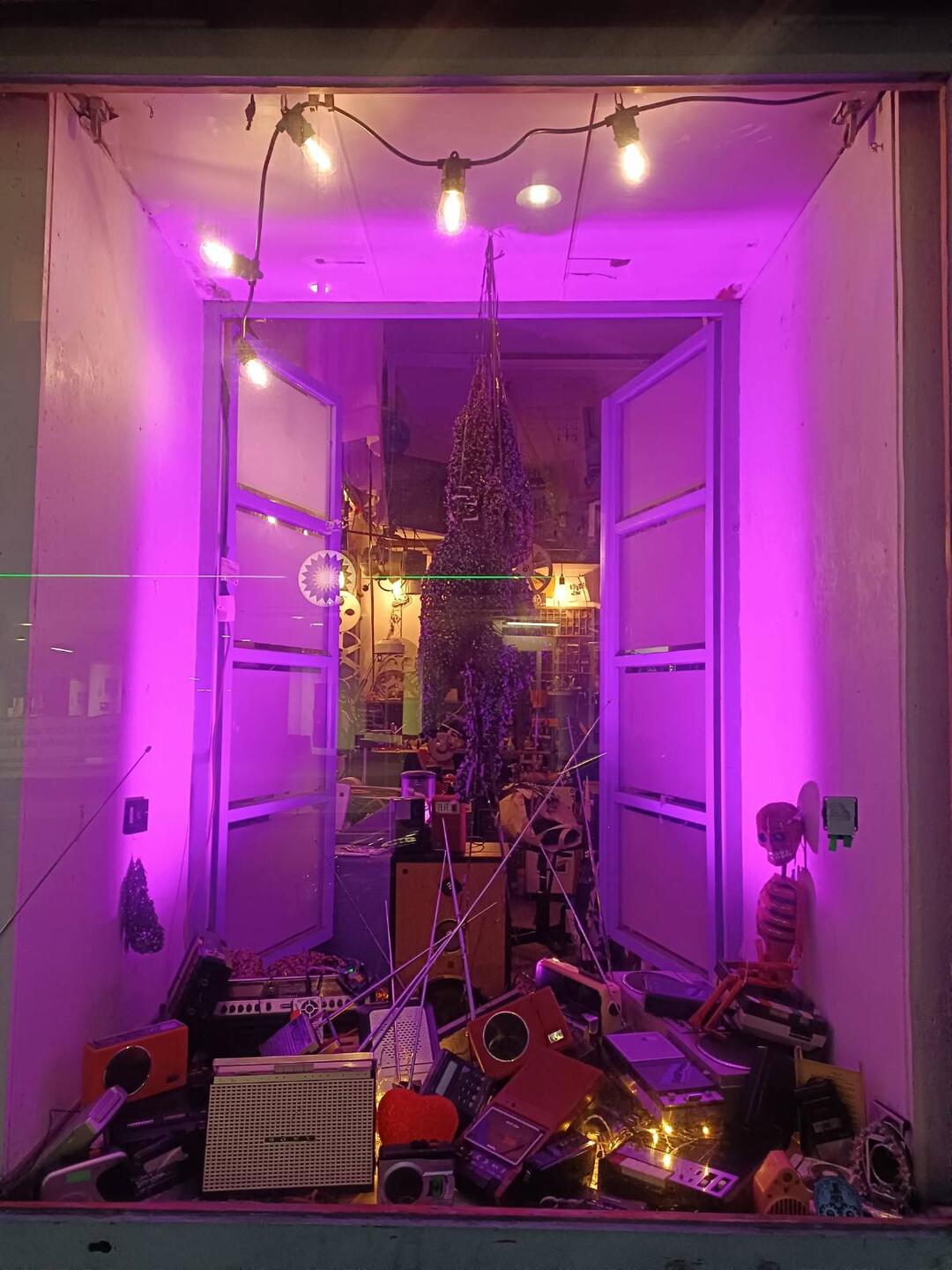
|
|
The 3 principal Projects of this research by Angélica Castelló (2024 - ongoing) Totem : Discarded audio machines are reactivated as ritual sound altars, transforming technological waste into a living techno-spiritual presence. Totem Series: A concert platform where invited artists engage with the altar, exploring relational sound and making kin with machines. Un Sueño: A performance with two Revox recorders and woven tape, creating an intimate dialogue where machines act semi-autonomously. |
The laboratory is designed as an experimental and interactive 90-minute session that not only presents our research topic but also pursues an open, engaged discussion aligned with the themes of the conference. It begins with a performance where we reconfigure the sonic and scenographic spaces of both religious and pagan altars. Old radios, cassette players, and tapes — materials often considered obsolete — are resurrected and re-enchanted. This is followed by a brief introduction to the topic and a presentation of our research findings to date. A moderated discussion with the participants will then take place, based on a questionnaire to gather individual perspectives and associations. Finally, participants will be involved in a collaborative performance, in which the previously discussed concepts will be practically explored and implemented in the space. The space itself should be organized around the totem/altar, which serves as a spatial and conceptual point of reference. | one table, if possible, round with a diameter of 2m (or similar); sufficient power strips |
none | Yes | Angélica Castelló | |||
| Star/flag Submit a contribution to the 2026 Forum on Artistic Research: Submission #367 | Anonymous | Lorenzo | Pusterla | lore.pusterla@gmail.com | Legacy of the Unseen: The Artistic and Pedagogical Heritage of Blind Pianist Alberto Mozzati | Poster presentation | English | The pedagogical practices of visually impaired musicians within Italian Institutes for the Blind have received limited empirical attention, despite their relevance for understanding alternative modes of musical learning. Alberto Mozzati, an Italian blind concert pianist and influential twentieth-century pedagogue, developed a piano teaching approach grounded in auditory, tactile, and kinaesthetic strategies. His work provides a historically situated case through which non-visual forms of musical knowledge transmission can be examined. Conducted in collaboration with the Blind People Institute of Milan (Historical Archives and Typhlopedagogical Service), this study investigates how non-visual pedagogical strategies were implemented and experienced in Mozzati’s teaching, and explores their implications for musical learning and skill development. The research adopts a qualitative empirical design integrating archival materials, pedagogical documents, semi-structured interviews with former students, performance-based exploration of selected strategies, and didactic laboratories involving blind students. Data were analysed using thematic analysis to identify recurring pedagogical patterns and perceptual modalities. Findings indicate that Mozzati prioritised listening, bodily awareness, and imitation over visual score-based instruction. Former students describe heightened attention to sound, touch, and movement, alongside early integration of technical and expressive elements. Laboratory observations suggest that such strategies support the internalisation of musical structures and interpretative decision-making across proficiency levels. By empirically examining this marginalised teaching context, the study contributes to discussions on embodied learning, accessibility, and diversity in music education, showing how historically grounded case studies can inform contemporary pedagogical research. |
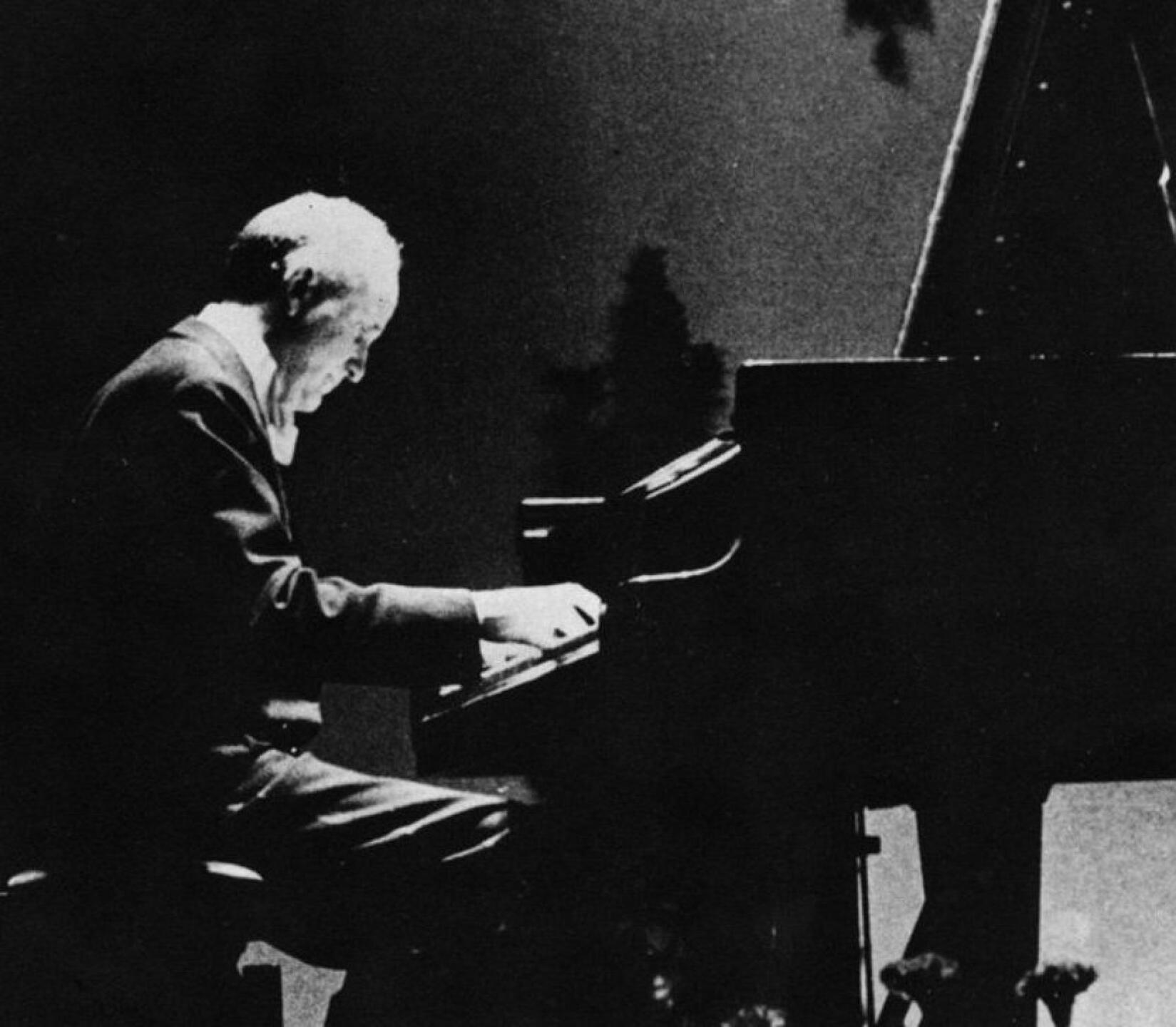
|
|
Yes | Lorenzo Pusterla | |||||||
| Star/flag Submit a contribution to the 2026 Forum on Artistic Research: Submission #366 | Anonymous | Jose Rolando | Jorquera | josejorqueraramirez@gmail.com | Rewriting Images: Performance as epistemic intervention in colonial visual archives | Project presentation | English | This artistic research project investigates how performative rewriting can operate as an epistemic intervention within colonial visual archives. It takes as its point of departure the 1859 painting El naufragio del Bergatin joven Daniel by Raymond Monvoisin, a work that stages the encounter between a white female survivor of a shipwreck and indigenous inhabitants in southern Chile. Rather than approaching the painting as a historical object to be interpreted, the project treats it as an active visual structure that continues to organize perception, affect, and subject positions in the present. Through a documented artistic laboratory, the image is activated using methods of slow collective observation, dialogical unfolding, spatial reconfiguration, and performative re – enactment. The body becomes an analytical instrument. By redistributing positions, gestures, and proximities within the original composition, the performance displaces the colonial narrative embedded in the painting and exposes its regime of visibility. The resulting performative act does not illustrate critique but produces knowledge through embodied experimentation. Rewriting emerges here as a research operation a way of interrogating how images distribute vulnerability, silence certain bodies, and naturalize hierarchies. The project argues that artistic practice can function as a mode of visual thinking capable of revealing and interrupting inherited structures of seeing. By articulating performance as a method of archival inquiry, this research contributes to the field of artistic research through an embodied, relational, and process-based epistemology. It proposes that intervening in images is not only an aesthetic gesture but also a way of transforming how knowledge about history, representation, and alterity is produced. Monvoisin, R. (1859). El naufragio del Bergantín joven Daniel. Museo O´higginiano y de Bellas Artes, Talca, Chile. https://www.surdoc.cl/registro/7-180 |
https://www.researchcatalogue.net/profile/show-set?set=4228615 | https://www.researchcatalogue.net/profile/show-set?set=4228615 |
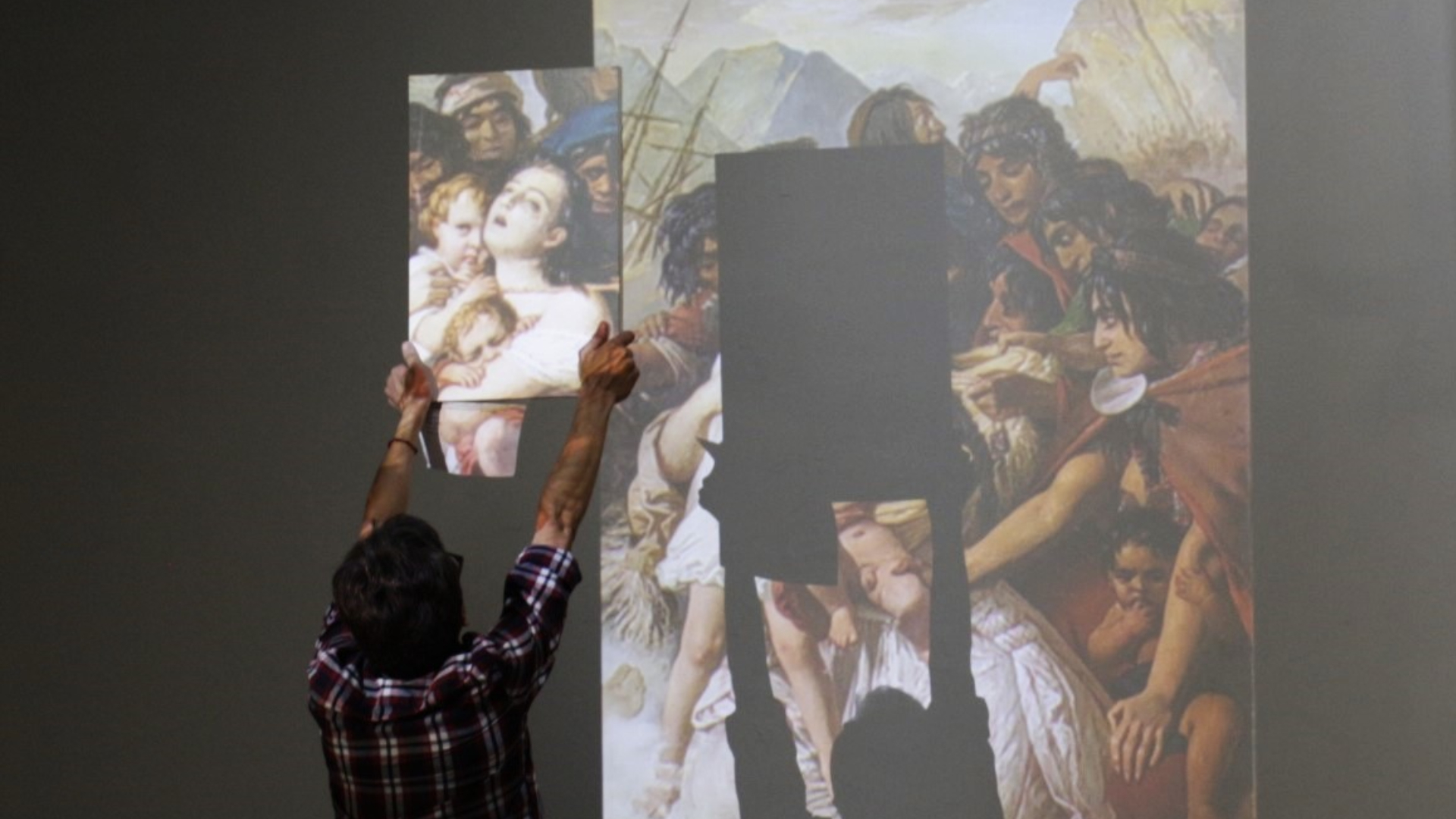
|
|
An early stage of this project was presented in 2023 at the research meeting "Escarbar a oscuras" at the University of Castilla-La Mancha, Spain. It later developed into an audiovisual creation laboratory at the University of Antofagasta, Chile, where a collective audiovisual piece was produced, now forming a central component of the current SAR proposal. | This project requires essential technical equipment to ensure proper presentation. A high-resolution digital projector is necessary to display images clearly and at an appropriate scale. A sound system with quality loudspeakers is also required to guarantee clear voice projection and balanced audio. The space should include a suitable projection surface, electrical access, and adequate acoustics for optimal visibility and sound clarity. | Yes | Jose Rolando Jorquera | |||
| Star/flag Submit a contribution to the 2026 Forum on Artistic Research: Submission #365 | Anonymous | Varvara | Keidan Shavrova | varvara.keidan.shavrova@network.rca.ac.uk | Haptic Flight | Project presentation | English | Since the development of flight early in the 20th century when flying captured the collective imagination as a technological project, its potential has been firmly harnessed by patriarchy. This project engages artistic and theoretical propositions that remove flight from monopolisation by militarist domination and commercial profit, to reimagine flight as a protective planetary capacity. By problematising the geo-politics of flight in relation to personal histories and feminist thought, this research develops new artistic and theoretical visions of flight. It centres auto-ethnography as a method that enables me to connect my family history with my practice, where I reach and touch transgenerational traumas by metaphorically and physically connecting myself to them through threads of intricate and intimate handmaking. Reflective of these ideas, this project reimagines flight through materiality of textiles, fibre-based installations and performative activations. In doing so, it suggests rerouting the trajectory of flight towards more intimate, embodied realms, where the liberatory qualities of flight are reclaimed through the domestic territory that reimagines flight and its technologies as an intrinsic part of the planetary eco-system that needs to be cared for, and not the frontier to be conquered. I argue that dreamworlds of flight could be channelled, through the softening, haptic qualities of thinking-through-hand-making, into empowering women to reimagine their role in relation to technologies, where instead of the automation of labour, visions of a posthuman feminist futures can be built around eco-communality and post-technological solidarity. |
https://www.researchcatalogue.net/view/4226864/4226865 | https://www.researchcatalogue.net/view/4226864/4226865 |
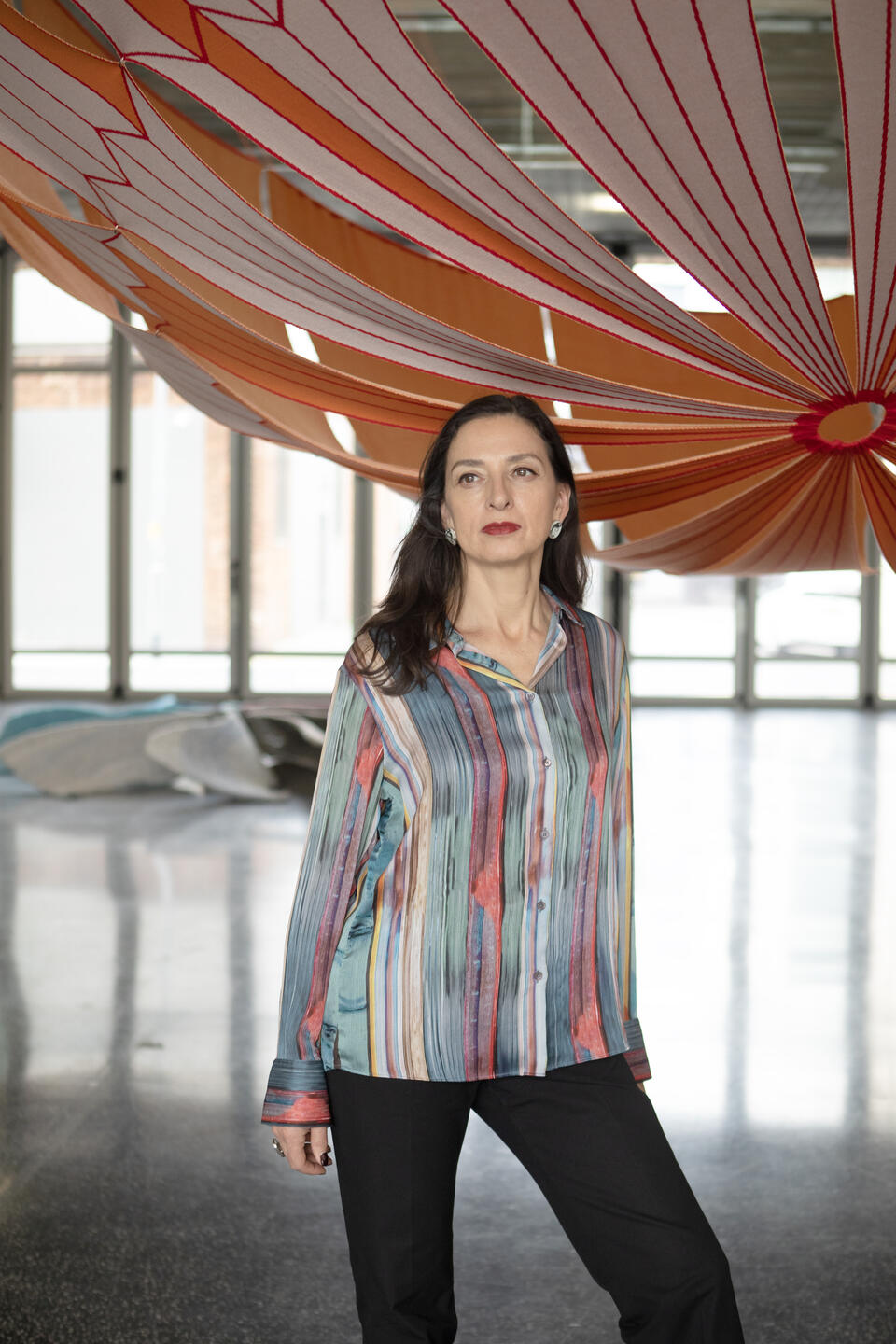
|
|
PhD VIVA exhibition, October 2025, Royal College of Art, London | No | |||||
| Star/flag Submit a contribution to the 2026 Forum on Artistic Research: Submission #364 | Anonymous | Tuula | Närhinen | tuua.narhinen@uniarts.fi | THE HELIOGRAPHIC GARDEN A Stroll into the medium-specific Umwelt of Analogue Colour Photography | Project presentation | Finnish | The project invites the audience to step into the queer and enchanted world of analogue photographs, produced by the chemical agency of plants in interaction with light sensitive technologies. The work includes spatial photographic and cinematic installations that propose the visitor to engage with the modus operandi of various analogue imaging technologies in their genuine, material-discursive milieu. Generated by cameraless techniques, the artworks create medium-specific visual realities and temporalities that set out to challenge the spectator’s anthropoid vantage point. The resulting chemigrams enable us to transcend the human sensorium and to envision alternative subjectivities and registers of materiality brought about by the contact prints and the analogue films. Drawing from Jacob von Uexküll’s theories of the Umwelt, the work taps into non-human perceptions of time and space. The project explores evanescent phenomena and the “ecology” of analogue photographic technologies in terms of Uexküll’s Naturtechnik. The concepts of “perception time” and “effect space” will be applied to study the silver-based light-sensitive materials as living fabrics of spatial and temporal becoming. The work is part of a three-year research project entitled "Worldmaking with the Aesthetic Apparatus: Tracing Vision back to the Embodied Observer". The research develops an artist-led, empiric approach to study the sweeping repercussions that visual technologies may have in orienting the human sensorium and in underpinning our worldview. |
https://www.researchcatalogue.net/view/2484702/3868499 | https://www.researchcatalogue.net/view/2484702/3868499 |
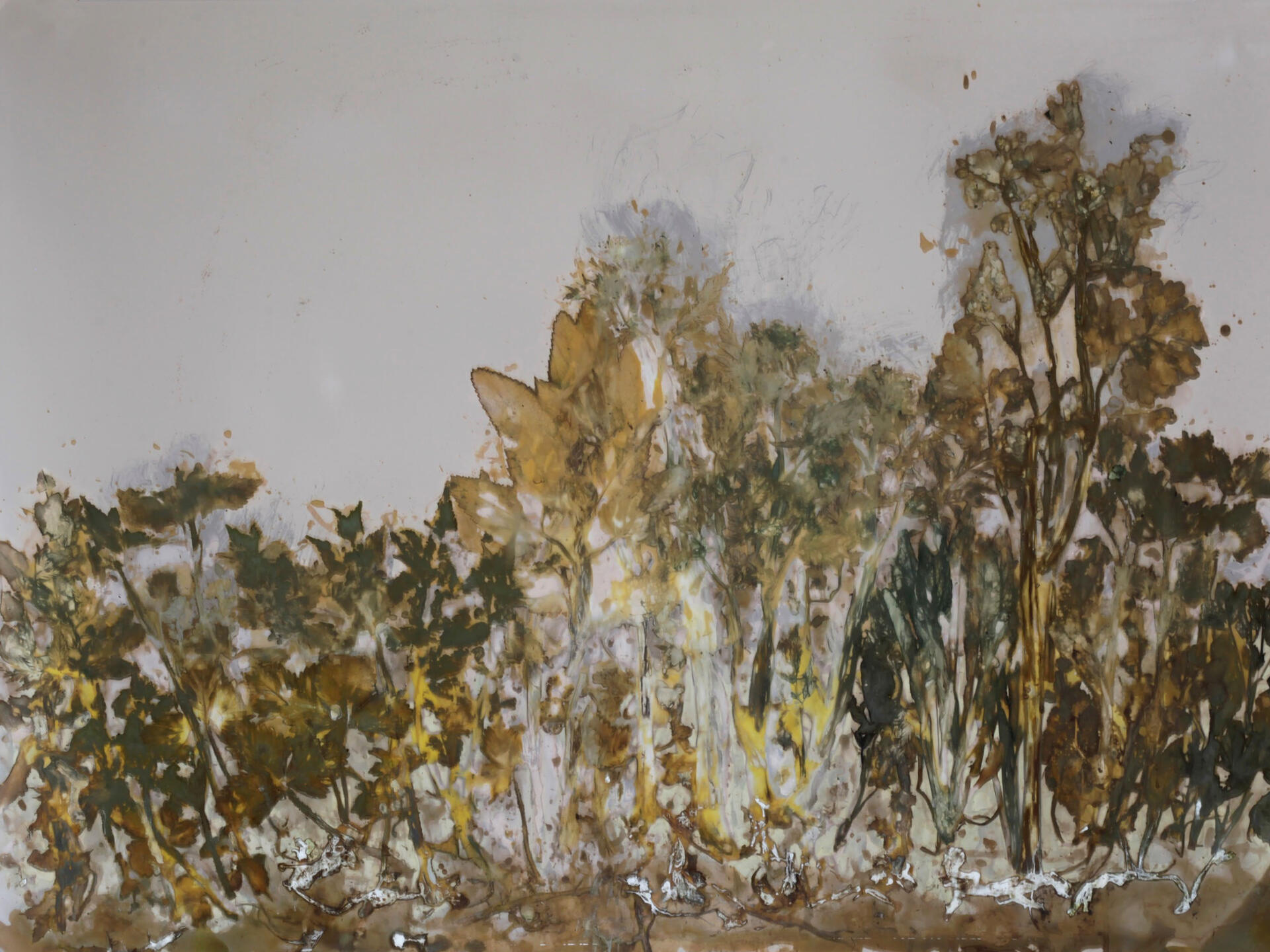
|
|
Conference presentation 20 minutes talk about the project at the event: Night of Science 2026: 200 years of Photography January 22, 2026, 17:00 – 19:00 French Institute in Finland: Tehtaankatu 27-29D, 00150 Helsinki Presentation: Tuula Närhinen: The Heliographic Garden - Studying photograms, chemigrams and other cameraless light-sensitive techniques |
No | |||||
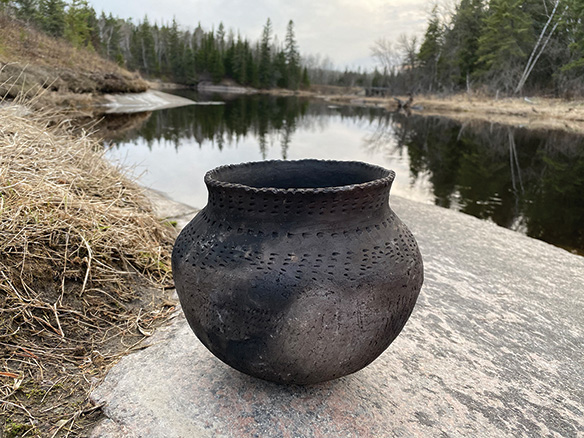
| Star/flag Submit a contribution to the 2026 Forum on Artistic Research: Submission #360 | Anonymous | Becca | Taylor | becca.taylor.e@gmail.com | Carriers: Indigenous vessels, food sovereignty and ancestral connections | Experimental format | English | Indigenous vessels carry teachings about nourishment, memory, and the relationships that sustain life. This proposal explores pottery as a site where food sovereignty, water teachings, ancestral connection, and land-based knowledge intersect. Grounded in Indigenous methodologies, the session invites participants into a shared space where clay becomes a starting point for reflecting on how cultural practices support community well-being and self-determination. Rather than focusing on a single technique or outcome, the gathering emphasizes relational engagement, attending to the origins of materials, the stories they hold, and the responsibilities that come with creating forms meant to sustain life. Through collective conversation and gentle interaction with clay, participants consider how vessels embody governance, kinship, and continuity, and how contemporary Indigenous artists and communities are renewing clay-based practices through cultural resurgence. The session offers an opportunity to think with clay, with each other, and with the teachings carried forward through generations, opening dialogue about the future of Indigenous food sovereignty and the role of material culture in supporting it. |
|
|
KC Adams is a leading contributor to the research and revitalization of Indigenous ceramic techniques in Treaty one. Adams has taught workshops, created exhibitions and performed on Indigenous pottery. Becca Taylor is a mentee of KC Adams, working alongside her to learn the process of harvesting clay and building vessels from the land. In response, Becca has research, written and created a public artwork highlighting the process of vessels and the honouring of their relationship as collaborators | The session uses an experimental hands on dialogue format where participants engage with clay while moving in and out of shared conversation. Rather than separating making from discussion, the process invites ideas, memories, and questions to surface through touch, rhythm, and material encounter. This open structure allows participants to think with their hands, respond to one another in real time, and explore relationships to food, water, and ancestral knowledge as they emerge organically through the act of working with clay. The format emphasizes relational learning, collective reflection, and the generative uncertainty of creating together. | Spatial needs: Movable tables and chairs with surfaces that can accommodate clay. Access to water. Enough room for participants to gather in a circle. Ideally the space will have natural light with views to the landscape. Limited participant numbers to assist in managing dialogue and workshop. Technical needs: Projector and/or TV, Speaker and clay. Potentially a fire pit. A more detailed list can be provided once location is decided. |
The session acknowledges potential risks related to cultural knowledge, emotional vulnerability, and material use. Conversations about food, water, and ancestral relationships may surface personal or community histories of loss or disruption. Care is taken to avoid cultural appropriation, misrepresentation, or the sharing of teachings that are not meant for public circulation. Participants are invited into a respectful, consent based environment where stories remain held within the group. | Yes | Becca Taylor | |||
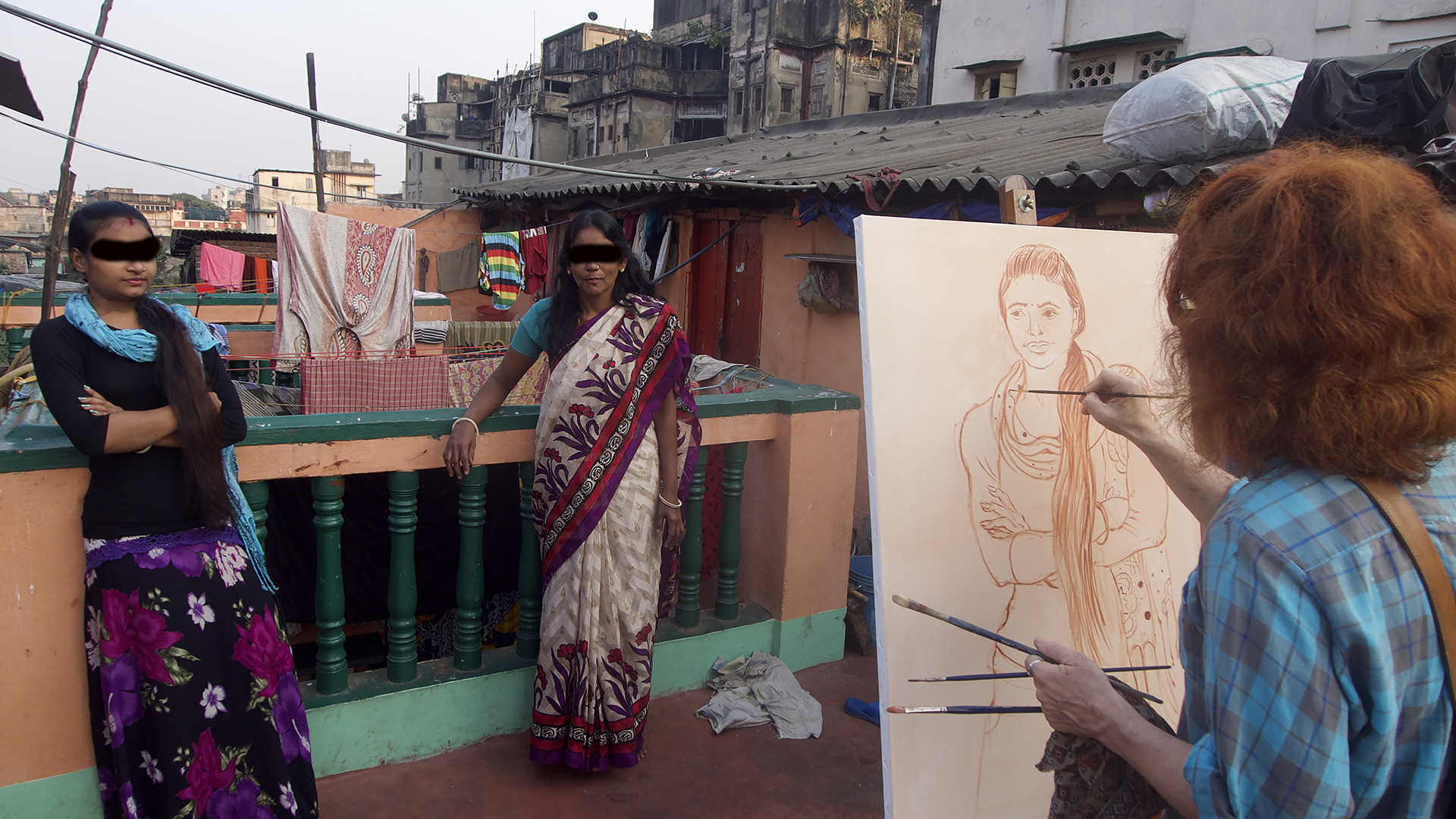
| Star/flag Submit a contribution to the 2026 Forum on Artistic Research: Submission #359 | Anonymous | Joan Marie | Kelly | joanmariekellyzzz@gmail.com | Drawing Close: Relational Proximity Across Difference in Marginalized Women’s Worlds | Project presentation | English | This research explores relational painting as a mode of inquiry through which knowledge and trust emerge in encounters between artist and participants, rather than approaching portraiture as representation alone. Painting is understood as a reciprocal practice shaped through shared time, attentive presence, and a determination among all parties to continue the work. As the painter looks, the sitter looks back. Both engage in a reciprocal process of encountering one another. We recognize ourselves in the other and the other in ourselves—a process of recognition and identification between artist and sitter (Schuster, 2019). The resulting portrait is neither solely the artist’s nor the subject’s but both, producing something new (Schuster, 2019). It becomes a relational space where participants actively shape how they are seen, creating images that reflect lived experience while foregrounding agency. Working within the socially and economically complex environment of a brothel in Kolkata, painting sessions are embedded in the rhythms of daily life—conversations, domestic activities, social interactions, and the material surroundings that shape lives. Through sustained engagement, the practice explores how individuals navigate this environment and express agency through gesture, posture, and self-presentation. The project draws on Sarah Pink’s formulation of sensory ethnography, particularly her emphasis on knowledge as embodied and situated. Painting unfolds through mutual attention, allowing insights to emerge through shared experience rather than detached analysis. Central to the work is the recognition that creative processes in complex contexts require collective effort. Practical challenges, including navigating resources and power structures, are addressed by drawing on the knowledge of everyone involved. Through ongoing problem-solving, relationships deepen and trust develops through repeated interaction and a shared commitment to sustaining the work. |
https://www.researchcatalogue.net/profile/show-exposition?exposition=4214608 | https://www.researchcatalogue.net/profile/show-exposition?exposition=4214608 |
|
|
An earlier stage of this project was presented in 2022 at Rabindra Bharati University, Kolkata, in an invited talk titled Drawing as a Visual Research Methodology in Female Spaces, hosted by Prof. Swati Ghosh, Director of the Women’s Studies Center. The current contribution develops the work further by situating the painting practice within relational artistic research and sensory ethnography. | The contribution will be presented as a 20-minute talk followed by 10 minutes for questions and discussion, including visual material from the portrait and drawing practice discussed in the paper. | Projector and screen for digital images, HDMI connection for laptop, and standard audio-visual setup for a slide presentation. Standard audience seating in rows is suitable. | The project involves portrait work developed through long-term relationships with participants in a sensitive social environment. Informed consent, ongoing dialogue, and participant agency in how they are represented are central to the process. Care is taken to avoid identifying details where appropriate and to ensure representations respect participants’ dignity, safety, and lived circumstances. | No | ||
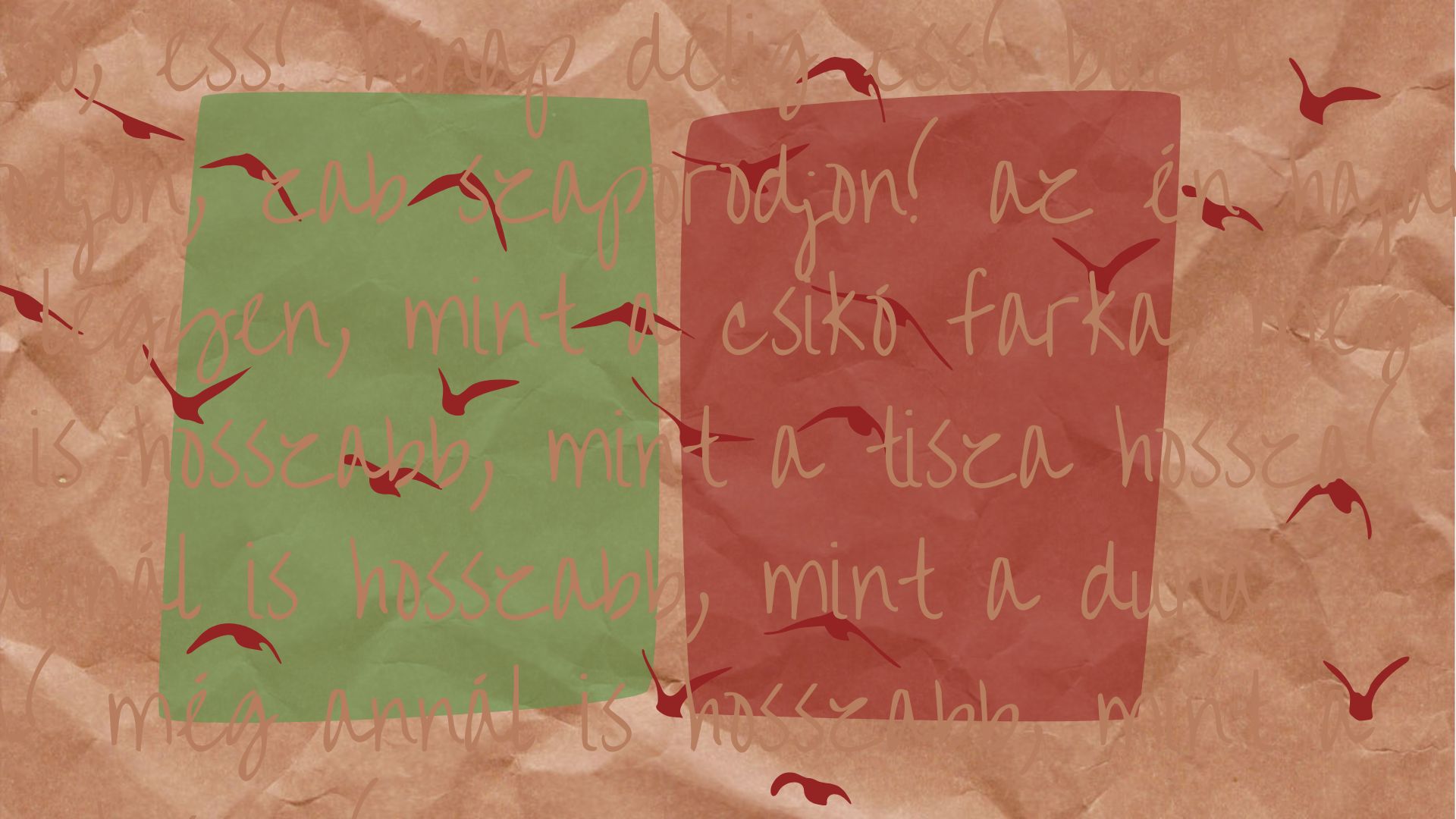
| Star/flag Submit a contribution to the 2026 Forum on Artistic Research: Submission #358 | Anonymous | Lóri | Fejes | lfejes@buffalo.edu | Fabulative retrieval for early Hungarian performance | Poster presentation | English | Any scholarly approach to ancient, pre-Christian Hungarian performance culture wrestles with reaching across the thousand years that separate researcher from subject matter. To uncover any traces of such subject matter across such immense temporality, this project looks to linguistic fabulation as a tool of cultural retrieval. In the late 18th century the language revival movement (nyelvújítás), among other efforts, reintroduced significant ancient lexica to modernize Hungarian. Such revitalized vocabulary often appear in games, limericks, and tales, even if their daily use has waned. The constellation of games, limericks, and tales isn’t solely a potent site for linguistic analysis, their trifecta may also evidence performative practices. At this linguistic-performative intersection emerge methodologies of fabulation that work against the empiric academic model of archival verification and factuality. In this project I access select Hungarian games, limericks, and tales through the framework of fabulation to argue that their lengthy cultural presence reiterates remnants of ancient, pre-Christian Hungarian performance. |
|
|
This project is a tentative chapter in my forthcoming dissertation proposal. I have previously engaged with the linguistic side of the work as an undergraduate, but am now moving this inquiry into performance studies and negotiating the embodied ramifications of linguistic and archival retrieval. | NA | NA | NA | Yes | Lóri Fejes | |||
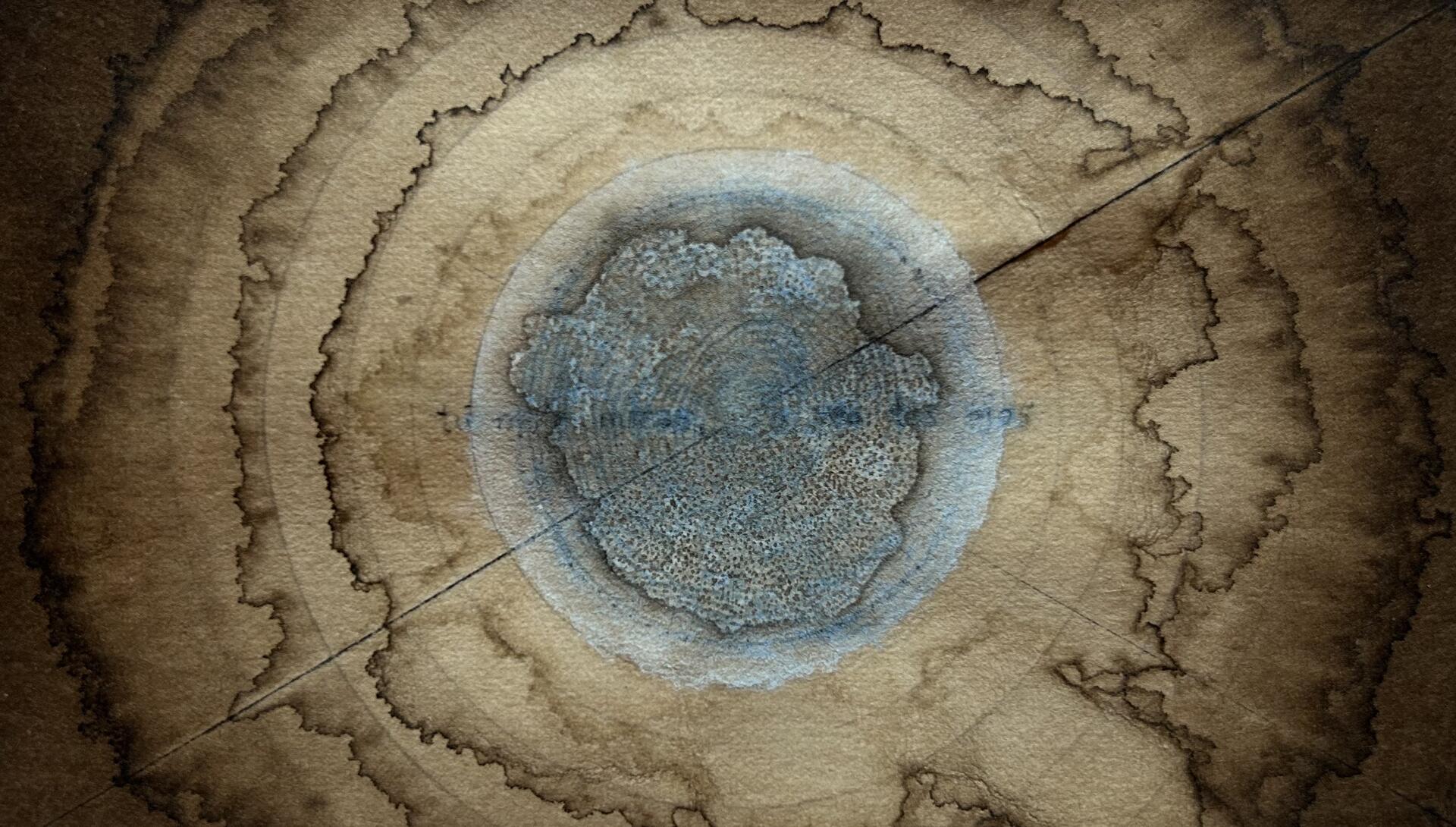
| Star/flag Submit a contribution to the 2026 Forum on Artistic Research: Submission #355 | Anonymous | Angelica Maria | Zorrilla | angelicamaria.zorrilla@gmail.com | With my Right Hand and With your Left Hand : Drawing Nearness through Minimal Gestures | Project presentation | English | Since they met, in the autumn of 2024, Pereira and Zorrilla have come together to reclaim drawing research as a privileged space from which to interrogate and rethink the way we relate to, understand and inhabit the world. With an emphasis on the minimal gesture of drawing, both artists have framed their research within an important logic of resistance. In their practices, they embrace the minor, the overlooked, the easily available and the affordable, while exploring precarious and vulnerable methodologies, and the many lines of intersection between the emotional and the political dimensions. Despite being shaped by distinct geographical, cultural and political backgrounds – Pereira born in Barcelos, Portugal and Zorrilla in Cali, Colombia – the two artists came to realise that their mutual love for drawing is anchored in the exercise of nearness. That, by implying an act of generosity though accessibility, drawing is conceptually entangled with touch, care, love, attention and proximity. Connectivity is key here, a synergy between modes of making and thinking: ‘sensing-thinking’ through a mutual process of learning and nurturing (Espejo Ayca, 2023). Written in conversation with each other, this paper will propose drawing as a counter-movement: as a moving away from the desire to own, dominate, and control, from the endless search for profit and exploitation. An act of resistance, to overcome narcissism and challenge anthropocentric arrogance. Arguing for the importance of sensing and knowing as a non-hierarchical bond, Pereira and Zorrilla will, therefore, engage with decolonial, feminist and gender studies, articulating a multiplicity of voices, including those of Audre Lorde, Gloria Anzaldúa, Elvira Espejo Ayca and Cecilia Vicuña, to find other ways of experiencing and telling drawing. |
https://www.researchcatalogue.net/shared/9de627367cab7eba07ad76dd3528bc2a | https://www.researchcatalogue.net/shared/9de627367cab7eba07ad76dd3528bc2a |
|
|
This research has never been presented before, yet we have recently participated in two conferences (2025/10/01 - The Fifth International Congress of Women Creators, Seville; 2025/07/11 - 12th European Feminist Research Conference, Barcelona) presenting related topics. Now we hope to expand further on the debate about the role of drawing as a vehicle for change, arguing for the importance of drawing as a way of sensing and negotiating our place in the world. | N/A | N/A | N/A | Yes | Angelica Maria Zorrilla | |
| Star/flag Submit a contribution to the 2026 Forum on Artistic Research: Submission #354 | Anonymous | Jon | Honerud | jho@usn.no | Restoring creative capacity under siege through artistic intelligence: Creative bureaucracy as force of democratic legitimacy | Project presentation | English | Public administration has for a few decades focused on innovation to solve the impossible tensions and needs of current societies. However, the understanding of creativity, appears to be limited to ideas of visual creativity and appearances, that are not relating to the artistic intelligence involved in creative work. In this presentation we showcase a framework of activities in administration, and forms of creativity, to pave a way towards artistic intelligence as a possible, situated and learnable practice in public administration. | https://www.researchcatalogue.net/shared/94b033fc4835b89ad29b9a3372f32b40 | https://www.researchcatalogue.net/shared/94b033fc4835b89ad29b9a3372f32b40 |
|
|
No | ||||||
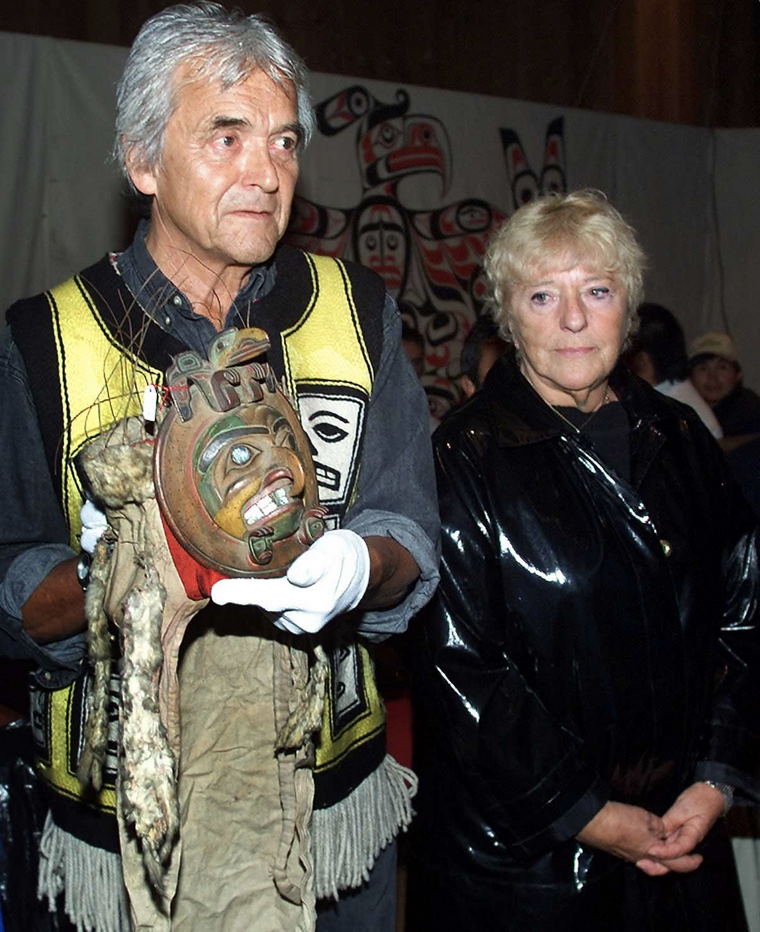
| Star/flag Submit a contribution to the 2026 Forum on Artistic Research: Submission #353 | Anonymous | Freya | Hattenberger | mail@freyahattenberger.de | Living Ground – A Photographic Dialogue Across Colonial Histories and Community Knowledge | Project presentation | English | Living Ground is an artistic research project by Freya Hattenberger in cooperation with the Rautenstrauch-Joest-Museum, the U'mista Cultural Centre (Canada), and the University of Cologne. The title denotes living soil as counter-concept to the toxic legacies of colonial photography. The project critically engages with colonial image archives, starting from late 19th-century Kwakwaka'wakw portraits in ethnographic collections – products of extractive practices that rendered people as objects. These images continue to shape visual memory and, through AI, reproduce stereotypes. The project asks: How can these silent images be translated into living relationships? How can agency over representation be returned to descendants? In collaboration with the U'mista Cultural Centre (whose name means "return of valuable things"), Living Ground develops a decolonial visual practice extending repatriation artistically. The methodology employs plant-based photographic processes (anthotype, chlorophyll printing), recognizing non-human actors – plants, light, seasons – as co-authors. In participatory workshops, historical photographs are re-introduced and new "Living Portraits" co-created with family members. This holds particular significance in Alert Bay, where Residential Schools ruptured cultural continuities. Accompanying recordings ("Archives in Conversation") interweave oral tradition with image formation: a narrative's duration determines exposure time, a family history guides plant choice. Voice, memory, and image coalesce; a silent archive is brought to life. The contribution demonstrates how artistic research activates endangered conceptual worlds as epistemic resources, understanding photography as relational practice that transcends colonial extractivist logics through dialogical, ecologically embedded processes. |
https://www.researchcatalogue.net/profile/show-exposition?exposition=4225853 | https://www.researchcatalogue.net/profile/show-exposition?exposition=4225853 |
|
|
Non | Yes | Freya Hattenberger | ||||
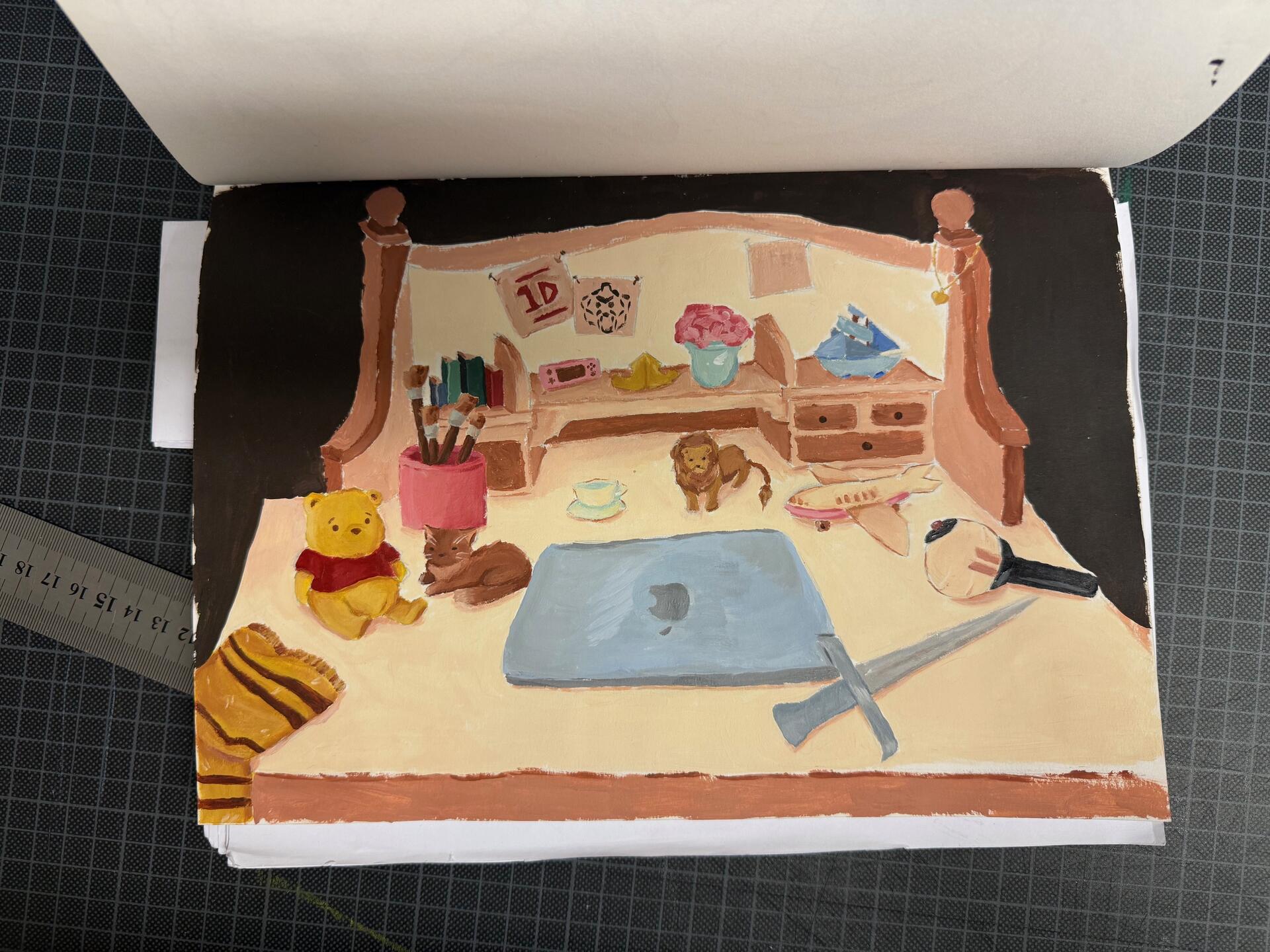
| Star/flag Submit a contribution to the 2026 Forum on Artistic Research: Submission #351 | Anonymous | Hilde | Honerud | honerud@usn.no | Artistic intelligence as situated creativity in the age of human fracking: An educational perspective. | Project presentation | English | This paper presents an educational experiment in artistic intelligence, focused on creativity as learned practice. The context is a bachelor's program in visual communication and design at a regional university, University of Southeastern Norway. As design students, the participants are generally not leaning towards or trained in artistic practices. From earlier evaluations, I also experienced that even senior students had little knowledge of creativity or working freely with ideas. in this presentation I show how I used artistic, creative practices, and codified it into creative challenges and assignments, and also how I worked with the educational space and also my role in creating safe conditions for learning creativity. I also used standard tests of human creativity to measure progress, which showed clear results in only few weeks. I will be exploring if this experiment can be used as a starting point for developing artistic intelligence as contextualized practice in other domains such as public administration and business education | https://www.researchcatalogue.net/shared/452de9721c2e4fd718869eaed8a46e65 | https://www.researchcatalogue.net/shared/452de9721c2e4fd718869eaed8a46e65 |
|
|
Student work illustrations are collected with approval, as according to Norwegian legislation. | No | |||||
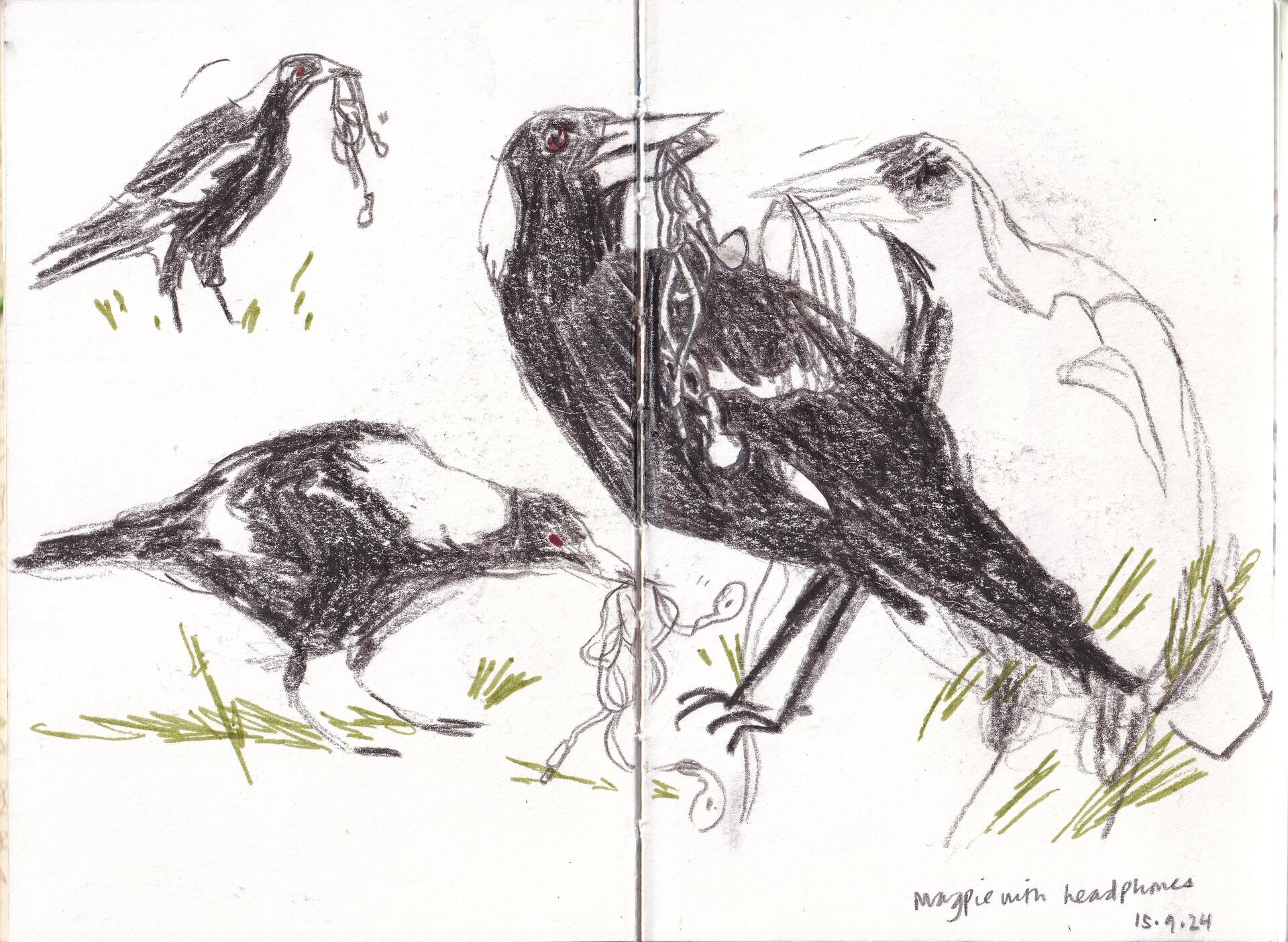
| Star/flag Submit a contribution to the 2026 Forum on Artistic Research: Submission #349 | Anonymous | Holly | O'Neil | hollyfoneil@gmail.com | The Sketchbook as a Dowsing Rod: Drawing to See and Surface Wetlands and their Kin | Project presentation | English | Amidst Sydney’s threatened, reshaped, and overlooked urban wetlands, this project presentation explores how place-based, creative research methodology might help to shine light on “undergrounded”(Coyne, 2024) urban stories of water within the Sydney context. Reflecting on the process of finding and seeing hidden, endangered and conceptual water worlds, in order to “surface” and translate narratives of water and it's kin, this research calls to an embodied, sketchbook drawing practice as a mode of attunement to “bear witness” (Dooren & Bird Rose, 2017) to more-than-human resilience in the face of urbanisation, habitat loss and climate breakdown. This is presented in three parts. Beginning with an introduction to the project ‘Surfacing Urban Wetlands’ and my PhD research that accompanies it, the intentions of this research and how embodied sketchbook practices are being utilised and qualified within it will be laid out. This research posits the sketchbook as a “dowsing rod” of sorts, working to help locate and listen to silenced, undergrounded ecosystems and places. Following on from this, I will present a positioned, critical analysis of the historic role of drawing, mapping and walking in so-called Australia. In Colonial-settler’s violent understandings of placemaking, drawings have been complicit in the destruction and violence towards both First Nations people and Country (Mannering, 2024), thus in section three of this presentation, this research will present how new ways of approaching these methodological creative practices might work as modes for embodied understanding and listening. Ultimately, through this project, an offering of methodological novelty is presented that aims to position the sketchbook, and sketchbook drawing practice, as an embodied extension of the author in place; as a tool through which to "divine" water stories; and a position from which to lay crucial groundwork to enact deep listening, care, and respect on Country. |
https://www.researchcatalogue.net/profile/show-exposition?exposition=4225026 | https://www.researchcatalogue.net/profile/show-exposition?exposition=4225026 |
|
|
Yes | Holly O'Neil | |||||
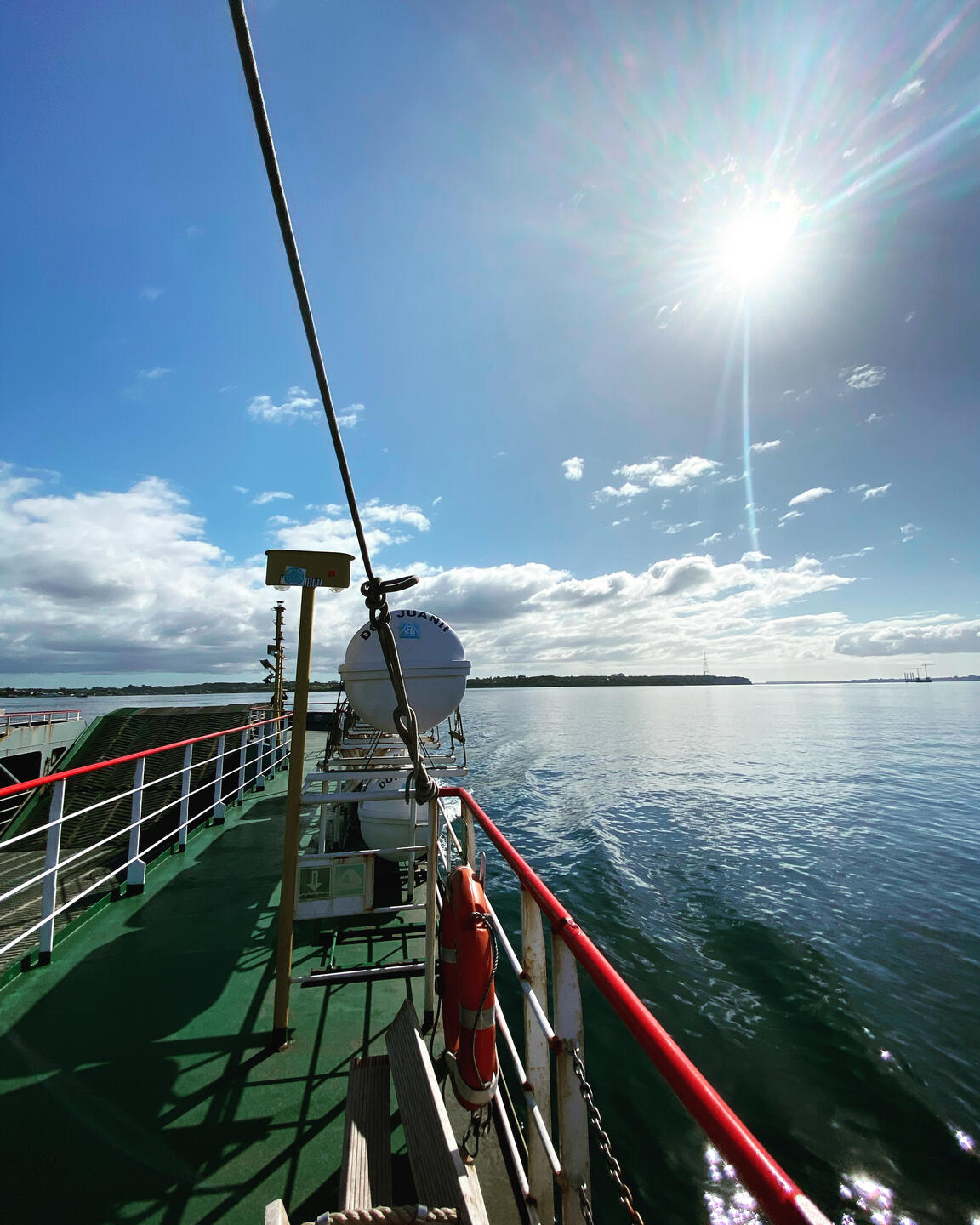
| Star/flag Submit a contribution to the 2026 Forum on Artistic Research: Submission #342 | Ignacio Soto-Silva | Ignacio | Soto-Silva | ignacio.soto@ulagos.cl | Recognising Artistic Research in the Global South: The case of the Universidad de Los Lagos, Chile | Project presentation | English | Artistic research frequently becomes legible through epistemic models consolidated in metropolitan academic centres. In regional universities of the Global South, however, it does not begin with the adoption of a disciplinary framework but with the recognition of artistic creation as knowledge already in practice. In Chile, recent higher-education legislation has formally incorporated artistic creation as a legitimate mode of knowledge production, placing it on an equivalent epistemic plane with scientific research. This juridical shift opens institutional space while simultaneously exposing unresolved tensions around validation, documentation and epistemic authority. This presentation reflects on the institutional articulation of artistic research at the University of Los Lagos, a public university in southern Chile located on historically Mapuche Williche territory. Here, recognising artistic creation as research requires engaging with conceptual worlds shaped by indigenous memory, territorial attachment and postcolonial continuities. Legal recognition alone does not determine how such knowledge is translated into academic formats within institutions historically structured by colonial epistemologies. Rather than importing artistic research as a stable paradigm, we approach it as a situated process of institutional translation. The establishment of a university-wide registry of artistic works functioned not simply as an instrument of measurement but as an experimental site where categories such as validation, circulation and exposition were renegotiated in dialogue with practices grounded in orality, community transmission and intergenerational cultural sedimentation. In a context marked by significant numbers of first-generation and indigenous-background students, artistic research emerges as a field of friction between academic infrastructures and lived territorial identities. |
https://www.researchcatalogue.net/view/4209793/4222925 | https://www.researchcatalogue.net/view/4209793/4222925 |
|
|
No additional spatial or technical requirements beyond those listed above. | Data projector Projection screen or white wall HDMI connection (USB-C adapter if needed) Sound system with stereo speakers Internet connection (Wi-Fi) |
No foreseeable risks or ethical concerns at this stage. | Yes | Ignacio Soto-Silva | ||
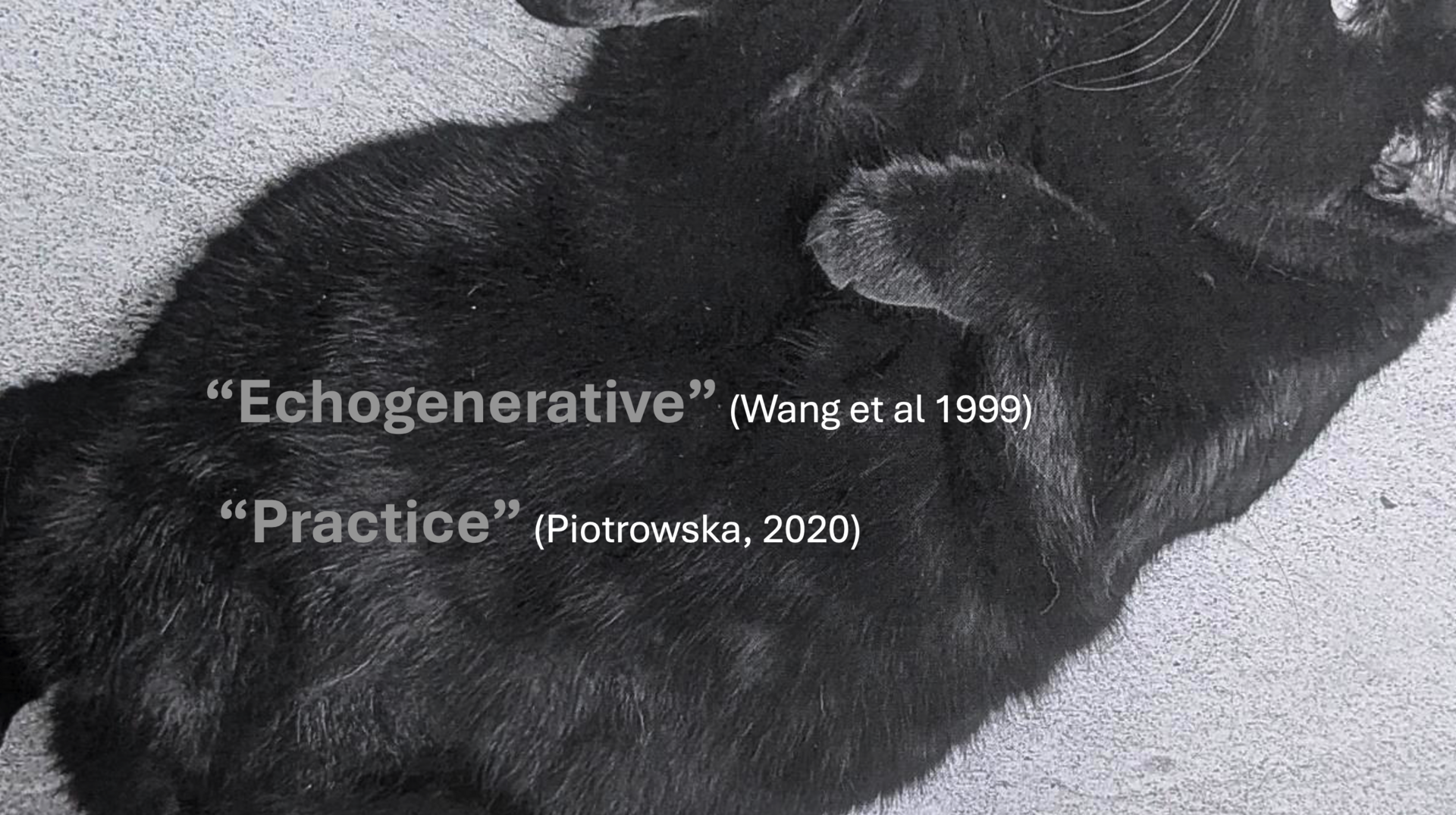
| Star/flag Submit a contribution to the 2026 Forum on Artistic Research: Submission #340 | Anonymous | Trish | Scott | trish.scott@kcl.ac.uk | Echogenerative Practice | Performance | English | Echogenerative Practice is an auto-theoretical textual performance that mobilizes echo as subject and form to interrogate how meaning is made and transformed through acts of citation. Drawing on feminist, neuroqueer, and decolonial perspectives, it reframes how echo and echolalia, traditionally cast as passive or pathological modes of communication, can be understood as generative forces that distort, queer, and reconfigure signification. Constructed as a 'tissue of quotations,' Echogenerative Practice performs citation as an aesthetic and critical gesture, exposing tensions between originality, appropriation, and authorship. The work positions echoing as activist poetics; a resistant practice that inhabits and transforms textual lineages in order to challenge institutional norms, disciplinary boundaries, and dominant epistemologies. The performance activates sonic rhythms that disrupt mainstream modes of articulation, opening space for forms of meaning and communicative patterning typically excluded by standard academic discourse. |
|
|
Work in progress presentation at 'Performance@King's Seminar Series': https://www.kcl.ac.uk/events/echogenerative-practice-a-citational-performance Initial presentation at 'Creativity, Creative Arts, and Neurodivergence Conference', Foundling Museum, London: https://fass.open.ac.uk/creative-interactions/creativity-creative-arts-and-neurodivergence-conference |
This will be a 25 minute performance in which I voice a text, comprised entirely of citations, which will also be projected, at scale, for an audience to follow. The projection is important as it shows the source of each word and phrase I am echoing. | The performance can happen in any indoor space with a projector. | N/A | Yes | ||||
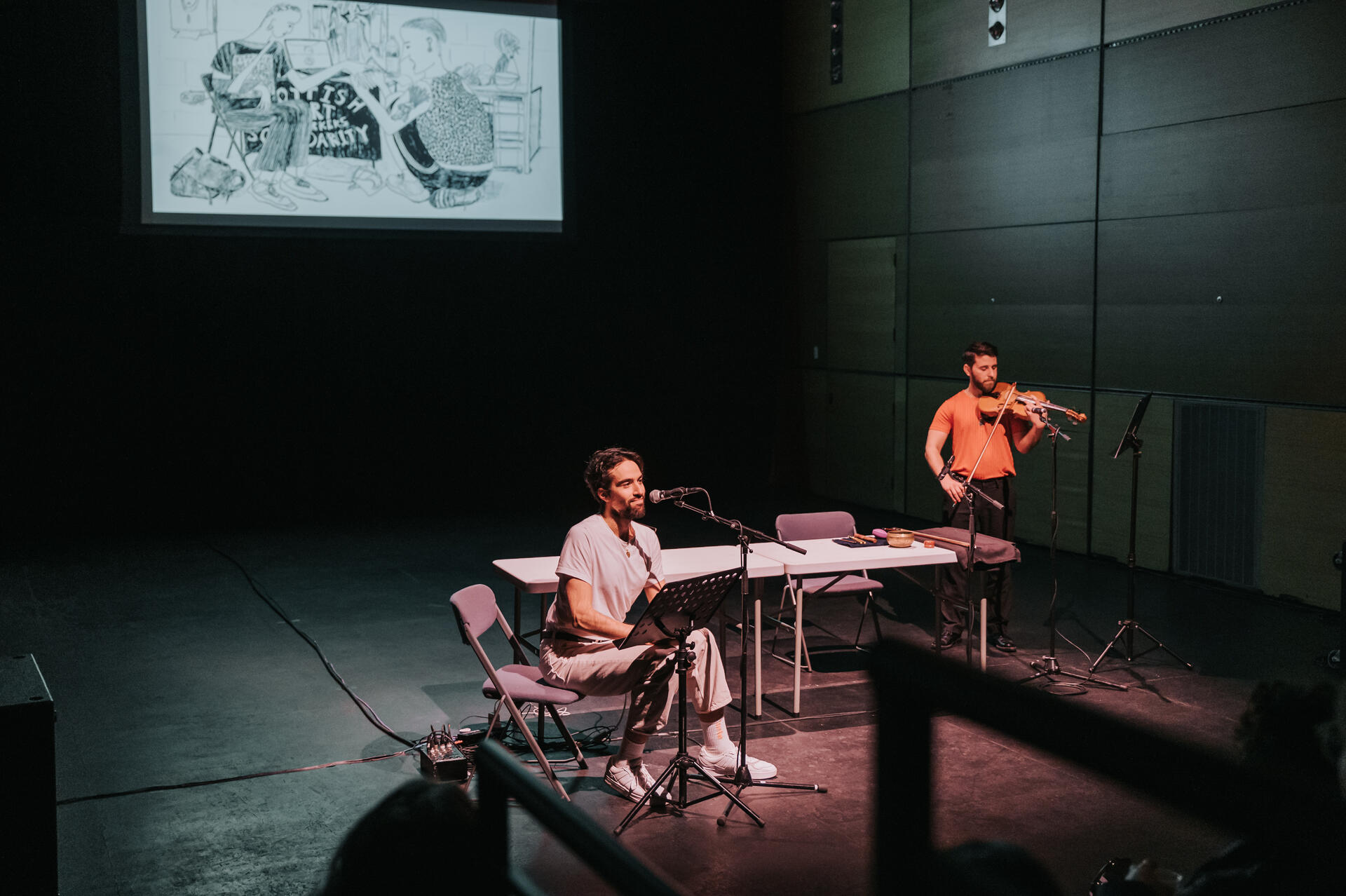
| Star/flag Submit a contribution to the 2026 Forum on Artistic Research: Submission #338 | Adam Nasser Benmakhlouf | Adam Nasser | Benmakhlouf | a.benmakhlouf@ed.ac.uk | Attempts to locate the body are continuing: A practice-led enquiry into artists' workshops, care and non-normative writing within contemporary art institutions | Performance | English | 'Attempts to locate the body are continuing' (ATLTB) is a collection of experimental writing in which I articulate my lived experience of running and participating in artists’ workshops. I identify workshopping as a key set of practices in contemporary art prioritising innovative sociality, collective care and non-normative methods of thinking and making together. The emphasis on embodiment and situated forms of knowledge, in resisting the structure of the objective passive audience and the active artist practitioner, makes workshopping’s powerful effects often come across as ineffable as they emerge and are felt in an entanglement of bodies working together in the interstices of more recognisable work, learning or social contexts. Unsayability of its impact threatens its realm for expansive study, improvisation, anarchic intimacy and unique ways of being in the world. As a disabled, queer, nonbinary working class person of colour, I recognise the workshop as distinctively valuable to marginalised bodies in society. I propose an hour-long performance of hybrid creative-critical writings, combining my PhD thesis' performance writing, fictioning, embodied poetic prose, and analytical-reflective accounts of my own invisible labour setting up queer, decolonial, working class, crip workshopping spaces, and methodological reflections to ensure ATLTB is shareable as a systemic method of artistic research, and reproducible beyond its own content and context. 'Attempts to locate the body are continuing' not only discusses, but evidences the capacities of endangered conceptual worlds to generate distinctive forms of innovation through the multiple registers and kinds of knowledge which coexist in my performance. Each one catalyses the other, across embodiment, collective organising, theoretical reflection and active accounts of praxis, making for a delicately arranged rhizomatic structure of learning and worlding through exceptional presence, sensitivity and care. |
|
|
The work I propose for my performance has been developed extensively through public sharings from 2021-present, for example: My one-act play 'Twig and Stump' in Dundee Contemporary Arts, May-June 2022 My one-act play 'Magenta Velour Glove' in Centre for Contemporary Art Glasgow, May 2023 My embodied poetic prose in Manchester Whitworth Gallery, British Art Network Queer Working Class Event Programme, and in University of Durham, Critical Neurodiversity Studies Conference |
I have not provided an exhibition as this is listed as relevant to project presentations only. The writing has been extensively developed under the generous supervision of Professor Maria Fusco, the pre-eminent international practitioner of interdisciplinary and experimental writing. I developed this material over the course of 2021-2026 as a fully-funded Doctoral student in the Scottish Graduate School for Arts and Humanities. As a Lecturer in University of Edinburgh, I'm now further refining my work as a professional academic researcher with full institutional backing. | I would like to use a clip-on microphone, a projector. I'm happy to adapt to a range of spatial configurations, and have good experience of performing in academic layouts. | I do not foresee risks or ethical concerns. | Yes | Adam Nasser Benmakhlouf | |||
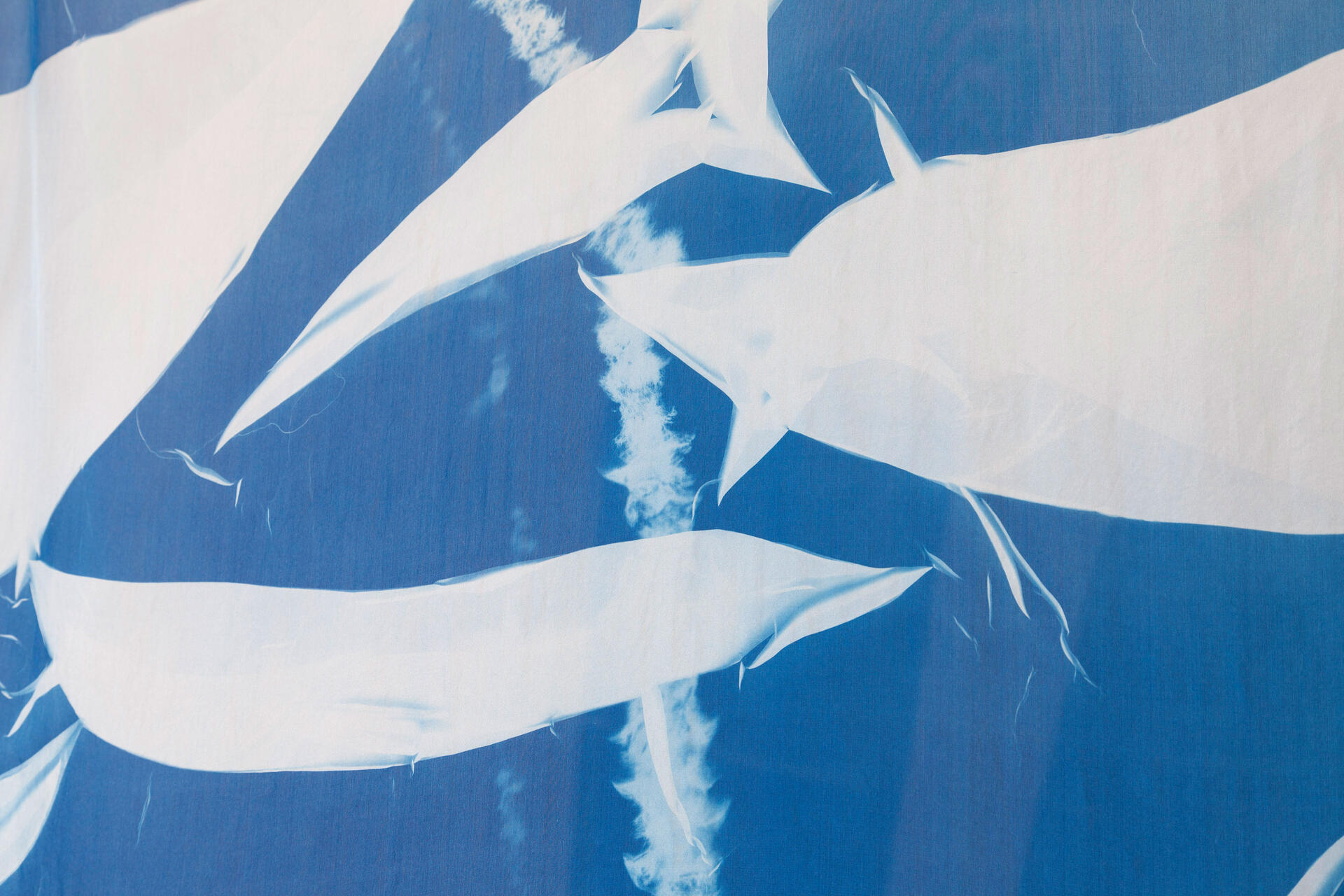
| Star/flag Submit a contribution to the 2026 Forum on Artistic Research: Submission #336 | Anne Haaning | Anne | Haaning | A.Haaning@gold.ac.uk | We Are Supernova | Other format | English | Submission to: Making seeable and sayable What can only be known by a body? And what happens to that knowledge when instruments can only detect what they already expect to find? We Are Supernova is a practice-led MSCA postdoctoral project by Anne Haaning at Goldsmiths, developing an intermaterial method tracing silica from cosmic origins to the silicon chip. Its findings take the form of a lecture performance in which an essay is read out loud while screen-capture records her navigating research repositories, enacting rather than illustrating the research. The project organises itself around three material investigations. First, seeing patterns in noise: before any pattern can be detected, the world must be reduced to data, stripped of embodied and situated knowledge as a prerequisite. AI diffusion models, the Vera Rubin Observatory, and NASA's cosmic dust collection share this logic, but what kind of knowledge goes undetected at such scales of information? Second, machine vision: the drone operates within a kill box; it must define its target before it can see. SETI listens only for signals it already knows. As ambitions to colonise space intensify, is the Vera Rubin Observatory's survey of the sky so different, a kill box aimed at the universe? Third, supernova/silica/silicon: tracing silica from stellar nucleosynthesis to semiconductor reveals a single continuous material history. Silica was transforming from supernova to sand to chip long before Silicon Valley turned that transformation into a product. Whatever computation achieves, the universe remains indifferent. Across all three is a lineage connecting Carl Sagan, the Whole Earth Catalog, and Silicon Valley accelerationism, cosmic curiosity progressively narrowed into extractivist projection. The intermaterial method refuses that narrowing, a form of situated knowledge that keeps body and material in relation against the homogenising pressures of algorithmic and platform-driven knowledge production. |
|
|
Our Work Wasn't Done was performed once at Goldsmiths University of London in June 2025, in an event organised by Prof. Nina Wakeford. The performance brought together We Are Supernova and curator Julia Marchand's research on the Georgian Pavilion at the 60th Venice Biennale. A response was provided by sociologist Michael Guggenheim. The accompanying exposition on the Research Catalogue can be accessed at: https://www.researchcatalogue.net/shared/a1cbfecd0fac6a34a9a7c0a05c440ef4 |
Low-light space suitable for video projection. A projector or screen and speakers, as well as a lectern or table where I can have my laptop. | Archival research was conducted within the terms of access granted by the Library of Congress, NASA, the Computer History Museum, and the Silicon Valley Archives. References to drone deployment in Ukraine and Gaza are handled as critical analysis, not advocacy. A meditation session at SETI's Hat Creek Observatory was conducted with the knowledge and cooperation of the institute's research team. | Yes | Anne Haaning | ||||
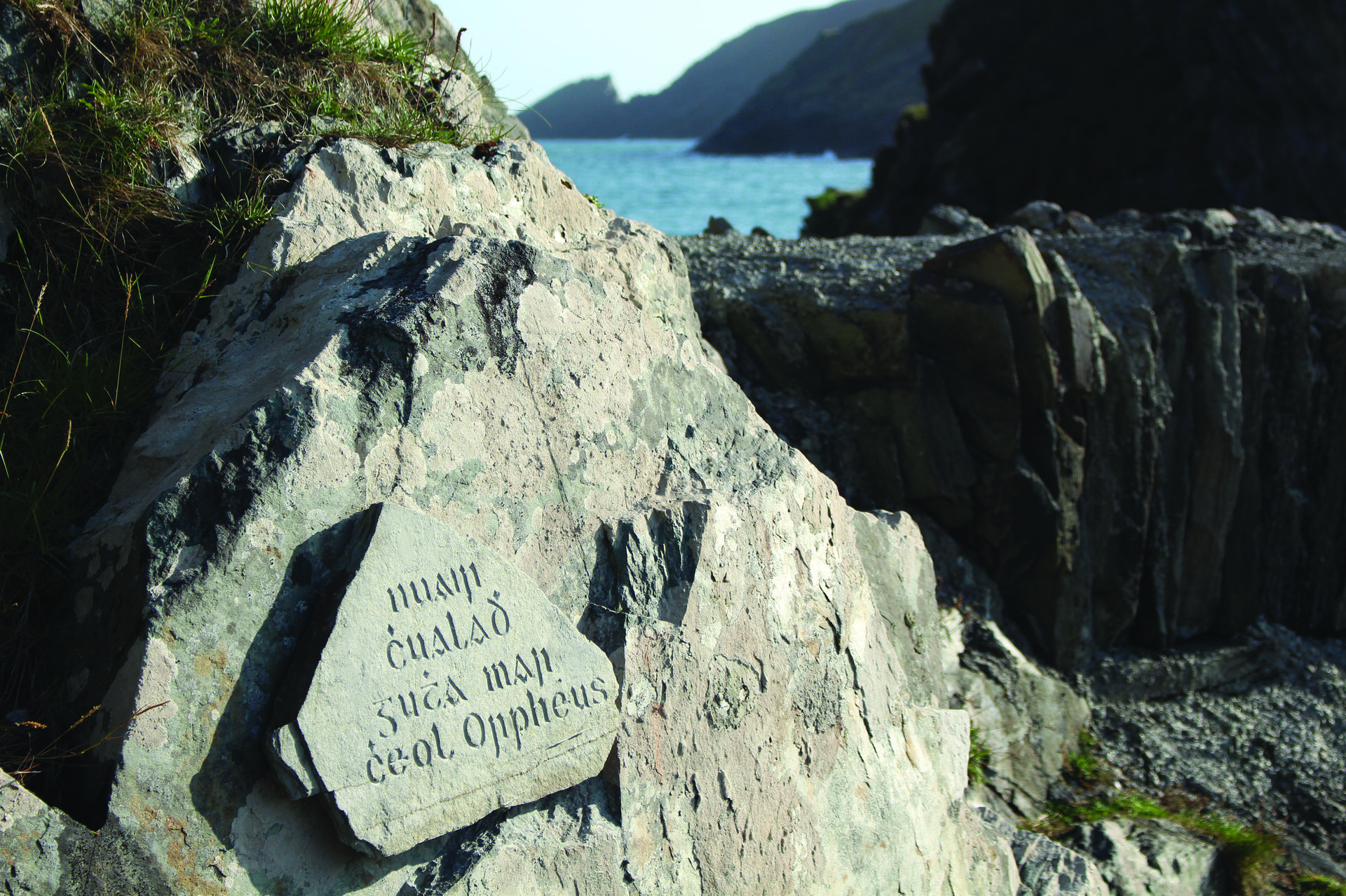
| Star/flag Submit a contribution to the 2026 Forum on Artistic Research: Submission #329 | Noah Rose | Noah | Rose | noah@noahrose.net | Sa teanga Ghaedhilge bhlasda bhinn: Sculpting the linguascape ‘in the tasty, sweet Irish language’ | Project presentation | English | How can expanded sculptural practice and the Irish language augment one another to transmit ephemeral cultural-linguistic knowledge through direct engagement with place? In 2020, I was an artist in residence on the gaeltacht (officially-designated Irish-speaking) island of Oileán Chléire/ Cape Clear, Co. Cork Situated knowledge acquired during a 2-month residency at a time of Covid-19 restrictions, led to a novel, practice-led methodology - a fluid combining of creative methods such as field exploration, drawing, photography, archival research, historical typographical design, hand letter-cutting and contemporary archaeological practices. My methodology incorporated language-learning in Irish, to examine challenges around communicating ephemeral cultural-linguistic knowledge between native, new and non-speakers on a small gaeltacht island (permanent population 130) where linguacultural tourism is an essential part of the ecosystem. Following Tim Ingold’s ‘Taskscape’ (Ingold, 1993) through which landscape can be perceived through the accretions of human activity over time, I use a new term to define how landscape might be perceived through a linguistic lens: the ‘Linguascape/ Teangadhreach’. Diverse creative practices were combined to materialise text from a 200 year old poem (author unknown) sourced from the Dúchas digital repository of the National Folklore Archive - to create a sculptural text-based installation, ‘Leabharlann na gClocha ceilte/ The Hidden Stone Library’, now permanently installed around the island in 8 locations, connected by walking trail. In this presentation I unpack some of the complexities of understanding cultural-linguistic landscapes through sculptural materialisation of ephemeral source texts in minoritised language settings. I expand on how the novel concept of ‘linguascape/ teangadhreach’ can enhance understanding of hyper-local knowledge and the contribution the made word can make to understanding the world. |
https://www.researchcatalogue.net/shared/c9007fd7813a27bf0880b79754f22471 | https://www.researchcatalogue.net/shared/c9007fd7813a27bf0880b79754f22471 |
|
|
This research informed a case study as part of my PhD: ‘Sculpting the Linguascape/ Ag dealbhú an Teangadhreach: unearthing place-based knowledge in the Irish language through expanded sculptural practice’ awarded by Glasgow School of Art, December 2025 (thesis unpublished). An earlier iteration was presented with a different research focus at the conference ‘Linguacultural Spaces: Inclusion, Extension and Identification in Discourse and Society (2021), Universities of Bologna, Glasgow & Tilburg |
My presentation will be richly visual, with photographs, video, drawings - and potentially sculpture - demonstrating work created during my 2020 residency on the Gaeltacht island of Oileán Chléire/ Cape Clear, Co. Cork - during a time of Level 5 Covid-19 lockdown restrictions. I unpack the processes of contextual, archival and artistic research, including contemporary archaeological practices to permanently install work within the island’s fragile ecology through respectful engagement with the island community. I examine ethical considerations regarding community engagement, Covid-19 adaptations, archival, translation and typographical design issues. The main language of the presentation will be English but with essential phrases in Irish. As an active learner of Irish, resident in Ireland but with no familial connection to Irish, I will examine some of the challenges around communicating cultural-linguistic knowledge between native, new and non-speakers of minoritised languages. |
The presentation will be made using Keynote on my own computer (MacBook Pro, 2021 M1 Pro with HDMI port). The presentation relates to work which is installed in-situ on a remote island, but there is also an option to physically display a sculpture that forms a companion piece to the installed work. This sculpture is approx 60x60x150cm and can be moved by one person. It can be shown during the presentation and installed anywhere in the venue for the duration of the conference. |
All research was conducted in accordance with Glasgow School of Art’s Research Ethics Policy and approved by GSA Research department - no additional ethical issues are envisaged. If the option to display the sculpture is chosen, this has already been displayed within 2 gallery spaces in Glasgow School of Art and has been approved by 2 curators as safe for public display. I will personally install the sculpture and can provide a risk assessment if required by the University of Galway. |
Yes | ||
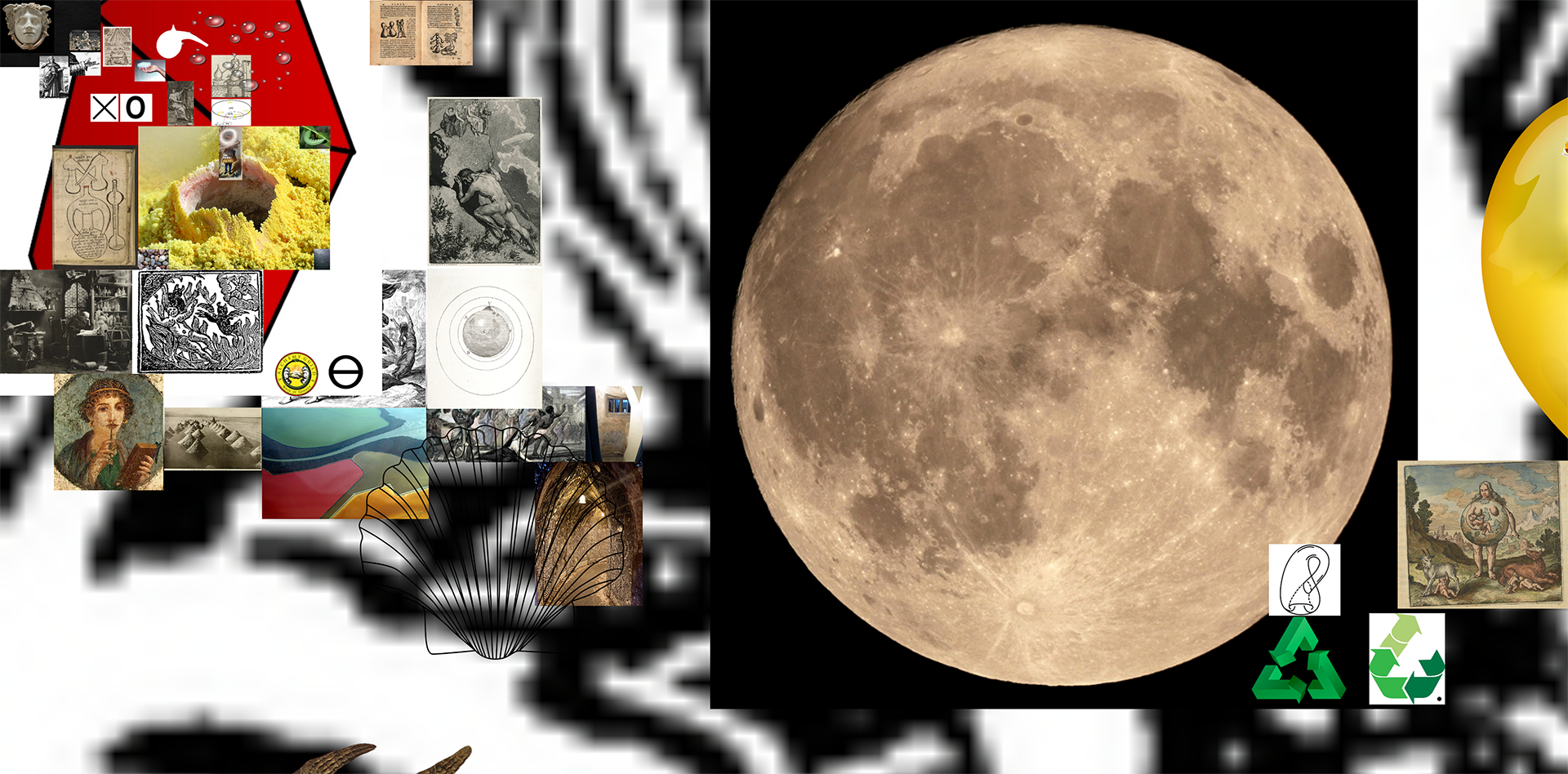
| Star/flag Submit a contribution to the 2026 Forum on Artistic Research: Submission #327 | Claire Scanlon | Claire | Scanlon | c.scanlon62@gmail.com | Prospecting alchemy as a ludicrous critique of capitalist-imaginaries: a distillation | Project presentation | English | Scene: the Petra-Chymist Sisters are looking at an alchemical image, Dew Catchers, 1677, which they find intriguing. F: I wonder if alchemy’s esoteric worldview might supply a novel lens through which to see how capitalism has endangered our planet. S: Interesting. Might the source of Dew Catchers, The Mutus Liber (‘mute book’), provide a method for us? Shall we make a RC exposition as a picture-play? We could mine the internet to source copyleft material, noting that the digital commons is also threatened. F: An image-scape might work, when alchemy’s Rosarium Philosophorum proposes that ‘whenever we have spoken openly we have (actually) said nothing. But where we have written something in code and in pictures we have concealed the truth’. S: And we’d build on a legacy of recent work with found images – Farocki, Thompson & Craighead, Magruder, and Warburg’s Mnemosyne? F: Yes, montage would enable us to critically modify the relations between discourses and images, as Didi Huberman notes. S: And visually play with those relations. F: We could also adopt an interrogative approach for our process, understanding collaboration as a dialogic structure, via a call and response game. Later, the Sisters are looking at a screen dense with images; varied types, scales, qualities and eras. S: How does this diversity help us critique the world of Mark Fisher’s ‘capitalist realism’? F: Surely, apparatuses of extraction and refinement point to the way in which capitalist practices continue an alchemical telos – the Faustian quest for a ‘world of profit and delight’ (Marlowe). S: But the philosopher’s stone can also be a means to spiritual transformation, as well as a short cut to riches. F: Look how these images speak critically to the idea of our planet as a ‘natural’ resource for human use. S: Here alchemy feeds into ecofeminism – Carolyn Merchant – and us as the Petra-Chymist sisters, negotiating our geo-chemical patrimony. The dialogue continues at SAR26. |
https://www.researchcatalogue.net/view/4223791/4223577 | https://www.researchcatalogue.net/view/4223791/4223577 |
|
|
An extended version of this exposition has recently been peer-reviewed by JAR and accepted for publication after reworking. We are currently in the reworking window (deadline 20th March 2026). We have sent an email to SAR 26 asking if we can make an application on this basis and have not had a reply as of Sunday 1st March, so have proceeded with this submission on the basis it is acceptable. |
We simply require two chairs and the ability to project the live exposition. | High resolution projector and screen, dimmable audiorium lights. | None. | No | ||
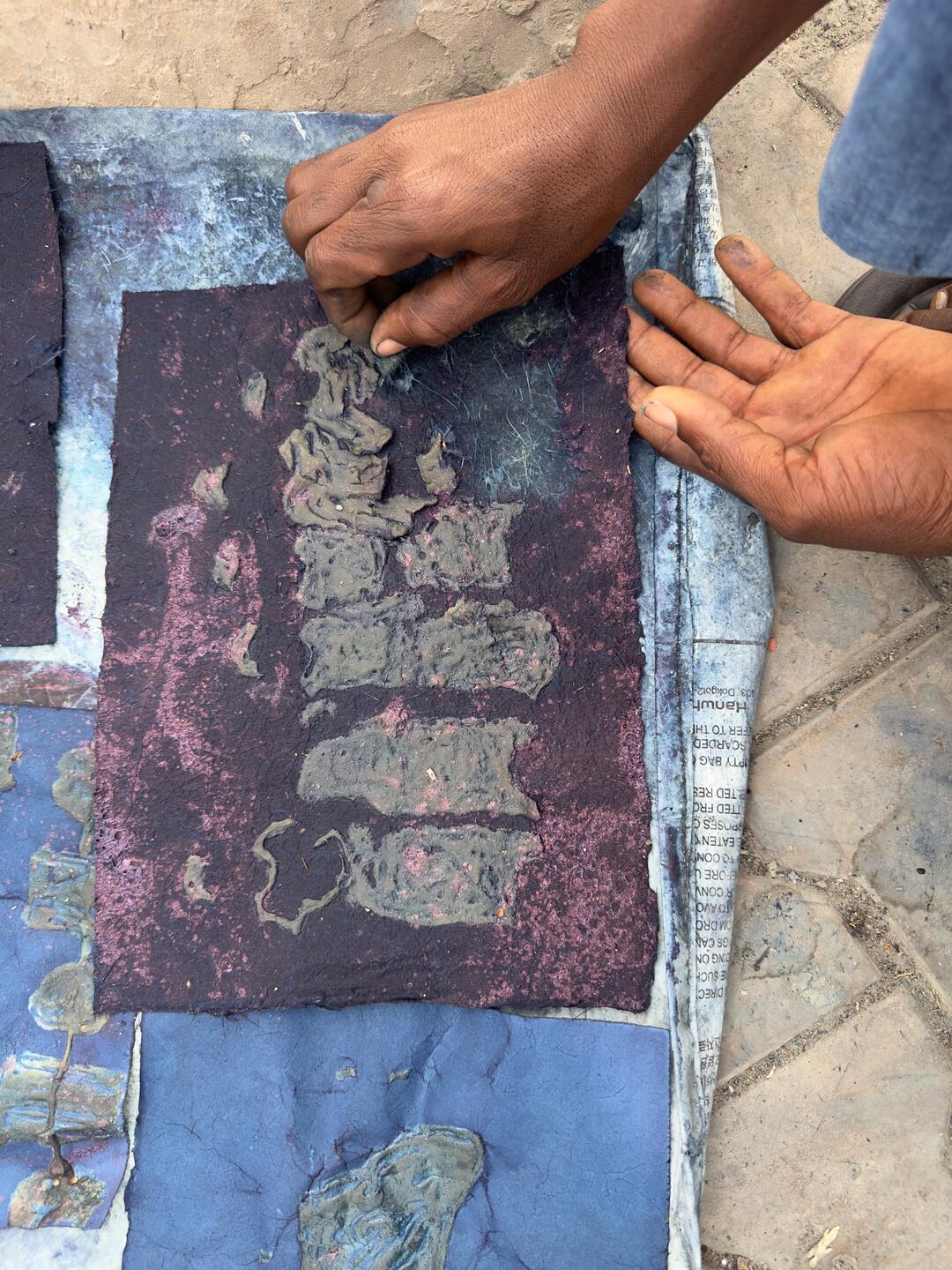
| Star/flag Submit a contribution to the 2026 Forum on Artistic Research: Submission #326 | Anonymous | Mbali | Dlhamini | mbali.dhlamini@wits.ac.za | Site specific drawing as worldmaking practice | Poster presentation | English | This research paper locates site-specific drawing as a methodological approach to artistic worldmaking. It proposes that drawings created in dialogue with place become more than representation; they function as modes of inquiry, translation, and spatial extension. The research is grounded in a practice-led methodology, where drawing operates as both a research tool and outcome. Simultaneously, the site is approached not only as a subject, but as a collaborator and repository of knowledge. Indigenous practices such as indigo making inform this research as living systems of knowledge, shaped and reshaped through making. These traditions lend a language of reading, cultivating, and preserving that underpins a methodology grounded in ecological interdependence and cultural resonance. Through presence, witnessing, and material engagement, the artist draws from and with the environment, allowing space, microbes, and the sensory to participate in the act of making. The drawings metabolize pigment, light, and invisible matter, embodying both the seen and the sensed. This paper argues for an expanded understanding of artistic worldmaking, where place is not simply occupied but emerges as co-creator. It gestures toward a theory of knowledge production rooted in adaptation, ecological harmony, and material understanding. In this view, site-specific drawing becomes a generative mode of imagining otherwise. Worldmaking is evident through drawing as situated, durational, and entangled with context. In doing so, it contributes to broader theories of artistic worldmaking grounded in African epistemologies of seeing, sensing, and being. The site-specific drawings were created at the Ancient Indigo Dying Pits of Kano State in northern Nigeria. A site where centuries-old textile practices continue to inform material understanding and cultural heritage. |
|
|
Exhibition at the Yaba Art Museum, Nigeria 2024. Cape Town Art Fair, 2025 The works were shown at the above exhibitions as artwork, for the conference I would like to present them as research. |
Screen and speaker, additional materials collected from the site. Drawings. | A wall space. | None at this stage. | Yes | Mbali Dlhamini | |||
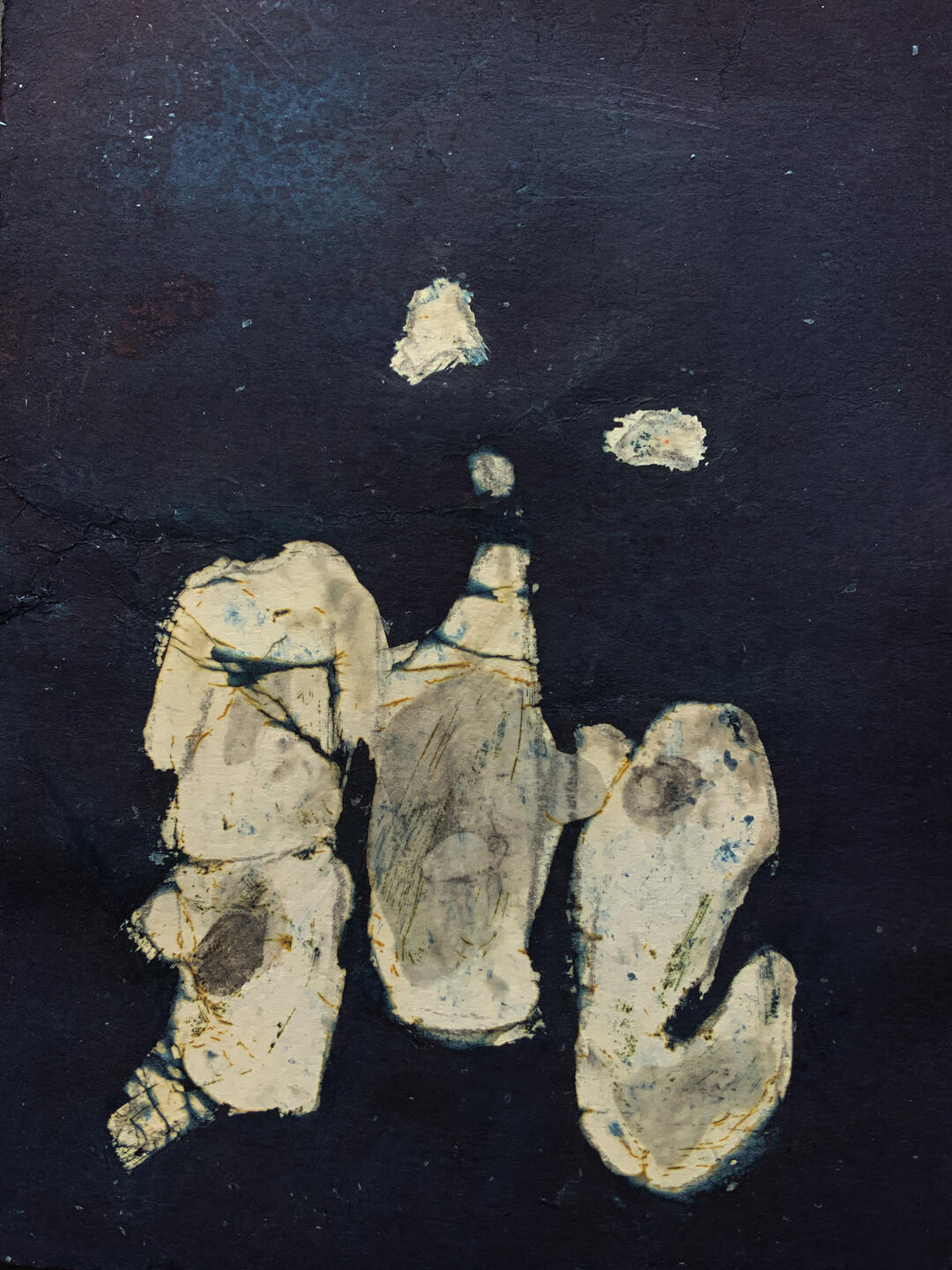
| Star/flag Submit a contribution to the 2026 Forum on Artistic Research: Submission #323 | Anonymous | Mbali | Dhlamini | mbali.dhlamini@wits.ac.za | Site specific drawing as worldmaking practice. | Project presentation | English | This research paper locates site-specific drawing as a methodological approach to artistic worldmaking. It proposes that drawings created in dialogue with place become more than representation; they function as modes of inquiry, translation, and spatial extension. The research is grounded in a practice-led methodology, where drawing operates as both a research tool and outcome. Simultaneously, the site is approached not only as a subject, but as a collaborator and repository of knowledge. Indigenous practices such as indigo making inform this research as living systems of knowledge, shaped and reshaped through making. These traditions lend a language of reading, cultivating, and preserving that underpins a methodology grounded in ecological interdependence and cultural resonance. Through presence, witnessing, and material engagement, the artist draws from and with the environment, allowing space, microbes, and the sensory to participate in the act of making. The drawings metabolize pigment, light, and invisible matter, embodying both the seen and the sensed. This paper argues for an expanded understanding of artistic worldmaking, where place is not simply occupied but emerges as co-creator. It gestures toward a theory of knowledge production rooted in adaptation, ecological harmony, and material understanding. In this view, site-specific drawing becomes a generative mode of imagining otherwise. Worldmaking is evident through drawing as situated, durational, and entangled with context. In doing so, it contributes to broader theories of artistic worldmaking grounded in African epistemologies of seeing, sensing, and being. The site-specific drawings were created at the Ancient Indigo Dying Pits of Kano State in northern Nigeria. A site where centuries-old textile practices continue to inform material understanding and cultural heritage. |
https://www.researchcatalogue.net/profile | https://www.researchcatalogue.net/profile |
|
|
The research paper was presented at University of Witwatersrand, humanities Research Day. 2025 The drawings have been presented in Lagos, Nigeria in 2024 and in Cape Town 2025. The video has not been presented. All the material mentioned above have not been presented together at once. I would like to use this moment to build a bridge between my artistic practice and academic writing as they have taken place at different times and I would like to use the conference to do that. |
The presentation will include physical visual drawings created in Kano State using indigo dye, it will include a video and items collected during my trip. This will be presented together with my academic reflections/writings from the research trip and how I am using and reading site, drawing and indigenous knowledge . I however saw this call today and I could not add create a RC exposition, as I only just applied for a RC upgrade. I hope my project will still be considered or I could be able to send it once my upgrade request is approved. |
Screen or projector, speaker and wall space. | I do no think there are any ethical considerations at this stage. | Yes | ||
| Star/flag Submit a contribution to the 2026 Forum on Artistic Research: Submission #315 | Fiona Kelly | Fiona | Kelly | fioneekelly@gmail.com | Conversations Amongst Objects | Project presentation | English | Conversations Amongst Objects Jussi Parikka describes the contemporary condition as an expanding ‘multitude of times that overlap and cannot be resolved into one multitemporal reality’ . In this epoch of crisis, the relevance of visual art practice- it’s role in communicating complex and multifaceted ideas is now more pertinent than ever. Exhibitions are increasingly understood as sites for knowledge production, and as having a material language. Activated by material agency, embodied installations of objects, matter, material, sound, form and light can speak when we fail to find words with the correct timbre, or connotation. These physical alterations material entanglements can speak more accurately, or with more familiarity to the space and place we occupy. An exhibition is a space where time passes strangely, where multiple histories collide, objects or images can act as displaced series of material questioning, a multisensory shape shifting space which can be read from multiple directions. In this presentation I will speak to the importance of the exhibition as a form of complex, material communication for scholarly discourse, a space of grounded knowledge that should be considered as academic publishing- a public siting of a collision of material research, testing, conversations, place-making and materially grounded dialogue. |
https://www.researchcatalogue.net/view/4228729/4228730 | https://www.researchcatalogue.net/view/4228729/4228730 |
|
|
Fiona has delivered numerous public lectures alongside her teaching and visual art practice which include; Radical Humanities Conference, University College Cork; Radical Entanglement & Environmental Residues in Visual Art Practice. NCAD, Dublin; a field of multiple destructions, Artist Lecture Series, National Sculpture Factory, Ireland; Peatlands in the Imagination; A Revolution in How We Live, University College Cork. | My proposal is for an academic paper which I would like to present as a lecture but with the capacity to show moving imagery and ambient soundscapes alongside, an experiment in distracted listening. | I would like access to a high res projector and sound system to play video and ambient soundscapes in tandem with my paper. | None | Yes | Fiona Kelly | |
| Star/flag Submit a contribution to the 2026 Forum on Artistic Research: Submission #313 | Ana-Artist | Ananya | Gupta | ananya.gupta@universityofgalway.ie | Drawing Resilience: Art as Language in Neurodiverse Worlds | Workshop | English | Over the past decade, the number of neurodivergent students in higher education has risen significantly. While universities aim to support diverse learners, many neurodivergent students face barriers that affect academic success and their sense of belonging. These challenges include difficulties with self-advocacy, academic stress, social isolation, and ongoing mental health concerns. Creating inclusive environments that promote participation, collaboration, and connection is therefore essential to improving their educational experiences. A key factor in improving participation is providing opportunities for students to communicate and collaborate with peers without barriers. To achieve this, it is important to understand the obstacles that prevent neurodivergent students from engaging in group activities. Art and creative practices can serve as powerful tools for non-verbal communication and inclusive participation and can help neurodivergent students overcome social and communication barriers while fostering peer connection. Studying student experiences in such settings can also inform pedagogical changes needed to improve inclusion, participation, and overall academic experience. This proposal explores “collaborative drawing” as a mode of communication through a participatory workshop with neurodivergent students. Participants will work in groups to co-create visual reflections of their campus experiences. The proposal frames visual art not as therapy, but as a primary form of communication and knowledge production, enabling students to express emotion, perception, and experience beyond verbal frameworks. Through a studio-based session, students will engage in illustration of themes of identity, resilience, and belonging. Group reflection will encourage shared interpretation and understanding. The workshop will examine how such participation can build resilience by strengthening self-expression, agency, and peer recognition. |
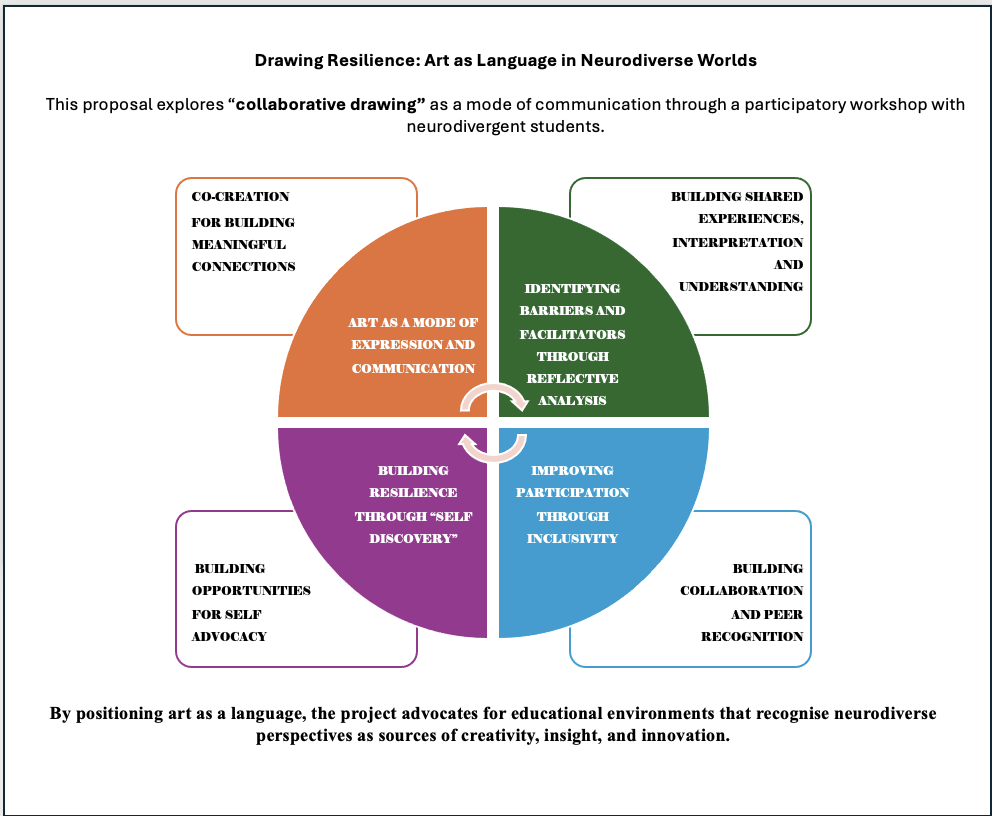
|
|
Through an immersive, studio-based session, students will participate in a structured yet exploratory illustration workshop centred on the themes of identity, resilience, and belonging. The session will begin with guided prompts designed to help participants reflect on personal experiences on campus, cultural backgrounds, community connections, and moments of challenge or growth. Students working in small groups will be encouraged to translate these reflections into visual narratives using a range of materials such as drawing, collage, mixed media, and text-based elements. Throughout the workshop, the facilitator will introduce examples of contemporary artists who explore similar themes, fostering discussion about symbolism, metaphor and visual storytelling techniques. Participants will be invited to share their thoughts and ideas in small groups, discussing intentions, challenges, and discoveries. Co-created visual artefacts, process notes, and feedback will inform reflective analysis | Room with open space for students to work in small groups, small round tables with chairs, art supplies and flip charts. | Students can experience strong emotions when communicating about their experiences. | Yes | ananya gupta | ||||
| Star/flag Submit a contribution to the 2026 Forum on Artistic Research: Submission #311 | Anonymous | Jaa | Sikk | jaak.sikk@eamt.ee | Endangered Inner Worlds: From Individual Creative Space to Inclusive Transcultural Exchange through Ensemble Improvisation | Workshop | English | In higher music education, assessment regimes and norms of “correctness” can narrow what counts as artistic knowledge, marginalising individual artistic and cultural sense-making. This artistic research develops and tests a reproducible practice format—Self-Determined Mental Creative Space Through Improvisation—in which structured improvisation supports participants’ “inner worlds” as resources for artistic agency and cooperative invention under uncertainty. The workshop transposes this format into an experiential artistic-research session for musicians and non-musicians alike, adaptable across art forms. Participants engage a sequence of short, constraint-based scores that operationalise four interlinked methods: guided imagination; translating imagery into sound, movement, or other material; reframing “error” as divergence between imagined intention and outcome; and shifting core values via multisensory attention. Constraints function as compositional scaffolds that reduce decision overload, temper dominance/withdrawal, and enable a workable shared “common language” through real-time negotiation. Reflection links the shared practice to the project’s questions: how structured improvisation reshapes capacities to initiate, refrain, and respond (“alone together”); how reframing error redistributes authority and supports collective adaptation; and how often-marginalised expressive vocabularies (timbre, gesture, texture, silence) can operate as epistemic resources for equitable participation and early-stage transcultural exchange without flattening difference. The underlying research is based on two iterative three-day courses with mixed-instrument, multilingual cohorts at the Estonian Academy of Music and Theatre; data (field notes, open questionnaires, follow-up interviews) are analysed abductively in ATLAS.ti. The contribution is a transferable artistic-research framework and score-based method for cultivating safe creative space in collective practice. |
|
|
The training session is structured into four 20-minute sections, each combining a short guided practice with discussion and reflection. Each section foregrounds a different sensitising concept—(1) uncertainty, (2) constraints, (3) safety/acceptance, and (4) agency and transcultural interaction—so that participants can both experience the score-based tasks and articulate what emerges in individual and collective practice. The workshop is open to artists working in any field; exercises are adaptable to sound, movement, text, and other materials, and no musical training is required. | Quiet room with open floor space and movable chairs. If available, an acoustic piano (preferred) or keyboard, and a cello (if possible). Participants may bring their own instruments/objects, but none are required. Requirements are flexible and can be adapted to the space and available resources. | Participation may involve creative risk-taking and may elicit mild discomfort (performance anxiety, vulnerability, or sensitivity to group dynamics). All activities are opt-in, with options to pause or observe. No personal data will be collected; discussion can remain non-disclosive and is art-oriented. The facilitator will establish shared safety/consent guidelines and support inclusive participation. | No | |||||
| Star/flag Submit a contribution to the 2026 Forum on Artistic Research: Submission #310 | Mariella Greil | Mariella | Greil | mariella.greil@gmail.com | Choreo-ethical Assemblages – Embodied Research as Cosmopoietic OEkology | Project presentation | English | How can we understand the world around us through our bodies, ethical considerations, and œcological awareness, and how can we actively shape it through cosmopoietic, generative forces? Choreo-ethical Assemblages – Embodied Research as Cosmopoietic Œcology explores the interconnections between choreography, ethics, and œcology through embodied research. The project and book presentation introduces micro-phenomenological actualisation and purposeful polysemy as methods for exploring subjective experiences and opening them up to diverse interpretations. Methodical-artistic approaches, such as the generative forces in choreographic environments that do not determine experience but open up spaces of resonance through ambiguity, are discussed. Thus, comprehension itself becomes a process that allows for and stimulates diverse interpretations. The twin existence of aesthetics and ethics, as well as narratives of “bare bodies,” make the intertwining of body, narrative, and responsibility tangible. “Choreo-ethical assemblages” make socio-aesthetic sensitisation and epistemic singularities palpable and unfold the political and poetic dimension of an artistic research that lives the relationality of diverse forces as choreo-ethical practice. The presentation will interweave filmscreening, book presentation and performance lecture followed by a conversation with the audience. The book "Choreo-ethical Assemblages – Embodied Research as Cosmopoietic Œcology" will be published on May 11, 2026 by De Gruyter Brill. |
https://www.researchcatalogue.net/view/4220892/4220893 | https://www.researchcatalogue.net/view/4220892/4220893 |
|
|
Last week I was invited to present my previous and current research projects at The Academy of Fine Arts in Prague. See the link: https://avu.cz/en/notice/artist-talk-and-screening-mariella-greil The book will be published on 11th May 2026 by DeGruyter Brill and I plan to further develop my performance lecture and integrate film screening and book presentation into the presentation at the SAR FORUM. |
I would like to bring several copies of my forthcoming book and in case there is the option of a book table, I would like 'Choreo-ethical Assemblages – Embodied Research as Cosmopoietic OEkology' to be presented there. | I will need a space that is equipped for a screening, but ideally also provides simple theatre lighting options. I can probably adapt to the situation though. | There are not ethical risks foreseeable at this moment. | Yes | Mariella Greil | |
| Star/flag Submit a contribution to the 2026 Forum on Artistic Research: Submission #309 | Anonymous | Francesca | Van Daele | francesca.vandaele@kuleuven.be | Which forms of knowledge vanish when they cannot be lived or experienced? | Poster presentation | English | Through an interdisciplinary approach that combines organic materials and analogue practices with multimedia techniques, this research project explores how creative (participatory) processes cultivate wellbeing through engagement with living systems and attentiveness to interconnected forms of life. |
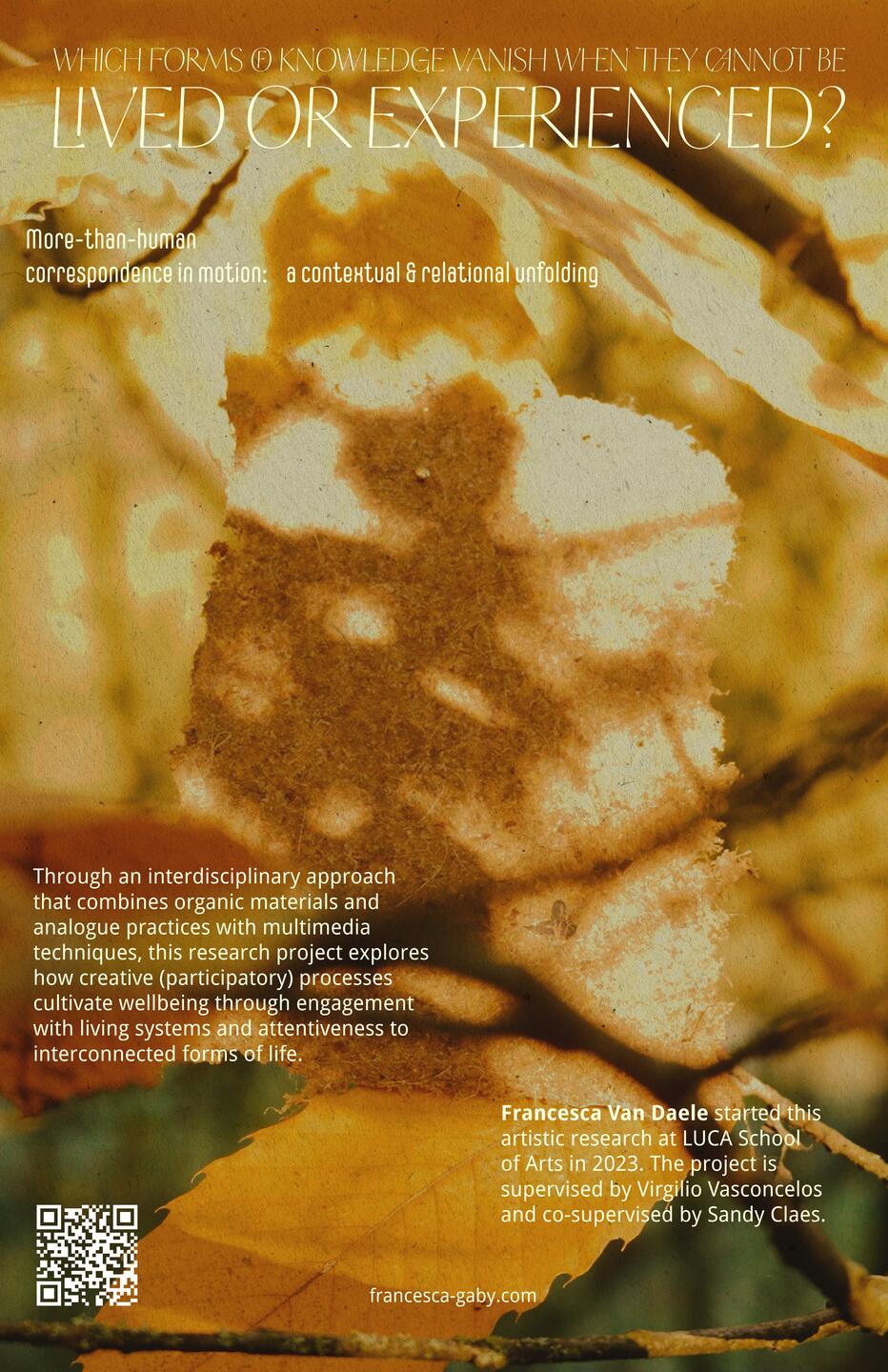
|
|
No | ||||||||
| Star/flag Submit a contribution to the 2026 Forum on Artistic Research: Submission #307 | Yilmaz Vurucu | Yilmaz | Vurucu | yilmazmv@hotmail.com | Paths Under Pressure: Nomadic Knowledge and Alternative Lifestyles in the Capitalocene | Project presentation | English | This artistic research project investigates the endangered material culture, ecological knowledge, and social structures of Anatolia’s Yörük nomads, whose traditional lifeways are under threat from forced settlement policies, climate instability, and capitalist extraction. Through participant observation, filmmaking, and collaborative ethnography, we explore how Yörük tent-making, goat-hair weaving, herding, and seasonal migration (Göç) embody a metabolic balance misaligned with the extractive logic of the Capitalocene. Rather than treating Yörük practices as folklore, we engage with them as valid epistemic systems, centering co-creation, shared decision-making, and relational trust to resist extractive research paradigms. Initial fieldwork with tribes in Ahmetli, Kuyucak, Başaran, Yatağan, and the Taurus Mountains reveals a spectrum of adaptation and precarity: from the fragmentation of migration routes by privatization and industrial expansion to the resilience of pragmatic adaptations, such as solar-powered tents and digital connectivity. The Yörük’s decentralized, undogmatic knowledge systems, rooted in cyclical mobility, communal labor, and reciprocal relations with the land, offer counter-models to the homogenizing forces of modernity. Their tents, weaving techniques, and seasonal rhythms reflect an ecological intelligence now strained by ecological degradation and economic pressures. Initial findings, including video documentation of Göç traditions and tent-making, highlight the tensions between memory and practice, as elders’ testimonies and adaptive strategies (e.g., solar panels, boot-making revival) reveal both loss and resistance. Future research will deepen these engagements, joining the 2027 Göç to document how Yörük communities navigate a shrinking world, where ancestral pathways and meanings are increasingly fragile. The project aims to co-create a multimodal archive that preserves their knowledge. |
https://www.researchcatalogue.net/view/4202310/4202309 | https://www.researchcatalogue.net/view/4202310/4202309 |
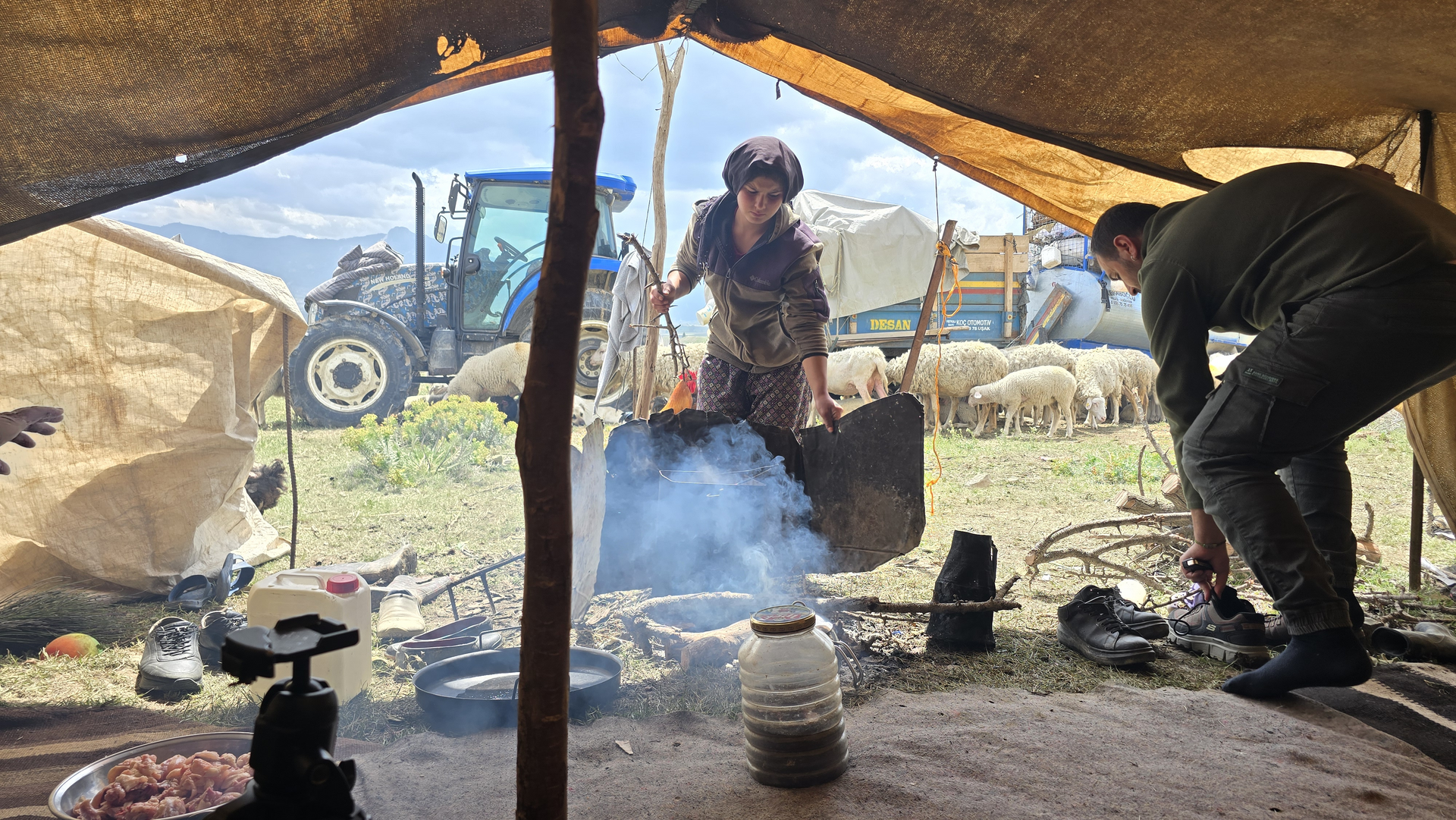
|
|
Nomadism in the Anthropocene is a work-in-progress. It’s an artistic research project that aims to document and analyze the endangered material knowledge systems of the Yörük nomads of Türkiye – particularly from two main vantage points: uncovering undocumented knowledge and situating their struggle to exist and pass on their knowledge in relation to the pressures by all-encompassing capitalist–settler infrastructures and the ecological crises of the Anthropocene. For the presentation, I would like to present our findings, share photos and video recordings, and present how we intend to work on and further develop this research by attending the Migration in 2027 with various tribes. I would also specifically like to present various material production techniques the Yörük use, their relations with the society around them, among each other, and with nature itself. | A screen, beamer and speakers. | There are no potential risks or concerns at the moment, the tribes we work with are fully emerged in our research and are aware of how they will contribute towards it. | No | |||
| Star/flag Submit a contribution to the 2026 Forum on Artistic Research: Submission #298 | Anonymous | Sofia | Malacalza San Martin | sofimalacalza@hotmail.com | Sonic Collage: A video-mapping exploration of amateur electronic music and sound artists relations with audio technologies. | Performance | English | In music composition, women, queer, and non-normative bodies often face marginalization, mirroring patterns seen in predominantly white male-dominated fields. This Art-based research unearths the creative ideas and composition processes of six female and LGBTQIA+ amateur electronic music and sound practitioners. It explores the potential of electronics as a liberating medium, echoing Laurie Spiegel's statement, and examines whether this technological usage can be deemed as a good technology. Employing friendship-as-a-method for qualitative interviews, and thematic analysis for data comprehension, the research show that community support is crucial for unlocking artistic potential and countering gender biases in music technology. Also highlight that these music practice empowers individuals to express personal narratives and artistic self-discovery. The analysis of the interviews reveals progress towards gender balance in European counterculture but persistent gendered hierarchies challenge true equality, emphasizing the ongoing struggle for representation and diversity in technical roles. The dissemination of project embraces avant-garde aesthetics. Through video mapping techniques, research extends beyond academic boundaries, sparking dialogues on gender and technology. |
|
|
This project originated from a master's thesis presented in July 2024 at UPF University in Barcelona, as part of the Master in Digital Culture and Emerging Media. It will be showcased at the Gender Sound 2026 event organized by ESMUC in Barcelona, in March 2026 The installation was created to be showcased at audiovisual events or any gatherings focusing on gender, technology, and music, including museums and educational institutions. |
The artistic creation is a video-mapping piece that seamlessly integrates audio and images provided by the participants with videos, animations, and glitch effects crafted by the researcher. These elements are inspired by the interviews, themes, and visual concepts shared by participants, offering a unique portrayal of their music creation process. After deriving themes from the interviews and analyzing the results, the creative process begins to develop an installation that narrates the participants' stories. I opted to weave a single narrative from all the interviews, identifying common threads in their experiences as music creators and intertwining them to form a cohesive story. Each theme is represented by two quotes from different participants in the audio, carefully selected to encapsulate ideas shared by all participants. Visual elements enhance the audio and text from the interviews, making the story more engaging and accessible to the audience. |
Video projector: High-definition resolution HDMI cable: Length sufficient to connect the projector to a personal laptop Power station for laptop. Location near projection area Display structure: 1 m² structure made out of vinyls, with a weight of approximately 1.5kg Appropriate distance between the projector and display structure for optimal image size. Floor space to accommodate the 1 m² structure. Capacity to manage ambient light |
Music creation is viewed solely as a form of expression separate from the cultural industry, with participants earning their income from other sectors, suggesting the need for further research. The constraints of conducting a small-scale research study, alongside the utilization of friendship-as-a-method, pose challenges in amplifying the voices of a more diverse range of female and LGBTQAI+ DJs and composers. This limitation restricts the breadth of perspectives encompassed within the study. |
Yes | ||||
| Star/flag Submit a contribution to the 2026 Forum on Artistic Research: Submission #295 | Marija Griniuk | Marija | Griniuk | marija.griniuk@gmail.com | AI and biometric data: jazz session with my own brain | Project presentation | English | AI and biometric data: jazz session with my own brain is a cross-disciplinary research project that investigates how a performer’s biometric data—specifically brain activity—can be used as a prompt for AI to be remediated live into sound during a performance. In this way, a performance artist can have a kind of jazz session with her own brain. I have a background in performance art with a focus on sound- and voice-based performance, often incorporating narratives of cultural history. I am working with a program developed in Processing and access biometric data from my body during the creative processess—either live on stage while creating, or while creating in my studio. Data is used as AI prompt to be remediated into sound. All biometric data collected during the project is exclusively from my own body. The research focuses on extending the performing body through technology, remediating biometric data, and using AI to transform this data into sound. This process enables a form of co-creation between the human performer and AI. The aim of my research is to develop new tools for performance remediation, strengthening interaction, and enhancing empathic connections with members of the audience by utilizing biometric data and AI remediation as records of the inner states of the performing body. | https://www.researchcatalogue.net/shared/bfbd6db2eea6c2f4daa0be2a9963970f | https://www.researchcatalogue.net/shared/bfbd6db2eea6c2f4daa0be2a9963970f |
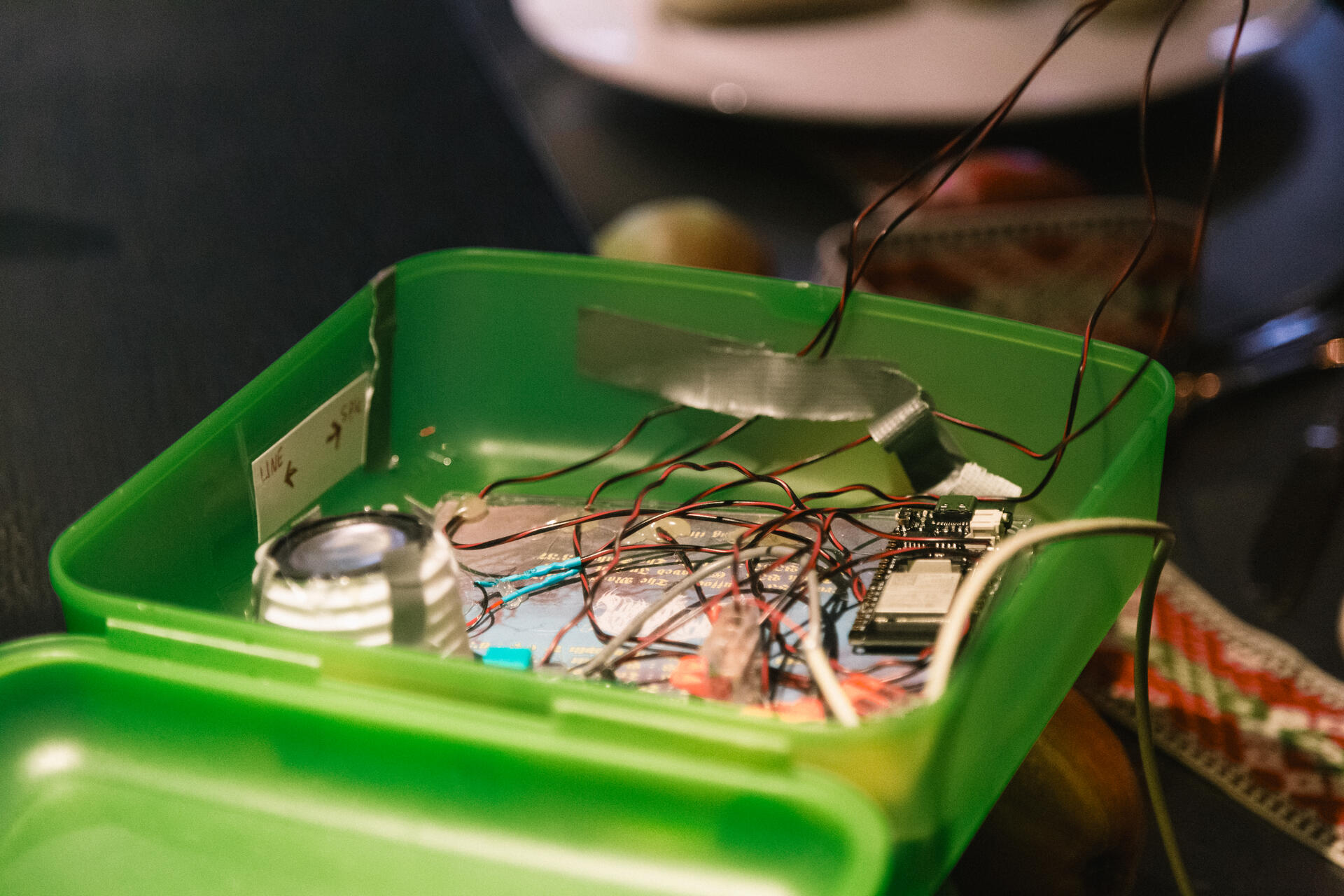
|
|
I have started to work on experiments towards combining AI and biometric data in 2025 and currently am applying for the postdoctoral positions with this theme, anyway the theme has not been published or presented at any platform yet. | I will need formal invitation for the event to be able to fund my participation | I will need PA/sound equipment and projector | Yes | Marija Griniuk | ||
| Star/flag Submit a contribution to the 2026 Forum on Artistic Research: Submission #294 | Laura Yuile | Laura | Yuile | yuilelaura@gmail.com | ASSET ARREST: Haunting the spaces of financialized housing | Project presentation | English | ASSET ARREST is an ongoing, long-term artistic research project that investigates the socio-spatial effects of financialised housing through fieldwork, and published mainly as a podcast series. Developed initially through research into housing speculation in the UK, the project operates as a methodological framework for examining how real estate systems shape everyday life, perception and urban narrative. My relocation to China in 2023 expanded this inquiry into contexts frequently framed through the metaphor of the “ghost.” Terms such as “ghost city,” “ghost mall,” and “ghost development” circulate widely in Western media, where images of under-occupied Chinese urban environments are mobilised as shorthand for speculative excess and systemic failure. Rather than treating these metaphors as descriptive, this exploration approaches them as conceptual devices that organise how Chinese urbanisation becomes legible to distant audiences. Drawing on field research conducted in Ordos’ Kangbashi district, the paper examines how the “ghost” condenses complex developmental temporalities into a singular aesthetic of absence. In doing so, it risks minoritising alternative urban conceptual worlds: processes of anticipation, phased inhabitation, infrastructural lag, and speculative continuity that resist the binary of success and failure. Positioning ASSET ARREST as a practice of situated investigation, I explore how artistic research can intervene in this epistemic flattening. Through audio, field recording and observational methods, the project foregrounds slower, locally embedded accounts of development that exceed the spectacle of emptiness. Rather than seeking to correct representation, the research works to reopen the conceptual field within which urban futures are imagined, proposing artistic research as a means of engaging with precarious and partially unsayable forms of infrastructural knowledge. |
https://www.researchcatalogue.net/profile/show-exposition?exposition=4217173 | https://www.researchcatalogue.net/profile/show-exposition?exposition=4217173 |
|
|
I have discussed the ASSET ARREST project at a number of public events in the past, but this will be my first post-China presentation that reflects upon my specific research conducted in the Chinese context. In this sense, it is an entirely new presentation on a long-term project that is constantly evovling. | N/A | This will be a spoken presentation, with a slide show of image/text/video material. | N/A | Yes | Laura Yuile | |
| Star/flag Submit a contribution to the 2026 Forum on Artistic Research: Submission #283 | Anonymous | Amy | Schuessler | aschuessler@idsva.edu | “PRIVATE”- MARIE HØEG & BOLETTE BERG: NON-CATHARSIS AS AN ETHICS OF OPACITY | Project presentation | English | This paper examines Marie Høeg's photographic practice with Bolette Berg as exemplifying what I term a non-cathartic methodology, an approach to art-making and viewing that refuses the therapeutic imperative dominating Western aesthetic discourse since Aristotle. This is a decidedly feminist, anti-hegemonic, and gender-liberatory perspective. Høeg's sartorial performances, captured in photographs never intended for public circulation, operate according to logics fundamentally at odds with confessional, or trauma-processing models of creative practice. Rather than seeking emotional purgation, narrative resolution, or the transformation of suffering into transcendent meaning, these images remain deliberately encrypted, withholding themselves from interpretive mastery while preserving generative contradictions and sustaining productive irresolution. Through close analysis of Høeg's photographs as well as her decision to keep these images private, I argue that her creative oeuvre enacts what Édouard Glissant terms in his text, Poetics of Relation "the right to opacity"; an ethical refusal of the demand that marginalized subjects render themselves legible within normative frameworks (Glissant 189-94). This withdrawal from circulation combined with her anarchic and joyful collaboration constitutes a defiant stance. Therefore her archive should not be read as closeted concealment but rather as a strategic refusal of visibility, which functions as a disciplinary technology enforcing compulsory gender norms. Her images and studio practice thus constitute a counter-public enclave. Here, alternative embodiments remain accountable only to the maker's immediate experiential needs, refusing orientation toward external validation or political legibility. This paper presents a critical methodological intervention in how we recover and interpret women's photographic practices. |
https://www.researchcatalogue.net/profile | https://www.researchcatalogue.net/profile |
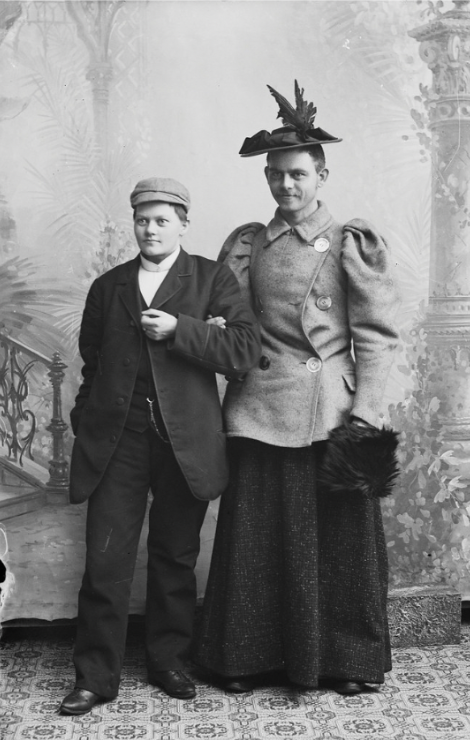
|
|
Powerpoint Slide Deck | Powerpoint Slide Deck | Yes | Amy Schuessler | |||
| Star/flag Submit a contribution to the 2026 Forum on Artistic Research: Submission #279 | Anonymous | Lisa | Metherell | Lisa.Metherell@BCU.ac.uk | Holes in Care: Material exploration through green woodworking to enable more representationally complex visualisations of adoptive families in crisis | Project presentation | English | This exposition explores the methodological processes of a creative research project concerned with representing the complexities of adoptive families in crisis with a wider backdrop of a crisis in care in the UK. Within this context, the domestic ‘private’ stresses faced everyday by families with lived experiences of trauma can be hidden and unsupported with devastating consequences. Yet understandings of families’ needs with care experienced young people at their heart is limited, with parents being failed or blamed if breakdown occurs. Holes in Care seeks to expand and develop more diverse and complex representations of family life amid crisis that centres a more trauma-informed approach including one that is attuned to systemic trauma. Art practice research is particularly well placed to presence these informally recognised but institutionally marginalised narratives in its ability to embrace complexity through the urgent need to tell stories differently, including when there are too many words or none that are meaningful. Through an exploration of wood, a signifier of strength, support and nature but with circling narratives of climate collapse, a material vocabulary is being developed that can express ambivalence, overwhelm, trauma and unspeakability within the context of failing care systems for care experienced young people and their families. Family Life (2025 ongoing) is discussed as a creative example of how non-hegemonic knowledges of families in crisis are visualised, in this instance feelings of overwhelm through systemic trauma. |
https://www.researchcatalogue.net/view/4202555/4204399 | https://www.researchcatalogue.net/view/4202555/4204399 |
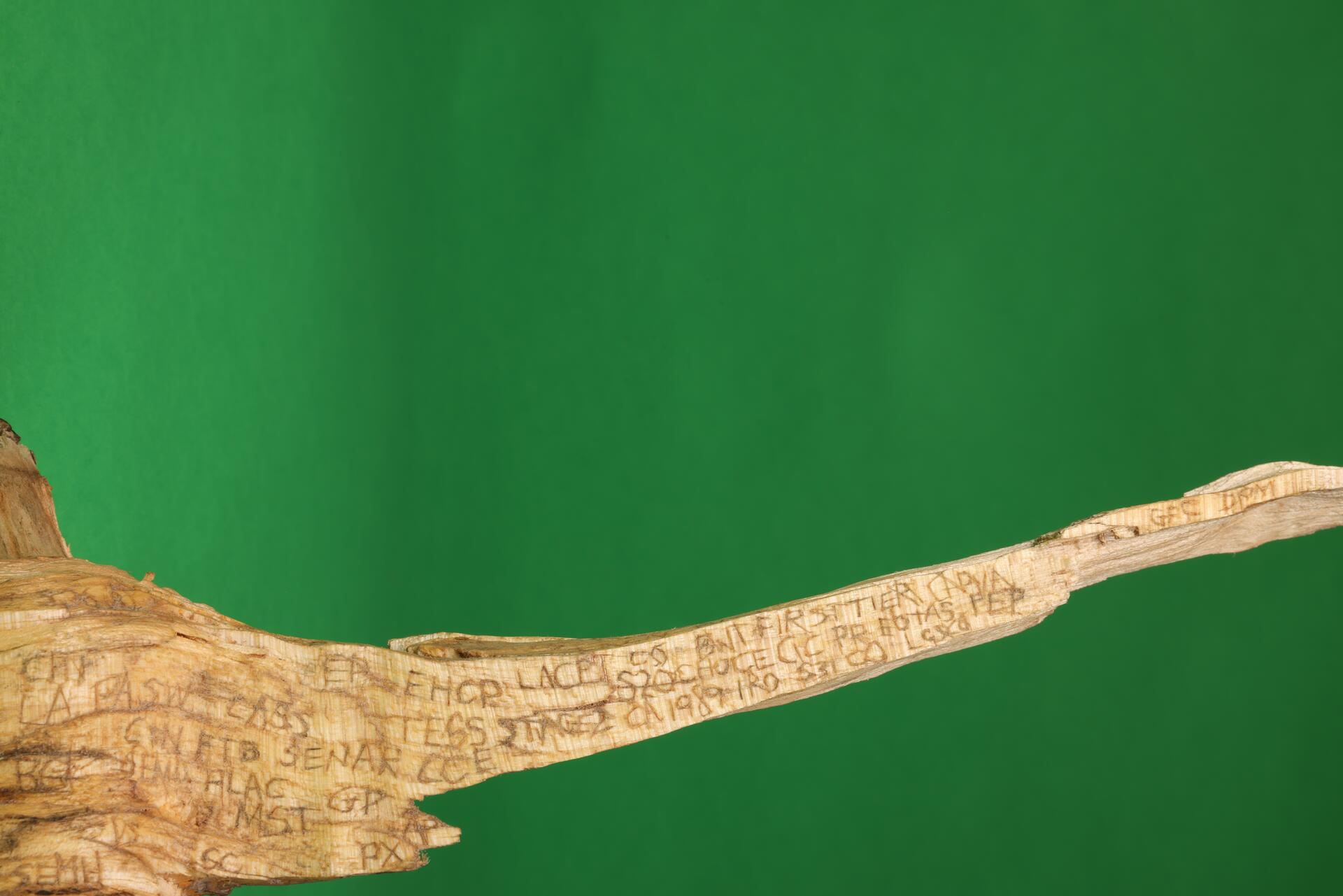
|
|
projector for presentation | Yes | |||||
| Star/flag Submit a contribution to the 2026 Forum on Artistic Research: Submission #278 | Anonymous | Chiaki | Tokui | tokuicak@gmail.com | Philosophical Practice as Arts-Based Research (ABR):A philosophical picture book Creation Workshop | Workshop | Japanese | This workshop introduces a new method of philosophical practice through the creation of a philosophical picture book. Participants freely choose a theme for the picture book they would like to create. Based on that theme, they share questions, ideas, and drawings with one another. Through the exchange of thoughts and collaborative dialogue, they work together to produce a single picture book. Creativity—an essential element shared by both art and philosophy—plays a central role in this book-making process. The completed picture book can be taken home by the participants. This workshop, based on a method I have developed, has previously been conducted at ICPP2025 (18th International Conference on Philosophical Practice), as well as in elementary schools and libraries in Japan. In this session, we would like to focus on Arts-Based Research (ABR) and explore how philosophical practice can be understood and developed through an arts-based approach. |
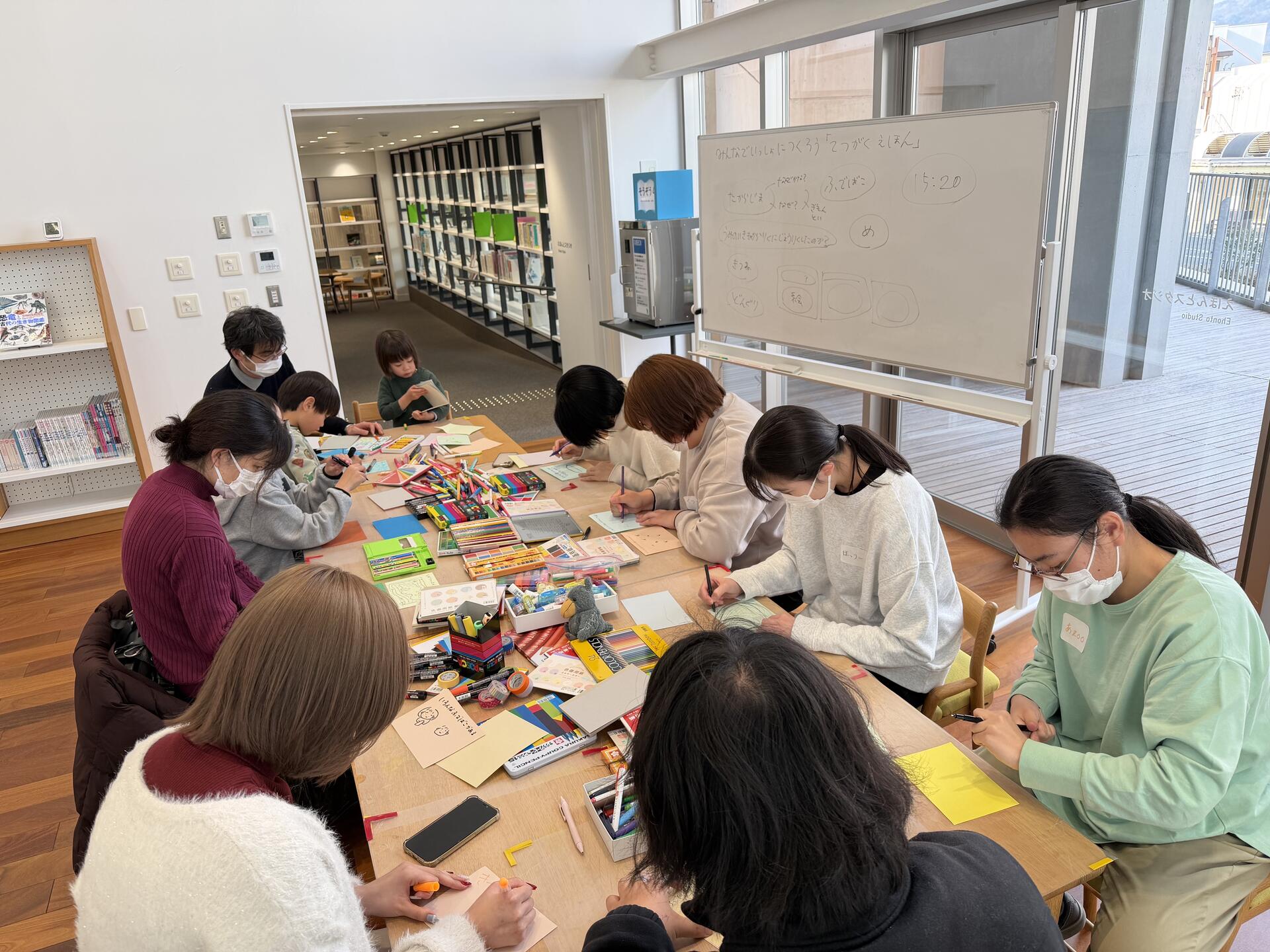
|
|
We will hold a workshop. We will draw pictures together. | For the workshop, we will need tables that participants can use for drawing. We would also like to project a PowerPoint presentation. | No | ||||||
| Star/flag Submit a contribution to the 2026 Forum on Artistic Research: Submission #277 | Anonymous | Rachel | Meyers | rachelmeyers81@gmail.com | Composing below articulation: embodied knowledge and the risk of making it sayable | Project presentation | English | What happens when you try to name knowledge that operates before naming? This project investigates that question through three years of cold-water swimming at Kingston Beach, Southern Tasmania (2022–2025), and its effects on compositional practice. Systematic shifts emerged over that period — in harmonic density, formal boundary articulation, temporal organisation — that preceded conscious recognition and presented as intuitive necessities. This project proposes retrospective portfolio analysis as a method for tracing those pre-reflective transformations without claiming transparent access to them. What analysis revealed exceeded what longitudinal portfolio comparison alone could account for. Attempts to attribute compositional innovations to any single domain — swimming, theoretical engagement, ethical commitment, expanding craft — consistently failed. The evidence pointed toward multiple domains operating convergently within compositional intuition before any could be separately identified. Electroacoustic work Thalassic tests whether the dynamics that emerged can be operationalised as explicit methodology without displacing the embodied judgement from which they arose. What the process suggested is scalar: explicit frameworks can govern macro-structural design while embodied responsiveness continues operating at the micro-compositional level. Articulation may not need to absorb what it names. In research cultures driven by optimisation and measurable output, long-duration embodied immersion risks minoritisation as method. This project argues such practices are not residues of pre-theoretical art making but epistemic resources — and that criteria exist for examining them without flattening them into a system. |
https://www.researchcatalogue.net/shared/df581ae94ec61c237e91b658baca4b4d | https://www.researchcatalogue.net/shared/df581ae94ec61c237e91b658baca4b4d |
|
|
N/A | Thalassic can be presented in stereo, which requires no specialist equipment beyond a standard audio playback setup. Multichannel presentation is also possible and would enact the research's methodology more fully: speakers distributed through the space, each carrying a distinct channel, allow audience members to move freely and compose their own mix — a controlled indoor analogue of the distributed sound walk proposed in the exposition. A site-specific sound walk remains a further possibility if the program allows. The presenter is happy to work within whatever format the venue supports. | Minimum: Stereo speakers and standard audio playback (laptop/interface). Preferred: 4–8 speakers distributed through the presentation space, each on a separate channel, with a multichannel audio interface. Speakers should be freestanding or floor-mounted to allow audience movement between them. If site-specific work is possible: Outdoor space accessible during the program, with participants carrying portable speakers. |
N/A | Yes | ||
| Star/flag Submit a contribution to the 2026 Forum on Artistic Research: Submission #273 | Anonymous | Francesca | Naibo | francescanaibo@sienajazz.it | Am I Right? Exploring Guitar Handedness Through Improvisation | Poster presentation | English | My research is focused on exploring the symmetries and asymmetries that characterize the guitar in terms of form, postures, technique and the movements that the guitarist can carry out to produce sounds on it. Starting from a unique perspective, that of left-handed guitar playing, the research studies how the hands are involved in traditional and contemporary performance practice. The project also investigates all the different technical postures and approaches typical of the world of the guitar, spanning from the academic world of the classical guitar to the DIY fields of rock, punk and similar non-academic genres of the electric guitar. Through this study I’m exploring new guitar gestures, seizing on the presence and coordination of two limbs that can undermine the concept of the “strong hand”, calling into question the subtle border of acceptable sound. Starting from an act of self-sabotage, this process leans on the natural instability that arises from reversing habits and performance practices. Thus, this project aims to amplify the technical-expressive possibilities of any guitarist, no matter what posture and technical approach they started from, in order to integrate all the possibilities that being left-handed or right-handed automatically excluded from the instrumental options at the beginning of the learning process. This innovative approach will be applied to the field of free improvisation using traditional instruments, as well as left-handed models of various types (classical, acoustic and electric). The expected results will be widely applied to improvising practices, the guitar world and guitar didactics. |
|
|
I haven't presented my research at conferences or symposia yet. The 2026 International Forum on Artistic Research would allow me to do my first presentation. | I don't need to provide any additional information. | No special requirements. | I don't foresee any potential risk or ethical concern. | No | ||||
| Star/flag Submit a contribution to the 2026 Forum on Artistic Research: Submission #271 | Anonymous | Jane | Hwang | janehwangjane@gmail.com | Sonic Relics: A Somatic Seance for the Fractured Archive | Other format | English | How do we repair the historical fractures of a marginalized diaspora when the official archive itself is the source of rupture? During WWI, an estimated 4,000 Koreans participated in the war, yet the traces of only six individuals were captured and recorded by the German phonogram archive (Lautarchiv). While these rare acoustic traces were preserved, the identities of these POWs were fractured by a shifting grammar of categorization—from imperial racial measurements to colonial administration, and later, retrospective Cold War ideological labels (e.g., 'North Korean'). Their existence became a collective "Posthumous Exile," perpetually displaced by borders and patriarchal archival logic. The official archive did not preserve their individual histories; it fragmented them. This lecture-performance and screening project, titled Sonic Relics, proposes a methodology of "reparative historiography" through the visceral body. When the documentary evidence is scattered and the paper archive fails to hold these drifting spirits, I turn to the body as an alternative theoretical site and a warm vessel. I define this practice as a "Somatic Seance." Through collaboration with a choreographer, the moving image work attempts to tether the disembodied voices back to the physical world using three elemental stages: Land (grounding the floating memory), Wave (manifesting the century-old echo), and Saliva (the fluid threshold of utterance). By shifting the focus from nationalistic narratives to visceral realities, this presentation asks how we can diversify our visual literacy. It challenges the audience to look past the ideological labels and meet the gaze of the individuals, offering an embodied practice to heal the fragmented archive. |
|
|
Moving Image Remains Conference, Goethe University Frankfurt, Frankfurt am Main, Germany (20 minutes long project presentation format) |
This contribution is designed for a 30-minute slot (20-minute lecture-performance + 10-minute Q&A). The session will interweave a critical academic reading with an artistic screening. The presenter will first narrate the historical and theoretical context of the Lautarchiv, functioning as a live storytelling element. This live narration will then transition into the screening of a curated 5-to-7-minute excerpt from the full 30-minute moving image work, Sonic Relics. By screening a focused excerpt rather than the full film, the presentation ensures ample time to discuss the specific artistic methodology—the "Somatic Seance" (Land, Wave, Saliva)—while strictly adhering to the conference's time constraints. This format bridges the gap between historical research and artistic practice, allowing the audience to experience the "Somatic Seance" both intellectually and sensorially. |
A dark room suitable for video screening. A projector and a high-quality sound system (stereo speakers). A microphone and a reading stand (podium) for the live lecture-performance. |
No | |||||
| Star/flag Submit a contribution to the 2026 Forum on Artistic Research: Submission #270 | Dario Savino Doronzo | Dario Savino | Doronzo | dariodoronzo@gmail.com | FABUALE: Translating Endangered Conceptual Worlds into Sound. [Concert for Flugelhorn and Piano] | Performance | English | FABUALE is an artistic research project presented as a live concert for flugelhorn and piano by Duo Doronzo | Minafra. The performance investigates how endangered conceptual worlds — particularly oral, ecological, and embodied modes of knowledge — can be translated into contemporary musical language. In a context marked by cultural homogenisation and algorithmic standardisation, FABUALE explores music as a minoritised epistemic space: a site where fragile, non-hegemonic forms of knowing can be enacted rather than merely represented. The project asks: (1) How can improvisation and composition function as tools to preserve and reactivate endangered conceptual worlds? (2) How does the dialogic relationship between two acoustic instruments embody ecological interdependence, asymmetry, and coexistence? The original works (Gongilo, La Piuma, Cerbiatto, Oltremare, Rane, Sol Invictus, Vespe) operate as sonic fabulae — narrative structures without words that foreground listening as a form of relational knowledge. Drawing from oral traditions, Mediterranean soundscapes, and embodied improvisation practices, the duo constructs a musical language rooted in breath, resonance, fragility, and unpredictability. Methodologically, FABUALE aligns with Art-Based Research and phenomenological inquiry, engaging uncertainty as a generative condition and performance as a site of knowledge production. The concert becomes both artistic event and epistemic experiment: a space where sound resists simplification and reclaims its capacity to host complexity. By framing music as an endangered yet resilient conceptual world, FABUALE proposes performance as an act of resistance, revival, and ecological imagination. REMARKS ON THIS CONTRIBUTION – PERFORMERS: Dario Savino Doronzo, Flugelhorn Livio Minafra, Piano VIDEO LINKS: https://www.youtube.com/watch?v=Ddr4xPm5nzA https://www.youtube.com/watch?v=0765NcVE_C4 https://www.youtube.com/watch?v=FoPQN9PmA08 |
|
|
FABUALE has been presented in concert form at international venues including Conservatório - Escola das Artes Luiz Peter Clode of Funchal, Museu de Arte Contemporânea – MUDAS (PT), Lithuanian Academy of Music and Theatre (LT), Mondo.NYC (USA), and other European institutions. While performed publicly, this submission reframes the project explicitly as artistic research, foregrounding its epistemic, ecological, and methodological dimensions in alignment with the SAR 2026 themes. | The performance by Duo Doronzo | Minafra (Dario Savino Doronzo - Flugelhorn & Presenter | Livio Minafra - Piano & Composition) will be presented as a live concert-lecture format, integrating artistic practice and reflective introduction. A brief contextual framing may precede the performance to situate FABUALE within the methodological perspectives of Art-Based Research and ecological epistemology. The project does not require multimedia materials and is conceived primarily as an acoustic experience. If appropriate to the conference programme, a short post-performance discussion can be included to further engage with its research dimensions. | The Duo prefers to perform acoustically (without amplification). A well-tuned grand or half-grand piano at 442 Hz is required, together with a rigid music stand for the flugelhorn. If amplification is necessary, please provide two/three microphones for piano, one microphone for flugelhorn, and two monitors (one for the pianist and one for the flugelhorn player). | No specific ethical risks are anticipated. The project does not involve human subjects, sensitive data, or external materials requiring permissions. FABUALE is an original artistic work focused on acoustic performance and artistic research. | Yes | Dario Savino Doronzo | |||
| Star/flag Submit a contribution to the 2026 Forum on Artistic Research: Submission #269 | Anonymous | Faidra | Chafta Douka | faidracd@icloud.com | Bodies in Resonating Action: Composing from the Body | Project presentation | English | Music-making begins with the body’s action ranging from the visible and grand to the imperceptible and subtle. Yet in modern times, the physicality of making music has been overshadowed by an obsession with sound and with the work of art as an object detached from human making and interaction. The research project Bodies in Resonating Action explores the potential of the musician’s body and its processes as compositional material. It is developed for and through the specific body of the collaborative performer, adapting and investigating concepts while taking into consideration the specificity and uniqueness of each performer’s soma. The fundamental idea of the project is to move away from pitch, rhythm, and rigid structure as the primary elements of music, and to focus instead on physical processes such as bodily motion, breathing, mental intention, and embodied awareness in the interaction with sound production, and investigate how these can systematically form a novel way of understanding and structuring music-making. In order to do so, the project incorporates concepts from music and movement practices outside Western art music and beyond Western culture broadly. It does not aim to create composed pieces as fixed objects, but rather a way of music-making, thinking, musically behaving that results in performance material in a constant process of transformation. The development of a unique notational system within this framework serves neither a descriptive nor a prescriptive role; it rather accompanies the research’s thinking process and traces the development of its key concepts. It is not intended as material for reproduction, but as a map and communicative tool for the collaborative musician. There is therefore a strong element of oral transmission, which functions alongside or even prior to notation rendering the composer’s presence inevitable in the practice and situating the material as dependent on the people involved in its making. | https://www.researchcatalogue.net/shared/7f77413cf3f760ceba0781ab03e7f39f | https://www.researchcatalogue.net/shared/7f77413cf3f760ceba0781ab03e7f39f |
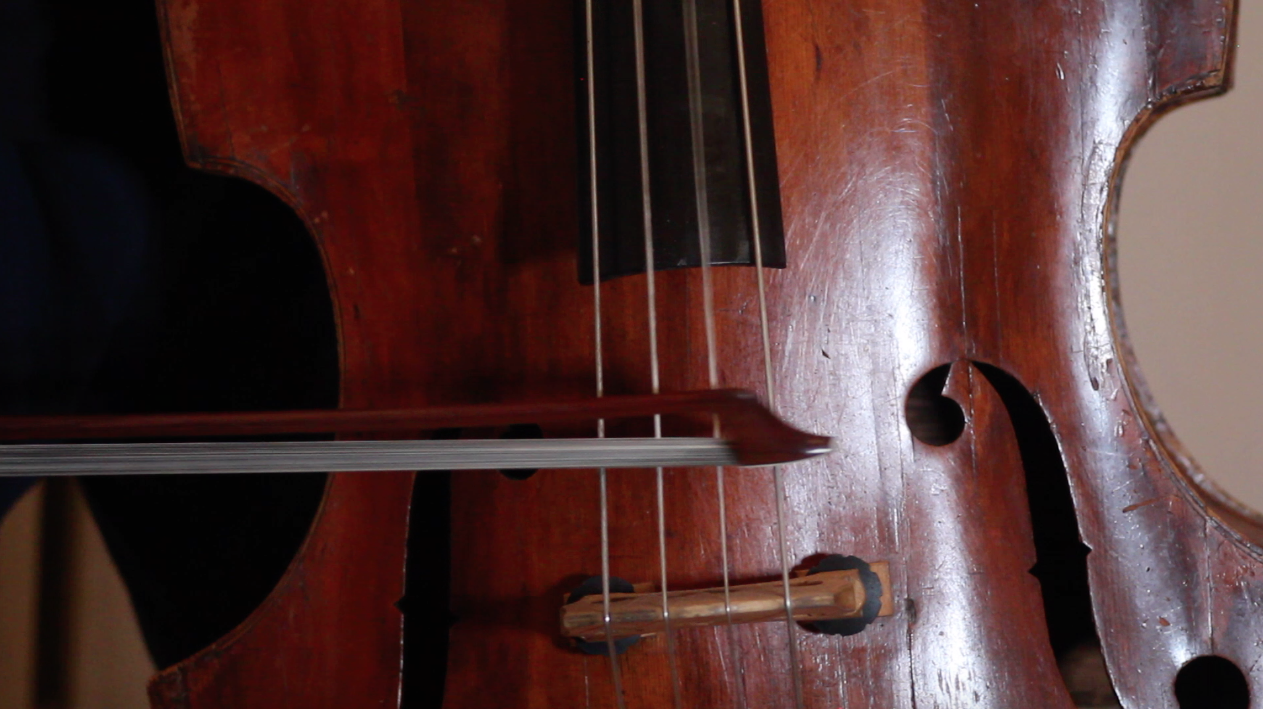
|
|
“Forum Artistic Research”, GMPU Klagenfurt June 2024 “Feedback Constellations” ZHdK Zurich November 2024 |
Audio and video. | No | ||||
| Star/flag Submit a contribution to the 2026 Forum on Artistic Research: Submission #268 | Anonymous | Grant | Corbishley | grantcorbo@proton.me | A Call to Arms | Project presentation | English | In January 2010 I deployed an ethico-aesthetic technique to address urgent issues in the area where I live. This began within Houghton Bay, a suburb of Wellington, New Zealand and later spilled over to two other suburbs. I came to call the whole area of the project, the “Valley of the Wild”. This technique is similar to Felix Guattari's notion of "ecosophy" that operates across the three registers of the environment, social relations and human subjectivity. Within the Valley of the Wild, processual ethico-aesthetic techniques and modes of expression demand a rethinking of relations between humans and the environment, without preference to either. Instead, they are thought and enacted ecologically, or what Guattari terms "ecosophically". This research project and process began to be one that considered how it might be possible to collectively generate or create a community of care or ethics for the three registers. In other eco-art projects, the question of stewardship is present. But I suggest, through this process-based art research, that what is needed is durational stewardship. Durational stewardship refers to ecologies of care that operate over long time scales and that fully implement the worlding experience of ecosophy. A durational stewardship also challenges the notion of the relations between artists and community as it may require artists to situate themselves within the project indefinitely, demanding a reformation of subjectivity that operates across the three registers. This project addresses processes that occur in the everyday but that can become resingularised: listening, noticing and waiting. The techniques, processes, conditions and events will continue to become. It is from such becoming that more sustained evental conditions emerge that provide a sense of collectivity across the community, our suburb and our subjectivations. Via such evental conditions, systems of durational stewardship become possible. |
https://haewaihoughtonvalley.org/liftingthecreek/ | https://haewaihoughtonvalley.org/liftingthecreek/ |
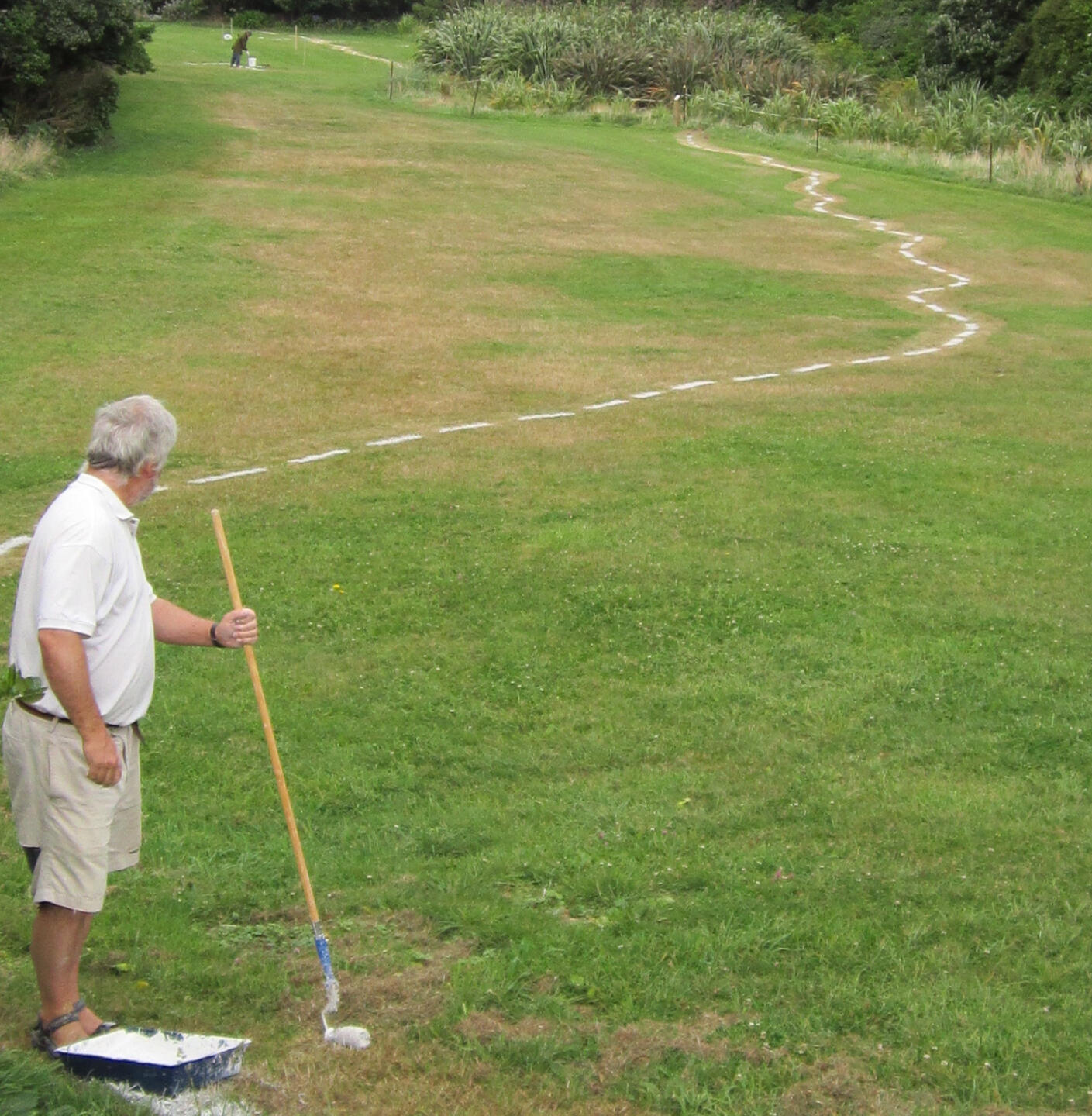
|
|
"Collaborating with the Outside", Presentation, 2012, University of New South Wales, Aus. "Valley of the Wild", Presentation at Waterwheel Symposium, 2016. "Lifting the Creek", Presentation at Victoria University, 2017, Wellington, New Zealand. "A Call to Arms", Presentation at Contested Imaginaries, 2020, Concordia University, Montreal. "Lifting the Creek", Whaitua Environmental Committee, Wellington, NZ 2023. "100 year vision", Presentation at Wellington NZ City Council 2024. |
It will be a powerpoint presentation | none required | No concerns or risks | Yes | ||
| Star/flag Submit a contribution to the 2026 Forum on Artistic Research: Submission #267 | Anonymous | Mari | Bastashevski | bastashevski.mari@gmail.com | Purple Perfect | Project presentation | English | Please note this is a new project and a research expose has not yet been created. I'd like to test it out and find potential collaborations and distributors. For centuries, Tyrian purple was a metaphor that connected knowledge across worlds: those of labor with those of kings, worlds of past wars with those of future extinctions. Ancient Tyrian purple was historically extracted from the gland of murex snails. Tens of thousands of marine snails were needed for a single gram of pigment. This painstaking process contributed to the mythologizing of color and its association with power. In 2021, a group of Chinese scientists used cellular biology to re-engineer this color through E. coli. While their model demonstrated scientific feasibility, the invention appears to have had no meaning beyond feasibility. The more-than-human agency of the snail at the heart of this invention is largely forgotten. Purple Perfect uses an artistic mode of inquiry to launch a labor-intensive, collaborative production of a single drop of color as a starting point to study how scientific discovery is always a form of cultural proposition. In doing so, it offers a fundamentally new approach for cross-disciplinary negotiation of more-than-human futures. The central research objectives are: a. To study how ancient color production methods compare to the cellular method. b. To analyze how cellular reproduction of the ancient color of Tyrian purple from a snail cell contributes to debates over the future of ecology today. In developing this case study, the project will investigate three primary questions: What kind of problems emerge when a scientific framework is shaped by artistic inquiry? How is it defended as simultaneously artistic and scientific research through the development of a single model? How does producing a single drop of color from one cultivated snail, rather than thousands extracted, shift the value and potential of ecological resources, however scarce? |
https://www.maribastashevski.com/pending-xenophora | https://www.maribastashevski.com/pending-xenophora |
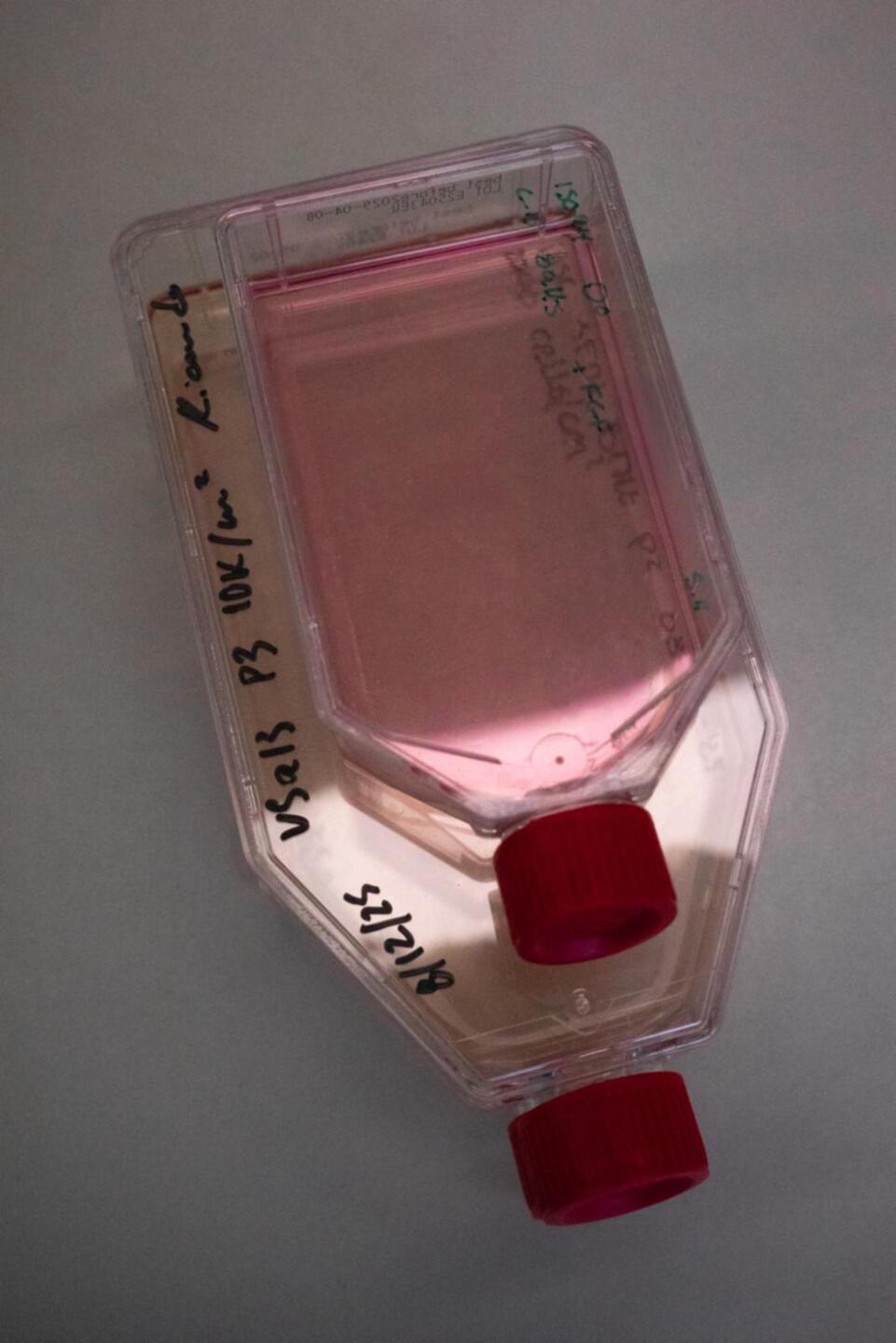
|
|
This is a new project. | Nothing yet | Two existing frameworks would be applied during the implementation of this project. First, the strict ethical protocols for working with living subjects developed by Wageningen University Cellular Agriculture Labs. Second, the ethical approach I developed during my doctoral research. | No | |||
| Star/flag Submit a contribution to the 2026 Forum on Artistic Research: Submission #266 | Sára Gottsteinová | Sára | Gottsteinová | s.gottsteinova@icloud.com | From individual to community, together we can surely achieve something | Project presentation | English | In Central Europe, we are collectively shifting toward the far right and patriotic struggles for power. The political key has become state sovereignty with the aim of defending and preserving traditions that are threatened by Western ideology, Anglicisms that are swallowing up contemporary culture and public space, but also rhetoric against queer bodies, whose presence here is claimed to be "unprecedented." In my artistic research, I observe how the meaning of words changes and how words are stolen from the Anti-Fascist Dictionary and misused by the far right. I also examine how this changes their narrative and mood. Where does the gap that is forming in the younger generation come from, and where does the era of insels who harbor hatred toward women and "other" bodies come from? Who do we consider to be our enemy, and why do we refuse to engage with them in discussion? Who raised the nationalists who hate "other" bodies? How can we support those who are slowly falling into this group, and how can we encourage each other to move away from hatred and towards understanding, discussion and care? In my work, I experiment not only with words but also with structure. This can help us to open up space for error or glitch, and break down the boundaries of our comfort zones. Through performativity, I create paths for changing dynamics and give a voice to those who rarely get to speak. For the conference, I will present parts of my dissertation, which poetically tells the story of how our queer bodies change in public spaces during the rise of the far right. It also explores how we reclaim the vocabulary of anti-fascism and strengthen ourselves in our daily struggles. It would be prepared primarily in English, incorporating poetry written in Czech and Slovak queer language, which is gradually finding its way into our conversations and resisting the language of national patriots. |
https://www.researchcatalogue.net/profile | https://www.researchcatalogue.net/profile |
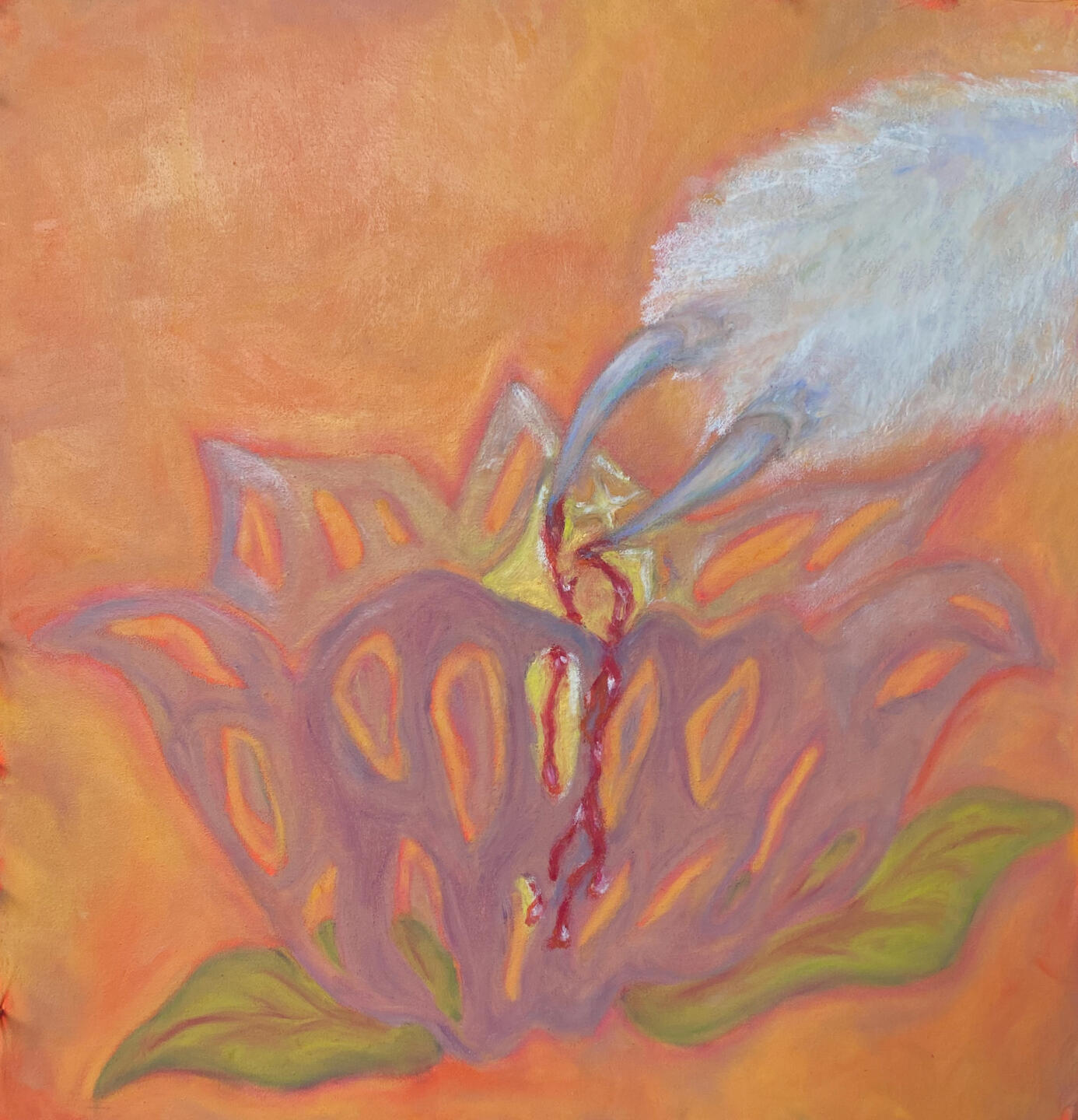
|
|
projection if possible | Yes | Sára Gottsteinová | ||||
| Star/flag Submit a contribution to the 2026 Forum on Artistic Research: Submission #262 | Anonymous | Amalia | Calderón | amaliamorcalderon@gmail.com | Earthly Rights Cartography | Poster presentation | English | The Earthly Rights Cartography is a doctoral thesis mapping the body of ecological law in different local and supranational jurisdictions through the use of an experimental cartographic method. It challenges the anthropocentric perception of nature bodies, interpreting the language of emerging legal texts in Earthly jurisprudence, so as to reveal specific meanings about their agency. In times of polycrisis, analyzing socio-ecological conflicts from this perspective allows us to address the urgent challenges of international legal practice. By creating an annotated visual tool that encompasses the developments in our legal language, this project will examine which practices work and which legal conceptual worlds can be pursued, as well as address potential obstacles to these new strategies. Thus offering a crucial opportunity to explore new conceptual horizons of coexistence and planetary and environmental justice. The project will compile a linguistic corpus of jurisprudence on the Rights of Nature. Through a comparative case study within the framework of the Global North and South, key words and texts will be identified and transposed into a textual map. This map will be structured in visual layers corresponding to different categories—i.e. terricide, hydrofeminism, unequal socio-ecological exchange and intergenerational justice—represented as routes connecting specific cases; articulating how different extrapolations of legal agency toward the bodies of nature can overlap, contradict, or complement others. The research will employ an interdisciplinary methodology of legal linguistics analysis and artistic research. Its theoretical foundation will adopt a materialist, feminist, and decolonial epistemological framework, engaging with and contributing to the work of key figures in posthumanist law: Dianne Otto, Emily Jones. The mapping methodology will be based on the speculative models of Anna Tsing's Feral Atlas and Lawrence Abu Hamdan's Earwitness Inventory. |
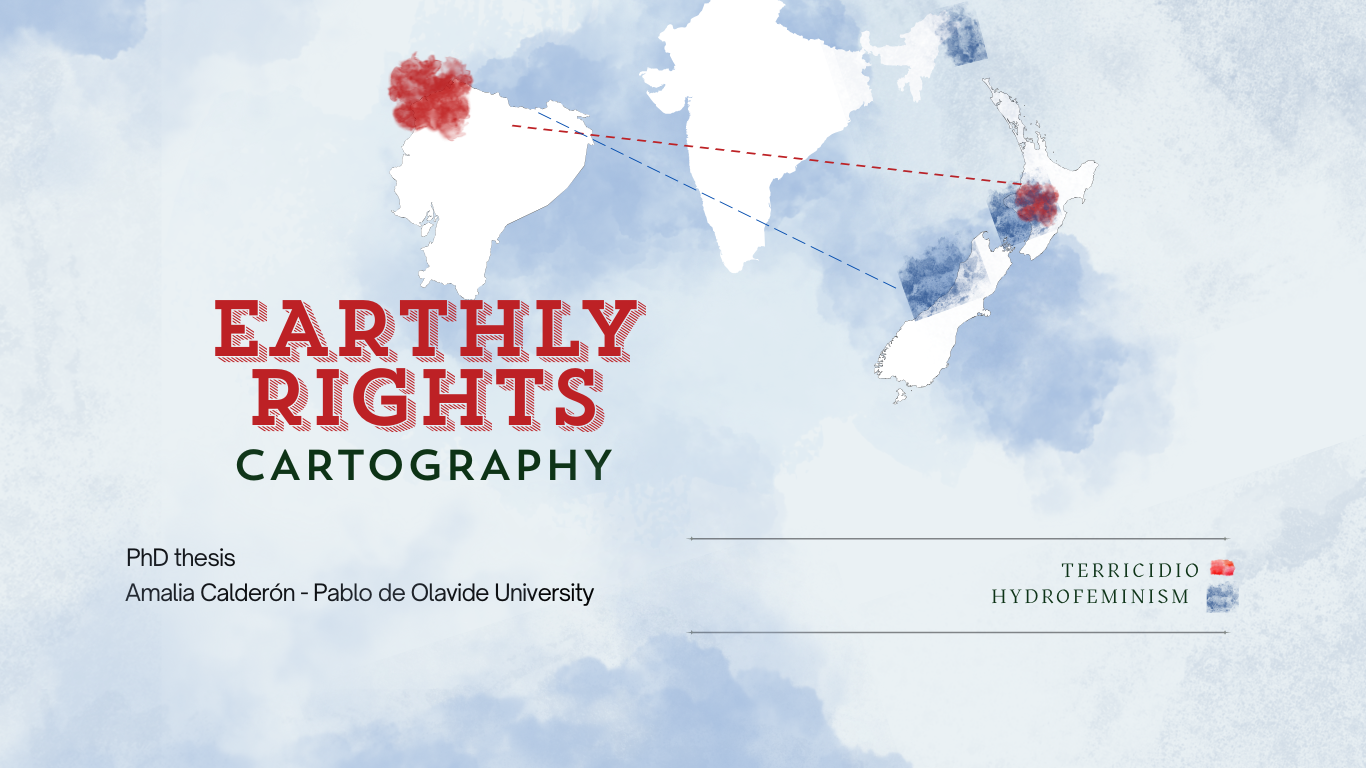
|
|
Yes | Amalia Calderón | |||||||
| Star/flag Submit a contribution to the 2026 Forum on Artistic Research: Submission #261 | Anonymous | Gabriel | Coleman | colemaga@tcd.ie | Assembling histories of the Irish rural landscape through print and sound | Project presentation | English | The spillage project combines environmental history methodologies with creative sound and printmaking practices to investigate more-than-human entanglement in Irish agricultural and peatlands landscapes. Emerging from enviornmental history reserach into agricultural pollution and fertiliser use in Irish pasture, the project attempts to form an archive for the messy more-than-human stories that spill out from traditional historial sources. The project's printmaking workshops and sound installations ask visitors to curate and collage archival texts and sound into new portraits of the Irish landscape. | https://www.researchcatalogue.net/view/4210415/4210416 | https://www.researchcatalogue.net/view/4210415/4210416 |
|
|
Workshops from this project have been held at the Galway Climate Festival and Mary Robinson Climate and Nature Conference. A reflection of work on this project developed through the Immersion Fellowship was presented at the 2025 Beta Festival. However, the collected work of the SPILLAGE project has not been presented in an academic context in general, nor has it been engaged with explicitly as an artistic research project. | Standard conference presentation setup with projected slide deck will suffice. | Yes | ||||
| Star/flag Submit a contribution to the 2026 Forum on Artistic Research: Submission #259 | Anonymous | Manuela | Rosso - Brugnach | manuela.rossobrugnach@ubc.ca | Between Wor(l)ds: Translingual Methods for Reimagining Water | Workshop | English | As border-crossing entities, both language and water are polylocal. As languages migrate, travel, mobilize, and transform, speech communities sedimenting voices across environments, waters surge, seep, re-route and cycle, crossing hydrosocial territories and jurisdictional partitions. Yet the governance of transboundary waters, paradoxically, also requires levels of agreement on what makes up a better way forward in the face of increasing scarcity, language loss, pollution, and uneven water realities—one of the most urgent challenges of the twenty first century (Castro 2007; Norman & Bakker 2015). While water governance approaches such as Integrated Water Resource Governance (IWRG) and Adaptive Water Resource Governance (AWRG) offer important groundwork, less attention has been paid to language practices that navigate the ongoing translations at the interplay between fluidity, flux, fixity, and the situated, ontological legibility of the hydrocommons (Neimanis, 2018; Buenafe et al 2024): what much artistic commons research has called ‘emplaced relational translation’ (Imhoff and Quirós 2015; De Carli et al 2025). Thinking with these challenges, this workshop—inspired by Franch I Gilabert, Luzárraga, and Muiño’s 100 Words for Water (2025) and by Simon on translation’s border-work (2019)—invites participants to choose a water body, write from their embodied relation to it, and translate it through a quick collective assemblage (re-voicing across languages and senses) before coining a new “water word” for a shared mini-glossary by the end. Sharing is optional; no recording; any traces enter a consent-based ethical archive by explicit choice. |
|
|
Builds from the project’s planned workshop with multilingual water researchers and the proposal’s theoretical and methodological framework; This workshop will have been piloted in a peer-reviewed rendition as part of my PhD comprehensive examinations, workshopped with Dr. Christine Schreyer, Dr. Denise Kenney, Dr. Leila Harris, and Dr. Astrida Neimanis at the University of British Columbia in April 2026. Feedback from this committee-supported iteration will inform the SAR2026 version. | This 90-minute workshop is practice-based and participant-led. After a brief framing, participants will (1) select a specific water body, (2) write a short “water note” grounded in embodied and situated experience, (3) have the note re-voiced by others through a rapid translation-as-assemblage exercise (across languages and/or registers such as memo/poem/testimony), and (4) coin and define one new “water word.” The session culminates in a collectively produced mini-water glossary. No specialist water knowledge is required. Participants do not need to be multilingual: translation can be interlingual where possible, or intra-lingual through register shifts and re-voicing within the same language. Sharing is optional throughout; quiet participation is supported. Ethical protocol: no recording/photography; paper traces are retained only by explicit opt-in consent and otherwise collected and destroyed after the session. Scales from 4–6 participants up to ~20. | Seminar room with movable seating, suitable for groups from 4–6 up to ~20. Setup: circle for opening/closing + small-group clusters. 1–6 tables/desks (depending on group size) for writing/assemblage. Materials: A4/letter paper and pens; optional simple collage supplies (sticky notes, tape/glue sticks, markers; scissors optional). Accessibility: all activities can be done seated. Internet preferred; no recording equipment used. | Foreseeable risks are low but include participants sharing sensitive experiences linked to water, or inadvertently naming identifiable people/communities in contested contexts. Sharing is voluntary; participants may write abstractly and are asked to avoid identifying details. No recording/photography. Any paper traces are kept only by explicit opt-in consent; otherwise collected and destroyed. | Yes | Manuela Rosso - Brugnach | |||
| Star/flag Submit a contribution to the 2026 Forum on Artistic Research: Submission #258 | Yssia Verano | Yssia | Verano | yveranol@estudiante.uc.cl | Repertoires of Resistance and the Deactivation of Peruvian Fascism: A Situated Performance-as-Research Approach in Times of Risk | Poster presentation | English | This research investigates the contemporary dispute over national identity in Peru through the lens of Performance as Research (PaR), situated within a landscape of increasing state censorship and the persecution of dissident artists. My work identifies a clash between two opposing performative bodies: the "repertoire of resistance"—rooted in activist and feminist movements—and the emerging "repertoire of Peruvian fascism," characterized by reactionary, extremist strategies that weaponize hate speech to dismantle democratic memory. Employing a "variegated methodology" (metodología abigarrada), a framework derived from Zavaleta Mercado and Silvia Rivera Cusicanqui that understands the political landscape as a space of overlapping layers, entrained contradictions, and sediments of subjectivity, this research proposes two core strategies: a) Re-performance: Updating historical acts of resistance (such as Lava la Bandera) to engage with current authoritarianism.b) Deactivation: A process aimed at stripping power from fascist symbols through poetic and affective interventions. The poster will be presented as a "variegated installation," featuring visual sketches, conceptual drawings, and tactile documentation of prototypes. These include actions such as the symbolic deconstruction of extremist banners through affective gestures and the collective embroidery on "hate flags" to resignify mourning and justice. By sharing these materialities, I aim to demonstrate how PaR can materialize the precariousness of the artist in the Global South while reclaiming the efficacy of performance to defend the right to a dignified life and the preservation of memory against state-led erasure. |
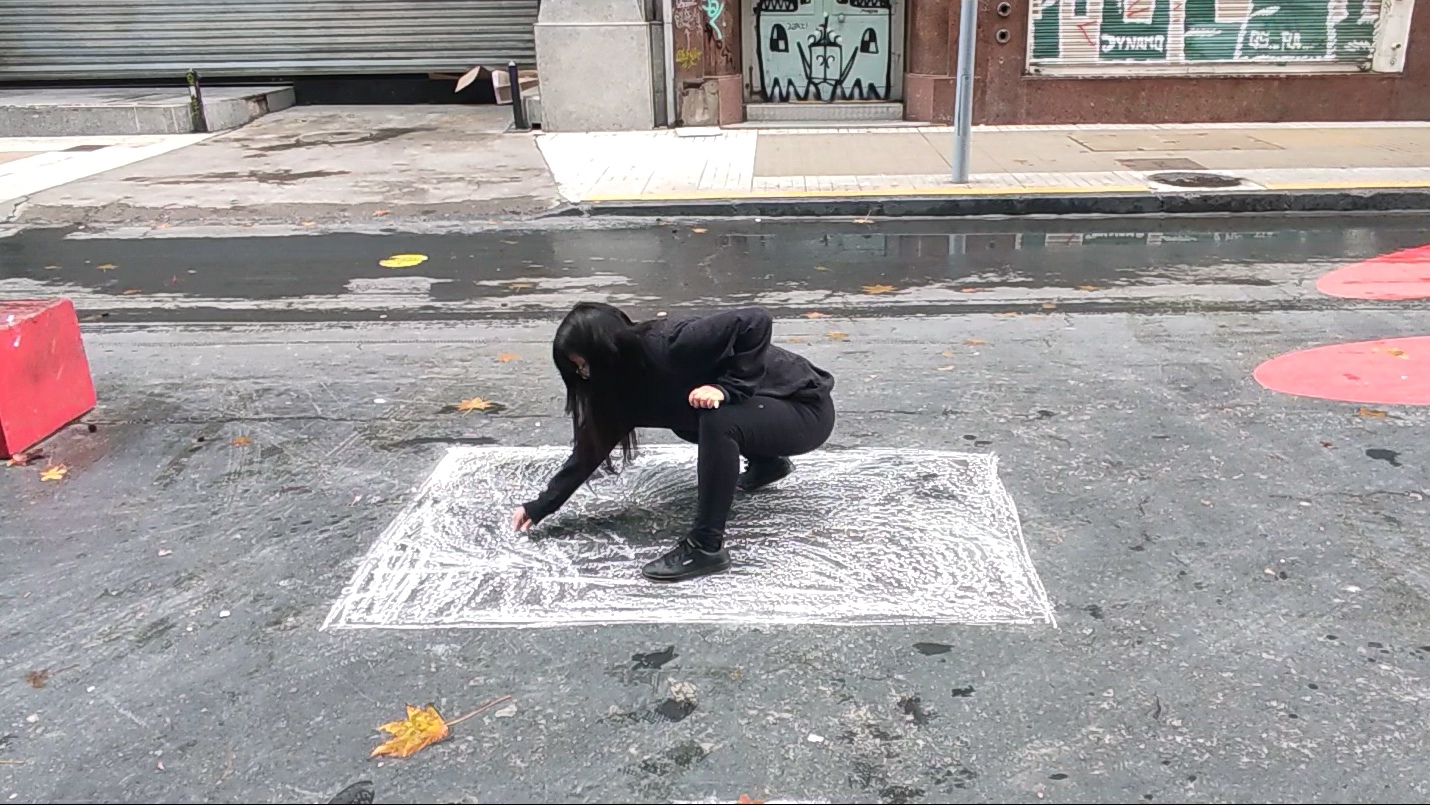
|
|
Earlier versions of this doctoral research (PUC) have been presented at internal seminars and international conferences specialized in Practice as Research (PaR) in Chile between 2025 and 2026. Each instance incorporated new academic discussions and peer feedback. This specific contribution expands on those findings by integrating a critical analysis of the escalating state censorship and the situated risk for artists within the current Peruvian context. | The contribution will be delivered as a Poster Presentation using a Practice as Research (PaR) approach. Beyond the standard visual display, I plan to incorporate a tactile and multi-layered presentation format. This includes printed drawings and visual sketches designed to clarify the conceptual framework of my doctoral research. These visuals are not merely illustrative but serve as a primary record of the creative process and the 'situated experience' of the artist-researcher. Additionally, I will include physical materials related to my artistic proposal. This hybrid format—combining traditional academic text with tactile and visual artifacts—aims to foster a direct, interdisciplinary dialogue with the audience. |
Vertical Surface: A standard poster board, corkboard, or wall space suitable for pinning/taping a main poster and several printed drawings and visual sketches. Horizontal Surface: A small table, plinth, or shelf (approx. 50x50 cm) to place my personal device and physical materials and tactile objects. No Electrical Requirements: No power outlets or AV equipment. |
My main concern is analyzing extremist "repertoires of fascism" without amplifying hate speech. Intervening in sensitive symbols (flag, flor de retama) is rooted in justice and reconciliation. Public "deactivations" use affective gestures requiring careful situational management. Finally, the "variegated scenario" acknowledges the researcher’s situated body facing political tensions while maintaining PaR integrity. All original works and authors are duly cited and credited. | No | ||||
| Star/flag Submit a contribution to the 2026 Forum on Artistic Research: Submission #257 | Anonymous | Yssia | Verano | yveranol@estudiante.uc.cl | Repertoires of Resistance and the Deactivation of Peruvian Fascism: A Situated Performance-as-Research Approach in Times of Risk | Poster presentation | English | This research investigates the contemporary dispute over national identity in Peru through the lens of Performance as Research (PaR), situated within a landscape of increasing state censorship and the persecution of dissident artists. My work identifies a clash between two opposing performative bodies: the "repertoire of resistance"—rooted in activist and feminist movements—and the emerging "repertoire of Peruvian fascism," characterized by reactionary, extremist strategies that weaponize hate speech to dismantle democratic memory. Employing a "variegated methodology" (metodología abigarrada), a framework derived from Zavaleta Mercado and Silvia Rivera Cusicanqui that understands the political landscape as a space of overlapping layers, entrained contradictions, and sediments of subjectivity, this research proposes two core strategies: a) Re-performance: Updating historical acts of resistance (such as Lava la Bandera) to engage with current authoritarianism.b) Deactivation: A process aimed at stripping power from fascist symbols through poetic and affective interventions. The poster will be presented as a "variegated installation," featuring visual sketches, conceptual drawings, and tactile documentation of prototypes. These include actions such as the symbolic deconstruction of extremist banners through affective gestures and the collective embroidery on "hate flags" to resignify mourning and justice. By sharing these materialities, I aim to demonstrate how PaR can materialize the precariousness of the artist in the Global South while reclaiming the efficacy of performance to defend the right to a dignified life and the preservation of memory against state-led erasure. |
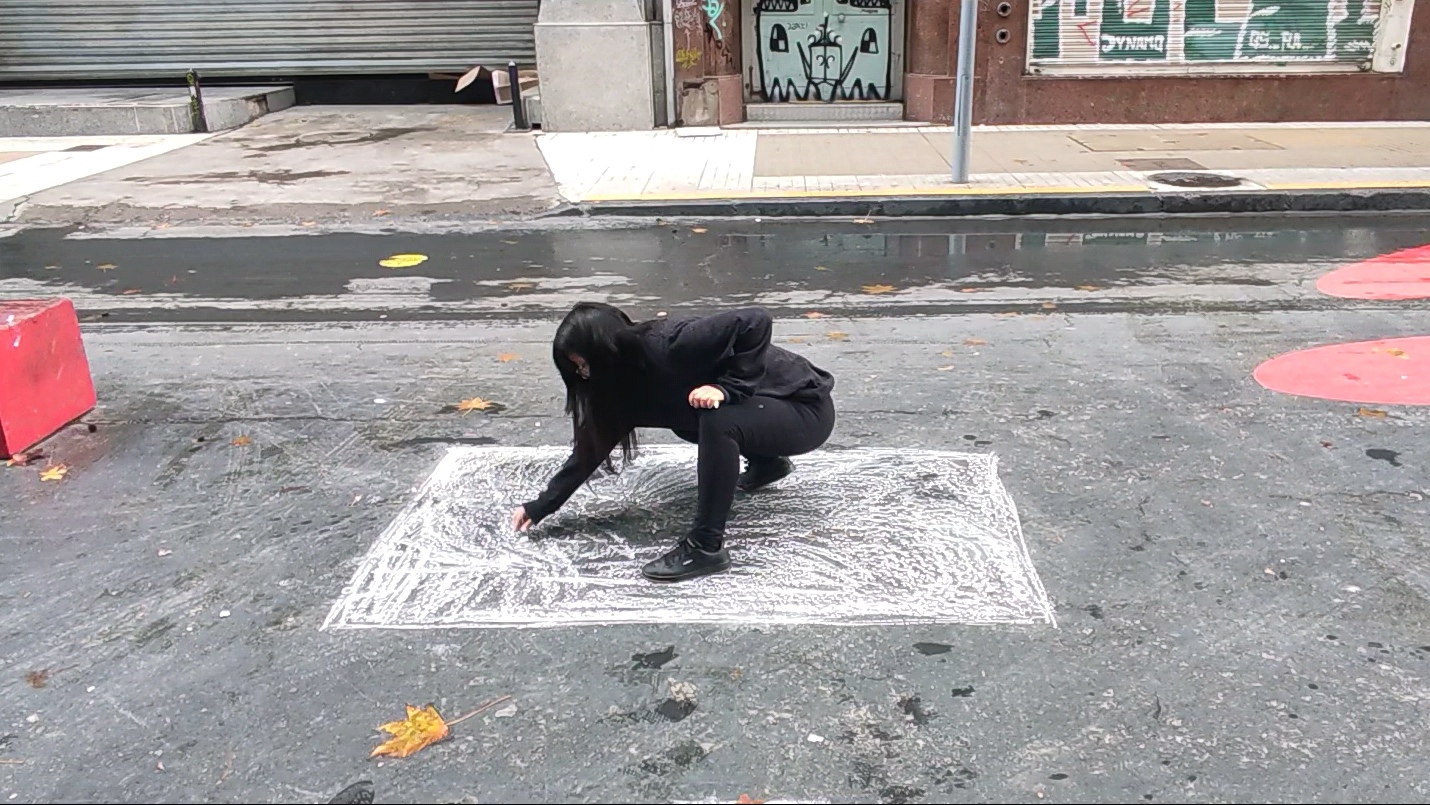
|
|
Earlier versions of this doctoral research (PUC) have been presented at internal seminars and international conferences specialized in Practice as Research (PaR) in Chile between 2025 and 2026. Each instance incorporated new academic discussions and peer feedback. This specific contribution expands on those findings by integrating a critical analysis of the escalating state censorship and the situated risk for artists within the current Peruvian context. | The contribution will be delivered as a Poster Presentation using a Practice as Research (PaR) approach. Beyond the standard visual display, I plan to incorporate a tactile and multi-layered presentation format. This includes printed drawings and visual sketches designed to clarify the conceptual framework of my doctoral research. These visuals are not merely illustrative but serve as a primary record of the creative process and the 'situated experience' of the artist-researcher. Additionally, I will include physical materials related to my artistic proposal. This hybrid format—combining traditional academic text with tactile and visual artifacts—aims to foster a direct, interdisciplinary dialogue with the audience. |
Vertical Surface: A standard poster board, corkboard, or wall space suitable for pinning/taping a main poster and several printed drawings and visual sketches. Horizontal Surface: A small table, plinth, or shelf (approx. 50x50 cm) to place my personal device and physical materials and tactile objects. No Electrical Requirements: No power outlets or AV equipment. |
My principal concern is analyzing extremist "repertoires of fascism" without amplifying hate speech. Intervening in sensitive symbols (flag, flor de retama) is rooted in justice and reconciliation. Public "deactivations" use affective gestures requiring careful situational management. Finally, the "variegated scenario" acknowledges the researcher’s situated body facing political tensions while maintaining PaR integrity. All original works and authors (e.g., Sociedad Civil, Ballón) are cited. | Yes | Yssia Verano | |||
| Star/flag Submit a contribution to the 2026 Forum on Artistic Research: Submission #255 | Anonymous | Ameena | Aljerman Alali | ameena.aljarman@gmail.com | The Body as Parallel Archive: Afro-Emirati Memory in the Arabian Peninsula | Project presentation | English | This artistic research project explores how Afro-Emirati slavery memory can be engaged through the body as a parallel archive in the Arabian Peninsula. In the region, history has largely been shaped through written narratives connected to institutional authority and nation-building. Within this framework, histories related to Indian Ocean slavery, are not fully articulated in public discourse. The project examines how embodied practices have carried memory across generations, instead of attempting to correct the known written history. It asks: What happens when ritual, movement, and inter-generational gestures are recognized as parallel forms of historical process ? Through video installation, recorded performances, and oral documentation, I examine Afro-Emirati practices such as Liwa dance and domestic ceremonial rituals as embodied archives. These forms transmit history through rhythm, repetition, and gesture, operating alongside textual historiography rather than in opposition to it. While grounded in Afro-Emirati experience, the project reflects more broadly on how history might be approached beyond event-based narration. It proposes a shift from understanding history solely as recorded information toward recognizing it as lived and transmitted knowledge. Artistic research becomes a space for acknowledging the endurance of embodied memory within complex social and political contexts. |
https://www.researchcatalogue.net/shared/30a8ffc80150dd40c6ef10b53962041f | https://www.researchcatalogue.net/shared/30a8ffc80150dd40c6ef10b53962041f |
|
|
Related aspects of this research were presented in 2024–2025 at Umeå University (Hurricanes and Scaffolding Symposium on Artistic Research) and at APARN (Artistic Research for Creative Communities Conference). These earlier presentations explored embodied memory and Afro-Emirati ritual practices. The current proposal develops the work further by framing the body as a parallel archival system within the historiographic context of the Arabian Peninsula. | Brief history of Afro-Emirati slavery memory within the Arabian Peninsula and Indian Ocean slavery. Introduction to the methodological framework (embodied archive, parallel historiography) Visual presentation of selected works ( still images and short excerpts) Reflection on how embodied practice operates as a parallel mode. |
Standard conference presentation setup (projector and screen) Laptop connection (HDMI or USB-C adaptor compatibility) Audio playback capability (speakers) for short video excerpts |
• The research showcase historically sensitive material related to Afro-Emirati slavery memory. • The project does not aim at direct political confrontation, but explores embodied practice as a parallel form of historical transmission. |
Yes | Ameena Aljerman Alali | |
| Star/flag Submit a contribution to the 2026 Forum on Artistic Research: Submission #254 | Anonymous | Maya | Sarfaty | Maya@edu.ulisboa.pt | Translation as Ethical Material Practice: Hosting Friction Through Typographic Action | Project presentation | English | This project proposes typography as a translational act capable of hosting linguistic friction rather than resolving it, particularly where translation claims transparency and erases linguistic difference. Developed within an ongoing artistic research process, it examines translation as an ethical and material practice shaped by relations between languages and by power within translation. Rather than aiming for equivalence, the research focuses on how gaps, misalignments, and delays can be recognized and sustained. Working between Hebrew and Portuguese, it asks how linguistic hospitality might be practiced under conditions of asymmetry, where one language hosts another. The presentation is based on a video essay that functions as an open translation laboratory. It opens the studio process through a sequence of situated experiments. Each section begins with a specific friction: a structural form that cannot be reproduced, a shift in emotional weight between similar words, differences in directionality, or moments where translation appears seamless while quietly erasing difference. Identifying what is lost, what shifts, and what persists becomes a methodological act. In practice, a machine assisted translation establishes a semantic layer, followed by close reading that examines syntactic and cultural tension. A typographic response is then developed within a digital environment. Not every friction leads to visible intervention. At times, the decision not to act becomes part of the ethical stance. The project does not present a finished system, but clarifies principles emerging through practice. Here, typography does not illustrate translation but continues it. Compression, spacing, delay, asymmetry, and desynchronization operate as translational gestures. Translation is treated as relational and asymmetrical, approached as an ecology of linguistic systems, and typographic materiality. Translation is materially negotiated rather than resolved. |
https://www.researchcatalogue.net/view/4211393/4211394 | https://www.researchcatalogue.net/view/4211393/4211394 |
|
|
Standard projector with HDMI connection, audio output, and internet access if possible. The presentation includes a video essay (approx. 4 minutes) and slides. | Yes | Maya Sarfaty | ||||
| Star/flag Submit a contribution to the 2026 Forum on Artistic Research: Submission #247 | Albert Cheng-Syun Tang | Albert Cheng-Syun | Tang | cheng-syun.tang@uib.no | Seeds of Truth - Questioning the visual representation of wor(l)ds in the age of AI | Project presentation | English | Dominated and pushed by the AI industry, the grand narrative and practices of GenAI has become a hegemony that sees the world—whether it's physical or conceptual—extractable, computable, modellable and profitable. Consequentially, our daily visual world has been flooded with synthetic media that not only spread particular ideologies in politics, but alter the ways we perceive and "see" the world in reality. Now, the visual representation of a fact, a word, a truth or an affair can be algorithmically defined and outputted by GenAI models. When what we are seeing are no longer believing, conceptual worlds—shaped by our visual world—are endangered. How can artistic research—through the field of design—critically respond to the synthetic realities mediated via visual means? The presentation centres on my artistic research project Border of Democracy - Human, interface, surveillance capitalism and its outcome—Seeds of Truth—a real-time interactive installation utilising Stable Diffusion to make visible the relationship between visual representation of word(s) and GenAI in politics. In the realm of image GenAI, a "seed" refer to a series of numbers that instructs AI on how to generate an image. Each seed ensures the generated output is reproducible. Through my research, I realised that seeds create "versions" of the relationship between a word and associated visual elements, which visually defines what the "word's world" is about. In the presentation, I will unpack the research process and reflection by showing experiments on deepfake technology, how the visual representations of word(s) as prompts are relentlessly "defined" by GenAI, and the artistic outcome Seeds of Truth. By sharing how I problematised GenAI by repurposing GenAI, the presentation serves as an urgent meeting point for collectively discussing and reflecting on how design and artistic research can respond to the synthetic and post-synthetic realities the world is facing. |
https://www.researchcatalogue.net/shared/4463cb5eb79b41ace5d996612d4484c1 | https://www.researchcatalogue.net/shared/4463cb5eb79b41ace5d996612d4484c1 |
|
|
The artistic research project Border of Democracy - Human, interface, surveillance capitalism (2023-2025) was supported by strategic fund from the Faculty of Fine Art, Music, Design, University of Bergen, Norway. | A/V equipment: Projector or large scale display and speakers. | Due to the nature of the research project, the presentation will contain some AI-generated explicit/nude images, which might disturb some of the audience. This will be addressed before the presentation so that the audience are informed and understand the necessity of it. | Yes | Albert Cheng-Syun Tang | ||
| Star/flag Submit a contribution to the 2026 Forum on Artistic Research: Submission #236 | Anonymous | Iwona | Wojnicka | iwona.wojnicka@hud.ac.uk | Sinken: 113 Falls and the Obscured Conceptual World of Ausdruckstanz | Workshop | English | This 120-minute movement workshop emerges from a practice-based PhD project investigating response as a choreographic strategy in relation to the movement practices of pioneers of modern dance in Poland and Germany. Through historical research, I encountered the semiotic foundations of Ausdruckstanz, rooted in the semantic density of the German language. In developing a choreographic response, I began an intensive studio practice that reconfigured my understanding of a forgotten kinetic language. The workshop draws on Kirsten Seeligmüller’s research identifying 113 German verbs related to Sinken – such as Neigen, Versinken, Umkippen, and Abflauen. These verbs operate as ideophonic carriers of movement semantics: they activate subtle distinctions of movement qualities that exceed direct translation. Unfamiliar with the meaning of German kinetic verbs, my practice was informed by Johannes Birringer’s motion-based interpretation. My gradual comprehension of this linguistic concept and the multiplicity of “falling” became emblematic of lineages in which the conceptual engine of Ausdruckstanz was gradually detached from its linguistic foundations and continued to circulate as a bodily form in contemporary dance, often without conscious awareness of its origins. I invite participants to delve into the practices developed through my research thesis: first, to engage in kinesthetic resonance with the material and develop kinesthetic imagination as a research strategy; later, to progress towards a movement choir — an archival method used by pioneers of German modern dance — to experience descent as both a somatic event and a creative act. We will reflect on how Sinken examines embodied knowledge and juxtaposes processes of technogenetic homogenisation and aesthetic standardisation. The session positions artistic research not as representation of history but as its kinesthetic reactivation — offering a reparative practice that reclaims fragility as a creative force. |
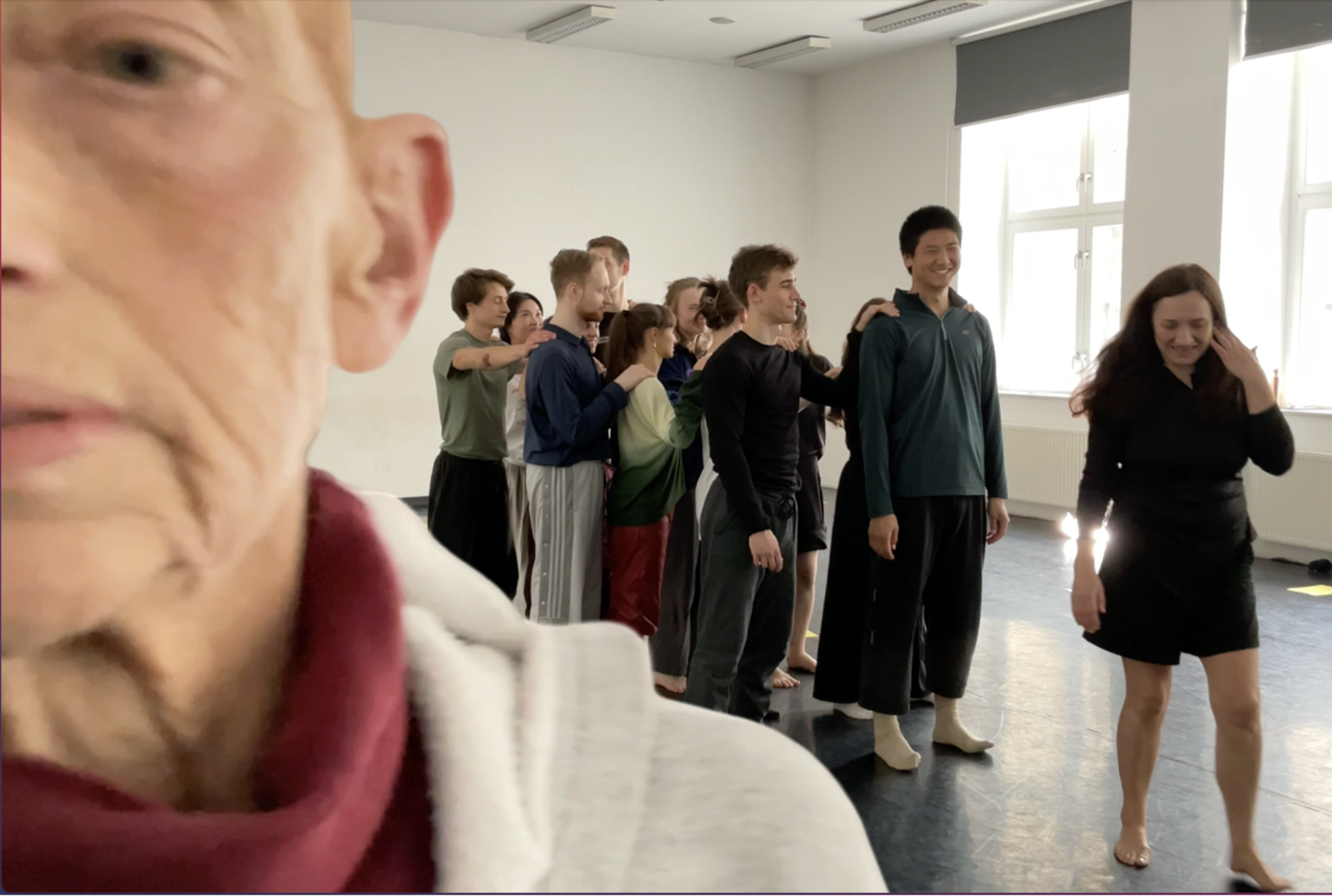
|
|
2025 o "Response in Choreography". A course delivered to students at the Department of Dance at the Vocal and Acting Faculty of the Karol Szymanowski Academy of Music in Katowice, Poland. (Link to footage https://youtu.be/XTfANkBUdYQ). o "Sinken: 97 Falls and the Research of Ausdruckstanz in Studio Practice". An online presentation at the Dance Studies Association Annual Conference "Indeterminate States: Bodies, Fields, Praxis", The George Washington University, USA. |
The 120-minute workshop is based on a working archive of 113 pages derived from my research on German verbs related to descent. It unfolds in structured stages. Participants first engage in a thematic warm-up and what I call kinesthetic resonance with the material, identifying verbs and movement qualities that resonate with their bodily experience. They then develop an individual response, connecting this resonance to their own kinesthetic memory and composing three movements. In the second part, these movements are reduced into a two-dimensional exploration, followed by a guided kinesthetic imagination practice performed on the floor. The session culminates in the formation of a collective movement choir. Ideally, one or two percussionists or participants willing to contribute vocally would support the final stage. | A wooden (non-concrete) floor suitable for barefoot movement and floor work is required. Participants should be able to lie and move comfortably on the surface. Basic sound equipment is needed; I will play music directly from my iPhone and can provide the necessary adapter. For the second hour/40 minutes, it would be highly beneficial to have access to percussion instruments or volunteer percussionists to support the collective movement choir. | No specific legal, technical, or ethical risks are foreseeable at this stage. The workshop is based on voluntary participation and low-impact movement practices suitable for participants’ individual physical capacities | Yes | Iwona Wojnicka | |||
| Star/flag Submit a contribution to the 2026 Forum on Artistic Research: Submission #233 | Anonymous | Magdalena | Mayas | magdalena.mayas@hslu.ch | Gesture as knowledge - Sonic–Visual–Embodied Meaning Making | Other format | English | This contribution proposes a collaborative lecture-performance by Charlotte Hug (viola, live-scoring) and Magda Mayas (piano) focusing on gesture as sonic, visual, and embodied knowledge-making within contemporary artistic research. Gesture operates as an epistemic force through which artistic knowledge is generated, tested, and transmitted across sound, movement, and visual inscription. Yet gestural knowledge remains endangered: fragile, tacit, process-based, and ephemeral, it is systematically marginalized within notation-centric traditions that privilege fixed representation over embodied process. Because gestures unfold in time and resist codification, they risk being overlooked or lost—subjugated knowledges falling outside dominant systems. This erasure is particularly acute in improvisation where gesture serves as compositional material, generating meaning through embodied, real-time action. Hug and Mayas draw on practices in improvisation, graphic notation, extended techniques, and interdisciplinary collaboration to demonstrate how gesture functions as a cross-modal artistic-research method. Their work reveals how gestures shift between media—from drawing to movement to sound—generating meaning that is continuously unfolding and relational. The lecture-performance unfolds through spoken reflection, live performance, and live-scoring, allowing audiences to witness gestural thinking in real time. The artists perform two miniature graphic scores created exclusively for SAR 2026, making visible how gestural knowledge operates across domains and opens interpretive spaces that resist standardization. The session concludes with Q&A, inviting audiences to consider how gestural experimentation enriches perception, challenges norms, and contributes to alternative knowledge production. Research Question: How can gesture generate, preserve, and articulate knowledge that remains tacit, fragile, or marginalized within dominant representational systems? |
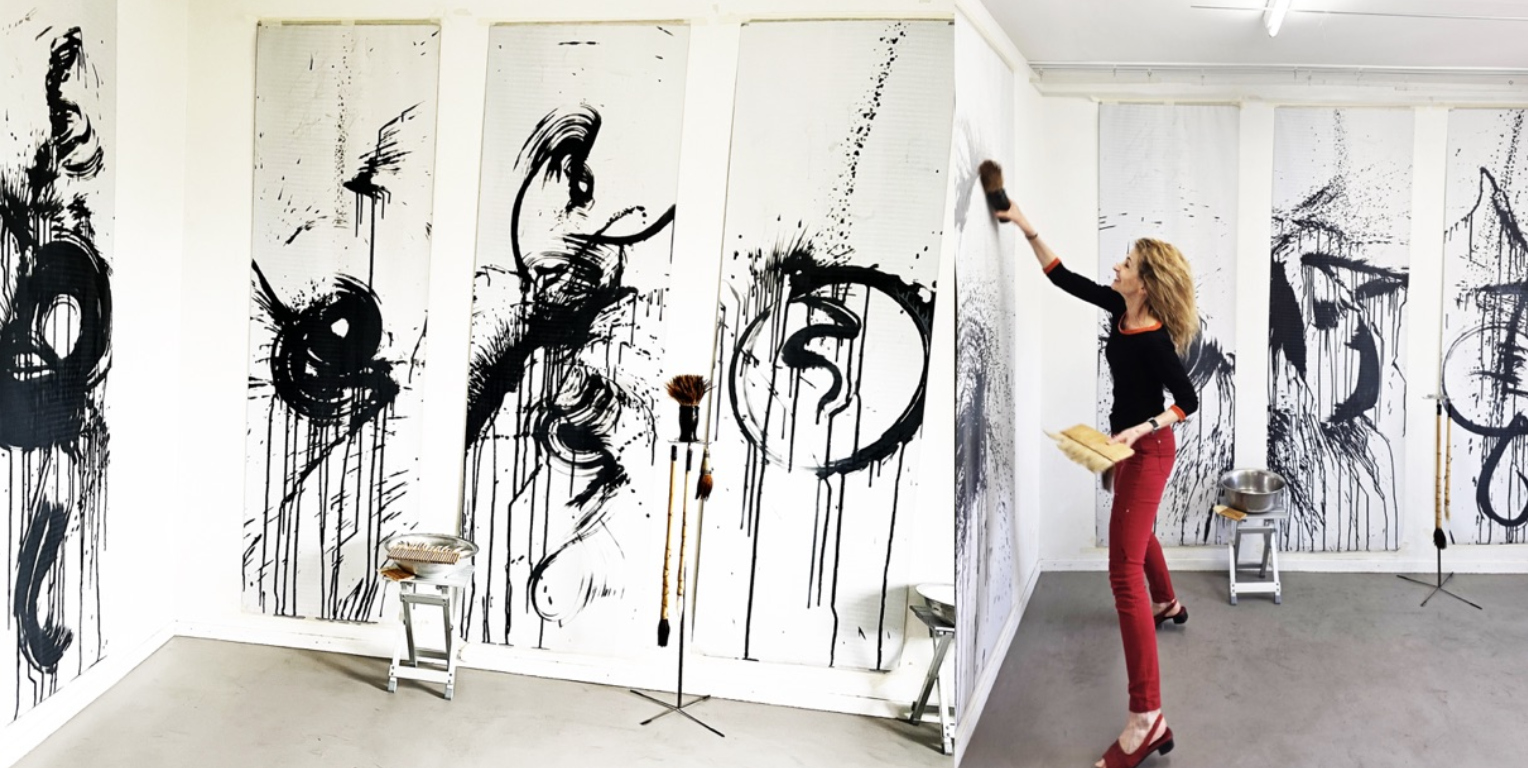
|
|
this RC exposition has been created specifically for the SAR 2026 conference https://www.researchcatalogue.net/shared/a3a6eaa866659b737cbc173f42e2c201 |
The project will be presented as a lecture-performance and structured over 30 minutes, followed by Q&A: Introduction and Framing (10 minutes): Hug and Mayas present their individual practices, establishing gesture as a primary site of knowledge production. They articulate why gestural knowledge is endangered—its ephemerality, resistance to documentation, and exclusion from academic/archival systems. Performance (20 minutes): Through live performance on viola and piano and live-scoring (drawing), the artists demonstrate how gestures operate across sound, movement, and visual inscription. They perform two miniature graphic scores created exclusively for SAR, allowing audiences to experience gestural thinking unfolding in real time. The performance foregrounds cross-modal meaning-making that resists hierarchical or fixed interpretation. Q&A: Open discussion follows, offering interdisciplinary insight into gestural experimentation as alternative knowledge production. |
Technical Requirements • Grand piano • PA system and amplification for viola/voice and piano • Projection system for slides All necessary materials for live-scoring (drawing materials, paper, etc.) will be provided by the artists, however mounting options for the fabric such as a solid wall (5m x 3m), long tables put up vertically or boards are neccessary for the attachment of the fabric. |
Yes | |||||
| Star/flag Submit a contribution to the 2026 Forum on Artistic Research: Submission #226 | Anonymous | Emily Jean | Hood | emilyjeanhoodphd@gmail.com | Epistolary Inquiry: Writing by Hand Alone Together | Project presentation | English | As artistic researchers, we engage in epistolary inquiry through the art of handwritten letters as a pathway for justice-oriented relational aesthetic practice. In the spring of 2020, we began a formal letter writing project to continue collaborating as researchers during the COVID-19 pandemic. Our practice of writing letters by hand is a form of artistic research. Although this project began with just the two of us, we are further developing it to a more public facing and collaborative process. While we are no longer on lockdown as we were in 2020, the cultural and political landscape mirrors that time. As art educators working in the United States, we wonder how letter writing as an aesthetic practice might serve as a method for imagining more just worlds. Writing letters by hand is a corporal analog engagement. Through handwriting we manifest our often hidden inner worlds into external material traces that connect us in more intimate ways. Perhaps this method allows us to be alone together. If I am writing a letter to someone, I am conscious of their existence beyond the space that I inhabit. In this way, the practice can collapse space and time and allow my internal world and intuitive ways of knowing to materialize as words on paper. As such, we contend that embodied relational engagements can counter the disconnection and isolation found in the rise of Artificial Intelligence. In response to AI and the dominance of digital communication technologies, we consider: What does handwritten letter writing offer as a mode of expression and connection that enables us to go deeper and engage the body even when we are apart? What other artists and artistic researchers engage in aesthetic epistolary practices and what can we learn from their work? In this presentation, we will share our own letter writing practice as a starting point for considering how others have engaged in epistolary methods of creative inquiry and how we might expand our practice further. |
https://www.researchcatalogue.net/view/4211843/4211842 | https://www.researchcatalogue.net/view/4211843/4211842 |
|
|
Travis, S., & Hood, E. J. (2021, May 21). Letter writing as critical duoethnography. International Congress of Qualitative Inquiry, online. Hood, E. J., & Travis, S. (2022, May 20). Letter writing as creative and embodied methodology. International Congress of Qualitative Inquiry, online. Hood, E. J. (2024). Traces of friendship as inquiry. In S. Travis, A. G. Smith, C. Hernández-Cabal, & J. Lucero (Eds.), Experiments in art research: How do we live questions through art? (pp. 180-182). Routle |
Projector with Screen | Not applicable. | Yes | Emily Jean Hood | ||
| Star/flag Submit a contribution to the 2026 Forum on Artistic Research: Submission #224 | Anonymous | JACQUELYN DALE | WHITMAN | JAYDEEWHITMAN@GMAIL.COM | Plastic Magnitudes: Transdisciplinary Art-Science as Collective Intelligence for Invisible Environmental Threats | Poster presentation | English | How can artistic research produce genuinely new knowledge about environmental threats that are structurally invisible and scientifically complex? Plastic Magnitudes, a transdisciplinary art-science collaboration with the European Commission's Joint Research Centre, demonstrates how integrating socially engaged art (SEA) with transdisciplinary research (TDR) addresses plastic particulates (micro-/nanoplastics) — threats that elude human perception and public engagement. Plastic Magnitudes integrates TDR (co-design, co-production, co-implementation) with SEA (community engagement, facilitated dialogue, art-making) across three activities: beach clean-ups, community sculpture workshops using collected marine debris, and an immersive projection-mapped installation merging community-made forms with JRC scientific documentation. Each provides material tangibility, emotional immediacy, and visible local solutions for plastic particulats, advancing participants through a five-stage framework: awareness, emotional connection, perceived agency, visible efficacy, and sustained action. Their integration generates material-affective accessibility: the conditions under which invisible threats become personally actionable. The work demonstrates that artistic research's unique capacity lies in producing knowledge that is simultaneously epistemically rigorous, emotionally resonant, and politically generative. By creating conditions where policy-driven research is experienced rather than read, the work transformed affect across three constituencies: scientists processing paralysis, citizens moving from isolation to agency, and policymakers unmoved by reports until aesthetic encounter made contamination felt. Plastic Magnitudes demonstrates that artistic research can function as preventive political infrastructure, generating the collective capacity for action that governance requires but information transfer alone cannot produce. |
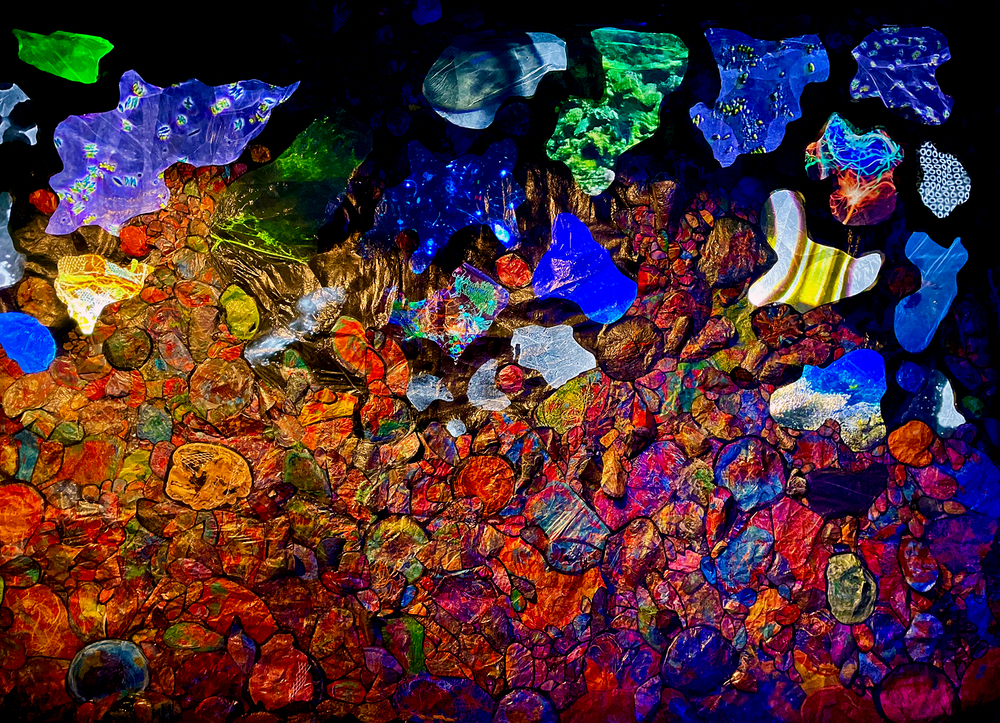
|
|
The development of Plastic Magnitudes was first co-presented in a Presentation of Residency at the Joint Research Center in Ispra, Italy. Plastic Magnitudes was first exhibited in NaturArchy: Towards A Natural Contract, JRC SciArt Project’s Resonance IV Group Exhibition at iMAL - Center for Digital Cultures and Technology, Brussels, May-Sept 2024. It was subsequently re-installed at EU Green Week 2025 (Brussels), EU Maritime Day 2025 (Cork), EU Ocean Days 2025 (Brussels). |
There are no risks or ethical concerns that are foreseeable at this stage. | No | ||||||
| Star/flag Submit a contribution to the 2026 Forum on Artistic Research: Submission #218 | Adnan Hadziselimovic | Adnan | Hadziselimovic | ahadz01@um.edu.mt | IMPULSE: Performing Heritage | Project presentation | English | This project presentation delves into the performing of digital heritage within immersive experiences, explored within the IMPULSE research project (https://euimpulse.eu/). IMPULSE investigates methods for experiencing and interpreting digitised cultural heritage within immersive virtual environments, challenging conventional narratives through speculative and inclusive frameworks. By integrating emerging immersive technologies, the project re-imagines the role of digital heritage in contemporary cultural discourse. The IMPULSE Performing Heritage stream extends its inquiry into live, speculative performance-making. Framed by posthuman feminist theories, the research positions heritage not as a static archive but as a living, dynamic practice open to reinvention. Artists critically engage with technologies and embrace glitches and process transparency, aligning aesthetics with ethical commitments to accessibility and openness. Anchored in Maltese heritage sites, including Ġgantija, Mnajdra, and Ħal Saflieni, the work treats architecture, resonance, and myth as active collaborators. Hybrid online–offline workshops incorporate MOCAP, VR/AR devices for real-time performance. Outcomes include a conceptual framework for performing heritage and prototype proposals for future performances, notably an augmented reality event at Ġgantija in 2026 that merges motion-tracked choreography, speculative avatars, and responsive soundscapes. In the artistic sense, multiple expressions are considered - choreography, live sound, video (360), texts/poetry, all through techno-media criticism. A small group of researchers and practitioners from across disciplines are working on experimental artistic research into movement, sound and post-cinematic media to explore performativity using digitised cultural heritage in virtual environments. | https://www.researchcatalogue.net/profile/show-exposition?exposition=4207979 | https://www.researchcatalogue.net/profile/show-exposition?exposition=4207979 |
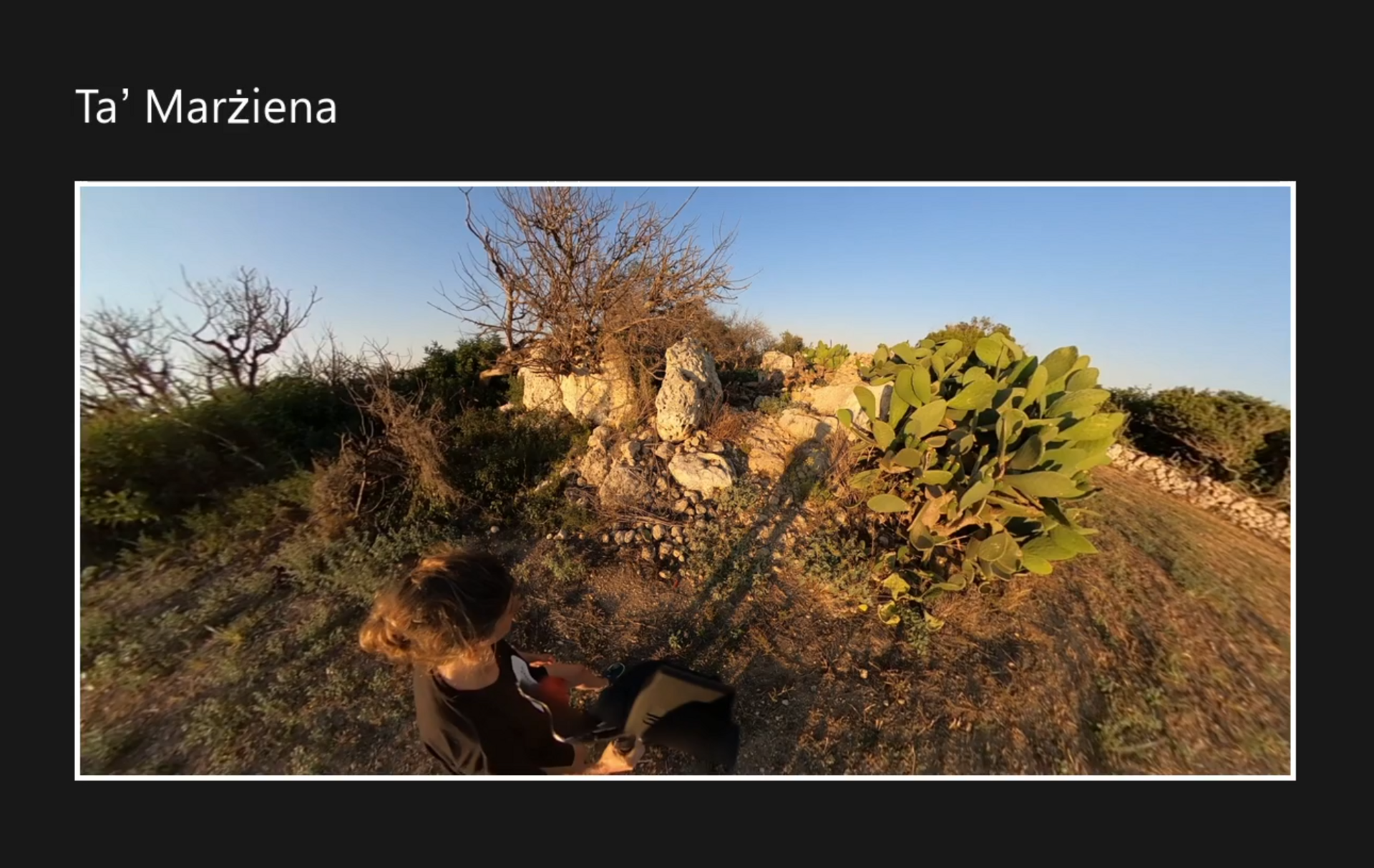
|
|
Overhead Projector connected to computer for presentation of slides (with playback of sound and moving images). | no potential risks or ethical concerns | No | ||||
| Star/flag Submit a contribution to the 2026 Forum on Artistic Research: Submission #212 | jcarrer@unicamp.br | Janaina | Carrer | janaina.carrer@gmail.com | Dis.autonomy Practices. A "conceptaphor" and methodological practices to other conceptual worlds in artistic research. | Project presentation | English | In dialogue with the Forum’s concerns, in this roundtable I will introduce the notion of “conceptaphor dis.autonomy,” first articulated during my PhD and currently elaborated methodologically in my postdoctoral research. It proposes dis.autonomy both as a concept and as a method, seeking strategies to displace hegemonic models of subjectivity through artistic practice. The notion of Dis.autonomy emerged from a biographical event, based on an illness, and was conceived as a conceptual–metaphorical device (conceptaphor) guiding both my artistic and academic practice. Rather than redefining autonomy, it seeks to displace the hegemonic model of the self-sufficient, vertical, self-owning, and independent subject historically embedded in patriarchal and colonial imaginaries. From a situated and feminist perspective, dis.autonomy advocates inclination, oscillation, and codependence as constitutive conditions of subjectivity. At the same time, it develops practical tools—both artistic and daily practices—to displace the hegemonic and patriarchal forms through which we express the idea of autonomy in our ways of being, doing, and creating. In this conversation I hope to reflect on the notion of “conceptaphor dis.autonomy”, to discuss practices I have been developing and explore how the idea of a “conceptaphore”—and specifically “dis.autonomy” - can displace our artistic research. | https://www.researchcatalogue.net/shared/e298bcbbf9c04bf28093315e2da5bbdd | https://www.researchcatalogue.net/shared/e298bcbbf9c04bf28093315e2da5bbdd |
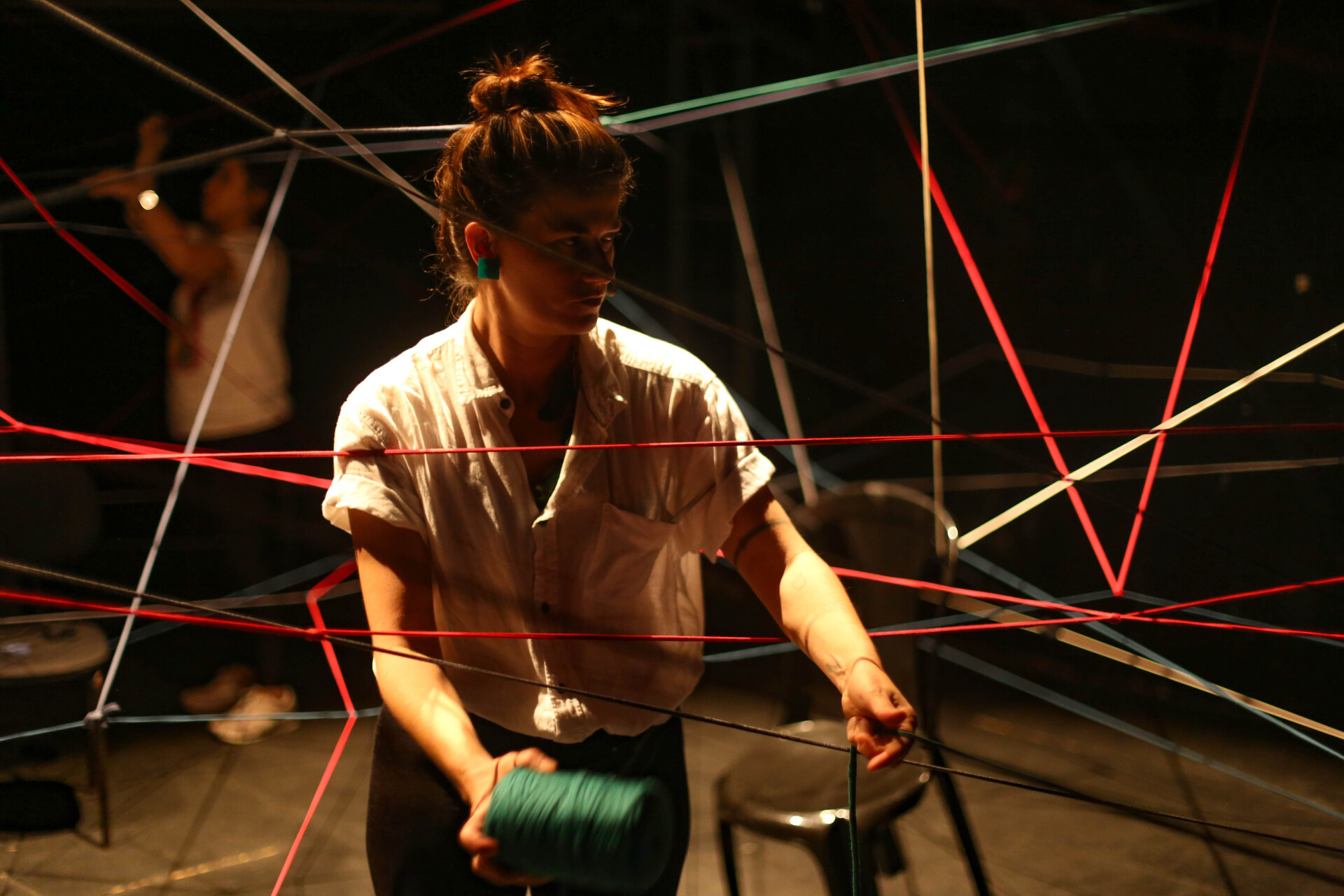
|
|
While the "dis.autonomy" concept was extensively presented and practiced during my doctoral studies through various labs and performances, this contribution marks the first public presentation of my current postdoctoral project. Unlike previous iterations focused on individual artistic creation, this version introduces a brand-new methodological framework specifically designed for other artist-researchers and educators. At SAR 2026, I will debut these newly developed pedagogical axes. | This presentation is structured into two main parts to offer a comprehensive view of the research. First, it introduces the theoretical foundation of the "conceptaphor dis.autonomy”. Second, it explores the four methodological axes of the "dis.autonomous practices" currently under development. The session will be supported by a slide presentation featuring visual documentation and images of previous laboratories and performances. I will cite and analyze specific examples of these exercises to illustrate the theoric discussion. This format ensures a rigorous conceptual exposition within the allotted time, providing the audience with a clear understanding of the project's aesthetic, practice and philosophical framework. |
The presentation requires a standard lecture setting equipped with a computer, a video projector, and a sound system for playing audiovisual content (slides and images). A stable internet connection is very important. The layout can be a traditional auditorium or classroom setup. | As this is a theoretical and visual exposition of the project, there are no physical risks or direct ethical concerns for the participants. While the research touches upon sensitive themes related to illness and disability, the presentation remains focused on the conceptual-metaphorical aspects and the resulting artistic methodology. All biographical references are treated as a source for philosophical inquiry, ensuring an ethical and respectful environment. | Yes | Janaina Carrer | |
| Star/flag Submit a contribution to the 2026 Forum on Artistic Research: Submission #211 | Anonymous | Markus | Hetheier | markus.hetheier@stu.mmu.ac.uk | Manchester's queer sonics: ineffable dimensions of embodied, minoritised knowledge | Experimental format | English | Manchester's queer sonics offer a compelling site for exploring the ineffable dimensions of embodied, minoritised knowledge. Sound lends itself to queer expression as listening holds affective and relational potential essential to understanding oneself and one's community. Whilst sonic practices have been used to engage communities, and sound artists have experimented with queerness, the intersection of queerness, sound and community remains underdeveloped — a gap this study addresses through a queer sonic engagement framework. Manchester's Gay Village serves as an apt site: well-researched as a queer geographic area, yet unexamined through sound. The research question — what can we learn from sonically mapping queer Manchester? — is pursued through practice as research with eleven co-researchers. The practice of sonic mapping encompasses soundwalks, field recordings, soundscape composition and soundmap drawing, each offering a mode of bodily, self-reflexive and narrative engagement with queer sonic experience. These methods foreground the embodied, subjugated knowledges that resist easy verbalisation, attending instead to what sound can articulate where language falls short. Theoretically grounded in the affective sonic self and queer sonic relationality, the framework attends to both individual and collective dimensions of queer sonic life. Findings suggest that sonically mapping queer Manchester cultivates agency and contributes to community building — articulated through a co-produced exhibition and digital soundmap presenting individual and collective artworks in dialogue. In this experimental format the early stages of the exhibition artworks will be presented and discussed, examining its potential to surface endangered, embodied and otherwise unsayable knowledges. |
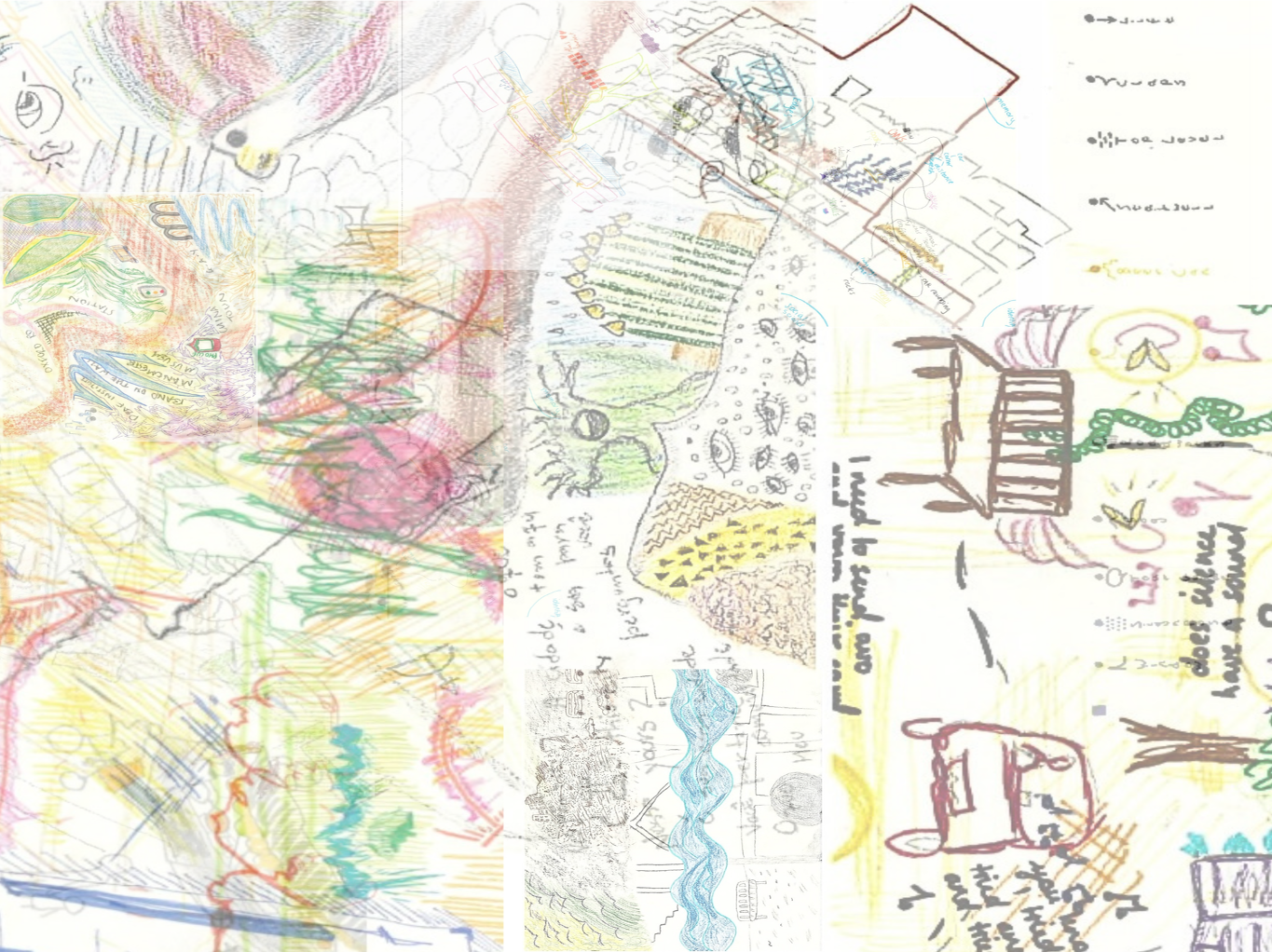
|
|
I will need access to a space with a table, computer, screen and speakers. I would also like to hang up some images, for example on a board with some pins. I would like the room to be set up in a workshop style with tables and chairs spread across the room as opposed to them all being in straight lines. | No | |||||||
| Star/flag Submit a contribution to the 2026 Forum on Artistic Research: Submission #210 | Anonymous | Victoria | Bradbury | vbradbur@unca.edu | Threads of Accusation: Artistic Research and the Afterlives of Witch Persecution | Project presentation | English | This presentation examines how interactive immersive installation can make endangered conceptual worlds seeable and sayable. Conducted during a 2026 Fulbright Fellowship at Glasgow School of Art, the project engages histories of witch persecution in Scotland, focusing on the 1697 Renfrewshire trials and the figure of Christian Shaw. Rather than treating witch persecution as superstition superseded by rationality, the research approaches it as a conceptual world structured by belief, rumor, testimony, and embodied knowledge. These epistemic formations, rooted in a specific historical context yet echoed in contemporary systems of power, reveal how language, accusation, and institutional authority co-produce reality. Through experimental installation and interactive prototypes, the project explores the interplay between power and speech, examining how suspicion circulates, how touch becomes evidence, and how speech and action become punishable. The work extends earlier projects including Witch Pricker (2013) and Blue Boar VR (2019), situating them within a focused investigation of systems of accusation that occurred in Scotland. Methodologically, the project combines historical research with prototyping in Unreal Engine and installation development. It embraces uncertainty as a research condition, using technical and material interaction to examine how belief systems operate socially and internally. The research asks viewers to re-experience histories of accusation as systems rather than isolated events. It asks what becomes visible when belief, language, and economic structures are treated as lived conditions, and how artistic research can create space to encounter these conditions differently. Using a game engine, AI, code, and textiles as artistic materials, the project explores how accusation operates as language, atmosphere, and system. It holds these fragile conceptual worlds open long enough for their internal logics and consequences to become perceptible. |
https://www.researchcatalogue.net/view/4217981/4217980 | https://www.researchcatalogue.net/view/4217981/4217980 |
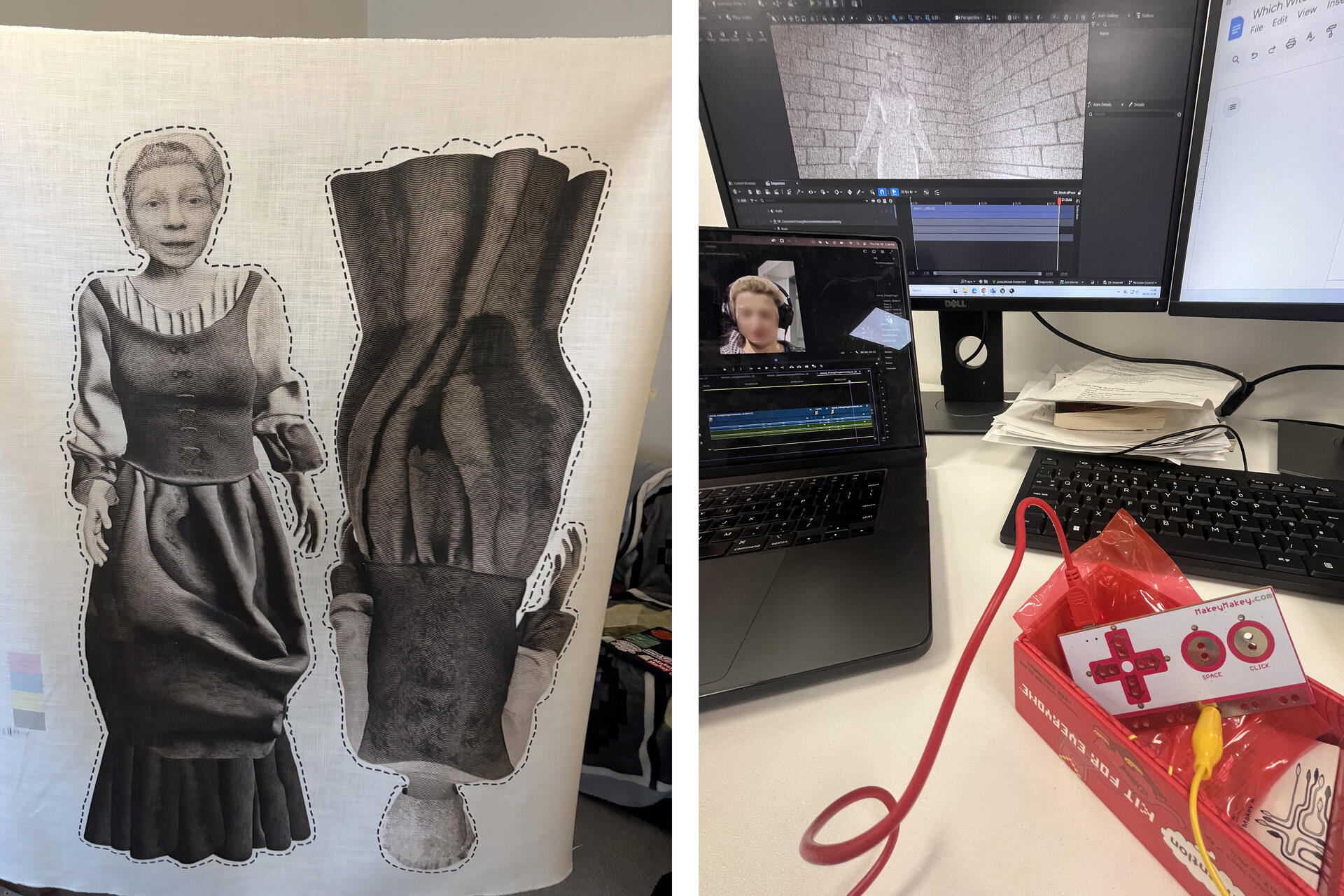
|
|
This research has not been presented previously. | This work is in-progress in Spring 2026 in Glagow. It is developing through an iterative process of researching, recording and motion capture sessions, Unreal Engine development, Photoshop compiliations, work in the weaving studio, printing at Centre for Adanced Textiles, and testing of technological interactive modalities. The project will be further iterated and documented in interactive installation format before the SAR conference. | If a presentation, simply a slide presentation with audio. If the project could be fully installed, it would require a PC computer and projector and approx 8' x 8' x 8' space (installation size is variable). One or more weavings would need to be hung on a wall. |
N/A | Yes | Victoria Bradbury | |
| Star/flag Submit a contribution to the 2026 Forum on Artistic Research: Submission #202 | Anonymous | Vittoria | Ecclesia | vittoria.ecclesia@bruckneruni.at | Lingue che Mancano - rediscovering our roots through breath and sound | Project presentation | English | Lingue che Mancano (Missing Languages) is an ongoing artistic research project by the duo 1212, formed by Albane Tamagna (flute) and Vittoria Ecclesia (clarinet). It investigates the intersection of linguistic memory, personal heritage, and contemporary instrumental practice. The project emerges from a shared condition: both artists grew up surrounded by regional languages, Corsican and the Verbano dialect, without acquiring fluency in them. We moved away and became part of the expat communities in different countries, rebuilding and reinventing our identity. Through this project, we want to engage with this common ground of missing languages and spaces, of redefining what “home” means and what “home” sounds like. We ask ourselves: how can musical practice become a site for reactivating through artistic imagination what seems lost? How can the mixture of absence, embodied sonic memory, and lived displacement be translated into a form of knowing and creation? Drawing on autoethnography as a methodological frame, the duo negotiates shared and divergent histories, mediates between contemporary musical languages and regional tradition. Field recordings, folk song archives, oral history interviews with dialect speakers, and the performers’ own memories serve as raw material. From these, hybrid sonic spaces emerge: instrumental timbre fusing with vocal inflections, traditional melodic fragments in dialogue with contemporary techniques, improvisation. The ultimate goal is to create a method of creation rooted in language and memory that can be successfully used by other artists to explore and perform their own roots. Rather than romanticising cultural retrieval, the project proposes music as a generative threshold space: tradition and innovation not opposed but mutually constitutive. The research positions itself within current discourse on practice-based inquiry as a method for addressing questions that exceed conventional academic modes. |
https://www.researchcatalogue.net/view/4150204/4150205 | https://www.researchcatalogue.net/view/4150204/4150205 |
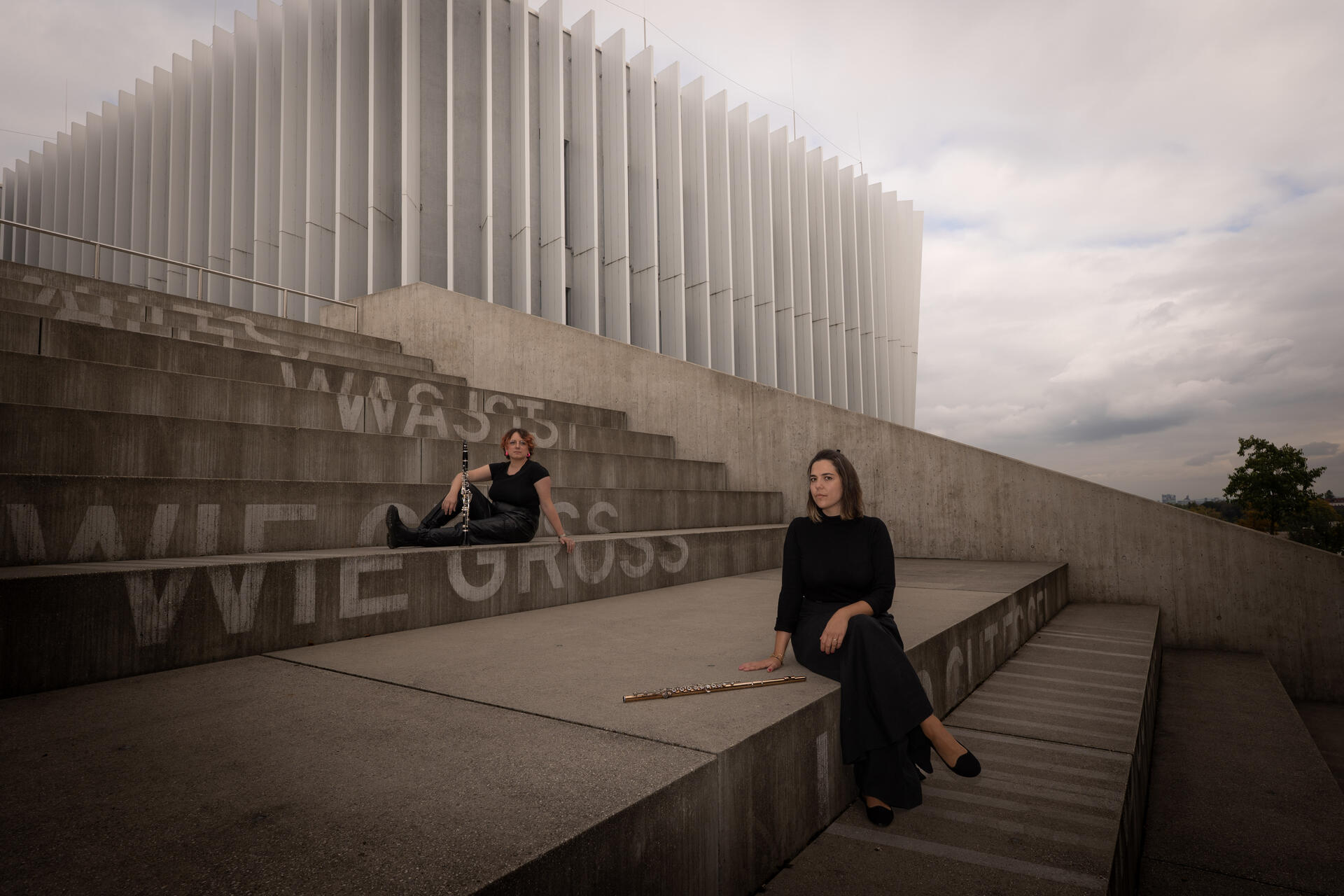
|
|
The project was featured as Performance-presentation at EPARM 2026: https://aec-music.eu/event/european-platform-for-artistic-research-in-music-eparm-2026/programme |
Stereo audio playback system and a screen or projector for video. Laptop connection via HDMI. | The project involves interviews with dialect speakers about their memories. Participation is voluntary, fully informed, and individually consented. Audio recordings are used solely as artistic material. The project does not claim ownership or authority over the communities represented, and actively reflects on the ethics of cultural reactivation by outsiders. | No | |||
| Star/flag Submit a contribution to the 2026 Forum on Artistic Research: Submission #197 | Anonymous | Shelley | Hannigan | shelley.hannigan@deakin.edu.au | Making With What Remains: Art, Environment, and Generational Dialogue | Project presentation | English | In recent years, there has been a significant rise in artists and arts educators working with found, discarded, and repurposed materials. The inventive ways these materials are sourced, collected, archived, transformed, curated, and presented carry strong ecological and socio-enviro meanings. Such practices respond to urgent cultural and ecological concerns, offering grounded portraits of place and material histories. Across Australia, artists including Carmel Wallace, Clare Milledge, Jessie French, and Narelle White have long engaged in upcycling and re-purposing practices that foreground environmental awareness within contemporary art. This project presentation centres on the arts-practice research of Shelley Hannigan and Joseph Doggett-Williams. Shelley offers insight into sustainable arts practice in Australia through her own research and creative work, presented alongside that of Joseph, a young artist who has recently completed his Honours research. A significant dimension of this presentation is their intergenerational relationship as mother and son. Having grown up in a sustainability-focused household, Joseph’s practice has evolved in dialogue with Shelley’s longstanding commitment to environmentally conscious making. Presented side by side, their work highlights two distinct yet interconnected approaches to sustainable arts practice, revealing how environmental values are interpreted, materialised, and reimagined across generations. Intergenerational learning—observing, reflecting on, and understanding each other’s creative methodologies—is positioned as central to this project. Their shared presentation advocates for collective movement toward environmentally responsible practices within the art world, emphasising collaboration, dialogue, and ongoing development in this space. By situating their arts-practice research within broader Australian contexts of upcycling and material re-use, Shelley and Joseph address pressing socio-environmental issues. |
https://www.researchcatalogue.net/profile/show-set?set=4210011 | https://www.researchcatalogue.net/profile/show-set?set=4210011 |
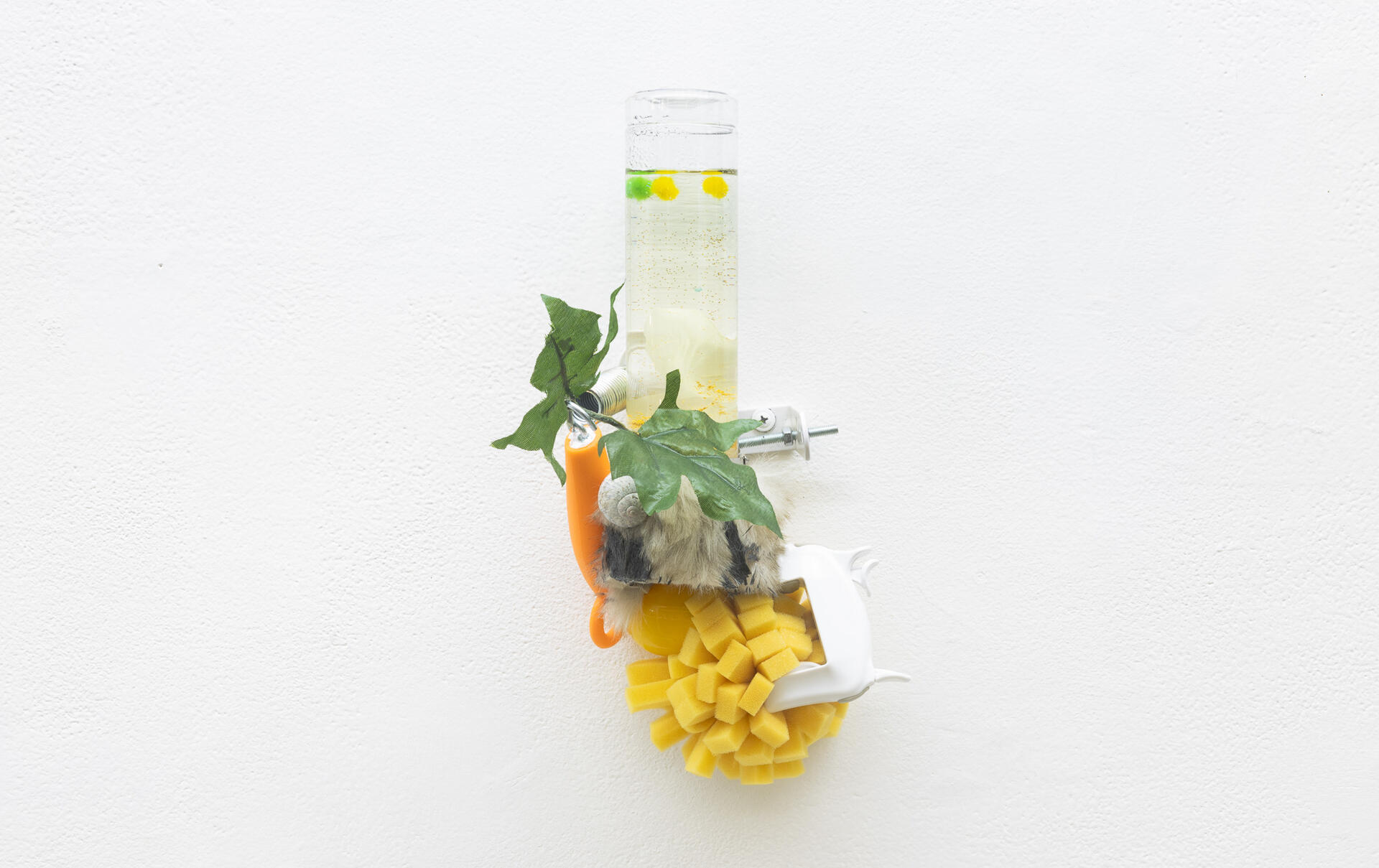
|
|
none | This presentation will be as a powerpoint presentation. | A room with digital projector facilities to present a powerpoint from my MAC laptop | There are no risks or ethical concerns. | Yes | Shelley Hannigan | |
| Star/flag Submit a contribution to the 2026 Forum on Artistic Research: Submission #196 | Anonymous | Björn | Eriksson | bjorn.k.eriksson@student.uts.edu.au | Fashioning Intelligence | Other format | English | While artificial intelligences (AI) are intensely deployed across industry and society to optimise production and expedite innovation, these technologies invoke curious fields of more-than-human (MTH) perceptions. As they replace human labour with machine automation, bodies with digital avatars, and relationships with synthetic communication, AIs position humans within relational ecologies of intelligences, creativity, and agencies rather than above. Countering anthropocentric assumptions, such shifts prompts explorations of nonanthropocentric MTH conceptual worlds. Practice-led artistic research through fashion enable such explorations. As an interface through which humans render themselves, sensually engages surroundings, and affect interactions with another, fashion enables dressing into MTH experiences. By producing fashion artefacts in collaboration with AIs, including ChatGPT, CLO3D, and refiberd to generate creative concepts, expedite technical production, and optimise material use, challenges and opportunities are synthetically rendered and physically embodied. By investigating practicing fashion with AI, their compounded conditions of consumption, exploitation, and universalisation, as well as their conceptions of intelligence, creativity, and agency as distributed, may be meaningfully investigated. For the conference, I propose a capsule fashion research installation. The collection presents 5 cohabitat artefacts, produced in collaboration with AI. It situates fashion as a field for exploring perceptions and developing embodied knowledge of endangered conceptual worlds. For instance, the Cohabitat Coat houses MTH by emulating the crevices of loggerhead turtle shells, as prompted by ChatGPT in response to habitats endangered by material pollution and disturbed by cabling. The collection materialises MTH resonance, positioning practice-led research as critical reconfiguration from within technological systems rather than as retreat from them. |
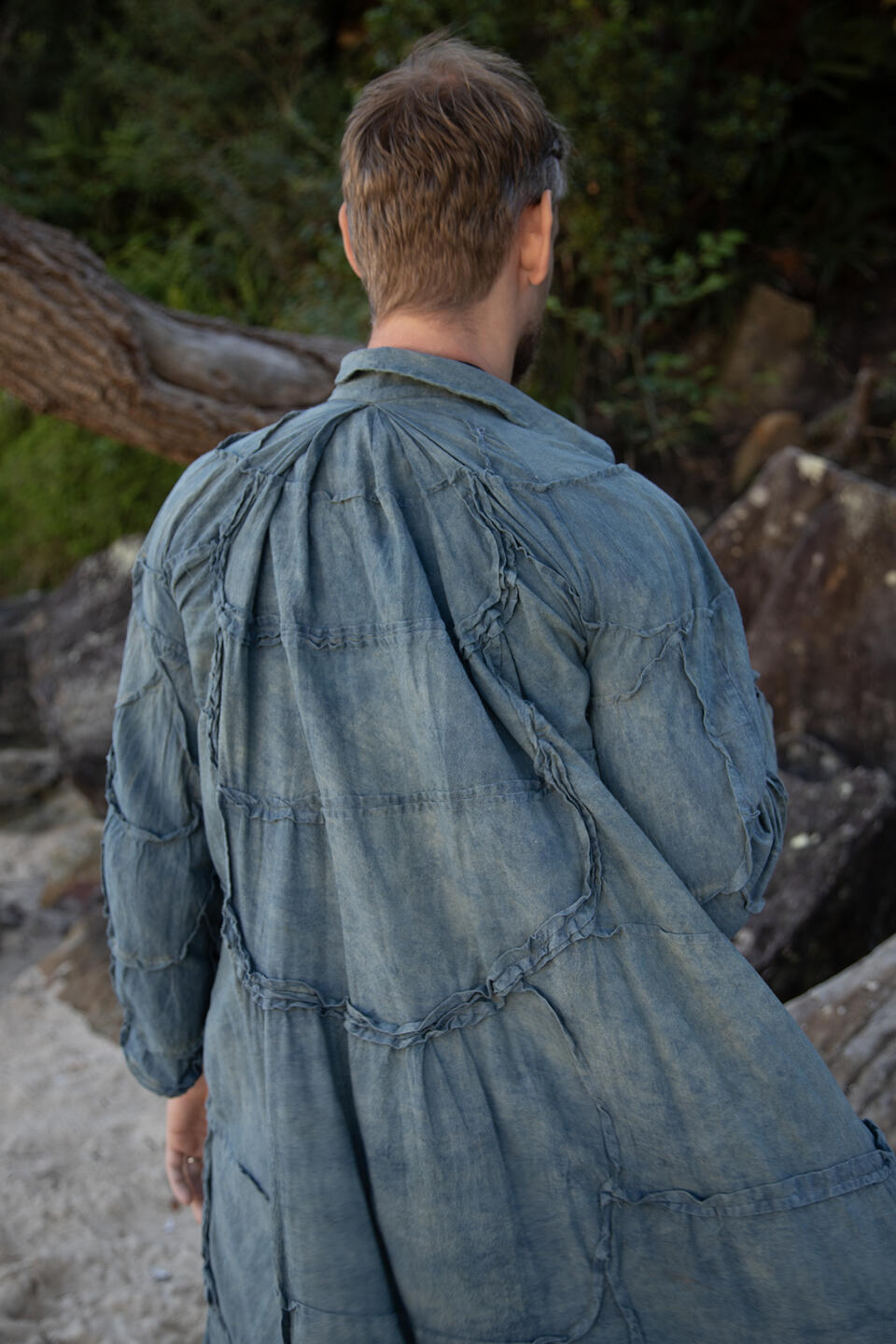
|
|
Elements of this research have been presented in academic seminars and symposia in Australia, including at the Hacking Visual Culture conference and the Northern Beaches Environmental Art & Design Prize. The proposed installation represents a new configuration of the material, as well as investigative outfits exclusively produced for the SAR Conference, foregrounding endangered conceptual worlds. | The installation will present five artefacts displayed suspended on hangers, overlaid with projected visualisations of AI interventions. The installation emphasises MTH material consequences and embodied encounters of AI in fashion processes. The artefacts function as research demonstrating practice-led artistic research in action. I will be present during designated sessions to discuss the research context and methodological framework. | Approx. 1 m² floor space per artefact. Adjustable lighting. Wall space for A4 poster with informational material. Power outlet for projector. | The research involves no human subjects or sensitive data. AI systems are used as design and production collaborators within artistic experimentation. All material processes follow institutional safety guidelines. No ethical risks anticipated. | No | ||||
| Star/flag Submit a contribution to the 2026 Forum on Artistic Research: Submission #195 | Anonymous | Liam | Gomez-Pedraza | gomezap.liam@gmail.com | Preliminal Laboratory: An exploration of the neurodiverse ecosystem and its social implication | Project presentation | English | The Preliminal Laboratory is a transdisciplinary artistic research methodology developed in Puerto Rico since 2023, using performance, dance, and devising to investigate neurodivergent experience as a system of knowledge production. This paper argues that neurodiversity constitutes an endangered conceptual world: a minoritised cognitive and perceptual ecosystem whose distinct modes of attention, association, and embodied understanding are systematically rendered illegible by dominant academic and cultural structures. Drawing on two completed performance works, Preliminal (2023), which explored ADHD and cognitive fragmentation, and Abismal (2025), which examined schizophrenia and anxiety, the paper presents the laboratory as a site where neurodivergent epistemologies are not represented but enacted. Rather than producing knowledge about neurodivergence, the methodology produces knowledge through it: using movement, liminality, and devising as instruments for accessing and articulating forms of experience that resist conventional representational frameworks. Situated within a Puerto Rican colonial context, itself a political threshold, a territory that exists at the permanent edge of recognition, the project positions the neurodivergent body as doubly marginalized: a minoritised cognitive mode within a minoritised cultural geography. The paper proposes that artistic research is uniquely equipped to hold these endangered conceptual worlds open, giving them legibility without assimilating them into dominant epistemological frameworks. The Preliminal Laboratory offers a methodology and a set of documented practices for doing exactly that. |
https://www.researchcatalogue.net/view/4212612/4212613/0/0 | https://www.researchcatalogue.net/view/4212612/4212613/0/0 |
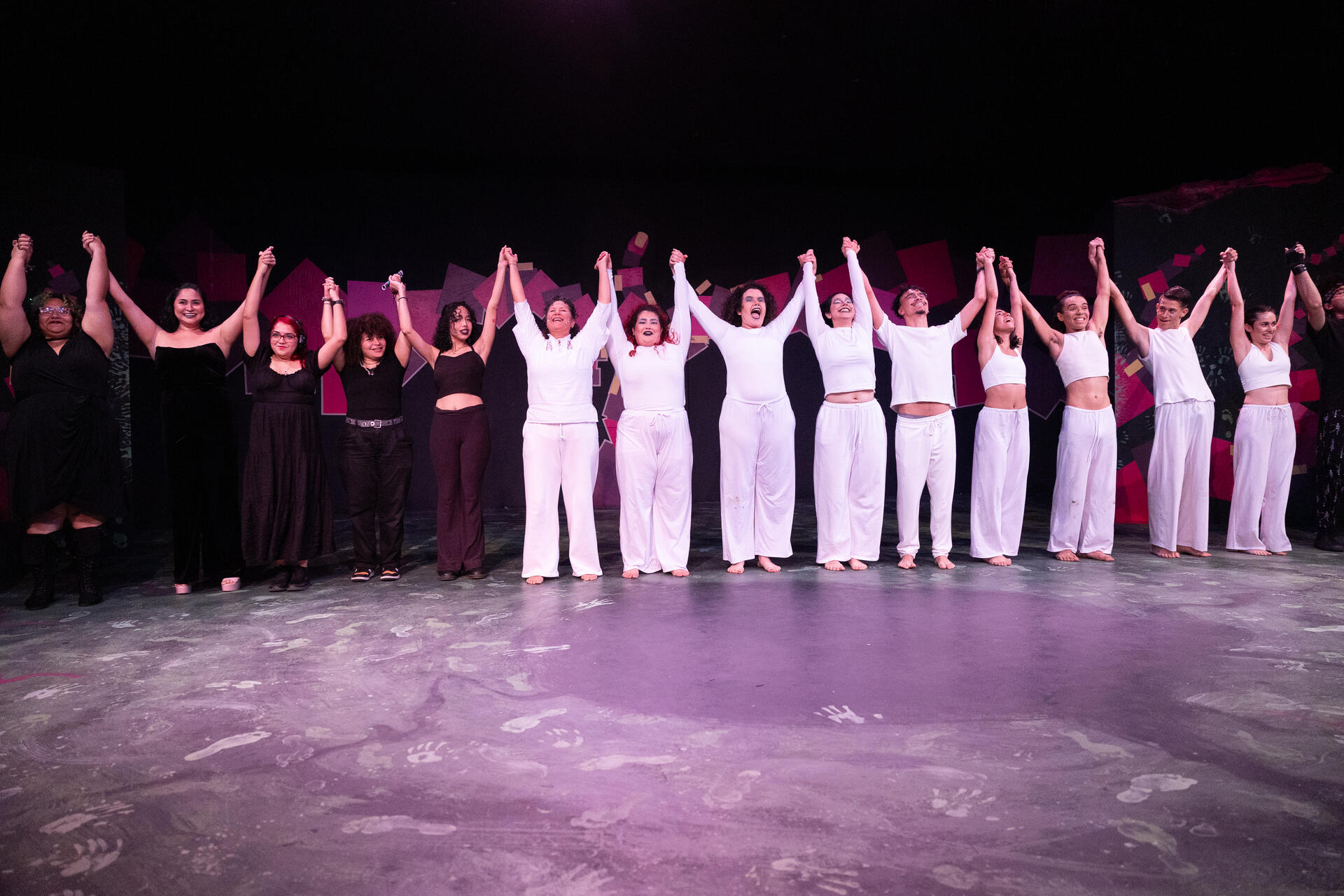
|
|
This was a project developed for Masters Thesis. | None for the presentation of the research | Yes | ||||
| Star/flag Submit a contribution to the 2026 Forum on Artistic Research: Submission #193 | Anonymous | Mariske | Broeckmeyer | mariske.broeckmeyer@luca-arts.be | Failing the Pornic Voice - Autotheoretical Fiction as Artistic Research | Project presentation | English | This project studies the failing singing voice as a minoritised sonic language through the development of an autotheoretical novel centred on a singer who attempts, and fails, to create a pornopera. Situated at the intersection of vocal performance, exposure, and excess, the project uses autotheoretical fiction as an artistic research method to examine how the singing voice collapses under conditions of hyper-visibility and desire. The novel follows a singer whose voice, once aligned with control and erotic capital, begins to falter. What fails is not only a vocal instrument, but a network of expectations regarding femininity, sexuality, artistic labour, and excellence. The rehearsal process of the opera becomes a laboratory in which questions of consent, representation, and spectatorship surface, even as the work itself appears increasingly unlikely to reach the stage. By staging failure at the heart of this project, the research foregrounds vocal breakdown as a form of situated knowledge. The failing voice emerges not as lack, but as a voice that cannot sustain heightened exposure, and thus reveals its limits within artistic forms structured around intensity and control. In this sense, the voice becomes a lens onto broader tensions of audibility and desire in a culture that is simultaneously hyper-sexualised and hyper-vigilant. Drawing on feminist theory, cultural studies, and artistic research in and through voice, the novel operates as a research apparatus rather than a narrative illustration. Writing becomes a way of thinking with and through vocal failure, allowing the research to remain with exhaustion, shame, pleasure, and interruption without resolving them into stable concepts or outcomes. Presented as a work-in-progress, the project reflects on autotheoretical fiction as a fragile research language; one that makes space for breakdown, opacity, and embodied knowledge, and that resists both academic abstraction and performative virtuosity. |
https://www.researchcatalogue.net/shared/b953f32cdf39070b67fed84936f2bde1 | https://www.researchcatalogue.net/shared/b953f32cdf39070b67fed84936f2bde1 |
|
|
Not to date. | NA | NA | Explicit language might be used in this lecture. | Yes | Mariske Broeckmeyer | |
| Star/flag Submit a contribution to the 2026 Forum on Artistic Research: Submission #192 | Anonymous | Justė | Tarvydė | juste.tarvyde@vda.lt | Whispers from the Seams: Artistic Research and the Minor Language of Fashion | Project presentation | English | This contribution presents Labeltry, an artistic research practice that engages clothing labels as minoritised linguistic and conceptual worlds. Although ubiquitous within global fashion systems, labels operate as marginal texts: concealed within garments, instrumentalised by branding, and subordinated to the visual and economic logics of platform capitalism. Their language is optimised for circulation, legibility, and desirability, yet rarely acknowledged as a site of knowledge. Through processes of collecting, archiving, cutting, and recomposing discarded labels into poetic micro-texts, Labeltry repositions these fragments as epistemic residues. The project treats fashion labels as sedimented carriers of cultural memory, encoding geographies of labour, gendered scripts, affective economies, and normative ideals of value and recognition. Drawing on Lacan’s concept of the gaze, Sara Ahmed’s theory of affective circulation, and Adorno’s negative dialectics, the practice sustains contradiction rather than resolving it. By fragmenting and rearticulating commercial language, it interrupts the homogenising tendencies of maximisation, simplification, and aesthetic standardisation. In doing so, Labeltry proposes minor poetic gestures as counter-models to algorithmic flattening and instrumental reason. Artistic research here functions as a method of recovering and transforming precarious conceptual worlds embedded in everyday material culture, foregrounding the fragile yet persistent knowledge contained in the seams of fashion. |
https://www.researchcatalogue.net/shared/1914e424e74f9c467dfcc5a36f44626f | https://www.researchcatalogue.net/shared/1914e424e74f9c467dfcc5a36f44626f |
|
|
LABELTRY was presented at the joint exhibition "Compo(s)t & Detritus" at the gallery "Titanikas" in Vilnius, Lithuania. Publication in an international peer-reviewed journal "Landing". DOI: https://doi.org/10.37522/z22pna81 |
Scree, PC, magnetic boards | None | No | |||
| Star/flag Submit a contribution to the 2026 Forum on Artistic Research: Submission #191 | Anonymous | Inna | Kulazhenkova | innakulazhen@gmail.com | Reimagining Conflict Through Gesture: Embodied Strategies as Artistic Method | Project presentation | English | This presentation examines how embodied artistic strategies function as methodologies for engaging with conflict, positioning artistic practice as epistemic inquiry and civic action. Building on my research into how dance and performance artists materialize conflict narratives and reimagine social fragmentation, I propose that conflict is not only something to be resolved but something that can be experienced, interpreted, and transformed through embodied awareness. At the center of the presentation is my practice-based project, Non-Verbal Scores: Reimagining Gestural Vocabularies for Mediators, which investigates gesture as an autonomous yet relational mode of meaning-making within mediation contexts. The presentation is situated within the conference theme Exploring the Ineffable, and specifically addresses dance, movement, and gesture as minoritized or endangered embodied knowledges. Based on analysis and reenactment of recorded mediation sessions, I separated gestures from speech units and realigned them through artistic interpretation. The work reveals how nonverbal expression can reshape communicative dynamics, empathy, and perception in conflict encounters. Combining artistic experimentation with research-driven inquiry, the presentation demonstrates that embodied knowledge is not illustrative of theory but generative of it. The presentation invites the audience to consider artistic methods as forms of knowledge production and as practical tools for those working with conflict, mediation, and collective processes. The presentation argues that embodied artistic strategies offer a distinct methodological contribution to conflict studies by foregrounding gesture as a site of knowledge, relation, and transformation beyond verbal discourse. This project contributes a transferable artistic methodology for examining nonverbal communication in conflict contexts, demonstrating how choreographic thinking can inform mediation practice. |
https://www.researchcatalogue.net/view/3058586/3058587 | https://www.researchcatalogue.net/view/3058586/3058587 |
|
|
Standard technical requirements: projector and screen | No | |||||
| Star/flag Submit a contribution to the 2026 Forum on Artistic Research: Submission #188 | Anonymous | Annie | Morrad | amorrad@lincoln.ac.uk | "From their view” | Performance | English | The transformation of image and sound into dialogue by Dr Yashaen Luckan, Dr Annie Morrad and a Majority Being (More Than Human). Working with what Gary Peters describes as “An improvisation that is substantial to the extent that it genuinely works through the dialectic of individuality and framework”. (Peters, 79, 2009). We are exploring how dialogue can transform the constituent parts. Eddie Prevost, writes that ‘The whole essence and meaning of dialogue is transformation’ (Prevost, 67, 1995). Through the following three elements, two sound instruments, taken from two different musical traditions, Indian and Western and one video using a dialogical method of interaction with the more than human avian. This performance explores the use of improvisation when in the dialectic framework. To engage with how live improvisation transforms through non hierarchical methods, where each ‘voice’ is from ‘the point of view’ of the participant. Always in relation to the other two, forming a collective language of image and sound. Through live sonic interaction, the project treats dialogue itself as a material practice: a way of writing in space; a choreography of listening; a method for thinking beyond linguistic determinism. The performance presentation ultimately proposes suspension as an artistic strategy for unsettling strict systems of legitimation and opening up shared, nonverbal practices of collaboration. The questions raised are: How does the visual form sound? How does the visual contribute to the improvisation that the sound is invested in? How is the silent video visual formed from the More Than Human (Dominate Beings), connecting to live instrumental sound from the humans? Where does visual and sound tonality link? How does rhythm in the flow of visual tonality contribute to the rhythmic pulse of the instruments? |
|
|
https://www.researchcatalogue.net/portal/search-result?fulltext=annie+morrad https://vimeo.com/1143802594?share=copy&fl=sv&fe=ci https://www.researchgate.net/profile/Annie-Morrad?ev=hdr_xprf https://vimeo.com/1158809434?share=copy&fl=sv&fe=ci anniemorrad.com (stories) |
Exploring the ineffable: artistic research and endangered arts practice beyond the verbal Dance, movement, and gesture as minoritised or endangered embodied knowledges Minoritisation and endangerment in visual, sonic, and digital cultures Subjugated knowledges, coloniality, and unsayability |
2 microphones Stereo PA system Table + two chairs VGA/HDMI projection 10–15 minutes setup time |
none | No | ||||
| Star/flag Submit a contribution to the 2026 Forum on Artistic Research: Submission #185 | Anonymous | Oo | Condit | outi.condit@uniarts.fi | Whine with a trace of slime - How to summon forth an institutional condition | Workshop | English | In 2021, Oo Condit approached Kar Kucia with the suggestion to make a collaborative work and experiment together at the intersection of two distinctive artistic research approaches. Oo was researching technogenetic becomings – how various technosocial arrangements produce and organise bodies and affects. Kar was working on the notions of monstrous agency and parasitic noise as tactics within the process of neoliberalisation of art institutions. At the same time, our home campus was undergoing a process of reorganisation affecting staff working environments (including ours). That process became the context of our engagement. We devised a playful remote interview format to conduct a series of interviews with members of staff affected by the ongoing changes. To channel these muffled voices and ‘hidden transcripts’ (James C. Scott), we created a character to scuttle along the abandoned campus corridors, leaving a trail of slime behind it. It became an embodiment of affects created by evasive and opaque institutional communication, and of the kind of speech that only becomes heard as a whinge. Through its built-in surveillance system, the character collected footage, forming the base for a video work. We are proposing a workshop led by our character and its operating system. The workshop will include screening the video work, followed by group work and discussion. We want to provoke a moment of collective thinking around how bodies at work are communicating within institutional policy changes and semiconductive (Michel Serres) structural shifts dictated by austerity politics, streamlining, and increased efficacy. What precarious forms of knowledge emerge from embodied minor expressions, experiences of complaining (Sara Ahmed) and inarticulate forms of resistance? |
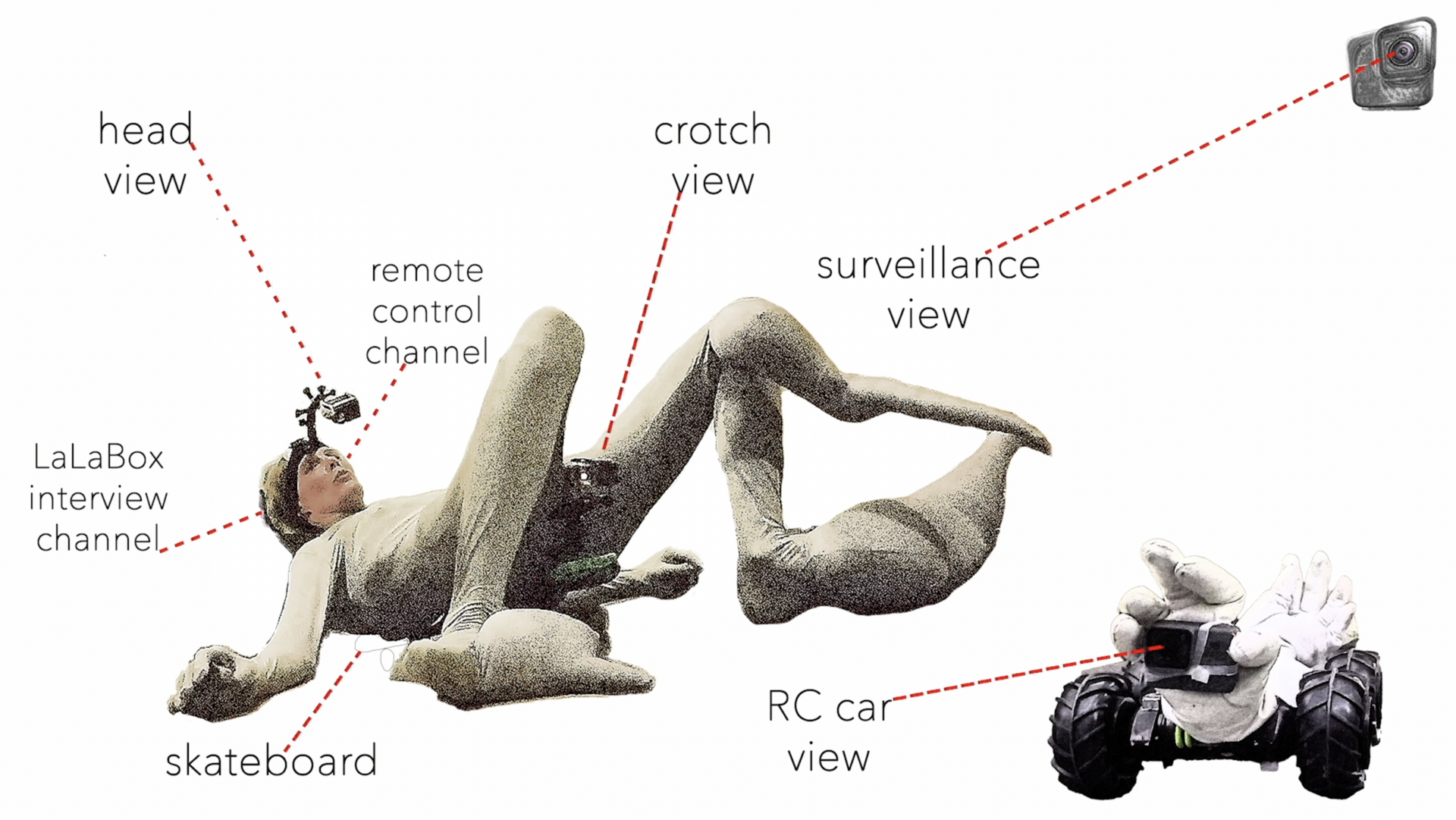
|
|
-possibility to project or screen our video (mov. file) -a space for preparation (costume and technical set-up.) We will bring with us a set of equipment and a costume, and will need a space to gear up (-30 min before, 20 min after). It doesn't need to be the same space as the workshop. -there will be a small amount of non-toxic, non-coloring slime in the presentation, we will need basic cleaning supplies (rag or paper wipes, detergent, 10-15 minutes cleaning time after workshop) |
The workshop involves inviting participants to share personal stories, but we provide fictionalisation and anonymisation as strategies to protect from oversharing or risk of institutional "outing". | Yes | Oo Condit | |||||
| Star/flag Submit a contribution to the 2026 Forum on Artistic Research: Submission #179 | Anonymous | Ilmi Gutzeit | Mathiesen | ilgum@oslomet.no | Silence Is Under Attack: The Artist, Poetry, and the Unspoken | Roundtable contribution | English | Silence is under attack. In a time when digital impulses shine at us from screens with harsh graphics, languages such as poetry fade away. In the language of poetry, silence, or emptiness, is a conversation partner. Poetry breaks the silence, yet the poem works because the words emerge out of a void. The words describe a potentially magical world where life’s possibilities are revitalized. It is like an imaginary journey where anyone can become someone else, or something else, a world where everyone can be transformed. But we live in a century that puts pressure on the definition of the self. Our thoughts are tied to a constant strain, forced into the smartphone’s rat race. It is a life in exile, entangled in the phone’s labyrinths. The phone is an object of contradictory fascination and desire, with a remarkable power and magical pull. Always fleeing from the obligations of community, it offers space for dreaming within the mobile reality, where everything is available. We invite you to light hearted conversations about poetry and how this language can be used to comment on the need for downtime, as a counterforce to mobile noise. In a roundtable setting, we offer the opportunity to write draft poems based on the question “How to be free as an artist?” We want people to participate actively in writing poetry and to linger with what is written through shared reflections. Our contribution explores how the poetic form can give language to the unspoken. It can offer resilience in safeguarding threatened and idea based worlds that live within us all. |
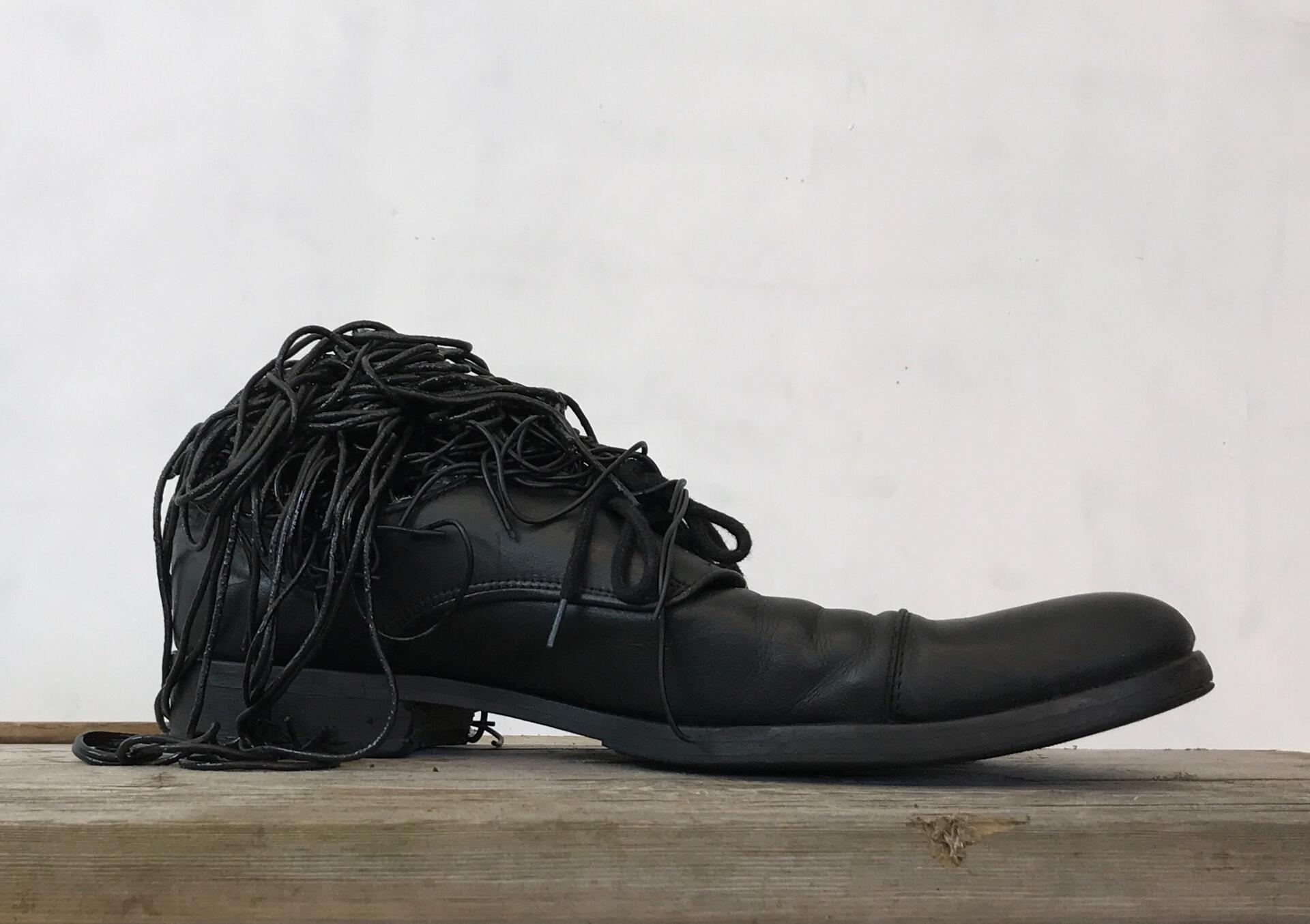
|
|
The project builds on the peer‑reviewed article Mobile in a Changing World (2025). It explores how conceptual art and storytelling can encourage reflection on lifestyle, consumption, and digital influence. The chapter shows how art conversations can counter algorithm‑driven media and how artistic approaches can support critical thinking in young people. | We believe that our contribution is suitable for approximately 12 participants, as we offer a creative and exploratory roundtable discussion where participants have the opportunity to express their own reflections through poetry. We require a room or a designated separate area for the discussion. | We require a digital screen (a large TV or a projector that can be connected to our laptop) to introduce material for the roundtable. Our laptop is equipped with HDMI and Mini‑USB ports. |
Participants may choose whether they wish to present their draft poems. We aim for a playful and lighthearted discussion with no obligation to share one’s attempts, though we hope that those who sign up are genuinely interested in the topic and therefore willing to engage actively. |
Yes | ||||
| Star/flag Submit a contribution to the 2026 Forum on Artistic Research: Submission #177 | Ivar Roban Križić | Ivar | Roban Križić | krizic@mdw.ac.at | Performing Reflection: Orality, Artificial Memory, and Improvised Thought | Project presentation | English | This contribution presents a new development of Performing Reflection, an artistic research practice that stages musical improvisation and improvised speech within a shared performative structure. Initially conceived as a way of making reflection-in-action audible during free improvisation, the practice has gradually shifted toward memory as a compositional and epistemic problem. Drawing on oral traditions and the classical art of memory, it reconsiders forms of discourse structured without external writing. In both cases, extended forms are organized through cultivated mnemonic architectures—internal spatial or relational frameworks that enable recall and recomposition. Composition does not depend on fixed inscription but on structured internal navigation. Developed within the research framework Spirits in Complexity, this work approaches memory not as storage but as relational encounter. Improvised recall does not retrieve intact content; it establishes contact with traces that persist within speech and sound, exposing how material is reshaped through its reactivation. Verbal and musical improvisation thus reveal distinct yet interconnected modes of mnemonic organization. The presentation examines how such internal mnemonic systems can be reactivated within contemporary artistic research. In a cultural landscape shaped by optimization, narrative standardization, and externalized storage, artificial memory can be understood as an endangered conceptual practice. It proposes embodied mnemonic composition as a situated and resilient mode of organizing knowledge that foregrounds memory as structured encounter rather than archive. |
https://www.researchcatalogue.net/shared/a196b76ae57186dfe026522b4f6ddbf5 | https://www.researchcatalogue.net/shared/a196b76ae57186dfe026522b4f6ddbf5 |
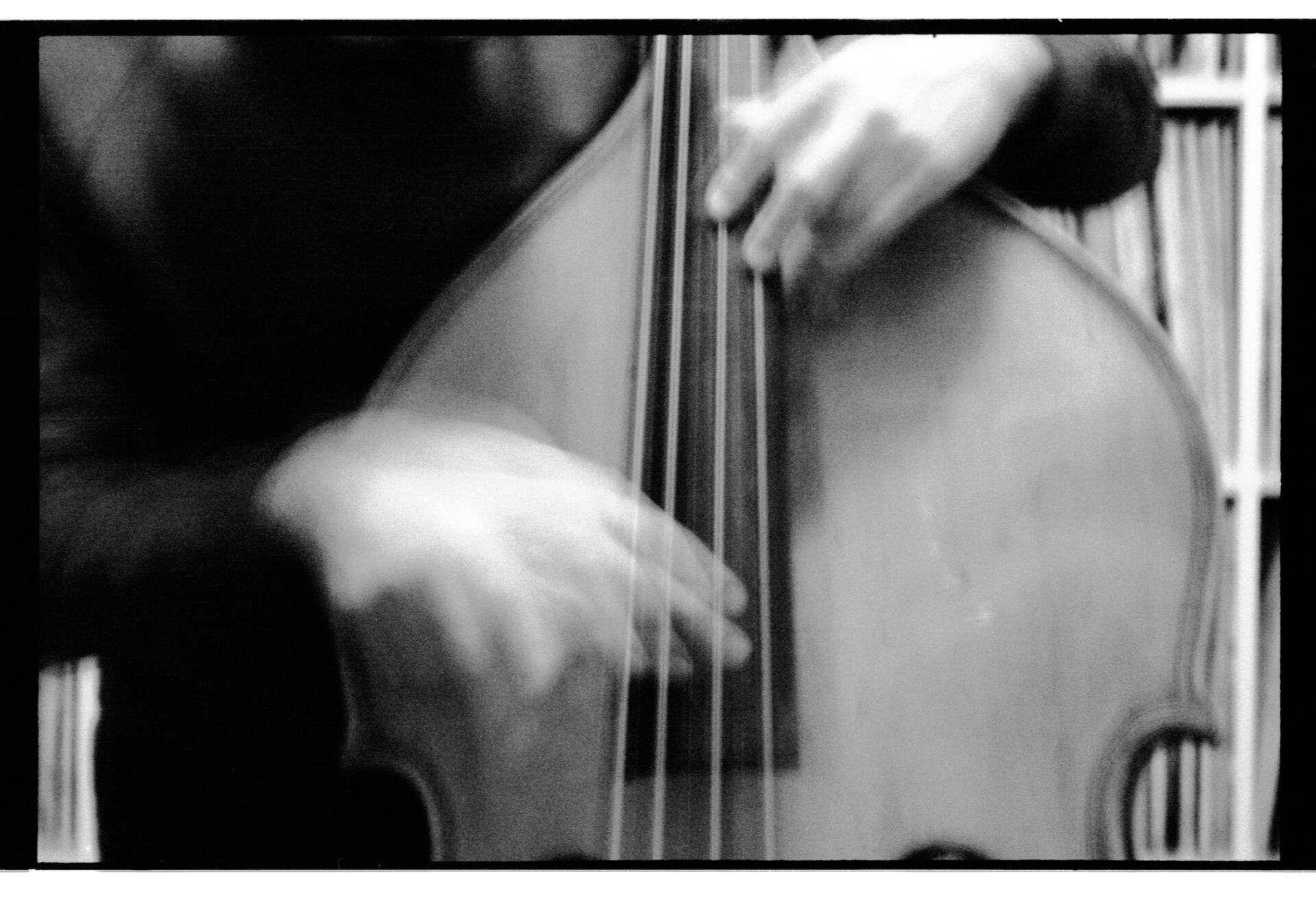
|
|
The broader Performing Reflection practice was developed as part of a doctoral artistic research project (2021–2024) and presented in various artistic and academic contexts. The specific exploration of artificial memory as a structuring method for verbal-musical improvisation represents a new iteration that has not yet been formally presented in this form. | The contribution can be presented as a lecture-performance combining spoken contextualization with short performative demonstrations. The format alternates between conceptual framing and improvised activation of mnemonic structures, allowing the audience to experience how artificial memory operates in real time. The presentation can also be adapted to a standard project presentation format if required. | If presented as a lecture-performance and a double bass is available on site, the contribution can take place in an intimate setting without amplification. In a larger room, a headset microphone for the voice and a standard PA system would be appropriate. | No specific ethical risks are anticipated. | Yes | Ivar Roban Križić | |
| Star/flag Submit a contribution to the 2026 Forum on Artistic Research: Submission #174 | Alexandra Harrison | Alexandra | Harrison | s3963130@student.rmit.edu.au | The Song Of Rolling Solo | Performance | English | Charting the movement of everyday encounters and gathering the hard evidence of our affective relations, The Song Of Rolling Solo is an expansive chronicle of a rolling nomadic sculpture, the Public Sphere, with its attendant archipelago of transcorporeal happenings. Interrupting the public’s fear with an antidote in the form of a homonym, the Public Sphere solicits a widened public imaginary. This closely observed account fathoms risk and heads out anyway, soliciting a continuous renewal of perspective and presence in an argument for becoming there, wherever there is. The artist rolls the sculpture, "it’s the world", they say. The Sculptor’s Daughter pushes a meteorite through Helsinki, Maree rebuilds her life stone by stone, Pippa sets out in wedding dress, Stav the security guard steps in. Solos coalesce and reverberate in a contiguous litany of miracle, danger and sometimes ruin. The body is struck. The impossible ear heeds mumbles, rhythms and refrains, accumulating in a living archive of Blue Language: Orality as an outspoken literary event, movement as bodying text, becoming literal all the way. Blue Language is a lively method, a speculative and affective play with composition and style, heeding Rosi Braidotti’s call for alternative, minoritarian figurations and conceptual personae (p. 34, 2019) and taking seriously Cixous’ declaration “Text: my body shot through with song” (p. 882, 1976). Blue Language invokes embodied and attentive presence, unstable and sensational, rooted and flowing, it is a method for negotiating intensities and composing the ineffable, together. Rest will be necessary but it’s okay, we will have choreographed it. What if baroque new materialisms, in defiance of metaphor, ground us in the literal immanence of what bodies can do and what language can do? Worlds here and gone. |
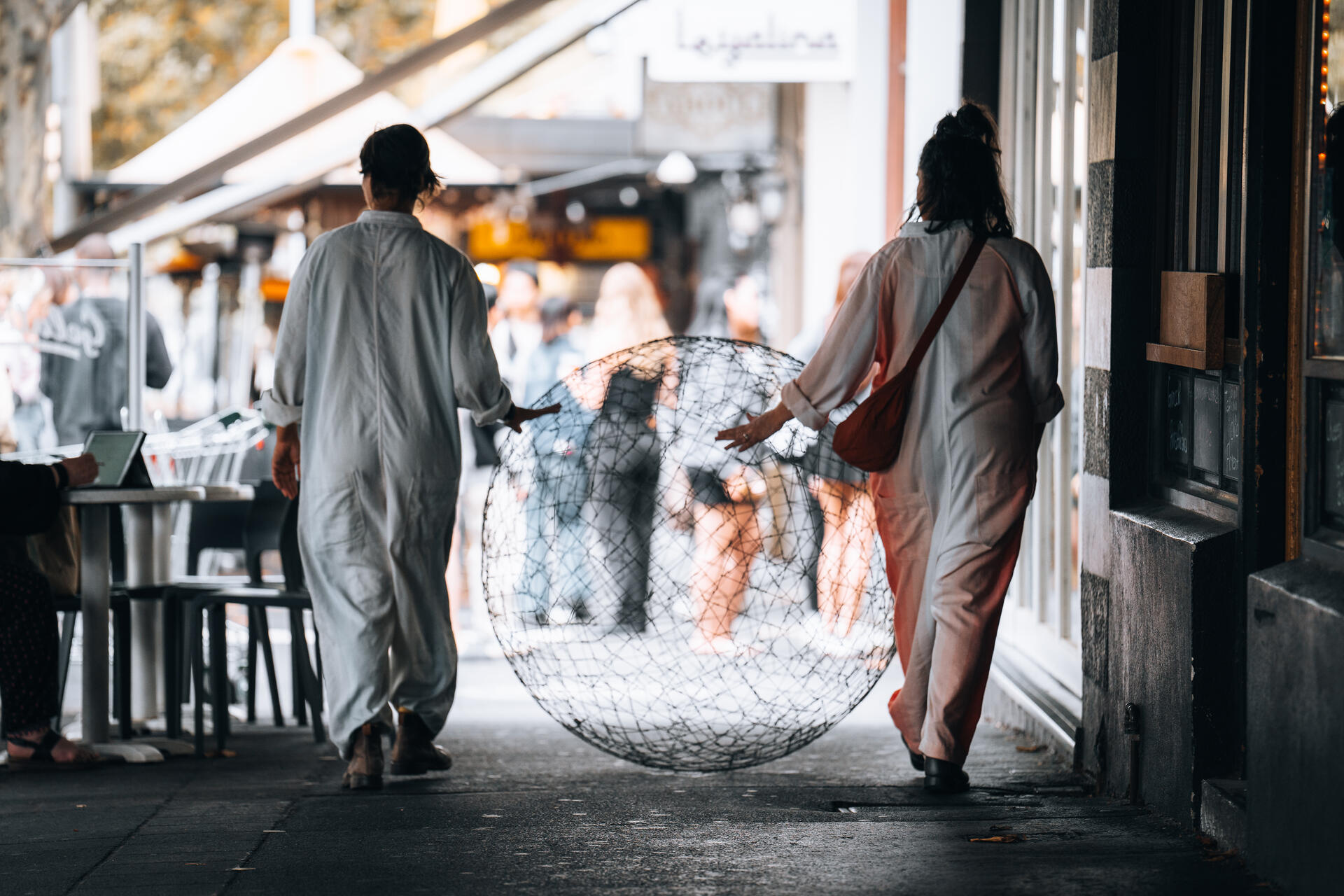
|
|
This particular performance lecture is an original work that will appear in my PhD dissertation. It has had an initial outing in a skeletal form to a small PhD milestone audience. | The Song Of Rolling Solo is a 30 minute (full-bodied) performance lecture. | A clear space of approximately 4m x 6m would be ideal, but smaller is also perfectly workable. A sound system for amplified sound would also be needed. A sound operator is not required as the artist will manage cues within the context of the performance lecture. An open lighting state is all that is required, house lights are fine. No projection, slides or other digital visual components accompany this project. |
There are no ethical concerns or risks associated with this work. | Yes | Alexandra Harrison | |||
| Star/flag Submit a contribution to the 2026 Forum on Artistic Research: Submission #172 | Anonymous | Christine | Vicera | cnvicera@gmail.com | Refusing “Diversity Day”: Creative Pedagogy as a Site of Epistemic Intervention | Project presentation | English | Based on ethnographic findings from artistic research conducted with South and Southeast Asian youth in Hong Kong (HK), the paper examines how creative pedagogy intervenes in what Fricker (2007) calls hermeneutical injustice. That is, “when a gap in the collective interpretive resources puts someone at an unfair disadvantage when it comes to making sense of their social experiences.” (p. 1). In HK’s context, where minoritised ethnic individuals and communities are often expected to present their lives in ways that are legible within its framework of diversity, inclusion, and multiculturalism, this paper attends to the excess: what happens to the embodied and affective dimensions of our being––ambivalence, anger, in-betweenness, opacity––that remain unsayable because they not fit into the neoliberal language of diversity? Drawing on Black feminist thought, this paper argues that creative pedagogy cultivates dialogical spaces in which “subjugated knowledges,” to borrow Hill Collins’ (2000) formulation of the term, can be articulated beyond commodified and institutionally managed scripts of diversity. It first traces the emergence of diversity governance in HK as one of the structural conditions that produce the hermeneutical gaps which delimit how diverse ethnic groups make sense of their experiences. Then, it positions creative pedagogy as a site of epistemic and political intervention within the broader genealogy of Paolo Freire’s critical pedagogy. In doing so, the paper demonstrates how creative pedagogy produces epistemic friction that enables participants to renegotiate or refuse institutional vocabularies of diversity, thus opening up the hermeneutical field. This paper contributes to debates in artistic research by positioning creative pedagogy and artistic research as a mode of theorising that enlarges what can be thought, felt, and spoken within—and against—neoliberal racial governance. |
https://www.researchcatalogue.net/profile/show-exposition?exposition=4226444 | https://www.researchcatalogue.net/profile/show-exposition?exposition=4226444 |
|
|
NA | NA | NA | NA | Yes | Christine Vicera | |
| Star/flag Submit a contribution to the 2026 Forum on Artistic Research: Submission #171 | Anonymous | Alessandro | Cazzato | alessandro.cazzato@conservatorio.ch | Dialogue Across Performance, Education, and Artistic Research: the Interdisciplinary Approach of ‘Ex Chordis’ Journal | Project presentation | English | The study of bowed string instruments, despite their cultural significance, often remains confined to traditional disciplinary boundaries. ‘EC ⎻ Ex Chordis’, a peer-reviewed ANVUR accredited scientific Journal, addresses this limitation by creating an interdisciplinary platform that connects performance, education, and artistic research. Its purpose is to develop a holistic understanding of bowed string instruments by fostering dialogue across fields. The EC's main goal includes bridging musical practice, pedagogical traditions, and scholarly research, thereby expanding the field of bowed string instrument studies. Key research questions include: How can interdisciplinary approaches deepen the understanding of bowed string instruments? How can a dedicated platform connect the practical, educational, and academic dimensions of bowed string instruments? EC operates on the hypothesis that a Diamond Open Access format can encourage innovative research and amplify appreciation for bowed string instruments within musical and cultural discourses. Using a descriptive methodology, the Journal analyzes its aims, editorial policies, and Open Access model, which features a double-blind peer-review process. Its target audience includes researchers, educators, and performers from various disciplines interested in bowed string instruments. Aligned with international Open Science policies, including the Messina and Berlin Declarations and the principles of League of European Research Universities (LERU), EC promotes the widest possible dissemination of research. It seeks to challenge conventional analytical frameworks by uncovering connections between historical development, contemporary relevance, performance practices, and cultural narratives. EC aspires to be a key resource for the interdisciplinary study of bowed string instruments, fostering innovative research and providing new insights into their role in artistic contexts, while ensuring broad international accessibility. | https://riviste.unimi.it/index.php/exchordis/index | https://riviste.unimi.it/index.php/exchordis/index |
|
|
Cazzato is a regular speaker at research events, including: EPARM (European Platform for the Artistic Research in Music); Xperimus Conference, Porto; Music Diaries Conference, Thessaloniki; Sound Thought Festival, Glasgow; Università Tor Vergata, Roma; NYC Electroacoustic Music Festival, New York; Royal Academy of Music, London; Universidade de Aveiro; REACT Conference, Wien; Articulate Festival, Antwerp. | Yes | Alessandro Cazzato | ||||
| Star/flag Submit a contribution to the 2026 Forum on Artistic Research: Submission #170 | Anonymous | Jesse | Allison | jtallison@lsu.edu | Biophilic Simulacra - Creating a Tool for Speculative Soundscape | Project presentation | English | The bio-mass speculator is a soundscape generation tool that stems from a collaboration with the New York Botanical Garden. Their [Welikia Project](https://www.welikia.org/) aims to illuminate the rich ecological history that underwrites the development of New York City – documenting how the ecosystems have evolved up to the present. In Biophilic Simulacra a bio-mass speculator imagines a similar time lapse through sound. By creating models of flora and fauna, behaviors, and environmental actors, the Welikia data is used to re-create soundscapes that may have existed in the past. This first instance of Biophilic Simulacra is a proof of concept mixing site recordings with re-constructed situations and environments. To make an engaging composition there are a few reveals of the process mixed in for good measure. A good recording is like a time capsule – this capsule, of speculative time and place. | https://www.researchcatalogue.net/view/4226434/4226435 | https://www.researchcatalogue.net/view/4226434/4226435 |
|
|
The first iteration of the composition series Biophilic Simulacra was premiered at the LSU Faculty New Music Concert, Digital Media Center Theatre, Baton Rouge, LA. 2026-01-31. | This project is in 3 parts: an artistic research project to devise a methodology for combining eco-acoustic source recordings to create speculative soundscapes; a set of software built in MaxMSP to combine soundbeds, actors and model behaviors; and a resulting composition that explored ways to successfully combine source recordings and emulated ambisonic sounds. The presentation will cover the insights learned from the compositional process. | Projection for presentation and a good sound system for presentation of the sonic art. The piece was composed for 7.1.4, and can be re-exported for other surround arrangements. If a surround audio system is not available, good stereo sound will suffice. | No ethical concerns. | Yes | Jesse Allison | |
| Star/flag Submit a contribution to the 2026 Forum on Artistic Research: Submission #165 | Anonymous | Adnan | Hadziselimovic | ahadz01@um.edu.mt | IMPULSE: Performing Heritage | Project presentation | English | This project presentation delves into the performing of digital heritage within immersive experiences, explored within the IMPULSE research project (https://euimpulse.eu/). IMPULSE investigates methods for experiencing and interpreting digitised cultural heritage within immersive virtual environments, challenging conventional narratives through speculative and inclusive frameworks. By integrating emerging immersive technologies, the project re-imagines the role of digital heritage in contemporary cultural discourse. The IMPULSE Performing Heritage stream extends its inquiry into live, speculative performance-making. Framed by posthuman feminist theories, the research positions heritage not as a static archive but as a living, dynamic practice open to reinvention. Artists critically engage with technologies and embrace glitches and process transparency, aligning aesthetics with ethical commitments to accessibility and openness. Anchored in Maltese heritage sites, including Ġgantija, Mnajdra, and Ħal Saflieni, the work treats architecture, resonance, and myth as active collaborators. Hybrid online–offline workshops incorporate MOCAP, VR/AR devices for real-time performance. Outcomes include a conceptual framework for performing heritage and prototype proposals for future performances, notably an augmented reality event at Ġgantija in 2026 that merges motion-tracked choreography, speculative avatars, and responsive soundscapes. In the artistic sense, multiple expressions are considered - choreography, live sound, video (360), texts/poetry, all through techno-media criticism. A small group of researchers and practitioners from across disciplines are working on experimental artistic research into movement, sound and post-cinematic media to explore performativity using digitised cultural heritage in virtual environments. | https://www.researchcatalogue.net/profile/show-exposition?exposition=4207979 | https://www.researchcatalogue.net/profile/show-exposition?exposition=4207979 |
|
|
Overhead Projector connected to computer for presentation of slides (with playback of sound and moving images). | no potential risks or ethical concerns | Yes | Adnan Hadziselimovic | |||
| Star/flag Submit a contribution to the 2026 Forum on Artistic Research: Submission #156 | Anonymous | Judit | Csobod | judit.csobod@ucdconnect.ie | shit craft: zining as an endangered conceptual world | Project presentation | English | this is shit craft. glue under nails. misaligned type. pages that won’t optimise. my practice research approaches diy zine-making as an endangered conceptual world: a minor, tactile language of knowledge production threatened by platform capitalism, academic standardisation, and extractive visibility regimes. zines carry sedimented feminist and queer lineages — riot grrrl, counter-publics, fugitive study. thinking with fred moten and Stefano sarney’s undercommons, shit craft operates “in but not of” institutional space: using its resources while refusing its demand for polish, scalability, and measurable impact. it values friction, delay, illegibility. projects such as no pain no gain and safe/brave explore zines as precarious epistemic resources. fragments mailed across distance, collective improvisation, unfinished pages — these are not aesthetic shortcomings but methodological commitments. drawing on sara ahmed’s work on affect and circulation, i understand shit craft as a sticky social practice: knowledge produced through touch, care, and obligation rather than optimisation. this research asks: what forms of knowing become impossible when everything must be streamlined, searchable, and monetisable? what minor languages of making persist anyway? presented as a performative exposition with handling and reading, this project demonstrates how endangered diy practices generate distinct forms of innovation: slow mediation, collective authorship, and refusal of extractability. shit craft does not scale. it circulates hand to hand. it keeps knowledge vulnerable, situated, and alive. |
https://issuu.com/girlwithoutaruler | https://issuu.com/girlwithoutaruler |
|
|
versions of this research will be presented at AR@K26 Oslo and women in punk conference in Nottingham. | Yes | Judit Csobod | ||||
| Star/flag Submit a contribution to the 2026 Forum on Artistic Research: Submission #155 | Anonymous | Kasia | Lech | k.k.lech@uva.nl | Dr | Workshop | English | Title: Preparing artistic researchers to work within multilingual ecosystems as a major task for artistic research education? Training artistic researchers to navigate multilingual environments and engage with diverse languages and their unique knowledge systems is a significant challenge in today’s higher education landscape. This challenge is driven by growing institutional interests and pressures from funding bodies to work in such contexts, whether related to internationalization, disability, the marginalization of communities, minority and regional languages, migration, or multilingual education. Additionally, precarious situations—whether due to economic issues or conflict—often compel artists to travel and work in different linguistic settings. In my book on multilingual dramaturgies, I describe the artistic creation within ecosystems made up of multiple languages as a multi-centered and multidimensional web of varied materials, gaps, and interactions. These webs continuously evolve in response to the performance and the audience's circumstances. Given this reality, how can we prepare artistic researchers to work within these complex webs? How can we enable them to fully embrace and explore diverse knowledge and knowings that exist across different languages, challenging established power structures and tapping into the potential highlighted in this conference’s call? In this presentation-workshop, I will consider the difficulties and unknowings related to these questions and suggest some practical exercises and approaches to navigate this intricate landscape. |
|
|
This will be a workshop with some elements of a paper presentation to contextualise. | An ability to use PowerPoint would be great. | None foreseeable. | No | |||||
| Star/flag Submit a contribution to the 2026 Forum on Artistic Research: Submission #154 | Ase Ava Fredheim | Ase Ava | Fredheim | ase.a.fredheim@uia.no | Indigenous Intelligence in Music-Making | Project presentation | English | In this paper I show how an Indigenous mindset founded in reciprocity can shape and guide music making. I examine the effects of placing luohti (yoik), the traditional Sámi vocal expression, in a leading position. Decades of colonial policies deprived many Sámi of cultural expressions and traditional knowledge; in several areas Sámi languages were skipped for at least one generation. Today a taking it back movement is underway—asserting rights to land, livelihood, culture and language—and many young Sámi are reclaiming skills and knowledge that should have been passed on by our families and communities. Embracing distinct qualities within Sámi music, such as in luohti, reshapes both what we make and how we create. Moreover, engaging with luohti across popular musical genres may enable a trans historical positionality in music making. By engaging with research creation as a method, I explore these processes from within through my own artistic practice. The paper is also based on semi structured interviews with several Sámi artists. I offer perspectives on how methods rooted in Indigenous knowledge may redefine and enrich musical practice. I ask: how does privileging luohti as a guiding voice influence our songwriting, instrumentation, and, indeed, the artist’s role? I show, for example, that centering luohti often shifts arrangements from fixed, grid-based productions to open soundscapes with space for organic elements, polyrhythmic turns and flexibility in terms of tempo and harmonic progressions. It becomes evident that decision making can extend to non human agents (landscape, objects, and technologies) as active collaborators. Upsetting hierarchical norms (where humans dictate musical form) and adopting active relationality with all agents involved opens new creative possibilities. These findings suggest a provocation for decolonizing compositional practice and rethinking authorship and agency in contemporary music. | https://www.researchcatalogue.net/shared/798863b5a7b6b6d35ec3ba868cc4c9b4 | https://www.researchcatalogue.net/shared/798863b5a7b6b6d35ec3ba868cc4c9b4 |
|
|
Presentation: “Stories of Reclaiming Yoik” at the Folk music researchers’ symposium at the Sibelius academy, Helsinki (February 2026) Presentation: “Decolonizing Vocal Expressions in Sápmi” at the AR@26 conference, Kristiania University College, Oslo (April 2026) Chapter: Guldalit: Transactional Resonance and Indigenous Perspectives on Listening. In Ø. Varkøy, K. Stensæht, & S. Røyseng (Eds.), Music and Resonance. Cappelen Damm Forskning. (Desk-review approved, awaiting peer review.) |
The presentation is prepared in Keynote. In addition to a projector, I need the possibility to play sound. | Ethical concerns worth mentioning, is that yoik is the source of some loaded discourses within Sámi communities. Opinions regarding how the rematriation of yoik should move forward are differing. I attend to these issues by highlighting how my presentation is based on my own positionality, and that I cannot represent Sápmi at large. | Yes | Ase Ava Fredheim | ||
| Star/flag Submit a contribution to the 2026 Forum on Artistic Research: Submission #153 | Anonymous | Sergio Patricio | Valenzuela Valdes | sergio.valenzuela.v@uacademia.cl | NON-COMPUTABILITY, ANTICIPATION, AND THE LIMITS OF PREDICTION: LIVE ARTS AS AN ONTO-EPISTEMIC LABORATORY | Other format | English | This presentation proposes an ontological reflection on Live Arts based on the distinction between prediction and anticipation, arguing that they represent divergent modes of inhabiting time. Prediction, rooted in the modern episteme’s linear and control-driven logic, is viewed as a residue of reductionist scientific thought that forecloses indeterminacy. In contrast, anticipation is conceived as a vital, relational quality inherent to living systems and contemporary artistic practices unfolding from the immanence of experience. Drawing on complexity theory (Gershenson, Rosen) and the biology of cognition (Maturana and Varela), we define anticipation as radical enaction: an epistemology and ontology of non-linear time where past, present, and future form an emergent continuum. This reframes artistic practice as an onto-epistemic laboratory where time is a field of co-emergence rather than an axis of succession. By revisiting these reflections through the artistic practices of creators such as Del Re, Calfuqueo, Gallego, Bate, and Munguía, the presentation describes how Live Arts challenge the notion of predictive composition. Through a video-essay presentation format, we attempt to observe how these artists' practices embody temporality in anticipation, becoming examples of how distinguished they are from more conventional practices based on controlled disciplines. In doing so, the research transforms the traditional idea of control into a temporality grounded in anticipatory practices. We conclude that Live Arts operate as a privileged territory for exploring a non-linear ontology of time, offering a space of resistance to the hegemony of prediction and an openness toward anticipatory modes of existence at the intersection of art, science, and philosophy. The contribution consists of a video-essay presentation followed by a moderated Q&A. |
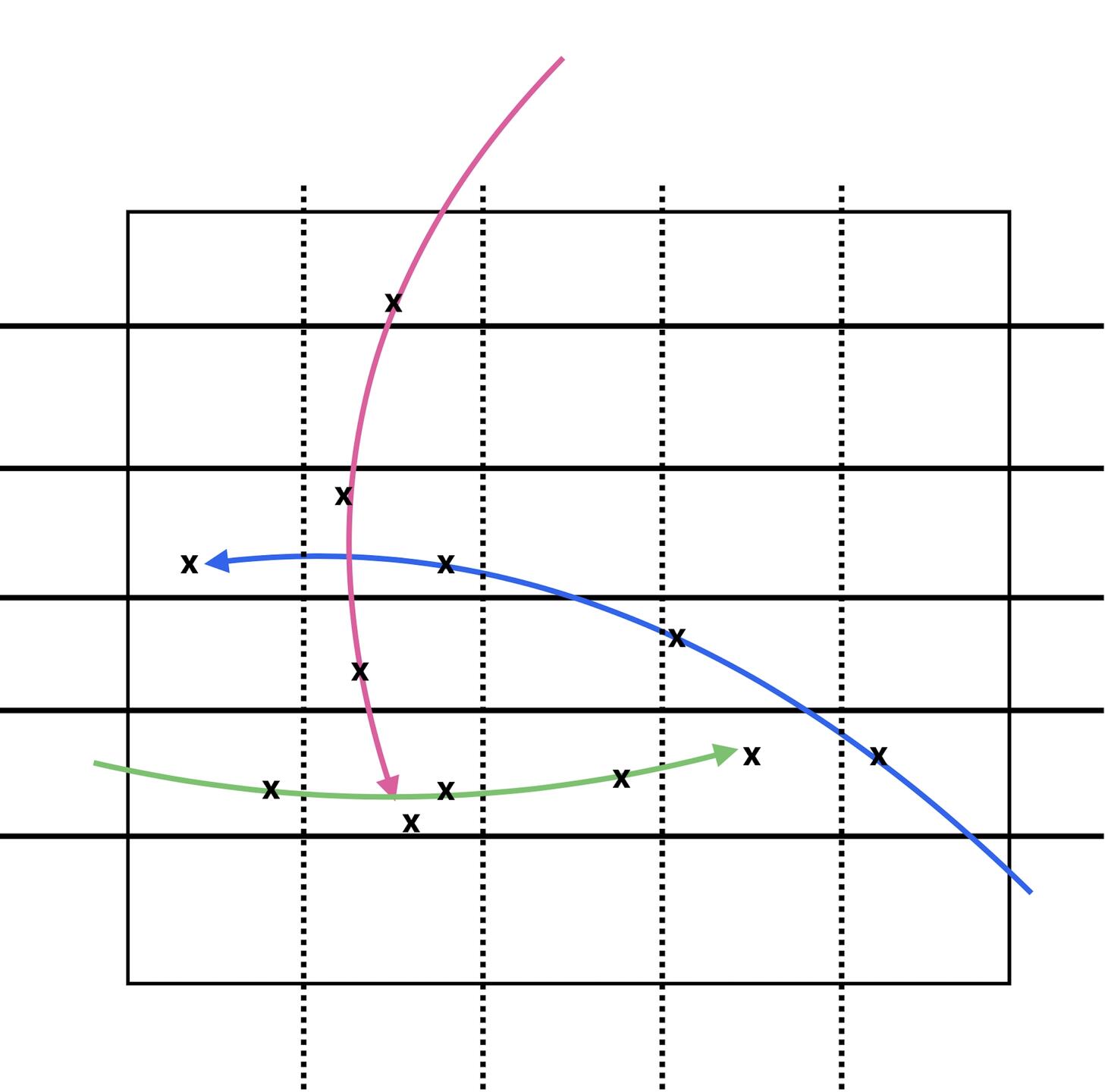
|
|
The current proposal is the culmination of a multi-year research trajectory exploring time, movement, and transdisciplinary practices. Key iterations and foundational presentations include: 2024: “Anticipation” – Foundational Conference, Royal College of Arts (RCA), London. (Direct precursor to the current theoretical framework). |
There are no physical risks involved. Ethically, the research involves the representation of "minoritised" and indigenous identities (e.g., Calfuqueo). To address this, the project adheres to strict protocols of citation and situated knowledge, ensuring artists' works are analyzed within their specific cultural contexts. All featured creators have consented to the use of their archival materials for research and educational purposes. | Yes | Sergio Patricio Valenzuela Valdes | |||||
| Star/flag Submit a contribution to the 2026 Forum on Artistic Research: Submission #150 | Anonymous | Kate | Fahey | fahey.kate@gmail.com | Mouthnotes | Other format | English | This project’s starting point is An Cloch Labhrais (The Speaking Stone), a huge glacial erratic made from conglomerate puddingstone rock. Located in Co. Waterford in Ireland, it is known as a ‘truth’ telling oracle stone. According to legend, the dramatic crack in the stone occurred after a woman perjured herself in its presence – her untruth causing it to split in two. Mouthnotes reclaims the stone’s split, and reimagines it as a mouth from which a multitude of utterances and un/speakable things leak and spill. In this disorderly form of self-expression, non-conforming vocalisations flow up to her mouth and out through her tongue (Carson, 2005). Through the logic of the the vocal warm-up, the work simultaneously stutters and echoes the order of language, numeracy, and structured behaviour. Breaking away from preconfigured expectations and narratives, mouths and voices separate and reunite, unearthing an imagined enunciation (LaBelle, 2014). In the work, these plural erratic agencies emerge through a series of audio-visual polyvocal Mouthnotes. |
|
|
Pallas Projects Dublin, September 2022. 6x6 Project, 31st Edition, March 2023. |
Mouthnotes (2022) is a single-channel audio-visual installation with multichannel sound (5 minutes 33 seconds). The work can be viewed in entirity here: https://vimeo.com/758518941?share=copy (please use headphones). |
There are 3 potential formats: 1. An installation with projection and stereo 'rock' speakers (in a darkened room). I can provide the rock speakers; they look similar to these: https://www.kbaudio.co.uk/products/osd-audio-rs670-outdoor-rock-speakers-granite See a similar installation here: https://www.katefahey.co.uk/Mouthnotes 2. Installed on a screen, with headphones (or additionally with the rock speakers). 3. Installed as stereo sound-only played through the rock speakers. |
N/A | Yes | Kate Fahey | |||
| Star/flag Submit a contribution to the 2026 Forum on Artistic Research: Submission #142 | Anonymous | Anna | Püschel | anna.pueschel@kuleuven.be | Stimming a Space - Dancing at the Margins of a Neurodivergent Cosmology | Project presentation | English | Neurodiversity is gaining more and more attention in the public discussion, slowly but persistently countering wide-spread prejudices around neurodevelopmental conditions such as autism, dyspraxia or ADHD. As the narrative surrounding neurodiversity is expanding, so are the possibilities to understand neurodivergent ways of thinking and doing. This development can bring immense relief and appreciation to neurodivergent individuals that are used to encounter constant misunderstandings, frustration or fatigue. In the rather recent field of neurodivergent academic writing, the neurodiversity paradigm that treats neurodivergent individuals as equals and entitles them to telling their own story opens new pathways to understanding neurodiversity as a variation of human existence and brings different ways of thinking-making-being into the discourse. Many authors in this still emerging field choose auto-ethnographic approaches, opening their experience to a larger audience and uncovering a sensuous world in constant movement, interwoven and enmeshed with the neurodivergent bodymind. This creative contribution traces my first steps of dreaming what I call a neurodivergent cosmology in which time, space and language as experienced by my neurodivergent peers constitute a whole new reality that can inspire us to re-think societal structures and institutions. If time defies linearity, if bodies are intertwined with their surroundings, and if language is not necessarily verbal, can these realms inspire us to do things differently? My artistic research feeds into current decolonial discourses and serves as an invitation to dwell at the margins of the neurotypical universe in an attempt to explore how neurodivergent (self)care and connection can offer alternatives to a collapsing world order. |
https://www.researchcatalogue.net/view/4151290/4151291 | https://www.researchcatalogue.net/view/4151290/4151291 |
|
|
I have presented my work at the CA2Re Conference in Aarhus in 2023, at the Subject/Object/Practice/Place conference in of the University of Malte, Valletta, in 2024 and the seminary Corps vivants, corps sensibles : penser, créer, expérimenter of the EHESS in Paris in the series Art, Autisme et Silence in 2024. There is an article published by Cogitatio Press about my research called Dancing Hands: On Neurodivergent Embodied Knowledge, and one in the process of being published with Cosmos in 2026 | I would like to give presentation of appr. 30 mins, with a Q&A/discussion of appr 20 mins. So an hour in total including transition time for the audience. | If possible, it would be wonderful to have a room in which people can easily get up as I would love to do a short embodied exercise at the beginning of the lecture. So a room with spaced tables would be more suitable than e.g. an auditorium. Furthermore, I need a screen and a laptop to do my presentation. That is all! | There are no ethical concerns as to this presentation. | Yes | Anna Püschel | |
| Star/flag Submit a contribution to the 2026 Forum on Artistic Research: Submission #137 | Anonymous | Yilmaz | Vurucu | yilmazmv@hotmail.com | Paths Under Pressure: Nomadic Knowledge and Alternative Lifestyles in the Capitalocene | Project presentation | English | This artistic research project investigates the endangered material culture, ecological knowledge, and social structures of Anatolia’s Yörük nomads, whose traditional lifeways are under threat from forced settlement policies, climate instability, and capitalist extraction. Through participant observation, filmmaking, and collaborative ethnography, we explore how Yörük tent-making, goat-hair weaving, herding, and seasonal migration (Göç) embody a metabolic balance misaligned with the extractive logic of the Capitalocene. Rather than treating Yörük practices as folklore, we engage with them as valid epistemic systems, centering co-creation, shared decision-making, and relational trust to resist extractive research paradigms. Initial fieldwork with tribes in Ahmetli, Kuyucak, Başaran, Yatağan, and the Taurus Mountains reveals a spectrum of adaptation and precarity: from the fragmentation of migration routes by privatization and industrial expansion to the resilience of pragmatic adaptations, such as solar-powered tents and digital connectivity. The Yörük’s decentralized, undogmatic knowledge systems, rooted in cyclical mobility, communal labor, and reciprocal relations with the land, offer counter-models to the homogenizing forces of modernity. Their tents, weaving techniques, and seasonal rhythms reflect an ecological intelligence now strained by ecological degradation and economic pressures. Initial findings, including video documentation of Göç traditions and tent-making, highlight the tensions between memory and practice, as elders’ testimonies and adaptive strategies (e.g., solar panels, boot-making revival) reveal both loss and resistance. Future research will deepen these engagements, joining the 2027 Göç to document how Yörük communities navigate a shrinking world, where ancestral pathways and meanings are increasingly fragile. The project aims to co-create a multimodal archive that preserves their knowledge. |
https://www.researchcatalogue.net/view/4202310/4202309 | https://www.researchcatalogue.net/view/4202310/4202309 |
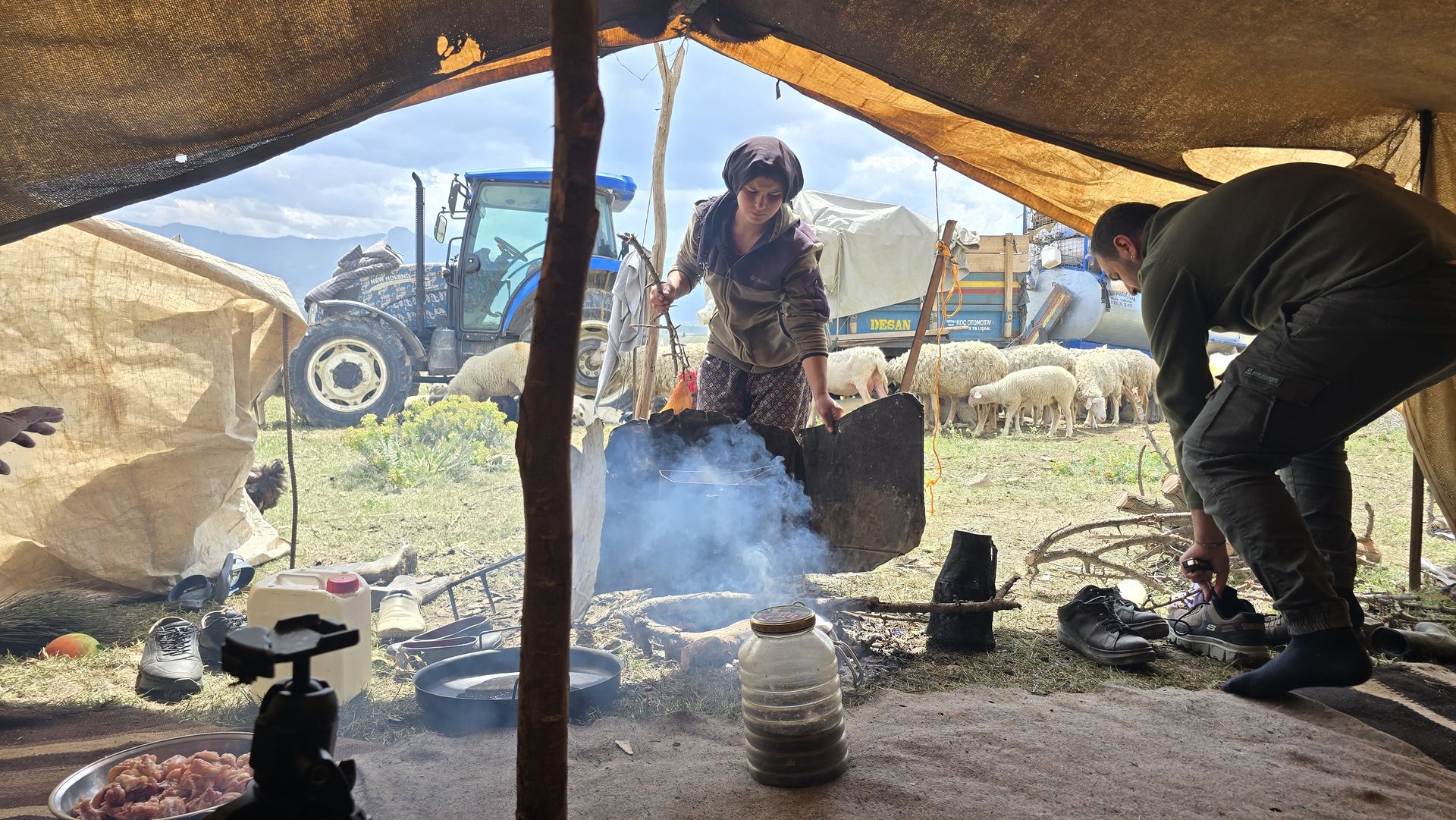
|
|
Nomadism in the Anthropocene is a work-in-progress. It’s an artistic research project that aims to document and analyze the endangered material knowledge systems of the Yörük nomads of Türkiye – particularly from two main vantage points: uncovering undocumented knowledge and situating their struggle to exist and pass on their knowledge in relation to the pressures by all-encompassing capitalist–settler infrastructures and the ecological crises of the Anthropocene. For the presentation, I would like to present our findings, share photos and video recordings, and present how we intend to work on and further develop this research by attending the Migration in 2027 with various tribes. I would also specifically like to present various material production techniques the Yörük use, their relations with the society around them, among each other, and with nature itself. | A screen, beamer and speakers. | There are no potential risks or concerns at the moment, the tribes we work with are fully emerged in our research and are aware of how they will contribute towards it. | Yes | Yilmaz Vurucu | ||
| Star/flag Submit a contribution to the 2026 Forum on Artistic Research: Submission #133 | Anonymous | Chiara | Bastoni | chiarabastoni.98@gmail.com | A Sun In The Palm | Other format | English | A Sun In the Palm is an experimental art film, an abstract, immersive and deep journey into the topic of human connection through sound and moving image. The film is divided in 5 acts, each showcasing the artistic practices of the five protagonists that build the narration, embodying one different perspective on connection: to God and the body, to nature and the soft heart of life, to the self through beauty, to others through love and conflict, to others through acceptance and gentleness and to the things of the world through empathy and unity. It is a narrative, abstract and spiritual elaboration, it aims to engage emotionally, hoping to leave the viewer with questions that can remain un-answered. It’s the result of a one year artistic/curatorial research residency on Islamic spirituality and ritual in connection to contemporary art, a hybrid experimental project carried out by visual artist and curator Chiara Bastoni. The project is part of a longer term, hybrid research project on the intersection of curation and artistic production, that aims to bridge rituality as a methodology with the practice of contemporary art, and draw back from the latter the elements that can render the experience of art authentic, intense, deep, empathy oriented and connective. The shooting eye is photographic. Besides the main narrative, a sense of connection and unity pervade the whole film, through the visual associations made. Messages overlap and layer. The film is permeated by references to Islamic rituals, to some passages of the Qur’an, which are intentionally left subtle and silent, only perceivable by those who know and seek, a choice made to make the piece universal. The piece is the first part of what aims to be a much wider and innovative project that unites researchers from various fields, deepening and widening what has been started throughout this process. |
|
|
The presentation format is the screening of a 34 minutes film that deals with the teme of empathy and connection, foundational to humanity yet threatened by an increasing atomisation of life (cfr. Byung Chul-Han). Following the screening is a presentation of the wider artistic-curatorial research in which the film emerged, connecting ritual as a methodology with the experience of contemporary art. My research aims to bring forth a new approach to curation. In doing so, I hope to join forces with artists and researchers from other fields to advance curatorial and artistic practices for a more just and connective world. | The film is shot in 4K, 16:9, and requires a (preferably short-throw) projector or led backlit screen and a soundsystem. | Yes | Chiara Bastoni | |||||
| Star/flag Submit a contribution to the 2026 Forum on Artistic Research: Submission #129 | Anonymous | Yen Yen | Woo | yenyen.woo@lasalle.edu.sg | Sonic Thick Description: Using the Food Podcast Docu-Dramedy to Re-Sense the Singaporean Voice | Other format | English | While the global podcasting industry has experienced exponential growth, the Singaporean scene remains a site of intense cultural negotiation. Local digital discourse frequently dismisses domestic productions as "cringe" when measured against "overseas" benchmarks. This presentation challenges these aesthetic hierarchies, positioning the food podcast—derived from sensory ethnography—as a radical performance of linguistic diversity in a landscape otherwise flattened by decades of linguistic regulation. Using my own Singapore-based food podcast, Eat by Ear, as a primary case study, I lead a listening circle and a comparative analysis against a sampling of local food media to map the current linguistic terrain. I argue that the "cringe" label is often a byproduct of unexamined postcolonial anxieties regarding local vernaculars and identities. By integrating theories of postcoloniality and critical pedagogy, this session explores how the medium of podcasting, with its affordance for emplaced ethnography, can be used for "culturally re-sensing" our languages. The presentation features an immersive audio component, utilizing episode playback in a listening circle to demonstrate how "sonic thick description" can disrupt a sanitized linguistic environment. Through the interweaving of ambient hawker sounds and the textures of local languages—delivered via a humorous and novel docu-dramedy form—podcasting emerges as a method to "rewild" an increasingly flattened linguistic landscape. I propose that sensory-driven podcasting functions as a vital intervention: a means of recognizing and valuing local voices and their inherent lived histories within a linguistically constrained media landscape. |

|
|
While a my food podcast was previously exhibited at The Listening Biennial, this presentation offers a debut critical analysis of the work’s contribution to Singapore’s linguistic landscape. In a national context where media is highly regulated and dozens of vernaculars have vanished within a single generation, the podcast functions as a radical performance of linguistic richness. | This session will be in the format of a demo-lecture in a listening circle, combining curated audio samples from a podcast I created, with the delivery of a paper, providing attendees with a multi-sensory experience of the research data. | Audio: High-quality stereo speakers (capable of capturing the nuance and "texture" of ambient field recordings). Visual: Projector with a connection for a laptop (HDMI preferred). Room Layout: A U-shape seating arrangement is requested to foster a communal, "listening circle" atmosphere and to encourage dialogue during the post-playback analysis. |
None | Yes | ||||
| Star/flag Submit a contribution to the 2026 Forum on Artistic Research: Submission #119 | Mong Sum "Joseph" Leung | Mong Sum "Joseph" | Leung | josephleung@hsu.edu.hk | On The AI Image and The Dissolution of Indexicality | Project presentation | English | This paper examines how the AI Image transforms the indexical conditions of image-making and, with them, the ethical relation to Alterity that has long underpinned photographic practice. While conventional photography maintains a legible index—what Barthes called "that-has-been"—such indexicality has been lost in the case of AI images, where a single image is in fact produced from computationally dispersed archives in which any visible sign of origin becomes irretrievable. Crucially, the paper distinguishes between the disappearance of indexical presence and the persistence of the Derridean trace: though one can no longer perceive a clear index of an AI image, the trace of the Other nevertheless persists within the very generative process. The loss of a direct index to the Other thus enables an illusion of absolute ownership, where the image appears authored by the user's desire alone. You own the image, but it doesn’t belong to you. Without the recalcitrant encounter with alterity in the image-making process, AI image generation risks becoming structurally auto-erotic. The paper therefore argues that negotiation with Alterity is foundational to ethical image-making and thus essential to artistic research practice. |
https://www.researchcatalogue.net/view/4137673/4137674 | https://www.researchcatalogue.net/view/4137673/4137674 |
|
|
N/A | I would only need a basic projector for the presentation of my slides. | There is not any risks or ethical concerns foreseeable at this stage. | Yes | Mong Sum "Joseph" Leung | ||
| Star/flag Submit a contribution to the 2026 Forum on Artistic Research: Submission #117 | Anonymous | Nina | Liebenberg | nina.liebenberg@uniarts.fi | In the Space Between: Curating Dispersal, Holding Difference | Project presentation | English | This performative lecture proposes curatorship as an artistic research practice that constructs interstitial 'holding environments' for endangered conceptual worlds. Developed through the interdisciplinary project Synzoochory (Uniarts Helsinki, 2024), it reframes synzoochory - seed dispersal through interspecies mediation - as a methodological model for epistemic transmission: knowledge understood as travelling and transformed through contact and context, rather than accumulation and taxonomic enclosure. Drawing on Donald Winnicott’s notion of the 'holding space', curatorial practice is approached as the creation of structured yet permeable environments in which heterogeneous materials, disciplines, and diverse worldviews encounter one another without immediate resolution. Materials such as scientific collections, current research, laboratory equipment, artworks, and archival objects are staged together, in productive tension, without being subordinated to a single explanatory frame. Difference is sustained (celebrated even) rather than collapsed. Central to this methodology is the “curatorial interval”: performative in-between moments that suspend authoritative narration and disrupt linear sequencing. Realised through in-situ departmental exhibitions and performative elements within the Synzoochory symposia, these interstitial pauses generate conditions of attentiveness and delay, enabling embodied and affective forms of knowing to surface. Glissant’s 'right to opacity' is central here: divergent epistemologies (Western taxonomies, Indigenous knowledges, anthropocentric and more-than-human perspectives) are allowed to coexist without being made fully legible to one another. In line with SAR 2026’s focus on power, language, and minoritised knowledges, this paper argues that curatorship sustains fragile epistemic worlds by creating dialogical spaces where difference is neither erased nor hierarchically ordered, but carefully held. |
https://www.researchcatalogue.net/view/4155375/4155376 | https://www.researchcatalogue.net/view/4155375/4155376 |
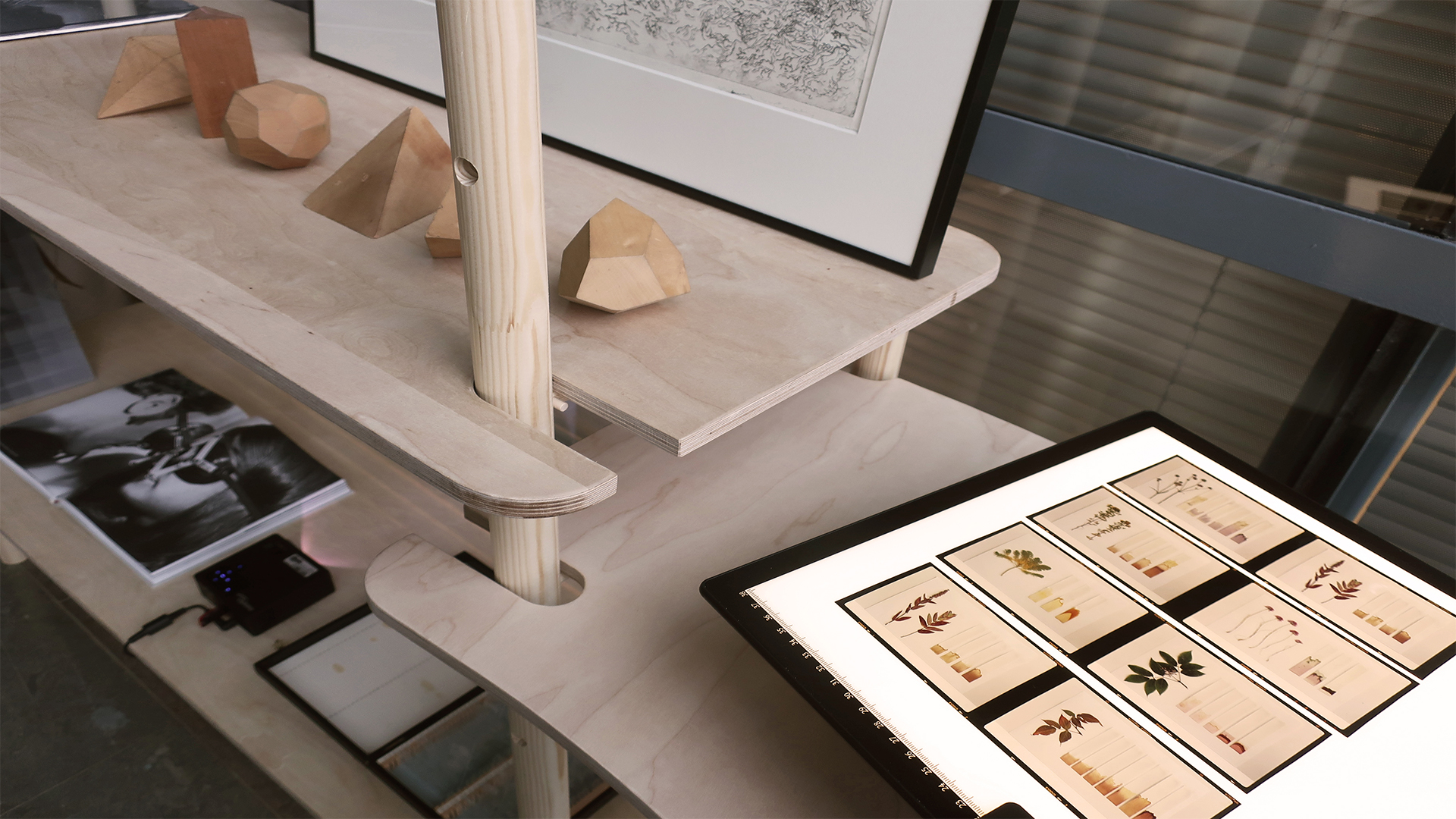
|
|
This research occurred in November 2025, and has subsequently not been presented at any research conference yet. | None | This performative lecture will be in ppt format, with audio-visual elements dispersed throughout. | None that I am aware of at this stage. | Yes | Nina Liebenberg | |
| Star/flag Submit a contribution to the 2026 Forum on Artistic Research: Submission #110 | Anonymous | Jo | O'Brien | jtobrien2@gmail.com | Refiguring Confusion: Expansive Language and Non-Resolution-Oriented Approaches to Confusion | Poster presentation | English | This poster presentation will share the initial outcomes of Necessary Confusion, a four-year artistic research project exploring how non-resolution-oriented approaches to confusion can function as a framework for making access in post-secondary education. Confusion tends to engender discomfort, worry, inefficiency, and disruption wherever it occurs. Because of this, confusion is generally treated as a problem that can—and should—be resolved. This “resolution-oriented” approach is shared across a wide variety of disciplines (medicine, pedagogy, communication studies, etc.) and is prevalent in everyday life. This ubiquity of resolution-oriented approaches has resulted in much of the existing language for confusion prefiguring it as a problem. In working towards a non-resolution-oriented approach to confusion, Necessary Confusion has first aimed to explore what expansive forms of language (verbal, visual, performative, etc.) are needed to describe confusion without prefiguring is as always already a problem. By combining queer/trans and crip theoretical frameworks with artistic research and participatory action research methodologies Necessary Confusion has begun to develop expansive languages that capacitate non-resolution-oriented approaches to confusion. The presentation will give an overview of the expansive language developed in the scope of this project through three recent project outcomes: "Sustainable Resistance/Resistance without Protest" (2024-25), a workshop and follow-up essay; "A Place Out of Time" (2025), a theater performance and text-based artwork; and "Inadmissible on Medical Grounds" (2026), a zine and sticker series. Collectively these projects have built verbal, visual, pedagogical, and performative forms of language for confusion that coalesce around themes of looping, slowness, il/legibility, vignetting, and relationality. These themes and forms of language will serve as groundwork for developing confusion as a framework for access. |
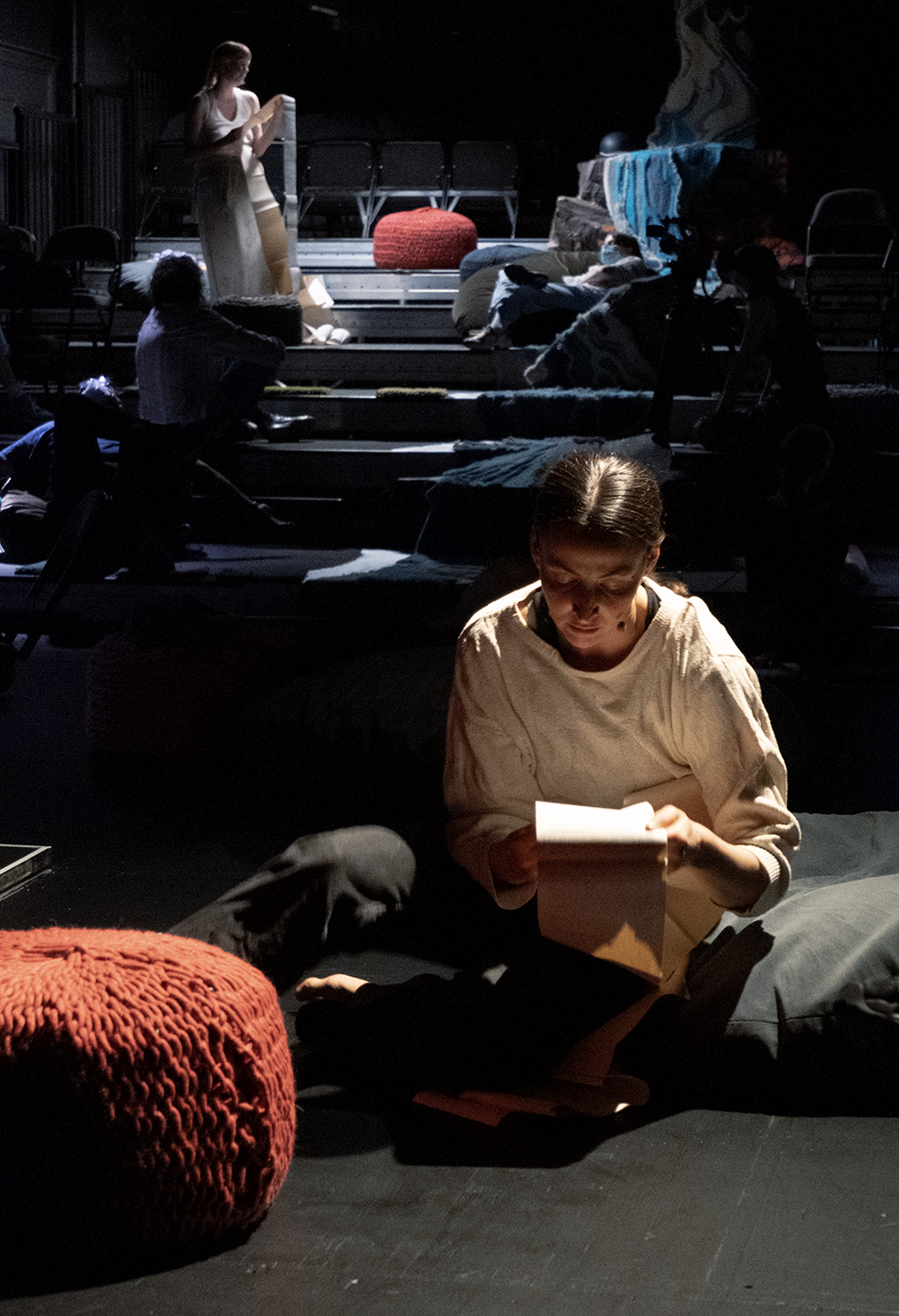
|
|
A general overview of this research project was presented in October 2025 as part of Research Days, an internal research symposium at the University of Applied Arts Vienna. However, that presentation predated the completion of the majority of project outcomes that this poster presentation would focus on. | If it is possible to have a small shelf of some kind near the poster then I would like to bring copies of one of the works mentioned in the presentation (the zine/sticker series). | At this time I foresee no risks or ethical concerns related to this project. | No | |||||
| Star/flag Submit a contribution to the 2026 Forum on Artistic Research: Submission #106 | Anonymous | Panagiotis | Sdoukos | folkperformancelab@gmail.com | E(d)ros & Helene A digital audiovisual folk performance by Panagiotis Sdoukos | Project presentation | Greek | This research investigates Greek folk song as a living, performative, and cultural phenomenon through the combined lenses of performative autoethnography and practice-based artistic research. Grounded in the ritual and embodied dimensions of folk traditions, the project explores how the researcher’s own body and voice can function as methodological tools that bridge theoretical inquiry with artistic creation. By engaging with archival materials, embodied practices, and collaborative processes with students of the Department of Audio and Visual Arts at the Ionian University, the study examines how folk song can be reinterpreted within contemporary artistic and academic contexts. The project develops a new intermedial model of expression -digital audiovisual folk performance- which situates traditional material within cinematic and multimedia environments. Through staged performances, embodied experimentation, and the subsequent transformation of the work into a cinematic framework, the research highlights the transformative potential of folk material when approached through contemporary technological and artistic practices. Overall, the study contributes to the revitalization of Greek folk song as a contemporary performative art form, demonstrates the methodological value of performative autoethnography, and establishes a coherent artistic-research framework that enriches interdisciplinary dialogue at the Ionian University. Click here to watch the video: https://youtu.be/VJLs-5yweks?si=Rph_m8cU1OY9buw9 |
https://www.researchcatalogue.net/shared/8d72acd6bca17024f4524103c4b1540c | https://www.researchcatalogue.net/shared/8d72acd6bca17024f4524103c4b1540c |
|
|
The work has been presented once, internally, at the Ionian University, where it was originally created. This was the first and only presentation of the project. The version proposed for the 17th SAR Conference is a new, expanded, and fully developed iteration | As I am currently based in Greece and may not be able to travel during the conference period, I kindly request the possibility of presenting my contribution remotely. If feasible, I can deliver my talk as an online PowerPoint presentation via screen‑sharing and stream the artwork through YouTube. Alternatively, if remote participation is not possible, I can provide a high‑resolution video file for screening in a viewing room, accompanied by a written statement to be read on my behalf | • Computer or media player capable of smoothly playing high‑resolution video files without latency. • Projector or large display screen supporting Full HD or 4K resolution, depending on the equipment available in the venue. • Stereo sound system ensuring clear reproduction of voice and musical elements. • Dark or semi‑dark room to ensure optimal image quality during projection. • Internet access (if required) in case the work needs to be streamed via YouTube or another online platform. |
No risks or ethical concerns are foreseen at this stage. The work is based exclusively on my own embodied artistic practice and uses only material that I have created myself. The students who participated in an early internal iteration of the project at the Ionian University did so voluntarily within an educational context. No vulnerable groups are involved, no sensitive data are used, and no practices that could be considered harmful are included. | Yes | Panagiotis Sdoukos | |
| Star/flag Submit a contribution to the 2026 Forum on Artistic Research: Submission #105 | Anonymous | Iracema | De Andrade Almeida | iracemadeandradea@icloud.com | Endangered Sonic Bodies: Situated Knowledge in Performer-Led Intermedial Electroacoustic Practice | Project presentation | English | This presentation examines how performer-led intermedial electroacoustic practice constitutes a form of situated knowledge production, proposing the "female sonic body" as an endangered conceptual world within Western concert music. Historically shaped by colonial, patriarchal, and score-centred epistemologies, the performer’s body—particularly when gendered—has been disciplined and rendered epistemically neutral. In response, this project develops the "female sonic body" as an analytical, critical, and methodological framework through which embodied, culturally inscribed, and minoritised sonic practices emerge as epistemic resources. Drawing on four audiovisual electroacoustic works created within the Féminas Sonoras collective, the presentation demonstrates how experimental artistic practices—including intermedial composition, improvisation, archival activation, and collaborative creation—function as modes of embodied analysis. Family archives, vernacular sonic memories, and genealogically transmitted imaginaries operate as cultural sedimentations that persist across generations, resurfacing through performance as forms of artistic and epistemic agency. These practices resist processes of standardisation and epistemic homogenisation by affirming situated, irreducible modes of knowing rooted in lived experience. By integrating artistic practice and critical reflection, the project proposes a transferable experimental methodology for artistic research, demonstrating how intermedial performance can generate new epistemic frameworks and sustain endangered conceptual worlds within contemporary artistic practice. |
https://www.researchcatalogue.net/editor?research=4194540&weave=4194539 | https://www.researchcatalogue.net/editor?research=4194540&weave=4194539 |
|
|
Earlier versions of this research were presented at Electroacoustic Music Studies Conference in Paris 2025, and published in Vórtex Music Journal, Vol. 14, 2026. The IFAR 2026 contribution expands this work by refining the methodological articulation of the “female sonic body” as a transferable artistic research framework, and explicitly addressing intermedial performance as a strategy for sustaining endangered conceptual worlds, including its live and practice-based dimensions. |
Projector Stereo sound system Laptop connection (HDMI or mini-jack) |
All audiovisual materials presented were created within collaborative artistic research contexts with full consent of participants. The presentation reflects critically on ethical approaches to collaborative knowledge production, ensuring that artistic and cultural materials are contextualised and not treated as extractable resources. | Yes | Iracema De Andrade | ||
| Star/flag Submit a contribution to the 2026 Forum on Artistic Research: Submission #104 | Anonymous | GIUSEPPE | RAMETTA | giusirames@hotmail.com | VOICE IN TIME | Project presentation | English | The Voice of Time — Short Summary The Voice of Time explores how vegetal matter can act as an active agent in the formation of contemporary rupestrian surfaces. Through processes of drying, pressing, inclusion and mineral stratification, leaves and organic membranes become archives of their own temporalities. Rather than representing nature, the work collaborates with its material behaviours—contraction, fracture, porosity, sedimentation—allowing time to manifest as a visible force. The project develops a replicable organo‑mineral protocol that transforms vegetal elements into “fossils of the present,” generating surfaces where the organic becomes geological and the ephemeral becomes material memory. Positioned within contemporary artistic ecologies, the research proposes the artwork as an ecosystem of relations between matter, process and temporality. |
https://www.researchcatalogue.net/view/4193863/4193862 | https://www.researchcatalogue.net/view/4193863/4193862 |
|
|
Further information on the project presentation: "The proposed presentation focuses on the technical and aesthetic process of material synthesis, specifically the transition of liquid elements into solid artistic mediums. As an artist, I develop my own material mixes to achieve the solidification of oil and seawater, creating a unique 'solid sea' canvas. The accompanying Research Catalogue (RC) exposition is designed as a 15-minute visual and technical journey through these chemical-artistic transitions. It documents the stability and texture of the resulting surfaces, including the integration of metallic elements (such as stainless steel) within the solidified layers. During the presentation, I intend to discuss the methodology behind these original mixes and, if logistically feasible, provide physical samples for a tactile and visual assessment of the material’s evolution." |
Spatial and Technical Requirements: Space: A standard presentation room with a sturdy table or plinth to display physical samples of solidified oil and seawater. Lighting: Strong, direct lighting (preferably adjustable) to highlight the textures, transparency, and metallic reflections (stainless steel elements) within the material mixes. AV Equipment: * Digital projector and screen for the Research Catalogue exposition. HDMI connection for a laptop. Stable Wi-Fi |
Potential Risks or Ethical Concerns: Material Stability: The original material mixes used for the solidification of oil and seawater are chemically stable once cured. There are no risks of leakage or off-gassing during the presentation. Safety of Handling: The physical samples, including those incorporating stainless steel elements, are non-toxic and safe for tactile inspection by the audience. Environmental Impact: The research focuses on the "solidification of the sea" as a conc |
No | |||
| Star/flag Submit a contribution to the 2026 Forum on Artistic Research: Submission #91 | Anonymous | Sussu | Laaksonen | susanna.laaksonen@uniarts.fi | Third Eye Perception: Sensoception and composition space | Workshop | English | In micro-phenomenological interviews with seven Finnish artistic writers about their work, I identified a recurring somatosensory state: a bodily sensing of emerging meaning that guides composition without yet being articulable as thought. I call this state merkitysaisti, or sensoception — the perception of sense prior to linguistic form. This workshop investigates sensoception alongside teoksen tila, or ("composition space", as best I can translate it): the felt spatio-temporal field writers inhabit during sustained creative work. Part of a doctoral research project on writers' embodied knowledge, this iteration begins with somatic preparation focused on non-visual orientation. The “third eye” is approached not as a mystical element but as part of developmental biology: in early vertebrates, the pineal complex functioned as a light-sensitive, image-producing organ. The workshop explores sensing space and meaning — attending to what precedes articulation. Participants then move through iterative writing cycles. The first of these is prompted with a sentence drawn from the somatic exercise, the rest of the writing emerges spontaneously. Participants are divided into three rotating groups: After each round, writers read aloud. (It is not necessary to write in a shared language.) Reflectors select resonant fragments and place them as notes in shared floor space. Cartographers reorganize these fragments spatially, tracing emerging relations and creating new fragments. After roles are rotated, new writers enter the field and the process is repeated several times. Finally, a co-composed “poem” is read out loud together. Through this process, composition space becomes collectively visible — not as private interiority but as a dynamic field organizing itself between bodies. The workshop leaves no permanent shared artifact or text. What remains are traces: a live research encounter at the intersection of phenomenology, somatics, and collective creative practice. |

|
|
This workshop is one iteration of the artistic component of my doctoral dissertation at the Theatre Academy, University of the Arts Helsinki. The project combines micro-phenomenological interviews with a six-part workshop series (Sept 2025–May 2026) exploring somatic preparation, iterative writing, spatial arrangement, and rotating roles. I propose score-based, improvised co-writing as an independent art form without a final artifact. The conference version adapts Session 4: Senses and Space. | 180 minutes. Somatic preparation (30 min), writing rounds with spatial arrangement (110 min), closing reflection (25 min), discussion (15 min). Participants randomly assigned to rotating roles: writers compose and read aloud; reflectors select spoken fragments and place them as written notes in shared space; cartographers rearrange notes during writing periods. All roles require full engagement. Maximum 18 participants. Pens and paper provided by presenter. No prior experience required. Comfortable clothing recommended. | No technical equipment is needed. A comfortably sized room with no desks, where chairs can be moved aside so that participants can move around, not be too close together, arrange fragments in clusters, take a seat on the floor or a chair to write and listen. | The workshop can be designed to be accessible to hearing impaired people if sign language interpreters are available, and sight impaired people as well. Wheelchair use can be accommodated. The workshop requires full participation to succeed, so observers will not be permitted. Participation constitutes consent to write, read writing out loud, listen supportively without criticism, and participate in the relational field. | Yes | ||||
| Star/flag Submit a contribution to the 2026 Forum on Artistic Research: Submission #86 | Anonymous | Kinga | Bartniak-Król | k.bartniak@asp.wroc.pl | Hic sunt equi | Poster presentation | English | In my artistic practice, I research the commodification of freedom of non-human beings. I consider them minorities, even though they often outnumber humans and yet remain unheard because they do not speak a language we recognise. What we offer them often does not correspond to their needs: claustrophobic stables, apartments, offices, dust, and a lack of sunlight. Their needs are often in conflict with human needs, yet they are forced to live within our society and serve multiple purposes. They have no choice. Processes of minorisation and commodification can affect not only human groups, but also plants, animals, and even emotions. In my PhD research, I focused on plants as victims of human well-being. Their greenery improves office environments, yet they are easily forgotten and left without care, as became visible during the pandemic months. Recently, I began a new research project on another non-human minority: horses. I focus on two groups - war horses and racing horses. Eohippus (eōs, “dawn” and hippos, “horse”), an early ancestor of the modern horse, resembled a rat, had toes instead of hooves, and was initially classified by scientists as a member of the shrew family. The strength, speed, and elegance of the modern horse have contributed to its commodification. Would its original form have been safer in its relationship with humans? Attached image: drawing, title "Koniec Świtu". |
|
|
Poster presentation won't exceed the formal requirements. | Yes | |||||||
| Star/flag Submit a contribution to the 2026 Forum on Artistic Research: Submission #81 | Anonymous | Shelley | Hannigan | shelley.hannigan@deakin.edu.au | Flux and Form | Poster presentation | English | Hannigan extends her material inquiry into copper through an evolving body of rogue knitted textiles, installation and small-scale sculpture which in recent years has deepened through the manipulation of fine copper thread—knitted, burned, melted and fused in dialogue with kiln-fired ceramics. The evolution of Hannigan’s artistic, material research, foregroundes copper not only as substance but as process: a medium shaped through heat, flux, tension, repetition and transformation. Returning in late 2025 to ceramic techniques explored decades before, alongside lace knitting with fine copper wire, Hannigan explores the intersection of mark-making and material behaviour these two processes offer. Here copper becomes both line and structure; ceramic clay becomes ground and counterpoint. The application of fluxes, glazes and controlled firing processes tests thresholds between stability and rupture, delicacy and endurance. Through kiln-based experimentation, Hannigan examines adhesion, oxidation, colour shifts and surface alteration, allowing chance and chemical reaction to co-author the work. While technically rigorous, this inquiry is equally reflective. Creative growth emerges through sustained engagement with material resistance and possibility. Hannigan’s exploration of copper is inseparable from her identity with place; Living in Australia (but born and raised in Aotearoa-NZ) her adopted home, is defined by mineral-rich, ochre landscapes. Here copper is materially and symbolically embedded. The metal’s presence within Australian geological and industrial histories informs her developing artistic identity; its prominence in her practice shaped by her current environment. In this way, Hannigan’s work situates material research within a broader narrative of migration, place-significance and self-formation. Copper becomes both medium and metaphor—an agent of transformation through which technical experimentation and personal geography converge. |
|
|
In 2020, due to COVID I presented my work remotely to this conference in Galway. This presentation was titled: An Embodied Dress Art Installation: Practice Based Research into Place and Identity. | Having nominated a poster presentation, I would like to make up my own poster presentation based on images of the works I will show, including text. As I will be travelling from Australia, I don't anticipate bringing any of the ceramic pieces with me, but could bring some small sculptural pieces and a textile work that might hang near of as part of my poster presentation. If you require the posters be digital, I can also organise this. | Going by most conference poster galleries, I am assuming that I will have at least a metre across and 2 metres in height, to display my poster. However if there is any more room I would appreciate it as an opportunity to hang one of my textile pieces that measure 1metre across and 2 metres high also. Otherwise I can encompass all images and text into a poster and print it out or show it digitally. | none | Yes | Shelley Hannigan | |||
| Star/flag Submit a contribution to the 2026 Forum on Artistic Research: Submission #74 | Gerard Ryan | Gerard | Ryan | gerard.ryan@urv.cat | Listening to Silence in a Primary Care Urgent Waiting Room: Catalan Listening Operators and Audible Order | Project presentation | Catalan | This contribution studies silence in a primary care urgent waiting room (CAP, Catalonia) as an institutional atmosphere that organises attention, movement, and uncertainty. The inquiry is situated in a context where Catalan functions as a minoritised language and where language becomes part of the waiting room’s infrastructure: it shapes orientation, hesitation, and repair. Through situated listening sessions and bilingual fieldnotes (Catalan and English), the project documents micro-events that structure the room: the baseline murmur (remor), sustained whispering texture (xiuxiueig), the recorded screen voice calling numbers, the metallic click of a remote lock, and the buzzer and long sustained buzz when a door re-locks. One vignette centres on the announcement “Trenta-cinc, passa al box cinc” and the brief collective hesitation that follows when the announcement language is not shared, even though the number is visible on the screen. A second vignette traces how access is governed through timing and acoustics: the short opening window of the locked door, the pressure of the long buzz, and the return of quiet as enforced attention. Methodologically, the contribution proposes a small set of Catalan “listening operators” (remor, xiuxiueig, torn, contenció, among others) as repeatable prompts for writing fieldnotes and comparing listening sessions. Translation into English is treated as part of the analysis, foregrounding where institutional pressure and vulnerability are softened when situated knowledge is rendered in a standard academic register. The outcome is a systematic, transferable protocol for making silent, non-verbal governance in healthcare waiting rooms describable and discussable through artistic research. |
https://www.researchcatalogue.net/shared/edef9ebdba87eabaf920f1c8911ab5ec | https://www.researchcatalogue.net/shared/edef9ebdba87eabaf920f1c8911ab5ec |
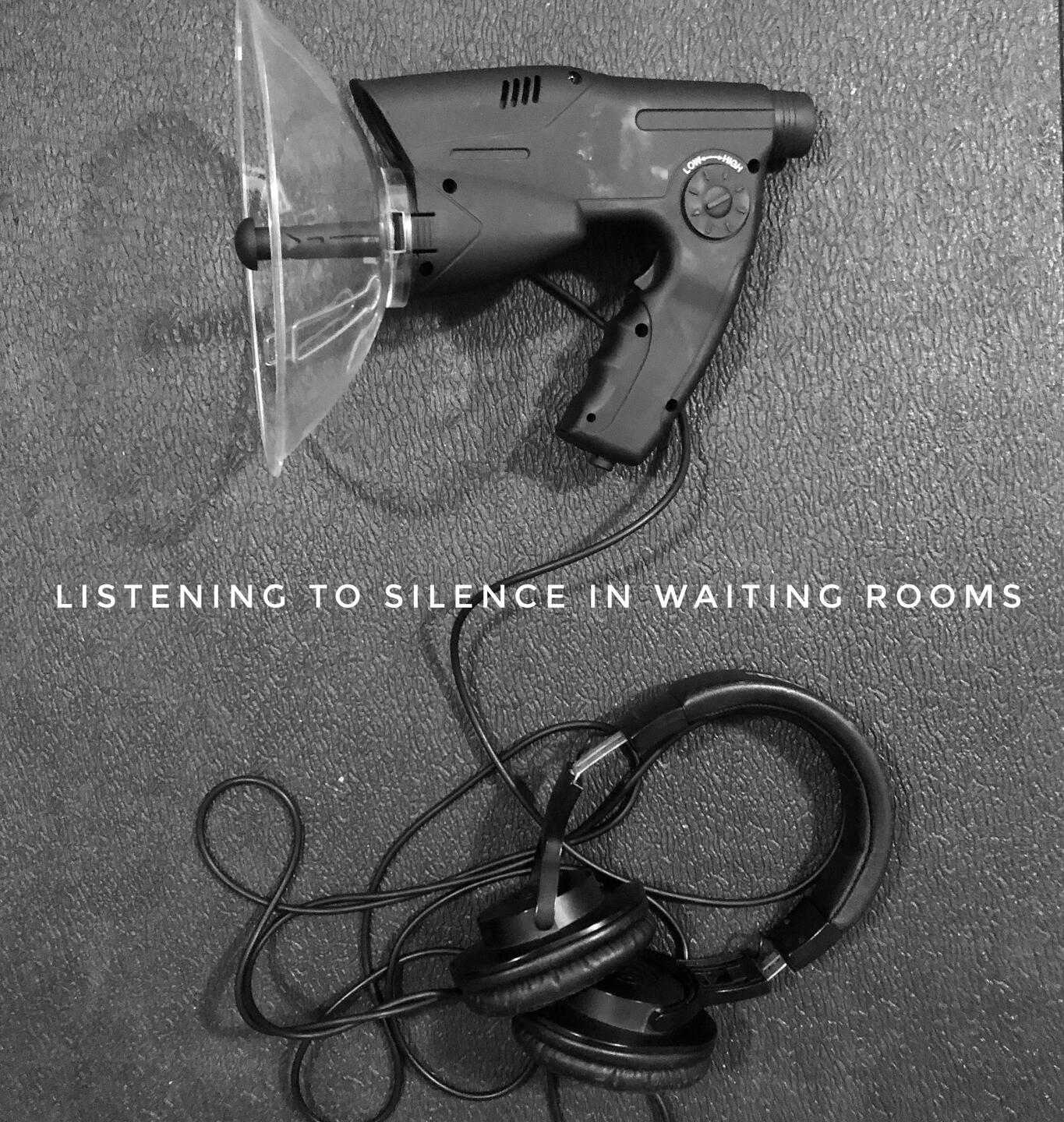
|
|
This contribution draws on my ongoing listening-based research on waiting and silence in service environments. The specific CAP waiting-room vignettes and the Catalan listening-operator framework presented here have not previously been presented or published as a standalone project. | The presentation is organised around two short listening vignettes from a primary care urgent waiting room (CAP, Catalonia). Vignette 1 focuses on a recorded screen announcement in Catalan and the brief hesitation and micro-translation it produces when the announcement language is not shared, even though the number is visible. Vignette 2 traces how access is governed through timing and acoustics: a remote lock click, a short opening window, a buzzer and long sustained buzz, and the return of quiet as enforced attention. I then outline the method as a repeatable protocol: situated listening sessions, bilingual fieldnotes (Catalan and English), and a small set of Catalan “listening operators” (remor, xiuxiueig, torn, contenció) used as prompts for writing and comparing sessions. The linked Research Catalogue exposition includes the vignettes, the operator glossary, and two translation frictions that demonstrate what shifts when situated terms are rendered into English | Standard lecture room. Projector and screen. Audio playback (speakers) suitable for short sound examples. No special lighting. A table/lectern. | Healthcare context. No identifying personal data will be collected or presented. No names, medical details, or identifying descriptions will be included. Documentation prioritises written listening notes and non-identifying description; any audio use will avoid intelligible speech and identifying information. Recording will be avoided where inappropriate, and potentially sensitive details will be anonymised or omitted. | Yes | Gerard Ryan | |
| Star/flag Submit a contribution to the 2026 Forum on Artistic Research: Submission #73 | Anonymous | Jessica | Thomas | jessflowingstill@gmail.com | Conscious Listening through the Lens of the Dancing Body | Other format | English | Conscious listening involves being intentionally present during intrapersonal and interpersonal communication. My practice-led research examines the body's role in this process, asking the following core artistic questions: In what ways can the embodiment of conscious listening serve as a catalyst for enhanced receptivity, empathy, communication, and connection with ourselves, others, and the variety of spaces we inhabit? Through the engagement of this process, what kinds of practical tools can we glean to then be embodied into our real-world, daily interactions and experiences? These inquiries are supported by relevant theories from notable somatically-sensitive artist scholars, as well as several subquestions throughout my creative process involving a series of live dancing dialogues in which I yield into a sensory and extrasensory conversation between my dancing body and four diverse surrounding spaces. This phase is followed by a series of residual variation dialogues, inducing an embodied conscious listening experience within the viewers via the screen in the form of a virtual gallery and projection/media installations. My creative process is contextualized and, thus, fortified in relation to my larger body of work and the broader artworld. A thorough analysis of my practice-led research implicates that the body is crucial amid conscious listening, consistently leading individuals into a state of inward repose and present-tense awareness. This implication initiates foresight into expanded creative manifestations, confirming our potential for embodied receptivity and empathy during communication and how this could pierce through the head-centric values of our society at large. |
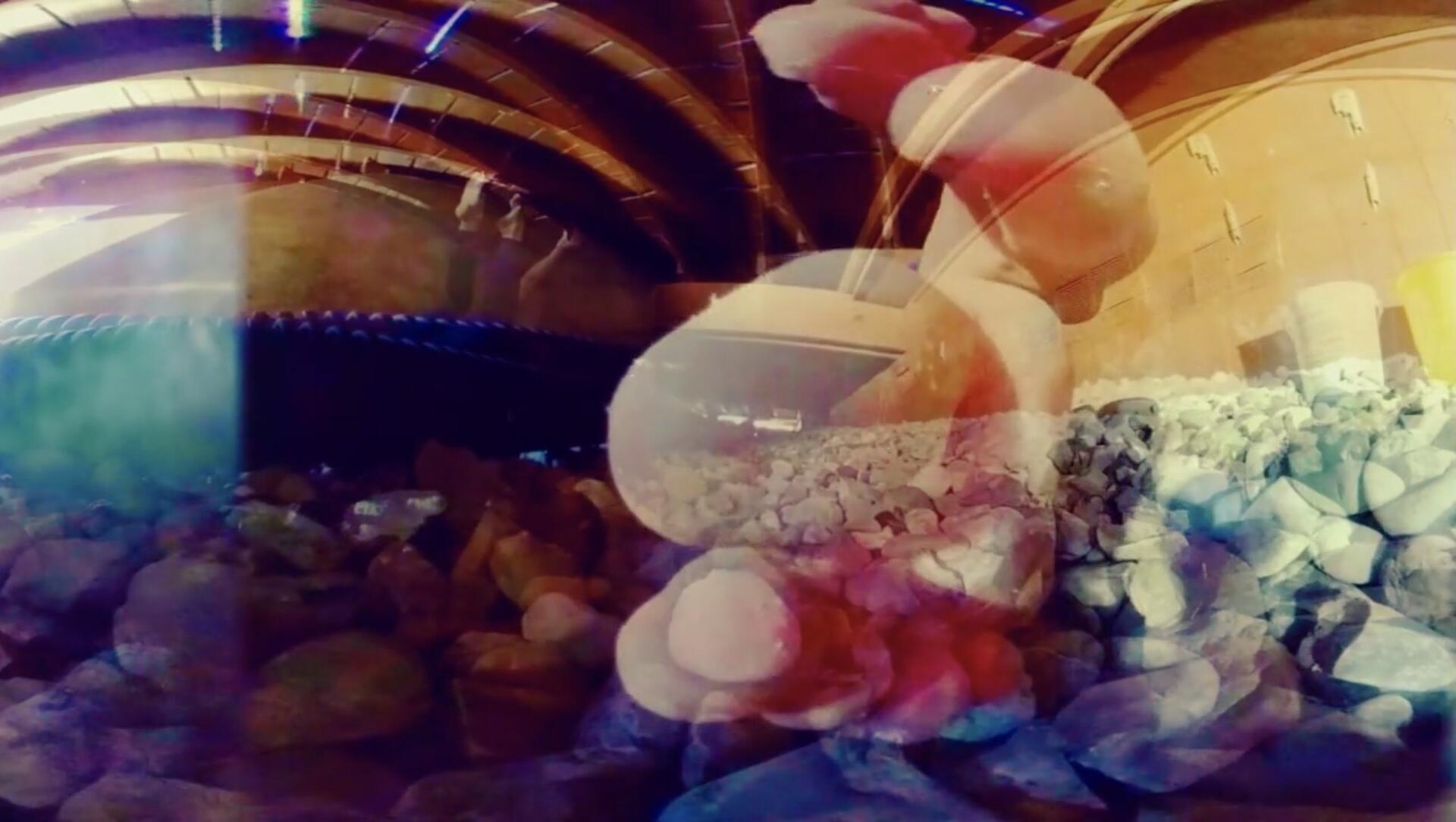
|
|
N/A | My practice-led research would be presented in one of my exploratory films (part of an evolving series; please refer to the abstract). Below is a link to the film: https://vimeo.com/676096122?fl=pl&fe=sh |
Given the work's immersive intent, using a large projection screen to present the film would be ideal. But, no necessary. | N/A | No | ||||
| Star/flag Submit a contribution to the 2026 Forum on Artistic Research: Submission #70 | Anonymous | Aaron | Goddard | 2551850@dundee.ac.uk | Situating labour: theatrical off-sites | Performance | English | My practice-led PhD research combines theories of Worlding and Unworlding with my own lived experiences of working as a backstage labourer to develop new practice-led research which critically engages with the invisible labour embedded in the production of large scale theatrical worlds. This involves situating writing, filmmaking and performance practices within the liminal areas of production to question the politics of what is occluded from view. These questions form the basis of interrelated site-specific embodied practices which seek to problematise and re-map thresholds between the construction and deconstruction of dominant fictions, past and present. In response to the provocation of 'Making seeable and sayable: artistic research in the interplay of power and language'. I propose to share elements of this ongoing research as a performance/lecture, combining readings from my experimental written field-notes with film extracts. Together, these materials approach the complications of representation through the proximal lens of backstage and working-class labour. I explore the body and voice as generative tools capable of developing haptic, perceptual and situated writing as practice which seeks to queer and destablise accepted hierarchies of knowledge production and the favourability of normative imaginaries. (My proposed presentation would be 20 minutes in duration). Two key pieces of theory which ground my methodological approach are Kathleen Stewart's notion of Worlding and Jack Halberstam's notion of Unworlding. "Worldings are not globe-like containers but radically-situated modes of response to a present sensed out in bodies, affects, aesthetics and politics". Whilst Halberstam's notion of Unworlding asks how concepts such as the human, subject, object or animal might be tipped out of their hierarchical formations to explore the unmaking of worlds. Building from these ideas, my research asks how attunements to the usually unseen and unheard can be |
|
|
Full Research Paper Presentations: WCBAN and QBAN (Working Class British Art Network and Queer British Art Network) Conference at Whitworth Art Gallery, Manchester 6th September 2024. On Subversion SGSAH 2025 Annual Symposium, University of Glasgow, UK. 2025. Expanding Cinema: Practice-Led Research, Edinburgh College of Art, Edinburgh University, UK. November 2025. IAWIS International Association For Word and Image Studies, 11th Annual Conference, Amsterdam, Netherlands. (2026 Forthcoming). |
Examples of recent published field-notes can be accessed via this link: https://landing.vda.lt/journal/article/view/37 Examples of film practice can be viewed via this link: https://vimeo.com/1087446812?share=copy&fl=sv&fe=ci Password: C2025 Research Profile: https://www.dundee.ac.uk/djcad/research/students/goddard |
My proposed contribution would be best suited to a screening room or lecture theatre space with basic AV requirements such as: - A viewable screen, connectable to laptop (projected or monitor) - Audio Speakers - Microphone |
I foresee no potential risks or ethical concerns at this stage. | Yes | Aaron Goddard | |||
| Star/flag Submit a contribution to the 2026 Forum on Artistic Research: Submission #69 | ANGELA FRAGKOU | ANGELA | FRAGKOU | fragkou.angela@gmail.com | Sea Light Arc_Kythera | Poster presentation | English | Sea Light Arc – Kythera is a long-term observational project that investigates the ephemeral interplay between sunlight, the sea surface, and time. Conducted on the island of Kythera, Greece, a liminal space at the intersection of multiple seas and meteorological systems, the project foregrounds the partiality and incompleteness of perception. Light is never singular or universal; it manifests asynchronously across the island’s coasts, producing reflections and arcs that cannot be witnessed simultaneously. By systematically recording these phenomena through field notes, diagrams, and restrained photographic traces, the work constructs an archive of fragmentary experiences rather than a definitive image. This project engages with Kythera as an endangered conceptual world—a specific ecological, geographical, and temporal system that offers counter-models to homogenized perceptual and aesthetic standards. It emphasizes attentive observation, patience, and immersion as methods for understanding phenomena that resist instrumentalization or simplification. In doing so, it demonstrates the capacities of minoritised ways of knowing: knowledge that is slow, local, and contingent, emerging through careful attunement to environmental conditions. By presenting light as evidence of temporal and spatial flux rather than spectacle, Sea Light Arc – Kythera positions artistic research as a strategy to document and honor ephemeral, non-dominant forms of knowledge. The project resonates with broader urgencies of epistemic sovereignty, highlighting how place-specific observation and experiential methodologies can provide critical insight into resilience, resistance, and alternative temporalities in both ecological and cultural contexts. |
|
|
The project Sea Light Arc – Kythera is currently in development and has not been presented or exhibited previously. This submission represents the first formal presentation of the research. | The presentation will include a digital observation diary documenting Sea Light Arc – Kythera. The diary records not only what is visible at sunrise, but also what cannot be seen simultaneously from other locations on the island. It integrates structured field notes, light diagrams, photographs, and video sequences, maintained on an iPad for precise temporal tracking. Each entry follows a standardized format (date, location, orientation, environmental conditions, sea surface, sensory impressions, timeline of light arcs, and asynchronous reflections), emphasizing the partiality and fragmentation of perception as central to the research. This method allows the audience to experience the observational process, the gaps, and the temporal variability of light as an emergent, site-specific phenomenon. | The contribution will be presented as a poster. Requirements include: a vertical display space (approx. 90x120 cm), access to power for an iPad or tablet to show digital diagrams, photos, and short video loops. If feasible, the digital content can be projected via a projector. No additional lighting or specialized equipment is required. | The project involves site-specific observation of natural light and sea conditions, with no interaction with human subjects or sensitive environments. Minor risks include exposure to weather, uneven terrain, or slippery surfaces during sunrise. Standard safety precautions for outdoor fieldwork will be followed. No ethical concerns are anticipated regarding data collection, as all materials document natural phenomena and not individuals. | Yes | ANGELA FRAGKOU | |||
| Star/flag Submit a contribution to the 2026 Forum on Artistic Research: Submission #67 | Giuseppe Rametta | Giuseppe | Rametta | giusirames@hotmail.com | Poesia in Natura | Poster presentation | Italian | Solidificare l'Etereo: La mia ricerca tra Alchimia Materica e Sguardo Divergente Abstract per il programma: La mia ricerca artistica nasce dal desiderio di sfidare l'effimero, trasformando l'inafferrabile in una tela solida e vibrante. In un'epoca dominata dalla dematerializzazione digitale e dalla standardizzazione dei linguaggi, io scelgo di operare sulla soglia fisica della materia. Ho sviluppato una metodologia proprietaria per la solidificazione di elementi fluidi — come l’acqua di mare, l’olio, il vino e persino il fumo — trasformandoli da sostanze transitorie in supporti strutturali per le mie opere. Questo processo non è solo tecnica chimica, ma un atto di resistenza epistemica. Solidificare il mare significa per me cristallizzare una memoria biologica e ambientale che rischia l’oblio, sottraendola al flusso indistinto del consumo contemporaneo. Ogni mia tela "solida" trattiene in sé l'energia di un luogo e di un tempo specifico, diventando un archivio materico che si oppone alla semplificazione algoritmica. Il cuore della mia indagine risiede in quello che definisco lo "Sguardo Divergente". Integrando la mia esperienza di neurodivergenza (autismo e bipolarismo), utilizzo la mia percezione come una tecnologia sensoriale capace di cogliere le micro-transizioni molecolari tra stato liquido e solido. Questo mi permette di operare su superfici estremamente fragili, dove il segno deve essere impresso con una leggerezza eterea per non compromettere l'equilibrio della materia. Attraverso l'uso di reagenti specifici, non cerco di dominare il colore, ma di rivelarne l'autonomia cromatica, lasciando che "fiorisca" spontaneamente sulla superficie solidificata. Con questo contributo, intendo dimostrare come la ricerca artistica possa esplorare mondi concettuali in pericolo, dando voce a saperi situati e non egemonici. La mia pratica trasforma l'ineffabile in una grammatica visiva solida, offrendo un contromodello alla visione meccanicistica del mondo. |
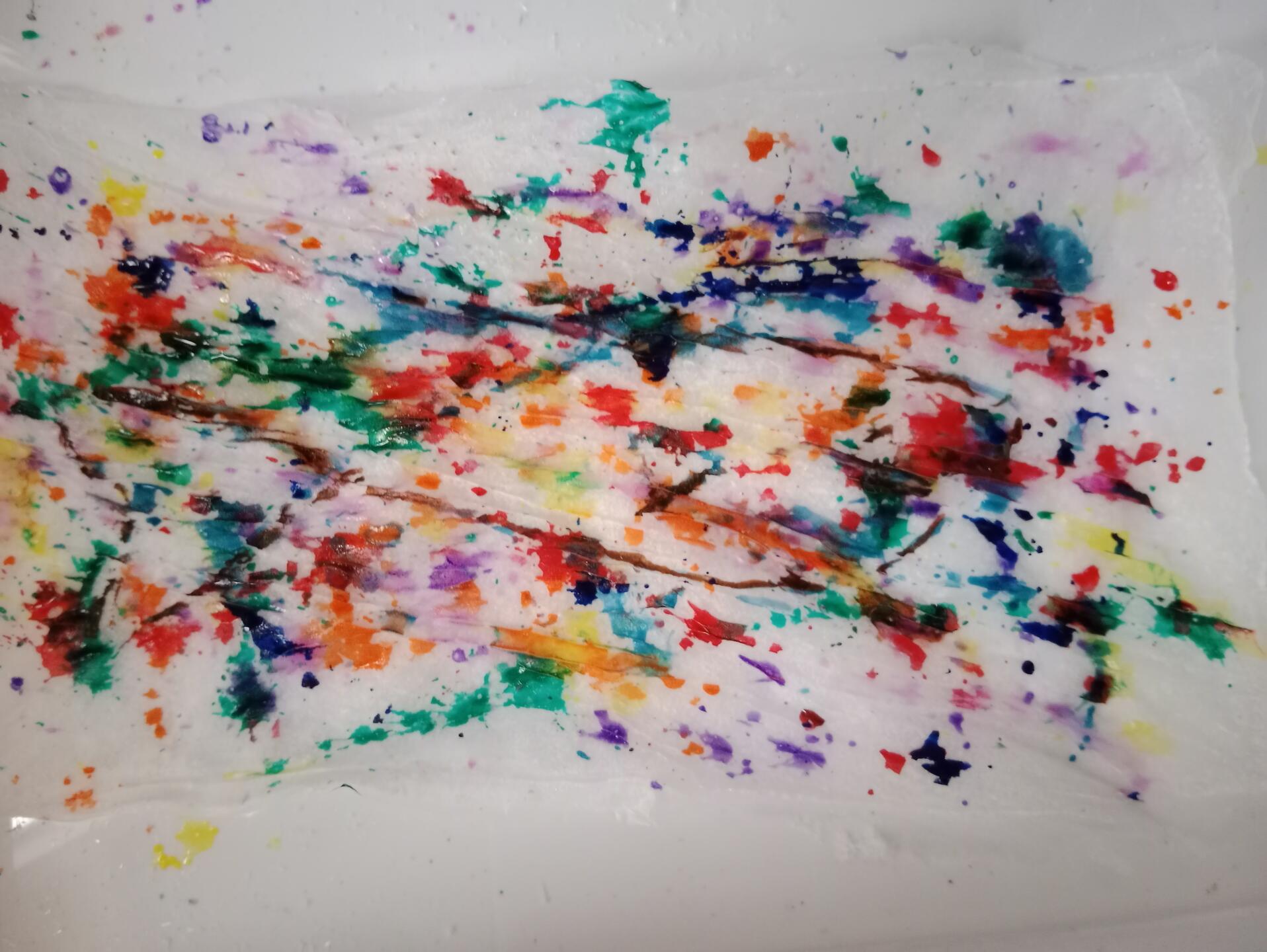
|
|
https://www.researchcatalogue.net/view/4155213/4155212 Qui trovate parte della mia vita! |
"La mia presentazione è strutturata come un'esposizione integrata di teoria, documentazione video e analisi materica. Il formato prevede: Analisi Video (Digital Documentation): Proietterò video inediti che documentano il processo di transizione molecolare durante la solidificazione del mare e dell'olio. Questi video sono fondamentali per dimostrare la natura sistematica e riproducibile della mia ricerca (secondo i criteri del Manuale di Frascati). Supporto PDF/Slide: Utilizzerò slide tecniche per illustrare lo 'Sguardo Divergente', spiegando come la neurodivergenza funga da strumento epistemico per percepire le soglie della materia. Analisi Comparativa: Attraverso il PDF dei dati tecnici, mostrerò il confronto tra la materia allo stato fluido e quella solidificata, discutendo la permanenza del pigmento su supporti chimicamente instabili. Interazione Materica: Se possibile, metterò a disposizione dei campioni fisici solidificati affinché i partecipanti possano osservare da vicino. |
"Per la presentazione del mio contributo, sono necessari i seguenti supporti tecnici: Proiettore ad alta risoluzione: Fondamentale per mostrare i video della transizione molecolare e della solidificazione della materia, dove i dettagli visivi sono parte integrante della ricerca. Schermo di proiezione e impianto audio: Per la riproduzione dei video documentari con audio originale dei processi chimico-fisici. Accesso a Internet: Per il collegamento in tempo reale all'esposizione sul Research C. |
No | Yes | Giuseppe Rametta | |||
| Star/flag Submit a contribution to the 2026 Forum on Artistic Research: Submission #66 | ANGELA FRAGKOU | ANGELA | FRAGKOU | fragkou.angela@gmail.com | Light Diffraction and Artificial Nanostructures: Re-Imagining Living Matter in Contemporary Art | Poster presentation | English | This contribution presents a case study in which the behavior of living matter is re-imagined through an artificial nanostructure, the liposome, within contemporary artistic research. The liposome, a biomimetic model of cellular membranes, enables the exploration of self-assembly, phase transitions, and thermotropic properties in a relational artistic context. Through visual installations across diverse urban and natural sites in Athens, light diffraction patterns generated by liquid-crystalline biomaterials reveal complex interactions between material behavior, environmental conditions, and human perception. The project integrates laboratory-based experimentation at the pharmaceutical nanotechnology lab of the National and Kapodistrian University of Athens with participatory and site-specific artistic practices. Collaborative workshops and experimental documentation foster dialogue between science and art, emphasizing the aesthetic and conceptual potential of nanoscale phenomena. The study builds on post-humanist perspectives, situating living matter and its structural transformations within broader ecological, social, and technological frameworks. Engagement with international networks, including the MERZ Erasmus+ programme, further situates the project within transdisciplinary approaches to art-science research, highlighting the relevance of endangered and minoritized conceptual practices in contemporary artistic inquiry. This work demonstrates how artificial nanostructures can serve as mediums for exploring complexity, materiality, and the dynamic interplay of light, space, and perception. |
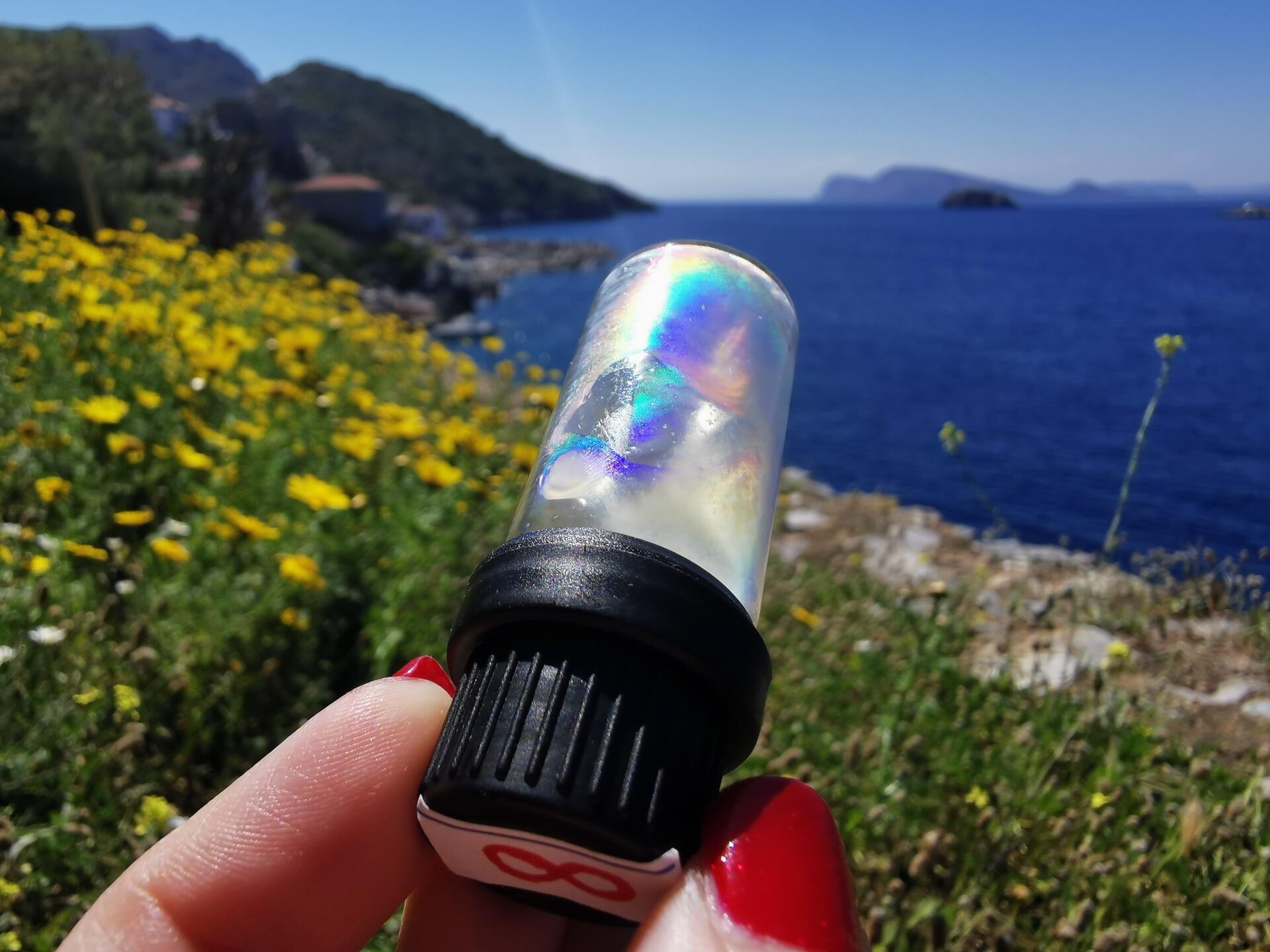
|
|
Previous presentations include the MERZ Akademie Smart Hybrid Forms program (Erasmus+, 2022), the Onassis Stegi Hackathon (Jul 2022), an exhibition/workshop at the NKUA Dept. of Pharmacy (Oct 2022), research with the NKUA Pharmaceutical Nanotechnology Lab (2022), and the 2025 article “Re-Imagine the Behavior of Living Matter: The Colorless Color and an Artificial Nano-Structure in Contemporary Art.” | The poster presentation includes visual documentation, diagrams, and selected stills from laboratory and field research. It is accompanied by a short video produced at Merz Akademie that documents the experimental process. The material bridges art practice and life science research, highlighting methodology, interdisciplinarity, and the translation of laboratory phenomena into contemporary art. | Poster presentation requirements. | No direct risks to participants are involved. The work involves nanomaterials and liposome-based artificial structures developed in prior laboratory contexts under institutional biosafety and ethics protocols. It does not include genetic modification or handling of living organisms. Ethical reflection focuses on environmental impact and the responsible use of biomimetic materials within an artistic research framework. | Yes | ANGELA FRAGKOU | |||
| Star/flag Submit a contribution to the 2026 Forum on Artistic Research: Submission #65 | Anonymous | Tesfay Equar | Kidanu | tesfaequarart@gmail.com | The Legacy of Kidus Yared as the Founding Father of Ethiopian Liturgical Music and World Music | Other format | English | This study examined Kidus Yared (c. 505-571 AD) a 6th-century Ethiopian theologian, notation system, musician, hymnologist, poet, author, translator, naturalist, choreographer, dancer, actor, director, critic, and composer, revered as the founder of Ethiopian Orthodox Tewahedo Church liturgical music. Methodologically, a qualitative approach. The data collection tools were interviews, observation, and document review. Data analysis methods used qualitative data thematic analysis through narratives and merged data. The study identified the Aksumite kingdom and early monasticism as crucial influences on Yared's development and performed a detailed analysis of his unique modal system, rhythmic structures, and vocal techniques (Zema). Findings reveal the meticulous oral transmission of his music through generations of Debtera (traditional musicians) and the profound cultural impact of his work on Ethiopian society and identity. Finally, this study contributes to a more inclusive and comprehensive understanding of global music history, placing Kidus Yared at the forefront of non-Western musical innovators and visionaries. |

|
|
Visual Arts Competition at the 4th Edition of EHRC’s Annual Human Rights Film Festival to mark International Human Rights Day on 10, 2024, Jimma, oromiya-Ethiopia. Exploring the Acting of Prominent Actor Wegayehu Nigatu in Focus. International Conference on Art studies on 10-12 october 2024, Milan, Italy. The Role of Laureate Tsegaye Gebremedhin's Selected Artwork in Promoting National Building: Audiences and Artists' Perspective in Focus. |
Inspired by his time at the Addis Adigrat and Jimma University, Tesfay has explored writer, actor, director, and critic training techniques, incorporating oral traditions and storytelling, and continues to explore alternative perspective in performance training. Tesfay brings an extensive 11-year teaching career to our University, with expertise spanning various aspects of theatre such as writing, acting, directing, criticism for (stage, screen, and radio), musical theatre, movement, voice, indigenous performance, and contextual studies. His rich professional background deeply informs his approach, anchoring practice and context as the core pillars of his teaching philosophy. Research interest: Art History, Teaching and Learning the Arts, Arts Policy, Art Management and Advocacy, Arts Theory and Criticism, Economic, Social, Cultural Studies, Migration, Climate change, AI in the Arts, Art Therapy, psychodrama therapy, Ethnomusicology, Political and Community in the arts. |
I have been teaching Theatre Arts courses as a lecturer at Jimma University. I am also working at Mara Children and Mothers Multipurpose Aid Social Development Organization as a program designer volunteer in a remote/online capacity. 2025: I have working as a chief operational officer, consultant, and project designer on remote/online at Harmony Tube as a content creator, Yament PLC in Yeshi Gabicha program, Addis Ababa, and an event organizer, and children's play game director with Ho-Arts. |
No, a potential risk at all. | No | ||||
| Star/flag Submit a contribution to the 2026 Forum on Artistic Research: Submission #61 | Anonymous | Theresa | Schütz | theresa@unos.at | Walking Worlding Words with Forest | Project presentation | English | What made us forget to touch ground — even if the world still matters? Take a handful of soil — humus containing more living beings than humans on the planet. With this minor gesture, Touch Ground stages a micropolitical shift in sensibility: affect becomes the capacity to affect and be affected within more-than-human entanglements. Our encounter with ground, the world we inhabit, is mediated by settler-colonial abstraction regimes extended through platform urbanism, rendering land a measurable resource, navigable data surface, ownable asset, fragmenting heterogeneous worlds into commensurable units within extractive logics of equivalence. Rather than representing an endangered world, the project reconfigures perception from within, making palpable the onto-epistemic rupture of the Digital Anthropocene: a dissociation between knowing about and being immanent to the world. Endangered is the lived sense of material entanglement from which tangible futures co-emerge. This concerns children under postdigital subjectivation within data-capitalist infrastructures operationalizing perception and enforcing self-optimization, eroding shared experiential worlds, pre-formatting imagination, foreclosing becoming otherwise. In Walking Worlding Words with Forest, children enter the forest as speculative ecology, a thick present of becoming-with. Through walking-with, they approach found fragments as a sensing objectory, assembling answering apparatuses from reused architectural tools, affecting-with wind and weather. A contact zone unfolds that invites correspondence and resonance. Rather than defining resonance conceptually, artistic research thickens theory by forcing it to take place. As resistance, it refuses optimization and control, sustaining shared situations in which other modes of worlding can be rehearsed. The presentation combines performative documentation and weather-altered drawings, holding open the ineffable, where sensing precedes articulation. |
https://www.researchcatalogue.net/profile/show-exposition?exposition=4152777 | https://www.researchcatalogue.net/profile/show-exposition?exposition=4152777 |
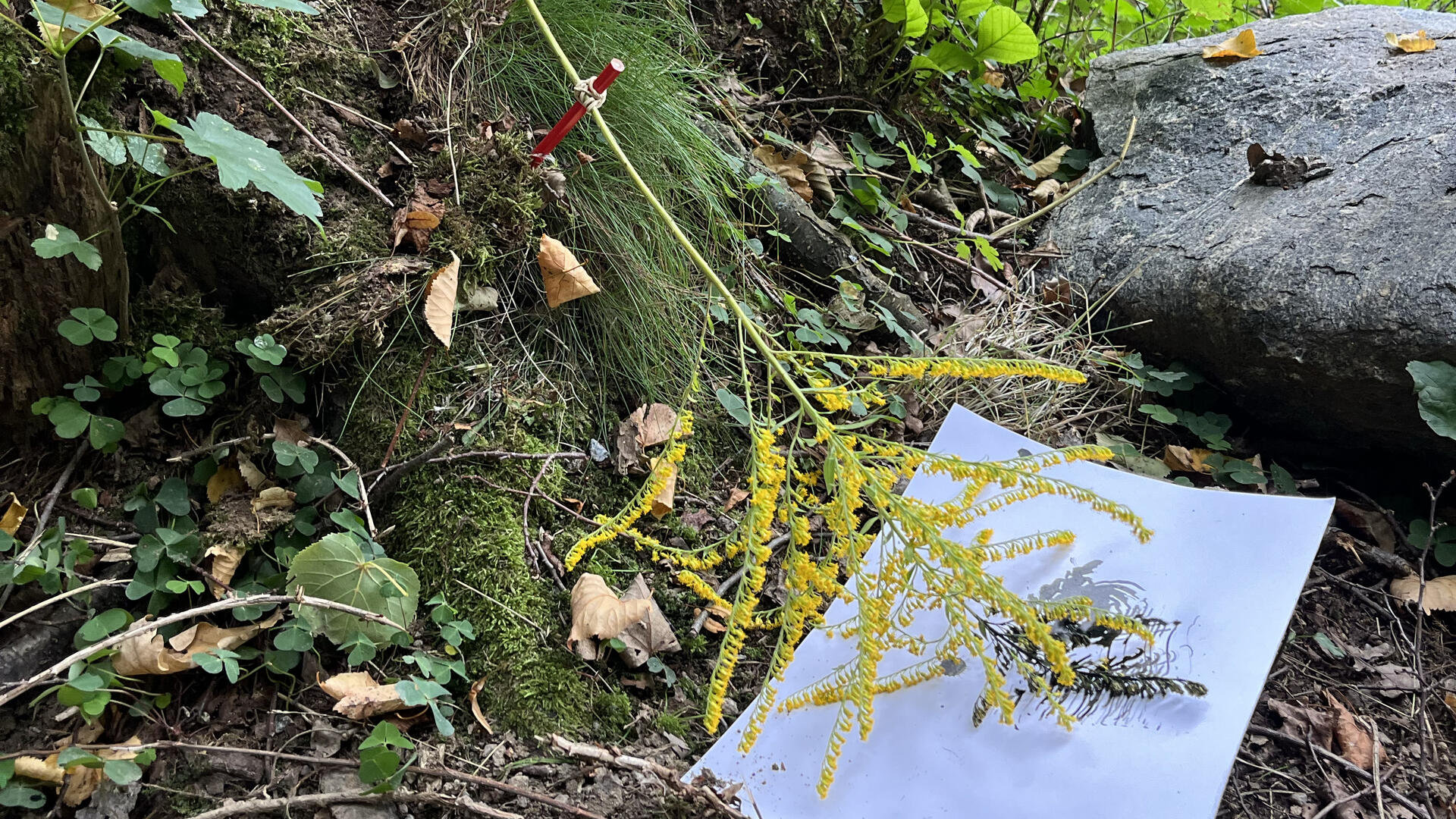
|
|
16th International Conference on Artistic Research, ‘16th International Conference on Artistic Research, University of Porto‘, Research Catalogue(2025) https://www.researchcatalogue.net/view/2759372/3582572/0/0 [accessed 12/02/2026] I was part of the 16th SAR Poster Session and presented "Unfolding Transversal Learnscapes for Environ/mental Emancipation" to conceptualize the following artistic research practices with children walking-with the forest. |
The presentation begins with a brief performative opening: the guiding question is placed within a small amount of soil at the center of the space, inviting participants to take a note and, if they wish, hold a fragment of earth. A short moment of silent walking introduces the inquiry as a spatial proposition before transitioning into a 20-minute lecture supported by photographic documentation from forest-based workshops with children. The session includes moderated reflection and discussion. | I will bring my own laptop and require a projector with HDMI connection. A circular seating arrangement and a small open space in the center are preferred. A table or surface to place material objects (soil, drawings) would be helpful. No additional technical setup is required. | The presentation includes a small performative gesture using soil. Participation is voluntary. The soil will be collected and reused; it will not be discarded. Workshop documentation involves children; no identifiable images, audio, or video recordings will be shown. Consent procedures were followed and participants’ privacy will be protected. | Yes | Theresa Schütz | |
| Star/flag Submit a contribution to the 2026 Forum on Artistic Research: Submission #57 | Anonymous | Cristiana | De Marchi | xianademarchi@gmail.com | “The Willful Creation of Error”. An Investigation into Language Accessibility and its Circulation | Project presentation | English | Introducing a selection of my long-term projects focusing on language–ranging from human rights repositories and legal texts, to newspapers and fictional correspondences– the exposition illustrates my research on language accessibility. The works presented here share a same strategy, that is a conscious, conceptual misunderstanding in their premises, in the very way they are offered to the viewer, to suggest and highlight the gap existing between the texts, as they are formulated, and their reception or enforcement. |
https://www.researchcatalogue.net/view/3706601/3706602 | https://www.researchcatalogue.net/view/3706601/3706602 |
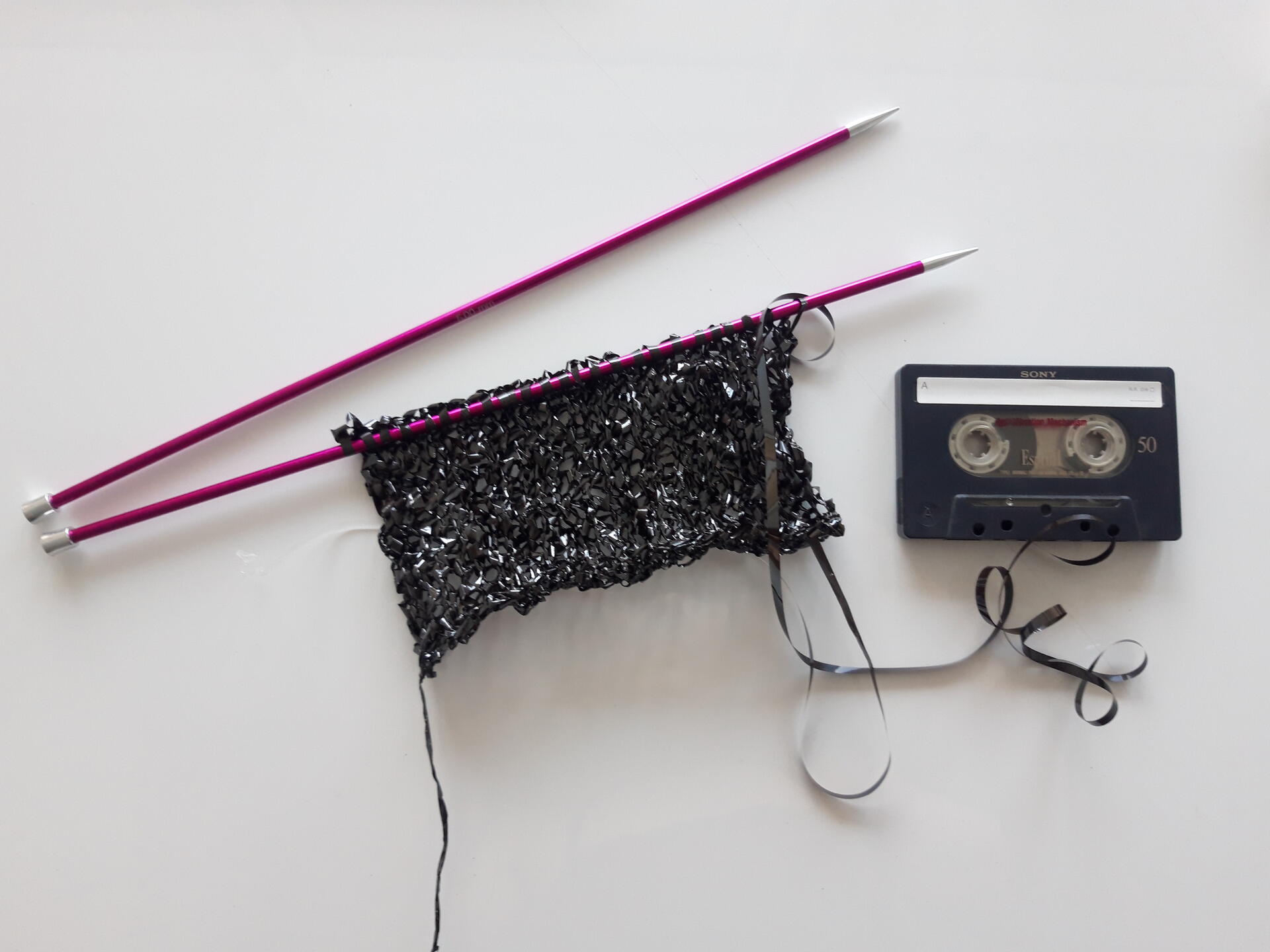
|
|
Convocation II, A Gathering of Language-based Artistic Research Zentrum Fokus Forschung, University of Applied Arts Vienna (3 – 6 October 2023) SAR International Forum on Artistic Research Fontys Academy of the Arts Tilburg (10-11 April 2024) |
projector / screen to accompany the presentation with visuals | Yes | ||||
| Star/flag Submit a contribution to the 2026 Forum on Artistic Research: Submission #43 | Anonymous | Eleni | Kolliopoulou | e.kolliopoulou@go.uop.gr | Polariza(c)tion | Experimental format | English | Polariza(c)tion is an experimental, performance-based laboratory that responds to contemporary geopolitical conflicts and the increasing polarization of social and territorial spaces. Triggered by ongoing wars and their devastating human, social, and economic consequences, the lab investigates how performative art can function as a safe yet critical platform for exploring alternative modes of coexistence, dialogue, and peace-making beyond force-driven solutions. The lab proposes a short performative experiment structured as a dynamic score to be activated by the participants. Participants are invited to collectively create temporary “living systems” through embodied interaction, attention, and relational decision-making. As with all living systems, this shared structure is fragile, unstable, and impossible to fully control. Within this framework, participants explore how power emerges, circulates, and shifts through proximity, negotiation, listening, resistance, and cooperation. The research asks: How can we embrace and creatively adapt to situations of conflict? Is it possible to positively charge shared space and actively avoid polarization? Rather than aiming for harmony or consensus, the lab foregrounds tension as an inevitable and potentially productive condition of collective life. Conflict is treated not as something to be resolved, but as material to be experienced, negotiated, and reflected upon. The performative experiment lasts approximately fifteen minutes and is followed by a brief collective feedback session. This reflection phase allows participants to articulate sensations, observations, and questions that emerged during the process, contributing to a shared evaluation of the lab’s provocations rather than fixed conclusions. By situating embodied participation at the core of artistic research, Polariza(c)tion frames the experimental lab as a micro-political space in which power structures can be made visible, temporarily |
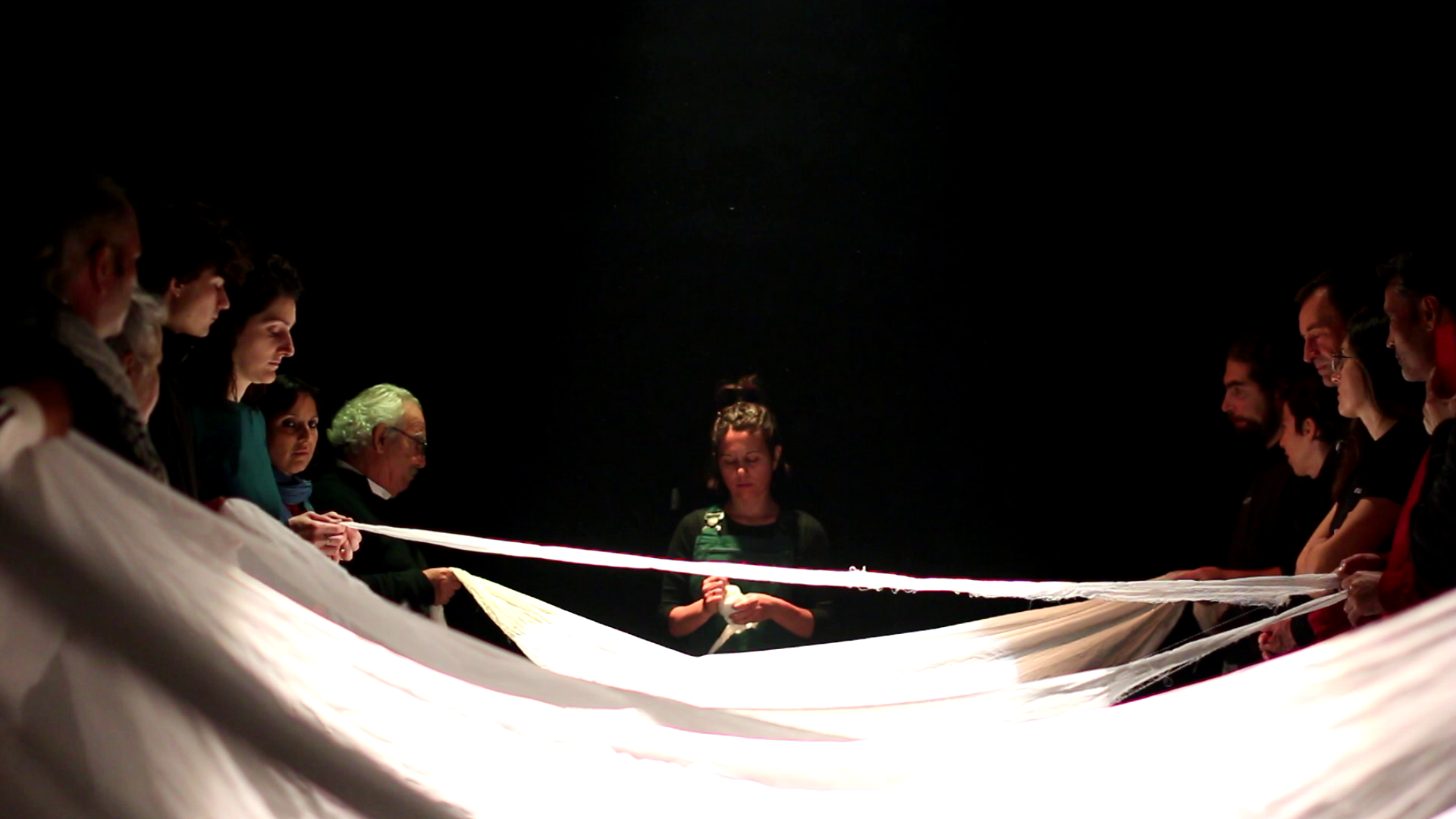
|
|
This research builds on my participatory performative artworks KYTTAΡΟ / THE CELL (2020–22), Luna Park: What Is Democracy? (2021–23), and Rock, Paper, Scissors (2024). These works explore self-governed living systems, anti-hierarchical structures, and conflict through guided improvisation, embodiment, and collective decision-making, informing the current experimental lab’s focus on polarization. http://www.elenivisualart.eu/category/immersion-synergic-systems/performative-systems/ | Workshop-based contribution, participatory artwork combined with open forum discussion. Total duration approximately 45 minutes. | Indoor activity with enough space to move freely. Participants should be at least 6 and maximum 20. | No potential risks. | Yes | Eleni Kolliopoulou | |||
| Star/flag Submit a contribution to the 2026 Forum on Artistic Research: Submission #37 | Anonymous | Antonio | Monte Casablanca | antonio.monte@una.cr | Monarca from North to South: An Audiovisual Memory of Exile | Other format | English | This presentation centers on the projection of the 55-minute documentary Monarca de Norte a Sur: An Audiovisual Memory of Exile, an artistic research project that reveals the fragile yet resilient conceptual worlds of Nicaraguan musicians in diaspora. Drawing on a collective of twelve composers based in San José, Costa Rica, the film captures how these artists reconstruct musical landscapes that an authoritarian regime sought to erase — sonic worlds that embody precarious knowledge, expression, and cultural continuity. In doing so, the documentary acts as an artistic intervention into the politics of memory and epistemic survival, documenting endangered conceptual worlds shaped by repression, displacement, and resistance. The narratives in Monarca de Norte a Sur reflect the concrete experiences of exile resulting from the authoritarian violence unleashed by the Ortega–Murillo regime since 2018, and intensifying against cultural producers post-2022. Produced by COPAL (Colectivo de Artistas y Productores Latinoamericanos), this documentary is itself a form of artistic research: it documents, preserves, and disseminates knowledge that otherwise risks disappearance, and it activates collective memory as a site of critical inquiry and creative response. The project aligns with SAR’s emphasis on artistic research that engages with precarious forms of knowledge — practices that are socially and politically entangled and that generate alternative ways of seeing, hearing, and knowing the world. As executive producer and historian of memory and authoritarianism, I propose screening the film with English subtitles to open dialogue between artistic practice and research at SAR. The presentation reflects on music as artistic research that preserves endangered conceptual worlds and minoritised knowledges, foregrounding memory-based justice and collective imagination in contexts of repression, exile, and global authoritarian resurgence. |
|
|
The documentary has been projected in international conferences on solidarity with Nicaraguan in Cologne and Nuremberg, Germany. It was also shown in the SOMOS festival of Human Rights sponsored by the NGO, People in Need. In this festival the documentary won the award for best short-documentary or film. |
I might be able to be together with the director of the documentary. Due to security reasons, I am not able to disclose her name. There is a chance that she might join me on a presentation in Berlin in June, so we might be able to fly together to Galway for this presentation. | The documentary needs a projector, a screen and good audio. | Security is at risk for all Nicaraguans that expose the dictatorship in international forums. I might have to cancel my particular participation in case my family in Nicaragua recieves threats or is subject to any form of surveilance. This has not happened yet, so I don't think it would be a problem. Also, it won't mean a problem to show the documentary. | No | ||||
| Star/flag Submit a contribution to the 2026 Forum on Artistic Research: Submission #33 | Thalia Hoffman | Thalia | Hoffman | thalia.hoffman@gmail.com | Absent/protective Presence | Performance | English | My proposal for the forum is informed from a performance I have been working on during the past months. The performance is a collaboration between Murad Hassan, Itamar Shapira and myself. It explores the possibilities of direct activism, especially in the West Bank, specifically in the severe times of violence we are part of. The performance Absent/protective Presence brings together the Palestinian actor Murad Hassan, who lives and works in Israel, with the experience of Protective Presence. Through an encounter with Itamar Shapira, a long-time activist and researcher of direct action in the South Hebron Hills, Murad performs simulations and dialogues drawn from testimonies of activists in the area. Protective Presence operates in the areas of the Jordan Valley and South Hebron Hills, struggling together with Palestinians for grazing and agricultural lands, against home demolitions, and for the possibility of living in the face of institutional and independent forces acting against them. Protective Presence is an activist practice, carried out mainly by Jewish and international activists, who stand alongside Palestinians in their struggle and amplify their visibility and actions. This proposal will study from the performative experience, in theoretical and practical methodologies, how mutual learning and ideological cross pollination can embody the unveiling and darkening of both visible and invisible privileges that exist in the local space here, between the sea and the river. |
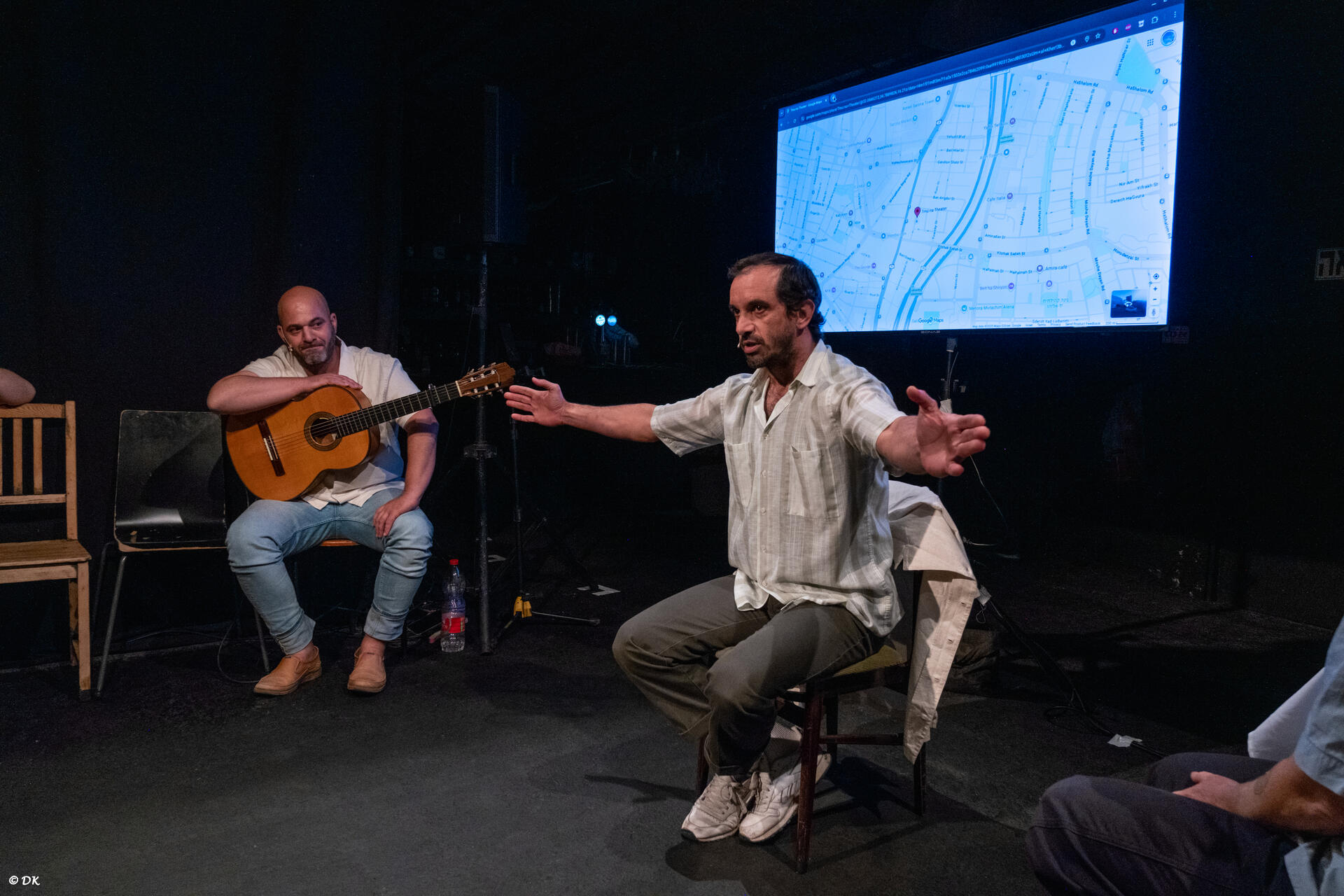
|
|
The performance took part at a performance festival at Tmuna Theater in Tel Aviv and was presented at a research group at the Haifa University. | It is possible to do the performance and in addition to hold a talk/presentation of our working process and research. | Tv or screen neck mics for 2 performers |
Yes | Thalia Hoffman | ||||
| Star/flag Submit a contribution to the 2026 Forum on Artistic Research: Submission #30 | Anonymous | Maria | Fusco | Mfusco001@dundee.ac.uk | History of the Present | Other format | English | The contribution is a screening of the experimental opera-film, History of the Present (45 minutes duration). The practice-led research output is made collaboratively by Maria Fusco and Margaret Salmon, featuring new compositions by Annea Lockwood, libretto by Maria Fusco and improvisational vocal work by soprano Héloïse Werner. This intersectional, intergenerational feminist work forefronts working-class women’s voices to ask: who has the right to speak, and in what way? Layering sociological, cultural, and political themes from the recent history of Northern Ireland, the work exercises voice, breath and field-recording composition through a range of film techniques and operatic articulations, to amplify marginalised stories. Made on 35mm and video in the streets of Belfast, the Ulster Museum and the Royal Opera House in London, History of the Present observes how defensive architecture defines movement to enforce intersectional histories and identities within daily experiences in conflict and post-conflict zones on an international level. Early stages of the work were developed during Fusco’s fellowship at the Royal Opera House, London and supported by the Abbey Theatre/ Amharclann na Mainistreach, Dublin. |
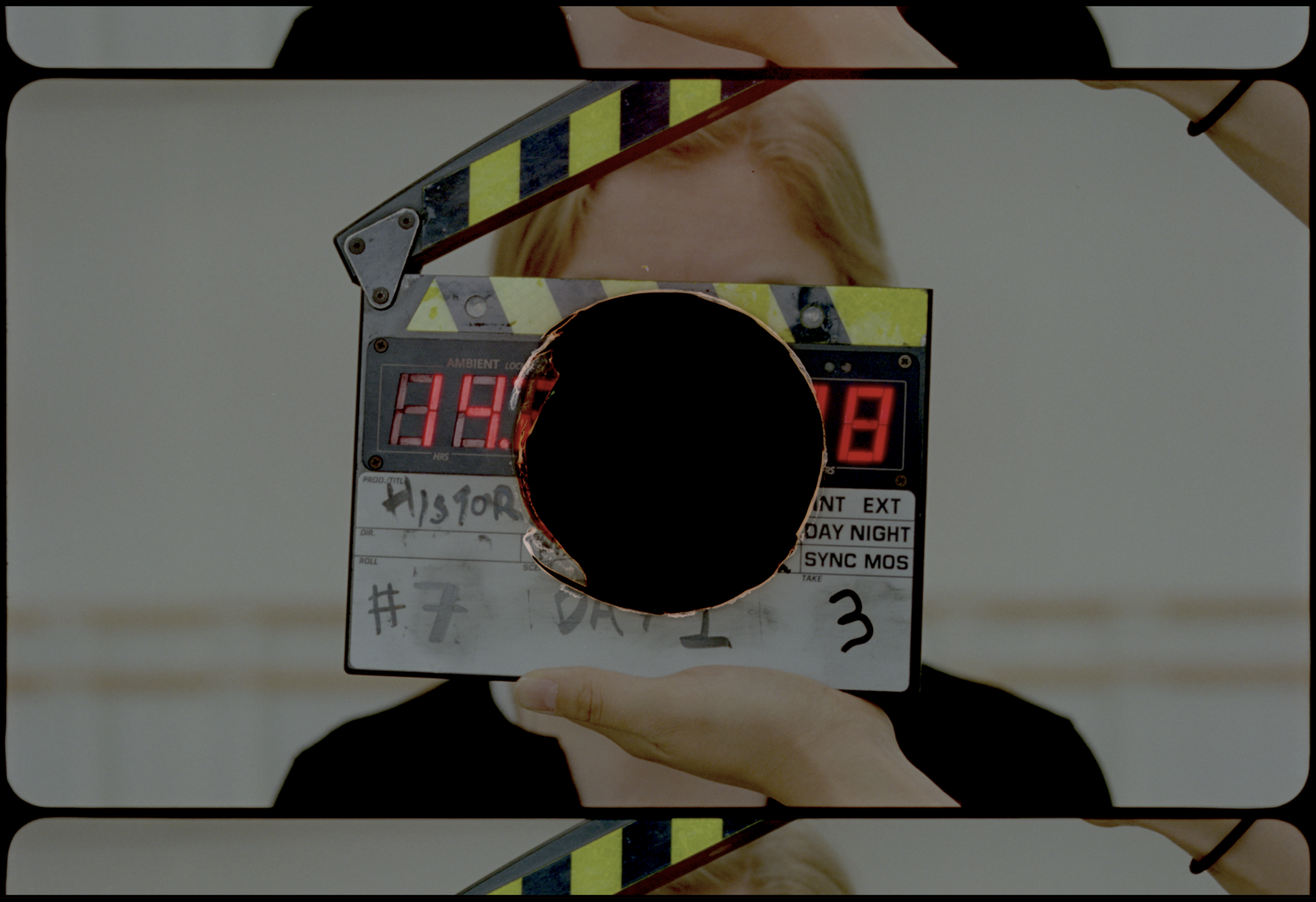
|
|
The work has so far received the following awards from: O. Festival for Opera. Music. Theatre (Rotterdam, NL) global opera work award; European Media Art Festival International Competition (Osnabruck, DE); Berwick Film & Media Arts Festival New Cinema Award (Berwick, UK) and has received a four-star review in The Observer newspaper, as well as press coverage in a range of international publications. | The proposed contribution is a digital film. | A screening space, with adequate sound. | N/A | No | ||||
| Star/flag Submit a contribution to the 2026 Forum on Artistic Research: Submission #25 | Gavin Keeney | Gavin | Keeney | editionofone@proton.me | Voice of Works | Roundtable contribution | English | The roundtable will summarize and report on the Works for Works (W4W) transdisciplinary research project (2019-2023) and the subsequent emergence of the Edition of One (EO1) project, an international (borderless) literary agency for collectively produced works of literary-artistic scholarship. In terms of the “voice of works,” issues associated with both projects will be utilized to suggest that the elective abolition of intellectual property rights (IPR) is the ultimate protest against both censorship and the commodification of works. This analytic, in particular, will draw upon Kierkegaard’s dance with the role of polemic and its antithesis – “silence” (scare quotes required) via the competent “dead and transfigured personality.” The summary of the W4W project notably includes: collectively produced works of literary-artistic scholarship; a PhD dissertation; and two open-access monographs, Works for Works, Book 1: Useless Beauty (2022) and Works for Works, Book 2: “No Rights” (2026). The focus on works-based agency and the voice of works is, as developed performatively, the justification for the “No Rights” idiom, an idiom subsequently transcribed to “No Rights” in the EO1 agenda to indicate that the renunciation of authorial privileges does not mean that those rights may be subsumed by others, but, instead, open onto higher rights long hidden in the 500-600-year history of intellectual property rights and copyright. The presentation will utilize radical diagrammatics and lexical/linguistic markers (mathemes) to chart a path out of the auspices of the debauched contemporary, post-capitalist commons for authors and works toward a renewal/renaissance of the concept of the common good. |
|
|
RECENT + FORTHCOMING PUBLICATIONS FORTHCOMING – “The Absolute,” w/ Amy Kellam, Amicus Curiae – The Journal of the Society of Advanced Legal Studies 7, No. 2 (March 2026) FORTHCOMING – Works for Works, Book 2: “No Rights” (Earth, Milky Way: Punctum Books, 2026) Works for Works, Book 1: Useless Beauty (Earth, Milky Way: Punctum Books, 2022) “Illuminated Mirrors and ‘No Rights,’” International Journal for the Semiotics of Law: Religion & Subjectivities 37, No. 4 (December 16, 2023) |
While proposing a way forward into the “wild blue yonder” of a No Rights idiom for works of literary-artistic scholarship, the presentation will draw on the long tail of the project’s backstory, inclusive of transmedia-base works from the multimedia archive of the OOI/MTA collective. | The multimedia aspects of the roundtable require a darkened room, plus projector and sound system. A seminar environment is also preferable to a lecture hall. | Not applicable. | Yes | Gavin Keeney | |||
| Star/flag Submit a contribution to the 2026 Forum on Artistic Research: Submission #23 | Tanatchaporn Kittikong | Tanatchaporn | Kittikong | tanaki@kku.ac.th | Curriculum as an Endangered Conceptual World: Epistemic Tensions and Artistic Wisdoms in Thai Higher Education | Roundtable contribution | English | Across Thailand’s Fine Arts, Music, and Performing Arts higher education, distinctive forms of artistic knowledge have long been sustained through embodied practice, oral transmission, and culturally situated pedagogies. In recent decades, however, national education reforms, including the Thai Qualifications Framework for Fine Arts (2015) and the adoption of Outcome-Based Education under TQF 2022 and AUN-QA, have reshaped how artistic learning is articulated, evaluated, and legitimised. These frameworks operate not only as administrative tools, but as epistemic systems that reconfigure what counts as knowledge within higher education. This roundtable invites collective reflection on curriculum as an endangered conceptual world, a site where artistic knowledge is required to become legible, assessable, and institutionally recognizable, and where epistemic tensions emerge most acutely. Drawing on a research project involving in-depth interviews, dialogic reflection, and long-term observation with Thai artist–educators across disciplines, the discussion foregrounds how educators navigate ongoing struggles over what can still be said, practiced, and transmitted as artistic knowledge. Rather than presenting a single argument, the roundtable opens a shared space to examine how embodied, process-based, and culturally embedded ways of knowing are negotiated within standardized outcome frameworks shaped by instrumental rationality and colonial epistemic legacies. Participants are invited to exchange experiences, strategies, and questions around curriculum design, assessment, and artistic transmission, attending to what may be at risk of being marginalised, displaced, or rendered unthinkable. By situating curriculum within broader struggles over epistemic authority, the roundtable reframes artistic research as a collective practice of attentiveness, one that seeks to sustain the plurality of artistic wisdoms within contemporary higher education. |

|
|
- | This project (N42A670199) is funded by National Research Council of Thailand (NRCT) and Khon Kaen University (KKU). | Computer, Internet access, and Projector. (Perhaps a shared writing board) | The roundtable discussion may be recorded with prior consent from all participants. No foreseeable risks or ethical concerns are anticipated. | Yes | Tanatchaporn Kittikong | |||
| Star/flag Submit a contribution to the 2026 Forum on Artistic Research: Submission #17 | Anonymous | Brice | Catherin | brice.catherin@ucc.ie | Decolonial love? How I, a middle-aged white man, learnt to listen with my hands | Project presentation | English | This presentation reflects on an intercultural collaboration with Zambian artist Afulodidim Nikefolosi that led to the exhibition “Decolonial Love” and the short film "Decolonial Love?". Working as her assistant, co-author and artisan, I found myself literally “listening with my hands”: translating her concepts into masks, installations and moving-image works while confronting my own position as a white, middle-aged European man. Through a series of practice-based vignettes (the Baobab portraits, the Masks series, and The Beads installation), I show how hand-based making can become a mode of decolonial listening. Rather than seeking transparency or explanation, this work engages Glissant’s “right to opacity”, Indigenous practices of refusal, and the discomfort of postcolonial encounter. The pieces require viewers to bend, peer, and negotiate fragile spaces; similarly, the process required me to negotiate miscommunication, white entitlement, and questions of authorship and value. Analysing these processes, I propose “listening with the hands” as an artistic research method that: - makes visible and sensible the usually unspoken dynamics of race, migration, and coloniality; - explores the ineffable through embodied, affective registers that exceed verbal discourse; - troubles the figure of the authoritative lone author by foregrounding asymmetrical, yet generative, collaboration. Situated at the intersection of “making seeable and sayable”, “ineffable and endangered practices”, and “experimental methodologies”, the talk contributes a grounded, practice-led account of how artistic research can enact decolonial love as shared, risky making rather than abstract ideal—inviting others to consider how their own hands might learn to listen. |
https://www.researchcatalogue.net/view/4137236/4137237 | https://www.researchcatalogue.net/view/4137236/4137237 |
|
|
No previous presentation, although I am presently working on an article on this topic. | n.a. | n.a. | No ethical concern. The research is auto-ethnographic in nature. | Yes | Brice Catherin | |
| Star/flag Submit a contribution to the 2026 Forum on Artistic Research: Submission #16 | Anonymous | Paulina | Larocca | paulina@paulinalarocca.com | To Touch What Refuses Resolution: Metabolising Research Politics as Endangered Conceptual Worlds | Workshop | English | Metabolising-Through-Making (MTM) is a transdisciplinary, embodied practice that works inside the unfinished politics of research. It treats ethics forms, authorship hierarchies, budget lines and evaluation metrics as endangered conceptual worlds: fragile, forceful languages that organise what can be seen, said and felt. Rather than resolving these tensions discursively, MTM stages them materially, through touch, rhythm and residue. This 60-minute participatory workshop follows the life rhythm of cicadas as epistemic companions – beings who spend years metabolising underground before emerging together in a brief, disruptive chorus. Their cycle echoes MTM’s recursive phases of Orient, Enact, Witness, Action. Participants work through three movements: 1. Pressing: bodies, pages and institutional texts meet through slow, weighted contact. Research politics is approached haptically – as pressure, density, resistance – instead of as abstract policy. 2. Weaving / Tearing: photocopied fragments of ethics clauses, funding terms, authorship rules, assessment criteria and personal notes are layered, woven and torn. Visual and spatial arrangements make visible how these conceptual worlds entangle and pull apart. 3. Chorus: small soundings with voice, paper and simple objects gather what has been stirred without forcing verbal “sharing”. The work ends in residues – arrangements of paper, marks and objects – that remain in the space as witnesses. The workshop speaks directly to SAR’s focus on endangered conceptual worlds and minoritised modes of knowing. It explores how dance, gesture and material engagement carry subjugated knowledges that resist summarisation; how institutional languages inscribe themselves in bodies; and how artistic research can cultivate forms of sensing and response that stay with unresolved tensions. Documentation of residues and a short reflective score will be developed as a Research Catalogue exposition linked to this contribution. |
|
|
Materials (Minimal + Portable) • Undyed cloth squares (recycled, approx. A4 size) • Charcoal, tea/coffee for staining • Pre-printed epistemic fragments • Soft yarn, thread, paper • Scissors, pegs, string line Small speaker for cicada audio • Can be run with one facilitator, if needed, or, ideally, 3 in total Space & Technical Requirements • Room size: Minimum 4×4m • Flexible seating or open floor • One wall or hanging line • Tolerance for gentle sound • No AV, no projection |
Yes | |||||||
| Star/flag Submit a contribution to the 2026 Forum on Artistic Research: Submission #12 | Anonymous | Miriam | Aziz | ma4mastudiolab@gmail.com | Lost for Words | Workshop | English | Law is not only made up of codes, statutes rule and norms, it is also constituted, particu- larly in common law systems, by cases or ‘stories’ which are interpreted by judges. The focus of my enquiry is not law and literature but the creative process of law as literature that is written and read through the body. This gives rise to a plethora of questions, such as what is a case? What is a legal narrative? What is a ‘speech act’? What are the rules that shape and constrain legal discourse, how are they devised, and by whom? Who is the author? Who is the audience? To what extent is our imagination overly constrained by words when we think of law? These questions have been raised in a plethora of discur- sive and epistemological spheres of discourse in the context of law and humanities and beyond. It is not my intention to address or restate these questions from a purely theoret- ical standpoint which draws exclusively from legal literature; rather, I will seek to address these questions through a singular and collaborative creative process that fuses body and mind. In short, I want to explore an alternative approach which is more ‘doing by learning’ than the other way round by collaborating with participants to the workshop. |
|
|
Lost of Words premiered as a performance installation at the Di Menna Center / Baryshnikov Arts Center in November 2012 and was favourably reviewed by the Frankfurter Allgemeine Zeitung in 2014. Publications: - ‘Law and Art: a postcard from Europe’ (2015) 27 Yale Journal of Law & the Humanities 343. - ‘Lost for Words: Embodying Law through Tanztheater’ (2013) Law and Humanities 91. Soundtrack of Lost for Words: CD Format (Rock Pixie Records) (2013) limited edition. |
Each participant will be invited to participate in any way they feel comfortable (text / movement / dance) after a short yoga based warm up. Any physical limitations and issues must be communicated with Dr Aziz beforehand. | Heated Space (preferably a dance studio within which to move freely and safely. Soundsystem |
No | |||||
| Star/flag Submit a contribution to the 2026 Forum on Artistic Research: Submission #9 | Emmi Kujanpää | Emmi | Kujanpää | emmi.kujanpaa@helsinki.fi | Applying Intersectional Feminist Pedagogy in a Transnational Folk Singing Collaboration in Finland and Bulgaria 2018–2022 | Project presentation | English | My presentation explores the implementation of intersectional feminist pedagogy to artistic practice in collaboration between Finnish and Bulgarian female folk singers in 2018–2022. The research material of the presentation consists of a music video trilogy (2019–2022) based on my solo album Nani (2020) and ethnographic interviews. Both the artistic and the ethnographic research data were produced in collaboration with singers from the Bulgarian Le Mystère des Voix Bulgares choir. In this study, intersectional feminist pedagogy was applied to transnational folk singing collaboration by paying particular attention to power relations arising from economic inequalities. The research also analyses the roles and opportunities of women folk musicians both within the European folk music field and more broadly in society. The study suggests that considering intersectional feminist perspectives can both support transnational artistic collaboration and strengthen musicians’ agency. Accordingly, the research emphasises the importance of considering gender perspectives more widely in EU cultural policy-making. This presentation highlights especially the artistic practices related to the Finnish, Karelian and Bulgarian languages throughout the project, as well as the ethical issues surrounding the endangered Karelian language. KEYWORDS: feminist folk music composition, Finno-Karelian folk singing, Bulgarian folk singing, transnationalism, intersectional feminist pedagogy |
https://www.researchcatalogue.net/view/2038366/2038367 | https://www.researchcatalogue.net/view/2038366/2038367 |
|
|
28.2.2026 Sibelius-Academy, 7th Folk Music Researchers’ Symposium. In my presentation at the International Forum on Artistic Research in June 2026, I will highlight the artistic practices related to the languages used in the project, as well as the ethical issues surrounding them. The Sibelius Academy's presentation in February 2026 focuses on the cultural sustainability of European societies in the context of the project's artistic practice. |
Powerpoint presentation, which includes music video material. | There are no ethical risks associated with the presentation. | Yes | Emmi Kujanpää | ||
| Star/flag Submit a contribution to the 2026 Forum on Artistic Research: Submission #2 | Anonymous | Cameron J | Laing | info@cameronjlaing.com | Natural Forms and Transference | Performance | English | The work focuses on environmental audio as a source of sustainable audio and simulacra; the representation of the real in the digital age of AI and algorithmic intervention. Its process involves using field recordings (or live mic input) fed into an instrument system centred around the Norns Shield, MIDIgrid and sample playground script to create a generative real-time, improvisational performance. Through live manipulation, the familiar environmental textures are intuitively glitched, stretched, and re-animated, evolving organically from the authentic 'real' into a new, hyperreal composition of rhythm and melody. This transformative approach explores the space between the natural world and its digital representation which has its roots connected to the concept of Simulacra by the French theorist and author Jean Baudrillard. As an artistic practice it is an ongoing investigation into the space between the authentic 'real' of the natural world and its technologically mediated representations, building auditory bridges that allow us to perceive the hidden rhythms and silent communications of the more-than-human world. Within the performance space it invites the audience to join the composer on a deep listening exploration. The constant evolving sound and harmonically rich textures requires adaptability as the glitched, digital artefact becomes a new, hyper-real experience that questions our very perception of nature and our symbiosis as humans, with the notion that only distortion utilised in the right way can lead to harmony. |
|
|
28th January - Bath Spa University (Immersive Audio Network Festival) Talk + playback | The core aspect of the work is related to the significamce of the material drawn from area. A minimum of days prior to the performance is required to allow for research, data collection, and rehearsal. Private link of full methodology which features a link to representative examples: https://files.cargocollective.com/705961/Natural-Forms-and-Transference-Bio-Methodology-and-Portfolio.pdf |
https://files.cargocollective.com/705961/Natural-Forms-and-Transference-Technical-Rider.pdf | Yes | |||||
| Unstar/Unflag Submit a contribution to the 2026 Forum on Artistic Research: Submission #396 | Anonymous | Glenn | Loughran | glenn.loughran@tudublin.ie | Artistic Research and Spatial Pedagogies in an era of Large Language models | Project presentation | English | This presentation expands on artistic research processes motivated by archipelagic thinking, and structured by three core concepts: Mapping, Sensing and Hacking. Together, these concepts provide an entangled approach to artistic research, where the cognitive mapping of traditional, textual histories and memories are balanced by the spatial, sensorial character of localities and communities, with the ambition to innovate and hack technical systems of recording to provide novel, artistic modes of representation and exchange. Reflecting this dynamic, the presentation will show how an artistic research process What is an Island? (2018-2020) led to a novel pedagogical programme MA Art and Environment (2020-2026) that aimed to cultivate the exploration of spatial intelligence, embodied knowledge and world-making methodologies in an era of artificial intelligence and large language models. As Stanford AI Researcher Fei-Fei Li’ has recently argued, spatial intelligence is “foundational to our imagination and creativity” and instrumental “for interactive experiences in real or virtual worlds” (2025). Beyond the limits of large language models, archipelagic spatial intelligence and relational pedagogies are uniquely organic characteristics that valorise experience over representation (Ayolov, 2026). Developed in partnership with the Sherkin Island Development Society (SIDS) and the West Cork Arts Centre (Uillinn) the BA in Visual Art and MA Art and Environment are the only formal art degree programmes delivered entirely on off-shore islands in Europe. To think artistic research through the lens of archipelagic thinking is to consider how the complex assemblage of artistic research disciplines and spatial-relational pedagogies can support the uniquely opaque character of artistic research at a time of increasing pressure for instrumentalization, digitalisation and quantification. |
https://www.researchcatalogue.net/editor?research=4271146&weave=4271147 | https://www.researchcatalogue.net/editor?research=4271146&weave=4271147 |
|
|
https://elia-artschools.org/page/UnislandingArtisticResearchADecolonialDialoguedigitalpamphlet | No extra info needed | Conference Room Projector Audio |
There are no inherent risks in the presentation |
No | ||
| Unstar/Unflag Submit a contribution to the 2026 Forum on Artistic Research: Submission #395 | Anonymous | Avishek | Ganguly | aganguly@risd.edu | Translation and Endangered Languages: A Transdiciplinary Conversation | Roundtable contribution | English | Endangered conceptual worlds, as invoked by this year’s Forum, are often imagined and represented in minoritized languages. Our round table approaches these issues through a discussion of translation and hopes to explore its significance for artistic research. However, we propose a rethinking of translation beyond its conventional understanding as a mode of interlingual transfer; instead, we argue for an expansive notion of translation as method and medium for creative as well as research practice. Translation, even in this formulation, always remains an imperative even if it is never enough; however, it is no longer merely literary but also performative, transpiring in sound and voice, gesture and movement, script and code; in sum, we propose a new understanding of translation as a practice that takes place across media and platforms. Here, then, are some of the questions we seek to address in our round-table: what happens to languages through or after translation? If a “small language” only survives through translation, how does this affect the language even for native speakers? How does computation reshape the relationship between translation and creativity? How do we move towards an understanding of translation as a generative infrastructural process rather than as a secondary act of representation? What indeed does an intermedial practice of translation look like? |
|
|
N/A | None. | Yes | ||||||
| Unstar/Unflag Submit a contribution to the 2026 Forum on Artistic Research: Submission #394 | Anonymous | Sarah | Kordecki | s.kordecki@filmuniversitaet.de | Non-hegemonic concepts and knowledges: Aristic Research in Germany | Poster presentation | English | How can artistic research develop its full potential in order to contribute to the currently necessary social transformation processes? Why is Germany lagging behind the developments in its neighbouring countries, maintaining artistic research in a peripheral position? What are the current developments and focal points regarding artistic research in Germany, at a moment when budget cuts and societal divisions are putting art and its instutions under pressure, while at the same time making its contributions even more compelling? The research project “ILLUME – potentials of complementary research practices in the higher education system: contributions and structures of artistic research and its integration at universities of art and music” focuses on artistic research as a complementary epistemic approach to the world, asking how it might develop its full potential to contribute to crucial social transformation processes and what framework conditions and structural changes are required for its successful integration at German art and music colleges. The process of mapping the status quo during the first year of the project revealed an impressive diversity of and strong commitment to artistic research at German art and music colleges, defying the systematic obstacles as for example the lack of funding structures. During the poster presentation, we would love to present our interim results, showcasing the heterogeneity of topics and approaches as well as the creativity of dealing with the still peripheral position of artistic research in Germany. We will include the presentation of exemplary projects with a focus on the conference's themes. |
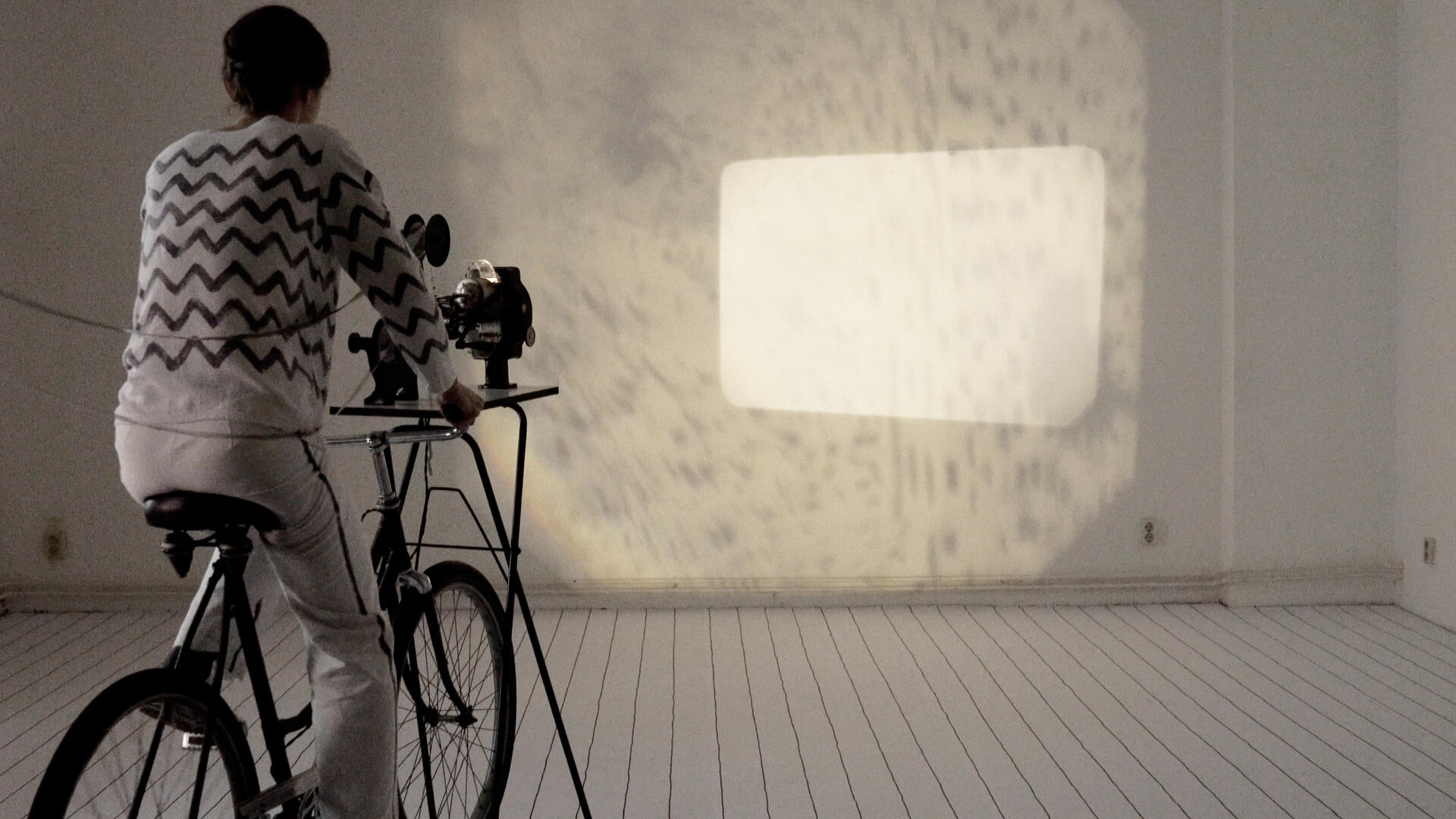
|
|
ILLUME's interim results have not been presented anywhere. ILLUME is a three-year project which started in January 2025 - so the moment of the SAR conference, we will be exactly halfway. We would therefore be happy to have the opportunity to present the findings we have made until this point and discuss them with the international audience of artistic researchers at the SAR conference. | No | |||||||
| Unstar/Unflag Submit a contribution to the 2026 Forum on Artistic Research: Submission #391 | Anonymous | Thomas | Grill | grill@mdw.ac.at | Conversing for Coexistence | Project presentation | English | "Conversing for Coexistence" is an electro-acoustic installation developed within the artistic research project "Spirits in Complexity – Making kin with Experimental Music Systems" (2024–). The work investigates sound as a medium for practising coexistence in adaptive, distributed systems. Inspired by Donna Haraway’s notion of "making kin," kinship is conceived here as a non-hierarchical, multispecies practice enacted through mutual responsiveness and shared inhabitation rather than fusion or domination. The installation consists of a distributed network of speaker-agents equipped with reinforcement learning capacities. Each agent listens locally and adapts its sonic behaviour in relation to other agents, architectural resonances, audience presence, and ambient noise. Instead of optimizing toward a fixed compositional goal, agents seek viable niches within a shared acoustic ecology. Drawing on the acoustic niche hypothesis, niche-finding becomes both technical procedure and aesthetic principle: when the sonic field saturates, agents must retreat, transform, or radically alter their behaviour to persist. The work recalls artistic approaches such as David Tudor’s Rainforest series, yet extends them through adaptive machine listening and synthesis. The installation space functions as habitat and co-agent; each iteration is site-specific and irreproducible, shaped by contingent interactions and feedback loops. "Conversing for Coexistence" stages an ecology of audible relations in real time. It invites listeners to attune to patterns of emergence, friction, and alliance, reframing attention as a mode of cohabitation. Making kin becomes both artistic strategy and ethical orientation: a speculative sonic sociality in which distinct entities maintain difference while sustaining shared worlds through continuous negotiation. |
https://www.researchcatalogue.net/view/4204449/4204450 | https://www.researchcatalogue.net/view/4204449/4204450 |
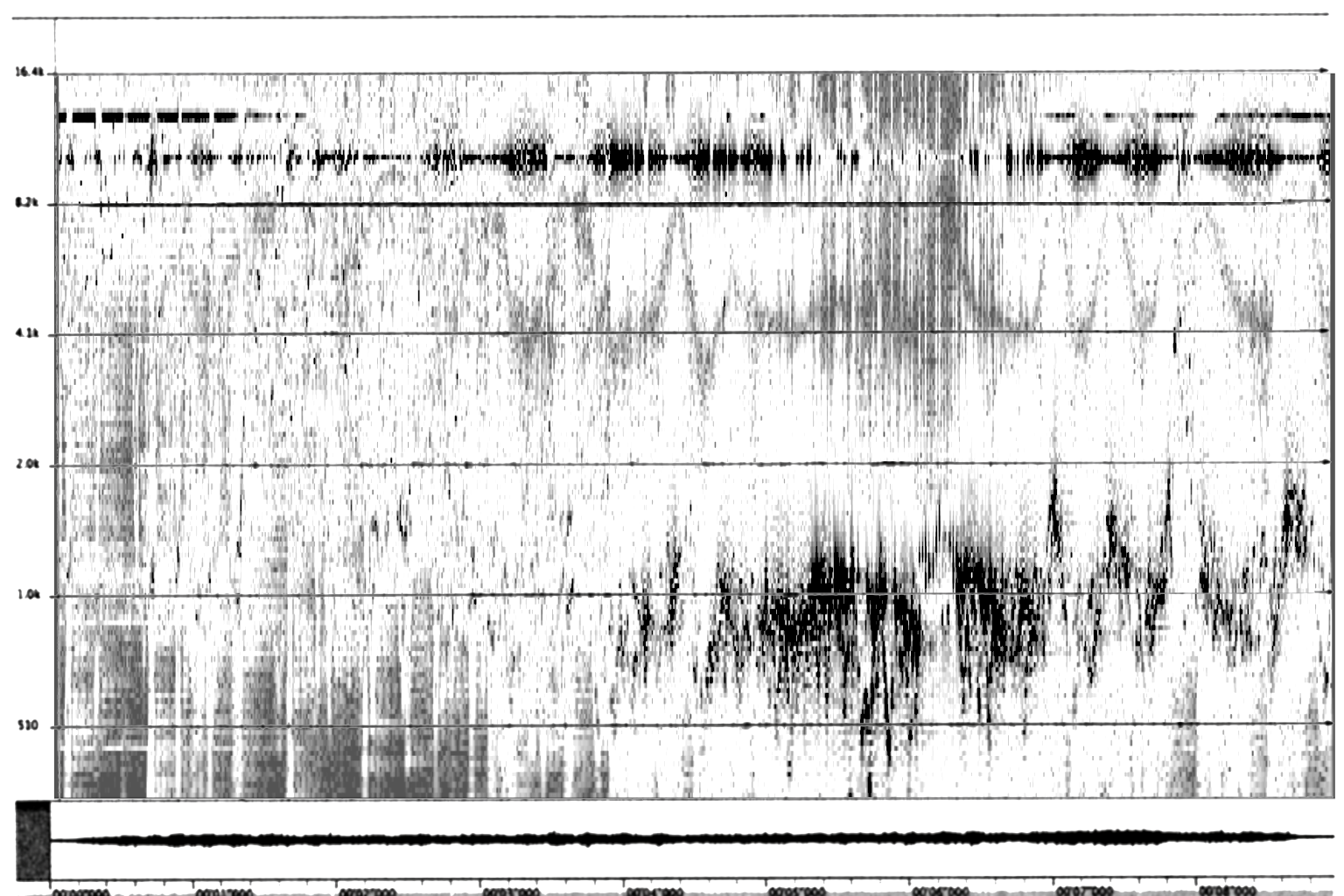
|
|
Our contribution is envisioned as presenting both theoretical and practical aspects. The described installation will run and evolve during the presentation slot, adapting among itself and the environment. |
We will bring a laptop with HDMI video output and minijack or USB-A audio output. We will bring a number of sounding agents (objects ca 10x10x10cm) which we like to distribute in the room. It would be helpful to have a couple of (min. 4) mic stands. If these are not available, we can use other horizontal parts of the space. |
none | Yes | Thomas Grill | ||
| Unstar/Unflag Submit a contribution to the 2026 Forum on Artistic Research: Submission #390 | Anonymous | Camila | Mangueira | camilasoares@fba.up.pt | Rethinking technical objects: Hands-on creative practices with historical media | Project presentation | English | Technological changes have intensified cycles of consumption and obsolescence, while dominant narratives of digital innovation continue to obscure the material, ecological, and historical continuities of media technologies. In higher education institutions, this results in the accumulation of obsolete or partially functional technical objects, raising questions about sustainability, heritage, and the role of technical media in knowledge production. Grounded in media archaeology, critical design, and practice-based artistic research, this project presentation introduces the ongoing project Philosophical Media (PhilMe), developed at the Faculty of Fine Arts of the University of Porto. PhilMe explores how historical, obsolete, and broken technical objects can be reactivated as epistemic devices within higher educational contexts. The project has identified and catalogued over 300 objects, and established a pilot collection structured through a non-hierarchical typology that articulates museological, operational, and circular modes of engagement. This framework enables research, preservation, teaching, and hands-on creative experimentation, by putting the objects in the hands of the artistic and general community. The presentation will discuss selected practices and methods emerging from this framework, including research through repair and reuse, reflection on pedagogical media collections, and teaching methodologies that promote speculative engagement with the collection. Rather than illustrating predefined categories, these practices test their limits, foregrounding materiality, maintenance, and obsolescence as productive conditions for research and learning. By articulating theory, pedagogy, and curatorial practice, the project argues that reactivation and material sensitivity can support more situated, critical, and ecologically responsible engagements with technological systems, contributing to debates on electronic art, media heritage, and sustainable futures. | https://www.researchcatalogue.net/shared/ed7ef3eec0f3745c906b6fe03f19bfc9 | https://www.researchcatalogue.net/shared/ed7ef3eec0f3745c906b6fe03f19bfc9 |
|
|
“Critical design practices for rethinking media ecologies”. SAR Forum, 2024. SIG 8: Facilitating as Creative Practice. “Unfolding Technical Objects”, Faculty of Fine Arts of the University of Porto, 2024. https://www.up.pt/philme/uto/ “Philosophical Media”. International Creation Processes Conference, Algarve University, 2025. |
Nothing specific needed, it will be a traditional mode of presentation. | Projector and speakers. | N/A | No | ||
| Unstar/Unflag Submit a contribution to the 2026 Forum on Artistic Research: Submission #389 | Anonymous | Benjamin | Helmer | benjamin.helmer@hfmt-hamburg.de | ARTILACS - Artistic Intelligence in Latent Creative Space | Poster presentation | English | The poster will focus on aspects of the research project ARTILACS (Artistic Intelligence in Latent Creative Spaces). Founded in 2025 it explores the tension between machine logic and artistic thinking. Instead of euphorically celebrating or reflexively rejecting Artificial Intelligence (AI), the project aims to question its possibilities and risks for artistic research through the principle of affirmative critique. A central approach within ARTILACS to generate these critical-affirmative shifts is the concept of «digital idiocy». While algorithmic systems like Large Language Models (LLMs) are primarily geared towards instrumental problem-solving through probability calculation, «digital idiocy» deliberately introduces a «slow-down effect» into aesthetic epistemology. Following Isabelle Stengers, the figure of the idiot forces us to pause and resist intrusive crisis rhetoric before a machine or social consensus is reached. As a conceptual persona, the idiot evades the pressure to conform; they reframe problems instead of merely optimizing given solutions. This approach forms a creative zero point, from whose indecisiveness artistic thinking can emerge beyond algorithmic market forces. The latent vector spaces of AI models serve as a methodological metaphor for the entire research group: artistic research similarly navigates the realm of the unspoken and the not-yet-known. Artistic intelligence develops here as a hybrid interplay of human and technology. It stretches out a provisional foil to rethink the political-aesthetic potential of the present. Supported by four Hamburg universities — the University of Music and Drama, the Hamburg University of Applied Sciences, the University of Fine Arts, and the HafenCity University — , ARTILACS functions as an interdisciplinary laboratory. The poster illustrates how linking artistic research with theoretical approaches like «digital idiocy» generates new, situational knowledge at the intersection of art and AI. |
|
|
To make the concepts of ARTILACS and the tension between machine efficiency and «digital idiocy» physically tangible, we will expand the traditional poster presentation with interactive elements at the provided table. Media Interaction: Using devices like headphones or a laptop/tablet, visitors can experience our aesthetic processes firsthand. This may include curated audio/multimedia experiments (HfMT/HAW) or a customized, interactive AI interface that performatively demonstrates the «slow-down effect» by inviting deliberate digital irritation. Participation: An open format—such as an analog notebook for «epistemological muttering»—will invite the audience to record their own everyday experiences with algorithmic errors or digital fatigue, allowing us to collectively gather methodological non-knowledge. |
- Space for poster display stand - Table to place two laptops, two speakers - two chairs - power supply |
No | ||||||
| Unstar/Unflag Submit a contribution to the 2026 Forum on Artistic Research: Submission #388 | Anonymous | Tanya | De Poar | tanyadepaor1@gmail.com | Touch Me, See Me, Hear Me: Power and Language | Experimental format | English | Emerging research highlights the vital role of contemporary art in challenging normative social and political models. As an agile and transgressive mode of inquiry, artistic research can move beyond dominant frameworks to engage communities in rethinking complex systemic issues, including the ecological crises of the Anthropocene. Prevailing Anthropocenic power systems reinforce linear narratives of dominance, extraction, and control. In times marked by uncertainty and fear, there is an urgent need to attune to imaginative and sensory ways of sensing, seeing, touching, and connecting with the fragility of the world—capacities often sustained through Indigenous languages and relational ways of being. Touch Me, See Me, Hear Me: Power and Language is a bilingual (Irish and English), interdisciplinary poetic artistic research project that explores the potential of practice-based inquiry to unsettle established epistemologies. Through socially engaged and aesthetic methodologies, the project stages a dialogue between material artefacts, moving image, landscape, and the intertwined languages of human and more-than-human worlds. It asks how artistic research can render perceptible the agencies embedded in matter and how minoritised language practices might reframe dominant understandings of power and communication. The concept of “thing-power,” is central to the project. It challenges Euro-Western traditions that frame matter as inert and devoid of meaning. Drawing on animist and Indigenous philosophical perspectives, the research approaches materiality as relational and storied—capable of affect, communication, and enchantment. Through immersive, interdisciplinary installations, the work nurtures curiosity, ecological awareness, and meaningful encounters with the natural world. By strengthening emotional, sensory, and cognitive connections between various entities, the project seeks to contribute to the protection of endangered conceptual and ecological worlds. |
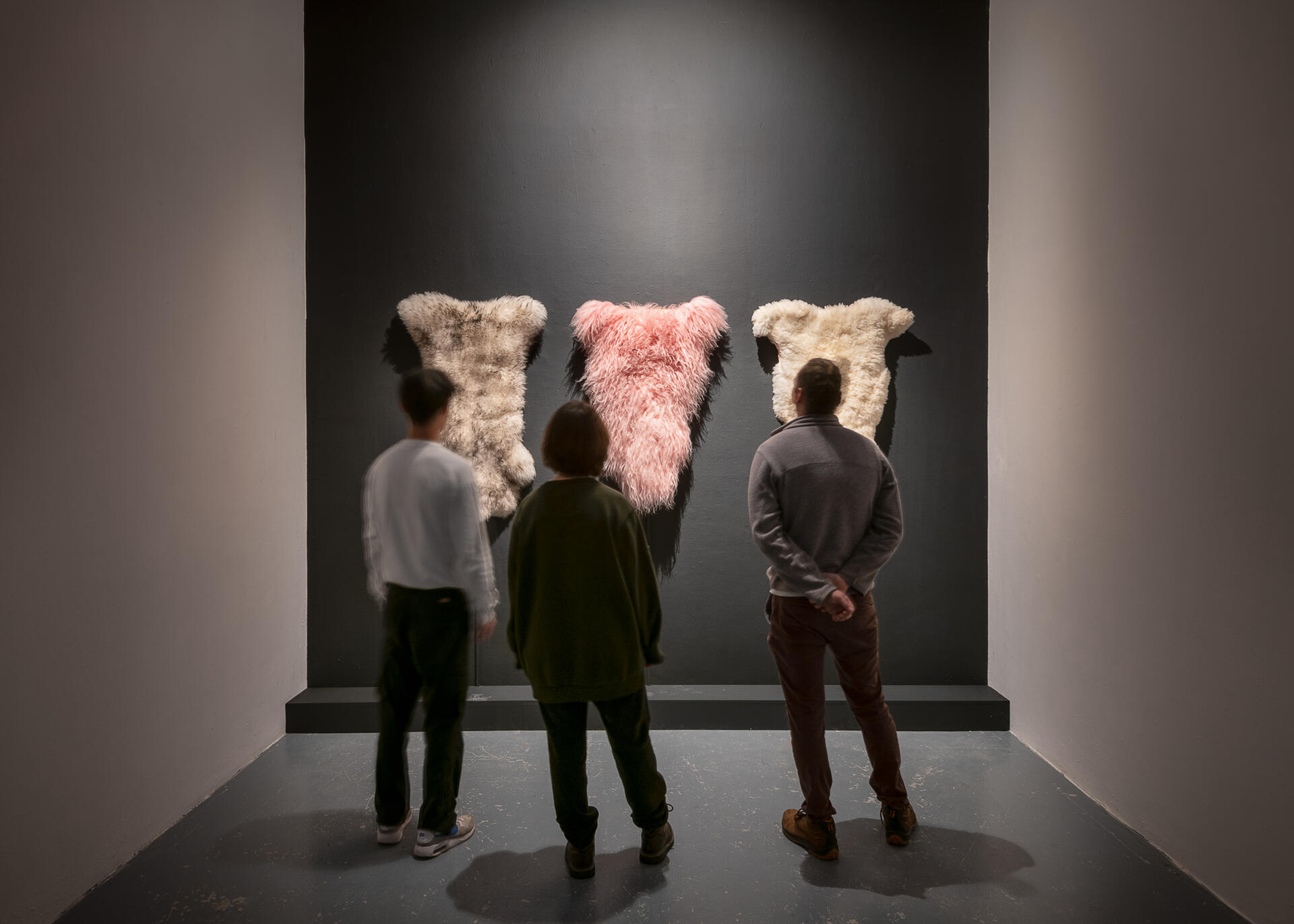
|
|
Presented Is Sinné an Tread, A moving image artwork during, EARTH RISING, Irish Museum of Modern Art, 2025. A festival of art, ecology, and ideas, inspired by Donna Haraways text, Staying with the Trouble. https://imma.ie/whats-on/earth-rising/ I presented an online seminars (2025) titled, Eco-Art and Fables for the Future. The seminars and scientific activities are part of the G.I.S EIRE Research Initiative which invites Irish writers and artists addressing land use issues to participate. |
Moving Image presentation. As part of the screening there will be a number of benches covered in sheepskin Rugs for the audience and participants to view and listen to the work. | A lecture theatre or gallery space would suit to screen the work. A large screen with projector and speakers will be required and two large speakers if possible. The moving image (5.45 mins will be played on loop for the required time). Benches and sheepskins will be provided by the artist/ presenter. Technical assistance to install the work. There will be an intriduction before the screening and Q & A after. |
N/A | No | ||||
| Unstar/Unflag Submit a contribution to the 2026 Forum on Artistic Research: Submission #387 | Anonymous | Mari | Sanden | mari.sanden@ntnu.no | The Compass for Advanced Practices | Experimental format | English | A significant number of artists and creative practitioners are currently engaged in processes of decolonising the cultural canons, moving across polylocal knowledge domains and beyond the limits of language. The ability to challenge established knowledge hierarchies whilst collaborating with individuals from diverse backgrounds, expertise, ages and locations requires specialised capacities to navigate the intricate landscape of institutional and cultural values, assumptions and expectations. It can prove challenging for artists and creative practitioners to navigate across fluid and shifting knowledge cultures and frameworks. The PACESETTERS research project has developed a Compass for Advanced Practices, with the aim of providing practitioners with the necessary tools to navigate the challenges of advanced practices in culture and creativity. By establishing and aligning key concepts as its coordinates, the Compass functions as a tool that references the terminology of contemporary transformation processes, reflects their potential significance, and provides conceptual orientation. We propose organising a performative session that uses the compass as a spatial guide and a conceptual tool. Through a performative and documentary approach, we aim to experiment with a format that may allow for a different kind of contribution from participants, both individually and collectively. The aim is to generate insights and further considerations on the relationships between these concepts, and to facilitate shared reflections on the key hypotheses about impact, value, quality, technique, affect and artistic intelligence. In addition, PACESETTERS aim to strengthen the development of alternative and independent digital infrastructures and the session can be a platform for sharing these strategies among peers. The session will be organised by researchers within the PACESETTERS project. For more information please check: https://pacesetters.eu/ccs/map-of-challenges |
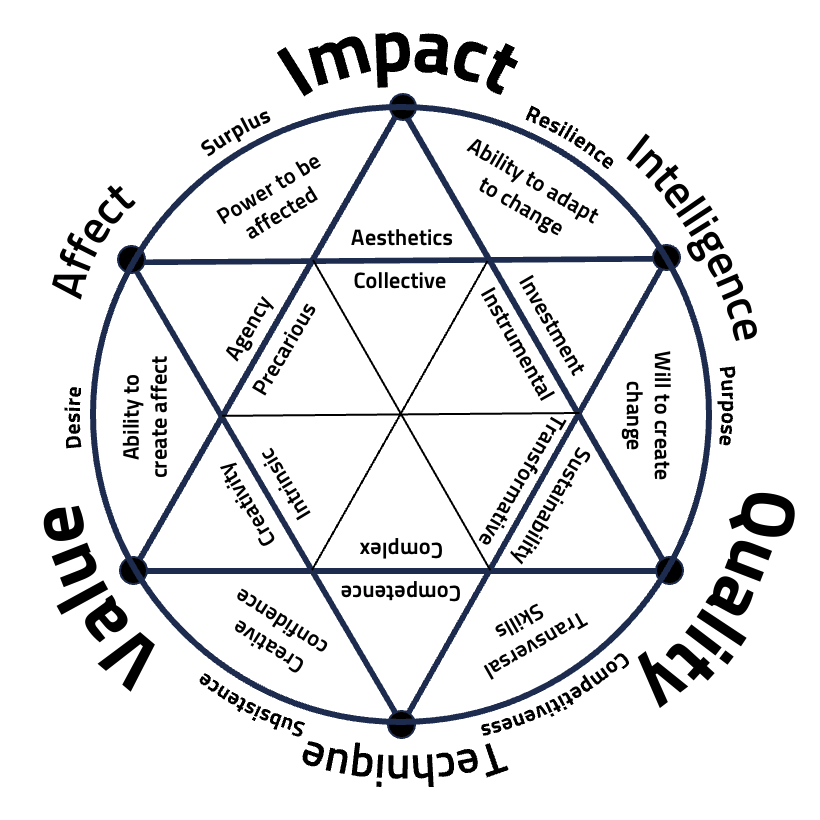
|
|
The Compass for Advanced Practices has not been presented in this format before. It has been published on the PACESETTERS project website and as part of a report by PACESETTERS titled Mapping of Challenges. | The session is planned to last two hours and will involve a group of 20–30 participants. The Compass of Advanced Practices' theories and main hypothesis will be shared with the participants. The Compass will be outlined on the floor of the room. A documentary team will film the session. The Compass outline will guide a choreography of participants raising questions, providing answers and sharing reflections. |
Ideally, we would like the session to take place in a black box theatre. We believe that the lighting and sound opportunities in such a space would provide an ideal setting for our experimental approach, and these conditions would also be optimal for video recording. | We acknowledge the co-creative and co-research aspects of the proposal, bearing in mind that the outcome will contribute to the ongoing PACESETTERS research project. Informed consent forms will be provided before any activities commence, and we will ensure that all participants are informed of their rights in accordance with the approved ethical guidelines for PACESETTERS. | No | ||||
| Unstar/Unflag Submit a contribution to the 2026 Forum on Artistic Research: Submission #385 | Anonymous | Zar | Mohseni | mohsenizarah@gmail.com | The Mystery of the Excluded Middle | Experimental format | English | Artists have been capitalized for economic harvest; The labor, the burnout, and the process are excluded. The figure of the successful artist is the synthetic reality of the market—a vitrine of the few who "made it." Creativity, diversity, artistic freedom, and opportunity have been replaced by market rules: taste-making, trends, and the logic of supply and demand. This research looks practically at what the artist goes through and how they use subversive affirmation as a tool for critique. The study unfolds as a meta-discursive essay that interrogates the space between being and non-being, using examples of performance and cannibalism to refer to the "in-betweens" of law, logic, and ethics. The figure of the cannibal, born from the impact of colonialism and extractivism, is here as a metaphor and a horizon to examine the endangered mechanisms of the art world. This artistic research holds the "Law of the Excluded Middle"—the third law of thought and the logical principle that a proposition must be either true or false—as a core framework to address binary thinking and its violence against the "in-betweens" of identity, trauma, ethics, and performing bodies. The research identifies the "Excluded Middle" as a fertile site of "clandestine existence." Drawing on Aristotle’s metaphysics, Derrida’s différance, and the radical agency/surrender in Marina Abramović’s Rhythm 0, I argue that the contemporary subject—specifically the "migrant" or the "artist-as-other"—is forced into a paralyzing binary. |
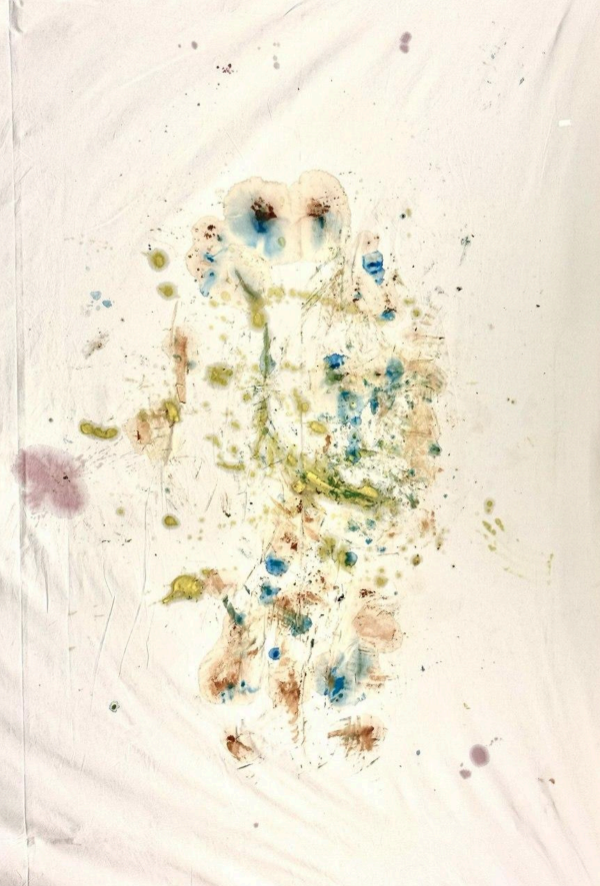
|
|
I would like to present this research as an immersive installation centered around a set dining table. a performative environment where the audience is can read and access the research. The table is dressed with the residue of research (textual fragments, archival documents of practice. The audience is invited to sit and engage with the materials and the act of reading becomes parallel with the act of consuming, they encounter the "stains" described in the essay. |
1 large table + 6-8 chairs Simple lighting |
Yes | Zar Mohseni | |||||
| Unstar/Unflag Submit a contribution to the 2026 Forum on Artistic Research: Submission #383 | Anonymous | Annett | Busch | annett.busch@ntnu.no | Marginal Notes | Poster presentation | English | This poster presentation proposes a printed wallpaper—composed of twenty A3 pages—featuring the newly produced Inflight Magazine #7 from the transversal, collaborative artistic research project Women on Aeroplanes. This issue explores the art of organising, focusing in particular on the extensive global network of the Women’s Democratic International Federation (WDIF), founded in 1945, and forms part of the wider artistic research project "Marginal Notes". Its concept engages with the productive tensions of margins and marginalia, inverting established hierarchies of attention. Handwritten notes in the margins of a page trace gestures of reading, association, disagreement, or sudden alignment. In this spirit, Inflight Magazine #7 becomes a review-like montage of images and literature, drawing on extensive research carried out by many others. Our contribution takes shape through reading-as-annotation, assembling quoted excerpts and re-situating them in new constellations. In acknowledging the labour of love and revolutionary endeavours of those involved in these historical struggles, the project seeks to amplify and resurface their subsisting relations. By recomposing these materials, we aim to activate them as resources for our present futures. We are not fixed in time—let's re‑organise. |
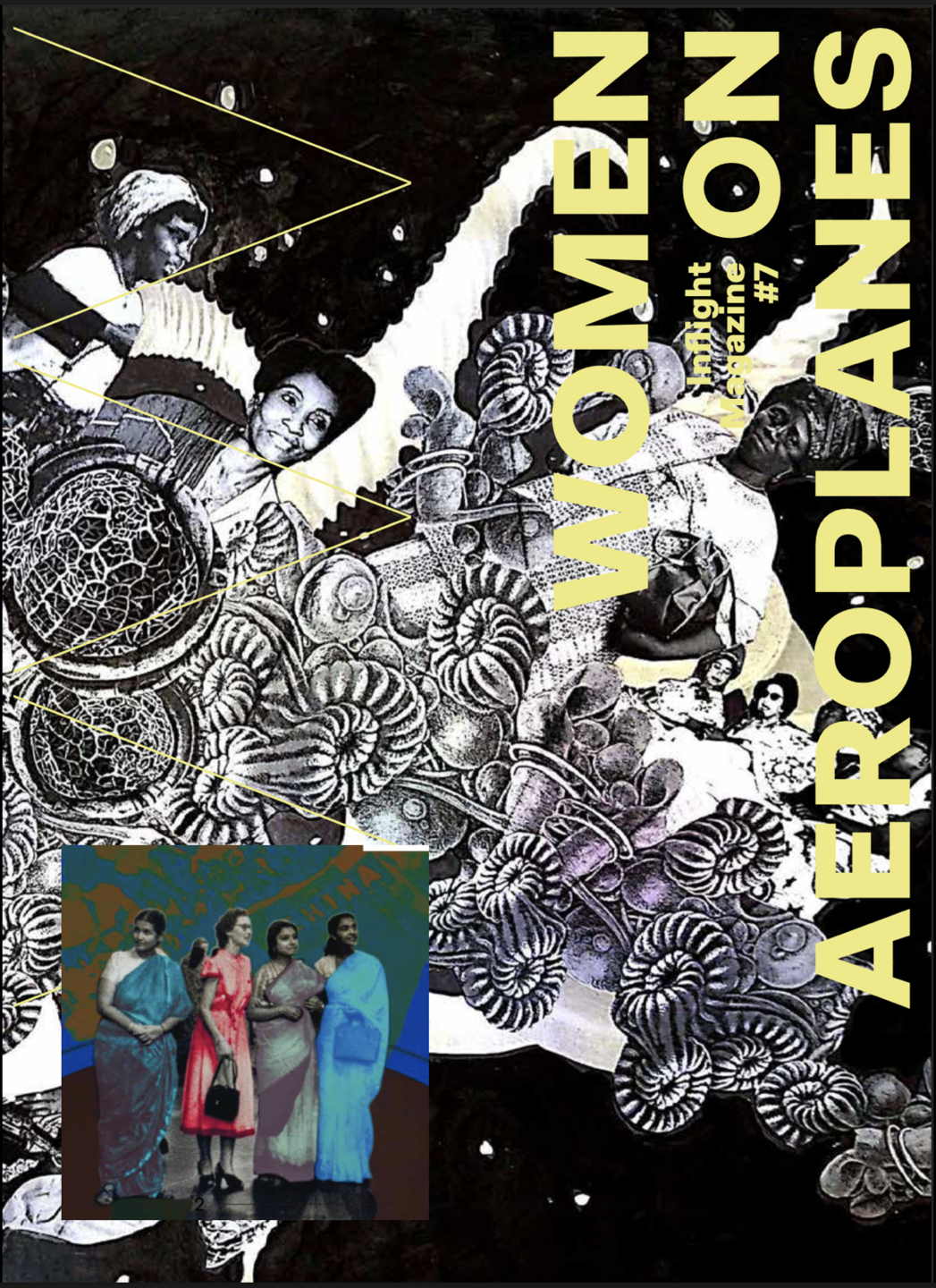
|
|
Yes | Annett Busch | |||||||
| Unstar/Unflag Submit a contribution to the 2026 Forum on Artistic Research: Submission #382 | Anonymous | Mari | Sanden | mari.sanden@ntnu.no | Policy Roundtable: Strengthening Artistic Research and Supporting Linguistic and Cultural Diversity | Roundtable contribution | English | This proposal follows up on the statement shared by Teresa Ribera, Vice President of the EU, at the PACESETTERS Summit (November 2025), where she suggested, 'Let us reclaim competitiveness as collaboration. Let us make Europe’s diversity — linguistic, cultural, and territorial — our most powerful asset”. The roundtable will discuss how artistic research can explore, support and promote linguistic and cultural diversity, and how these capacities can be strengthened within research and policy frameworks. Drawing on ongoing debates within cultural policy, arts research evaluation, and science and technology studies, this session brings together practitioners, researchers, funding agencies, and institutional leaders to interrogate normative assumptions and practical mechanisms for policy integration. Specifically, the discussion will examine three interrelated dimensions: epistemic recognition (policy as a space for plural knowledge systems), governance and funding design (structures that align with artistic methodologies), and impact and accountability (approaches that respect both qualitative richness and policy reporting needs). The roundtable will include Florian Schneider and representative of the Policy Work Package from the COST Action on Artistic Intelligence, whose contribution will provide insight from ongoing transnational coordination and policy-oriented research across Europe. The session is designed not only as a forum for debate but as a structured policy-development moment. The discussion will culminate in a set of concrete recommendations synthesised from the exchange among participants. These recommendations will form the basis of a policy brief aimed at European and national decision-makers, contributing to the consolidation of a more coherent and enabling framework for artistic research. |

|
|
Simona De Rosa (PhD) is partner and senior researcher of T6 Ecosystems srl. Since 2015, she has participated in responsible positions in more than 10 European projects funded by the European Commission. Within T6 she is coordinating the Policy dialogue and advocacy activities. Furthermore, she is highly engaged in the research of the projects mainly taking care of policy analysis, strategies for ecosystem building finalised at policy development and impact assessment. | This policy roundtable builds on the work carried out in the PACESETTERS Research and Innovation Action and the Artistic Intelligence COST Action. If the proposal is successful, the organisers will invite additional experts from these projects and related networks, such as the JRC SciArts, STARTS and the Artistic Research Alliance, to contribute to the event and provide relevant policy insights. For more information about PACESETTERS and ARTISTIC INTELLIGENCE: https://pacesetters.eu/ https://artisticintelligence.info/ |
We are flexible and can arrange for a roundtable discussion with 20 - 30 people seated on tables, or we can provide a panel discussion with 4-5 speakers in front of an audience. We would like to discuss these two options with the organisers of the SAR conference and make a decision together with them. | no risks or ethical concerns are foreseen at this stage. | Yes | Mari Sanden | |||
| Unstar/Unflag Submit a contribution to the 2026 Forum on Artistic Research: Submission #381 | Anonymous | Katherine | Butcher | katherine.a.butcher@ntnu.no | PATIPOLITICS, PEAK FACE and THE ENCLOSURE OF THE HUMAN | Poster presentation | English | We are living in the age of Peak Face: a historical threshold at which the human face becomes the primary site of extraction under algorithmic capitalism. Drawing on Isabel Millar’s concept of patipolitics, Lacanian drive theory, and the evolutionary logic of cephalisation, this contribution examines how the face shifts from relational organ to optimised infrastructure. From Instagram aesthetics to deepfake legislation, faciality becomes a regime of legibility governed by circulation, enclosure, and personalisation. Through the artistic projects END-TO-END and EPIS(T)EMIC EROTIC with the Nansen Fredssenter, I propose friction, opacity, and preserved ambiguity as ethical other counter-practices against the pornographic drive for total knowledge and machinic intimacy. |
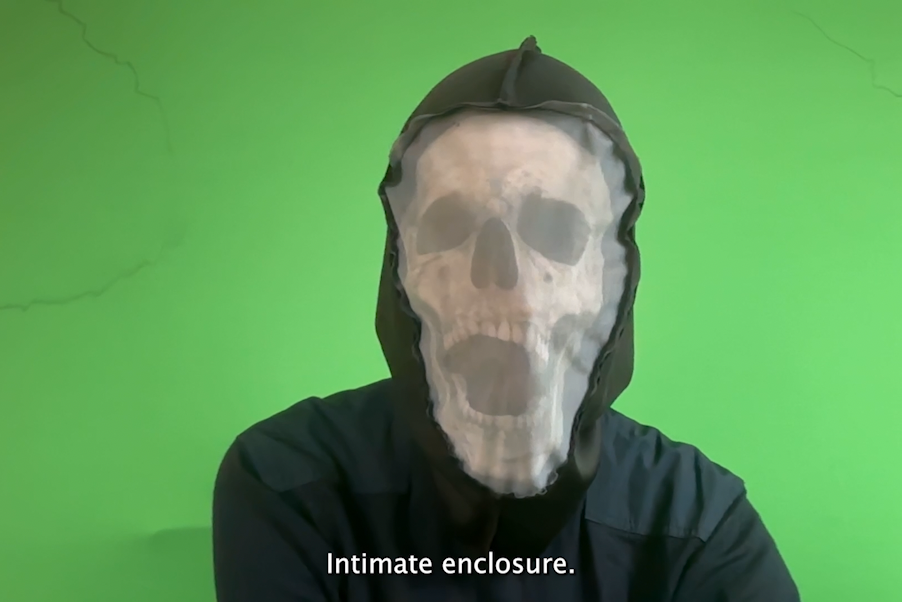
|
|
No | ||||||||
| Unstar/Unflag Submit a contribution to the 2026 Forum on Artistic Research: Submission #379 | Michelle Palmer | Michelle | Palmer | michelle.palmer@universityofgalway.ie | The Resistance of Subjugation: Dance, movement, and eco soma performance as embodied ecological intelligence | Performance | English | This performance-lecture will explore the application of theoretical approaches and creative practices in processes for dance, theatre, and musical performance which is an experiential, embodied, living practice of resistance to domination and exploitation. In doing so, it will examine the value of ecofeminism, dance theatre, and eco somatic practices in shaping the nature of the performing arts in the face of slow violence and the multiple socio-ecological crises confronting us. Michelle will perform an excerpt of her artistic-research piece, "Moon Change: A Dance of Blood and Soil", which is a dance theatre contemplation of the relationships we have with our bodies and with the earth. As a solo performance piece, it journeys through natural cycles and seasons, historical and modern-day beliefs, rituals, experiences, and cultural constructions around menstruation. After showing a demonstration through dance, the lecture makes the argument that although they have important value, the evolving approaches of ecosomatic dance have been and continue to be neglected in ecological theatre and performance, and that by tapping into ecosomatic approaches we can experience a felt knowledge which is becoming increasingly endangered as humans disconnect from their bodies and environments. This research investigates the question: How can ecological embodiment in dance, movement, and performance illuminate hidden connections and marginalized histories? The body and the place in which it performs become sites of felt knowledge-making and transformation for socio-ecological change. By examining questions such as these through an eco-somatic movement inquiry, Michelle will provide a space to contemplate the capabilities of the performing body in eco soma movement, ecofeminist and dance theatre practices to serve as a site of knowledge production and contribute to the development of ecodramaturgy. |
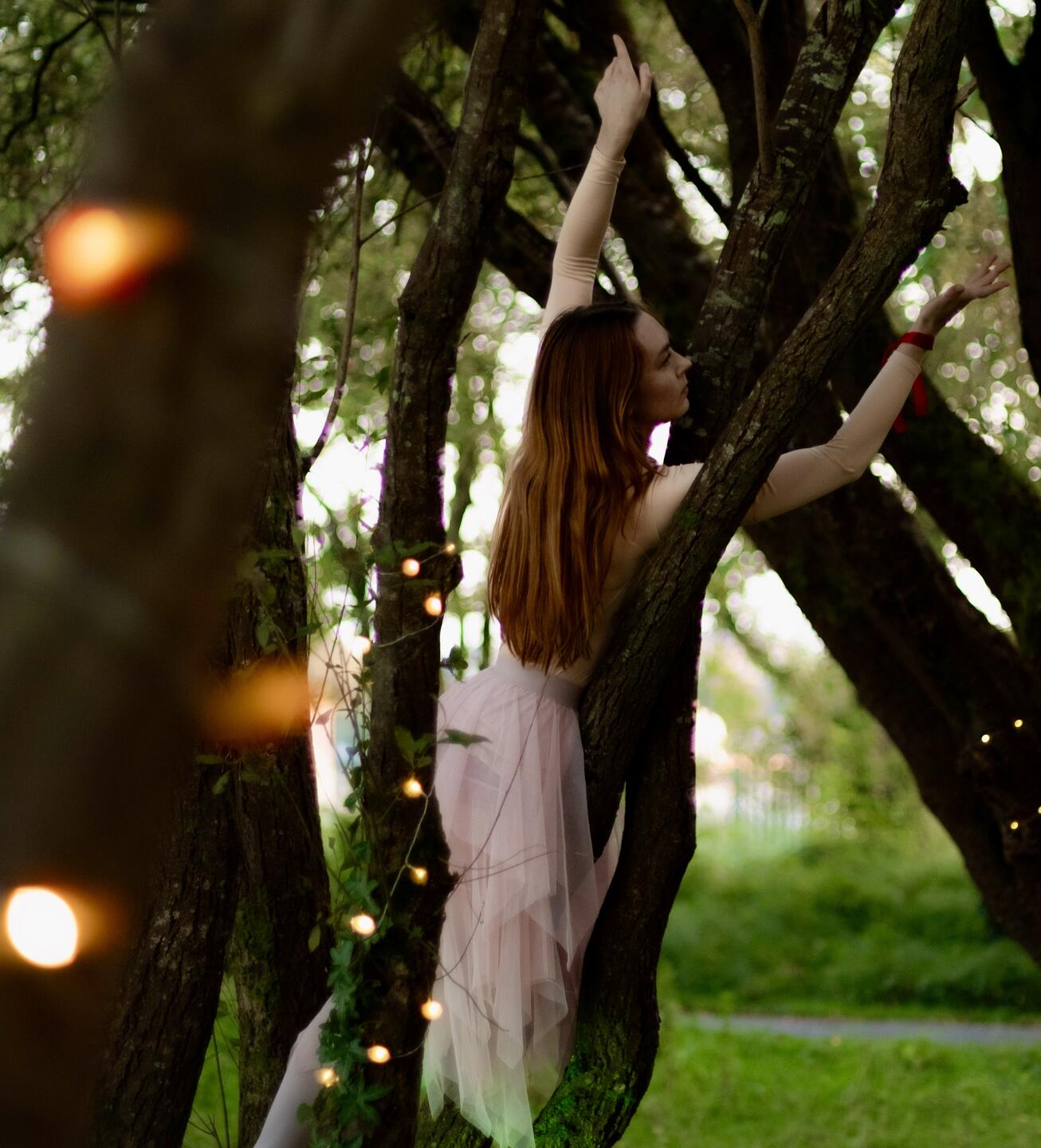
|
|
In addition to sharing this research in conference and seminar formats such as The SMI and the ICTMD Ireland postgraduate conference, there have been six total performances of the show. As a part of practice-based-research, it was first performed under the title of “Au Naturel” with M.Fest in Galway March 2024, followed by performances with Arts in Action and Culture Night in 2025. In 2026, the developed iteration in the form of dance theatre was programmed for both M.Fest and Arts in Action. | This performance ideally should take place outside. If that is not possible, any location where there is space for the performer to dance is requested. Technology and props are minimal, and the researcher can bring her own Bluetooth speaker if taking place outside. If taking place inside, it would be great to have speakers which can connect to a Spotify playlist. |
If performed outside - Uneven surface with potential hazards and proximity to water. Ushers to advise audience prior to performance of the uneven surface within the tree covered areas. Event team will provide an alternative pathway for wheelchair users. Information regarding the event location will be communicated and audience advised to wear appropriate footwear and clothing. If conditions deteriorate to an unsafe level the “Show Stop” plan will be put into effect, moving to backup location. | Yes | Michelle Palmer | ||||
| Unstar/Unflag Submit a contribution to the 2026 Forum on Artistic Research: Submission #376 | Nina Liebenberg | Nina | Liebenberg | nina.liebenberg@uniarts.fi | In the Space Between: Curating Dispersal, Holding Difference | Project presentation | English | This performative lecture proposes curatorship as an artistic research practice that constructs interstitial 'holding environments' for endangered conceptual worlds. Developed through the interdisciplinary project Synzoochory (Uniarts Helsinki, 2025), it reframes synzoochory - seed dispersal through interspecies mediation - as a methodological model for epistemic transmission: knowledge understood as travelling and transformed through contact and context, rather than accumulation and taxonomic enclosure. Drawing on Donald Winnicott’s notion of the 'holding space', curatorial practice is approached as the creation of structured yet permeable environments in which heterogeneous materials, disciplines, and diverse worldviews encounter one another without immediate resolution. Materials such as scientific collections, current research, laboratory equipment, artworks, and archival objects are staged together, in productive tension, without being subordinated to a single explanatory frame. Difference is sustained (celebrated even) rather than collapsed. Central to this methodology is the “curatorial interval”: performative in-between moments that suspend authoritative narration and disrupt linear sequencing. Realised through in-situ departmental exhibitions and performative elements within the Synzoochory symposia, these interstitial pauses generate conditions of attentiveness and delay, enabling embodied and affective forms of knowing to surface. Glissant’s 'right to opacity' is central here: divergent epistemologies (Western taxonomies, Indigenous knowledges, anthropocentric and more-than-human perspectives) are allowed to coexist without being made fully legible to one another. In line with SAR 2026’s focus on power, language, and minoritised knowledges, this paper argues that curatorship sustains fragile epistemic worlds by creating dialogical spaces where difference is neither erased nor hierarchically ordered, but carefully held. |
https://www.researchcatalogue.net/view/4155375/4155376 | https://www.researchcatalogue.net/view/4155375/4155376 |
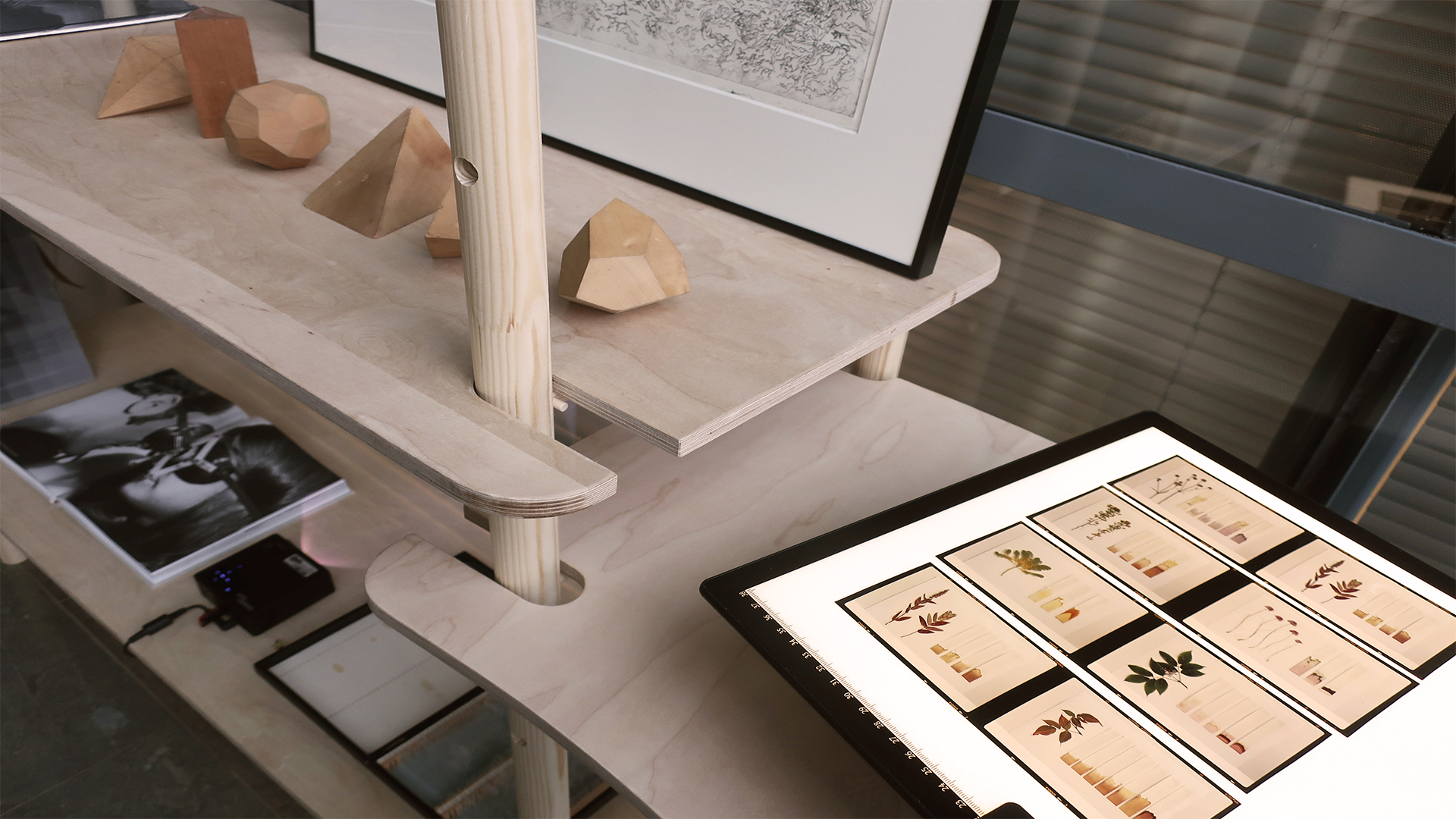
|
|
This research occurred in November 2025, and has subsequently not been presented at any research conference yet. | None | This performative lecture will be in ppt format, with audio-visual elements dispersed throughout. |
None that I am aware of at this stage. | Yes | Nina Liebenberg | |
| Unstar/Unflag Submit a contribution to the 2026 Forum on Artistic Research: Submission #374 | Anonymous | Elena | Cologni | ecologni@gmail.com | Caring-with: On Potentialities and Challenges of Relational Approaches | Experimental format | English | The lab based activity aims at collectively exploring potentialities and challenges of relationality through a series of experiential 'exercises' (Cologni 2025), to allow for co-creation. This practical dialogic work has been more recently understood in terms of embodied care, in relation to percipience and contamination (Cologni 2024), and rooted in the reciprocal nature of 'caring-with' (Cologni 2020, Tronto 2013). Such approach is at the core of the ongoing conversation with Mother Art Collective, pioneer Los Angeles based artists within the ongoing Getty Research Institute funded research project 'Towards a Feminist Care Aesthetics' (2023/), which is grounded in archival study, intergenerational dialogue, and sustained artistic exchange. During the experimental exercises I aim at instigating reflections on the nature of care within art practice research - as central and not peripheral - through exchanges including conversations, movement based activity, and tangible traces in terms of maintenance, mothering, emotional labour, as well as public and ecological responsibility (Puig de la Bellacasa, M. (2027) , and planetary commitment. References. 'From The Home To The Planet. A Dialogue Between Elena Cologni And Mother Art Collective' (2025) MLAC Museum, Sapienza Università di Roma, in collaboration with the Getty Research Institute, the University of California, Los Angeles (UCLA) Mathias Botanical Garden (exhibition) Cologni, E. (2025) (Un)Monuments of the Everyday: The Body of/at Work. In City, Public Space, and Body. The Embodied Experience of Urban Life. Routledge Cologni, E. (2024) Percipience, Embodiment, Contamination(s). Practicing a Feminist Care Aesthetics. International Journal of Education and the Arts 25(1. Art for the Sake of Care: Learning from Artistic Practice and Inquiry) Puig de la Bellacasa, M. (2027) Matters of Care. Speculative Ethics in More Than Human Worlds. |
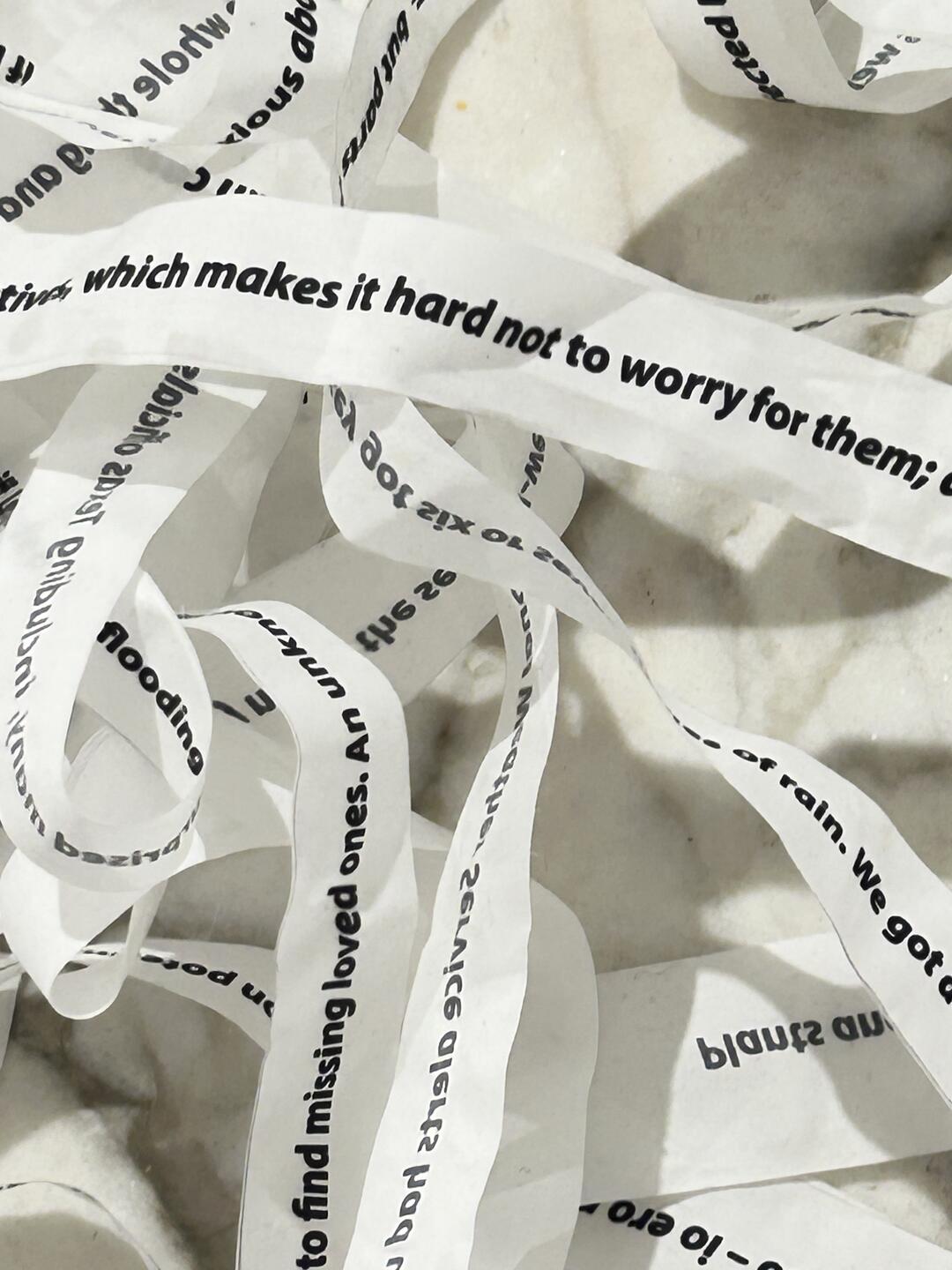
|
|
I am working on an exposition about the whole project the activity is part of, to be submitted and published when complete. The workshop, lab can be between 1 hour long and be repeated during the conference. | A room that can host 20 people at any time allowing for movement based work. This would need to have projector and screen to be connected to my laptop |
none. but people with (visible or invisible) disabilities are encouraged to get in touch | No | |||||
| Unstar/Unflag Submit a contribution to the 2026 Forum on Artistic Research: Submission #373 | Anonymous | Joseph | Young | artofnoises@me.com | The Big House Made of Sound | Experimental format | English | ‘The Big House Made of Sound’ demonstrates an artistic research methodology developed by artist and researcher Joseph Young. Since 2016, Young has been engaged in a series of site-specific interventions using geo-located sound to add layers of complexity to our understanding of historic sites and contested histories. The Irish Big House is a remnant of British colonial rule, when a vast network of houses marked a visible presence of the Anglo-Irish landowning classes in the landscape. Many of them did not survive the war for independence and of those that did, only a handful are still maintained by their 'original families'. Their presence in the 21st century can therefore be understood as a haunting reminder of a recent past whilst pointing towards an ongoing entanglement between the Irish and British states which was further complicated by the Brexit vote in 2016. Young hails from the UK and completed his PhD in Ireland as artist-in-residence at Killruddery House in County Wicklow, in 2023, creating a hauntological sound trail ‘The Ancestors’ which re-imagined visitors’ smartphones as a modern day dowsing tool for archival spectres imagined to be roaming the estate. In 2026, Young returns to Ireland to research the archives of Annes Grove in County Cork, as part of a postdoctoral research project supported by Research Ireland, where he will use song, sonic sculpture and enchantment to address the women of the archive, whose voices in a patrilineal inheritance system often go unheard. This experimental presentation will utilise audio geo-location in public spaces to allow conference attendees to directly experience some of his works, alongside a performative lecture format which will detail a making process with soundwalking at its heart, whilst showing how artistic research methodologies can interact with critical heritage practice to reimagine the Big House as a dreamlike and otherworldly storehouse of narrative, poetic commentary and memory. |
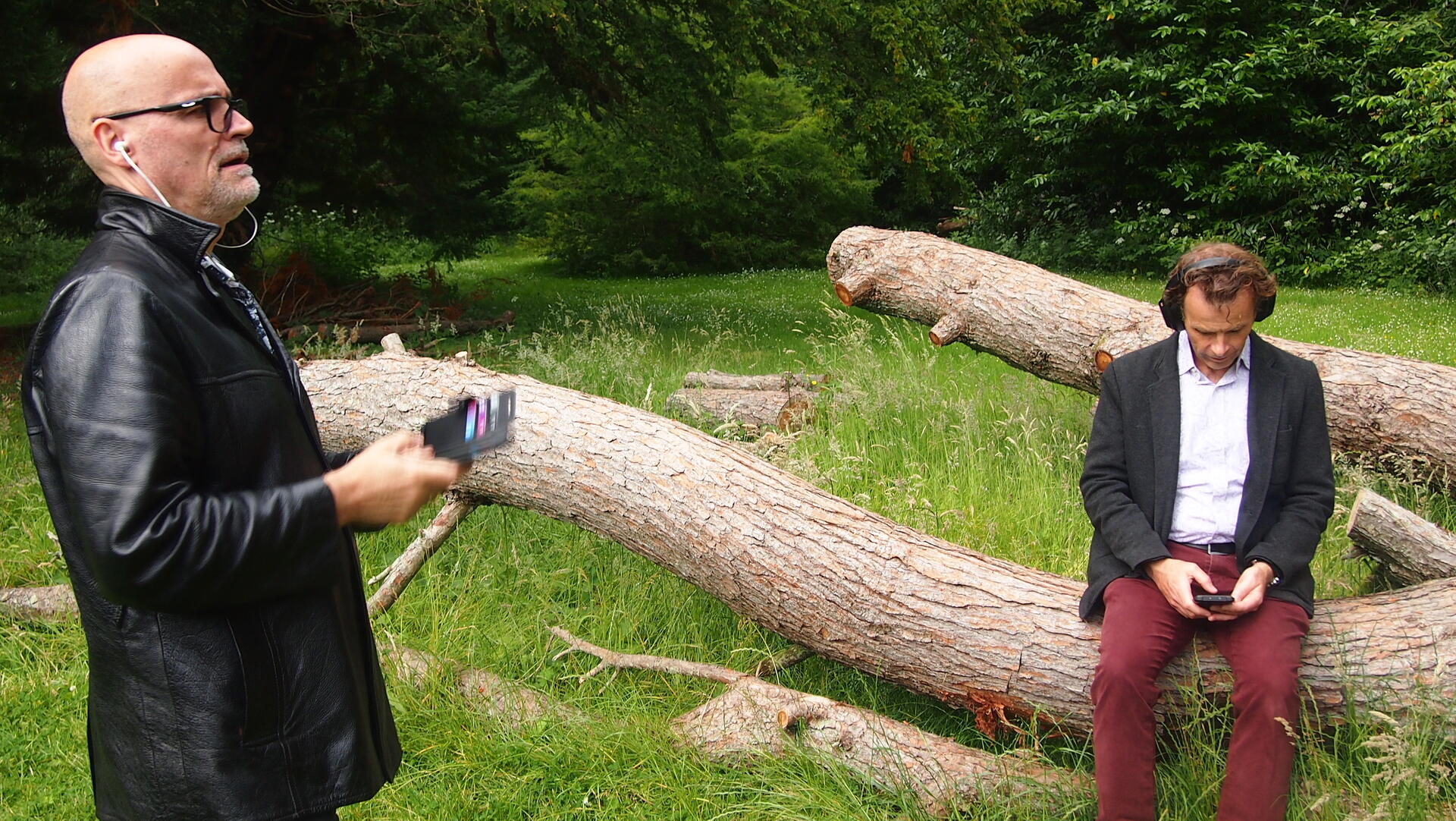
|
|
Whilst I have spoken about the work frequently in seminars and public events, this particular focus on the wider artistic research methodologies behind the work, accompanied by a opportunity to experience some of the work in situ, is a new development that has not previously been seen or heard at any conference to date. The presentation will also allow me to showcase emerging knowledge from the postdoc research as it is happens. | The presentation comprises 3 interlinked strands: 1) A performative lecture (see below) 2) A series of geo-located soundscapes in public spaces, available for the duration of the conference 3) A one-off artist-led tour of the soundscapes |
I will require a larger, informal space rather than a lecture theatre, which is set up with a good stereo sound system and a projector. In addition, I will geo-locate soundscapes in and around campus, in coordination with the organising committee to provide a public experience of some of the work originally created for presentation at historic houses. QR codes will be provided for attendees to download the Echoes.xyz app on which the work is hosted accompanied by detailed operating instructions | Due to the nature of experiencing audio based artworks in public spaces, clear instructions will be provided to keep listeners safe, in consultation with the organising committee. | Yes | Joseph Young | |||
| Unstar/Unflag Submit a contribution to the 2026 Forum on Artistic Research: Submission #371 | Karoline Schneider / Krawc | Karoline | Schneider / Krawc | kaschneider@posteo.de | ryć/rěč | Project presentation | English | languages: Upper Sorbian, English and German In my autoethnographic project ryć / rěč (2025), I draw on the phonetic proximity of the Upper Sorbian words ryć (dig!) and rěč (speak!) to describe the embodied process of relearning Upper Sorbian (serbski jazyk). Digging and speaking become one gesture: I imagine my tongue as a spade cutting through sedimented histories of silence, shame, and loss. In my family, Sorbian was actively unlearned by my grandmother—yet her decision must be understood within a broader history of repression and devaluation in the German majority context. Nineteenth-century accounts document how for example teachers “waged war” on Sorbian language and dress, forcibly removing girls’ traditional bonnets in schools, producing ruptures that extended across generations. My family history is further marked by extraction. The village of Šiboj, birthplace of my great-grandmother, was destroyed by coal mining; today Lake Šiboj covers its remains. I was born in the year the site was excavated. Building a paddle shaped like a tongue, I move across the lake as a performative act of return, asking what can be recovered from submerged ground. Linguistic and geographic migrations—between Upper and Lower Lusatia and Dresden—produced hybrid forms of speech in my family. Becoming Sorbian again thus appears not as a return to an origin, but as a negotiation of layered identities. Within a sorbian/wendish queer feminist collective, I understand this process as a queering of belonging: creating space to question patriarchal traditions, to name gaps, and to embrace the Sorbian/Wendish minority as a plurality within itself. |
https://www.researchcatalogue.net/shared/511c65ab93eaf9b8a3e5a37b7c8ad084 | https://www.researchcatalogue.net/shared/511c65ab93eaf9b8a3e5a37b7c8ad084 |
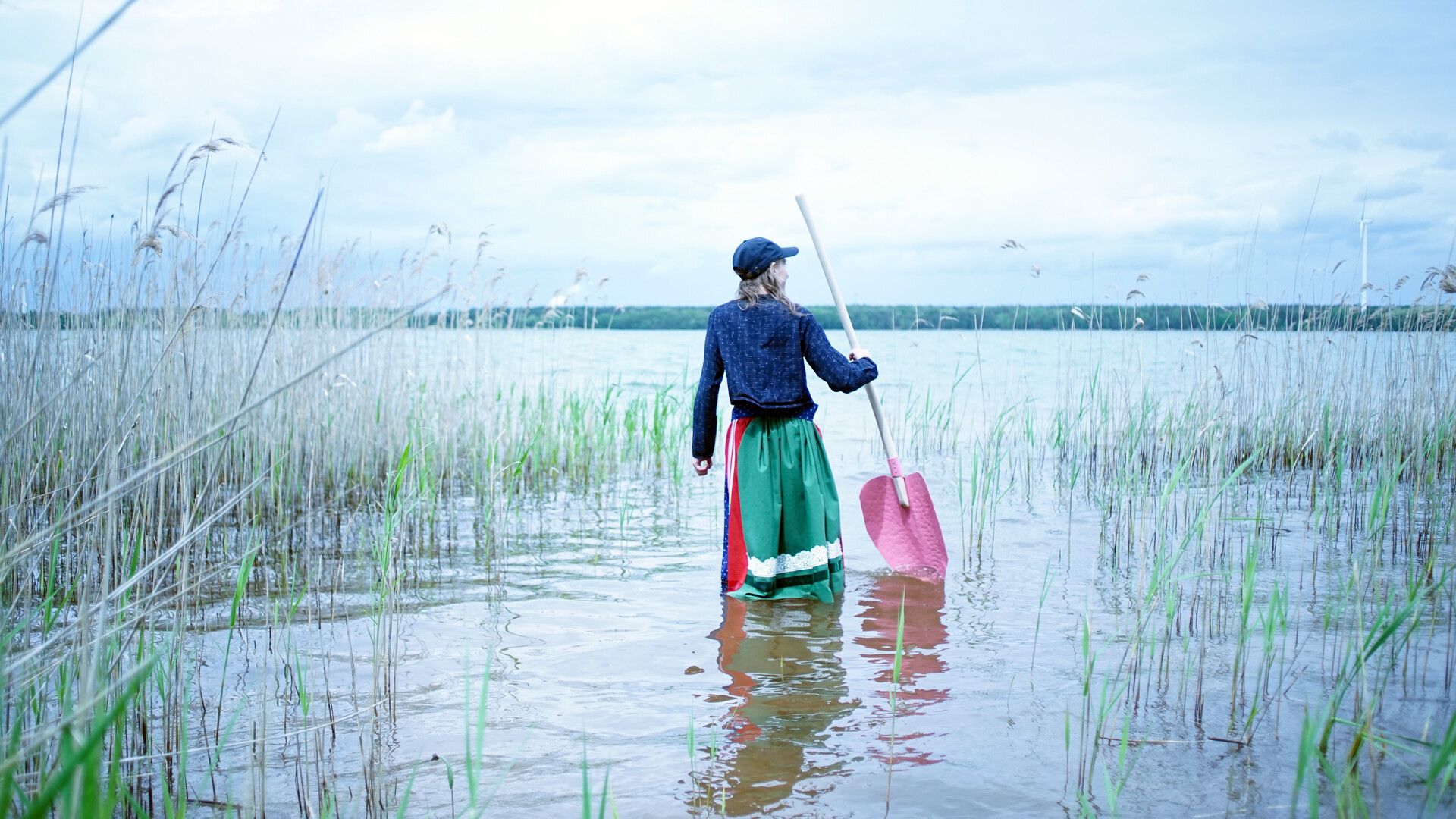
|
|
The Installation ryć/rěč was part of the international Group exhibition "family matters" at Museum of Fine Arts Leipzig: https://mdbk.de/ausstellungen/family-matters/ https://www.karolineschneider.me/works-tworby#/rycrec/ |
I don't have any additional information at the moment. I use Upper Sorbian and Lower Sorbian languages. I prepare subtitles for this purpose. Experimental elements can be implemented in a conventional presentation setting. | I will only need a projector and some space. | There are no specific risks or ethical concerns. | Yes | Karoline Schneider / Krawc | |
| Unstar/Unflag Submit a contribution to the 2026 Forum on Artistic Research: Submission #370 | Anonymous | Penn | Newell | penn.newell@gmail.com | Critical Poetics and Ecology | Roundtable contribution | English | This roundtable is a space to discuss contemporary critical poetics—textual and visual—as a site of ecological thought. How do textual and visual poetics think and rethink ecology? Is it possible to discover organising principles mediating questions of ecology in contemporary artistic process, style, form, material or otherwise? Do we yet possess the language that we need for speaking about these poetics? What, if anything, is stopping us from scaling critical poetics into emancipatory praxes in an ecological context? The positioning of this roundtable draws together postcolonial and anti-racist theorists of ecology, poetry, and language, namely Mel Y. Chen, Édouard Glissant, Sylvia Wynter and Aimé Césaire. For Mel Y. Chen the ‘alchemical magic of language… animate humans, animals, and the things in between’. Sylvia Wynter and Aimé Césaire both mediate a similar critical inquiry into the history of the natural sciences through a question of language, focussing a critique of narrative and poetic struggle by interrogating the role of stories and language in colonial formations and extractive paradigms in industrial and social relations of production. In step with Édouard Glissant, such "poetics" expose and elaborate on what is required to redress the intersecting imbalances of power behind climate catastrophe. Following a critical framing statement, the roundtable unfolds in an overlap between these thinkers. Contributors are invited to bring an example from contemporary artistic practice or research for collective close-reading, in either text, image, or descriptive format. Each participant will receive a glossary of key terms to inform the discussion. Together, we will seek to compose a descriptive space capable of thinking and scaling a critical poetics of ecology. The roundtable builds on existing research in Critical Poetics and Ecology, which has so far engaged curator Samia Henni and poets Padraig Regan, James Goodwin and frank r jagoe. |
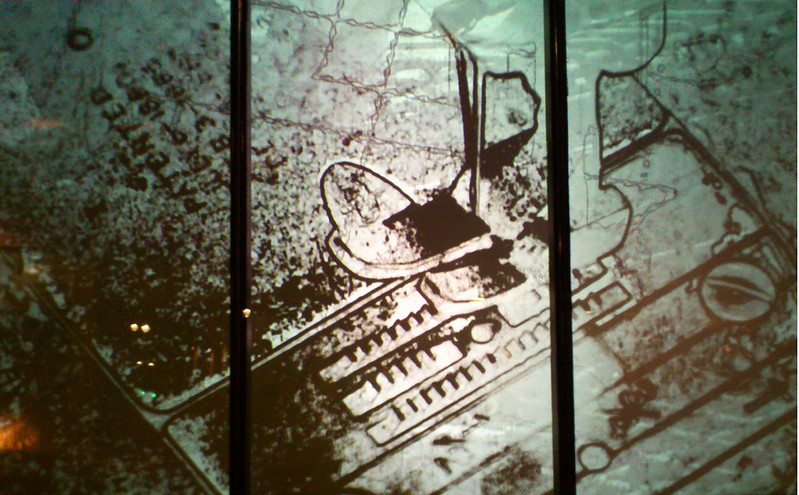
|
|
This roundtable will visit the themes of a creative-critical network for poets or people who seem themselves as working poetically, launched in London in February 2026, with research activities throughout 2026-7. Further large-scale work will commence in 2027 and roundtable contributors will be invited to join a mailing list. | Participants will need to be contacted in advance to make sure that their accessibility needs are met with the resources. They will be invited to share resources on the day - printing of these can be arranged by facilitator if required. | Roundtable set-up | Some content may be triggering for participants. This will be mitigating by gathering insight in advance on what each participant seeks to share. If this is not possible, then a general trigger warning can be provided based on the area of research and likely triggers that will arise. | No | ||||
| Unstar/Unflag Submit a contribution to the 2026 Forum on Artistic Research: Submission #369 | Anonymous | Joseph | Steele | joesteele@alumni.harvard.edu | Loose Conceptualism: Deadpan Strategies and the Figure of the Migrant | Performance | English | This paper examines strategies of deadpan affect and withholding in conceptual and documentary practices, proposing "loose conceptualism" as a framework for thinking conceptual strategies that operate through elasticity rather than closure. It centers on Renée Green, Christopher Cozier, and Glenn Ligon, bringing together works produced around 1970 and the early 1990s in which migration functions both as socio-political condition and as structuring metaphor for aesthetic movement, translation, and displacement. Grounded in Lauren Berlant's 2014 writing on deadpan, particularly what Berlant describes as "showing up to withhold" in their "reading-with" William Pope L.'s exhibition at the Renaissance Society U. Chicago, the paper shifts attention from migration as a fact or one occupying a figure position to one of potentiality. Loose conceptualism asks how itinerancy is inhabited through a series of historically sedimented figures: the traveler, the dandy or bohemian, flâneur, maroon, nomad, or other types of mobility and their relations. These inhabitations allow artists to explore non-catharsis, questions of subjunctivity and belief, and holding the tension between opposites–– such as concept/material, staying/migration, and performance/document. Across transmedial forms of documentation, these works inhabit migration obliquely, through figures that register movement, precarity, and displacement without reduction, staging a distinction between resistance and refusal, which highlights incompleteness of story, and the ongoing nature of narrative identity. Situating these practices within longer avant-garde histories of intermedial experimentation, the paper considers how a post-conceptualism gives way to an ana-performativity or non-performance, and proposes ‘loose conceptualism’ as a way of thinking how impure strategies migrate across media and historical moments. By presenting the talk as a lecture-performance with slides, the oblique engagement is tested. |
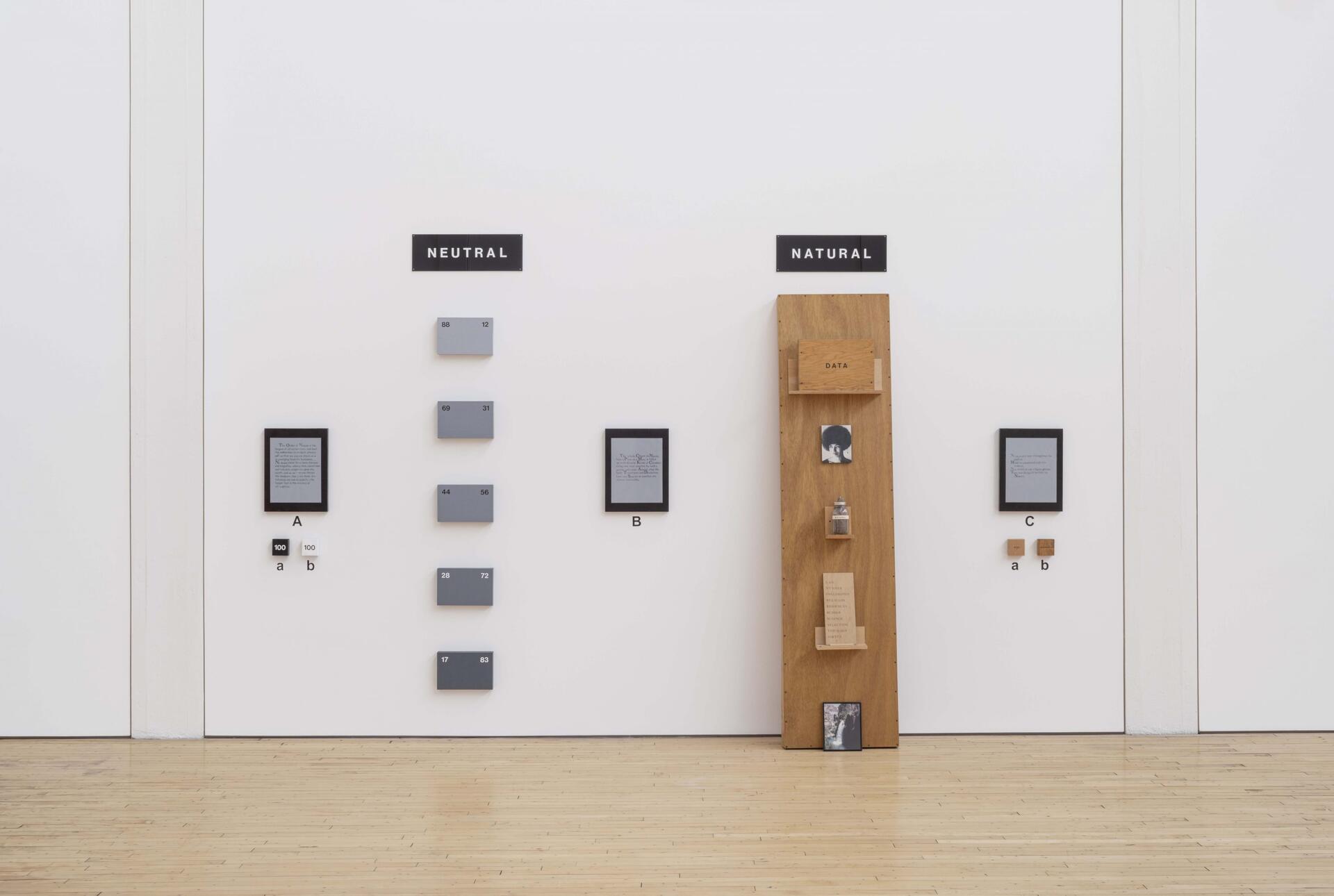
|
|
This is a relatively new piece for me. It's not directly related via the subject but in terms of the presentation method it's related to two other presentations I have given at RAI Film Festival (Bristol UK) in 2021 and presentations in Amsterdam between 2021 at the Amsterdam School for the Arts, DAS Theatre Master program in Performance and Dance and Eye Filmmuseum Academic Conference (2025)./ The topic is related to my dissertation (PhD thesis) and a publication on the work of Renée Green. | It's a lecture performance where I am performing a paper and showing examples of itinerant artists, the use of novels and other texts, and re-routing of conceptualism. The lecture and academic conferences themselves are taken up as a medium and the audience's attention (e.g., the percipient of a work of art) is used as a medium. | Table, projector and projector screen [or alternatively a monitor on wheels]. Space on the floor to walk around, lav mic with transmitter or wireless microphone [except if I can project enough for all to hear me]. Ability to darken the room. Speakers, since I might play one video clip. | no known risks, nor anticipated. Primarily developed together with the artist Christopher Cozier of Alice Yard and my dialogue with Green, her studio and archive. The artists are public figures and advanced in their careers. | No | ||||
| Unstar/Unflag Submit a contribution to the 2026 Forum on Artistic Research: Submission #368 | Anonymous | Lorenzo | Pusterla | lore.pusterla@gmail.com | Legacy of the Unseen: The Artistic and Pedagogical Heritage of Blind Pianist Alberto Mozzati | Poster presentation | English | The pedagogical practices of visually impaired musicians within Italian Institutes for the Blind have received limited empirical attention, despite their relevance for understanding alternative modes of musical learning. Alberto Mozzati, an Italian blind concert pianist and influential twentieth-century pedagogue, developed a piano teaching approach grounded in auditory, tactile, and kinaesthetic strategies. His work provides a historically situated case through which non-visual forms of musical knowledge transmission can be examined. Conducted in collaboration with the Blind People Institute of Milan (Historical Archives and Typhlopedagogical Service), this study investigates how non-visual pedagogical strategies were implemented and experienced in Mozzati’s teaching, and explores their implications for musical learning and skill development. The research adopts a qualitative empirical design integrating archival materials, pedagogical documents, semi-structured interviews with former students, performance-based exploration of selected strategies, and didactic laboratories involving blind students. Data were analysed using thematic analysis to identify recurring pedagogical patterns and perceptual modalities. Findings indicate that Mozzati prioritised listening, bodily awareness, and imitation over visual score-based instruction. Former students describe heightened attention to sound, touch, and movement, alongside early integration of technical and expressive elements. Laboratory observations suggest that such strategies support the internalisation of musical structures and interpretative decision-making across proficiency levels. By empirically examining this marginalised teaching context, the study contributes to discussions on embodied learning, accessibility, and diversity in music education, showing how historically grounded case studies can inform contemporary pedagogical research. |
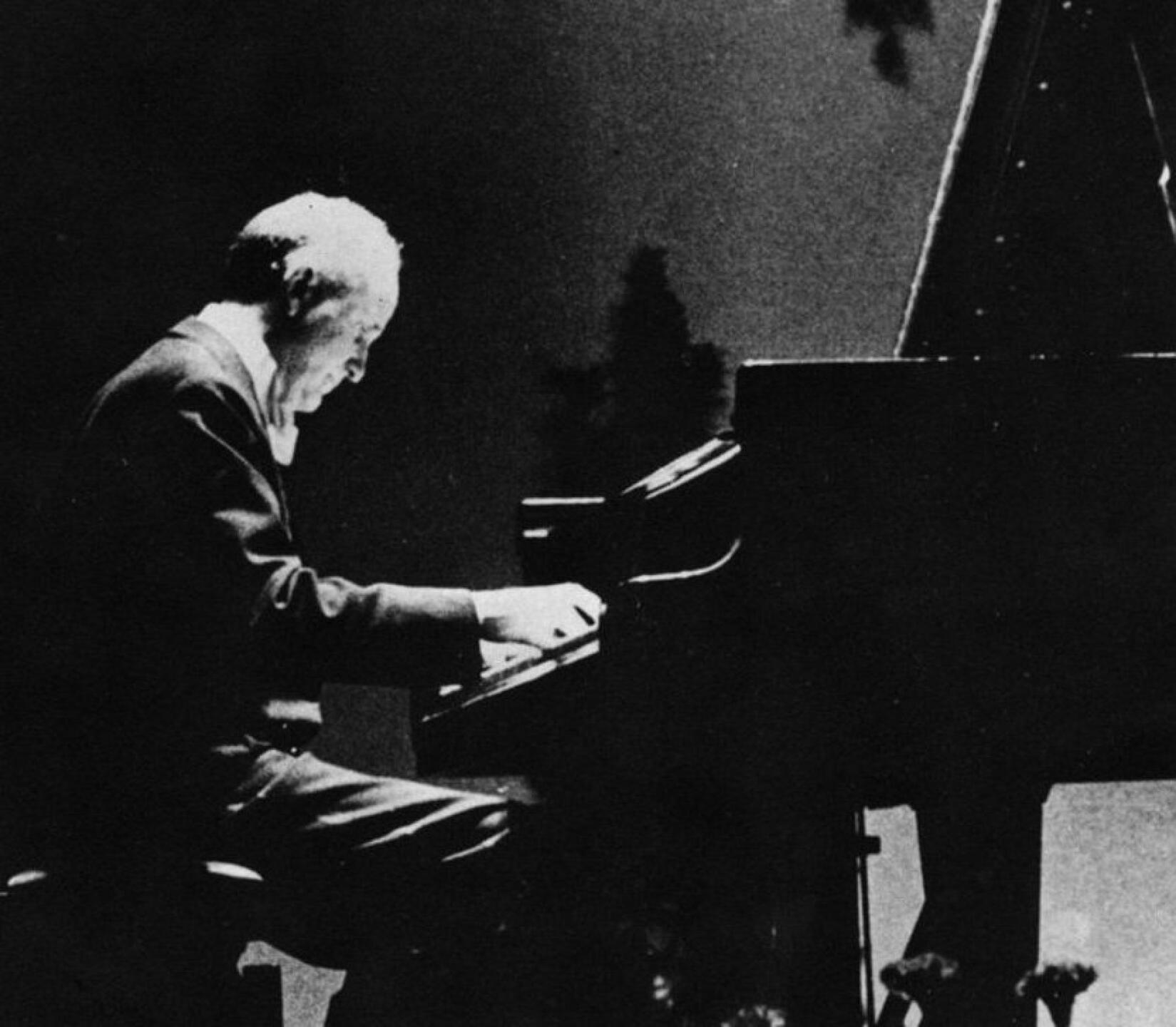
|
|
No | ||||||||
| Unstar/Unflag Submit a contribution to the 2026 Forum on Artistic Research: Submission #363 | Nikolay Barzakov | Nikolay | Barzakov | nbarzakow@gmail.com | Radical Listening: Activating Rear-Space Cognition in Performance Practice | Workshop | English | Listening is commonly understood as auditory attention. This workshop reframes listening as embodied, relational attunement to spatial forces, with particular focus on the under-theorised dimension of posterior orientation. Contemporary spatial organisation privileges frontality: the face, the screen, and the forward vector of attention dominate architectural and performative environments. The space behind the body is rarely cultivated as an active perceptual and decisional field. The workshop introduces rear-space cognition as the capacity to navigate, compose, and make decisions in relation to spatial fields that cannot be visually confirmed. Through structured embodied protocols, participants will decentre frontal visual dominance and amplify awareness of the posterior field, gravitational alignment, and cross-modal orientation. Guided movement scores and collective spatial tasks will investigate how activating back-space reorganises bodily presence, relational sensitivity, and three-dimensional coordination. Participants will explore how shifting attention into the posterior field transforms the organisation of the body in space, producing a more volumetric presence and heightened responsiveness without reliance on direct gaze. The workshop situates rear-space cognition as an artistic research tool that expands perceptual hierarchy and challenges the assumption that spatial intelligence is primarily forward-facing. Rather than proposing a therapeutic practice, Radical Listening offers a transferable methodology for cultivating multi-directional awareness and reconfiguring how collective decisions emerge in performance and shared environments. |
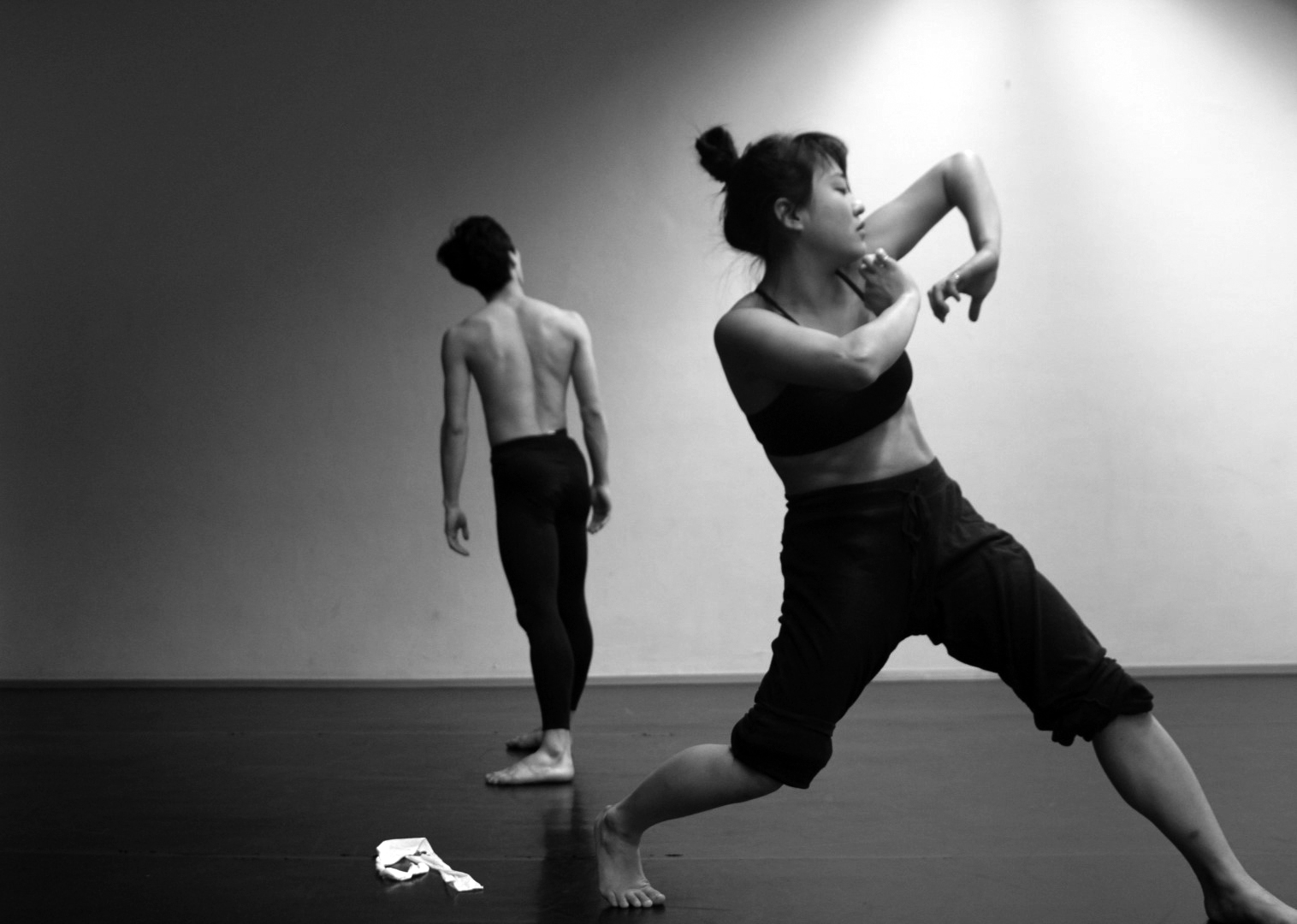
|
|
The methodologies presented in this workshop emerge from ongoing laboratory-based practice within university teaching contexts and independent artistic research sessions focused on embodied presence and spatial decision-making. While not presented in this exact format, these protocols have been developed and refined through pedagogical and rehearsal environments. | The workshop is designed for 120–150 minutes and combines brief theoretical framing with guided embodied exploration. The structure includes movement protocols, collective compositional tasks, and reflective dialogue. Participants work individually, in pairs, and in small groups to investigate rear-space orientation and its impact on spatial organisation. The session will conclude with a moderated reflection connecting practice to artistic research discourse and the Forum’s themes. The format prioritises experiential inquiry while maintaining clear research framing and methodological coherence. | Open studio space allowing free movement. | The workshop involves movement and spatial exploration without necessary physical contact. Participants may opt out of any task at any time. Exercises prioritise awareness and presence. Clear verbal guidance will ensure accessibility and psychological safety. | Yes | Nikolay Barzakov | |||
| Unstar/Unflag Submit a contribution to the 2026 Forum on Artistic Research: Submission #362 | Anonymous | Clareese | Hill | C.hill@northeastern.edu | Cosmologies of Worldbuilding | Experimental format | English | Researchers from the Lab of Speculative Repair propose a workshop exploring worldbuilding through divination and non-Western cosmologies. The lab is interested in worldbuilding as a pedagogical mechanism in games and how these understandings transfer into the real world. Facilitators will examine how divination technologies from African and Indigenous belief systems to tarot function as pedagogical tools that conjure a worldbuilding praxis centered on consent and speculative methods of repair. The workshop will support the development of an interactive oracle AI project and interrogate worldbuilding as a tool of repair in the design of interactive narrative XR applications. The workshop accommodates 10 to 12 self-selected participants over two hours. The lab will supply tarot decks; participants should bring large pads and writing materials. The workshop unfolds across three learning outcomes. The first explores the history of tarot, focusing on the Rider-Waite-Smith deck and its illustrator, Pamela Colman Smith, a woman of color erased from her own work until the 2009 centennial, when U.S. Games finally renamed the deck in her honor. Participants will reflect on the contributions of women of color to worldbuilding and their systematic erasure.The second outcome examines overlaps between African, African American, and Indigenous cosmologies and contemporary divination practices as forms of social worldbuilding, exploring how these traditions evolved alongside tarot through queer, Black, Indigenous, and ecologically inspired decks. The third outcome uses collective worldbuilding through active tarot reading to track what has and hasn't worked in prior worldbuilding frameworks, reconsidering speculation and the consent embedded in divination as a foundation for reimagining terraforming. The structural framework is the Kongo cosmogram, a cartographic chart from the Bakongo tradition mapping the relationality between the spirit world and the physical. |
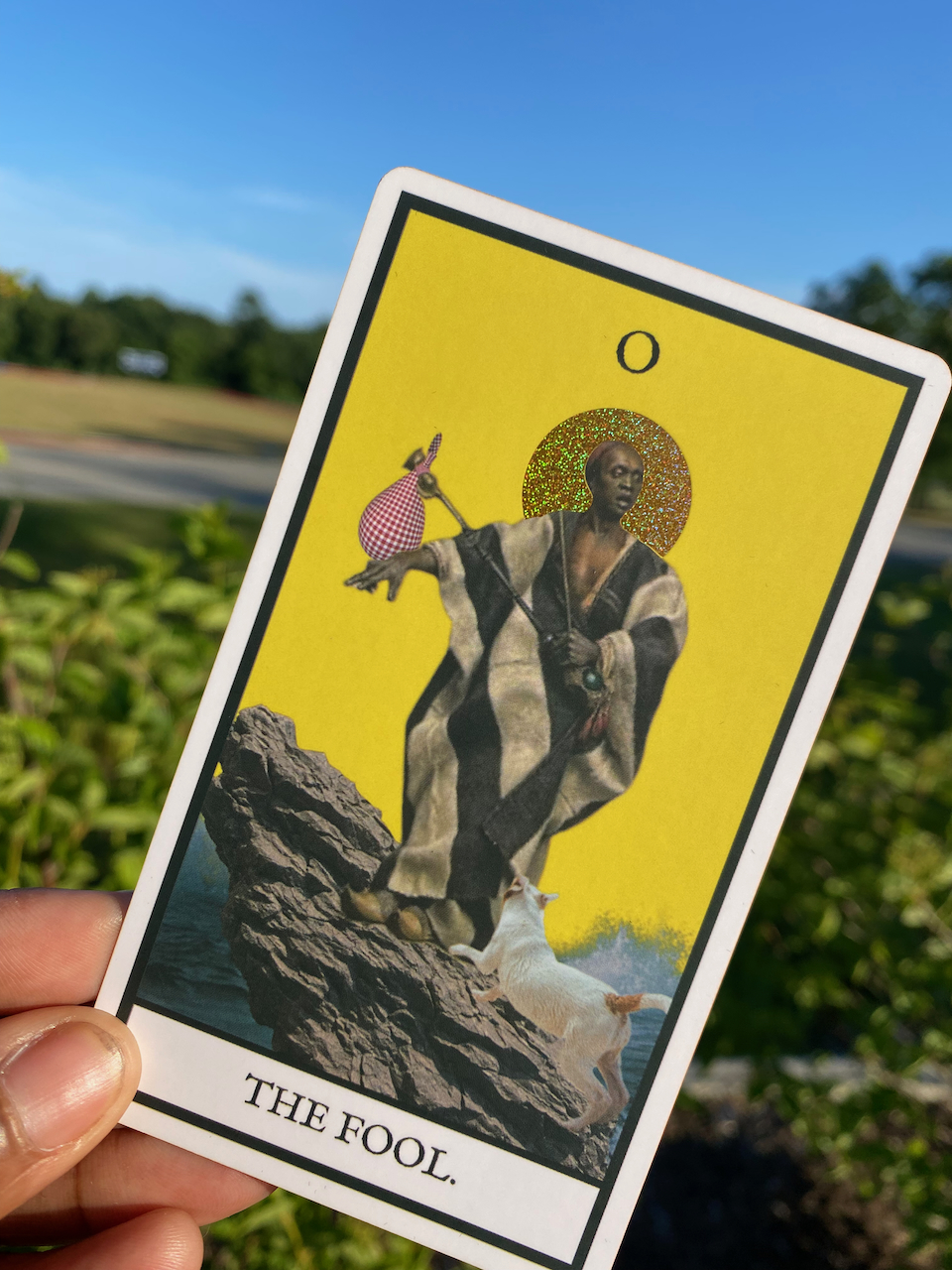
|
|
This work has not been presented previously. | easels, flexible space, ability to play audio and video | Yes | Clareese Hill | |||||
| Unstar/Unflag Submit a contribution to the 2026 Forum on Artistic Research: Submission #361 | Anonymous | Amy | Sparks | gilm0024@umn.edu | Time Travel: Embodied Artistic Research as Tactile Archive, Ancestral Memory, and Pedagogies of Slowness | Experimental format | English | This laboratory invites participants into a live, tactile encounter with a reconstructed 1950s wool cloak transformed through arts-based educational research. The garment; altered with archival photographs, Irish lace, spray stencils, and layered stitching; functions as both artifact and method. It holds a lineage: Irish ancestors displaced by famine in the late 1800s, settling in Wisconsin on already-colonized land; a great-grandmother married at sixteen after losing her first baby; a grandmother sent away in 1952 as an unmarried mother. Their silence and hardness, once read as cruelty, begin to surface as sedimented grief shaped by migration, assimilation into whiteness, and the moral scripts of respectability. Rather than presenting findings, this laboratory stages artistic research as process. Participants are invited to move around the cloak, examine interior and exterior layers, listen to short audio excerpts, and engage in guided material reflection. The inquiry centers how conceptual worlds are stitched into garments, rituals, and bodies, and how colonial extraction relocates itself across generations, from land to family to marrow. A companion video and paper, Good White Women extends this research through performative layering and feminist self-critique; however, the cloak remains the primary research site: a living archive that resists efficiency and self-branding through slowness, tactility, and embodied attention. This experimental format responds to the Forum’s call by foregrounding endangered embodied and domestic knowledges, those often dismissed as private or apolitical, and by positioning artistic research as a space where inherited goodness can be examined, unsettled, and turned inside out. |
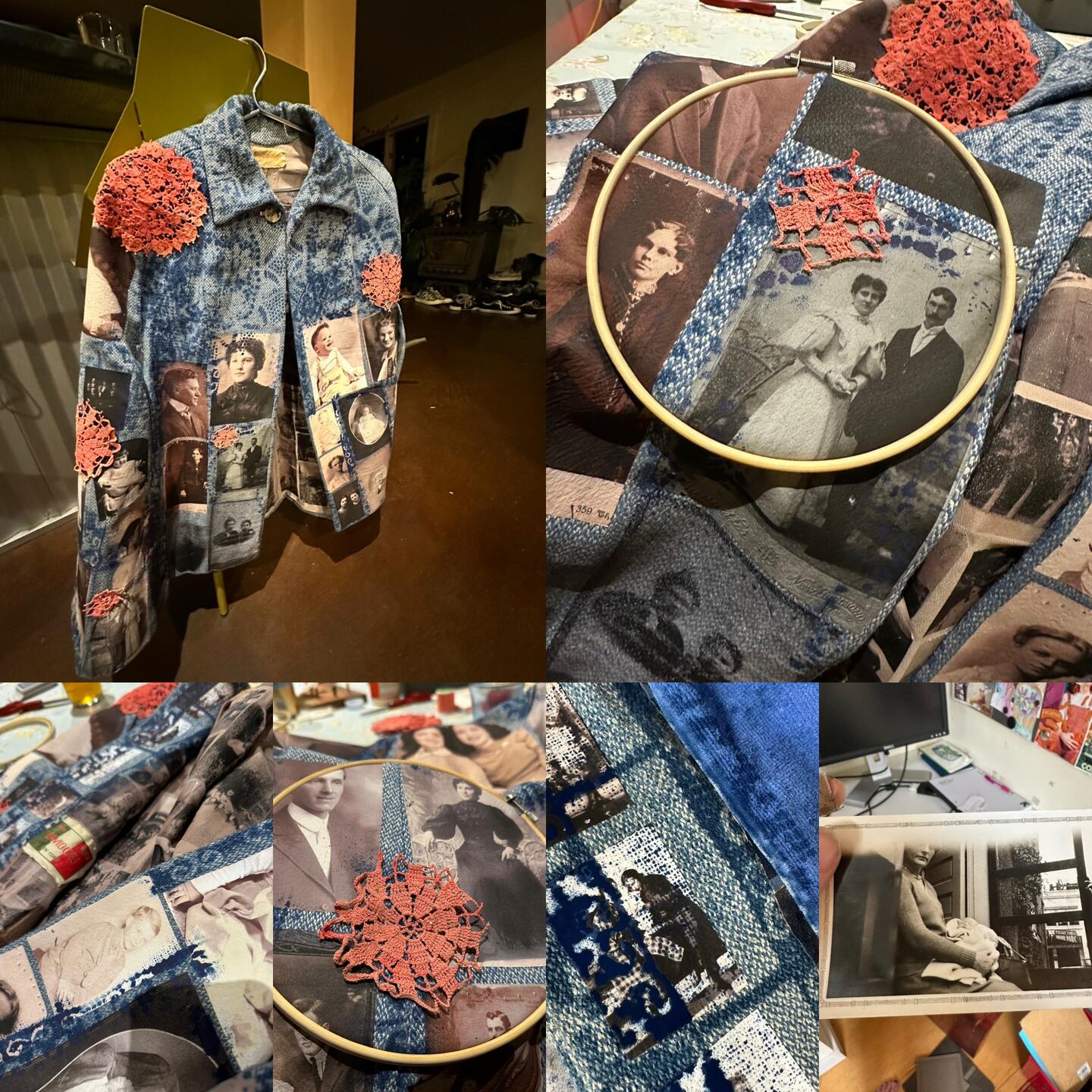
|
|
The laboratory will function as an open, durational space rather than a fixed presentation. The cloak will be displayed (worn or on a dress form), with documentation images and QR access to process video. Participants may enter and exit during the session. Short facilitated prompts will occur intermittently, inviting tactile reflection using simple materials (fabric scraps, tracing paper, thread). The format emphasizes slow looking, quiet dialogue, and relational inquiry rather than lecture. The space operates as an unfolding research site where participants collectively examine how inherited conceptual worlds are materially constructed. |
Open room or flexible studio space with tables arranged to allow participants to gather and work collectively. Seating for small-group conversation and shared making. Materials table for fabric, paper, thread, and writing tools. Dress form or hanger for cloak display. Video monitor or projector with sound to loop the cloak-making process video. Soft lighting preferred for textile visibility. |
The work engages ancestral histories and colonial inheritance. Pseudonyms are used for living relatives. Participants will not be required to disclose personal histories; reflective prompts remain invitational. The inquiry may surface discomfort regarding whiteness, assimilation, and complicity; this is framed as generative rather than confrontational. | No | |||||
| Unstar/Unflag Submit a contribution to the 2026 Forum on Artistic Research: Submission #356 | Anonymous | Edmund | Hunt | edmund.hunt@bcu.ac.uk | Augmented Vocality: Reimagining Old Irish Poetry for Contemporary Classical Music | Project presentation | English | Augmented Vocality: Recomposing the Sounds of Early Irish and Old Norse was a cross-disciplinary artistic research project, funded by the AHRC, that ran from 2020 to 2023. The project’s key aim was to reengage with the sonic qualities of early medieval texts from two significant corpora: Early Irish and Old Norse. By combining linguistic and literary scholarship, analysis, audio processing, and musical composition, the project sought to develop new methodologies for cross-disciplinary artistic research. Between 2020 and 2023, Augmented Vocality resulted in a number outputs, including: audio databases of texts, words, and phonemes in reconstructed Old Norse and Old and Middle Irish pronunciation; audio processing tools; and musical compositions for singers, live electronics, and ensembles. During the AHRC-funded phase of Augmented Vocality, the project team, comprising researchers from the department of Anglo-Saxon, Norse and Celtic (University of Cambridge) and Royal Birmingham Conservatoire, sought to develop methodologies for creative engagement with the reconstructed sounds of Early Irish and Old Norse. Rather than trying to recreate a version of historically-informed performance, we felt that working with native speakers of the project’s descendent modern languages (Irish and Icelandic), combined with contemporary music and technology, would enable us to re-present the performative qualities of early texts in a twenty-first century context. We intended to develop a framework for cross-disciplinary research that could be repurposed and adapted for other artistic research projects involving ancient, endangered, or minority languages. Since 2023, our research has focused on how we might apply the project’s databases and tools to different performance contexts, with a greater emphasis on composer-performer collaboration. To explore these areas, this paper draws on a work-in-progress for guitar, audio archive material (a recorded poem in Old Irish) as a case study. | https://www.researchcatalogue.net/view/4217852/4217853 | https://www.researchcatalogue.net/view/4217852/4217853 |
|
|
Previous work based on Augmented Vocality has been presented at other conferences, but this is the first time that this paper (focusing on a new composition) will be presented. | There are no technical requirements. | There are no ethical concerns associated with this research. | No | |||
| Unstar/Unflag Submit a contribution to the 2026 Forum on Artistic Research: Submission #352 | Anonymous | Cecilia | De Lazzaro | cecilia.delazzaro@conservatoriovivaldi.it | Sonic Archetypes of the Mondine: Artistic Research as Environmental Testimony | Experimental format | English | This project presents a performative and discursive investigation of the sonic archetype of the mondine — seasonal rice-field workers — as a site of endangered knowledge and minoritised oral traditions. The artistic research positions itself as environmental testimony, making audible the interactions between human voice, ecosystems, and social memory. The work reinterprets historical repertoires through improvisation and site-specific performance, highlighting how vernacular songs and embodied sonic practices resonate with contemporary ecological and social urgencies. The performances created in this research are grounded in ethnographic and practice-based methodologies, including field recordings, interviews, audiovisual documents, hydrophones and sensors, electroacoustic compositional processes, and vocal improvisation as a form of situated knowledge. Case studies address rice-field pollution, abandoned industrial sites, and invasive alien species, exploring the interplay between human voice and environmental sounds, and demonstrating artistic responses to ecological transformations. By engaging with the sonic archetype, the research explores how endangered conceptual worlds generate distinctive forms of innovation. The mondina repertoire is treated as generative rather than archival: improvisation mediates dialogue between voice, biophony, geophony, and anthropophony, revealing precarious ecological conditions and making visible subjugated knowledge embedded in the landscape. This approach emphasizes resilience, resistance, and revival, demonstrating the potential of minoritised sonic languages to counter homogenising pressures, platform capitalism, and cultural standardisation, while offering alternative epistemic models for listening, interpretation, and creative action. The presentation combines live performance and discussion, illustrating how artistic research can act as both an aesthetic experience and a method of ecological and cultural investigation. |
|
|
-27.05.2025,PARL, Platform for Art and Research Linz Overcoming Boundaries: A Dialogue Between Artistic and Scholarly Research. "Sonic Mapping as Cross -Disciplinary Research: Connecting Artistic Practice and Scholarly Inquiry in the Soundscape of Female Rice Field Work Songs" - 17-10-2025, Anda Symposium: "Dalla figura della mondina alla risaia contemporanea: pratiche artistiche tra ecoacustica, voce e trasformazione sociale" - 175-11- 25 Oi dialogoi symposium: La figura della mondina |
projector, an audio system with mixer, and a microphone for singing. | No | ||||||
| Unstar/Unflag Submit a contribution to the 2026 Forum on Artistic Research: Submission #350 | Synne Tollerud Bull | Synne Tollerud | Bull | synnetollerud.bull@kristiania.no | Artistic Intelligence and Infrastructural AI: Reframing Urban Perception in Automated Environments | Roundtable contribution | English | Artificial intelligence is reshaping urban environments at a scale and speed that outpaces critical understanding. Cameras, sensors, and predictive systems increasingly determine how cities are navigated and known, producing urban knowledge organised around computational legibility at the expense of situated experience. Through the ongoing artistic research project Time to Reflect Reality (TTRR; Bull.Miletic, 2020–) we investigate this transformation, taking the tram network, from its electrified origins to its instrumentation toward autonomy, as our point of departure. The project forms part of AI Ecologies, which approaches AI not as a singular technology to be adopted or resisted, but as a complex environment of interwoven material, energetic, and algorithmic systems. Building on Guattari's three ecologies, the group develops a multi-scale framework tracking AI across three mutually determining registers: infrastructural, epistemic, and operational. In TTRR, we trace a genealogy of urban machine vision from the early phantom ride and the perceptual experience of mechanized urban movement we have conceptualized as cinéma trouvé to contemporary autonomous sensing. In the prototype installation, a self-driving vehicle navigates the gallery projecting archival tram footage, while a second, orbital projection holds the street-level gaze in tension with the planetary scale of remote sensing. We ask how artistic research can hold open the interval between sensing and interpretation that automated systems are designed to eliminate. What forms of collective agency remain possible when reflection is compressed into real-time calculation? Can artistic research strengthen a society's capacity to engage with technological and ecological change while operating from within the infrastructures it questions? And what conceptual tools are required when knowledge production becomes entangled with planetary-scale computation? |
|
|
Selected earlier iterations of Time to Reflect Reality were presented between 2020 and 2021, including the CAA 109th Annual Conference, the International Latsis Symposium at EPFL, and the Urban Ecologies project at ROM, Oslo. Those presentations focused on the prototype installation and its genealogy of machine vision. The present roundtable reflects a new research phase (v2.0) turning toward AI infrastructures, predictive modelling, and the material conditions of computational vision. | As a participant in the roundtable, I will contribute a short input drawing on the ongoing development of TTRR (v2.0), introducing the multi-scale framework (infrastructural, epistemic, and operational dimensions of AI) developed within AI Ecologies and situating the project within debates on artistic intelligence and planetary-scale computation. I will bring short visual excerpts from the work to support the discussion and to open questions for exchange with the other participants and the moderator. | Projector with HDMI connection and audio playback for short visual excerpts. Internet access if available, but not essential. | My contribution discusses AI infrastructures, sensing systems, and extractive technological supply chains but does not involve personal data, human subjects, or sensitive material. No specific ethical risks are anticipated. | Yes | Synne Tollerud Bull | |||
| Unstar/Unflag Submit a contribution to the 2026 Forum on Artistic Research: Submission #348 | Anonymous | Stephanie | Misa | stephanie.misa@gmail.com | Saluhan | Performance | English | Oralities are spoken languages existing outside the framework of reading and writing – living through embodied articulations of marginalized bodies. “Saluhan" looks at oralities as potentiality, rather than the written and material residue of language and their agency as they narrate a diffused and transitive space of ‘commoning’ to ask: what happens to the mother tongue in diaspora? Does the tenacity of language spoken in migrant communities attest to resilience or perhaps a recognition of language in its fullest sense: as a site of power, identity, longing, memory? “Saluhan” is a participatory artistic research project working with the Filipinx community (first and second generation) in Helsinki to observe the use of their orality, and how this generates an identity that is both inside and outside the scope of assimilation or assumed Finnish-ness. Emphasized here are methodologies of resistance (silence, opacity or refusal) and transformation (hybridity, slang, linguistic innovations) as participants navigate multi-faceted identities. Through intergenerational and multilingual encounters, “Saluhan" brings forward situated forms of knowledge and lifeworlds which are invisible within the Nordic labor paradigm. The project worked with eight Filipinx families and their stories are presented as a performance lecture by Jay Albaos and Stephanie Misa. As artist-researchers with Philippine migration backgrounds, we work multilingually and relationally, drawing on shared cultural references such as cooking and eating together, karaoke, dancing etc. These elements function as epistemic anchors—material and affective carriers of conceptual worlds shaped by feminized labor export, racialized care economies, and extractivist legacies. Through co‑creation, “Saluhan" becomes a site where these worlds can be held, tended to, and made seeable and sayable. Saluhan proposes artistic research as a collective practice of care, resistance, and knowledge‑making. |
|
|
The performance lecture would require a projector or monitor, microphones ( for two performers) and speakers. A room for 40 persons (seated) should suffice. | None at this stage. | Yes | Stephanie Misa | |||||
| Unstar/Unflag Submit a contribution to the 2026 Forum on Artistic Research: Submission #347 | Adam Nasser Benmakhlouf | Adam Nasser | Benmakhlouf | a.benmakhlouf@ed.ac.uk | Attempts to locate the body are continuing: A practice-led enquiry into artists' workshops, care and non-normative writing within contemporary art institutions | Performance | English | 'Attempts to locate the body are continuing' (ATLTB) is a collection of experimental writing in which I articulate my lived experience of running and participating in artists’ workshops. I identify workshopping as a key set of practices in contemporary art prioritising innovative sociality, collective care and non-normative methods of thinking and making together. The emphasis on embodiment and situated forms of knowledge, in resisting the structure of the objective passive audience and the active artist practitioner, makes workshopping’s powerful effects often come across as ineffable as they emerge and are felt in an entanglement of bodies working together in the interstices of more recognisable work, learning or social contexts. Unsayability of its impact threatens its realm for expansive study, improvisation, anarchic intimacy and unique ways of being in the world. As a disabled, queer, nonbinary working class person of colour, I recognise the workshop as distinctively valuable to marginalised bodies in society. I propose an hour-long performance of hybrid creative-critical writings, combining my PhD thesis' performance writing, fictioning, embodied poetic prose, and analytical-reflective accounts of my own invisible labour setting up queer, decolonial, working class, crip workshopping spaces, and methodological reflections to ensure ATLTB is shareable as a systemic method of artistic research, and reproducible beyond its own content and context. 'Attempts to locate the body are continuing' not only discusses, but evidences the capacities of endangered conceptual worlds to generate distinctive forms of innovation through the multiple registers and kinds of knowledge which coexist in my performance. Each one catalyses the other, across embodiment, collective organising, theoretical reflection and active accounts of praxis, making for a delicately arranged rhizomatic structure of learning and worlding through exceptional presence, sensitivity and care. |
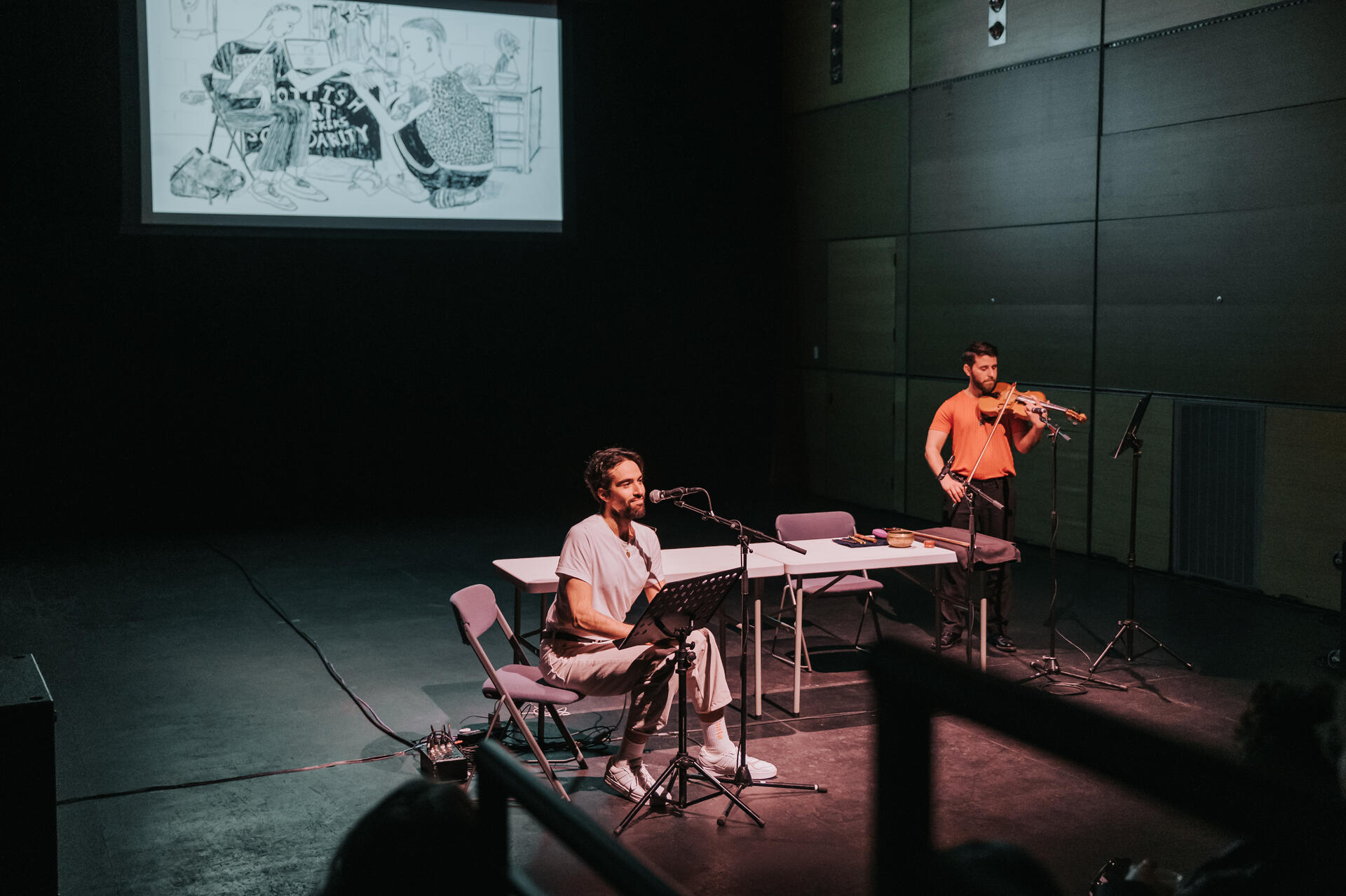
|
|
The work I propose for my performance has been developed extensively through public sharings from 2021-present, for example: My one-act play 'Twig and Stump' in Dundee Contemporary Arts, May-June 2022 My one-act play 'Magenta Velour Glove' in Centre for Contemporary Art Glasgow, May 2023 My embodied poetic prose in Manchester Whitworth Gallery, British Art Network Queer Working Class Event Programme, and in University of Durham, Critical Neurodiversity Studies Conference |
I have not provided an exhibition as this is listed as relevant to project presentations only. The writing has been extensively developed under the generous supervision of Professor Maria Fusco, the pre-eminent international practitioner of interdisciplinary and experimental writing. I developed this material over the course of 2021-2026 as a fully-funded Doctoral student in the Scottish Graduate School for Arts and Humanities. As a Lecturer in University of Edinburgh, I'm now further refining my work as a professional academic researcher with full institutional backing. | I would like to use a clip-on microphone, a projector. I'm happy to adapt to a range of spatial configurations, and have good experience of performing in academic layouts. | I do not foresee any risks or ethical concerns | Yes | ||||
| Unstar/Unflag Submit a contribution to the 2026 Forum on Artistic Research: Submission #346 | Anonymous | Mo | Zhou | m.zhou0320256@arts.ac.uk | Between the Lines: Sonic Heterotopias and Minoritised Voices in Narrative Public Art | Project presentation | English | This project presentation introduces an ongoing practice-based doctoral research that investigates how minoritised and endangered forms of everyday knowledge—such as vernacular speech, family voices, and affective memory—can be activated through narrative public art as artistic research. Focusing on sonic and relational practices beyond the purely verbal, the research explores how voice operates as an epistemic medium through which experiences of otherness, distance, and belonging are made perceptible in public space. The presentation centres on Between the Lines, a participatory sound installation developed across culturally specific sites in the UK and China. By employing public telephones as interfaces, the work invites participants to listen to intimate greetings spoken in a hometown dialect and to contribute their own spoken reflections on moments of being culturally “out of place.” These exchanges foreground forms of knowledge that are often overlooked, unarchived, or rendered invisible—domestic speech, oral memory, and emotionally charged vocal expressions—while situating them within a shared public environment. Rather than treating language as information, the project approaches voice as an embodied, temporal, and affective practice that exceeds full articulation. Through listening and speaking, participants engage with forms of knowing that are sensed rather than fully explained, revealing how sonic practices can sustain endangered conceptual worlds embedded in everyday life. Methodologically, the research employs participatory action research, positioning artistic practice as an iterative mode of inquiry in which participants contribute to the ongoing formation of meaning. The presentation reflects on how narrative public art can operate as a heterotopic space for the negotiation of minoritised voices and examines the role of sonic artistic research in making fragile, situated knowledges audible within contemporary visual, sonic, and digital cultures. |
https://www.researchcatalogue.net/shared/cab78c7a0646dddfa32a207b4f83ca78 | https://www.researchcatalogue.net/shared/cab78c7a0646dddfa32a207b4f83ca78 |
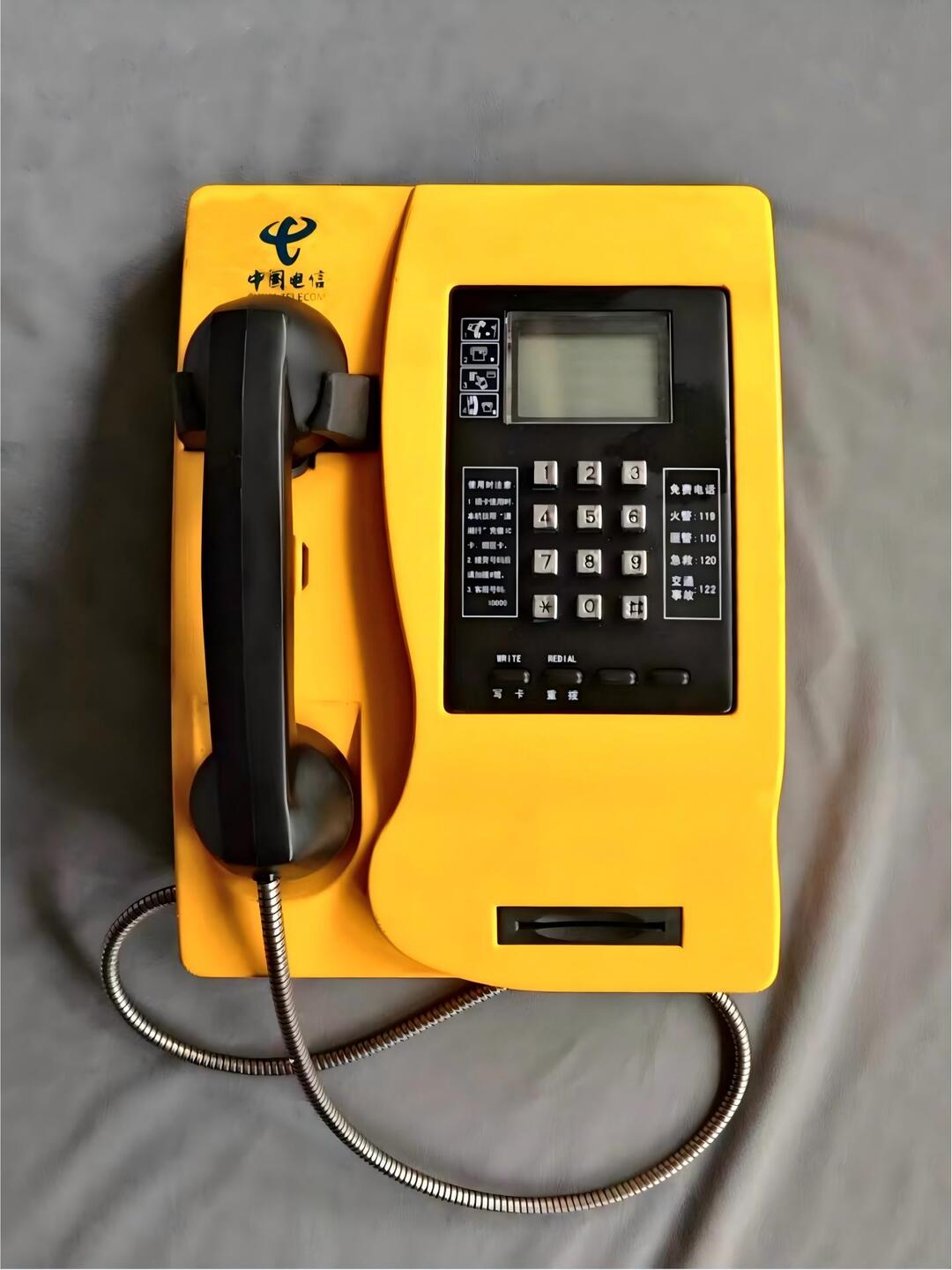
|
|
Earlier iterations of Between the Lines have been exhibited in academic and gallery contexts as part of the author’s doctoral research. Related aspects of the broader research have been submitted to international conferences in art and humanities contexts. The SAR presentation focuses specifically on the project’s sonic, minoritised, and non-verbal dimensions as artistic research. | The presentation will combine visual documentation, sound excerpts, and reflective commentary. Short audio fragments from the installation will be used to illustrate how voice operates as an embodied and affective form of knowledge within the work. The presentation emphasises process, iteration, and artistic decision-making rather than fixed outcomes, and will invite discussion on how sonic practices can articulate endangered conceptual worlds beyond the verbal. | Standard presentation setup is sufficient. Audio playback capability (speakers) is required for short sound excerpts. No live performance or complex installation setup is needed. | This project involves voluntary public participation through listening and spoken contributions. All recordings are anonymous, non-identifiable, and collected with informed consent. Participants may withdraw at any point. The research follows institutionally approved ethical protocols, with particular attention to care, consent, and the non-instrumentalisation of participants’ voices. | Yes | Mo Zhou | |
| Unstar/Unflag Submit a contribution to the 2026 Forum on Artistic Research: Submission #345 | Anonymous | Samo | Zeichen | samo.zeichen@gmail.com | Veliko nas je bilo / We were many – Articulating Disappearance: Slovene Voices from the Archive | Experimental format | English | How can the slow disappearance of an ethnic group be articulated? How does the loss of linguistic identity manifest itself, and what political circumstances lead to this? The project Veliko nas je bilo / We were many – Articulating Disappearance: Slovene Voices from the Archive, critically examines sound recordings of Carinthian Slovenes from the 1960s and 1970s which are stored in the Phonogrammarchiv (Austrian Academy of Sciences – ÖAW) in Vienna. Although these recordings were originally intended for dialectological and linguistic research, this project explores whether their entry into the archive coincided with the group's gradual disappearance in the outside world. The sound recordings tell stories of belonging, temporality, and materiality, and even after digitisation, these sonic memories remain witnesses to the time when they were captured. This project is an invitation to understand language and identity as something ghostly that is inherent in all social relations and can dis-appear or re-appear at any time. The metaphor of the ghost is applied to further investigate the invisible fabrics of social relations in Koroška (Carinthia) and beyond. Through attentive listening, the recordings re-surface as carriers of meaning, and the artistic work derived from them re-connects them with the outside world. Reflecting the recordings in the context of critical archival studies can offer new perspectives on how such research projects served the interests of those in power by extracting materials and resources from elsewhere. This work is an appeal against forgetting and disappearance. The performance lecture/workshop/listening session collage re-circulates voices from the archive and brings them back to the here and now - into the centre of perception. The sound pieces re-connect the voices with the broader public – telling stories of the past, present, and uncertain futures. In English and Slovene. Dedicated to the liberation of those about to disappear. |
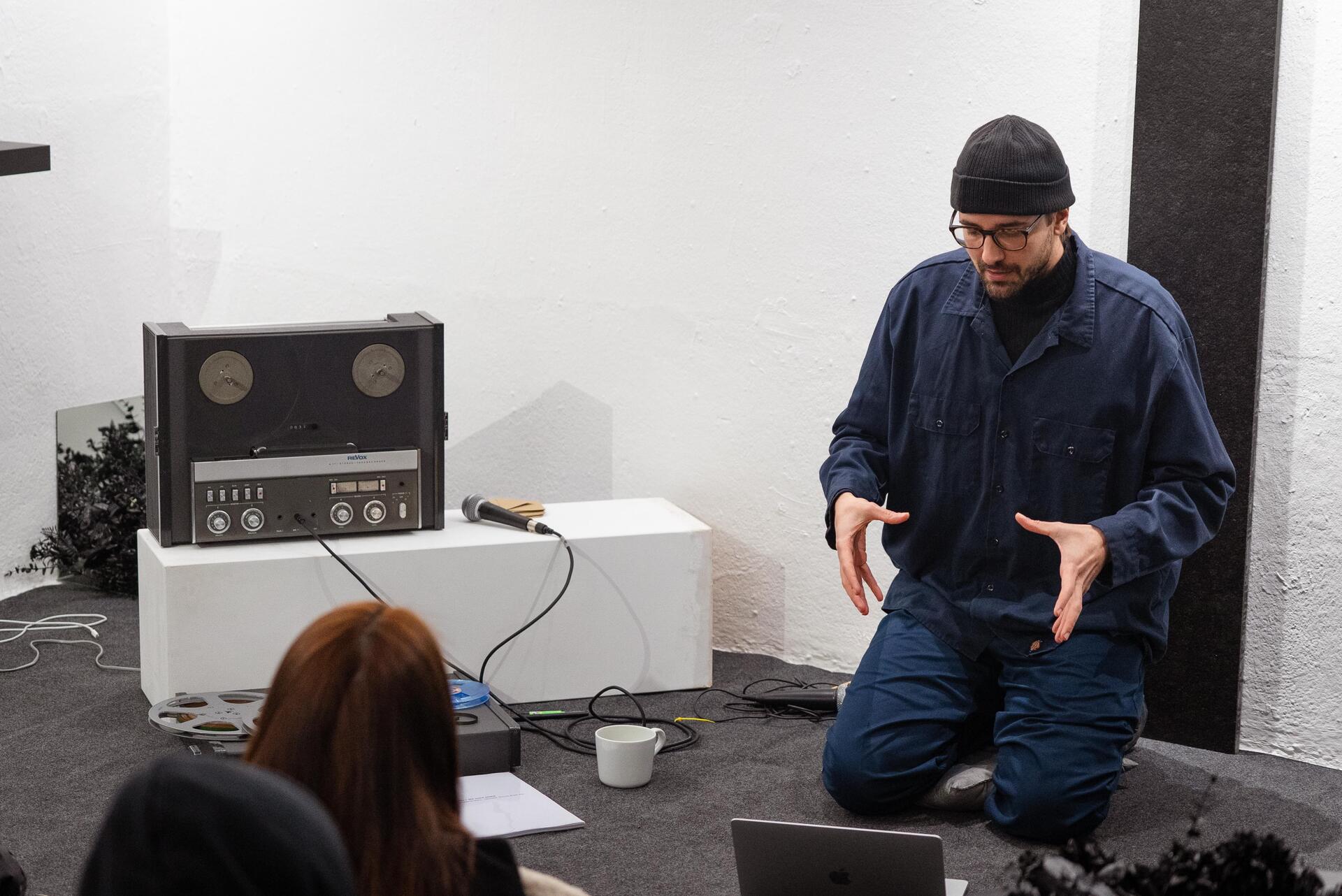
|
|
Veliko nas je bilo was Samos' master thesis project (artistic and scientific work) at the University of Applied Arts Vienna at the the department of Cross Disciplinary Strategies. A similar workshop was shown in a small gallery space in Vienna on January 16th 2026 as part of the exhibition Closer Still by Pakathi Brooklyn J. Yet the setting will be totally developed anew for the Endangered Conceptual Worlds conference 2026. | As all of Samo's projects are connected to practices that constitute knowledge-in-the-making at the time and place of presentation, each workshop and performance is unique. |
Small version (must have): A pair of working studio monitors (like yamaha, genelec, neumann, or similar) A mixing console where i can plug my laptop A audio cable small stereo jack to rca (goes from the laptop into the mixing console) A microphone for presentation All necessary power cables Participants should be able to sit comfortably, maybe the setup can be changed to a more loosely arrangement of chairs Extended version (only if possible): A Tape Machine (Revox A77) |
Yes | Samo Zeichen | ||||
| Unstar/Unflag Submit a contribution to the 2026 Forum on Artistic Research: Submission #344 | EVANGELIA KATSAITI | EVANGELIA | KATSAITI | ekatsaiti@uniwa.gr | The Visible, the Spoken and the Unspoken | Workshop | English, British | The workshop explores the relationship between the “visible”, the “spoken” and the “unspoken” in the context of artistic research, focusing on the intertwining of power, language and representation. Dealing with the subject of Photography and Gendered Narratives, it approaches photography as a mechanism for producing visibility and normalization, but also as a tool for deconstructing dominant narratives. The visibility of the body and its verbal framing constitute regimes of truth that determine which subjects are recognized and which are silenced. At the same time, the workshop examines the unspoken not as a lack of speech but as embodied and cultural knowledge that escapes the normative linguistic structure. Gesture, silence, orality and bodily memory are approached as threatened or minoritized artistic practices. Through image re-titling exercises, performative explorations and hybrid image-text-body compositions, participants are invited to reflect on: Who speaks? Who is visible? Who remains invisible? When does language function as a mechanism of power and when as an act of resistance? The workshop proposes a transferable methodological model of artistic research that combines theoretical analysis, artistic practice and collective reflection, highlighting the political and epistemological dynamics of the unspoken. Additional Information on the Presentation Format Duration: 150 minutes. The structure includes: Short theoretical introduction (30’) Practical exercise on photographic material and re-narration (40’) Performative exploration of the implicit through embodied practice (40’) Collective hybrid composition and reflection (40’) The workshop is participatory and is aimed at artists, researchers and educators. No specialized technical knowledge is required. The methodology can be applied in educational, community or research settings. |
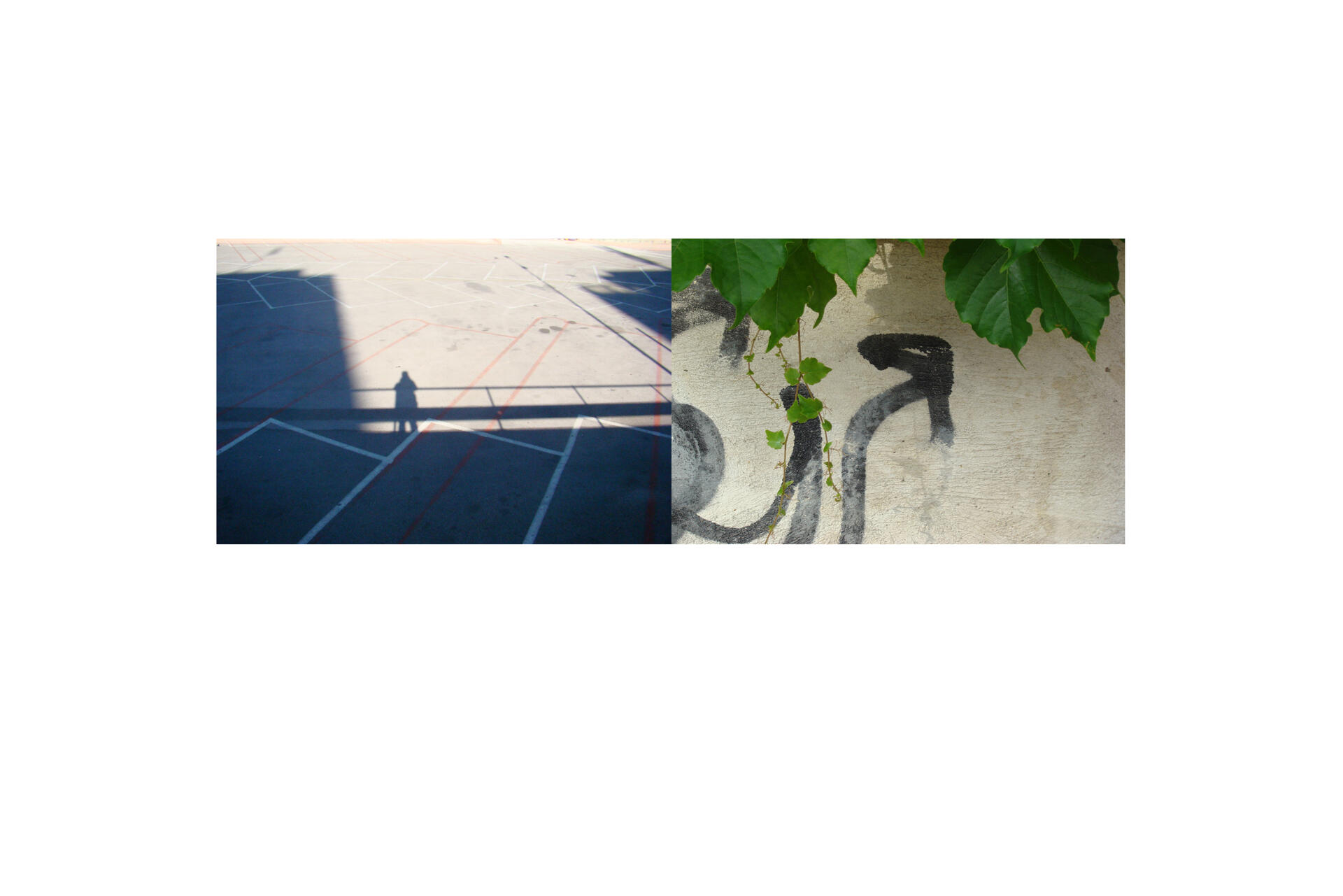
|
|
Duration: 150 minutes. The structure includes: Short theoretical introduction (30’) Practical exercise on photographic material and re-narration (40’) Performative exploration of the implicit through embodied practice (40’) Collective hybrid composition and reflection (40’) The workshop is participatory and is aimed at artists, researchers and educators. No specialized technical knowledge is required. The methodology can be applied in educational, community or research settings. |
A room that allows flexible configuration (circle and small groups), projector, computer, projection surface, work tables. Possibility of low lighting for performative exercise. Paper, markers, wall mounting tape. | The workshop may trigger personal experiences related to gender representation, exclusion or silence. A clear framework of care, voluntary participation and the possibility of abstention from exercises will be established. Personal material will not be used without consent. | Yes | EVANGELIA KATSAITI | ||||
| Unstar/Unflag Submit a contribution to the 2026 Forum on Artistic Research: Submission #343 | Anonymous | Chris | Groenveld | chrisandeverything@gmail.com | "Never Again. Five Stars": Game Design as Artistic Research into Platform Capitalism, Unsayability, and the Ethics of Remediation | Project presentation | English | "Never Again. Five Stars" takes its name from a contradiction found in thousands of Tripadvisor reviews of the Dachau Concentration Camp Memorial Site. In these entries, moral gravity coexists with the language of consumer evaluation. The same interface invites users to award five stars to hotels and restaurants and to Holocaust memorials. Conceived as artistic research, the project investigates how digital platforms structure the conditions under which Holocaust memory is expressed, circulated, and valued. The reviews function as testimony, complaint, recommendation, and data trace, shaped by rating systems, character limits, and commercial imperatives of visibility. The project asks how these infrastructural conditions contour affect, authority, and legitimacy, and what forms of speech fall outside their frame. At the centre of the work is a board game developed from a curated archive of real anonymised reviews. Participants must decide how to act in relation to these texts: to preserve, delete, reform, or instrumentalise. Each action requires the review to be read aloud. Speech is not supplementary but constitutive, staging a shift from silent scrolling to embodied articulation and foregrounding voice, hesitation, and complicity. Methodologically, the project treats the archive as a site of subjugated knowledge: vernacular, affective engagements with historical atrocity that are both solicited and disciplined by platform logics. The game's rule-based structure mirrors the administrative rationalities it interrogates, inviting players to experience their own implication in systems of ordering and extraction. The presentation traces archival reading sessions, design iterations, and playtesting as moments in which ethical and formal tensions became operative rather than resolved, proposing gameplay as a mode of inquiry that mobilises discomfort as a critical resource while remaining accountable to the histories it engages. |
https://www.researchcatalogue.net/view/4224805/4224806 | https://www.researchcatalogue.net/view/4224805/4224806 |
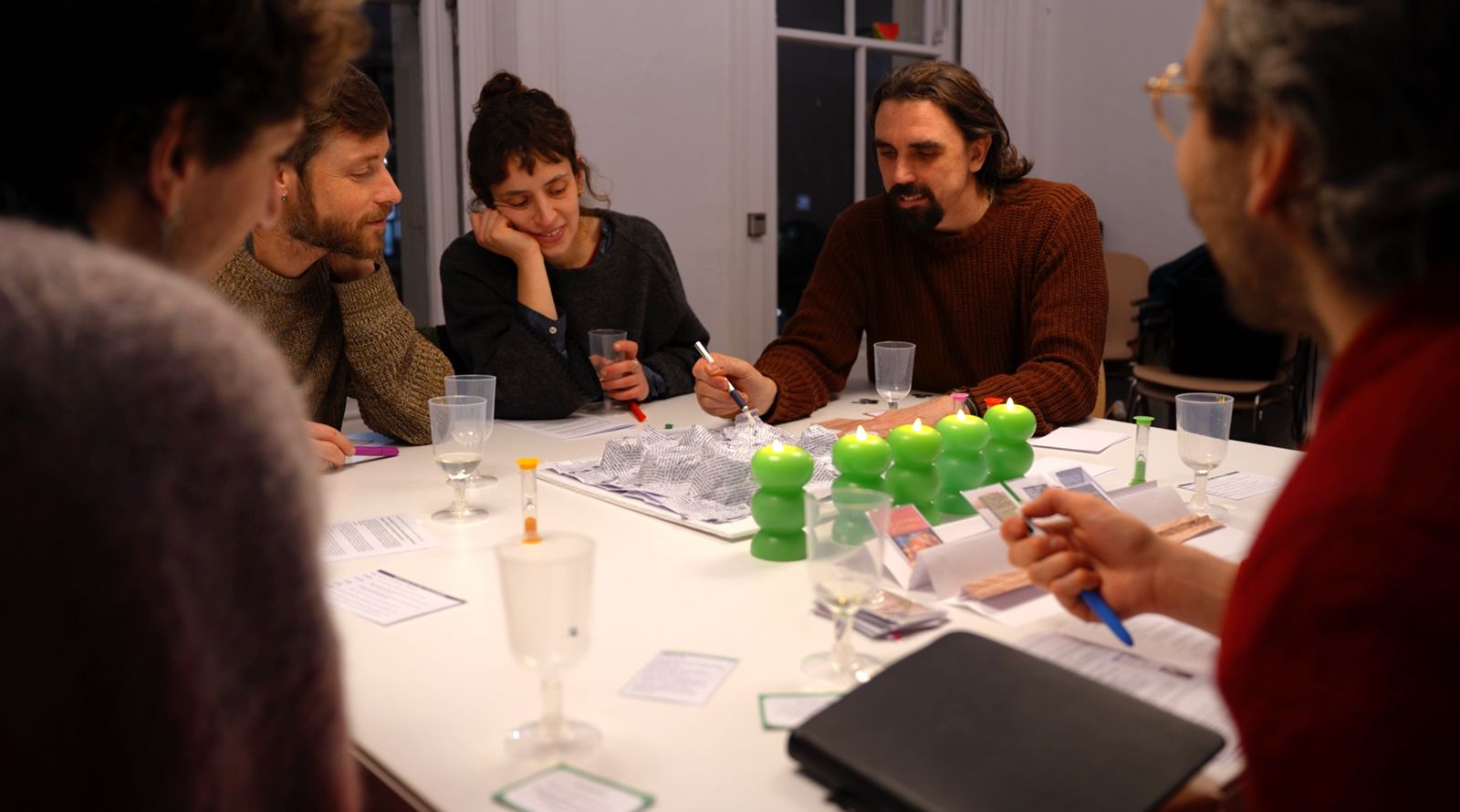
|
|
The board game at the centre of this presentation has been playtested in a small number of closed sessions, with staff at the UK's National Holocaust Museum and members of the Utrecht Games Lab, Netherlands, but has not previously been presented or published in an academic context. The research is ongoing and the current version of the game reflects findings from these sessions. The SAR 2026 Forum would be its first presentation to an international artistic research audience. | The 20-minute presentation will combine a brief account of the iterative research process with a short live demonstration of key game mechanics and card content, allowing participants to directly encounter the research material. Slides will document the evolution of game design across multiple prototypes, foregrounding moments of impasse as productive sites of artistic inquiry rather than resolved findings. The presentation will specifically address how game mechanics came to function as both research method and critical argument. Ten minutes will be reserved for Q&A. The presenter is open to the possibility of a small group handling the physical game materials during discussion, if table space permits. | Standard projection setup (screen, HDMI connection) for slides. A table with space to display physical game components, board, cards, tokens, for demonstration and post-presentation handling. No specialist AV requirements. Please note: the accompanying RC exposition is currently incomplete. I have been unable to successfully upload media due to difficulty using the RC interface with my accessibility software, and have not yet been able to schedule an access support appointment. |
The project uses anonymised Tripadvisor reviews of a Holocaust memorial as artistic material. Reviewers have not consented to this use. The research engages with these ethical tensions critically and reflexively, as they are constitutive of the inquiry rather than resolved procedurally. The presentation will involve reading some review content aloud, which may be distressing. Participants will be forewarned. | Yes | Chris Groenveld | |
| Unstar/Unflag Submit a contribution to the 2026 Forum on Artistic Research: Submission #341 | Jack Faber | Jack | Faber | jackfaber@gmail.com | Dictionary of Darkness: Artistic Research as Post-Linguistic Knowledge | Project presentation | English | Dictionary of Darkness is an Artistic Research project investigating how language, technology, and perception co-produce systems of control that shape ecological, political, epistemic and endangered realities. Developed as part of the research chapter Threshold Technologies & Extinction Economies, the project examines how the supposably marginalized linguistic presence of technical vocabularies—particularly military and surveillance lexicons—operate as instruments that reorganize perception while concealing the infrastructures of planetary crisis. Responding to the Forum’s focus on endangered conceptual worlds and minoritized knowledge systems, the project argues that infrastructural languages of power function as extractive technologies. These vocabularies standardize reality, suppress alternative epistemologies, and normalize asymmetrical relations between humans, machines, and environments. Rather than treating language as a neutral descriptive tool, Dictionary of Darkness approaches it as an operative force that produces material consequences. The research unfolds through moving image, sound, text and montage that destabilize authoritative terminology by placing official definitions within unfamiliar sensory environments. Drawing conceptual lineage from cinematic strategies in Lessons of Darkness by Werner Herzog and philosophical propositions in Postscript on the Societies of Control by Gilles Deleuze, the work demonstrates how artistic research can translate theoretical knowledge into experiential forms that exceed linguistic discourse. By suspending viewers between reading, listening, and sensing, the project proposes artistic research as a method for accessing forms of knowledge that cannot be fully articulated through other means alone. It suggests that rethinking how language operates—as atmosphere, architecture, and technology—is essential for sustaining conceptual diversity in an era defined by ecological degradation and informational control. |
https://www.researchcatalogue.net/shared/c6130d5e9ab40ae49daa7158e63f48b6 | https://www.researchcatalogue.net/shared/c6130d5e9ab40ae49daa7158e63f48b6 |
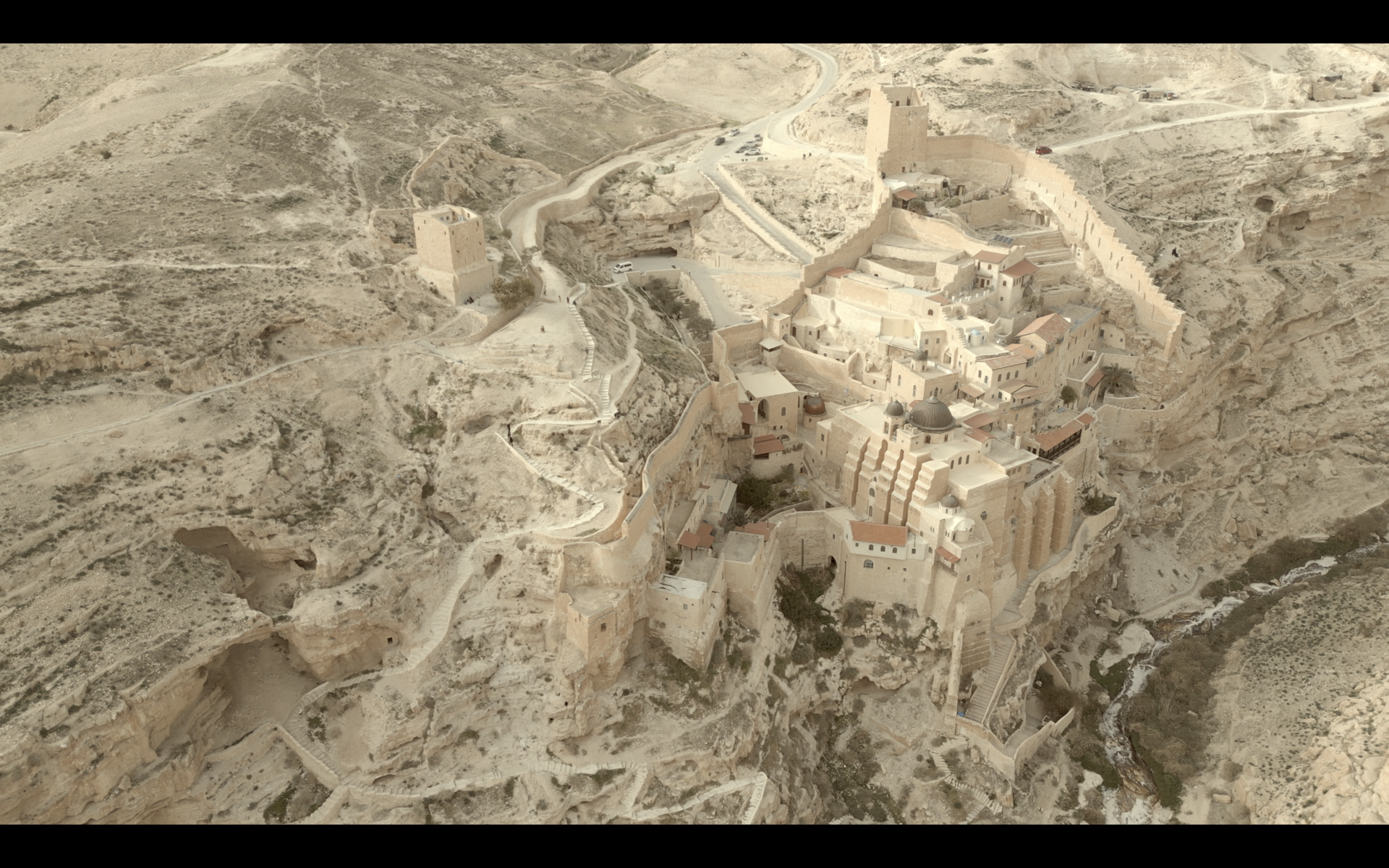
|
|
- | The presentation includes a short film screening + still images | - | Yes | Jack Faber | ||
| Unstar/Unflag Submit a contribution to the 2026 Forum on Artistic Research: Submission #339 | Anonymous | Paul | Green | paul.green@mtu.ie | Small Stories: Engaging Cultural Memory with Contemporary Language | Project presentation | English | Artists often give voice to marginalised communities and resist the cultural threats accompanying globalisation, dominant markets, popular narratives, technological change, and shifting political attitudes. This project highlights the importance of language on two levels. First, it considers the impact of indigenous language loss on the preservation of local folklore and cultural heritage. The disappearance of language-specific forms of expression diminishes cultural richness more broadly. Second, it addresses the development and recognition of artistic research, the expressive benefits of interdisciplinary collaboration, and the role of artistic language in public-facing and cross-disciplinary communication. The presentation explores the first issue through the collaborative practice of Paul Green and Tomasz Madajczak, focusing on work in the Irish-speaking regions of Cape Clear (Oileán Chléire) and the Muskerry Gaeltacht (Gaeltacht Mhúscraí) in County Cork. Madajczak responds to the cultural pressures of island life on Cape Clear through conventional and interpretive film approaches. Green draws on oral folklore collected in the early 1940s in the Muskerry Gaeltacht, developing short VR narratives narrated in Irish. These works re-engage a local oral tradition at risk due to demographic change. The language of artistic research is also examined as potentially vulnerable within a contemporary academic landscape where funding increasingly depends on cross-cultural and interdisciplinary partnerships. Drawing on three additional recent collaborations, alongside the project introduced above, the presentation identifies the conceptual and communicative challenges inherent in such work. It also examines related research initiatives on artistic collaboration between the Faculty of Creative and Performing Arts and Media and the Nimbus Research Center at Munster Technological University, funded by Research Ireland and TU RISE. |
https://www.researchcatalogue.net/shared/5890ec2cd8f280061ad4860f8717a4fa | https://www.researchcatalogue.net/shared/5890ec2cd8f280061ad4860f8717a4fa |
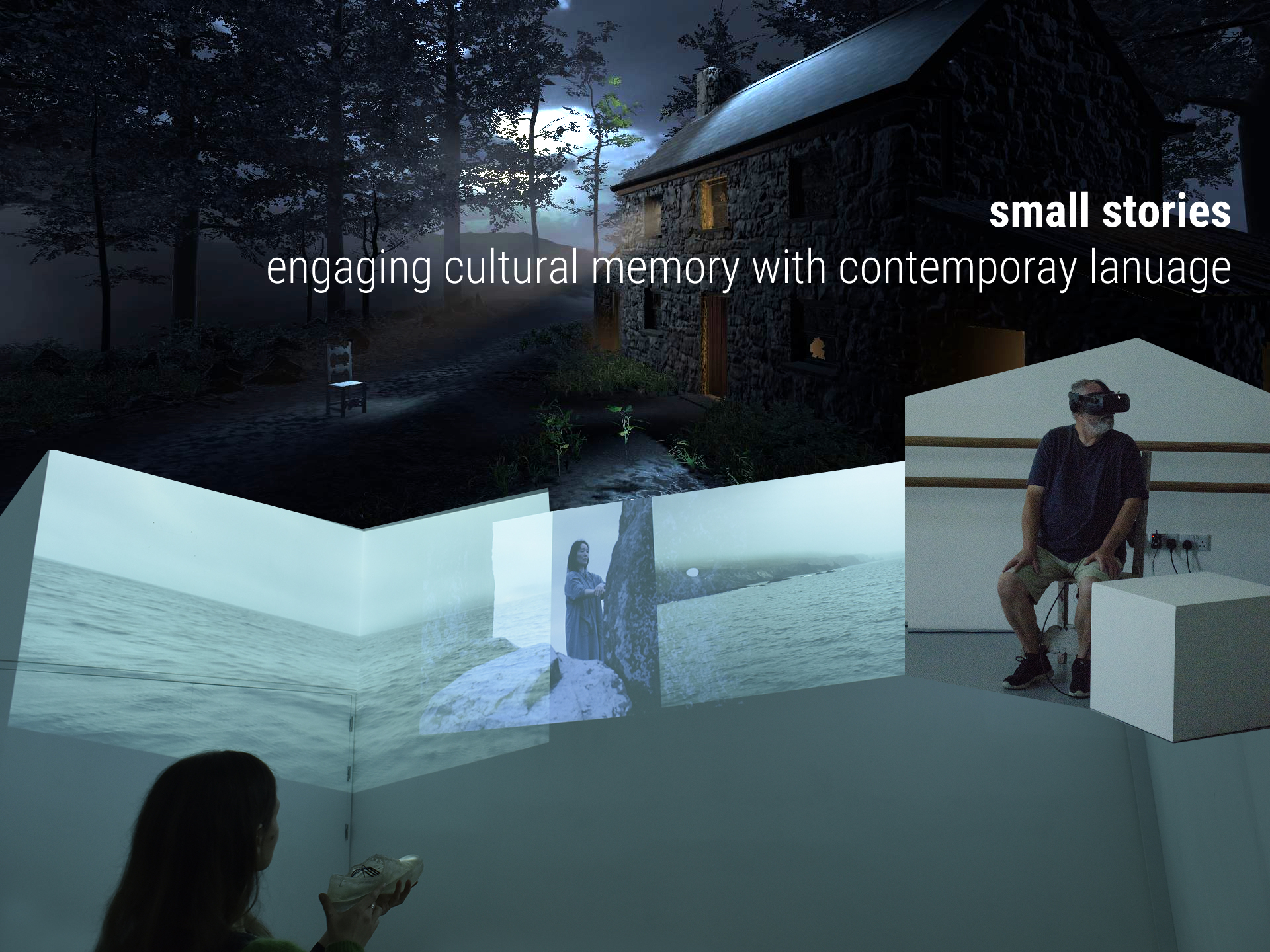
|
|
There have been no previous presentations of this project . The work is currently under development with dates targeting early 2027 for initial exhibition. Some of the collaborative activities described in the exposition, that support knowledge to be applied in this project, have been presented in the Digital Art in Ireland Symposium in University College Cork in 2024 and 2026. | The presentation of the will be with a standard PowerPoint presentation introducing visual examples of collaborative projects. | There are no special technical requirements for the presentation of the project. | There are no potential risks or ethical concerns in relation to this project. | No | ||
| Unstar/Unflag Submit a contribution to the 2026 Forum on Artistic Research: Submission #337 | Anonymous | Renata | Pekowska | renata.pekowska@gmail.com | Have you tried prompting your body? Attentive body as a site of intermodal interpretation and subjective response | Experimental format | English | I aim to present and discuss emergent understandings of my PhD research project which uses shared situations of responsive drawing as epistemic spaces of emergent knowledges and sites and acts of primary, creative, joint attention. By inviting participants to join a workshop session, I would like to initiate a discussion on the possible limits of creative possibilities of AI, using embodiment as the lacking element identified both by N. Katherine Hayles and Carolyn Christov-Bakargiev. During the session we will use mark making and its responsive crossmodal potential as a process within a lived, situated, spatial, bodily experience. I will present my processes of ‘prompting’ the body with verbal scripts, sensory presences, and space-or time-experience-related descriptions, revealing the body as a medium of transmission, activated as an imperfect conductor and a site of crossmodal interface. The workshop will use the marked space and surfaces as scripts for a performative interpretation. The performative workshop will interrogate a shared group situation of co-envolvement and togetherness, as enabling the processes of discovery and crossmodal bodily interpretations where subjective responses and perspectives are possible outside of the scale of attention economy models and algorithmically generated ‘discorrelated’ illustrations of a ‘gaze from nowhere’. The session will aim to show that the in-between spheres of intermodal description and response can generate critical reflection, lived discoveries, through being acts of ‘setting of the scene’ and ‘getting into it’ of primary embodied attention and rearranging of perceptual attentional habits. It will also aim to reiterate the proposed possibility of practicing and learning perceptual attention through shared acts of attention, and further explore attention as a non-binary concept which points to interconnected realities of experience and its representation. |
|
|
My current practice involves constructing and conducting expanded drawing sessions. My sessions have been hosted by IMMA, temple Bar Gallery & Studios, the Hugh Lane Gallery, Kirkos, Poetry Ireland, International Literature Festival Dublin, Architectural Association of Ireland, among others. | This session is suitable for 15-20 participants. Duration: one hour. | Technical & Spatial Requirements: The workshop session can adapt to different spaces, inside and outside. Tables and chairs if possible, paper and pencils, white chalk if any space surfaces available to mark. |
At this stage there are no foreseeable ethical risks or concerns related to this proposed activity. | Yes | Renata Pekowska | |||
| Unstar/Unflag Submit a contribution to the 2026 Forum on Artistic Research: Submission #334 | Anonymous | Carolyn | Defrin | cdefrin@gmail.com | Doors to the Future: Imagining more humane migration futures | Workshop | English | 'Doors to the Future' is an immersive sonic installation and participatory workshop engaging migration as an endangered conceptual world: a terrain where dominant policy languages of crisis and security eclipse lived, multilingual, and relational knowledge. Developed in Samos, Greece with asylum seekers, lawyers, educators, artists, and humanitarian workers, the project centres voices diminished by border regimes while foregrounding artistic practice itself as a minoritised epistemology capable of generating alternative timelines. The installation consists of five QR-coded sonic thresholds. Crossing a doorway activates a multilingual sound world (currently in English, Greek, and Amharic) imagining more humane futures in relation to self, others and the natural world. These imagined future worlds align with St. John’s Eve as a liminal threshold between dark/light and past/future as they were created through a speculative design methodology grounded in intergenerational listening: participants first responded to music from their grandparents’ generation, then crafted sonic futures in dialogue with that inherited wisdom. Genealogy here becomes an ethical relation between memory and responsibility—listening back to create forward. Presented at SAR, the installation/workshop will invite workshop participants to encounter the doors, engage in facilitated dialogue, and create additional visions for humane migration futures. Exploring how listening and collaborating within artistic encounters can enable listening and collaborating beyond it, 'Doors to the Future' proposes artistic research as speculative, multilingual, and embodied practice for regenerating endangered conceptual worlds and rehearsing futures policy discourse has yet to articulate. |
|
|
'Doors to the Future' was first developed in Samos, Greece in February 2026. This was its first iteration and it will evolve as it tours to other contexts (both academic settings and arts festivals in the coming year.) Read more here: https://www.carolyndefrin.com/doorstothefuture | The installation will adapt from its first context where it was made on the island of Samos in Greece. This can be discussed in more detail with the conference conveners; however, in its simplest form, the installation can exist with designed QR codes placed in appropriate doorways at the conference. Workshop participants will directly experience these by scanning the codes and listening to each of the audio pieces through their own phones/headphones. These QR codes also make the installation accessible to all conference participants throughout the four days. In terms of the time length of the workshop-- 180 minutes is ideal to enable time to experience the installation, engage in dialogue, learn more about how the project was made, and create additional artworks for migration futures. A 90 minute session can also be considered. |
For the workshop, it would be best to have a room where we can create a circle of chairs, as well as some tables for creating artworks. In addition, a projector for sharing documentation of the project from its first iteration in Greece. | None. | Yes | Carolyn Defrin | |||
| Unstar/Unflag Submit a contribution to the 2026 Forum on Artistic Research: Submission #332 | Anonymous | Anna Eleonora | Fabrizi | annafabrizi.design@gmail.com | The Bratto Cradle: Can a Vernacular Object Reconnect a Dispersed Community? | Experimental format | English | The Bratto Cradle is a vernacular wooden cradle from a small village in Lunigiana, Tuscany - Italy. It is no longer produced, just like the other domestic objects that once made this mountain community locally known. The cradle emerged within a pastoral society in which villagers were not full-time artisans: during the winter months, shepherds produced furniture using local wood, natural pigments, and joinery techniques without nails. For the rest of the year they were engaged in other forms of labour. This made the community highly flexible, but also made the transmission of knowledge fragile, seasonal, and mostly oral.Today, only a few examples of the cradle survive. Its distinctive form appears in old paintings and traces of local memory, but no longer belongs to common artisanal practice. Its colours and symbols were also linked to protective functions, intended to ward off evil. After the Second World War, the village was gradually abandoned; many inhabitants migrated, including to London, where they carried elements of their habits and local language, known as “bratash”. The material culture that once shaped the village has become increasingly unstable and difficult to transmit.This experimental format asks whether such an object can become more than a relic. Can a vernacular object reactivate a community through artistic and productive processes? Starting from the rediscovery of the cradle, the session reflects on workshops and temporary courses already developed, in which the object became a source of inspiration for graphic works and design outcomes. Moving beyond temporary activation, the proposal asks whether the cradle can still generate artistic residencies, collective discussion, and process-based research, including reflections on biomaterials and local making. The session opens a shared inquiry into how a fragile object — rooted in oral transmission, migration, and disappearance — may still act as an epistemic resource for contemporary art. |
|
|
The present contribution is new in terms of its questions, research development, and open issues. An earlier phase of the project was addressed in a 2023 thesis at the Accademia di Belle Arti di Carrara, which documented experimental work carried out from 2019 onwards through graphic, design, and biomaterial-based practices developed in the village. | This experimental format builds on an initial community-based test developed in 2019 through short courses in art, design, and graphic practices inspired by The Bratto Cradle. Those activities explored the object’s potential as a shared cultural reference within the village. The current phase expands this research through collaborations with local and international women artists, focusing on care, multi-skilled labour, and the practical knowledge once needed to live in a rural community. Particular attention is given to the fragility of memory, due to the largely oral transmission of knowledge, and to the seasonal nature of making, both historically and in the present. In partially abandoned villages, artistic and productive processes often unfold through slower and extended temporalities. The session reflects on how such conditions may still generate forms of reactivation through residencies, process-based design, and material research connected to local resources. | A table, wall space or a pinboard/whiteboard to display and organise open questions, plus sticky notes for participants. Chairs arranged for group discussion. A projector and screen for a short visual introduction would be helpful. | The project engages with local memory, vernacular knowledge, and community narratives, so particular care is given to respectful contextualisation and to avoiding extractive, reductive, or romanticised representations. The session does not require participants to share personal or sensitive data. | Yes | Anna Eleonora Fabrizi | |||
| Unstar/Unflag Submit a contribution to the 2026 Forum on Artistic Research: Submission #331 | Anonymous | Rada | Leu | rada.leu@zhdk.ch | AdBlock, but for your ears | Experimental format | English | Whilst conducting research within the scope of my PhD thesis in Moldova’s capital Chisinau, I was struck by the sheer number of speakers in public spaces, which play music that serves purely commercial purposes. Curiously, none of the locals seemed to particularly enjoy the music selection, shrugging its presence away as an inescapable fact. In less-regulated spaces outside of the heavily ‘revitalized’ parts of the city center, residents listen to a much broader variety of music. This is especially notable in places like Chisinau’s Central Market, a lively labyrinth where vendors play their personal music selection on portable radios. This market is facing imminent closure and will likely be replaced with a shopping mall. Like many post-socialist countries, Moldova is still undergoing a turbo-neoliberal phase in urban ‘development’. An oligarchic class snatched unregulated public spaces away, aided by a cumbersome bureaucracy that hinders public scrutiny and participation at every turn. The result, a disaffected citizenry, avoids going through the trouble of reclaiming public space, withdrawing to their private spaces. The acoustic environment remains a rather underexamined area within the struggle for the preservation of non-commercial public spaces in the region. Without stepping into the traps of nostalgia and romanticised notions of ‘authenticity’, I want to examine how the commercialization of auditory spaces ties into the larger processes of erasing parts of the city considered less presentable, and how this displaces already marginalized lower-income communities. Whenever I spoke of this research, I encountered a strong response from other artists/researchers. Therefore, I would like to open the conversation up and, starting from the case study of Chisinau, see which types of audio advertising participants have encountered in their daily lives, how they address them, and what a resistance for a sonic commons could look like. |

|
|
I presented a very first draft of my research into urban soundscapes at the ISA Research Conference 'Sound, Politics and the Urban Laboratory' in Vienna (Summer 2025). Since then, I have been expanding my research, and plan to publish the results in 2027. | I would like to briefly present my research (15min) and open up the conversation to the participants. I think a laboratory format would be best suited. I would like to collect the participants' responses in the form of drawings and share them with them in the form of a mini-zine (digital or physical, depending on the possibilities9. | a space with a projector; possibly a microphone if it's a larger space, as my voice isn't the loudest | I wish to make the space as inclusive and accessible to as many participants as possible. | Yes | ||||
| Unstar/Unflag Submit a contribution to the 2026 Forum on Artistic Research: Submission #330 | Anonymous | Ora | Ferdman | oraferdman@gmail.com | Found/Fabric Lab | Experimental format | English | How might trans construction preserve and sustain the endangered conceptual world of trans liberation? Within Found/Fabric Lab, we will explore the potential for trans construction by testing sample materials, methods and processes of trans construction. “Found,” here refers both to the ground (foundation) which is the basis for construction and that which has been sought or studied (finding/s); when, how and where trans construction is situated. “Fabric,” referring both to building-work (fabrication) and the stuff we use to get dressed everyday, becomes a subject for deeper investigation via its found-ness. We understand trans construction as an emergent tactic for developing physical spatial infrastructure for trans liberation, as well as language to recover from trans liberation’s institutional expropriation. Whereas normative construction typically creates records of attempts – to frame, gather, house, re/store, exchange, insulate, etc – we understand trans construction to also involve “an often, sometimes chaotic, but hopefully ultimately space-clearing attempt,” as Cameron Awkward-Rich put it. That is to say, we believe trans construction’s viability lies not only in its production of positive forms but also in its delicate attention to negative spaces’ previously unrecognized relevance. In practicing this durational art of epistemologically encouraging trans liberation, we illuminate the powerful influence of cis-masc and hetero-normative perspectives in deciding what is safe, what is sturdy, what is beautiful, what is functional and livable in the built environment. In this session, we will discuss the body’s inherent capacity to be gendered differently, and consider ways in which construction can already be conceived of as trans. Participants are likewise invited to test the inherent capacities of common and uncommon construction materials to regenerate trans cultures and ecologies. |
|
|
Fora Construction, an all-trans and queer design-build company headed by Ora Ferdman, functionally completed residential and commercial projects in New York state’s Hudson Valley-Catskills region, while simultaneously conducting performance research, from 2023-2025. A short essay on Fora’s implications and ramifications is forthcoming in a zine created by the Social Architecture Track of the New Inc cultural incubator program, and a demo talk will be presented at the New Museum in June 2026. | This guided experimentation session will occur in 4 phases: Survey (getting the lay of the land, facilitators present groundwork for the experiment), Field Coordination (negotiation and mutually decision making on roles and protocols for working together), Meshes (testing the cultural, historical and practical capacities of various mesh-like materials and their applicability for advancing trans liberation), and Trans Construction (enacting activation processes individually and/or collaboratively). Supposing this arrangement is amenable to the group, the facilitator will circulate around the room during the final 2 phases, engaging participants either individually or in small groups. This session will be 120 minutes, and can accommodate 5 - 30 participants. | An accessible classroom-type space with tables and chairs that can be moved into a square configuration (seminar-style) would be ideal. Preferably this room would not be windowless and would contain some apparatus for writing on a wall or easel-mounted display (i.e. a chalkboard, wipe board or large pad of paper). | There is an emotional risk in discussing matters of trans liberation, particularly for gender-nonconforming folks and sexual minorities, regardless of social presentation. Risk factors include: discomfort with one’s own gender identity, trepidation of ideologically hurtful statements and discrepancies in governmental recognition/protection afforded to various participants. Further, it would be unethical to contextualize trans oppression apart from histories of racist and colonialist exploitation | No | ||||
| Unstar/Unflag Submit a contribution to the 2026 Forum on Artistic Research: Submission #328 | Ida Bomm | Ida | Bomm | ida.bomm@posteo.de | Activating Spatial Metaphors as Tool to Reclaim Strategic Writing from Neoliberal Aesthetics | Workshop | English | The writing and self-publishing of strategic texts (mission, vision, and value statements) within social-profit organisational and institutional contexts is often an undervalued yet authoritative practice. It is typically carried out to meet responsibilities toward funding bodies or to align with cooperative market logics. The development of "About (Us)" page therefore becomes often a publishing realm in which neoliberal aesthetics creep into our work, life and its representations. In this workshop session, the practice of strategic writing is reclaimed as a literary genre within the field of visionary fiction—a form of “fantastical writing that helps us imagine new just worlds” (Imarisha, 2016). The workshop proposes a shift away from strategic writing as a cooperative, non-fictional mode of communication toward an understanding of it as a speculative literary practice. This approach allows participants to connect, through (visual) writing, with the immaterial futures they are envisioning, and to critically reflect on them in a subsequent step. Strategic writing is approached through the literary device of spatial metaphors, which function as a vehicle to bring material and immaterial worlds into closer proximity. In doing so, the workshop challenges a perception of strategic writing as purely goal-oriented and instead activates it as a strategy for pausing and critical reflection: Which imaginary spaces will the collective engagement of you and the people you work with produce in the future? What are its ecologies? How does it welcome bodies and species? How is it equipped to tackle institutional, ideological, interpersonal, and internalised oppression? The workshop introduces a methodology designed to be applicable across different local contexts. Whereas we agree to communicate within a reflective framework in a shared language, participants are encouraged and through the use of metaphors as visual-literary practice to engage in their own languages. |
|
|
This workshop is currently under development. Its research is developed and critically reviewed within the freestanding course "Writing and Publishing in Contemporary Art" at HDK-Valand. It is accepted to be realised at the ITAC8 conference in Antwerp in August 2026 and is currently tested and improved in small-scale test runs with people experienced working in the cultural sector of Flanders, Belgium. | The workshop is designed in a 90min format, 8-12 participants. 5 min: Introduction & group arrangement (agreement on collaborative ethics) 10 min: Sharing perceptions & experiences on strategic writing 45 min: Crafting personal vision and mission statements through Spatial Metaphors (individual writing and drawing exercise with printed working material and shared drawing and collaging material from "spatial metaphor toolbox") 20 min: Critical reflection of spatial metaphors (smaller group arrangement with printed working material: "action cards") 10 min: Collective reflection and debriefing (whole group arrangement) LO: - Apply methods to visualise and articulate immaterial futures through spatial metaphors, connecting ideas with action. - Compose frameworks for critical reflection on own roles within organisational and institutional networks. - Contrast different frameworks within the group of learners and acknowledge their local, cultural, political specificities. |
Spatial requirements: - tables (3-4 small group table arrangements) - chairs according to number of participants - 1 material table (spatial metaphor toolbox, action cards, drawing and collaging material) Technical requirements: - projector (beamer) - projection surface (screen or white wall) - connection option (HDMI) - power outlet near presentation area or extension cable |
As argued by Katherine McKittrick in Dear Science and Other Stories, an ethical risk emerges when spatial metaphors are treated as fixed interiors. This risks “remov[ing] social actors from the production of space” (McKittrick 2021, 10). The workshop therefore embeds the development of spatial metaphors within a framework of critical reflection on the relationality between literary, visual, and materialised spaces, using designed action cards. | Yes | Ida Bomm | |||
| Unstar/Unflag Submit a contribution to the 2026 Forum on Artistic Research: Submission #325 | Adelaide Swanston | Adelaide | Swanston | swan0360@mylaurier.ca | Embodied Maps: Critical Considerations for Exploring Identity, Power, and Knowledge Through the Body | Workshop | English | There is a dominant biomedical narrative of mental health formed by psychology practitioners of what ‘disorderly’ ways of being looks like (Martinez-Mendia et al., 2024; Masters, 2023; Runswick-Cole et al., 2024). This dominant narrative has seeped into popular culture and influenced lay understanding of mental health, in which more people continue to medicalize their everyday experiences and relationships (Hollon, 2024; Masters, 2023). Medicalized language can hegemonize individual conceptions of psychological experiences, overshadowing the conceptions of marginalized communities (i.e. BIPOC individuals) whose perspectives were largely ignored while the biomedical narrative was developed. Body mapping is an artistic embodied method where one creates a life-sized drawing of their body and creatively adorns it with various images, words, and phrases telling a story of the emotions and feelings they perceive through their body (Jokela-Pansini, 2021). When employed in mental health research, body mapping allows individuals to resist medicalized language by expressing their psychological experiences in visual art modalities, limiting oral communication often over relied upon in qualitative mental health research. Drawing from an arts-based research project that explored the lived experience of Black women managing PPD, this workshop foregrounds body mapping as a critical feminist methodological approach. Through practicing group body mapping, participants will examine how the artistic method can support marginalized communities reclaiming and voicing a new preferred view of their embodied psychological reality thereby disrupting negative assumptions that exist in the dominant biomedical narrative (Jager et al., 2016). Objectives: 1) Join ongoing conversations about the value of using beyond oral artistic methods (e.g., body mapping) to engage marginalized populations in stigmatized topics (2) Identify how critical theories shape the implementation of artistic methods. |
|
|
This workshop will be a combination of group body mapping and collective discussion that will be facilitated in a world cafe format. I approximate between 150 to 180 minutes. For the first 1.5hours, groups will initially be given a prompt related to the author's context when facilitating body maps, and then together each group will create a body map that visualizes the story of the prompt. For the next 1 hour they will then rotate every 20 min to different stations to discuss their fellow groups maps and key questions related to the ethics of body mapping and the role of critical theory in that process. For the remaining 30 min of the session everyone will come together to engage in an open dialogue where we will identify guiding principles for future researchers looking to use body mapping in their context. | Depending on the size of the room participants will be seated in a few groups of 6-10. I can provide markers, coloured pencils and papers for each group as part of their group mapping. It would be helpful if there was a board in the room or an easel so we could display the map of each group during the discussion portion of the session. I will also have a slide presentation to guide everyone with information and instructions so a projector display would be needed. | Body mapping can be an emotionally heightened experience. Although in a group setting, participants may wish to take a moment to themselves if they find the process is raising negative emotions. | Yes | Adelaide Swanston | ||||
| Unstar/Unflag Submit a contribution to the 2026 Forum on Artistic Research: Submission #322 | Anonymous | Václav | Janoščík | janoscik.vaclav@gmail.com | Art Education and gaming after Contemporary Art | Project presentation | English | There is an ongoing discussion about a crisis, if not an end, of art. Intriguingly, it is not because of some deficiency; indeed, it is because art actually works all too well and all too smoothly. The ongoing discussion about art’s possible (or even desirable) end stems from its “proximity” to capitalist temporality (as has been argued by many theorists, including Bojana Kunst, Marina Vishmidt, Peter Osborne, Reza Negarestani, Armen Avanessian, and Suhail Malik). Rather than proposing some sort of (post-contemporary) solution or a new revamping of the problem, I would like to focus on art education. In other words, if the contemporary (mode of operation) is no longer tenable as a framework for art—its universalizing logic, liberal consensus, and biennial culture now exposed as exhausted—then what becomes of art education? Art schools have long defined themselves in relation to "contemporary art," training students to navigate its discursive spaces, markets, and institutional circuits. But in the current situation, art education should explore a different orienting horizon and indeed consider art education itself as an endangered conceptual world. Perhaps somewhat surprisingly, I will try to explore gaming cultures as providing the most topical medium of today (and its empire; Greig de Peuter and Nick Dyer-Witheford). I will try to explore identity-as-play, tactical theory, the utopia of control and attention, hellscapes vs. pastoral garden worldbuilding, and the genre of artwalks as components that could provide a different mediatic, cultural, and conceptual horizon for art and its education. |
https://miro.com/welcomeonboard/dnlSQm5LSTBXeUpPMGFNaUpudlVjaHFiQzlmUmwzRmRadEZndHhuMTZEN0lhZ0xJaTlnRDg0dHd6dlAvR3YzRGk1ZlFYeWdPZFRabHBTdmlQUlV0R0phUWdGYmFpNmNrVE1NWWFIemhkSzVoZ2k5T01kcDc3MGdXUUpmbURxVlJQdGo1ZEV3bUdPQWRZUHQzSGl6V2NBPT0hdjE=?share_link_id= | https://miro.com/welcomeonboard/dnlSQm5LSTBXeUpPMGFNaUpudlVjaHFiQzlmUmwzRmRadEZndHhuMTZEN0lhZ0xJaTlnRDg0dHd6dlAvR3YzRGk1ZlFYeWdPZFRabHBTdmlQUlV0R0phUWdGYmFpNmNrVE1NWWFIemhkSzVoZ2k5T01kcDc3MGdXUUpmbURxVlJQdGo1ZEV3bUdPQWRZUHQzSGl6V2NBPT0hdjE=?share_link_id= |
|
|
The presentation builds upon my previous research. Most recently, I have presented different strands of it at conferences at the Theatre Faculty, Janáček Academy of Performing Arts (February 2026); Broadside Gallery, Glasgow, UK (January 2026); and the Ladislav Sutnar Faculty of Design and Art, University of West Bohemia, Pilsen (November 2025). |
I would like to have interactive lecture / seminar with emphasis on examples (from art, gaming, culture and media) and visual board. | Hdmi for projection of the board / presentation. Preferably sound as well. | Yes | Václav Janoščík | ||
| Unstar/Unflag Submit a contribution to the 2026 Forum on Artistic Research: Submission #321 | Anonymous | Catherine | Hehir | hehircath@gmail.com | Bogscape | Poster presentation | English | A stack is never a single thing: it is an assemblage, a gathering of fragments placed one atop another, their weight shifting with each new addition. Unlike a tower or a monument, the stack is not built toward permanence or grandeur. It is provisional, contingent, and precarious. It can topple, re-form, or disperse at any moment. Yet it is precisely in this fragility that its strength lies: the stack makes visible the ongoing processes of collecting, layering, balancing, and negotiating that underpin my research. The stack resonates with the bogscape in which much of my research is situated. In the bog, material is never static but accumulates through slow, compressed layering season upon season. This is not linear time, but each layer bears the traces of what came before. To stack is to engage in rhythm the repetitive placing of one element upon another, the pause, the adjustment, the recalibration when the balance wavers. Like music, it is rhythmic, it emerges through embodied negotiation with weight, friction, and gravity. The stack, then, is a lived score, enacted in time. The stack allows me to conceptualise my research not as a finished object but as a provisional and evolving form. It holds together the tension between order and disorder, intention and accident, gravity, and lightness. It acknowledges the temporality of practice, where knowledge is always in the making, always layered, always at risk of collapse. To work within a stack is to embrace instability, to recognise that meaning is not singular but accumulated, pressed together like the strata of a bog. Thus, the stack becomes both a material image and a methodological orientation: an insistence that research is not linear progress toward a fixed outcome but a continual layering of practice, reflection, and entanglement. |
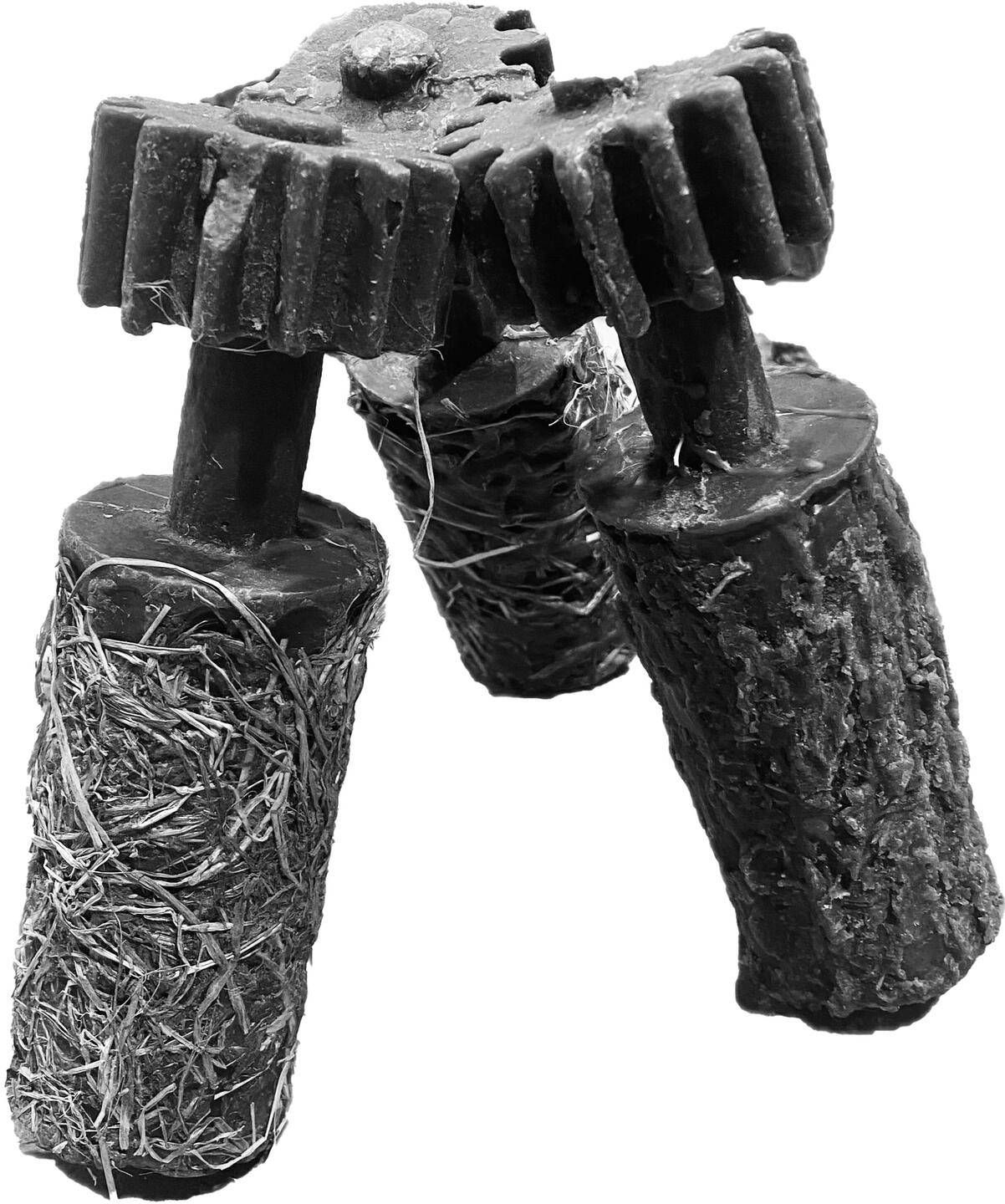
|
|
The IMPACT 13 International Printmaking Conference October 9–12, 2025, at the Université du Québec à Trois-Rivières (UQTR) in Quebec, Canada Presentation Paper. The bog as Print room. DJCAD Research EXPO 2024 .Talk ONE Leans into ANOTHER , Soft Cell Exhibtion January 2025 Bogscape Exhibition and Talk at James barry Gallery INGENIUM European University Alliance. Upcoming roundtable discussion at Grande parade Gallery Cork EAL Ecologies Art Lab 'Land as collaborator,' April 2026. | a poster presentation requirement only | a poster presentation requirement only | None | Yes | Catherine Hehir | |||
| Unstar/Unflag Submit a contribution to the 2026 Forum on Artistic Research: Submission #319 | Jeremy Woodruff | Jeremy | Woodruff | jeremy.woodruff@kug.ac.at | Discussique: Translation and Metaphor as Guides to Informed Listening and Hybridity in Trans-traditional Music Making | Project presentation | English | The Discussique: Hearing Flowers project follows the floral metaphors in different culture's music to unfold new forms of listening, music-making, and exchange for 12 musicians representing 7 different traditions of music. Over the course of the year, the project takes place at the botanical Gardens, historical Eggenberg Palace, and Kunsthaus in Graz in turn. Here the translation of metaphors guides fellow musicians and audience members to understand for what to listen in each tradition, in order to acquire a differentiated and insightful appreciation. Only after a long process of learning how to listen to each other do the musicians begin to make music together, looking for a hybrid technique together which can accommodate, rather than flatten out the special aspects of all the different musicians. | https://www.researchcatalogue.net/shared/9dd532a50205e68a310081f94241abb4 | https://www.researchcatalogue.net/shared/9dd532a50205e68a310081f94241abb4 |
|
|
None | Projector and sound | Yes | Jeremy Woodruff | |||
| Unstar/Unflag Submit a contribution to the 2026 Forum on Artistic Research: Submission #318 | Anonymous | Eoin | O Cuinneagain | eoinocuinneagain@gmail.com | On Oideas as Artistic Research: Songing as Decolonial Method | Project presentation | English | This project frames amhránaíocht as a site of epistemic resistance, confronting colonial hierarchies of knowledge and reclaiming conceptual sovereignty. It advances oideas (healing-based education) as an artistic research methodology emerging from the endangered conceptual world of Gaelic oral epistemology. Grounded in the practice of amhránaíocht (unaccompanied Irish-language song), it argues that songing is not merely cultural expression but a living research paradigm through which knowledge is generated, tested, and transmitted. Drawing on vernacular concepts including dúchas (relational indigeneity), seanchas (epistemic inheritance), dinnseanchas (land-knowledge), aisling (sound-vision), and casadh (turning/encounter), the project demonstrates how Gaelic song traditions enact a circular, session-based methodology in which ontology, epistemology, and axiology are inseparable. Within the ceremonial space of the session, research unfolds through embodied listening, repetition, variation, debate, and collective attunement. Knowledge is produced relationally—between singer and listener, ancestors and descendants, land and voice. Situating this paradigm in dialogue with Indigenous and decolonial methodologies, the project challenges Anglo-modern separations between method and meaning, archive and performance, research and ceremony. It critiques the folklorization and epistemic exteriorization of Gaelic knowledge under Anglo-modernity/coloniality while proposing oideas as a transferable methodological orientation attentive to healing, accountability, and communal continuity. By foregrounding Irish-language conceptual tools as methodological resources rather than objects of study, the project makes audible the epistemic violences concealed within Anglo-modern knowledge systems. Re-centering oideas as a healing-based research orientation, it contributes to broader debates on epistemic sovereignty and the role of artistic research. |
https://www.researchcatalogue.net/view/4226048/4226049 | https://www.researchcatalogue.net/view/4226048/4226049 |
|
|
This project emerged from my PhD research on Gaelic oral epistemology and decolonial methodology, "Songing Dúchas: Amhránaíocht as Decolonial, Epistemic Disobedience". In my current postdoctoral fellowship at the University of South Africa (UNISA), it has developed an expanded international comparative dimension, placing amhránaíocht and oideas in dialogue with African and other Indigenous research traditions. Note: RC exposition pending account upgrade – link to follow within 24 hours. |
This presentation combines short live song excerpts with analytical reflection. The structure moves between practice and conceptual framing, demonstrating how oideas operates within amhránaíocht as a session-based research paradigm. Rather than presenting theory about song, the presentation enacts songing as method, allowing participants to encounter its relational and epistemic dimensions directly before situating them within a decolonial and artistic research framework. | Standard lecture room setup with projector and screen. Audio playback capability for short sound excerpts (via laptop connection). If possible, a microphone for brief live vocal demonstration. No additional technical or spatial requirements. | No ethical concerns identified at this stage. | Yes | Eoin O Cuinneagain | |
| Unstar/Unflag Submit a contribution to the 2026 Forum on Artistic Research: Submission #317 | Anonymous | Leonardo | Mezzalira | leonardomezzalira@yahoo.it | Exploring ecological thought in composition: endangerment as a key point on the map | Project presentation | English | There is no single definition of ecological thought. First emerged in the wake of evolutionary biology, it has since been shaped by multiple influences, among which the rise of systems theory and cybernetics in the mid-twentieth century. In the next decades it has taken on political and philosophical implications, shaping desires and utopias and merging with older and endangered traditions of thought. As it grew into a worldview characterized by layered meanings and a complex set of affective patterns, this form of thought has begun to increasingly inform artistic practices, which in turn have become an essential place to investigate what an ecological approach can be. As a composer engaged with ecological thought, I constantly experience how this approach resists attempts to embrace it comprehensively. Every experiment generates new questions and insights, which in turn are reflected in the next compositional choices. In order to articulate the knowledge that emerges through this exploration, I started drawing a map in which sound excerpts, quotations, preparatory materials and insights coming from other fields are grouped around nodes of intensity, with a close intertwining between verbal and non-verbal elements—and between the cognitive and the affective. After an overview of some of the many possible itineraries within this map, my presentation focuses on “endangerment” as one of the main cognitive-affective intensity nodes within ecological thought, and shows its connections and tensions with other nodes, among which “situatedness” and “organicity”. The constellation of practices and materials around these nodes can be intended as an ongoing assemblage capable of bringing out connections between different fields and of hinting at the existence of still unexplored areas. In this sense, the map is also a generative tool, because it allows to identify patterns and tensions in practice and theory and to find new gaps to address in future research. |
https://www.researchcatalogue.net/shared/03fde61a16cfc7de3da5a471ec2d5286 | https://www.researchcatalogue.net/shared/03fde61a16cfc7de3da5a471ec2d5286 |
|
|
No special requirements, except a normal projection and audio system. | No | |||||
| Unstar/Unflag Submit a contribution to the 2026 Forum on Artistic Research: Submission #316 | Anonymous | Katrina | Maguire | katrina.maguire@tus.ie | The exhibition, Static Vision, seeks to offer an original and innovative presentation model for the articulation of creative practice within the field of contemporary art while also contributing as a research model | Project presentation | English | The exhibition, Static Vision is the creative output of the practice-based research and examines the sites derived from the collapse of Ireland's Celtic Tiger economy in the late 2000s. It questions how we perceive place in Ireland today and examines the correlation between the ephemeral celluloid fabric of photography and film, and the decay and stains of time displayed on the unfinished structures of the contemporary ruin, each a temporal barometer, physically registering memory, the imprint and history of time. Polaroid photography is employed for its distinct indexical, temporal, material and visual qualities, and to facilitate an intuitive interaction with these abandoned sites. This creative practice encourages a dialogue between the activity of looking and recording, and that of delivering on-site single framed images and objects, a dialogue that can also probe the dichotomies between the past and present, the fixed single moment and the sequential fixed moment. Recordings are made in Super 8 to examine celluloid’s ephemeral, and temporal qualities, and to investigate the medium’s transformative capacity through engaging with its alchemical processes and presentational properties. The research examines how this low gauge medium and its capacity to interpret time, duration and movement can also communicate stasis, and Super 8’s textural qualities and static shots are also analysed within this context to emulate the abandoned sites in between condition - stuck in time, yet slowly evolving and changing. The project explores how the increasing obsolescence of analogue technologies draws parallels to the condition of Ireland’s contemporary domestic and commercial ruins, signifying a past time and period of progress and modernity, but now discarded, redundant and abandoned, challenges its medium specificity and offers a new approach to merging, re-interpreting and experiencing disparate forms of obsolescence and ruination. |
https://www.researchcatalogue.net/view/4222979/4222980 | https://www.researchcatalogue.net/view/4222979/4222980 |
|
|
Conferences: Art of Research VIII, Re-Imagining, Conference dates: 30 November – 1 December 2023, Aalto University, School of Arts, Design and Architecture, Espoo, Finland. In Crisis: Art in Eras of Emergency, 1750-Present, Faculty of English, University of Cambridge, 6th-10th July 2020. Book Fairs: Static Vision, Katrina Maguire, selected; Artist Book Section of the Dublin Art Book Fair 2020: Design as an Attitude. Curator: Alice Rawsthorn, 23 Nov - 06 Dec 2020, TBG&S, Dublin |
The presentation will be presented as a power point | Yes | Katrina Maguire | |||
| Unstar/Unflag Submit a contribution to the 2026 Forum on Artistic Research: Submission #314 | Yin | Yin-Wen | Lin | sunrain6_11@hotmail.com | Cheap Copies and Collective Memory: The Postcolonisation in Archives and Digital Art Practice | Project presentation | English | Mass-produced reproductions circulate extensively across both physical and digital cultures, these forms are typically characterised by low production costs and degraded visual quality due to repeated copying. Inexpensive domestic objects have received limited scholarly attention. This research will define the potential inherent in portraits of unknown women, specifically a series of female portraits reproduced as cheap copies, printed illegally, and affixed to the backs of mass-produced plastic mirrors. These are specific vintage products from Taiwan that have not been popular or reproduced in recent years. Their origins trace back to the Japanese Colonial Period during the 20th century, a time when copyright law was not yet established. This study aims to investigate how mass-produced portraits of anonymous women on plastic mirrors shape collective memory in Taiwan, and how the degradation of cheap copies as an artistic method connects household objects with digital media. The project analyses the historical and cultural contexts of these portraits that have been overlooked or rendered invisible and explores their potential for artistic experimentation. This practice-research comprises a series of artworks, including video, paper installation, and pixel degradation. In videos, I wear a pixelated mask to embody the portraits of actresses on the mirrors, symbolising women born during and after Japan's rule. Drawing on interviews with Taiwanese women from different generations, the research examines how these portraits function as sites of fragmented recollection, misrecognition, and collective memory. Through this practice-based research, the paper argues that degradation can generate diverse hybrid images rather than merely signal loss. The project contributes to discussions on how the artist employs embodied performance to engage with anonymous female figures and utilises labor-intensive methods to embody collective memory in physical print. | https://www.researchcatalogue.net/editor?research=4225439&weave=4225440# | https://www.researchcatalogue.net/editor?research=4225439&weave=4225440# |
|
|
Art residency: The aura of the found photograph Its invisible political transaction in digital art practice. Grow Plymouth, 2025 | PowerPoint slides(PDF), audiovisual | A projector, a microphone, a speaker, HDMI adapter for a MacBook | No | Yes | Yin-Wen Lin | |
| Unstar/Unflag Submit a contribution to the 2026 Forum on Artistic Research: Submission #312 | Anonymous | Mel | Galley | melfrangalley@gmail.com | Holdings | Performance | English | Holdings is a remote artwork on housing and changing places that unfolds in audience’s homes, delivered through a website, phone call and mysterious package. Bringing the deeply personal discussions about homes directly to the audience, the show is an original and accessible artwork rooted in care and possibility. Holdings was developed from Mel’s artist residency with Data Stories, a Maynooth University based research project led by Professor Rob Kitchin, which maps the Irish housing and planning system through its data ecosystem. The project uses collaborative, artistic research methods in its iterative processes of development, adapting in response to the knowledge, memories and opinions shared by each audience member. It considers how digital methods of dispersion, such as phone calls and websites, can renegotiate where artistic work is met and audiences to reflect on (and shape) what data is collected, cooked and shared on housing and development. Adapting this format for the SAR conference setting, Mel and Clara will give an introduction to the research, development and methodology of the piece, leading into a performance of Holdings, followed by our reflections on the process of creating and sharing this work and where we will take it next. One member of the conference will be welcomed as our caller for the performance, which will be through the phone with two actors based remotely, while the rest of the audience will be invited to consider and record their own answers to the survey through a handout. The project is led by Clara McSweeney and Mel Galley, whose collaborative practice spans two previous public presentations: Fringe Was Here (Dublin Fringe Festival 2024) and The City at Ten Kilometres an Hour (Ireland India Conference and Conference of Climate and Society, DCU, 2025). |
|
|
- Holdings debuted as a show at the 2025 Dublin Fringe Festival with a sold-out run of 88 performances, winning the Judges Choice Award for 'Beyond the Stage', and nominations for Best Design and the Fitzmaurice award. The performances featured two actors, who delivered a survey and monologue to each individual audience member through a phone call. - The first iteration of Holdings, which featured the monologue in an etched artist book, was exhibited at Liquid Urbanisms, the LAB Gallery, 2025. |
- The total time required for the performance, including the introduction and reflections, is 30 minutes. - Whilst an audience member is invited to volunteer to be the caller for the performance, we will arrange to have a guaranteed caller to step in if there's no volunteers from the audience. - A link to the website section of the performance can be found at: https://holdings.myportfolio.com/ |
- We will need a room with good phone signal in order to have a strong and clear connection with the actors performing remotely. - If possible, the technical set up to link the phone to a speaker (so that the audio is clear for the audience) would be beneficial, however we can also bring our own speaker if this is not possible! - We will have imagery to share on slides as we are introducing the performance (and for the website) so a space with a projector would suit. |
- We will discuss how the responses to the survey will be used in the development of the work, which ensures anonymity and confidentiality for all responses we get. | Yes | Mel Galley | |||
| Unstar/Unflag Submit a contribution to the 2026 Forum on Artistic Research: Submission #306 | Anonymous | Paul | O' Neill | paul.oneill@universityofgalway.ie | The WhoIs Protocol as Critical and Creative Practice | Project presentation | English | Beginning with a “ghost” internet protocol address once registered to an American tech company based in Ireland, this presentation focuses on ongoing artistic research into the WhoIs protocol as public directory and archive, incorporating outcomes from a residency at the Media Archaeology Lab (University of Colorado Boulder). WhoIs refers to the protocols, services and data types associated with Internet naming and numbering resources (icann.org, 2024).It contains hundreds of millions of entries including domain name registration and expiry dates, details of technical administrators, IP addresses of name servers, and other technical information (Muller, 2002). However, WhoIs has limitations. The information it offers contains inaccuracies and inconsistencies (Gañán, 2016), and recent supranational privacy legislation, including the European Union’s General Data Protection Regulation (GDPR), has restricted the availability of personal registration data. In 2015, ICANN introduced the Registration Data Access Protocol (RDAP) as a replacement for WhoIs, designed to provide more secure access, increased standardisation, improved usability, and greater support for internationalisation (icann.org, 2024). As such, the WhoIs Protocol can be considered an endangered conceptual world within our current algorithmic era. Critical internet resources such as IP addresses and domain names carry significant “technical, economic, and political implications” (DeNardis, 2009), raising concerns regarding governance, accessibility, and distribution among institutions, nation-states, and commercial actors. The allocation and documentation of these resources within WhoIs provide insight into the global infrastructure of the internet, past and present, while also recalling the “rigidly defined hierarchies” around which networked systems are structured (Galloway, 2004). This presentation outlines creative and critical methods to engage and preserve the WhoIs protocol. |
https://www.researchcatalogue.net/profile/show-exposition?exposition=4226827 | https://www.researchcatalogue.net/profile/show-exposition?exposition=4226827 |
|
|
Archiving Care Symposium, NeMe Media Arts Centre, Limassol, Cyprus (September 2024) https://www.neme.org/projects/toolkit-of-care/archiving-care |
Powerpoint | Projector and audio | N/A | Yes | ||
| Unstar/Unflag Submit a contribution to the 2026 Forum on Artistic Research: Submission #304 | Anonymous | Imani | Rameses | imanirameses@gmail.com | first person plural | Performance | English | First Person Plural, a five person solo performance, in which rameses attempts to turn herself into a mirror. After a yearly practice of mirror-gazing informed by African divination and Jungian psychology, rameses has broken the contract of being. The viewer is invited to be a witness of this contradiction as rameses attempts to erase her image of herself. She embraces the crisis at the intersection of performance and “real life” as she spirals around the question: How does the self survive the fracturing of performing itself? Messy and marvelous, curious and candid, needy and neurotic, the five performers and their performances are held in the same living body, trapped and transformed by the enclosure around them. This five person solo, shatters and recombines across the piece, rending seeing and self not as concepts but as an embodied practice; the body here becomes both the seer and the seen, a living formal constraint expressing the self. Will she manage this ineffable feat of unseening oneself? Can she achieve self-erasure? |
|
|
This work was previousl performed at brut Wien in 2025 as a part of the Imagetanz Festival 2025. | None at this time. | Techincal Requirements for Sound We will need some form of a PA system, mix board, mic stand, small table and bench for the sound designer Marleen to play cello. Spatial Requirements This work requires a site specific crossing of a threshold. I will simply need a door way/hallway from which to cross from one side to another. I am happy to scout this location once I am there. |
No forseeable risk or ethical concerns at this stage. | Yes | ||||
| Unstar/Unflag Submit a contribution to the 2026 Forum on Artistic Research: Submission #302 | Anonymous | Jakob Margit | Wirth | post@jakobmargitwirth.net | On Parasiting: Tactical Artistic Research as Resilience under Cultural Capture | Workshop | English | 90 Min This presentation proposes Parasite Art as an artistic research methodology that explores parasitic tactics not only as forms of resistance, but as potential alternative modes of knowledge production. Situated within an artistic PhD research project, the workshop treats parasitism as a minoritised epistemic practice that operates through proximity, dependency, adaptation, and tactical ambiguity rather than opposition, morality or autonomy. Instead of positioning endangered languages and knowledges as objects of rescue, I approach them as tactical agents capable of irritation. Drawing on Michel Serres’ figure of the parasite, parasiting becomes a method: entering dominant structures, living off their infrastructures, and introducing dissonance into processes of standardisation and optimisation. The ongoing artistic research project On Parasiting functions as a real-time laboratory. Invited artists temporarily embed themselves in host systems - cultural institutions, corporate environments, bureaucratic settings - testing how minoritised languages, gestures, and epistemologies can survive and act within extractivist frameworks to produce irritations. The project combines artistic interventions, collective reflection, independent publishing, and discursive formats such as a Parasite School. In the context of platform capitalism and synthetic realities that flatten heterogeneity, parasitic artistic research does not claim purity or externality. It acknowledges complicity and proximity to power as conditions of action. Minoritised languages are not romanticised as untouched reservoirs; they are understood as resilient yet fragile modes of sense-making that must negotiate hostile environments. The workshop reflects on practice-based knowledge production: How can infiltration function as method? How can irritation produce epistemic value? And how can artistic-curatorial experiments be articulated as research without neutralising their subversive force? |
|
|
Elements of this research have been presented in academic and artistic contexts, including lectures and workshops on Parasite Art; the edited volume Parasite Paradoxa (Kunstforum International, 2024); the article “Parasitic Tactics” in the Journal for Art and Technology; and at conferences: Arts-based Research in Girona (2025), Global Artivism in Pretoria (2024), and the ethnographic Symposium at Cambridge (2024). The workshop proposed here is new and developed specifically for SAR2026. | The presentation will combine a structured with visual documentation from artistic interventions and the On Parasiting research laboratory, followed by discussion. Rather than presenting a finished model, the contribution shares the “messy middle” of a practice-based PhD: methodological negotiations, ethical tensions, and epistemic risks. The workshop is structured in three phases: 1) Conceptual framing (approx. 30 min): Introduction to parasitic artistic research as a resilient epistemology, drawing from the project On Parasiting. 2) Tactical exercises (approx. 40–50 min): Guided individual and small-group exercises identifying parasitic positions, dependencies, and tactics within participants’ own artistic or institutional environments. 3) Collective reflection (approx. 30 min): Sharing insights, limits, and ethical tensions; discussion of how parasitic tactics function as resilience strategies rather than oppositional critique. |
A flexible room with movable seating allowing group work. Whiteboard or flip chart recommended. Projector and speaker required. |
The workshop addresses undercover practices and institutional proximity. Ethical concerns - such as consent, self-exploitation, legal exposure, and instrumentalisation - are explicitly discussed as part of the methodology. No participants will be asked to perform actual infiltration; exercises remain speculative, reflective, and situated within participants’ own ethical boundaries. | Yes | Jakob Margit Wirth | |||
| Unstar/Unflag Submit a contribution to the 2026 Forum on Artistic Research: Submission #301 | Anonymous | Thorolf | Thuestad | thorangutang@gmail.com | Transmedial composition in kinetic performance: Mimesis without resemblance, ambiguity, and the enactive mind | Project presentation | English | This presentation explores transmedial composition in kinetic performance as a practice foregrounding embodied, kinaesthetic knowledge; understanding that precedes language and whose centrality in aesthetic experience and is marginalized by the computational standardisation of aesthetic experience. Drawing on Movement, Mimesis, and Mimicry (Uniarts Helsinki) and previous research, I use the performance Inscription as case study. Performer Alwynne Pritchard shares the stage with non-representational kinetic sculptures "disembodied prosthetics" that bear no resemblance to a human body whose movements derive from her motion-captured data. The mediation here, the motion capture, robotics and software translate one performer's movement into mechanical forms that necessarily transform it, producing difference, not replication. The presentation traces three ontological thresholds. Intent to inscription: human movement inscribed into mechanical forms, understood through Derrida's trace and Malafouris' material engagement theory as transformation, not degradation. Mechanism to agency: non-representational forms enlisting kinaesthetic knowledge through enactive perception (Noë, Sheets-Johnstone), creating an "intentionality vacuum" compelling embodied meaning-making. Sensation to kinship: pre-reflective bodily resonance (Gallese) fostering felt relation with non-human performers grounded in kinaesthetic recognition rather than visual resemblance. I argue that transmedial composition here is not the organisation of parallel media but the design of conditions for co-emergent meaning, irreducibly embodied, plural, and private. The practice orients toward a horizon - felt kinship - that can only exist in the interior of each encountering body. This is intended as a subversive compositional stance: work whose essential content is constitutively inaccessible to standardising forces, belonging to knowledge that cannot be extracted or algorithmically reproduced. |
https://www.researchcatalogue.net/shared/69f499b4374d572eb781d76e585c428a | https://www.researchcatalogue.net/shared/69f499b4374d572eb781d76e585c428a |
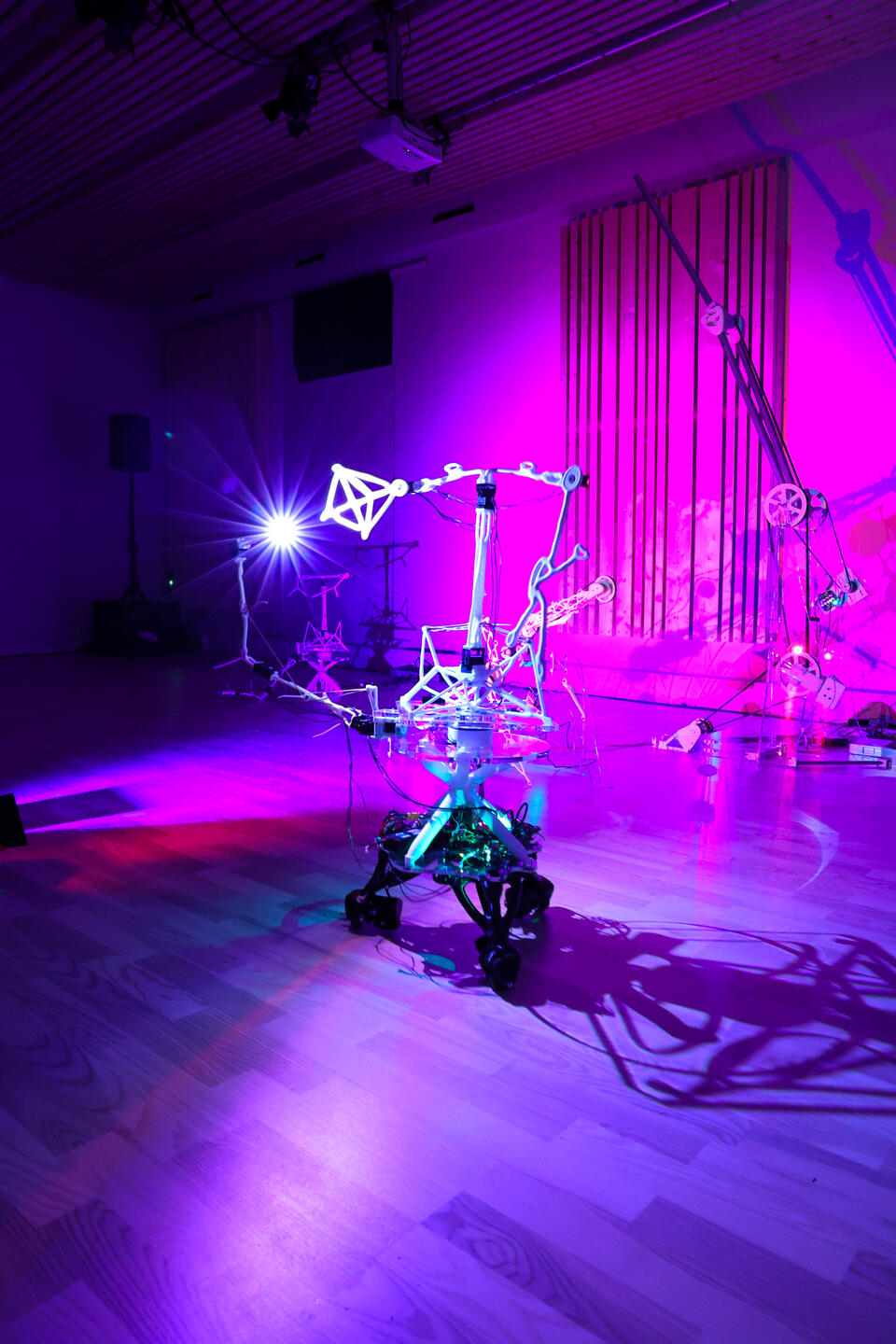
|
|
Some of the material discussed has appeared in an article published in HUB. The overlap is limited. | I did consider suggesting a full performance of Inscription as an artistic contribution to the forum. Inscription premieres June 12th so if this is of interest it could be possible. If interested, lets talk! | If the organisers think it's practical, I might be able to bring some small kinetic sculptural elements for "in the flesh" demonstration as part of presentation. In that case a space where light could be substantially reduced/ black, is desirable. A full-range sound system, including subwoofers, is needed. Any type of surround sound setup is desirable but not required. If I bring kinetic sculptural elements, I require at least 20 minutes of setup time(could happen hours earlier). |
None that I am aware of. | Yes | ||
| Unstar/Unflag Submit a contribution to the 2026 Forum on Artistic Research: Submission #299 | joachim ben yakoub | Joachim | Ben Yakoub | joachim.benyakoub@kdg.be | Finding Ceremony. Dancing nearby the Guardians of San Words and Worlds | Project presentation | English | This paper, presented by choreographer, dancer and artist Moya Michael and dramaturg and researcher Joachim Ben Yakoub, examines our collaborative artistic research for the sculpturance It is like a Finger Pointing a Way to the Moon, co-produced by KVS and Wiels in Brussels in 2024. Departing from Moya Michael’s artistic journey in performing arts, searching for relations with her San lineage and ancestrality, this research explores the power of movement, sculptural installation, storytelling and transmission. The San people are historically the most over-researched Indigenous people. They were also the first target of colonial efforts to erase Indigenous knowledge systems, and ways of moving and being in the world. Ways of relating and co-labouring with these communities are in dire need of re-invention. Reflecting on our distinct roles as choreographer and dancer on the one hand, and dramaturg and storyteller on the other, we will account for the various reasons why our artistic research refuses the frame of extinction shaped by anthropology, and the impulse to understand artists as ethnographers. These refusals aim to be generative and make space for the idea of transformation as a way of continuation, by finding ceremony, dancing nearby the guardians of words and worlds. Making kin with the San in Namibia, it explores ways of finding ceremony and dancing nearby through embodied listening, all the while diffracting the ethnographic, modern and colonial gaze, undoing their stereotypes and embedded forms of violence. This research hopes to inspire methodological conversations on ways to overcome historical power relations and doing justice to all the lifeforms dwelling in their cosmovision, but also impact the debates on collaboration in artistic research, on dance, movement, and gesture as minoritised or endangered embodied knowledges, and in this ways prop | https://www.researchcatalogue.net/profile/show-exposition?exposition=4210227 | https://www.researchcatalogue.net/profile/show-exposition?exposition=4210227 |
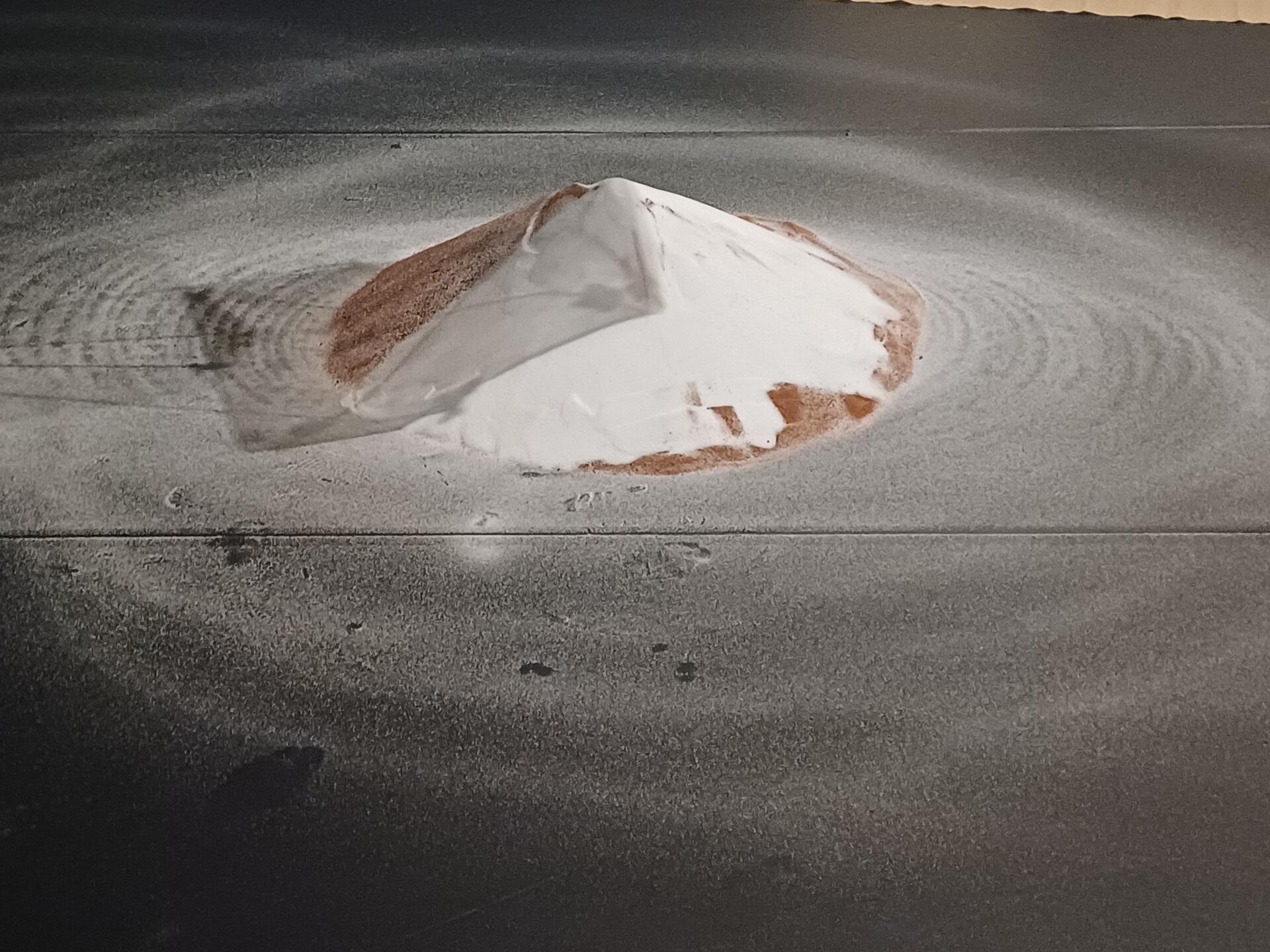
|
|
Moya Michael is a dancer, performer, and choreographer born and raised in Johannesburg, South Africa. Moya is interested in ‘performing the self’ and developing projects with other artists and artistic fields. She has an ongoing commitment to process and discourse. She continues to evolve as a creative maker of live performance. As a skilled performer, Moya is interested in all forms of expression and identity with the use of mixed mediums. | Yes | Joachim Ben Yakoub | ||||
| Unstar/Unflag Submit a contribution to the 2026 Forum on Artistic Research: Submission #297 | Gwen Rakotovao | Gwen | Rakotovao | gwen.rakotovao@uniarts.se | Let the text speak for the Methods: Embodied archives, Diasporic epistemologies, and Performative methodologies | Other format | English | Let the text speak for the Methods is a performative paper presentation emerging from an ongoing artistic research project at Stockholm University of the Arts. Grounded in embodied knowledge and diasporic epistemologies that honour ancestors, the presentation explores method as something inherited, relational, and continuously in the making. Through first-person narration and performative reading, the paper moves across geographies between Stockholm, Mayotte, Paris and New York; and across time, where past, present, and future co-exist within the body. Unfolding through thematic constellations such as Methods, Geographies, Black/Human, Time, and In-visible Love, the presentation resists linear knowledge production and foregrounds embodiment, care, and fugitivity as methodological forces. Blending poetic writing with artistic research, this contribution invites the audience to listen differently — to methods that are felt before they are named, and to knowledge carried, transmitted, and transformed through bodies. |
|
|
A preliminary version of this research was presented in an internal seminar presentation at Stockholm University of the Arts in the autumn 2025. | The presentation will take the form of a paper reading. The text is written through choreographic approaches, shaping its structure, pacing, and use of language. The performative aspect is embedded in the composition and oral delivery of the paper. | No special technical requirements are needed. A microphone and space to stand will be sufficient. | No potential risks or ethical concerns. | Yes | ||||
| Unstar/Unflag Submit a contribution to the 2026 Forum on Artistic Research: Submission #296 | Fiona Hallinan | Fiona | Hallinan | fionahallinan@gmail.com | Life Finds a Bend and Nests in it | Project presentation | English | Life Finds a Bend and Nests in it is the working title for a nascent research project by artist Fiona Hallinan. This project stems from a broader collaborative research practice, the Department of Ultimology, which works to produce artworks and activities dedicated to paying attention to “endings”. The presentation will begin with an introduction to the work of the Department of Ultimology in the context of endangered conceptual worlds, and will then present Life Finds a Bend and Nests in it as its current project in development. Life Finds a Bend and Nests in it looks at the relationships between an endangered plant family, bryophytes, and the dedicated human individuals working to nurture, conserve and share knowledge of them. The project asks what repository could store vital knowledge such as this? And more broadly how can deep, embodied knowledge be both disseminated and preserved for future generations? This project proposes that the lullaby, the genre of infant-directed music, could act as a repository and form of dissemination for endangered conceptual worlds, in this case knowledge of endangered plants. The project will take the form of a three year process documenting the making of a hybrid documentary that gathers knowledge into the relationships that dedicated individuals have with the plant family of bryophytes, in particular sphagnum moss. This will include visits to laboratories and greenhouses where moss is propagated, landscapes where it is being implanted and spaces where imaging is used to document their spores. These visits will work towards generating a song cycle of lullabies, working both with a select number of vocal artists and sound designer Brendan Jenkinson. The project encompasses ongoing research into the lullaby as form and draws on literature and oral interview sources to explore this genre as a repository of knowledge. The research continues from an initial development period in 2023 funded by the Arts Council of Ireland. |
https://www.researchcatalogue.net/view/4213420/4213421 | https://www.researchcatalogue.net/view/4213420/4213421 |
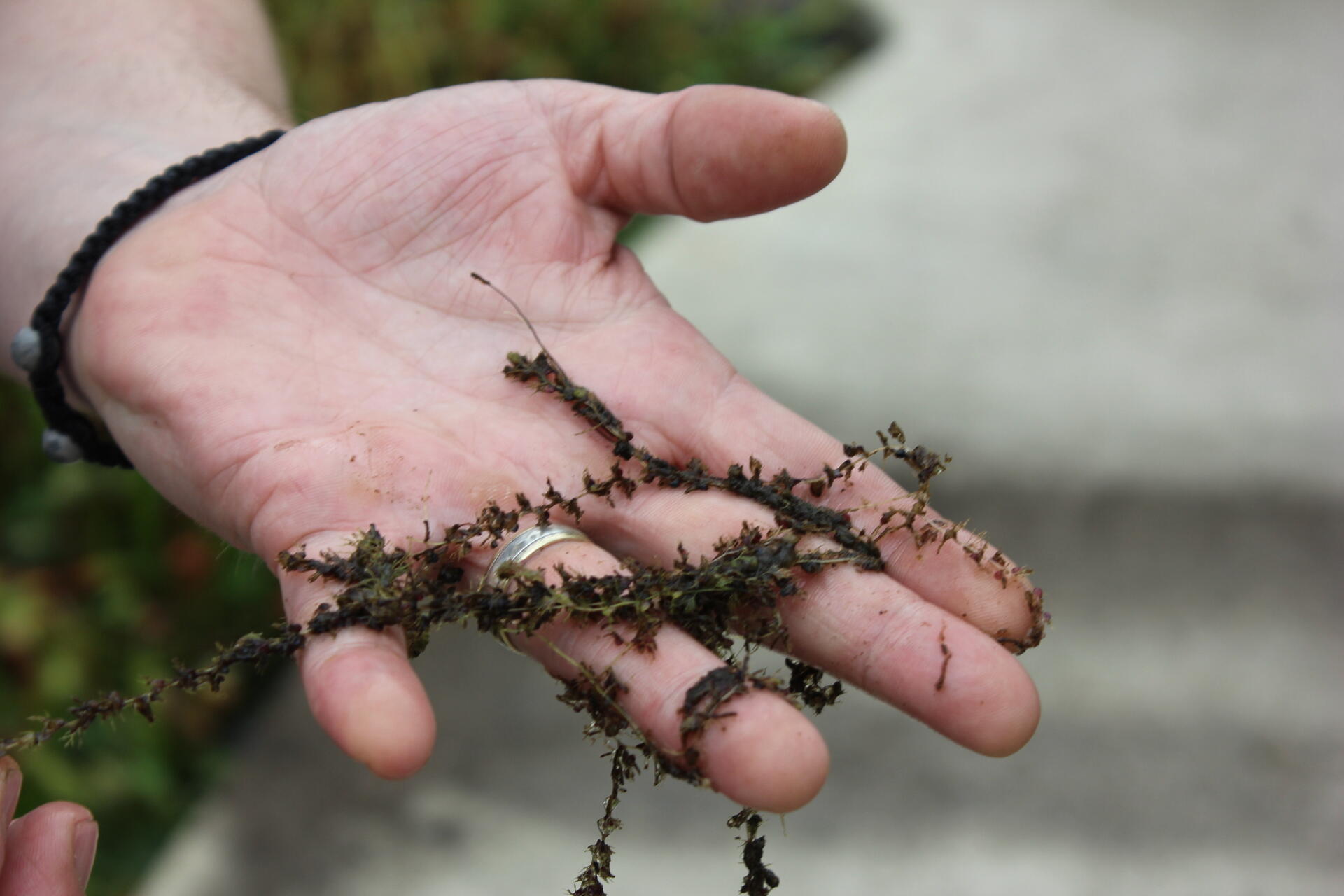
|
|
The presentation format will include video, images and audio and will require a projector and good quality speakers. | The presentation may include recorded conversations with interlocutors, which will need to be approved by those individuals in advance. | Yes | Fiona Hallinan | |||
| Unstar/Unflag Submit a contribution to the 2026 Forum on Artistic Research: Submission #293 | Shona Stark | Shona | Stark | shonastark@gmail.com | Languages and Linguistics of Love: Examining a conceptual contemporary artistic practice of multilayered language installations | Performance | English | This PhD research at RMIT University AU combines reflective and generative practice, using a creative practice research methodology (Candy) to reflect on my artistic practice. In this research, minoritised languages and linguistics of love, refer to language based theory and artworks which utilise direct and indirect references to ‘love of the contemporary Western experience’ (Carson), in particular familial, romantic and self love. The medium of language is used to create multilayered language installations (MLI) which contain combinations of informational text, spatial wall text, multi-channel sound, and a language based performance. These installations conceptually and structurally embody the intersection between oralities – language based performance, the voice (tone, rhythm, repetition) and literacies – written text, linguistics, public and private language. The installations aim to foster self and societal reflection within the introspective space of the viewer. When the syntax “I love you” is said repeatedly in different tones, intonation and emotion, it is heard in an individualistic way based on the viewers’ mother tongue, culture and family experience (Dewaele). When the syntax is read with different descriptions of types of love the viewer is brought into other conceptual worlds. The minoritised languages and linguistics of love serve as resistance to living ‘in a state of despair, disillusionment and fear’ (Emin). In the current political discourse – climate collapse, fascism and hatred, wide-spread war, sexual violence and suffering – vocabularies and discourses of counteraction are desperately needed. Love as a practice builds resilience to survive, it’s integral to life and to feel safe. I will present MLI, ‘Safe’ (2025) as a lecture performance with methods including real-time recording art making practice – based on ‘creative analytical processes ethnography’ (Richardson), the design of a MLI and the performance of the artist as researcher. |
|
|
This is the ongoing research as a doctoral candidate in the school of Architecture and Urban Design at RMIT University, Australia and is presented semi-annually since 2023 at the Practice Research Symposium in Barcelona, Spain and Melbourne, Australia. My examination is planned for April 2027. https://practice-research.com/presentations/prs-europe-november-2025/language-and-love-examining-a-conceptual-contemporary-artistic-practice-of-multilayered-language-installations |
The presentation will be a multilayered language installation– part language performance and sound installation – ‘Safe’ (2025) and part lecture performance– knowledge produced as part of the doctoral research. | 4 speakers, microphone and projector linked to the computer. If 4 is not possible, I can work with 2. Ideally a short speaker and mic test if that is possible. |
Need for trigger warning and protection of people who have experienced trauma – Possible mentioning of sexual assault without detail. Exposure of personal information beyond intended boundaries. Audience misreading autotheory elements as purely confessional. Re-triggering trauma through language-based sound or repetition. |
Yes | Shona Stark | |||
| Unstar/Unflag Submit a contribution to the 2026 Forum on Artistic Research: Submission #292 | Bettina Schwalm | Bettina | Schwalm | bettina.schwalm@gmail.com | Weirding Language - A Glossary of the Strange and Unexpected | Experimental format | English | Language structures our understanding of the world. It can transport us into realities articulated by others, making us feel we belong, or just as forcefully exclude, leaving us outside this particular world-made-with-words. At the same time, language with its rigid black box is a supervillain of the non-binary, the spectral, the moving. What if words could shed skin, become cyclical, morph, and shape-shift as their meanings must? English operates as a compromised global academic language. What is being reduced, lost, untranslated, or dismissed as too strange? As words become colonised, we want to think through their own liberation front. This workshop responds to the epistemic violence embedded in academic English. Where "matter-of-factness dampens intensity" (Massumi, 1995), we treat language itself as a site of intervention. Drawing on feminist epistemologies, pluriversal thinking, and speculative design, we frame language not as something to be mastered but as a material to be reworked, one that was itself "performatively called into being" (Makoni & Pennycook, 2006). We seek meaning "entangled with material and relational ontologies" (Frichot, 2023): language as an active, liberated agent, far beyond the fixed meanings that become shackles of content. Participants bring a key concept from their academic practice in their native language and place it into friction with its English equivalent. Through translation, mistranslation, and speculative recomposition, they generate hybrid terms that exceed both linguistic systems. What fails to translate is treated not as a deficit but as productive knowledge. The workshop culminates in a collective Academic Glossary of the unexpected and weird. Frichot, H. (2023). Dirty materialism: What Jennifer knew. Architectural Theory Review Makoni, S., & Pennycook, A. (2006). Chapter 1: Disinventing and reconstituting languages Massumi, B. (1995). The autonomy of affect. Cultural Critique, 31(2), 83–109 |
|
|
Each participant begins with a key concept from their own academic practice — something already formulated, or not yet found in language, perhaps because no expression for it exists. Some bring a term from their native tongue and place it into friction with its English equivalent. Others begin with movement, tracing the body's knowing before reaching for words. Through guided experimentation, translation, and mistranslation, participants generate hybrid terms that exceed both linguistic systems. What fails to translate is treated not as a deficit but as productive knowledge. The workshop culminates in the collective creation of an Academic Glossary of the Weird and Unexpected: an archive of concepts that never quite "made it" into dominant discourse. This glossary expands situated imaginings — the culturally and linguistically bounded frameworks within which one imagines the novel ways the world has worked, works, will work, and must work (Szagdaj et al., 2022). |
Room capacity: 15–20 participants Projector Workshop materials provided by facilitators |
- | Yes | Bettina Schwalm | ||||
| Unstar/Unflag Submit a contribution to the 2026 Forum on Artistic Research: Submission #291 | Anonymous | Lisa | Mayes | lamayesartist@gmail.com | Code-Switching Cartographies: Sound, Language, and Ancestral Resistance in Intermedia Practice | Project presentation | English | This presentation emerges from CodesWitcher, an intermedia artistic research project that investigates how diasporic and minoritized identities can be reclaimed through visual, sonic, and linguistic practice. Grounded in Stuart Hall’s “encoding/decoding,” W.E.B. Du Bois’s “double consciousness,” and Nick Mirzoeff’s critique of visuality as a regime of colonial power, the project examines how representation structures who is seen, heard, and remembered. Mirzoeff argues that visuality historically legitimized empire by determining what could be made visible and intelligible. In response, I approach code-switching as a form of countervisuality: a strategy that unsettles dominant mappings of race, land, and belonging. Through painting, sound installation, and immersive media, I rework inherited archives and endangered languages into speculative cartographies of resistance. The presentation focuses on two interlinked works. Titles of Land _ The Map Folds consists of ancestral landscapes painted on folded brown parcel paper, invoking colonial cartography while destabilizing its authority through bilingual titling in Gaeilge and Muscogee Creek. Language Lessons is a sound installation layering ancestral testimony with beginner language recordings, performing code-switching as embodied recovery rather than assimilation. Together, these works reframe language as material practice and voice as epistemic infrastructure. By moving between visual and sonic registers, the project claims what Mirzoeff calls “the right to look”—and extends it to a right to speak, to remember, and to remap. I propose code-switching as both a method and medium for engaging endangered conceptual worlds in contemporary artistic research. |
https://www.researchcatalogue.net/view/4142725/4142726 | https://www.researchcatalogue.net/view/4142725/4142726 |
|
|
It was first shown as a research-creation thesis exhibition at FAB Gallery, Edmonton (2023), it explored diasporic identity through A/R/Tographic, land-based inquiry and intermedia practice. Elements were later presented at In-between Cultures: Cultural Translation in Diasporic Contemporary Art in Canada (II) (Western University, 2025). The proposed presentation synthesizes these iterations into an expanded intermedia framework. | The presentation includes a slideshow of exhibition images, and audio excerpts from the Language Lessons sound installation. The presentation is structured as a narrative of artistic process with theoretical framing, concluding with reflections on endangered language as embodied research. | HDMI-compatible projector, stereo speakers or audio playback option for sound samples. Laptop playback will be used for media. No special lighting required. | The presentation includes autoethnographic material, family archives, and ancestral language documentation. Care is taken to respectfully represent all cultural elements and oral histories. | No | ||
| Unstar/Unflag Submit a contribution to the 2026 Forum on Artistic Research: Submission #289 | Athene Currie | Athene | Currie | athene.currie@alumni.griffithuni.edu.au | Méconnaissance: Misrecognition and the Endangered [I] | Project presentation | English | This project is a series of personal recorded rituals employed to reveal a transformation of the ‘I’ and the bodily ego through the tripartite process of separation, transition and reincorporation as evident in a rite of passage. These rituals are performed in nature employing my own body. The works point to the ecofeminist view that women and nature are inextricably linked while referring to posthumanism that seeks to encourage thinking outside of our self-interest, the ‘I’. The project implies that patriarchal constructs imposed upon women are associated with the ‘I’, that is the distinction between the conscious ego which forms the I of the self, and the unconscious of the subject—amounts to what feminist and social theory scholar Kirstin Campbell describes as a “misrecognition” (méconnaissance). I suggest that through ritual, there is an opportunity to recognise the ‘I’ for what it is – imposed. In so doing the concept of the ‘I’ may fall away and provide opportunities for self-transformation. | https://www.researchcatalogue.net/shared/1f583b8b9ca642c4ec7e363f622bb2a4 | https://www.researchcatalogue.net/shared/1f583b8b9ca642c4ec7e363f622bb2a4 |
|
|
2023 Artists of Australia and New Zealand (AAANZ) Conference, Griffith University Misrecognition and {I} Posthumanism, Ecofeminism and the Bodily Ego. No publication of presentation. Abstract published. |
spoken presentation with projected video artworks possible short performance if time permits |
projector / speakers possible use of a suitable space for a short 3- 5 minute performance if time permits |
NA | Yes | Athene Currie | |
| Unstar/Unflag Submit a contribution to the 2026 Forum on Artistic Research: Submission #288 | jturalba | Josephine | Turalba | jturalba@pwu.edu.ph | Speculative Glossary of Hybrid Marine Life: Preserving The Endangered Knowledge of the West Philippine Sea | Other format | English | The West Philippine Sea is a militarised and heavily trafficked maritime corridor where geopolitical force, ecological precarity, and fisher livelihood collide, and official vocabularies often fail to hold lived experience. Media narratives are easily manipulated, while the knowledge of those who work the sea is embodied and intergenerational, hard to document without flattening it. This knowledge lent itself to subjective mapping, where lived experience is treated as data rather than noise. The mapping process documents movement, risk, and survival at sea: tides, tuna highways, fish as product vs crew sustenance, foreign vessels, and no-go zones. The process then evolves through speculative image-making and iterative studio-led inquiry into a glossary of artist-imagined hybrid sea creatures, grounded in situated observation and circulating coastal narratives.These imagined creatures draw from Philippine mythology, real marine life, and the lived experience of those affected by the territorial frictions in the area. The creatures operate as composite witnesses shaped by militarisation and encroachment, making conditions perceptible without reducing them to policy speech or media templates. Their playfulness makes trauma legible without turning it into spectacle; it registers the sea’s trauma, its inhabitants, and those who rely on it.Removed from the context of the artwork, the glossary of creatures preserves this endangered conceptual world in an alternate way. The glossary is not stagnant. Creatures are added and altered with every iteration and representation across different artworks. Collaboration and co-thinking push new forms of invention, and new ways of naming pressure, adaptation, and survival. Each iteration is used to reveal something different within the context of a given piece. This fluidity of the glossary is precisely what makes it an endangered conceptual world: it is continually pressured by militarisation, ecological loss, and narrative capture. |
|
|
An earlier iteration of this research was presented at the APARN Conference 2025 (Asia Pacific Artistic Research Network, a SAR Special Interest Group), discussing initial subjective mapping methods (pp. 1145–1154). The current submission extends the project by foregrounding minoritised epistemologies and endangered conceptual worlds in the West Philippine Sea, situating the work within ongoing SAR dialogues while introducing new experimental methods and experiential outputs. | N/A | 15-20 minute AV presentation (online). If the presentation will happen in person, I will require a smart TV or Projector for visual aids and microphone if the space requires it. I also have hanging works that can be displayed in support of my talk. For this I will need a wall or 4x8 wall panel. | N/A | Yes | ||||
| Unstar/Unflag Submit a contribution to the 2026 Forum on Artistic Research: Submission #282 | Ryan Woodring | Ryan | Woodring | rwoodring@drew.edu | Mutable Data: Artistic Apophatic Research | Workshop | English | This workshop opens space for grappling with precarious, mutable forms of data by deepening the potential of artistic research through apophatic thought — the recognition that some realities exceed description and can only be approached through indirection, pointing, negation, and silence. Across three parts, participants engage existing artistic strategies such as absence, detour, and negation, connecting them with central insights of apophatic studies to evoke the unsayable, ineffable dimensions of experience that precede language. Drawing from the Soft Data/Base project (Woodring 2025), the first part of our workshop engages participants in creative strategies for confabulating mutable visual data for illegible or otherwise data-avoidant experience. Pushing beyond passive notions of quantified selfhood endemic to platform capitalism, this segment focuses on the transformative potential of contextualizing certain forms of artistic practice as mutable data in a time of personal data leakage and extraction. Subsequently, participants will be introduced to the field of ‘apophatic thought’. Apophatic thought has shaped artistic practices for centuries, yet contemporary artistic research rarely invokes apophatic thought as a lens. Thus, as a field, apophatic studies are generally unexplored by artistic researchers, even as they offer several powerful insights and approaches relevant to art practice and research. During the workshop, we will share central insights on the cross-over between apophatic studies and the arts, drawing on comparative literature (Franke, 2007; 2013), ecopoetics (Azambuja, 2025, 2023) and artistic research (Visse, 2024, 2025; Woodring, 2025). In the final segment of the workshop, participants will critically examine the promises and pitfalls of apophatic studies within their own artistic research, and situating the field in dialogue with prominent new materialist frameworks — including those of Bolt, Barad, and Bennett. |
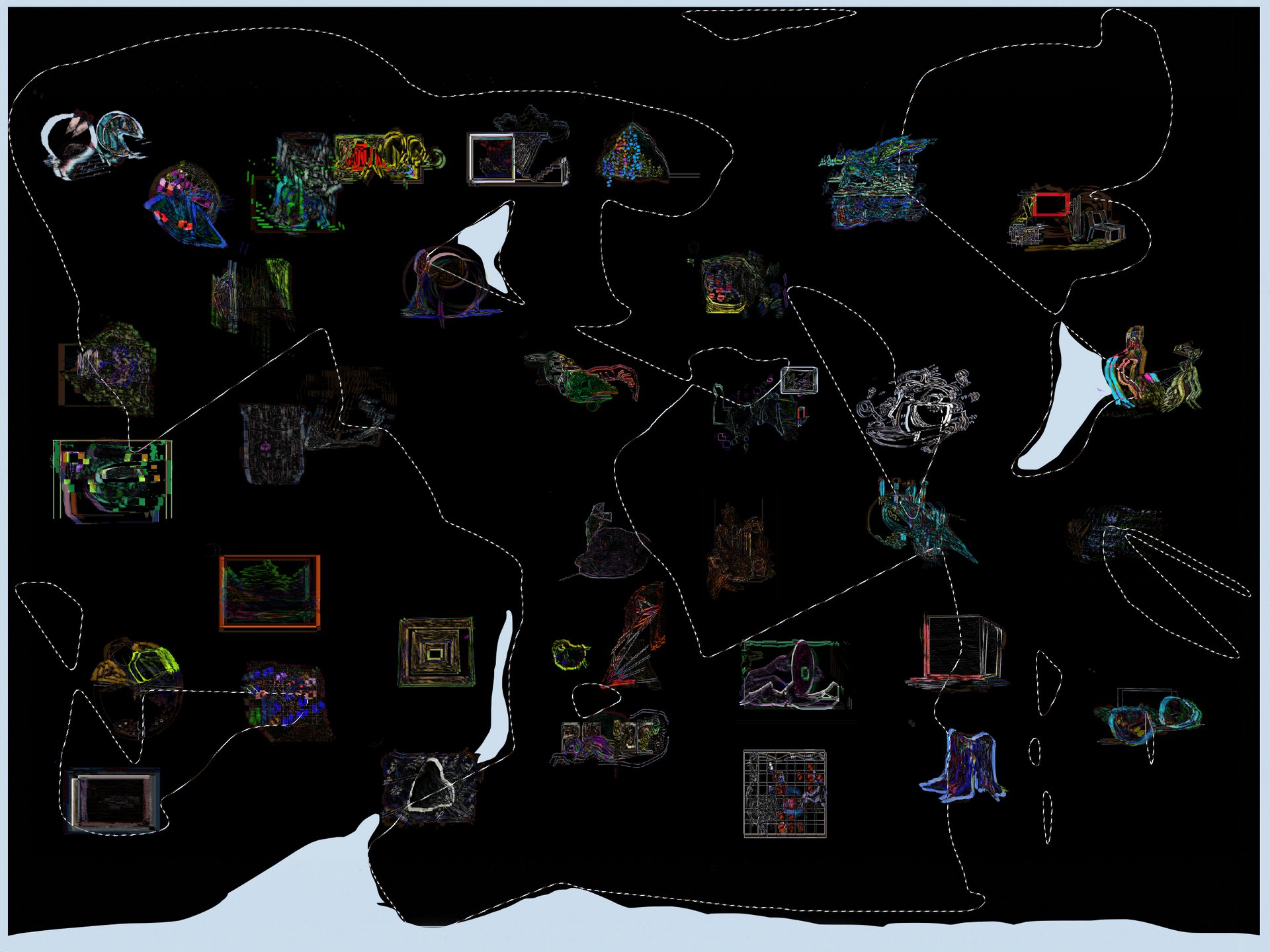
|
|
We haven’t delivered previous versions of this contribution. | Proposed schedule: Artistic provocation (30 minutes Apophatic studies (30 minutes) Reflection (30 minutes) |
Internet Projector Laptops, tablets or phones for visualization exercises Seating Tabletops |
We do not foresee any at this time. | Yes | Ryan Woodring | |||
| Unstar/Unflag Submit a contribution to the 2026 Forum on Artistic Research: Submission #281 | Anonymous | Sara | Gómez | saragomez74@yahoo.com.mx | Gesture as a construction technique | Project presentation | English | Through a performative lecture (20 to 25 min.) I will present my current postdoctoral research in which I seek to define the term choreographic aesthetic apparatus. To do it, I must ask whether choreography has the capacity to reveal something unintelligible through its aesthetic production. I maintain that a structure of meaning is created through the gesture. Gesture can be understood here as the technique by which one element is joined to another -object to body, gesture to words. That union is not only formal but related to meaning: if each object has multiple meanings (due to its linguistic and cultural dimensions), the gesture creates heterogeneous meanings through the union between several objects; an assemblage is created through contradictions (Rancière) between concepts and symbols. Choreographic construction unfolds a thought that is ordered on the stage (P. Valéry). Thought must unite emotion and intellect because it is not reduced to the production of knowledge, it is something more comprehensive: integrates ways of knowing the world (E. Kant). Choreography could be an aesthetic apparatus if it offers us ways of thinking (in an integral way), aspects that have not been ordered in intelligible processes. In a performative lecture I propose to work on the following problems: the creation of meanings through the gesture of uniting things; the relationship between choreography with the concept of construction (V. Fabbri, W. Benjamin, J. L. Déotte); a choreographic final meaning that offers an integral way of thinking. The way I will address this is by sharing a reflective text while working with diverse objects (things, books, letters, images, writings), exploring their possible relationships, and leaving a trail of their unions in the space. With all of these I will form an (choreographic and spatial) utterance that articulates and makes visible the main idea: the ephemeral but visible construction of the choreography through gestures. | https://www.researchcatalogue.net/shared/9cc418a578a743f9094178080088f8d6 | https://www.researchcatalogue.net/shared/9cc418a578a743f9094178080088f8d6 |
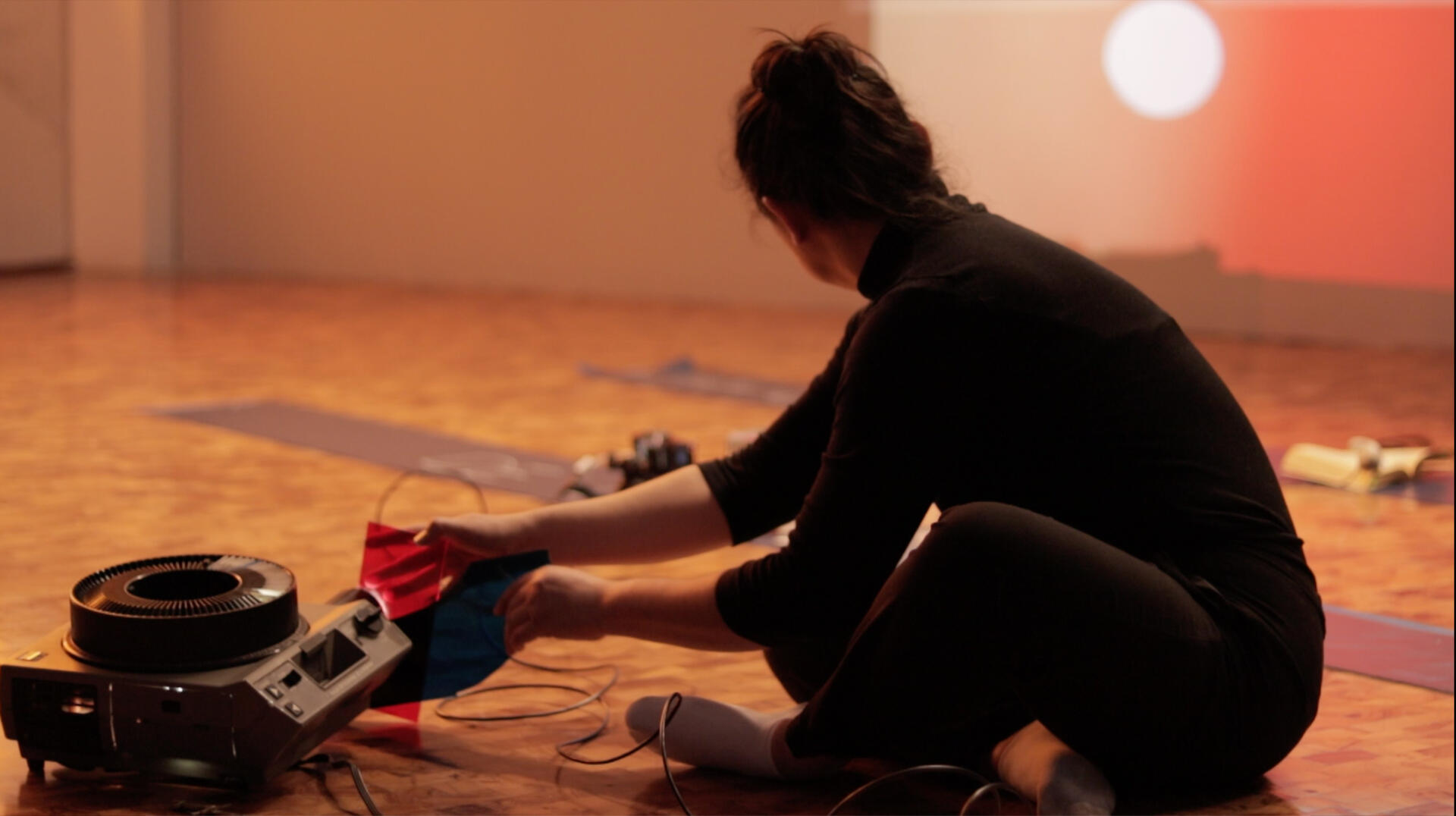
|
|
I created a performative lecture (10 min) related to my postdoctoral research for the 4th International Congress on Dance Research (Mexico). That work is the starting point for creating the performative lecture proposed here, but it will be center in developing the aesthetic problems mentioned above (that I've just begun to research). I’m publishing a chapter in Dance and Philosophy by Nicolasa ed. (currently in press), named “On Eros and Episteme” that is also related with my current research. | My proposal, although it is a performative lecture, and takes advantage of the format of a traditional lecture, requires an open space and some technical specifications. | Stage: empty space (4m x 5m). Chairs or cushions around it. Dimmable lighting (if possible) Possibility of darkening the room for projection Projector Space for projection (2.10 m high x 3 m wide if possible) Possibility to rehearsal on the assigned room for one hour, before the presentation day. Possibility of preparing the space 30 minutes before the presentation, on the presentation day. |
Yes | |||
| Unstar/Unflag Submit a contribution to the 2026 Forum on Artistic Research: Submission #280 | Iracema De Andrade | Iracema | De Andrade Almeida | cenidim.ideandrade@inba.edu.mx | Endangered Sonic Bodies: Situated Knowledge in Performer-Led Intermedial Electroacoustic Practice | Project presentation | English | This presentation examines how performer-led intermedial electroacoustic practice constitutes a form of situated knowledge production, proposing the "female sonic body" as an endangered conceptual world within Western concert music. Historically shaped by colonial, patriarchal, and score-centred epistemologies, the performer’s body—particularly when gendered—has been disciplined and rendered epistemically neutral. In response, this project develops the "female sonic body" as an analytical, critical, and methodological framework through which embodied, culturally inscribed, and minoritised sonic practices emerge as epistemic resources. Drawing on four audiovisual electroacoustic works created within the Féminas Sonoras collective, the presentation demonstrates how experimental artistic practices—including intermedial composition, improvisation, archival activation, and collaborative creation—function as modes of embodied analysis. Family archives, vernacular sonic memories, and genealogically transmitted imaginaries operate as cultural sedimentations that persist across generations, resurfacing through performance as forms of artistic and epistemic agency. These practices resist processes of standardisation and epistemic homogenisation by affirming situated, irreducible modes of knowing rooted in lived experience. By integrating artistic practice and critical reflection, the project proposes a transferable experimental methodology for artistic research, demonstrating how intermedial performance can generate new epistemic frameworks and sustain endangered conceptual worlds within contemporary artistic practice. |
https://www.researchcatalogue.net/editor?research=4194540&weave=4194539 | https://www.researchcatalogue.net/editor?research=4194540&weave=4194539 |
|
|
Earlier versions of this research were presented at Electroacoustic Music Studies Conference in Paris 2025, and published in Vórtex Music Journal, Vol. 14, 2026. The IFAR 2026 contribution expands this work by refining the methodological articulation of the “female sonic body” as a transferable artistic research framework, and explicitly addressing intermedial performance as a strategy for sustaining endangered conceptual worlds, including its live and practice-based dimensions. |
Projector Stereo sound system Laptop connection (HDMI or mini-jack) |
All audiovisual materials presented were created within collaborative artistic research contexts with full consent of participants. The presentation reflects critically on ethical approaches to collaborative knowledge production, ensuring that artistic and cultural materials are contextualised and not treated as extractable resources. |
Yes | Iracema De Andrade Almeida | ||
| Unstar/Unflag Submit a contribution to the 2026 Forum on Artistic Research: Submission #275 | Anonymous | Junuka | Deshpande | junuka.deshpande@manipal.edu | Drawing from the cracks, an enquiry into soil and witnessing | Project presentation | English | This project explores urban transformation through a quiet, persistent lens of soil as a witness and as a feminist voice of dissent from the cracks of a rapidly transforming landscape in one of the most populated and culturally diverse countries.Through the practice of image-making, recording, drawing and observing at infrastructural construction sites in the city, the project listens to the cracks,the pits,the heaps of rubble,and the life it holds, revealing resistance in the liminal spaces between the increasingly contrasting binary of soil and concrete.To crack open is, to speak, to utter. In times of mainstreamed majoritarian discourses, social ruptures and normalised violence amidst the deceptive illusion of technological advancement, the observation of physicality of soil in the cracks, opens possibilities to listen to minoritised, generative force, challenging the aggressive capitalist force of exploitation, growth, and control that drives the current narrative of homogenous infrastructural development in an environmentally and culturally diverse context. Through the textures,traces and marks in the physical space of cracks under flux, photographic and drawn observations of bodies-human and more than human,machines,lands and labour,forms and formations of soil,cement, stones and their variants,the project aims to pay attention to the uncertainty, vulnerability and the temporality of this endangered socioecological and political landscape under transformation, that the binaries of progress abandon. The method of artistic practice is in being vulnerable, interrogative and persistent to become the cracks and the soil, countering the dominant linear narratives of progress by existing and witnessing.By listening to and from the cracks as a physical,representational and phenomenological world,the project invites sensing the transformation of the layered, heterogeneous, and alive earth we build on. |
https://www.researchcatalogue.net/view/4196268/4196269 | https://www.researchcatalogue.net/view/4196268/4196269 |
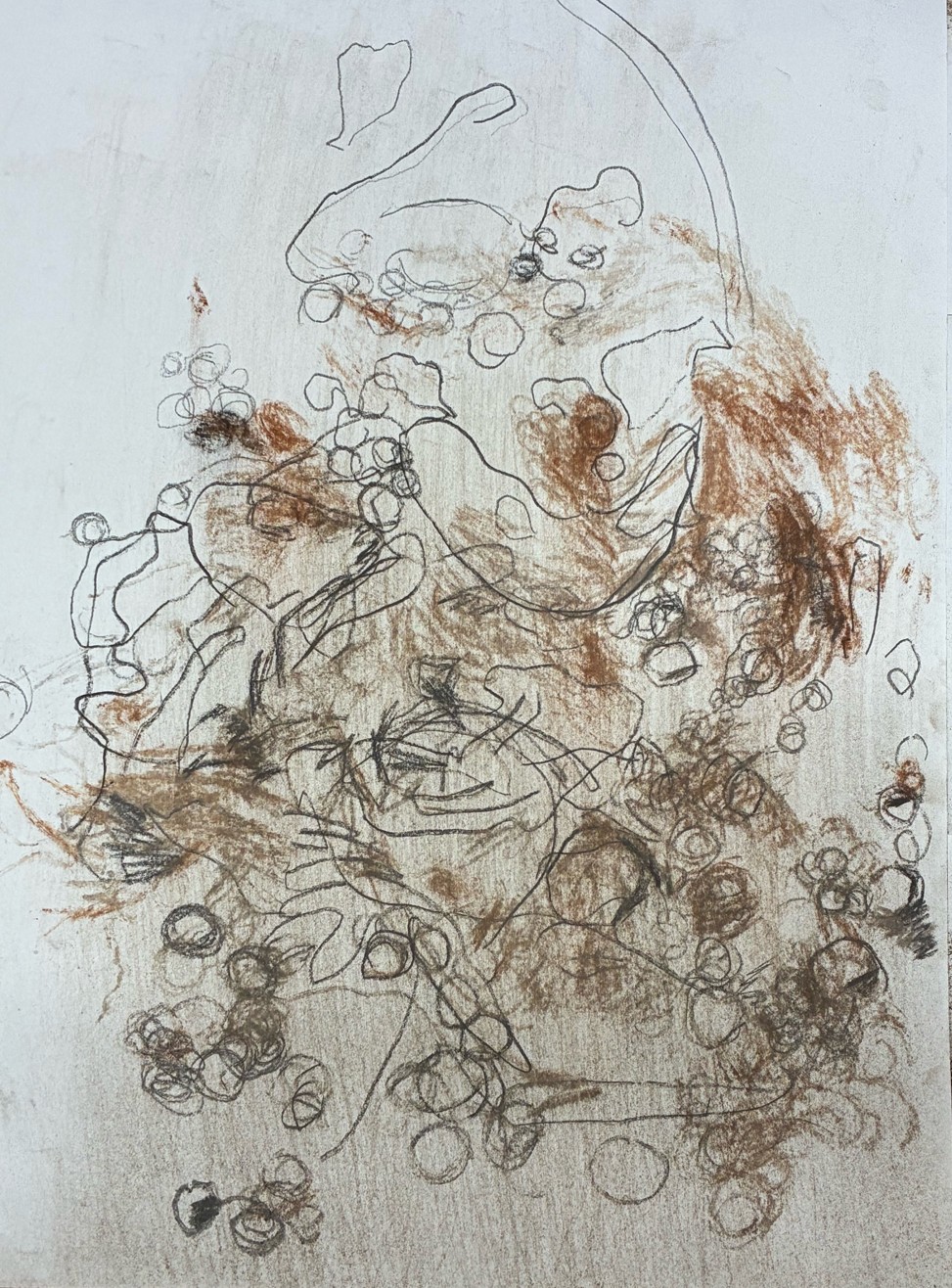
|
|
https://www.researchcatalogue.net/view/1807187/1807188 https://www.researchcatalogue.net/view/3129144/3129145 At 16th SAR conference: https://www.researchcatalogue.net/view/2759372/3513874 |
Project presentation with some physical work | a room with a good light, projector, speaker, table, other technical help | Yes | |||
| Unstar/Unflag Submit a contribution to the 2026 Forum on Artistic Research: Submission #274 | Anonymous | Alessandro | De Francesco | alessandro.defrancesco@albertina.academy | Poetic Practice as Marginalised Language in a Neo-Conceptual Approach | Roundtable contribution | English | During this roundtable, I aim to explore with my interlocutors several research processes and epistemological configurations that I have encountered in poetry over the years, both as a scholar and practitioner. I consider poetry an autonomous form of artistic practice and research, with its own methodologies, which are increasingly independent from both the traditional literary field and from domains in which it has often been subsumed within the art world, such as visual or concrete poetry and language-based conceptual art. I would like to address four central questions: 1. How might the synthetic capacity of poetic language—together with its semantic density and stratification of meaning—inform contemporary artistic research and neo-conceptual practices? 2. In modern and contemporary contexts, poetry has often occupied a marginal position. It is frequently perceived as obscure and untranslatable, and its material manifestation as text appears more fragile than works produced in other media. In what ways might this marginality constitute a critical strength within today’s art world? 3. Poetry presents a productive paradox: although it is composed of words, its linguistic operations are so unconventional and intensified that it continually gestures toward the non-verbal. It deploys language in order to reach what exceeds language. What semantic and aesthetic bridges could this tension establish with other art forms? 4. I will also outline two theoretical trajectories I have been developing and that are related to the previous points: the “three obstacles” and the “knowledge without understanding.” The first proposes that poetry confronts and reconfigures cognitive, political, and emotional obstacles embedded in dominant systems of representation through its strategic misuses of language. The second suggests that, by engaging ontological and conceptual dimensions that resist comprehension, poetry generates an alternative approach to knowledge. |
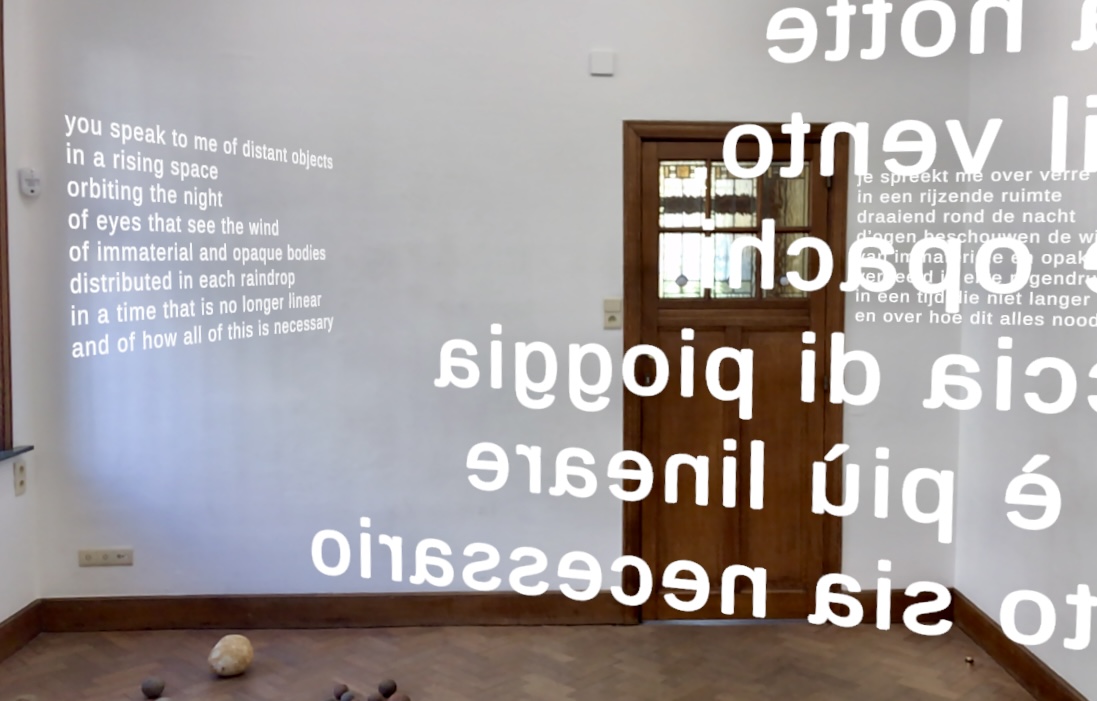
|
|
The concept of the “three obstacles” was presented in a lecture series at the European Graduate School. The concept of “knowledge without understanding” was developed in a paper for a special issue on object-oriented ontology and poetry in the international journal "Semicerchio" (Florence). Some aspects of this research are informed by the “Italian Network of Artistic Research” project at the Albertina Academy of Fine Arts in Turin, for which I served as an advisor. | A cosy room if possible, where an intense discussion can take place. | No particular risks. | Yes | Alessandro De Francesco | ||||
| Unstar/Unflag Submit a contribution to the 2026 Forum on Artistic Research: Submission #272 | Anonymous | Elide | Sulsenti | elide@elide.it | Individual listening, shared space: shaping listening through instrumental design | Performance | English | This performance-based research proposes a series of short, repeatable concerts (approximately 10 minutes each), built around a new work for cello composed by composer Alessandro Perini and cellist Elide Sulsenti, performed through a dedicated instrumental setup in which the mediation of listening is itself the instrument. Rather than treating headphones as neutral transmission devices, the project constructs a specific apparatus in which the cello, microphones, signal routing, and the individual headphones provided to each listener form a single extended instrument. This “lutherie of listening” positions both the work and the instrumental apparatus as co-emergent: they are instaurated— that is, they acquire meaning and function — through the mediations and translations between human and non-human actors that constitute the performative assemblage. Within this framework, performance thus becomes an act of care: the performer assumes the role of custodian of the system and guarantor of musical meaning, responsible for stabilising an assemblage in which sound, technology, and perception are in constant negotiation. This stabilisation occurs live and remains open to variation across iterations, rendering the apparatus itself a site of ongoing inquiry. While the sound of the cello is distributed individually through the headphones, the electronics inhabit the shared acoustic space, producing a layered condition of private immersion and collective presence. The personal listening space thus proves permeable, giving rise to a shared presence and rendering audible the relational conditions of the event. Through repetition and iterative performance, the project investigates how instrumental design can actively construct modes of listening, how agency is redistributed between performer and technical systems, and how mediated intimacy reshapes the ontology of live musical experience. |
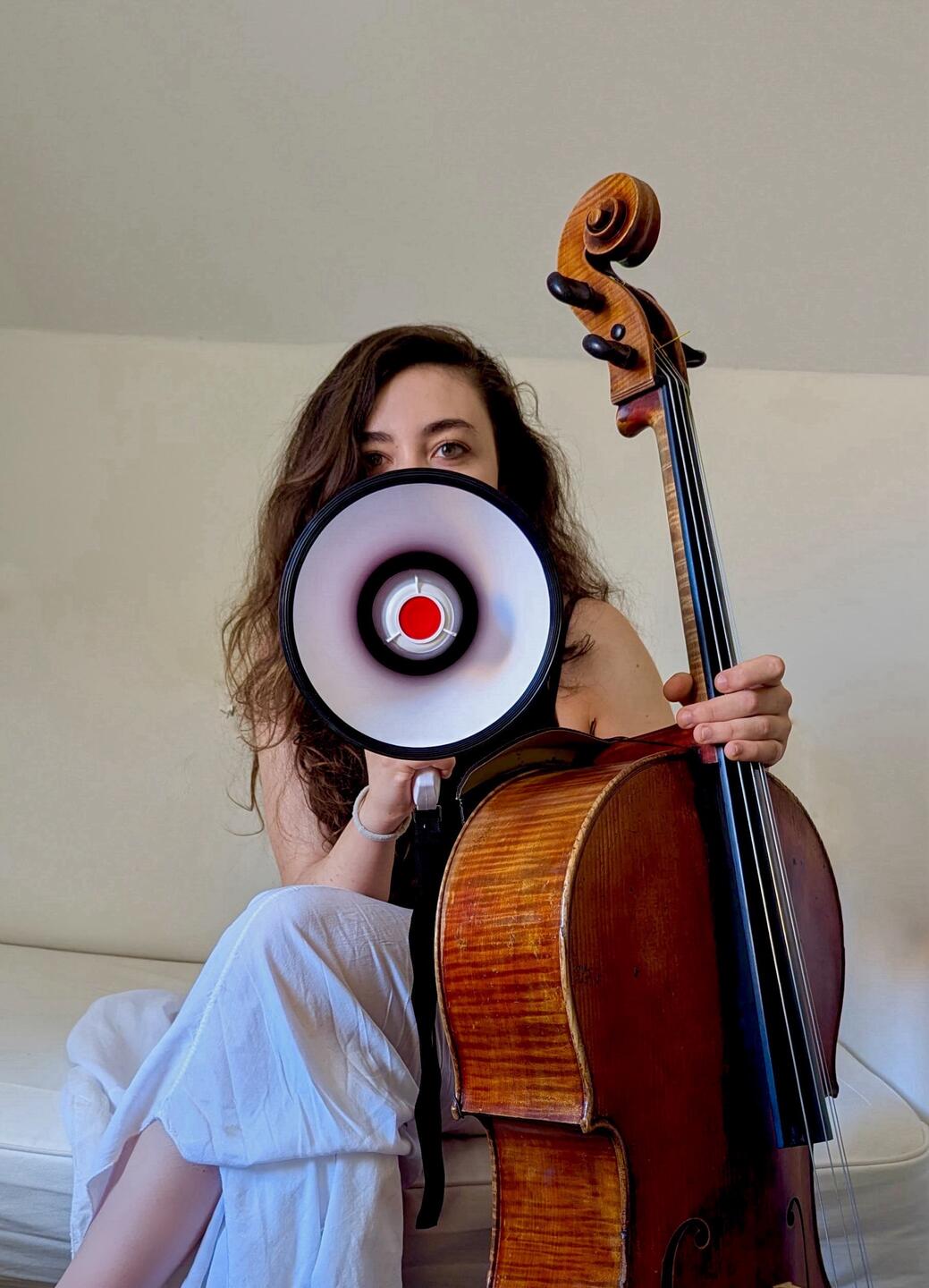
|
|
10 Chairs for the audience Mixer with at least 12 channels, stereo main out, aux/bus for headphone mix 2 PA speakers (with stands) Cables: XLR or TRS for mixer / XLR for microphones 4 microphones with stands and cables (provided by performer) 10 headphones (provided by performer) 10 minijack male-female extensors (can be provided by performer) 2 headphone amplifiers (5 outputs each) (it can be provided by performer) Power: stable 230V supply, surge-protected strips for all equipment |
No | |||||||
| Unstar/Unflag Submit a contribution to the 2026 Forum on Artistic Research: Submission #265 | Barbora Lungova | Barbora | Lungova | lungova@ffa.vutbr.cz | Good Fetishism? | Project presentation | English | The initial aims of the research project focused on the possibilities of representing queer desire while eschewing the problem of objectification which is frequently at stake especially when representing women’s bodies. In my research, I was originally grounded in painting, formerly my main discipline. During the process of exploring strategies of other artists, both historical and contemporary, I started questioning the adequacy of painting for the ends I wanted to communicate. Gradually, as I was involved in other artistic projects focusing on botanical and horticultural topics, I realized that a garden could be a perfect tool of not only representing desire, but communality and shared joy – aspects that are crucial to the experience of queer lives in hostile environment. In 2020, I decided to plant The Rainbow Garden in Kameníky by Kyjov dedicated to queerness. The key to the composition of the garden is conceptual, not primarily visual. The garden is composed of iris barbata cultivars arranged into flower beds according to different topics. The names given to cultivars by breeders frequently reflect frozen tropes (Secret Weekend), cultural imagery (Cher and Cher Alike), and even stereotypes (Perfect Wife, Wild Petticoat).The names function as ready-mades from which a cluster of associations or even narratives or poems can be made. Thus the rainbow garden consists of iris beds dedicated to different topics: there are several Gender stereotypes beds, a Queer bed, and several love poems. Situated among vineyards, orchards, and fields, the garden without fences is accessible to passers-by and is the location of annual queer picnics and annual short-term artistic residencies. In the course of seven years, I have found (but not perfected!) a form of representing and enacting queer desire trough indirect metaphors reflected in names given to irises by others, but also through direct orchestration of events and meetings of both queer and straight people. |
https://www.researchcatalogue.net/view/3530093/3534183 | https://www.researchcatalogue.net/view/3530093/3534183 |
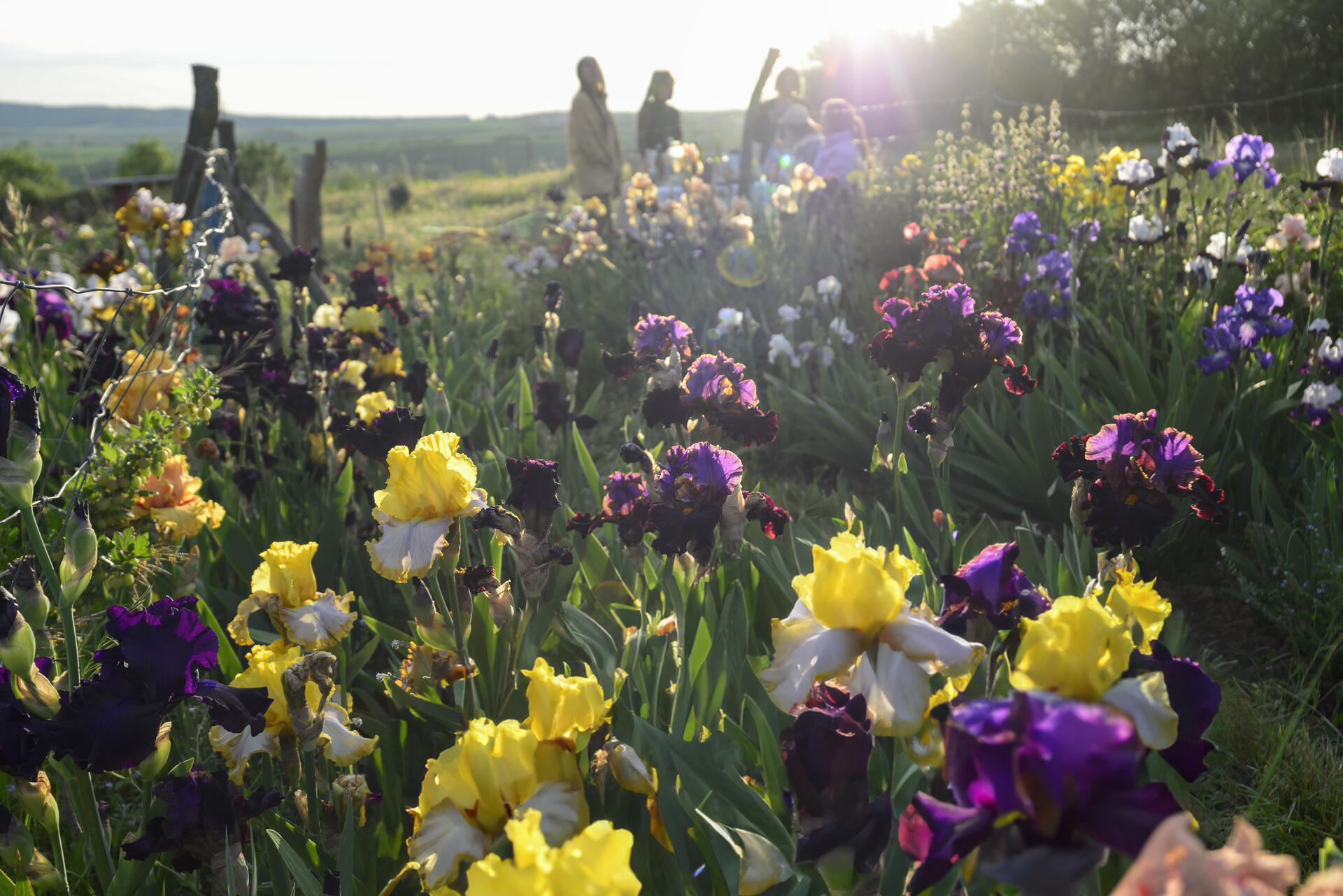
|
|
The project about the Rainbow Garden in Kameníky by Kyjov under the title The Garden Visit at the Jindřich Chalupecký Award laureates‘ exhibition in the National Gallery Prague in the format of a multimedia installation, see https://www.ngprague.cz/en/event/4505/jindrich-chalupecky-award-2025; the Rainbow Garden was also presented in a different, smaller-scale format in Entrance Gallery in Prague in a group exhibition in 2024, see https://entrancegallery.com/kvetomluva/. | I am also open to the poster format if there are not enough slots for presenters. | For a presentation (artist's talk), I need projection (video + audio + microphone). | No known. | Yes | Barbora Lungova | |
| Unstar/Unflag Submit a contribution to the 2026 Forum on Artistic Research: Submission #264 | Anonymous | Feilim | O'hAolain | f.ohaolain@artez.nl | The Semiotics of Synthetic Spaces: Embodied Knowledge and Multilingual Narratives in Digital Performance | Experimental format | English | This proposal, developed by the Future Storytelling Lab (FSL), investigates the creative and pedagogical potential of generating visual naratives in performance and artistic research. Led by Feilim Ó hAoláin (Programme Coordinator, FSL), the session brings together Niek Van Oosterweyk (dancer/choreographer), Cris Molee (technologist), and Pol Eggermont (dramaturg & technologist) to explore how AI-driven image generation can enhance interdisciplinary collaboration between movement, language, and digital media. In this laboratory setting, participants will experiment live with generative design softwares, converting embodied movement and multilingual prompts into AI-generated visual narratives. Through practice-based experimentation, the workshop not only explores how AI can reshape artistic practices, but also fosters critical reflection on these performances or happenings—examining their aesthetic, ethical, and conceptual implications. Participants will: -Experiment with Stable Diffusion as a performative and educational medium, integrating movement, voice, and multilingual input. -Discuss strategies for embedding AI in arts education, focusing on interdisciplinary learning, digital literacy, and collaborative creation. -Explore how AI challenges boundaries between physical/digital performance and the roles of creator, performer, and audience. -Address key tensions, such as authorship, agency, and the algorithm’s role in live and educational settings. Drawing on the Future Storytelling Lab’s expertise in experimental pedagogy and performance technology at ArtEZ University, the workshop will equip participants with actionable insights for integrating AI into their research or alternatively creating a space of critique and dialogue around this emerging technology. Designed for artists, educators, and researchers, this session invites reimagining AI as a tool for innovation, storytelling, and critical inquiry in contemporary practice. |
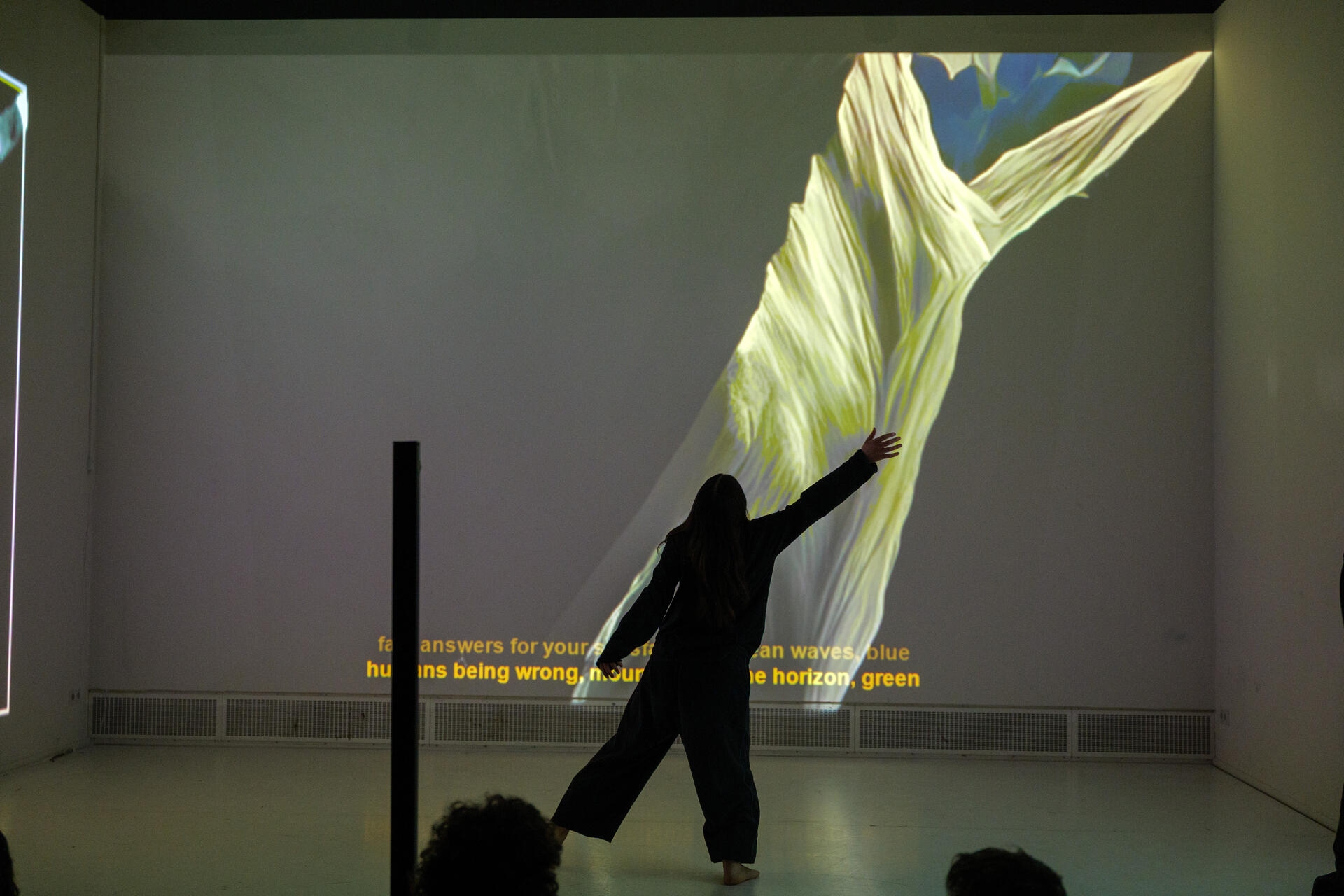
|
|
An earlier inspiration of this proposed laboratory took place at ArtEZ University's Future Labs programme in January 2026. During a project week with a inter disciplinary group of bachelor theater and dance students, participants were invited to explore and experiment in a workshop based around stable diffusion led by technologist Cris Mollee. It was the first of its kind at ArtEZ University and feedback from students and teachers respectively led to further considerations to develop it. |
This experiment holds particular significance in bridging the artistic research landscapes of the Netherlands and Ireland, two countries with rich traditions in interdisciplinary performance, multilingual storytelling, and digital innovation. Both nations share a strong emphasis on experimental pedagogy and the integration of emerging technologies into creative practices, making this workshop a timely exploration of shared methodologies and cultural exchange. The Netherlands and Ireland have become hubs for artistic research that merges technology with embodied practices. The experiment/lab serves as a case study for how AI can act as a catalyst or even a threat to new forms of artistic dialogue, particularly in educational and community-driven settings. By examining the similarities in how both countries approach AI, movement, and language, the workshop not only advances technical and creative methodologies but also strengthens transnational connections in artistic research. |
A large black box/white cube studio is the most ideal setting for this event but it it could be suitable within certain perameters in other locations. basic requirements: Large projection back walls (white) Ideally or prospectively x3 walls whereby projection would be 270 degree from a ceiling. Showcasing both the outcome or visualisation but also the components of creating stable diffusion and touch designer elements. |
The workshop explicitly engages with ethical questions surrounding AI in artistic practice such as Authorship & Agency (Who "owns" AI-generated work, and how do we credit human/machine collaboration?), Bias & Representation (How do training datasets and algorithms influence (or limit) creative output, particularly in multilingual and multicultural contexts?),Embodiment & Consent (What are the implications of using biometric data (movement, voice) in live AI performances). | No | ||||
| Unstar/Unflag Submit a contribution to the 2026 Forum on Artistic Research: Submission #263 | Anonymous | Breogán | Torres Gutiérrez | breogantogu@gmail.com | CANTO - onda - ONDA - canto | Performance | Galician | In Galician orally transmitted music, sung pieces are structured as a sequence of verses (coplas) that do not necessarily share a thematic connection. What binds them is the place of their emergence—the social and emotional life of a specific village. Between verses, abstract vocal refrains appear—variations of “aialalalá” or “aialelo aialalelo.” These non-lexical sounds make fragmentation operative: rather than memorizing a three-minute song, singers learn clusters of short, self-contained chants lasting only a few seconds. Such refrains are part of the sonic fabric of the Galician language. They carry no semantic meaning beyond their own resonance and cannot be translated. Yet they remain unmistakably Galician. How does this identification between community and sound arise? And how might these marginal, non-semantic forms generate resistance within a minoritized language in friction with the dominant Spanish? This performance centers on these abstract refrains—“ailalaes”—extracted from archival field recordings. I separate them from the narrative body of the verses, focusing solely on their sonic presence. The material is processed through Pure Data, which reorganizes the chants into irregular, generative patterns. Their timing and recurrence are partially automated, producing a shifting structure that I cannot fully predict. Within this system, my role is to listen and respond. I echo the recorded voices, aligning my breath and rhythm with theirs. Percussive gestures on the tambourine punctuate the intervals, recalling traditional transitions while recontextualizing them in a contemporary frame. Over 10–20 minutes, the piece unfolds as a layered dialogue between archival recordings and live voice, past and present. The work foregrounds repetition as a method of learning and embodiment, staging transmission not as preservation of fixed meaning but as the ongoing reactivation of sound within a living, vulnerable language. |
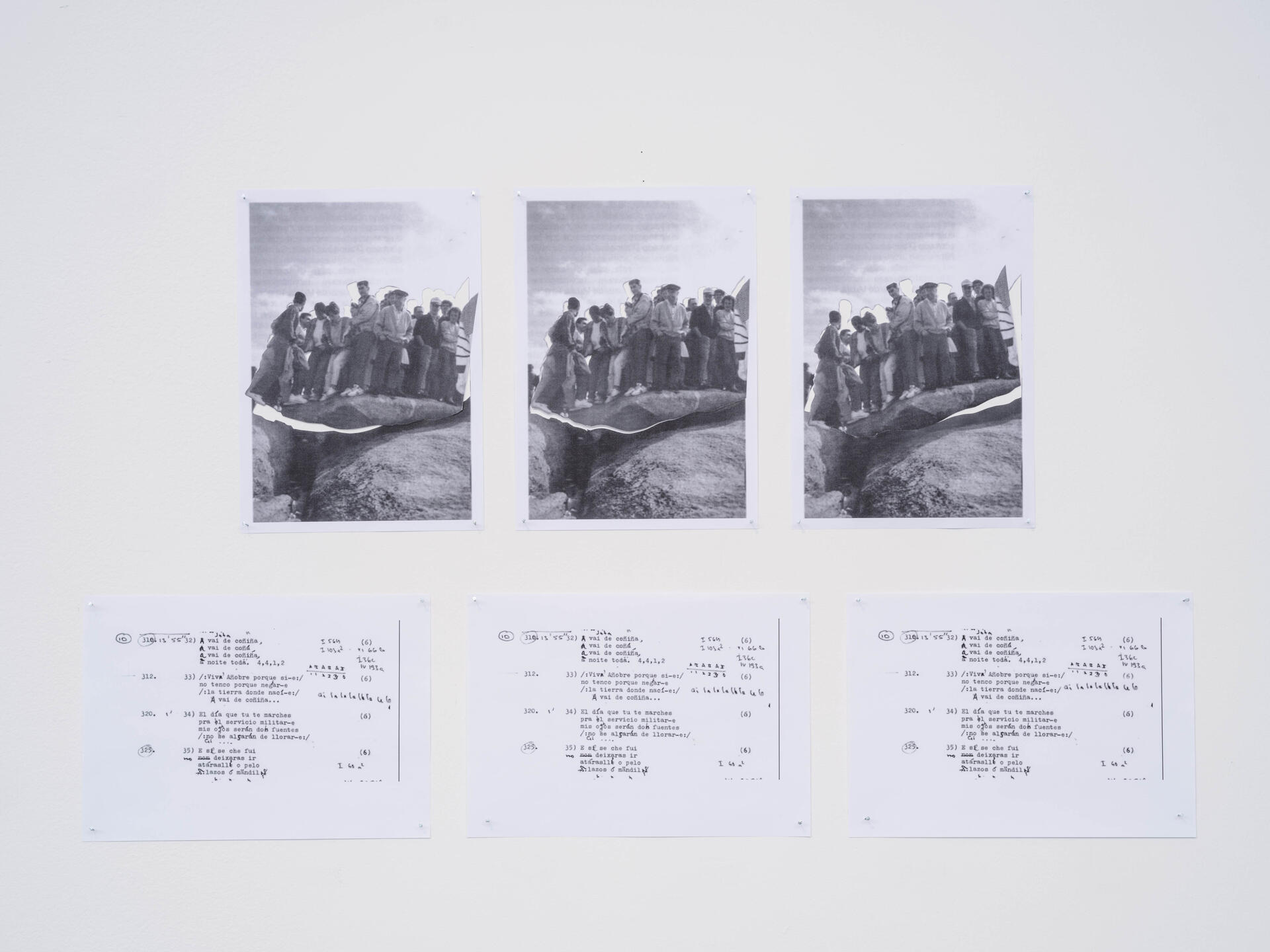
|
|
A prototype of this performance was presented in 2022 at the symposium “Non-Knowledge, Laughter and the Moving Image,” led by Annika Larsson at INDEX Foundation in Stockholm. In 2023, it was shown at the Royal Institute of Art’s graduation exhibition at Konstakademien and at the Auditorio de Galicia museum in Santiago de Compostela. In 2026, a new version will be presented as part of the Anozero program at the Coimbra Biennial in Portugal. | The technical requirements are simple. I would only need my laptop and some speakers. | The technical requirements are simple. I would only need my laptop and some speakers. I could adapt to the available space, even though it would be easier in an empty room than in a conference room. | My interest in working with abstract parts of language stems from my desire to understand a tongue as something alive and hybrid. My only dilemma is whether, by accepting the reality of this hybridization in a context of diglossia, we lose part of the idiosyncrasy of the Galician language. | Yes | Breogán Torres Gutiérrez | |||
| Unstar/Unflag Submit a contribution to the 2026 Forum on Artistic Research: Submission #260 | Anonymous | Kathy | D'Arcy | kathy@hi.is | Silence as Failure, Failure as Toolkit: an articulation of the Anfinn creative research project | Project presentation | English | I will present the experimental methodologies and philosophies behind this project in the way in which my autistic brain structures knowledge, without interpretation, as a creative performance of nonperformative authenticity. There are so many barriers between neurodivergent (ND) artists and collaborative spaces. The in-between or ‘third’ spaces where collaborative connections are most often made are often impossible to navigate, as are project formats relying mainly on ‘face-to-face' verbal interaction. The contributions and innovations of ND people are often lost to creative and research discourses. My project involves creating an experimental website where ND artists play together to develop creative spaces to exist in: this presentation is about how I’m doing this, starting a neurodivergent creative myco-ecology underneath the neurotypical capitalist academy. It will not be necessary to use neurotypical words or story-systems or semiologies, or words at all. It will not be silence and it will not be separation. This presentation is also about how I’m doing the project While Being Autistic (academi(mi)cking). Because of course I am failing. I am failing to create the rich, full silence I want from out of the poor silence I’m confined within. I am failing to speak in the languages I am trying to escape and I can’t escape them without them. I am failing to write this abstract. I am sentenced to silence. So what is the methodology of failure? This presentation is actually about when I walked an ancient path from the south coast of Ireland to the monastic site called the Rock of Cashel. I divined the parts that had been built over and erased by a kind of unfurling around the omissions to wherever the path should come out, and there it would eventually be. There was and is no way to measure this. When I arrived at the Rock gift shop with my shoes full of blood, absolutely nothing happened. I got the bus home. |
https://www.researchcatalogue.net/editor?research=4219155&weave=4219156# | https://www.researchcatalogue.net/editor?research=4219155&weave=4219156# |
|
|
19.4.24: Academi(mi)cking Neurodivergence: biennial conference of Hugdok, Assoc of Doctoral Candidates and ECRs at School of Humanities, University of Iceland 31.10.24: Neurodivergent Academi(mi)cking, Neurodivergent Creativity: Þjóðarspegilinn ('The National Mirror') Conference, University of Iceland Planned 2025 presentations at the NNDR conference 2025 (Helsinki) and the Umede Festival (Vilnius) could not go ahead due to autistic burnout and lack of accessibility. |
The presentation will involve live performative speaking and prerecorded audiovisual components. | I will need to be able to project images and video onto a screen from my laptop I am autistic so will need: - a small quiet room nearby where I can go in case of sensory overwhelm - a seat very close to the presentation area - visual rather than/as well as verbal cues due to sensory processing difficulties - someone to meet me outside the venue and walk with me to the conference space, if possible. |
As a privileged white cis woman I try to be as mindful as possible of unconscious bias, ignorance and casual prejudice of any kind, but I am always aware of these possibilities. I want to be authentic and mindful about addressing any offense or triggering my work may cause at any point. To my knowledge my presentation does not contain any triggering, offensive or inappropriate content. | Yes | Kathy D'Arcy | |
| Unstar/Unflag Submit a contribution to the 2026 Forum on Artistic Research: Submission #256 | Anonymous | Merel | Visse | mvisse@drew.edu | A not-quite round table: apophatic artistic research at risk | Roundtable contribution | English | In a time when complex, nuanced human experiences are increasingly reduced to data points, categories, and optimized outputs, we consider this an urgent gathering for artistic researchers. Like no other, they know how to mediate liminal, precarious knowing that may counter the aesthetic harm we're witnessing in the news, in schools, at work. Artistic research has unique capabilities for preventing the erasure of ineffable human experiences from everyday life — those profound, unsayable dimensions of meaning, embodied knowledge, and consciousness that resist codification. This not-quite round table provides a platform for all who engage with the ineffable through apophatic artistic research. We respond to contemporary crises by discussing artistic research in the context of a field that has studied the ineffable for decades: apophatic studies. We explore apophatic artistic research that honors, rather than colonizes or erases, the ineffable. Apophatic approaches have shaped artistic practices for centuries, yet contemporary artistic researchers rarely invoke apophatic thought as a lens. Apophatic studies thus occupies a precarious, minoritized position, its rich conceptual knowledge at risk of being lost — and with it, a valuable resource for artistic researchers. Participants will engage with unique apophatic concepts such as excess, propensity, indirectness and maturation through artistic research. This not-quite Round Table sits with an ongoing project that tries to do the impossible — bring apophatic artistic research into view. A multimodal, curated publication and exhibition, we circle an ongoing project — a multimodal, curated publication and exhibition on apophatic artistic research, spanning visual art, performance, media and time-based art, and hybrid practices including bioart, land art, and conceptual art; spaces where naming often falls short. Discussants are contributors and members of the www.apophatic.art initiative. |
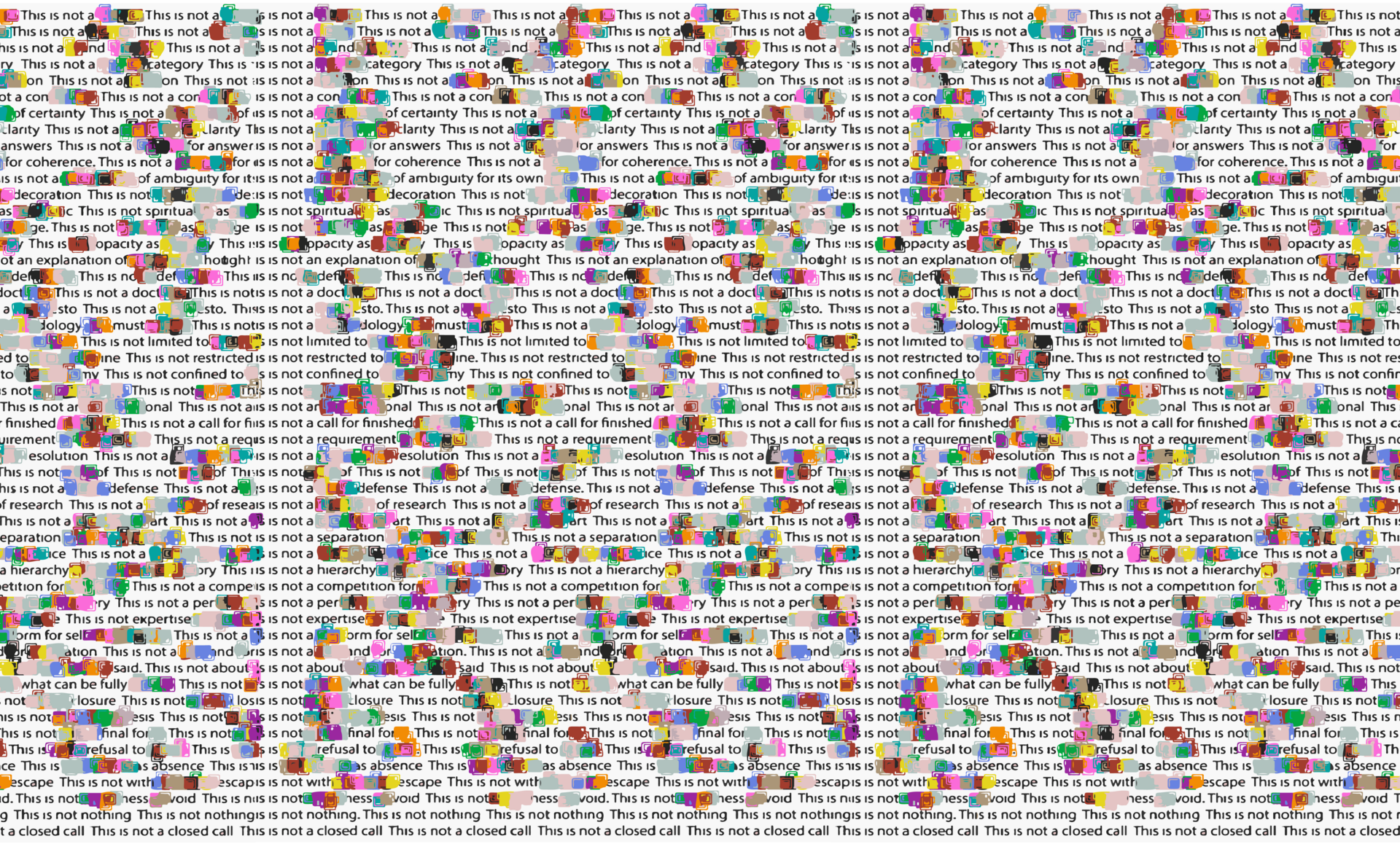
|
|
We haven’t delivered previous versions of this contribution. |
We would need an internet connection and audio in the room, as well as a projector or screen, as we plan to show visual work. | We are not aware of any risks or ethical concerns. | Yes | |||||
| Unstar/Unflag Submit a contribution to the 2026 Forum on Artistic Research: Submission #252 | Anonymous | Olivia | Turner | olivia.turner@ed.ac.uk | Moving Beyond Words: Embodied Meaning‑Making and Evaluation in Participatory Arts and Dementia | Project presentation | English | Over 25 years, research into participatory arts in dementia care has grown rapidly, yet dominant evaluation practices privilege positivist, outcome-driven methodologies. Such approaches fail to capture the ineffable qualities that make participatory arts encounters meaningful, for example feeling, atmosphere and imagination. These tacit, embodied forms of knowledge are central to artistic practice and to the experiences of people living with dementia, yet they remain marginalised within evidence frameworks favouring verbal, measurable and causal models. This oversight obscures the importance of meaning as constituted through social interaction, encompassing meaning-making, belonging, and relationality, which are vital to wellbeing. Drawing on findings from the IMAGINED project, we explore how participatory arts move beyond words, using dance, gesture and music to create spaces where shared meaning emerges between people living with dementia, carers and artists. We reflect on ethnographic insights of artists and arts organisations delivering dementia-related programmes in community and social care settings, highlighting how artists navigate and cultivate embodied and relational encounters. We present a new evaluation framework co-produced with people living with dementia, artists and arts organisations. This framework promotes reflexivity and co-production, challenges hierarchies of evidence, and supports the articulation of complex, relational and embodied meaning-making in arts and health contexts. This paper contributes a deeper understanding of the role of artists in co-creating meaningful experiences, improving our understanding of why participatory arts are important for wellbeing, how these complex processes can be articulated, and to support with future evaluation in this field. | https://www.researchcatalogue.net/shared/ec8d09bfdc1cbc967d217239ae92c377 | https://www.researchcatalogue.net/shared/ec8d09bfdc1cbc967d217239ae92c377 |
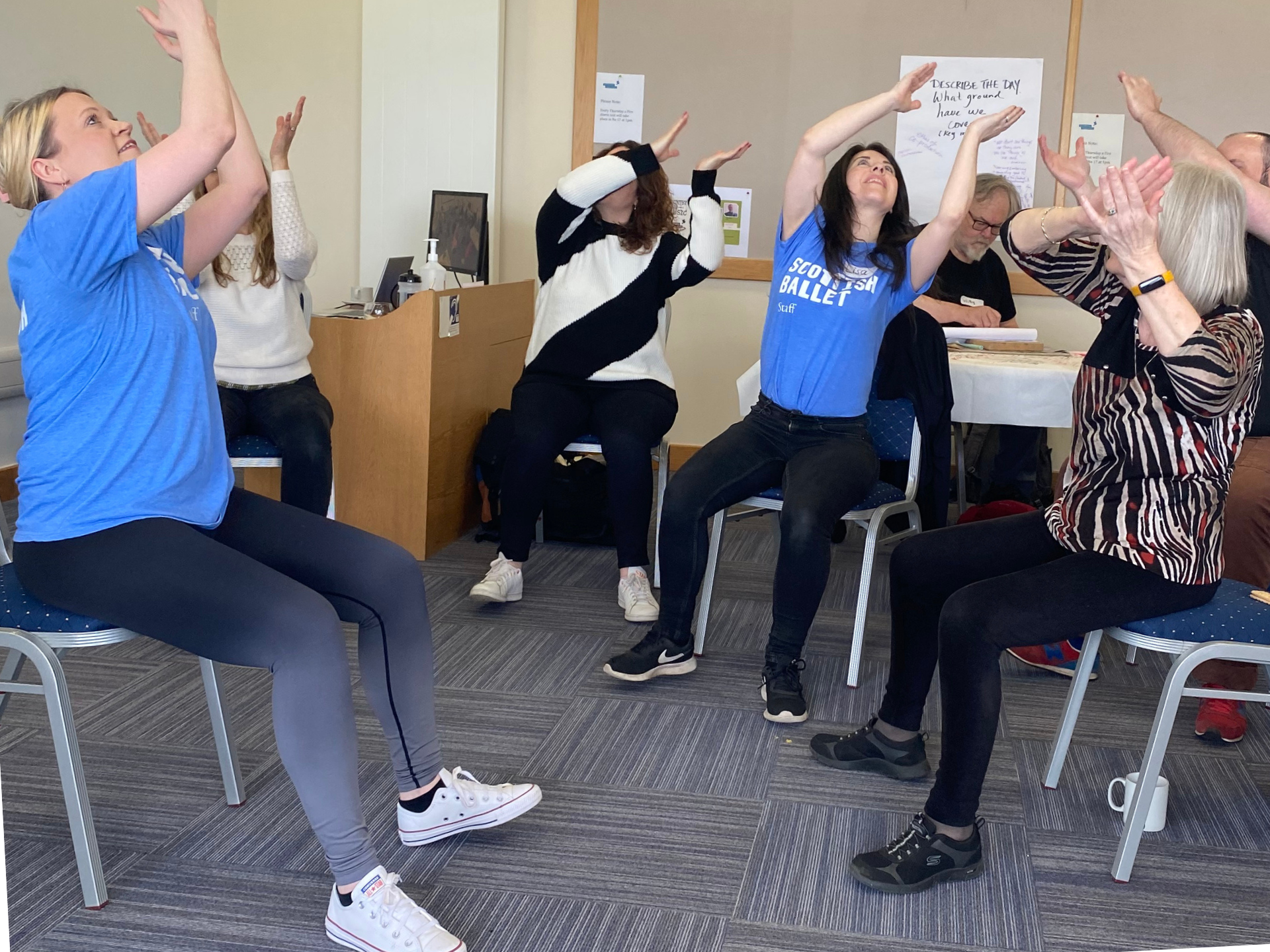
|
|
Full ethical approval was granted for this study by The University of Edinburgh (Ref: 23-24CNST139). | Yes | |||||
| Unstar/Unflag Submit a contribution to the 2026 Forum on Artistic Research: Submission #251 | Anonymous | Lynne | Heller | contact@lynneheller.com | Reinvigorating digitality through artistic tenacity | Poster presentation | English | This poster explores handmaking to AI digital generation, offering insights into artistic tenacity—both intuitive and deliberate—that support creation that holds significance in the face of technological advancement. The current digital production landscape, often criticized as “AI slop,” faces widespread criticism across various fields, including art, design, craft, writing, pop culture, and internet culture. Remarkably, within a short time, AI has become the dominant discussion. The term “slop” implies not only a decline in quality but also an inevitability. How can artistic perseverance combat this seemingly unavoidable shift? In certain contexts, revitalization can be achieved by deliberately applying traditional artistic methodologies. By embracing hands-on processes, craft reinvention, material exploration, and critical reflection, artmaking can counteract overproduction and foster originality that AI tools alone cannot achieve. Artistic practice grounded in critical dialogue, sensory engagement, intuitive creation, and the manipulation of both digital and physical materials offers a counterbalance to purely technological stimulation. This revitalization doesn’t stem from rejecting digitality but from reaffirming the generative potential of human-centred, arts-first experimentation. It allows innovation to evolve in dialogue with emerging technologies while preserving aesthetic and conceptual richness. Re-framing AI as collective intelligence rather than artificial intelligence opens a new perspective on this evolving mode of knowledge assembly and distribution. Why does the culmination of collective realization result in slop rather than excellence? Overwhelming and relentless production, regardless of its specific qualities, diminishes meaning. Meaning emerges from our relationship with artifacts or concepts. Artistic research provides a pathway to creating meaning using new tools while retaining age-old knowledge that AI has not been able to aggregate. |
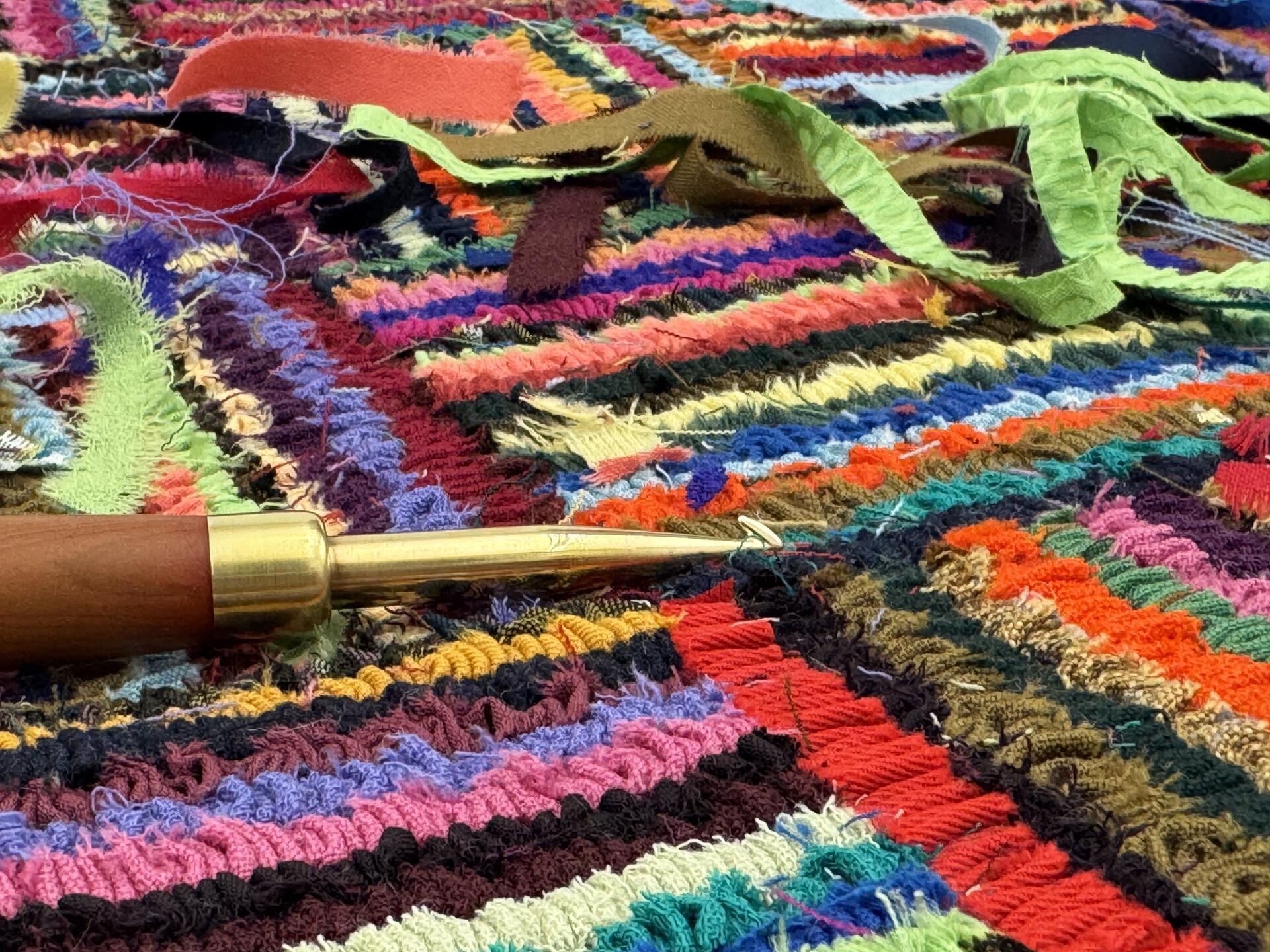
|
|
n/a | n/a | n/a | Yes | Lynne Heller | ||||
| Unstar/Unflag Submit a contribution to the 2026 Forum on Artistic Research: Submission #250 | Nadia Armstrong | Nadia | Armstrong | nadiajarmstrong@gmail.com | In Pursuit of the Quantum Imaginary | Project presentation | English | Artist and researcher Nadia J. Armstrong (NCAD/CONNECT) will present her Cyborg Feminist framework for her practice-based research which is an examination of knowledge production in the field of quantum-based research. Armstrong’s project is in pursuit of the imaginaries at play in the production of technoscientific research. Drawing on STS scholar Sheila Jasanoff’s analytical framework of the sociotechnical imaginary and Karen Barad’s philosophical framework of agential realism, this project presents the quantum imaginary as a fertile site of knowledge-production within technoscientific innovation. Armstrong will break down some of the practice-based research methodologies she adopts in order to examine “quantum” as a sociotechnical imaginary. Her project is a capturing of imaginaries that circulate in the quantum-based research field. Her practice seeks to make visible the potential futures emerging from this field of research. Through inviting chance, immanence and uncertainty into the research, Armstrong’s practice is equipped to pursue the quantum imaginary. Drawing on quantum phenomena and behaviour as the starting point to devise her methodological approach, Armstrong employs quantum research’s established principles as conceptual and performative practice-based modes with which to interrogate the constraints of technoscientific knowledge production. In this presentation Armstrong will describe her interpretations of the quantum principles as philosophical frameworks for “knowing” that may enable us to reinstate other forms of knowledge that typically exist outside the technoscientific paradigm; forms of knowledge that rely on instinct, intuition, belief and imagination. |
https://www.researchcatalogue.net/shared/07322c1fdcb4d29822bd85f8ab06a48c | https://www.researchcatalogue.net/shared/07322c1fdcb4d29822bd85f8ab06a48c |
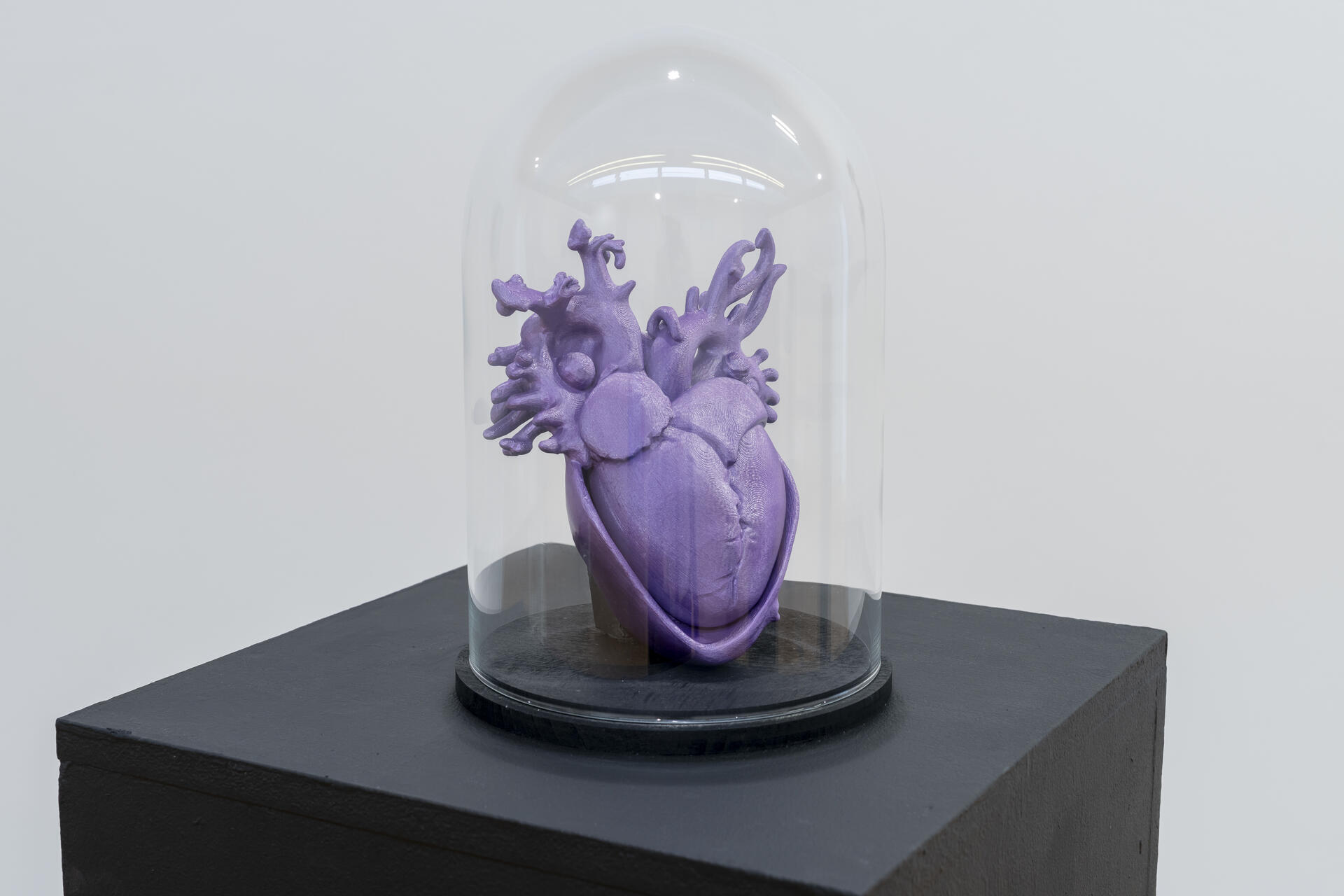
|
|
1) "The Question Concerning (Quantum) Technology : A Transdisciplinary Symposium” Hamilton Building, TCD. 6th Oct 2025.
Armstrong participated in panel presentations, delivering a presentation on developing her quantum-inspired research methodology. 2) A version of this presentation, focusing on the creative practice elements of the project will be presented at the “4th MTU Creative and Performing Arts & Media Research Forum” 3-5th March. 3) GIRLHERO installation at the Luan Gallery, Nov 25. |
The presentation will require a projector or screen for slides in a pdf format. | None of the data from the ongoing interviews for Armstrong's PhD are part of this presentation. Content, unless referenced, is produced by the artist-researcher. | Yes | Nadia Armstrong | ||
| Unstar/Unflag Submit a contribution to the 2026 Forum on Artistic Research: Submission #249 | Pia Siirala | Pia | Siirala | pia@ensemblexxi.org | The Chukchi Personal Song as a Reflection of Musical Thought | Other format | English | My post-doctoral artistic research, “The Chukchi Personal Song as a Reflection of Musical Thought”, is a continuation of my PhD “Aspects of hearing the music of the indigenous peoples in north-eastern Siberia” completed at the Sibelius Academy, University of the Arts, Helsinki. My research is a musical expedition into the Chukchi Personal Song. It does not mean simply listening, but rather the understanding created by the interaction of ambiguous and often contradictory hearing and music making. At the core of the research is aural perception and the creation of music based on this. Composing and improvisation are my primary research methods, but I also use film, photography and storytelling. Between 2004 and 2019, I made seven field trips to northeastern Siberia, Sakhalin Kamchatka and Chukotka, where I recorded the traditional singing of the indigenous Paleo-Siberian peoples. These journeys are the foundation of my research. The audiovisual material consists of over 1400 songs. The Personal Song belongs to the tradition of the indigenous peoples in the Arctic. Amongst the Chukchi it is the tradition for a Personal Song to be given to every child when they are born, together with their name. Later in life, people make their own songs. This makes the song a part of a person’s identity. The Chukchi language, as well as the other Paleo-Siberian languages are severely endangered, which directly affects the Personal Song as well. The artistic research methods open new paths to study the Personal Song. Combined with the analysis of the musical motifs, I examine the internal logic in the musical structures. This reflects on my experiences and observations as a musician who has grown up in the European tradition of classical music, when presented with the singing of an Arctic nomadic reindeer herder, that changed my musical thinking. |
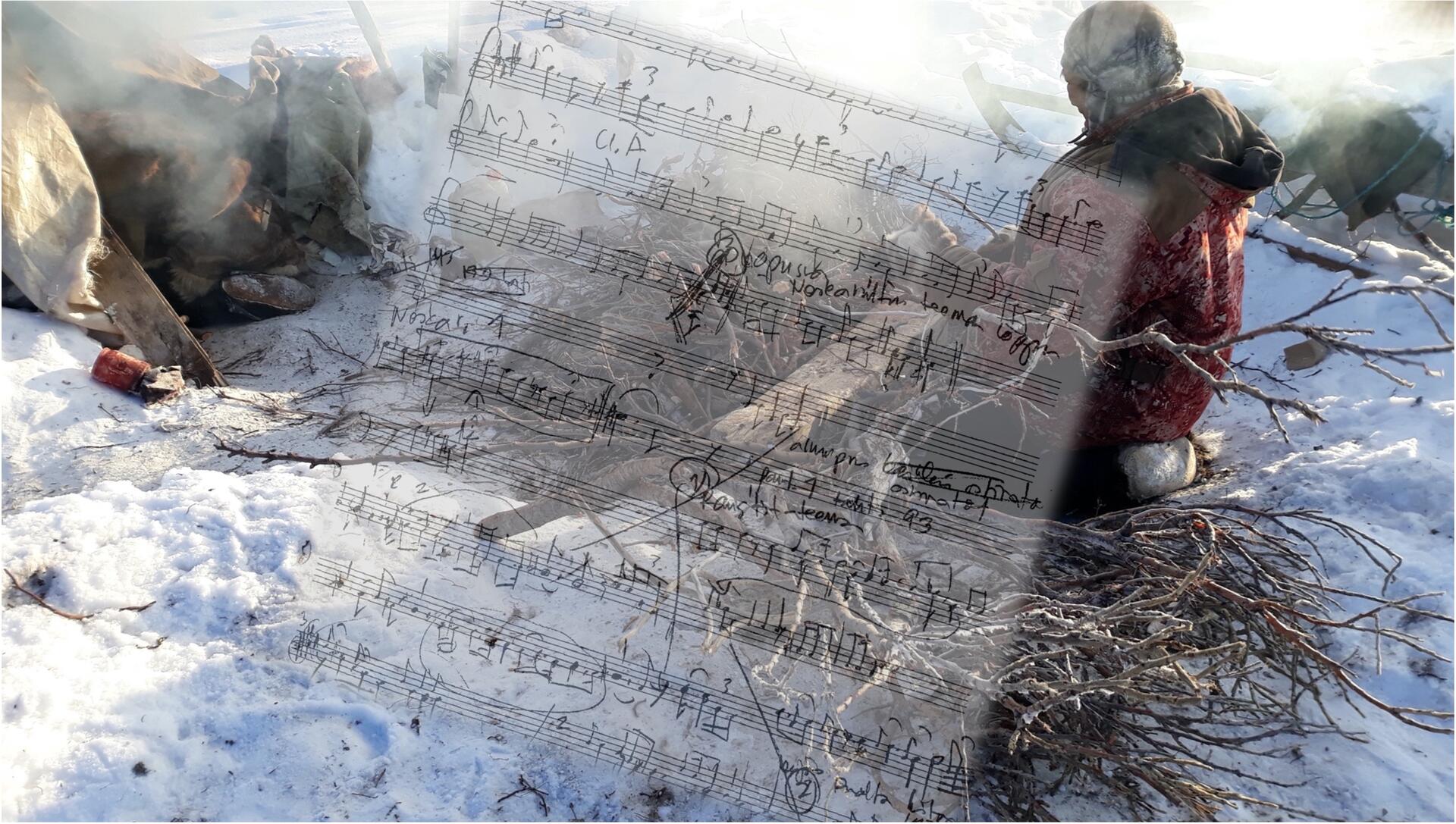
|
|
This is a new presentation, and Galway would the first place where I would give it. | I have two options as a proposal: 1) A PowerPoint presentation that would include 7 minutes of live music (violin) which is a dialogue with a recorded indigenous song. This is in the format of a short concert lecture. The total length of this Presentation would be 30 minutes. B) A normal length PowerPoint presentation (20 minutes) including recorded musical excerpts. |
A device with good sound quality to show a Powerpoint presentation. If the presentation includes live music I would need a space with good acoustics. | All ethical concerns and risks have been assessed and addressed rigorously throughout my Doctoral work at the University of the Arts, Helsinki and my work continues along these guidelines. | Yes | Pia Siirala | |||
| Unstar/Unflag Submit a contribution to the 2026 Forum on Artistic Research: Submission #246 | Julia Hölzl | Julia | Hölzl | hoelzl-j@mdw.ac.at | Vocabularies of/for/at the Limit | Poster presentation | English | What can we utter at, with, and of the limit? What languages exist beyond the boundaries of the “known” and “understood”? Why are such experiences frequently intensified by a perceived speechlessness? This contribution aims to introduce and present the arts-based research project “UNKNOWN BEYOND ABYSS: Toward Vocabularies of/for/at the Limit” (Grant-DOI 10.55776/ART5589424). As such, it offers a collaborative exposure to the project’s core objective: to create vocabularies and related contextualizations that explore the limit and the im/possibility of experiencing and communicating in, with, and out of it. By sharing this process of exposure to the limit, we adhere to Sara Ahmed’s "Strange Encounters": “The unknowable is a relation to what is already assumed to be known: it is hence not an absolute. The unknowable is a limit that pushes us to the boundary of the historical and ontological: the ways of being in the world in which being-ness is constituted by the worldliness of the world.” For all this is to relate to the limit-experience of and through language – a language that would defer rather than refer, indicate rather than signify, suggest rather than state, fragment rather than originate, and reverberate rather than resonate. |
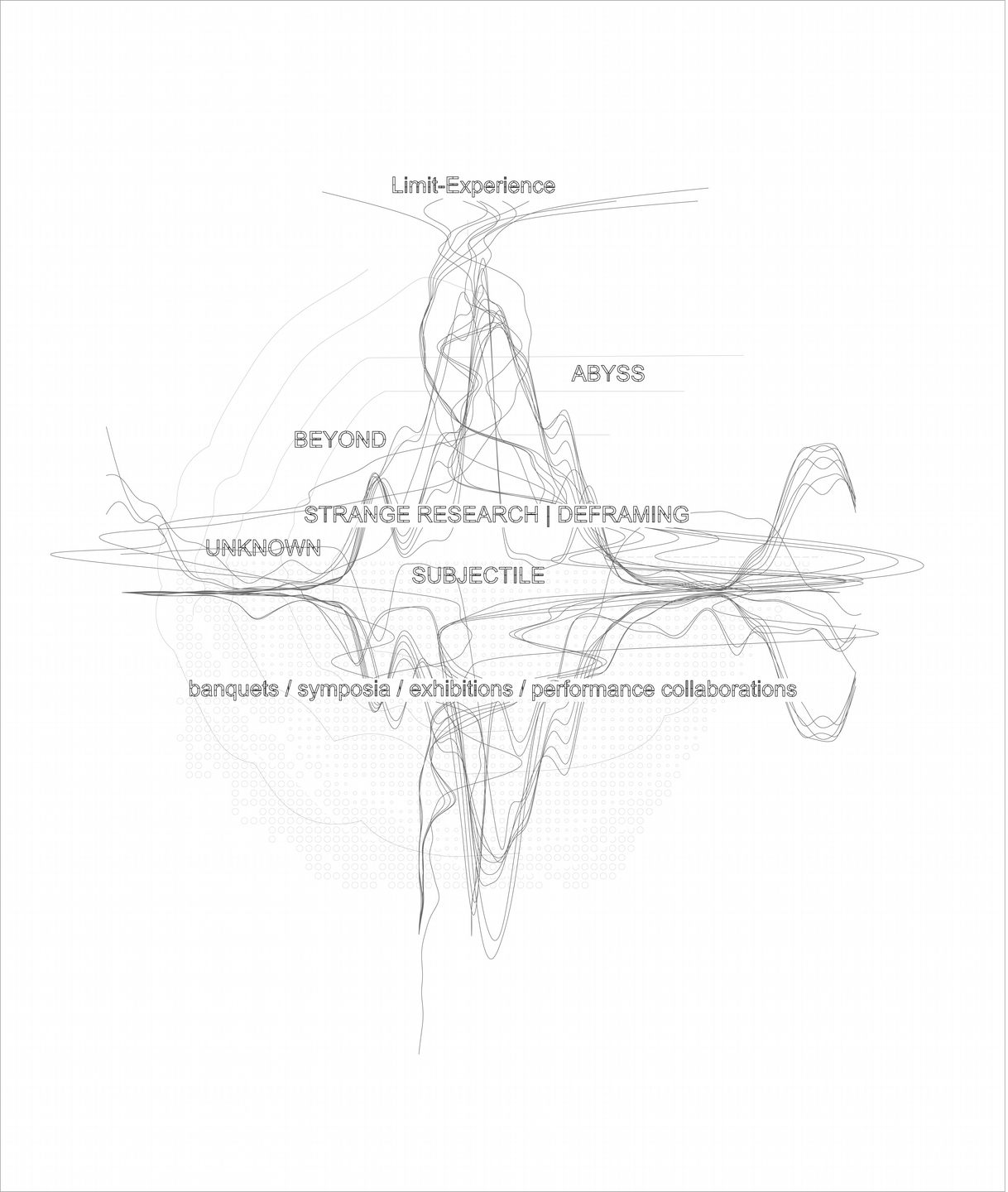
|
|
This contribution consists of an introduction to our arts-based research project “UNKNOWN BEYOND ABYSS: Toward Vocabularies of/for/at the Limit” (funded by the Austrian Science Fund and hosted at ARC/Artistic Research Center at mdw -University of Music and Performing Arts Vienna). While singular components of it have been/will be published or performed, the proposed paper presentation has not yet been presented in this form. | Projector, sound system | Yes | Julia Hölzl | |||||
| Unstar/Unflag Submit a contribution to the 2026 Forum on Artistic Research: Submission #245 | Simon Schultz | Simon | Schultz | simon.schultz@hfbk-hamburg.de | Hammerschlag – Artistic practice as Queer Local History Research | Poster presentation | English | In this poster presentation I want to present the methodology and state of research of my artistic-scientific PhD project, I am pursuing at HFBK Hamburg since 2024. In the late 1970s and early 1980s, queer resistance against repression in Hamburg was forming collectively. One example is the first pride parade 1980, that was organized by a small collective using the infrastructure of the student and artist led gay liberation movement. Indeed, the demonstration revealed the police's will to document and single out individuals by taking photographs for unofficial registers. I order to end this surveillance of queer bodies in public spaces, an campaign was started to make this illegal practice public and to influence public opinion – again as a collective effort. Researching this incident I found it very difficult to rely on official and hegemonic archives, as they mostly do not collect neither evidence of illegal police practices, nor self-representations of the subjects of police investigations. With the aim in mind to re-tell the story of queer resistance it is necessary to activate, build, and manifest counter archives. My PhD project aims to fill the gaps in the official state archives by activating private memories of time witnesses and survivors, using the means of artistic production like re-enactment of a historic incident of self empowerment during an installation at Kampnagel Hamburg theatre space in April 2026, and an ongoing oral history workshops at the annual Queer History Month Hamburg. |
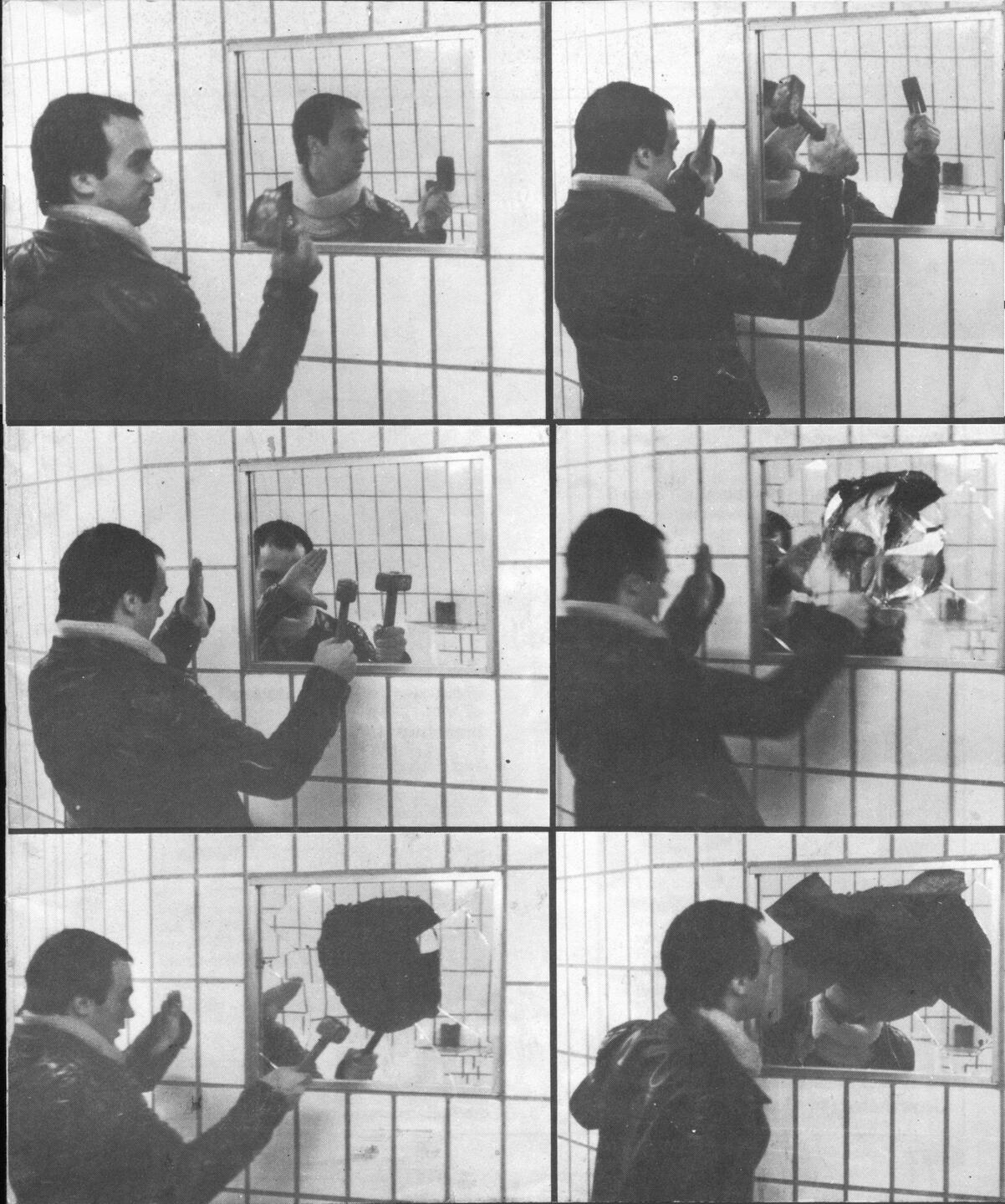
|
|
2024 Zeitzeugen Festival Bochum, Germany 2025 EKA Tallin, Estonia 2025 YCAM Yamaguchi, Japan 2025 para-educational research seminar Hamburg, Germany 2025 Suttner University St. Pölten, Austria 2026 Hans-Böckler-Stiftung, Springe, Germany |
Poster Presentation | poster presentation | none | Yes | Simon Schultz | |||
| Unstar/Unflag Submit a contribution to the 2026 Forum on Artistic Research: Submission #244 | Anonymous | Carrie Marie | Schneider | carriemarieschneider@gmail.com | What Do You Want With the Archive About You? | Other format | English | This video, accompanied by a media archeology paper, audits the sealed archive of one of the most influential type specimens of American science history and famous “feral” children in popular culture, marking the slip of this word to cover not wild and unsocialized but imprisoned and deprived. Susan Wiley was disappeared and confined in isolation for 13 years by her abusive parents. For the next 5 years she was intensively scrutinized as a scientific research subject. Taken as a control variable of human isolation, she -as represented through her scientific case- is massively influential in the fields of child development, psychology, linguistics, neuroscience, and -I argue- the architectures of unsupervised deep machine learning in artificial intelligence today. I join a legacy of critical inquiry regarding the ethics of her treatment as a “forbidden experiment” pseudonymed “Genie” to emerge and grant the wishes of researchers.Namely, she is instantiated as the scientific subject used to test the now defunct Lenneberg "critical period" hypothesis: that (what counts as) language must be acquired by puberty or it will not be acquired at all. Her case still widely taught, with the general conclusion that neglect made her incapable of learning to express herself. This is false. And, in the search to fit her to this experiment, so much is lost about her own ways of knowing and communicating in the world.* In affiliatively refocusing on her actions of expression that have slipped the archive’s seal and official scientific narrative, I find cause to challenge the assumptions that rest on her. Visual, somatic, and spatial modelling reveal ways to repatriate this sealed archive of primary source documents about, of, and by her to her: culturally, historically, internationally, poetically, politically, musically, speculatively, and actually. Now, with an idea of what is there and possible, I want to ask Susan what she wants. *Including ASL. Interpretation by Joyce Hom. |
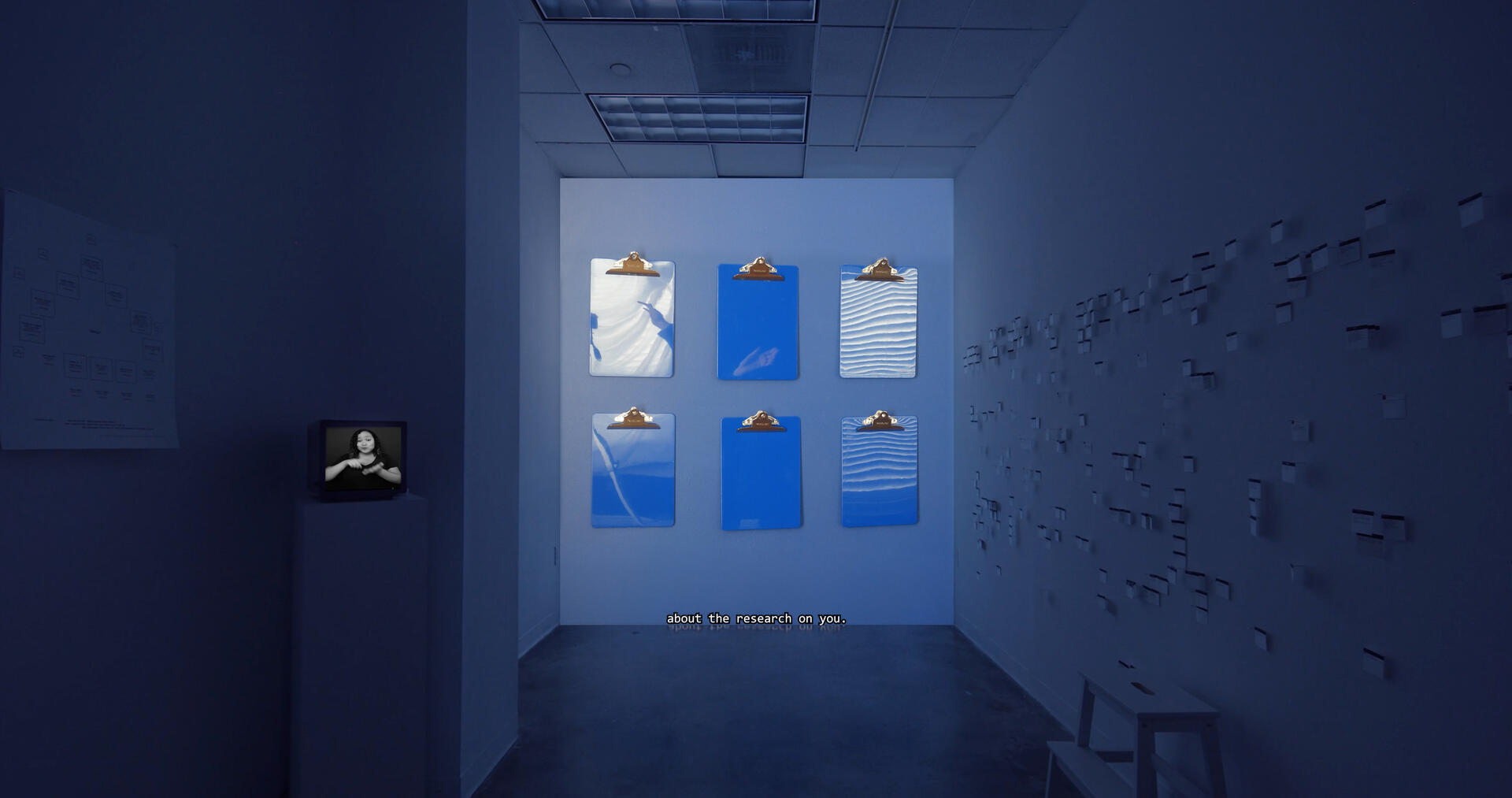
|
|
-Became second unofficial MFA Thesis upon graduation, as I got pulled into Feminist STS -Developed while auditing Visualization Design course with Atif Akin after graduating -Prototype installation and feedback at Rutgers University while in development -Paper was used as background guide for collaborators, then turned into Writing Sample as finalist application for UCSD's PhD in Practice program -Used as direction for original score composed by Flannery Cunningham for a song gift for Susan |
Additional materials: https://tinyurl.com/ax8s6jas I've tapped input from multidisciplinary practitioners in the East & West Coast, USA, but 1. I would love international POV on this work 2. a major component of recovered archive material is abroad 3. expanded research is essential to not reperform violence Alignment with conference themes: Making seeable - audit of indefinitely sealed archive using art practice visualization, spatialization, and installation Making sayable - forefronting that Susan did acquire language- American Sign Language, but also forms of expression such as drawing, invention, performance, and modes unnameable to our disciplines Exploring the ineffable - countering the inherited knowledge that abuse can steal the ability to express, using visual means where viewing is disallowed, avowing the sonic environment in visual deprivation, my theory of creativity grounded in Elaine Scarry’s 1984 The Body in Pain: The Making and Unmaking of the World |
Ideally the projection should be 3x2.5m on a white or light-neutral wall without bright/direct light around it. I can bring a short throw projector, but need a table stand for it, and electricity. The video loop is 11 min long. I provide 3 headphones so people can access spoken English language, ambient sounds such as what Susan may have heard from her room even while she was considered deprived of language (birds, trains, wind), and headphones for reducing the ambient sound in the space. |
The timing of the conference is in tight sequence with my trip to Los Angeles in May to contact Susan to find out her wishes, but the ethical risks remain the same: that anyone might use the data I’ve attained for further click bait, toxic news cycles, or exploitative study that would re-entrench the limited story about her without her representation. However, the potential to find SAR interlocutors of integrity who can equip a nonexploitative, critical, expansive approach is my hopeful bet. | Yes | Carrie Marie Schneider | |||
| Unstar/Unflag Submit a contribution to the 2026 Forum on Artistic Research: Submission #243 | Anonymous | Francesca | Placanica | Francesca.Placanica@mu.ie | EROSION | Project presentation | English | In January 2026, alarming footage from the town of Niscemi, Sicily, struck by flooding has circulated internationally. Images of the landslide affecting the medieval borough perched on a hill drew the attention of geologists and geographers worldwide. A similar fate—though subjected to far less media coverage—affects the historic centre of Caulonia, a small Calabrian town and the place of origin of one of the artists. Reflection on erosion as the process by which the earth's surface is gradually worn away through the climatic action of rain and wind becomes a fertile metaphor for the progressive demographic and cultural decline of these territories, which remain unique repositories of cultural and colonial stratification. Erosion as depopulation mirrors the progressive abandonment of these lands by younger generations who emigrate elsewhere in search of stability, leaving behind aging communities and increasingly fragile infrastructures. Furthermore, environmental exploitation and speculative development intensify territorial fragility. Cultural predation operates through the commodification of tradition, dialects and musical forms repackaged for tourist consumption and stripped of their layered historical relevance. As human presence diminishes, so too does the attention needed to sustain the built and natural environment. 'Erosion' is a vocal digital work with moving image addressing the geological urgency of erosion as metaphor for the progressive impoverishment of these territories and their cultural and linguistic legacies. Emerging from a textual collage of endangered local dialects and the Griko language, the piece stems from a sonic form of lamentation. Through stratified vocal and media textures, the work evokes the richness of the cultural inheritances these languages incapsulate while resisting the deterioration processes to which these territories and their idioms are increasingly subjected. | https://www.researchcatalogue.net/profile/show-exposition?exposition=4215171 | https://www.researchcatalogue.net/profile/show-exposition?exposition=4215171 |
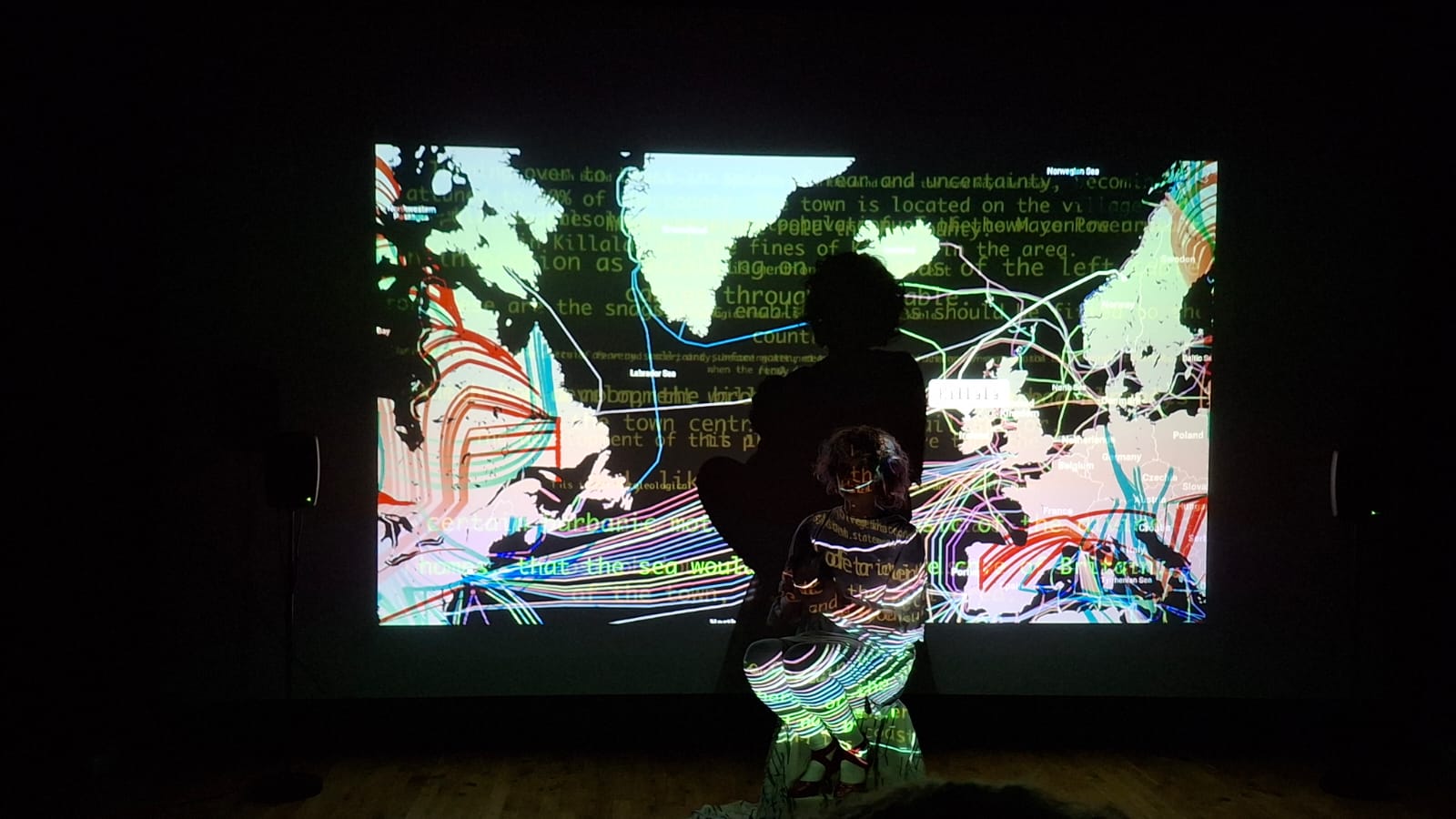
|
|
No | Powerpoint Slides; embedded audiovisual screening | Screen and sound system for audiovisual reproduction (PC/Mac podiums with HDMI connection is fine) | No ethical concerns | Yes | Francesca Placanica | |
| Unstar/Unflag Submit a contribution to the 2026 Forum on Artistic Research: Submission #242 | Sarah Kordecki | Sarah | Kordecki | s.kordecki@filmuniversitaet.de | Potentials of artistic research and its integration in the German higher education system | Workshop | English | Artistic research has been established and institutionalized in many countries, causing structural as well as conceptual changes in the respective higher education systems, and the recognition of practice-based forms of research has gained strong momentum. In Germany, however, artistic research is still in a peripheral position, lagging behind the changes even in its neighboring countries. Faced with the hegemonic standing of scientific research, artistic researchers struggle to find funding and acceptance for their projects and research approaches. The research project “ILLUME – potentials of complementary research practices in the higher education system: contributions and structures of artistic research and its integration at universities of art and music” focuses on artistic research as a complementary epistemic approach to the world, asking how it might develop its full potential to contribute to crucial social transformation processes and what framework conditions and structural changes are required for its successful integration at German art and music colleges. Regarding higher education in the arts in Germany, there is a strong tradition of institutionally independent art and music colleges which claim special perspectives and regulations – and enjoy a prestigious international reputation. Furthermore, they form both part of the higher education system and of the public cultural sector. Consequently, both areas are (potential) beneficiaries of the institutionalization of artistic research, while at the same time concepts for structural changes have to be adapted to the organizational peculiarities. The investigation of international best-practice examples and a policy analysis are part of ILLUME’s research design in order to implement experiences and expertise from abroad. In the workshop, participants are invited to contribute to the identification and discussion of focus topics regarding the situation in Germany from an international perspective. |
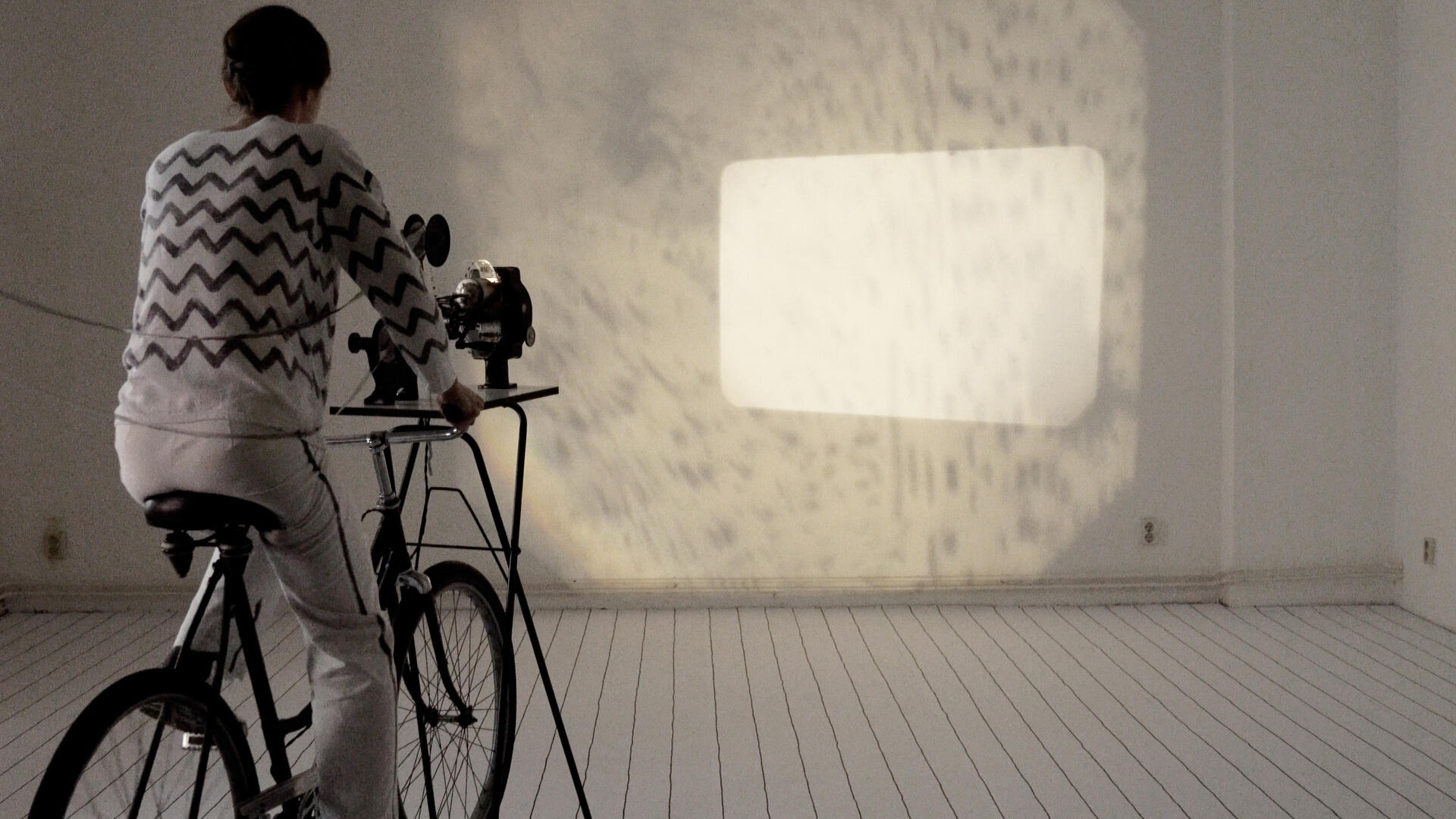
|
|
We presented ILLUME and its research design at the annual conference of the German Society for Higher Education Research in September 2025. Since we are a joint research project, with the Institute for Higher Education Research in Wittenberg and Film University as cooperation partners, it is necessary to address both communities - higher education research and artistic research. We have gathered a lot of information and identified certain focus topics that we would love to discuss in Galway. | We would love to have the opportunity to discuss our research project with members of the international artistic research community. If the format chosen is not suitable, we would be very happy to receive notice and find a fitting format for our project. | Yes | Sarah Kordecki | |||||
| Unstar/Unflag Submit a contribution to the 2026 Forum on Artistic Research: Submission #238 | Richie Lux Kramár | Richie Lux | Kramár | p.korepetitorka@gmail.com | The Prompter: Discord, Care, and Cues for Survival | Other format | English | In the opera house, the prompter works as a vocal prosthesis, a disembodied voice dedicated to filling gaps when the operatic machine falters. This figure lives in perpetual readiness to serve yet is structurally excluded from authorship and public history. This research identifies a parallel between the prompter and the trans subject through their shared navigation of the gap between body and voice. While this discord, an asymmetrical or desynchronized relationship between how one sounds and how one is seen, is a site of safety and an official function for the prompter, it remains a site of high-stakes danger and political endangerment for the trans subject. This lecture performance explores how the prompter’s labor can be reclaimed as a survival strategy. It moves away from the institutional demand to save or document the trans voice, proposing a methodology of cruising instead. Much like the silent high-stakes codes of cruising, prompting is a private linguistic exchange, a shorthand of whispered cues and cryptic marks on a score intended for an audience of one. By treating the vocal score not as fixed but as a site for unauthorized intimate connection, the work explores the pleasure a trans subject derives from a voice that refuses to appear for the general public. The performance enacts this discord as a tactile labor of care. The presentation is intentionally non-frontal and desynchronized, creating a tension that requires the audience to proactively activate the material. Through live vocalization and opaque video traces that maintain a specific gaze without offering full disclosure, the work invites a process of participatory sense-making. Rather than a smooth delivery of results, the performance functions as an open rehearsal, a space where the trans subject and the prompter become co-conspirators in a practice of resistance against narrative standardization. |
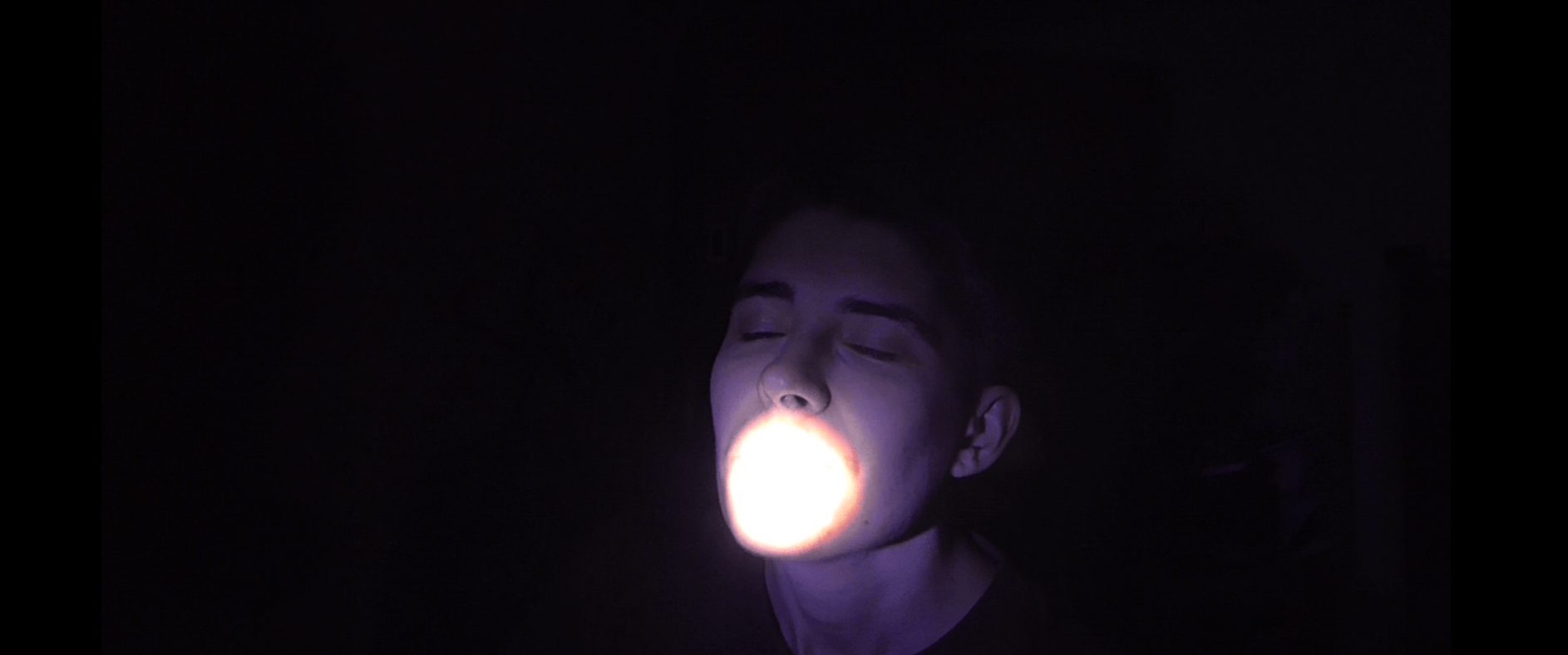
|
|
This lecture performance stems from the doctoral research project THE MONSTER SINGS (JAMU). Elements of this research have been peer-reviewed and presented in the following contexts: Peer-reviewed Journals: "Mouthing into the void: Can the prompter sing?" (JIVS, 2026); "I Love Listening to Music and Imagining Things Happening" (VIS, 2025). Conference Presentations (2025): PARSE (Gothenburg); Teritoria umění (Prague); Dance Resonance (Vienna); The Culture of Attractions (Torun); IFTR (Cologne). |
This 20-minute lecture performance functions as a situated rehearsal, rejecting a directive or smooth style in favor of a fragmented, haptic engagement. The performance centers on the figure of the prompter, focusing on the physical strain of throwing a voice that belongs to an other. This is mirrored in the text: an unfaithful reconstruction of operatic fragments and personal reflections that leak, emphasizing the inherent relationality of language and the fact that we always receive our words from someone else. The accompanying media, video projections serving as opaque traces, offer a gaze that is both seductive and non-coercive. By creating a space of partial invisibility, the format allows the audience to determine their own degree of participation. Ultimately, it is a transmission that values the interval, the echo, and the unfaithful memory over the standardized institutional record. |
AV: Projector and screen; stereo audio output for a laptop. Furniture: One music stand or small table, chair. Lighting: The ability to dim lights is appreciated but not necessary. Space: A setup that allows for a non-frontal relationship with the audience is appreciated but not necessary. |
The performance involves live vocalization and themes related to trans identity. There are no physical risks to the audience. Practically, the research uses opacity as a framework to ensure that personal or community-specific data is not made public, protecting the anonymity of sources. All archival operatic materials are used under fair use for artistic research. Audience participation is voluntary; the non-frontal setup allows attendees to choose their own level of proximity and engagement. | Yes | Richie Lux Kramár |