Secondary tabs
Submission information
Submission Number: 375
Submission ID: 446
Submission UUID: 66c5a1cf-0d59-45b8-a5e4-a0da607e379b
Submission URI: /form/submit-contribution
Created: Mon, 2 Mar 2026 - 14:58
Completed: Mon, 2 Mar 2026 - 16:09
Changed: Wed, 13 May 2026 - 08:14
Remote IP address: 92.254.68.76
Submitted by: Anonymous
Language: English
Is draft: No
Current page: webform_confirmation
Personal Information
Your contribution
Disquietudes: The Entrails & Hummings
English
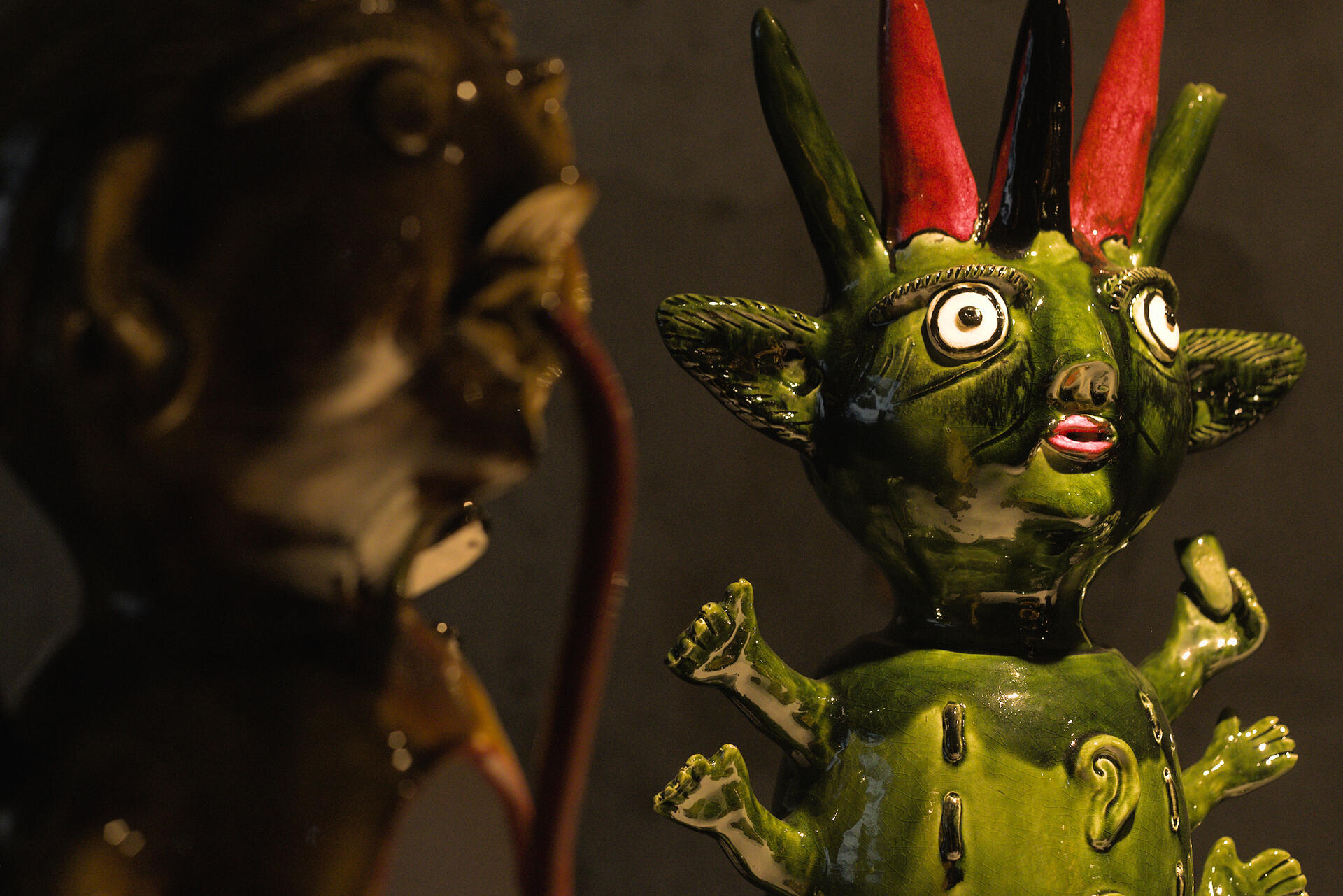
Disquietudes: The Entrails & Hummings is an ongoing artistic research project developed in collaboration with Barcelos-based ceramist António Ramalho. Since 2023, our dialogue has unfolded through drawing, clay, etching, short stories and expanded footnotes, generating a constellation of ceramic figures—Entrails (Longing, Trauma, Denial, Implicated) and Hummings (Rhetoric, Lament, Fable, Silence).
Emerging from the figurative clay tradition of northern Portugal—historically intertwined with folklore, markets and narratives of national identity—these works reorient a vernacular language toward questions of colonial memory and its afterlives. Traditionally inhabiting domestic interiors and circulating through local markets, such figures carry stories of saints, professions and popular myth; here, they hold other narratives. The project approaches this material tradition as a site of inquiry into how colonial memory lingers—in gestures, domestic objects, pedagogical repetition and half-forgotten stories. Etchings and short texts, accompany each figures, while expanded notes trace historical frameworks running beneath them. As the ceramic figures become integrated into Ramalho’s repertoire and circulate through local markets, they enter domestic space, generating intimate conversations about difficult and often silenced pasts.
The research unfolds through what I call material fabulation: working with clay, drawing and narrative as sites where inherited histories are tested, displaced and reconfigured. Through this process, historical narratives are not described but physically unsettled, allowing affect, hesitation and contradiction to surface. For the SAR Forum, I propose an in-person presentation introducing context and methodology, followed by readings of Longing and Lament, engaging the theme of “Endangered Conceptual Worlds” by reflecting on how inherited histories persist and can be reworked through vernacular material practice.
Emerging from the figurative clay tradition of northern Portugal—historically intertwined with folklore, markets and narratives of national identity—these works reorient a vernacular language toward questions of colonial memory and its afterlives. Traditionally inhabiting domestic interiors and circulating through local markets, such figures carry stories of saints, professions and popular myth; here, they hold other narratives. The project approaches this material tradition as a site of inquiry into how colonial memory lingers—in gestures, domestic objects, pedagogical repetition and half-forgotten stories. Etchings and short texts, accompany each figures, while expanded notes trace historical frameworks running beneath them. As the ceramic figures become integrated into Ramalho’s repertoire and circulate through local markets, they enter domestic space, generating intimate conversations about difficult and often silenced pasts.
The research unfolds through what I call material fabulation: working with clay, drawing and narrative as sites where inherited histories are tested, displaced and reconfigured. Through this process, historical narratives are not described but physically unsettled, allowing affect, hesitation and contradiction to surface. For the SAR Forum, I propose an in-person presentation introducing context and methodology, followed by readings of Longing and Lament, engaging the theme of “Endangered Conceptual Worlds” by reflecting on how inherited histories persist and can be reworked through vernacular material practice.
- Barbara Neves Alves is an artistic researcher and educator based in Amsterdam. She holds a PhD from Goldsmiths, University of London, and teaches at the Gerrit Rietveld Academie and the Royal Academy of Art, The Hague (KABK). Her practice moves across drawing, writing, ceramics and publication, engaging colonial memory, museum dispositifs and vernacular material cultures. Through collaborative, practice-led methodologies, she explores how inherited histories persist in domestic space, embodied gesture and narrative form. Her work has been supported by Creative Industries Fund NL and presented through exhibitions, workshops and publications internationally.
Earlier iterations have been presented in exhibition and public talk formats. A first constellation of ceramic works developed in collaboration with António Ramalho was exhibited at RAMPA, Porto (2023–24), and presented at the Faculty of Fine Arts Univeristy of Porto (2023). The research has been shared through readings and work-in-progress presentations at Manifold Books Amsterdam (2025) and Gerrit Rietveld Academy. The publication is currently in development, with Clare Butcher as editor.
Requirements
The presentation builds on earlier exhibition and work-in-progress iterations, shifting from display to live articulation of the research process. At SAR 2026, I will introduce the collaborative methodology and material development of the project, followed by readings of Longing and Lament. Ceramic figures and etchings will be present as material references, allowing the audience to encounter the work across object, narrative and reflection. Working with intangible heritage through material practice, the presentation reflects on how inherited knowledges are unsettled from within the making process itself. As the figures circulate through markets and enter domestic space, they open intimate encounters with histories that are sensitive and traumatic—often avoided in public debate, yet necessary to engage in relation to Portugal’s colonial past.
A projector, a microphone (if needed), an environment conductive to reading and conversation.
{Empty}
No