Secondary tabs
Submission information
Submission Number: 353
Submission ID: 420
Submission UUID: 8f674da4-a533-4946-bbde-12799ac9ac81
Submission URI: /form/submit-contribution
Created: Sun, 1 Mar 2026 - 22:51
Completed: Sun, 1 Mar 2026 - 22:59
Changed: Wed, 13 May 2026 - 08:12
Remote IP address: 87.79.189.133
Submitted by: Anonymous
Language: English
Is draft: No
Current page: webform_confirmation
| Given name | Freya |
|---|---|
| Surname | Hattenberger |
| mail@freyahattenberger.de | |
| I understand that by submitting this form, I consent to the use of my data for the purposes of the 2026 Forum on Artistic Research'. | Yes |
| I agree to the terms of service. | Yes |
| Title | Living Ground – A Photographic Dialogue Across Colonial Histories and Community Knowledge |
| Format | Project presentation |
| Main language | English |
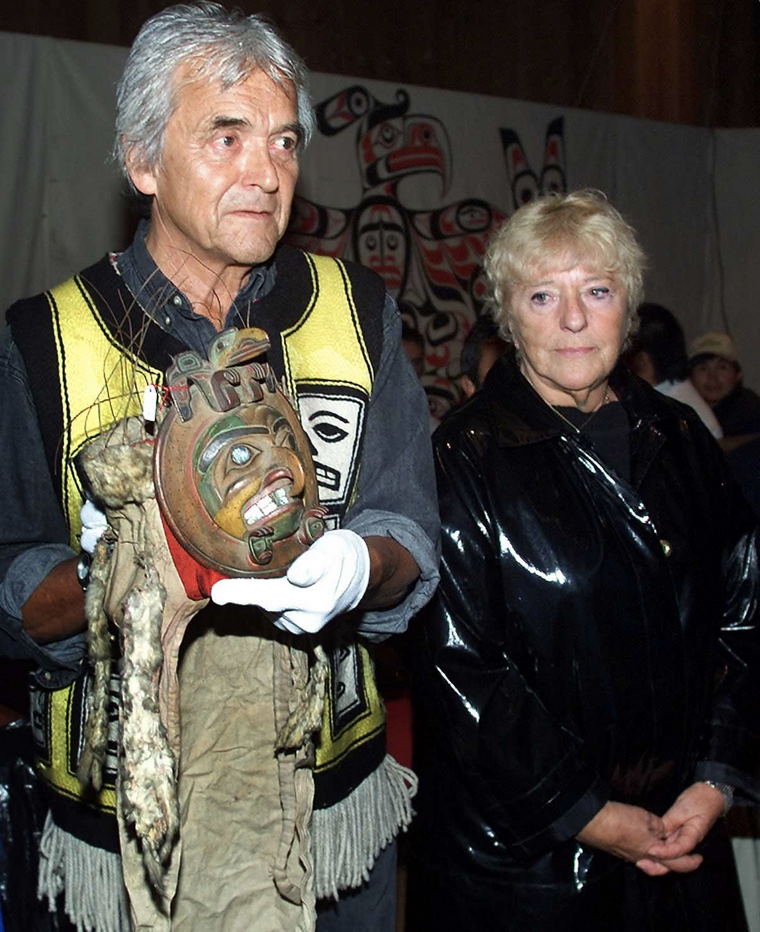
| Abstract | Living Ground is an artistic research project by Freya Hattenberger in cooperation with the Rautenstrauch-Joest-Museum, the U'mista Cultural Centre (Canada), and the University of Cologne. The title denotes living soil as counter-concept to the toxic legacies of colonial photography. The project critically engages with colonial image archives, starting from late 19th-century Kwakwaka'wakw portraits in ethnographic collections – products of extractive practices that rendered people as objects. These images continue to shape visual memory and, through AI, reproduce stereotypes. The project asks: How can these silent images be translated into living relationships? How can agency over representation be returned to descendants? In collaboration with the U'mista Cultural Centre (whose name means "return of valuable things"), Living Ground develops a decolonial visual practice extending repatriation artistically. The methodology employs plant-based photographic processes (anthotype, chlorophyll printing), recognizing non-human actors – plants, light, seasons – as co-authors. In participatory workshops, historical photographs are re-introduced and new "Living Portraits" co-created with family members. This holds particular significance in Alert Bay, where Residential Schools ruptured cultural continuities. Accompanying recordings ("Archives in Conversation") interweave oral tradition with image formation: a narrative's duration determines exposure time, a family history guides plant choice. Voice, memory, and image coalesce; a silent archive is brought to life. The contribution demonstrates how artistic research activates endangered conceptual worlds as epistemic resources, understanding photography as relational practice that transcends colonial extractivist logics through dialogical, ecologically embedded processes. |
| Link to the Exposition | https://www.researchcatalogue.net/profile/show-exposition?exposition=4225853 |
| Image |
|
| Short biographies of the presenter(s) |
|
| Previous presentations or iterations of the research | Non |
| Additional information | |
| Spatial and technical requirements | |
| Potential risks or ethical concerns | |
| Create a user account for SAR 2026 | Yes |
| Create new user | Freya Hattenberger |