Secondary tabs
Submission information
Submission Number: 330
Submission ID: 396
Submission UUID: 023107fb-271f-4576-a74a-302c98bee48a
Submission URI: /form/submit-contribution
Created: Sun, 1 Mar 2026 - 17:21
Completed: Sun, 1 Mar 2026 - 18:38
Changed: Wed, 13 May 2026 - 08:20
Remote IP address: 67.245.202.201
Submitted by: Anonymous
Language: English
Is draft: No
Current page: webform_confirmation
Flagged: Yes
Personal Information
Your contribution
Found/Fabric Lab
English
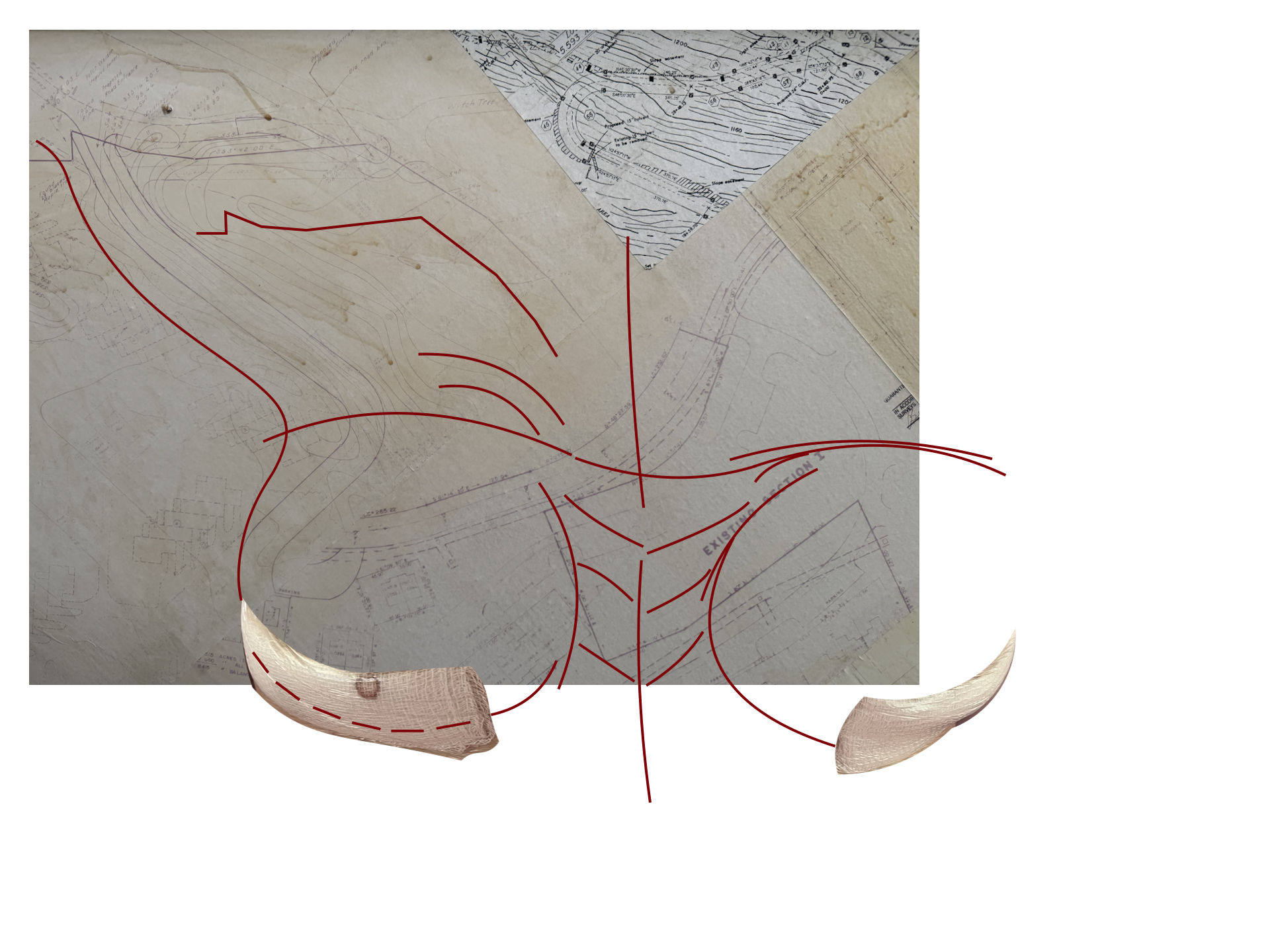
How might trans construction preserve and sustain the endangered conceptual world of trans liberation? Within Found/Fabric Lab, we will explore the potential for trans construction by testing sample materials, methods and processes of trans construction. “Found,” here refers both to the ground (foundation) which is the basis for construction and that which has been sought or studied (finding/s); when, how and where trans construction is situated. “Fabric,” referring both to building-work (fabrication) and the stuff we use to get dressed everyday, becomes a subject for deeper investigation via its found-ness.
We understand trans construction as an emergent tactic for developing physical spatial infrastructure for trans liberation, as well as language to recover from trans liberation’s institutional expropriation. Whereas normative construction typically creates records of attempts – to frame, gather, house, re/store, exchange, insulate, etc – we understand trans construction to also involve “an often, sometimes chaotic, but hopefully ultimately space-clearing attempt,” as Cameron Awkward-Rich put it. That is to say, we believe trans construction’s viability lies not only in its production of positive forms but also in its delicate attention to negative spaces’ previously unrecognized relevance. In practicing this durational art of epistemologically encouraging trans liberation, we illuminate the powerful influence of cis-masc and hetero-normative perspectives in deciding what is safe, what is sturdy, what is beautiful, what is functional and livable in the built environment.
In this session, we will discuss the body’s inherent capacity to be gendered differently, and consider ways in which construction can already be conceived of as trans. Participants are likewise invited to test the inherent capacities of common and uncommon construction materials to regenerate trans cultures and ecologies.
We understand trans construction as an emergent tactic for developing physical spatial infrastructure for trans liberation, as well as language to recover from trans liberation’s institutional expropriation. Whereas normative construction typically creates records of attempts – to frame, gather, house, re/store, exchange, insulate, etc – we understand trans construction to also involve “an often, sometimes chaotic, but hopefully ultimately space-clearing attempt,” as Cameron Awkward-Rich put it. That is to say, we believe trans construction’s viability lies not only in its production of positive forms but also in its delicate attention to negative spaces’ previously unrecognized relevance. In practicing this durational art of epistemologically encouraging trans liberation, we illuminate the powerful influence of cis-masc and hetero-normative perspectives in deciding what is safe, what is sturdy, what is beautiful, what is functional and livable in the built environment.
In this session, we will discuss the body’s inherent capacity to be gendered differently, and consider ways in which construction can already be conceived of as trans. Participants are likewise invited to test the inherent capacities of common and uncommon construction materials to regenerate trans cultures and ecologies.
- Doors Unlimited was initiated in 2015 by Bethany Ides & Ora Ferdman with Mahshid Rafiei as a generative structure for hosting collaborative research in convocational technologies and speculative folklife. Doors Unlimited events often engage large groups of people walking, eating, reading, diagramming, discussing, experimenting, play-acting, planning, drawing, laughing, listening and/or deciding together. Previous projects have occurred in community centers, art galleries, academic institutions, private residences, theaters and public, open spaces across the U.S. and Canada, as well as online.
- Ora Ferdman is a 3rd-generation builder and designer, investigating the social, political, and performative dimensions of construction practice. She is the recipient of fellowships by Benjamin Menschel Program for Creative Inquiry, the Good Work Institute and the New Inc Program. As part of Doors Unlimited, she has been an artist-in-residence at/with Sense Lab, Habitable Spaces and the Prattsville Art Center.
- Bethany Ides is a writer, artist, professor, theater-maker, community organizer and co-director of Doors Unlimited. Her investigative operatic projects have been mounted at the Harbourfront Centre, Knockdown Center, Mandragoras Art Space, FADO Performance Art Centre, CounterPULSE, Dixon Place, The Poetry Project, PS122 and PerformanceWorks NW. Her work on pedagogy, reparative reading, excessive communication and collective practice has recently appeared in Community Literacy Journal, Radical Teacher, C Magazine, Shifter, Ear|Wave|Event and the Candidate Journal: Psychoanalytic Currents.
Fora Construction, an all-trans and queer design-build company headed by Ora Ferdman, functionally completed residential and commercial projects in New York state’s Hudson Valley-Catskills region, while simultaneously conducting performance research, from 2023-2025. A short essay on Fora’s implications and ramifications is forthcoming in a zine created by the Social Architecture Track of the New Inc cultural incubator program, and a demo talk will be presented at the New Museum in June 2026.
Requirements
This guided experimentation session will occur in 4 phases: Survey (getting the lay of the land, facilitators present groundwork for the experiment), Field Coordination (negotiation and mutually decision making on roles and protocols for working together), Meshes (testing the cultural, historical and practical capacities of various mesh-like materials and their applicability for advancing trans liberation), and Trans Construction (enacting activation processes individually and/or collaboratively). Supposing this arrangement is amenable to the group, the facilitator will circulate around the room during the final 2 phases, engaging participants either individually or in small groups. This session will be 120 minutes, and can accommodate 5 - 30 participants.
An accessible classroom-type space with tables and chairs that can be moved into a square configuration (seminar-style) would be ideal. Preferably this room would not be windowless and would contain some apparatus for writing on a wall or easel-mounted display (i.e. a chalkboard, wipe board or large pad of paper).
There is an emotional risk in discussing matters of trans liberation, particularly for gender-nonconforming folks and sexual minorities, regardless of social presentation. Risk factors include: discomfort with one’s own gender identity, trepidation of ideologically hurtful statements and discrepancies in governmental recognition/protection afforded to various participants. Further, it would be unethical to contextualize trans oppression apart from histories of racist and colonialist exploitation
No