Secondary tabs
Submission information
Submission Number: 306
Submission ID: 371
Submission UUID: cf325256-9fb7-40e0-9d3f-d80b2365984e
Submission URI: /form/submit-contribution
Created: Sun, 1 Mar 2026 - 11:28
Completed: Mon, 2 Mar 2026 - 15:06
Changed: Wed, 13 May 2026 - 08:44
Remote IP address: 84.203.226.251
Submitted by: Anonymous
Language: English
Is draft: No
Current page: webform_confirmation
Flagged: Yes
| Given name | Paul |
|---|---|
| Surname | O' Neill |
| paul.oneill@universityofgalway.ie | |
| I understand that by submitting this form, I consent to the use of my data for the purposes of the 2026 Forum on Artistic Research'. | Yes |
| I agree to the terms of service. | Yes |
| Title | The WhoIs Protocol as Critical and Creative Practice |
| Format | Project presentation |
| Main language | English |
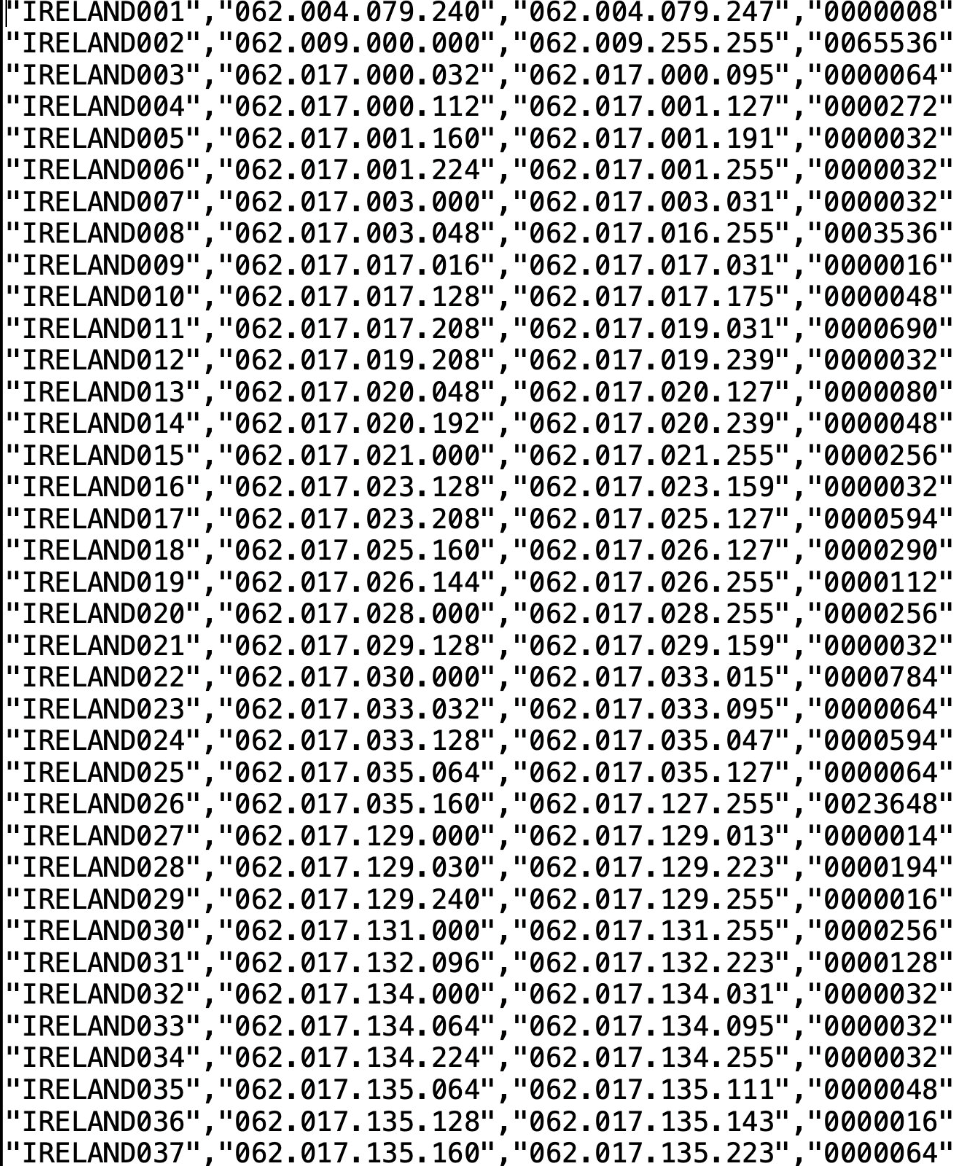
| Abstract | Beginning with a “ghost” internet protocol address once registered to an American tech company based in Ireland, this presentation focuses on ongoing artistic research into the WhoIs protocol as public directory and archive, incorporating outcomes from a residency at the Media Archaeology Lab (University of Colorado Boulder). WhoIs refers to the protocols, services and data types associated with Internet naming and numbering resources (icann.org, 2024).It contains hundreds of millions of entries including domain name registration and expiry dates, details of technical administrators, IP addresses of name servers, and other technical information (Muller, 2002). However, WhoIs has limitations. The information it offers contains inaccuracies and inconsistencies (Gañán, 2016), and recent supranational privacy legislation, including the European Union’s General Data Protection Regulation (GDPR), has restricted the availability of personal registration data. In 2015, ICANN introduced the Registration Data Access Protocol (RDAP) as a replacement for WhoIs, designed to provide more secure access, increased standardisation, improved usability, and greater support for internationalisation (icann.org, 2024). As such, the WhoIs Protocol can be considered an endangered conceptual world within our current algorithmic era. Critical internet resources such as IP addresses and domain names carry significant “technical, economic, and political implications” (DeNardis, 2009), raising concerns regarding governance, accessibility, and distribution among institutions, nation-states, and commercial actors. The allocation and documentation of these resources within WhoIs provide insight into the global infrastructure of the internet, past and present, while also recalling the “rigidly defined hierarchies” around which networked systems are structured (Galloway, 2004). This presentation outlines creative and critical methods to engage and preserve the WhoIs protocol. |
| Link to the Exposition | https://www.researchcatalogue.net/profile/show-exposition?exposition=4226827 |
| Image |
|
| Short biographies of the presenter(s) |
|
| Previous presentations or iterations of the research | Archiving Care Symposium, NeMe Media Arts Centre, Limassol, Cyprus (September 2024) https://www.neme.org/projects/toolkit-of-care/archiving-care |
| Additional information | Powerpoint |
| Spatial and technical requirements | Projector and audio |
| Potential risks or ethical concerns | N/A |
| Create a user account for SAR 2026 | Yes |
| Create new user |