Secondary tabs
Submission information
Submission Number: 302
Submission ID: 367
Submission UUID: e7dc428f-60be-425b-af72-f721c4bdaaf0
Submission URI: /form/submit-contribution
Created: Sun, 1 Mar 2026 - 10:42
Completed: Sun, 1 Mar 2026 - 10:54
Changed: Wed, 13 May 2026 - 09:05
Remote IP address: 92.211.1.33
Submitted by: Anonymous
Language: English
Is draft: No
Current page: webform_confirmation
Flagged: Yes
| Given name | Jakob Margit |
|---|---|
| Surname | Wirth |
| post@jakobmargitwirth.net | |
| I understand that by submitting this form, I consent to the use of my data for the purposes of the 2026 Forum on Artistic Research'. | Yes |
| I agree to the terms of service. | Yes |
| Title | On Parasiting: Tactical Artistic Research as Resilience under Cultural Capture |
| Format | Workshop |
| Main language | English |
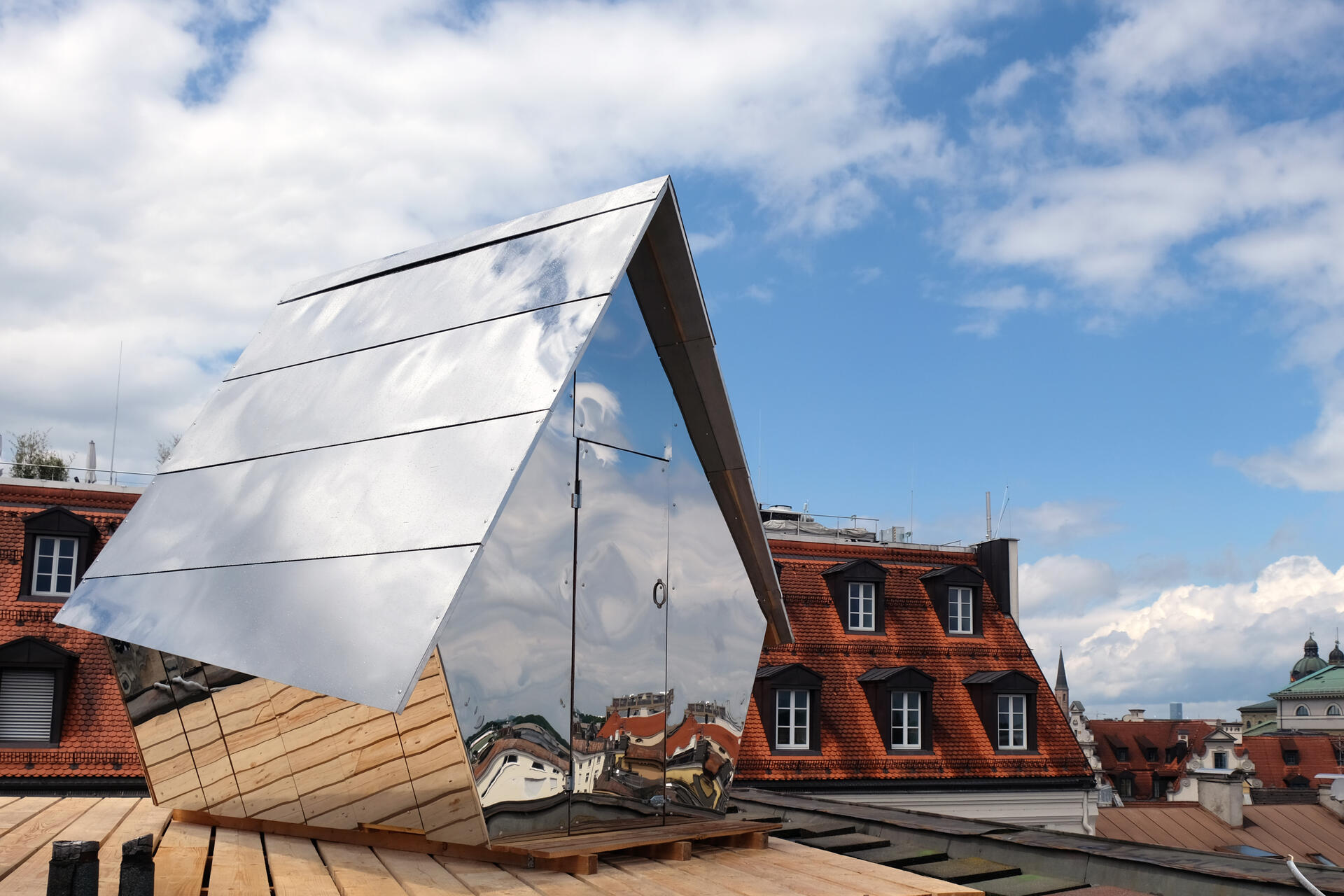
| Abstract | 90 Min This presentation proposes Parasite Art as an artistic research methodology that explores parasitic tactics not only as forms of resistance, but as potential alternative modes of knowledge production. Situated within an artistic PhD research project, the workshop treats parasitism as a minoritised epistemic practice that operates through proximity, dependency, adaptation, and tactical ambiguity rather than opposition, morality or autonomy. Instead of positioning endangered languages and knowledges as objects of rescue, I approach them as tactical agents capable of irritation. Drawing on Michel Serres’ figure of the parasite, parasiting becomes a method: entering dominant structures, living off their infrastructures, and introducing dissonance into processes of standardisation and optimisation. The ongoing artistic research project On Parasiting functions as a real-time laboratory. Invited artists temporarily embed themselves in host systems - cultural institutions, corporate environments, bureaucratic settings - testing how minoritised languages, gestures, and epistemologies can survive and act within extractivist frameworks to produce irritations. The project combines artistic interventions, collective reflection, independent publishing, and discursive formats such as a Parasite School. In the context of platform capitalism and synthetic realities that flatten heterogeneity, parasitic artistic research does not claim purity or externality. It acknowledges complicity and proximity to power as conditions of action. Minoritised languages are not romanticised as untouched reservoirs; they are understood as resilient yet fragile modes of sense-making that must negotiate hostile environments. The workshop reflects on practice-based knowledge production: How can infiltration function as method? How can irritation produce epistemic value? And how can artistic-curatorial experiments be articulated as research without neutralising their subversive force? |
| Image |
|
| Short biographies of the presenter(s) |
|
| Previous presentations or iterations of the research | Elements of this research have been presented in academic and artistic contexts, including lectures and workshops on Parasite Art; the edited volume Parasite Paradoxa (Kunstforum International, 2024); the article “Parasitic Tactics” in the Journal for Art and Technology; and at conferences: Arts-based Research in Girona (2025), Global Artivism in Pretoria (2024), and the ethnographic Symposium at Cambridge (2024). The workshop proposed here is new and developed specifically for SAR2026. |
| Additional information | The presentation will combine a structured with visual documentation from artistic interventions and the On Parasiting research laboratory, followed by discussion. Rather than presenting a finished model, the contribution shares the “messy middle” of a practice-based PhD: methodological negotiations, ethical tensions, and epistemic risks. The workshop is structured in three phases: 1) Conceptual framing (approx. 30 min): Introduction to parasitic artistic research as a resilient epistemology, drawing from the project On Parasiting. 2) Tactical exercises (approx. 40–50 min): Guided individual and small-group exercises identifying parasitic positions, dependencies, and tactics within participants’ own artistic or institutional environments. 3) Collective reflection (approx. 30 min): Sharing insights, limits, and ethical tensions; discussion of how parasitic tactics function as resilience strategies rather than oppositional critique. |
| Spatial and technical requirements | A flexible room with movable seating allowing group work. Whiteboard or flip chart recommended. Projector and speaker required. |
| Potential risks or ethical concerns | The workshop addresses undercover practices and institutional proximity. Ethical concerns - such as consent, self-exploitation, legal exposure, and instrumentalisation - are explicitly discussed as part of the methodology. No participants will be asked to perform actual infiltration; exercises remain speculative, reflective, and situated within participants’ own ethical boundaries. |
| Create a user account for SAR 2026 | Yes |
| Create new user | Jakob Margit Wirth |