Secondary tabs
Submission information
Submission Number: 293
Submission ID: 358
Submission UUID: 5d84e538-6619-4985-add0-7634ceb23a1d
Submission URI: /form/submit-contribution
Created: Sun, 1 Mar 2026 - 08:30
Completed: Sun, 1 Mar 2026 - 09:15
Changed: Wed, 13 May 2026 - 08:54
Remote IP address: 150.228.181.75
Submitted by: Shona Stark
Language: English
Is draft: No
Current page: webform_confirmation
Flagged: Yes
| Given name | Shona |
|---|---|
| Surname | Stark |
| shonastark@gmail.com | |
| I understand that by submitting this form, I consent to the use of my data for the purposes of the 2026 Forum on Artistic Research'. | Yes |
| I agree to the terms of service. | Yes |
| Title | Languages and Linguistics of Love: Examining a conceptual contemporary artistic practice of multilayered language installations |
| Format | Performance |
| Main language | English |
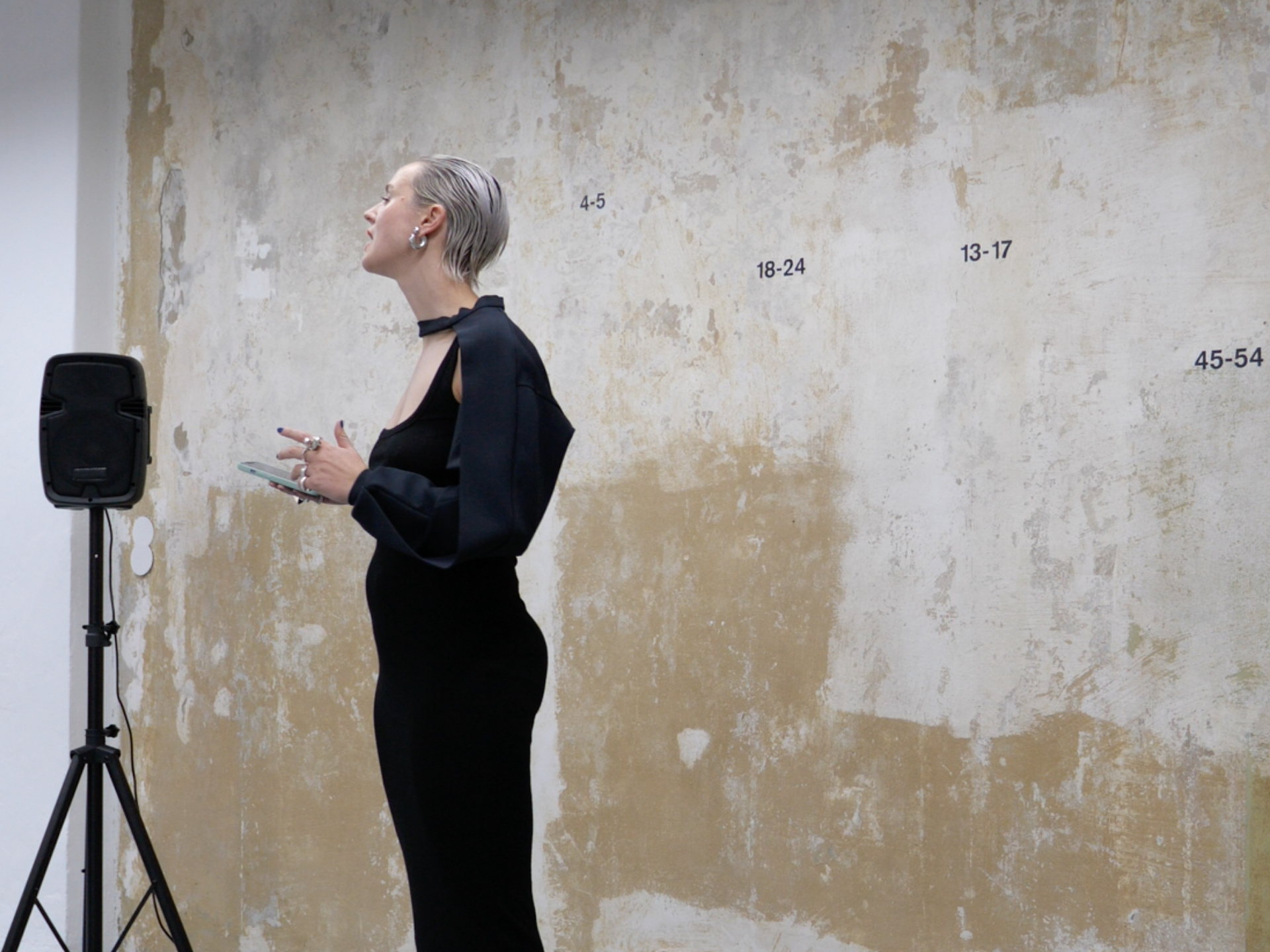
| Abstract | This PhD research at RMIT University AU combines reflective and generative practice, using a creative practice research methodology (Candy) to reflect on my artistic practice. In this research, minoritised languages and linguistics of love, refer to language based theory and artworks which utilise direct and indirect references to ‘love of the contemporary Western experience’ (Carson), in particular familial, romantic and self love. The medium of language is used to create multilayered language installations (MLI) which contain combinations of informational text, spatial wall text, multi-channel sound, and a language based performance. These installations conceptually and structurally embody the intersection between oralities – language based performance, the voice (tone, rhythm, repetition) and literacies – written text, linguistics, public and private language. The installations aim to foster self and societal reflection within the introspective space of the viewer. When the syntax “I love you” is said repeatedly in different tones, intonation and emotion, it is heard in an individualistic way based on the viewers’ mother tongue, culture and family experience (Dewaele). When the syntax is read with different descriptions of types of love the viewer is brought into other conceptual worlds. The minoritised languages and linguistics of love serve as resistance to living ‘in a state of despair, disillusionment and fear’ (Emin). In the current political discourse – climate collapse, fascism and hatred, wide-spread war, sexual violence and suffering – vocabularies and discourses of counteraction are desperately needed. Love as a practice builds resilience to survive, it’s integral to life and to feel safe. I will present MLI, ‘Safe’ (2025) as a lecture performance with methods including real-time recording art making practice – based on ‘creative analytical processes ethnography’ (Richardson), the design of a MLI and the performance of the artist as researcher. |
| Image |
|
| Short biographies of the presenter(s) |
|
| Previous presentations or iterations of the research | This is the ongoing research as a doctoral candidate in the school of Architecture and Urban Design at RMIT University, Australia and is presented semi-annually since 2023 at the Practice Research Symposium in Barcelona, Spain and Melbourne, Australia. My examination is planned for April 2027. https://practice-research.com/presentations/prs-europe-november-2025/language-and-love-examining-a-conceptual-contemporary-artistic-practice-of-multilayered-language-installations |
| Additional information | The presentation will be a multilayered language installation– part language performance and sound installation – ‘Safe’ (2025) and part lecture performance– knowledge produced as part of the doctoral research. |
| Spatial and technical requirements | 4 speakers, microphone and projector linked to the computer. If 4 is not possible, I can work with 2. Ideally a short speaker and mic test if that is possible. |
| Potential risks or ethical concerns | Need for trigger warning and protection of people who have experienced trauma – Possible mentioning of sexual assault without detail. Exposure of personal information beyond intended boundaries. Audience misreading autotheory elements as purely confessional. Re-triggering trauma through language-based sound or repetition. |
| Create a user account for SAR 2026 | Yes |
| Create new user | Shona Stark |