Secondary tabs
Submission information
Submission Number: 232
Submission ID: 291
Submission UUID: ac220da3-d4c4-46ba-9c92-a09d83b0726f
Submission URI: /form/submit-contribution
Created: Sat, 28 Feb 2026 - 14:10
Completed: Sat, 28 Feb 2026 - 15:01
Changed: Wed, 13 May 2026 - 08:45
Remote IP address: 74.71.15.154
Submitted by: Gwen Welliver
Language: English
Is draft: No
Current page: webform_confirmation
Flagged: Yes
Personal Information
Your contribution
Unidentified Rehearsals
English
This project begins with Trisha Brown (1936-2017), a groundbreaking choreographer, often seen as dance’s equivalent of better-known (male) contemporaries in other media — John Cage’s experimentalism, Sol Lewitt‘s minimalism, or the chaotic collages of Robert Rauschenberg, with whom she often collaborated. After years of institutional processing, her archives — notebooks, videos, drawings — are becoming available to researchers. But the fact that we have access doesn’t mean we know how to look at them. The aim of "Unidentified Rehearsals", a phrase taken from a label on one of her early rehearsal videos, is twofold: to learn how to work with her archives, and to teach how those lessons can inform artistic research more broadly.
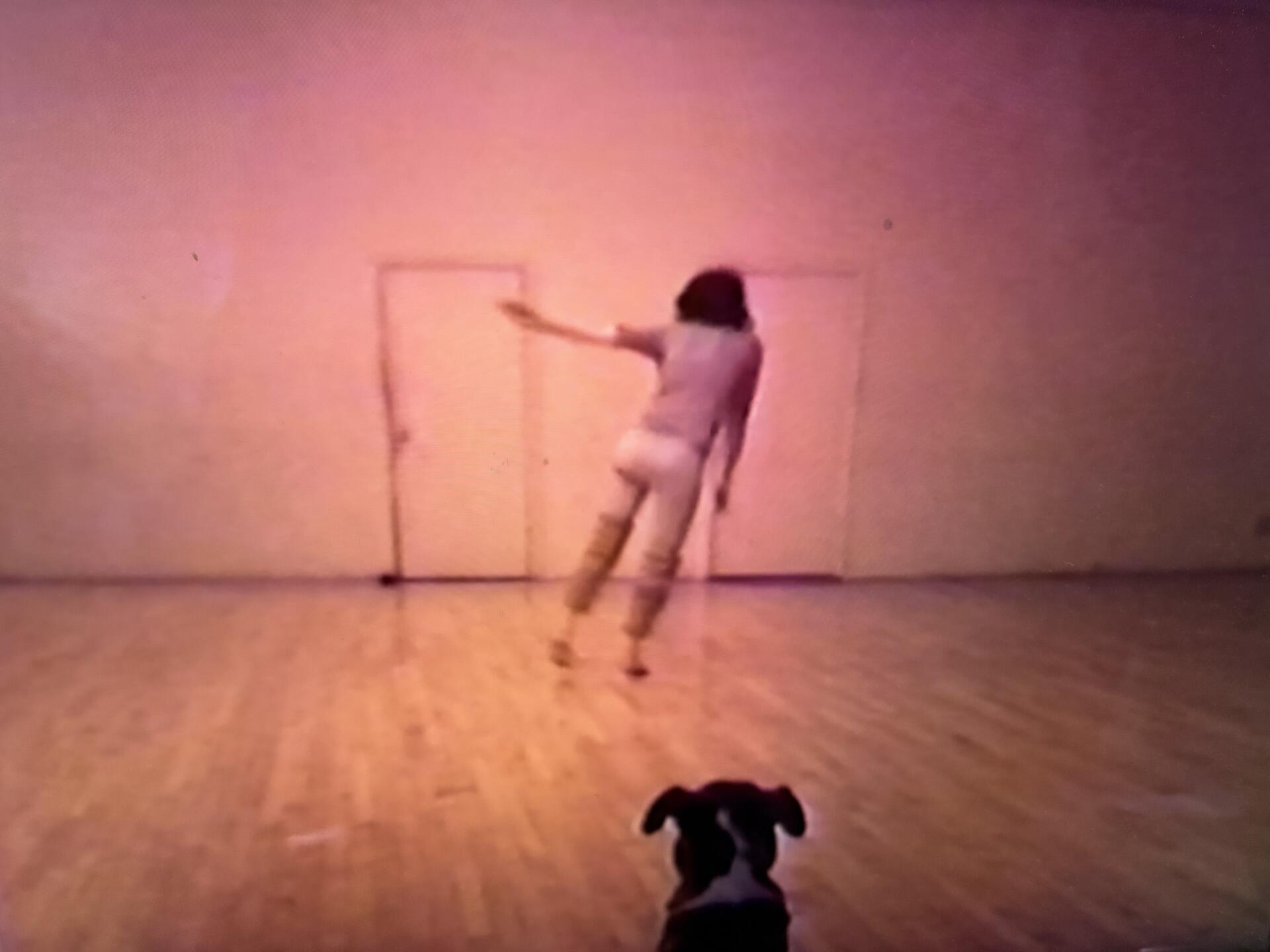
Today we take a woman choreographer in her studio working with video for granted, but when Trisha began doing this every aspect of it was radical. Dancers might be women but (with few exceptions) choreographers were men; lofts were rough alternatives not lifestyle choices; and video was a cheap, reusable tool dismissed by cinema, museums, and academics. So it comes as no surprise that her videos blur the boundaries around artmaking: a dog walks by, someone pops in for a hug, the camera moves out of focus, then reframes to show dance through a new window. This kind of material is typically ignored as incidental; on the contrary, I will show how it was central to how she developed her work on every level, from fine-grained vocabulary to stage composition to, ultimately, the poetics of her bodies — as collages of limbs, as site-specific experiments, as polyrhythmic beings.
These observations are specific to Trisha’s work, but the lessons are broadly relevant. In speculative contexts — artistic and scientific — it’s far from clear what a “document” actually documents. With this project, I invite others to consider examples or parallels in their own domains and research — and why it’s essential to the questions posed by artistic research
Today we take a woman choreographer in her studio working with video for granted, but when Trisha began doing this every aspect of it was radical. Dancers might be women but (with few exceptions) choreographers were men; lofts were rough alternatives not lifestyle choices; and video was a cheap, reusable tool dismissed by cinema, museums, and academics. So it comes as no surprise that her videos blur the boundaries around artmaking: a dog walks by, someone pops in for a hug, the camera moves out of focus, then reframes to show dance through a new window. This kind of material is typically ignored as incidental; on the contrary, I will show how it was central to how she developed her work on every level, from fine-grained vocabulary to stage composition to, ultimately, the poetics of her bodies — as collages of limbs, as site-specific experiments, as polyrhythmic beings.
These observations are specific to Trisha’s work, but the lessons are broadly relevant. In speculative contexts — artistic and scientific — it’s far from clear what a “document” actually documents. With this project, I invite others to consider examples or parallels in their own domains and research — and why it’s essential to the questions posed by artistic research
- Gwen Welliver is a choreographer and movement director based in New York City. She previously served as Rehearsal Director of the Trisha Brown Dance Company, where she led the revival of Brown's early work, the restaging of opera, and the supervision of the company’s international touring repertory. Welliver is a full professor in the School of Dance at Florida State University (US). Her current research explores speculative and open-ended approaches to dance, including emotional tenor through non-figurative drawing, performing simultaneity, and collaborative practices.
N/A
Requirements
This project presentation will involve an oral presentation accompanied with slides, video examples, and live gestural demonstration.
technical requirements: I plan to project video excerpts and images from a 2024 MacBook Pro, via the built-in HDMI port, a USB-C (Thunderbolt) to HDMI/DisplayPort cable, or potentially wirelessly using AirPlay.
Spatial requirements: Physical demonstrations may occur during my talk but I will need no special requirements for this.
Spatial requirements: Physical demonstrations may occur during my talk but I will need no special requirements for this.
N/A
Yes
Gwen Welliver