Secondary tabs
Submission information
Submission Number: 194
Submission ID: 249
Submission UUID: a71dc1a3-0484-4bcc-b943-f154e0e9d1a7
Submission URI: /form/submit-contribution
Created: Thu, 26 Feb 2026 - 19:41
Completed: Thu, 26 Feb 2026 - 20:06
Changed: Wed, 13 May 2026 - 08:32
Remote IP address: 91.102.85.117
Submitted by: Anonymous
Language: English
Is draft: No
Current page: webform_confirmation
Flagged: Yes
| Given name | Fiona |
|---|---|
| Surname | Woods |
| woods.fiona@gmail.com | |
| I understand that by submitting this form, I consent to the use of my data for the purposes of the 2026 Forum on Artistic Research'. | Yes |
| I agree to the terms of service. | Yes |
| Title | Epistemologies in a Minor Key: Theorizing Creative Artefacts as Knowledge Entities |
| Format | Other format |
| Main language | English |
| Abstract | This paper examines creative artefacts as knowledge entities in practice-centred research, exploring their ontological status and epistemological function within academia. It investigates how theoretical frameworks of material agency, performative research, embodied cognition and visual thinking enable analysis of these artefacts as knowledge carriers and epistemological interventions. The paper addresses a critical problem: the distinctive knowledge forms embedded in creative artefacts (material, visual, embodied, performative) communicate not only intellectually but also bodily, engaging kinaesthetic, spatial and sensory understanding; however, these epistemological languages are minoritized in academic discourse and policy. Within academia, the artefact must exist simultaneously in multiple registers - material, conceptual, social, temporal, performative - generating epistemological complexity that exceeds textual representation. While existing scholarship addresses methodological challenges in practice-based research, a gap remains in theorizing the creative artefact as a conjunction of minor epistemologies. The paper addresses this by positioning creative artefacts' ontological and epistemological frameworks as distinct conceptual languages, and framing practice-based knowledge systems as epistemologies in a minor key. The material examined emerges from the design of a postgraduate course, ‘The Creative Artefact in Practice-Centred Research.’ This course explores how creative artefacts can become legible to academic institutions while maintaining an apartness from interpretive structures, and how their knowledge modes, irreducible to textual forms, can be elucidated without epistemological distortion or aesthetic over-determination. The paper contributes to the argument that critical thinking necessarily includes multiple, incommensurable ways of knowing that cannot be subordinated to any single epistemological paradigm. |
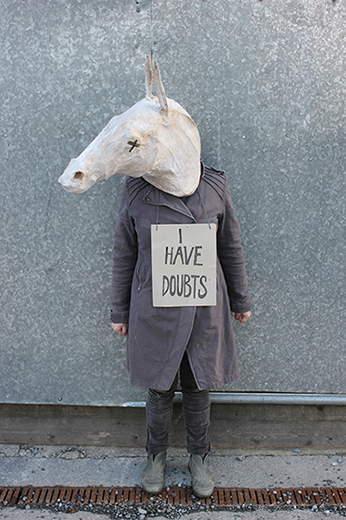
| Image |
|
| Short biographies of the presenter(s) |
|
| Previous presentations or iterations of the research | |
| Additional information | I propose a standard paper presentation format, with slides. |
| Spatial and technical requirements | As above. |
| Potential risks or ethical concerns | No foreseen risks. |
| Create a user account for SAR 2026 | No |