Secondary tabs
Submission information
Submission Number: 161
Submission ID: 212
Submission UUID: e5da3927-e3fb-45ad-8b27-d2ee55763a20
Submission URI: /form/submit-contribution
Created: Wed, 25 Feb 2026 - 08:58
Completed: Sun, 1 Mar 2026 - 16:41
Changed: Wed, 13 May 2026 - 08:43
Remote IP address: 157.190.40.134
Submitted by: Alan Magee
Language: English
Is draft: No
Current page: webform_confirmation
Flagged: Yes
| Given name | Alan |
|---|---|
| Surname | Magee |
| alanmagee@gmail.com | |
| I understand that by submitting this form, I consent to the use of my data for the purposes of the 2026 Forum on Artistic Research'. | Yes |
| I agree to the terms of service. | Yes |
| Title | Process Art as Methodological Innovation: From University Studios to Digital Practice |
| Format | Project presentation |
| Main language | English |
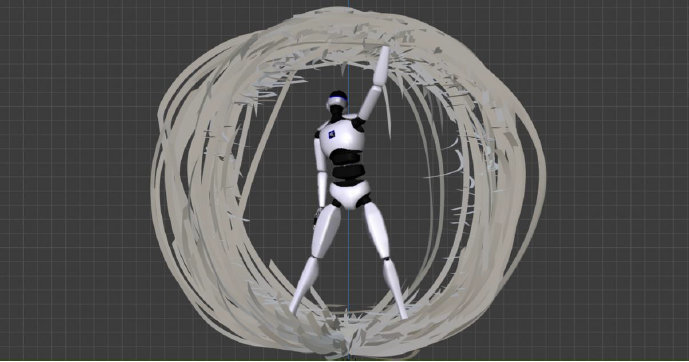
| Abstract | This article examines Process Art - an artistic movement that emerged from United States university art programs in the 1960s - as a viable methodological framework for contemporary practice-based research. While Process Art is typically understood as a historical movement characterised by its emphasis on making over outcome, this study argues that its pedagogical foundations and core principles position it as a rigorous, autonomous arts-based research methodology. Drawing on the movement's key characteristics - foregrounding labour, valuing process over product, non-skilled execution, and treating the body as both subject and object - the article demonstrates how Process Art methods evolved within educational contexts that prioritised theory-practice integration and systematic inquiry. Through analysis of seminal works by Robert Morris, Eva Hesse, Richard Serra, and contemporary practitioner Elizabeth Price, this research establishes Process Art's capacity to address questions of artistic labour, embodied knowledge, and the visibility of making processes. The article contributes to ongoing discussions about practice-based research methodologies by proposing that Process Art offers an internally generated framework - born within art education rather than borrowed from other disciplines - uniquely suited to investigating the corporeal dimensions of artistic production. This has particular potential for understanding digital sculpture, where computational smoothness threatens to efface indexical traces of the artist's hand. |
| Link to the Exposition | https://www.researchcatalogue.net/view/4207787/4207786 |
| Image |
|
| Short biographies of the presenter(s) |
|
| Previous presentations or iterations of the research | Exhibitions: • Ode to the soft centre, Courthouse Gallery, Ennistymon (2021). • Among the dregs of daily toil, LAB Gallery, Dublin (2020). Panel Discussion: ‘The Future of Work’ featuring Dr Dave Beech, Dr Barbara Cueto, Dr Rachel O'Dwyer, Dr. Glenn Loughran & Dr Alan Magee (2020) Publications: • Doctoral thesis: Agency, Index & Process: Investigating the role of the artist's body in digital sculpture production (TU Dublin, 2025). Online: Arrow@TU Dublin |
| Additional information | Structure (20 min): Endangered Knowledge in Digital Practice (3 min) • Computational smoothness as a threat to embodied knowing • Digital materialisation - effacing gesture, irregularity, trace • Why Process Art methodology matters today Process Art's Historical Emergence (7 min) • 1960s US university art education transformation • Artist-as-researcher: autonomy from co-opted methodologies • Six key characteristics as a methodological framework Case Studies (6 min) • Robert Morris's Box with the Sound of Its Own Making: foregrounding labour • Eva Hesse's serial work: systematic, body-centred procedures • Elizabeth Price's boulder & sidekick: ongoing doctoral research demonstrating methodology Summation & Contemporary Relevance (4 min) • Digital sculpture's effacement challenges • Process Art as counter-model Visual documentation throughout, including historical works, Price's ongoing practice, and theoretical frameworks. 10-minute Q&A follows |
| Spatial and technical requirements | No special requirements |
| Potential risks or ethical concerns | No significant risks or ethical concerns |
| Create a user account for SAR 2026 | Yes |
| Create new user | Alan Magee |