Secondary tabs
Submission information
Submission Number: 63
Submission ID: 101
Submission UUID: b48963e4-19d8-4ec9-9035-2b7630888398
Submission URI: /form/submit-contribution
Created: Fri, 13 Feb 2026 - 07:10
Completed: Fri, 13 Feb 2026 - 09:09
Changed: Wed, 13 May 2026 - 08:48
Remote IP address: 176.58.197.110
Submitted by: ANGELA FRAGKOU
Language: English
Is draft: No
Current page: webform_confirmation
Flagged: Yes
| Given name | ANGELA |
|---|---|
| Surname | FRAGKOU |
| fragkou.angela@gmail.com | |
| I understand that by submitting this form, I consent to the use of my data for the purposes of the 2026 Forum on Artistic Research'. | Yes |
| I agree to the terms of service. | Yes |
| Title | A colourless colour |
| Format | Poster presentation |
| Main language | English |
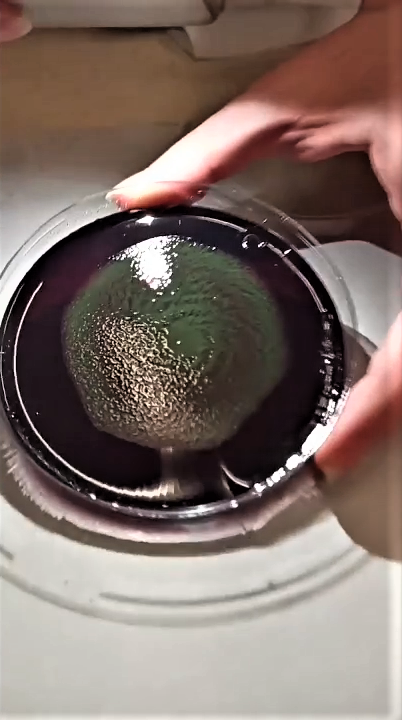
| Abstract | This poster presents A Colourless Colour, an artistic research project developed within the Computer Sculpture Lab, Athens School of Fine Arts that investigates how structural colour-produced by nano-scale organization of matter rather than pigments—can reframe artistic materiality and ecological responsibility. The project emerges from the experimental 3D Biohub, an interdisciplinary platform connecting digital sculpture, biotechnology and genetics, in collaboration with the iGEM Athens Team and the Agricultural University of Athens. It explores how living systems that naturally exhibit structural colour, such as colonies of Flavobacterium IR1, may inform the development of non-toxic, bio-derived materials for 3D printing and sculptural practice. Unlike chemical colour, dependent on pigments and toxic dyes, structural colour arises from the self-organization of micro- and nano-structures that refract light. Certain bacterial biofilms display vivid iridescence through this mechanism. By studying genetic pathways enabling cellulose secretion as an extracellular matrix, the research examines whether this colour phenomenon can be imprinted onto a printable biomaterial. The poster documents the methodological pathway—interdisciplinary workshops, artistic archiving, digital modelling and laboratory observation—through which biological self-assembly becomes both a conceptual and material model for artistic production. Structural colour is approached not simply as an optical effect, but as a paradigm for re-imagining how matter organizes itself, how colour can exist without pigment, and how art can mediate biotechnological knowledge in the public sphere. A Colourless Colour addresses ecological concerns linked to the paint and textile industries and proposes colour as an emergent property of living matter, opening a dialogue between art, science and environmental ethics. |
| Image |
|
| Short biographies of the presenter(s) |
|
| Previous presentations or iterations of the research | Earlier iterations were presented through the 3D Biohub workshop & exhibition (2020–21) at the Computer Sculpture Lab, Athens School of Fine Arts with the iGEM Athens Team, Creator Doctus doctoral presentations, a 2022 lecture at the National and Kapodistrian University of Athens, a talk at Onassis Stegi, and related publications (2025) and conference presentations (2021–23). |
| Additional information | Supporting material, documentation of previous iterations, publications and the 3D Biohub project can be accessed here: [publication links] https://www.hilarispublisher.com/open-access/reimagine-the-behavior-of-living-matter-the-colorless-color-and-an-artificial-nanostructure-in-contemporary-art-113726.html https://daysofart.gr/wp-content/uploads/2022/02/%CE%A0%CE%B5%CF%81%CE%B9%CE%B5%CF%87%CF%8C%CE%BC%CE%B5%CE%BD%CE%B1-Contents-13.pdf [3D Biohub / project link] https://2020.igem.org/Team:Athens/Collaborations http://www.sculpture.asfa.gr/Lectures/3dBIOHUB.pdf [personal website] https://www.angelafragkou.org/3d-biohub |
| Spatial and technical requirements | Poster presentation requirements |
| Potential risks or ethical concerns | No ethical concerns are anticipated. The presentation includes only a poster and visual documentation of laboratory-prepared biomaterials. No live organisms, hazardous chemicals, physical samples, or participant interaction are involved. All referenced materials follow standard laboratory safety practices and are presented purely as documented research. |
| Create a user account for SAR 2026 | Yes |
| Create new user |