Secondary tabs
Submission information
Submission Number: 363
Submission ID: 430
Submission UUID: 81e4d449-579d-42cc-8268-4a28c2c397d4
Submission URI: /form/submit-contribution
Created: Mon, 2 Mar 2026 - 06:40
Completed: Mon, 2 Mar 2026 - 07:17
Changed: Wed, 13 May 2026 - 08:59
Remote IP address: 62.73.122.147
Submitted by: Nikolay Barzakov
Language: English
Is draft: No
Current page: webform_confirmation
Flagged: Yes
Personal Information
Your contribution
Radical Listening: Activating Rear-Space Cognition in Performance Practice
English
Listening is commonly understood as auditory attention. This workshop reframes listening as embodied, relational attunement to spatial forces, with particular focus on the under-theorised dimension of posterior orientation. Contemporary spatial organisation privileges frontality: the face, the screen, and the forward vector of attention dominate architectural and performative environments. The space behind the body is rarely cultivated as an active perceptual and decisional field.
The workshop introduces rear-space cognition as the capacity to navigate, compose, and make decisions in relation to spatial fields that cannot be visually confirmed. Through structured embodied protocols, participants will decentre frontal visual dominance and amplify awareness of the posterior field, gravitational alignment, and cross-modal orientation. Guided movement scores and collective spatial tasks will investigate how activating back-space reorganises bodily presence, relational sensitivity, and three-dimensional coordination.
Participants will explore how shifting attention into the posterior field transforms the organisation of the body in space, producing a more volumetric presence and heightened responsiveness without reliance on direct gaze. The workshop situates rear-space cognition as an artistic research tool that expands perceptual hierarchy and challenges the assumption that spatial intelligence is primarily forward-facing. Rather than proposing a therapeutic practice, Radical Listening offers a transferable methodology for cultivating multi-directional awareness and reconfiguring how collective decisions emerge in performance and shared environments.
The workshop introduces rear-space cognition as the capacity to navigate, compose, and make decisions in relation to spatial fields that cannot be visually confirmed. Through structured embodied protocols, participants will decentre frontal visual dominance and amplify awareness of the posterior field, gravitational alignment, and cross-modal orientation. Guided movement scores and collective spatial tasks will investigate how activating back-space reorganises bodily presence, relational sensitivity, and three-dimensional coordination.
Participants will explore how shifting attention into the posterior field transforms the organisation of the body in space, producing a more volumetric presence and heightened responsiveness without reliance on direct gaze. The workshop situates rear-space cognition as an artistic research tool that expands perceptual hierarchy and challenges the assumption that spatial intelligence is primarily forward-facing. Rather than proposing a therapeutic practice, Radical Listening offers a transferable methodology for cultivating multi-directional awareness and reconfiguring how collective decisions emerge in performance and shared environments.
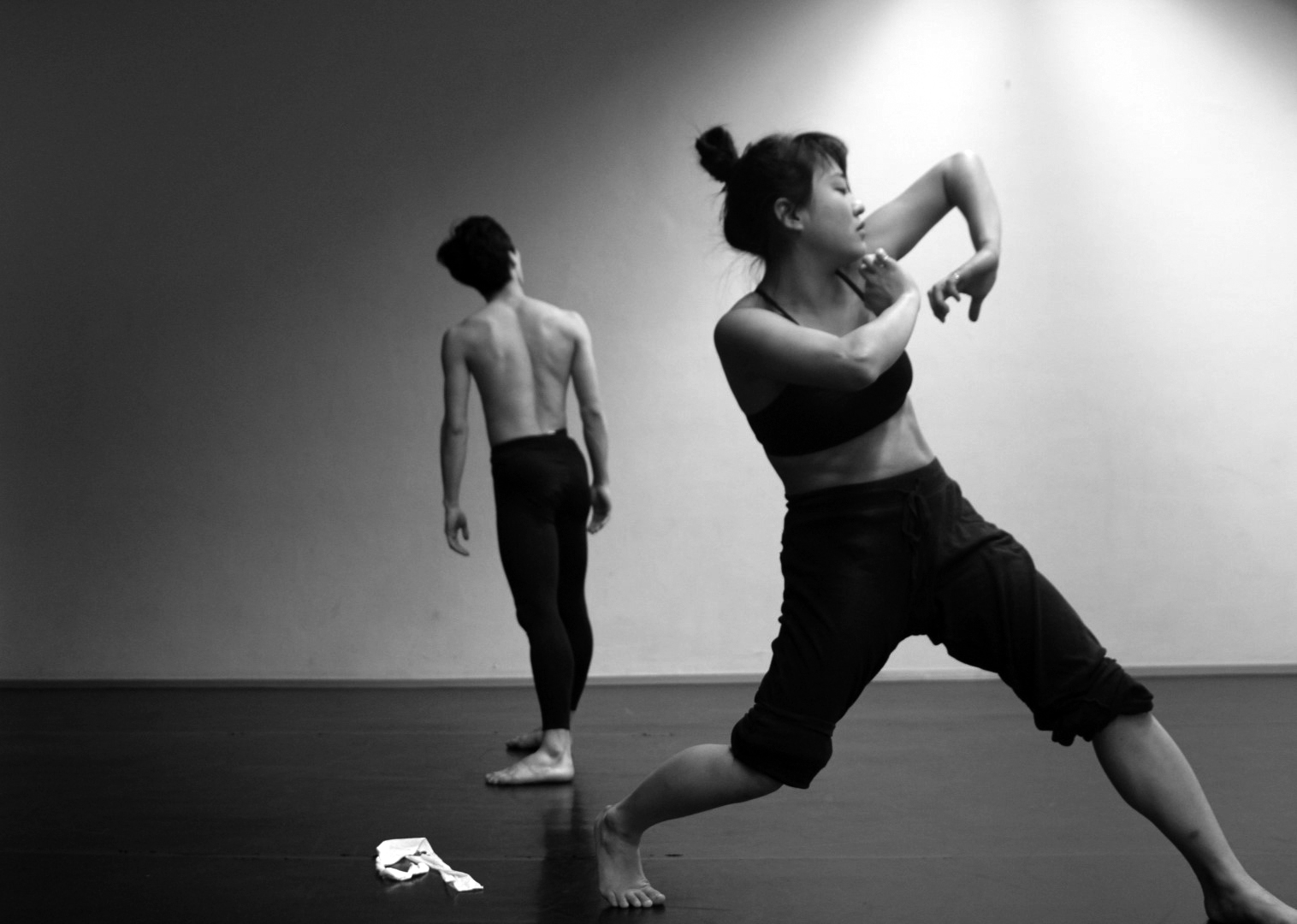
- Dr. Nikolay Barzakov is an actor, director, and performance researcher working at the intersection of embodied practice, theatre anthropology, and perception studies. He is Assistant Professor at Southwest University “Neofit Rilski” (Bulgaria), where he teaches stage movement and develops practice-based research on presence and spatial decision-making. His work has been presented internationally, including at Wiener Festwochen, IDFA, and December Dance.
The methodologies presented in this workshop emerge from ongoing laboratory-based practice within university teaching contexts and independent artistic research sessions focused on embodied presence and spatial decision-making. While not presented in this exact format, these protocols have been developed and refined through pedagogical and rehearsal environments.
Requirements
The workshop is designed for 120–150 minutes and combines brief theoretical framing with guided embodied exploration. The structure includes movement protocols, collective compositional tasks, and reflective dialogue. Participants work individually, in pairs, and in small groups to investigate rear-space orientation and its impact on spatial organisation. The session will conclude with a moderated reflection connecting practice to artistic research discourse and the Forum’s themes. The format prioritises experiential inquiry while maintaining clear research framing and methodological coherence.
Open studio space allowing free movement.
The workshop involves movement and spatial exploration without necessary physical contact. Participants may opt out of any task at any time. Exercises prioritise awareness and presence. Clear verbal guidance will ensure accessibility and psychological safety.
Yes
Nikolay Barzakov