Secondary tabs
Submission information
Submission Number: 323
Submission ID: 389
Submission UUID: f7d842a9-cd77-45a3-b19e-e81501890578
Submission URI: /form/submit-contribution
Created: Sun, 1 Mar 2026 - 16:30
Completed: Sun, 1 Mar 2026 - 16:55
Changed: Wed, 13 May 2026 - 08:12
Remote IP address: 169.0.44.97
Submitted by: Anonymous
Language: English
Is draft: No
Current page: webform_confirmation
Personal Information
Your contribution
Site specific drawing as worldmaking practice.
English
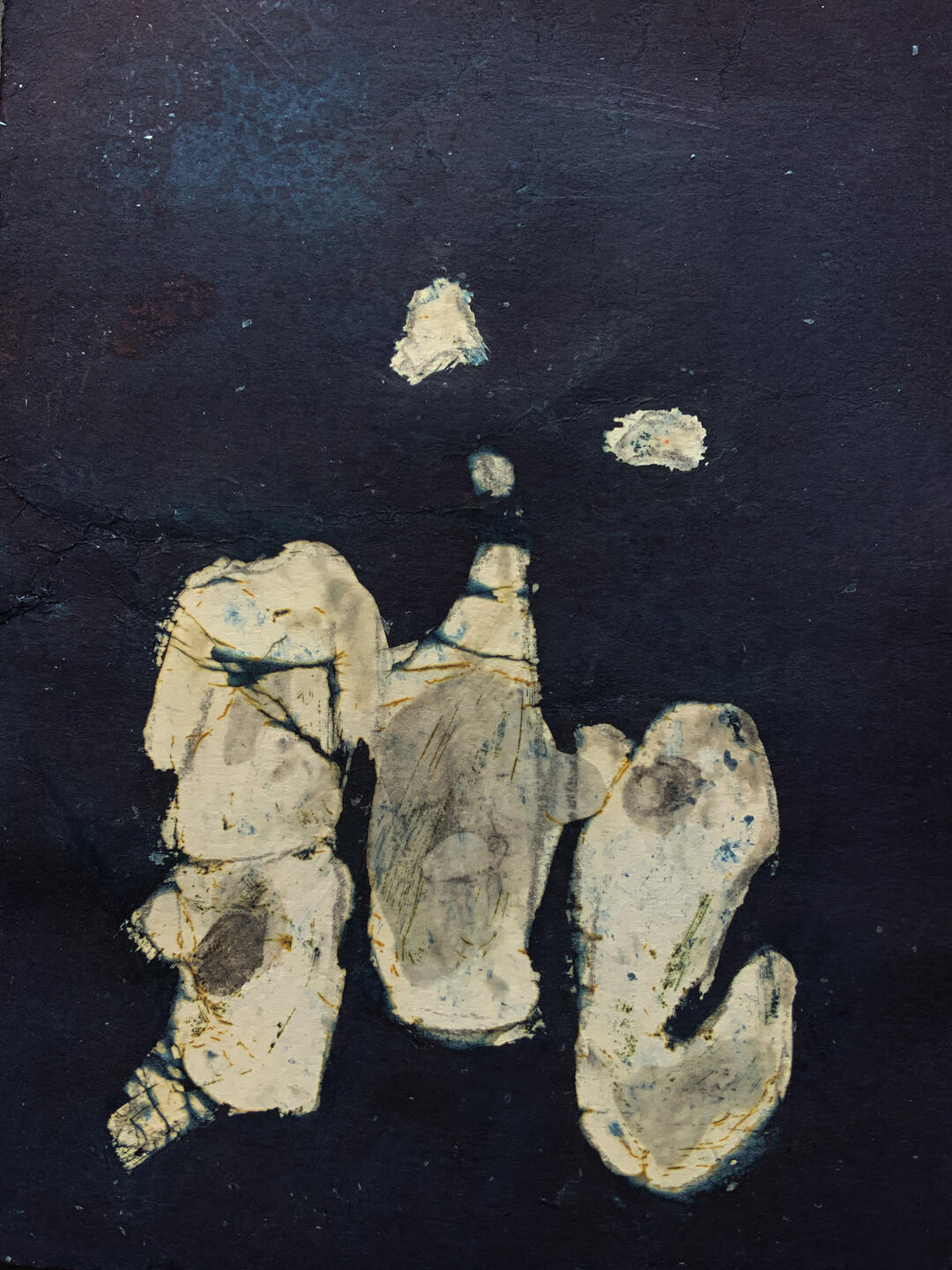
This research paper locates site-specific drawing as a methodological approach to artistic worldmaking. It proposes that drawings created in dialogue with place become more than representation; they function as modes of inquiry, translation, and spatial extension. The research is grounded in a practice-led methodology, where drawing operates as both a research tool and outcome. Simultaneously, the site is approached not only as a subject, but as a collaborator and repository of knowledge.
Indigenous practices such as indigo making inform this research as living systems of knowledge, shaped and reshaped through making. These traditions lend a language of reading, cultivating, and preserving that underpins a methodology grounded in ecological interdependence and cultural resonance. Through presence, witnessing, and material engagement, the artist draws from and with the environment, allowing space, microbes, and the sensory to participate in the act of making. The drawings metabolize pigment, light, and invisible matter, embodying both the seen and the sensed.
This paper argues for an expanded understanding of artistic worldmaking, where place is not simply occupied but emerges as co-creator. It gestures toward a theory of knowledge production rooted in adaptation, ecological harmony, and material understanding. In this view, site-specific drawing becomes a generative mode of imagining otherwise. Worldmaking is evident through drawing as situated, durational, and entangled with context. In doing so, it contributes to broader theories of artistic worldmaking grounded in African epistemologies of seeing, sensing, and being.
The site-specific drawings were created at the Ancient Indigo Dying Pits of Kano State in northern Nigeria. A site where centuries-old textile practices continue to inform material understanding and cultural heritage.
Indigenous practices such as indigo making inform this research as living systems of knowledge, shaped and reshaped through making. These traditions lend a language of reading, cultivating, and preserving that underpins a methodology grounded in ecological interdependence and cultural resonance. Through presence, witnessing, and material engagement, the artist draws from and with the environment, allowing space, microbes, and the sensory to participate in the act of making. The drawings metabolize pigment, light, and invisible matter, embodying both the seen and the sensed.
This paper argues for an expanded understanding of artistic worldmaking, where place is not simply occupied but emerges as co-creator. It gestures toward a theory of knowledge production rooted in adaptation, ecological harmony, and material understanding. In this view, site-specific drawing becomes a generative mode of imagining otherwise. Worldmaking is evident through drawing as situated, durational, and entangled with context. In doing so, it contributes to broader theories of artistic worldmaking grounded in African epistemologies of seeing, sensing, and being.
The site-specific drawings were created at the Ancient Indigo Dying Pits of Kano State in northern Nigeria. A site where centuries-old textile practices continue to inform material understanding and cultural heritage.
- Since joining the University of Witwatersrand, Dhlamini has lectured in the undergraduate and postgraduate programs of the Department of Fine Arts. Her artistic practice delves into visual, tactile, and discursive investigations of indigenous cultural practices, with her work constantly engaging in conversations with both her past and present visual landscapes. She is currently pursuing a PhD in the Faculty of Arts, Design and Media at Birmingham City University.
The research paper was presented at University of Witwatersrand, humanities Research Day. 2025
The drawings have been presented in Lagos, Nigeria in 2024 and in Cape Town 2025.
The video has not been presented.
All the material mentioned above have not been presented together at once. I would like to use this moment to build a bridge between my artistic practice and academic writing as they have taken place at different times and I would like to use the conference to do that.
The drawings have been presented in Lagos, Nigeria in 2024 and in Cape Town 2025.
The video has not been presented.
All the material mentioned above have not been presented together at once. I would like to use this moment to build a bridge between my artistic practice and academic writing as they have taken place at different times and I would like to use the conference to do that.
Requirements
The presentation will include physical visual drawings created in Kano State using indigo dye, it will include a video and items collected during my trip. This will be presented together with my academic reflections/writings from the research trip and how I am using and reading site, drawing and indigenous knowledge .
I however saw this call today and I could not add create a RC exposition, as I only just applied for a RC upgrade. I hope my project will still be considered or I could be able to send it once my upgrade request is approved.
I however saw this call today and I could not add create a RC exposition, as I only just applied for a RC upgrade. I hope my project will still be considered or I could be able to send it once my upgrade request is approved.
Screen or projector, speaker and wall space.
I do no think there are any ethical considerations at this stage.
Yes
{Empty}