Secondary tabs
Submission information
Submission Number: 249
Submission ID: 309
Submission UUID: fd1fb3f1-144b-4a6f-8372-12b7bdc65b4b
Submission URI: /form/submit-contribution
Created: Sat, 28 Feb 2026 - 17:34
Completed: Sat, 28 Feb 2026 - 17:40
Changed: Wed, 13 May 2026 - 08:31
Remote IP address: 87.92.194.211
Submitted by: Pia Siirala
Language: English
Is draft: No
Current page: webform_confirmation
Flagged: Yes
Personal Information
Your contribution
The Chukchi Personal Song as a Reflection of Musical Thought
English
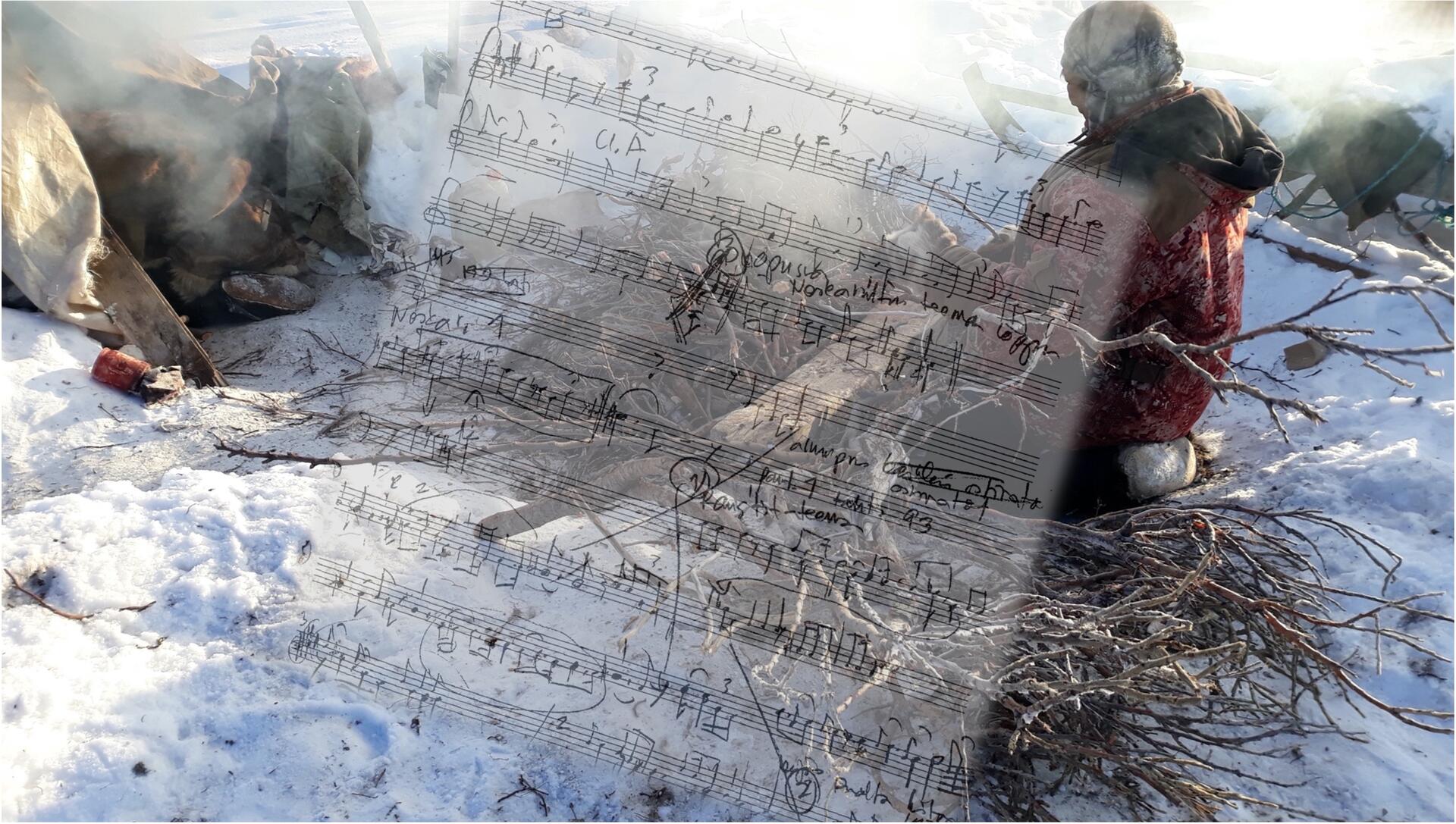
My post-doctoral artistic research, “The Chukchi Personal Song as a Reflection of Musical Thought”, is a continuation of my PhD “Aspects of hearing the music of the indigenous peoples in north-eastern Siberia” completed at the Sibelius Academy, University of the Arts, Helsinki. My research is a musical expedition into the Chukchi Personal Song. It does not mean simply listening, but rather the understanding created by the interaction of ambiguous and often contradictory hearing and music making. At the core of the research is aural perception and the creation of music based on this. Composing and improvisation are my primary research methods, but I also use film, photography and storytelling.
Between 2004 and 2019, I made seven field trips to northeastern Siberia, Sakhalin Kamchatka and Chukotka, where I recorded the traditional singing of the indigenous Paleo-Siberian peoples. These journeys are the foundation of my research. The audiovisual material consists of over 1400 songs. The Personal Song belongs to the tradition of the indigenous peoples in the Arctic. Amongst the Chukchi it is the tradition for a Personal Song to be given to every child when they are born, together with their name. Later in life, people make their own songs. This makes the song a part of a person’s identity. The Chukchi language, as well as the other Paleo-Siberian languages are severely endangered, which directly affects the Personal Song as well.
The artistic research methods open new paths to study the Personal Song. Combined with the analysis of the musical motifs, I examine the internal logic in the musical structures. This reflects on my experiences and observations as a musician who has grown up in the European tradition of classical music, when presented with the singing of an Arctic nomadic reindeer herder, that changed my musical thinking.
Between 2004 and 2019, I made seven field trips to northeastern Siberia, Sakhalin Kamchatka and Chukotka, where I recorded the traditional singing of the indigenous Paleo-Siberian peoples. These journeys are the foundation of my research. The audiovisual material consists of over 1400 songs. The Personal Song belongs to the tradition of the indigenous peoples in the Arctic. Amongst the Chukchi it is the tradition for a Personal Song to be given to every child when they are born, together with their name. Later in life, people make their own songs. This makes the song a part of a person’s identity. The Chukchi language, as well as the other Paleo-Siberian languages are severely endangered, which directly affects the Personal Song as well.
The artistic research methods open new paths to study the Personal Song. Combined with the analysis of the musical motifs, I examine the internal logic in the musical structures. This reflects on my experiences and observations as a musician who has grown up in the European tradition of classical music, when presented with the singing of an Arctic nomadic reindeer herder, that changed my musical thinking.
- The Finnish composer and violinist Pia Siirala’s PhD was completed at the Sibelius Academy, University of the Arts, Helsinki in 2024. Her artistic research concentrates on the music of the indigenous peoples in north-eastern Siberia, where the ancient singing tradition is still alive. Pia Siirala made many field trips to those areas, recording over 1400 songs. and has composed several works that are inspired by this ancient indigenous music. Pia Siirala studied at the Sibelius Academy, the Budapest Liszt Academy and at the Moscow Tchaikovsky Conservatory. She is the concert master of Ensemble XXI and has performed in Europe, Russia, Australasia and the US.
This is a new presentation, and Galway would the first place where I would give it.
Requirements
I have two options as a proposal:
1) A PowerPoint presentation that would include 7 minutes of live music (violin) which is a dialogue with a recorded indigenous song. This is in the format of a short concert lecture. The total length of this Presentation would be 30 minutes.
B) A normal length PowerPoint presentation (20 minutes) including recorded musical excerpts.
1) A PowerPoint presentation that would include 7 minutes of live music (violin) which is a dialogue with a recorded indigenous song. This is in the format of a short concert lecture. The total length of this Presentation would be 30 minutes.
B) A normal length PowerPoint presentation (20 minutes) including recorded musical excerpts.
A device with good sound quality to show a Powerpoint presentation. If the presentation includes live music I would need a space with good acoustics.
All ethical concerns and risks have been assessed and addressed rigorously throughout my Doctoral work at the University of the Arts, Helsinki and my work continues along these guidelines.
Yes
Pia Siirala