Secondary tabs
Submission information
Submission Number: 156
Submission ID: 207
Submission UUID: 3938cf5e-bc10-458e-a2cd-67316af0fcea
Submission URI: /form/submit-contribution
Created: Tue, 24 Feb 2026 - 17:59
Completed: Tue, 24 Feb 2026 - 18:06
Changed: Wed, 13 May 2026 - 08:12
Remote IP address: 51.37.121.166
Submitted by: Anonymous
Language: English
Is draft: No
Current page: webform_confirmation
Personal Information
Your contribution
shit craft: zining as an endangered conceptual world
English
this is shit craft. glue under nails. misaligned type. pages that won’t optimise.
my practice research approaches diy zine-making as an endangered conceptual world: a minor, tactile language of knowledge production threatened by platform capitalism, academic standardisation, and extractive visibility regimes.
zines carry sedimented feminist and queer lineages — riot grrrl, counter-publics, fugitive study. thinking with fred moten and Stefano sarney’s undercommons, shit craft operates “in but not of” institutional space: using its resources while refusing its demand for polish, scalability, and measurable impact. it values friction, delay, illegibility.
projects such as no pain no gain and safe/brave explore zines as precarious epistemic resources. fragments mailed across distance, collective improvisation, unfinished pages — these are not aesthetic shortcomings but methodological commitments. drawing on sara ahmed’s work on affect and circulation, i understand shit craft as a sticky social practice: knowledge produced through touch, care, and obligation rather than optimisation.
this research asks: what forms of knowing become impossible when everything must be streamlined, searchable, and monetisable? what minor languages of making persist anyway?
presented as a performative exposition with handling and reading, this project demonstrates how endangered diy practices generate distinct forms of innovation: slow mediation, collective authorship, and refusal of extractability. shit craft does not scale. it circulates hand to hand. it keeps knowledge vulnerable, situated, and alive.
my practice research approaches diy zine-making as an endangered conceptual world: a minor, tactile language of knowledge production threatened by platform capitalism, academic standardisation, and extractive visibility regimes.
zines carry sedimented feminist and queer lineages — riot grrrl, counter-publics, fugitive study. thinking with fred moten and Stefano sarney’s undercommons, shit craft operates “in but not of” institutional space: using its resources while refusing its demand for polish, scalability, and measurable impact. it values friction, delay, illegibility.
projects such as no pain no gain and safe/brave explore zines as precarious epistemic resources. fragments mailed across distance, collective improvisation, unfinished pages — these are not aesthetic shortcomings but methodological commitments. drawing on sara ahmed’s work on affect and circulation, i understand shit craft as a sticky social practice: knowledge produced through touch, care, and obligation rather than optimisation.
this research asks: what forms of knowing become impossible when everything must be streamlined, searchable, and monetisable? what minor languages of making persist anyway?
presented as a performative exposition with handling and reading, this project demonstrates how endangered diy practices generate distinct forms of innovation: slow mediation, collective authorship, and refusal of extractability. shit craft does not scale. it circulates hand to hand. it keeps knowledge vulnerable, situated, and alive.
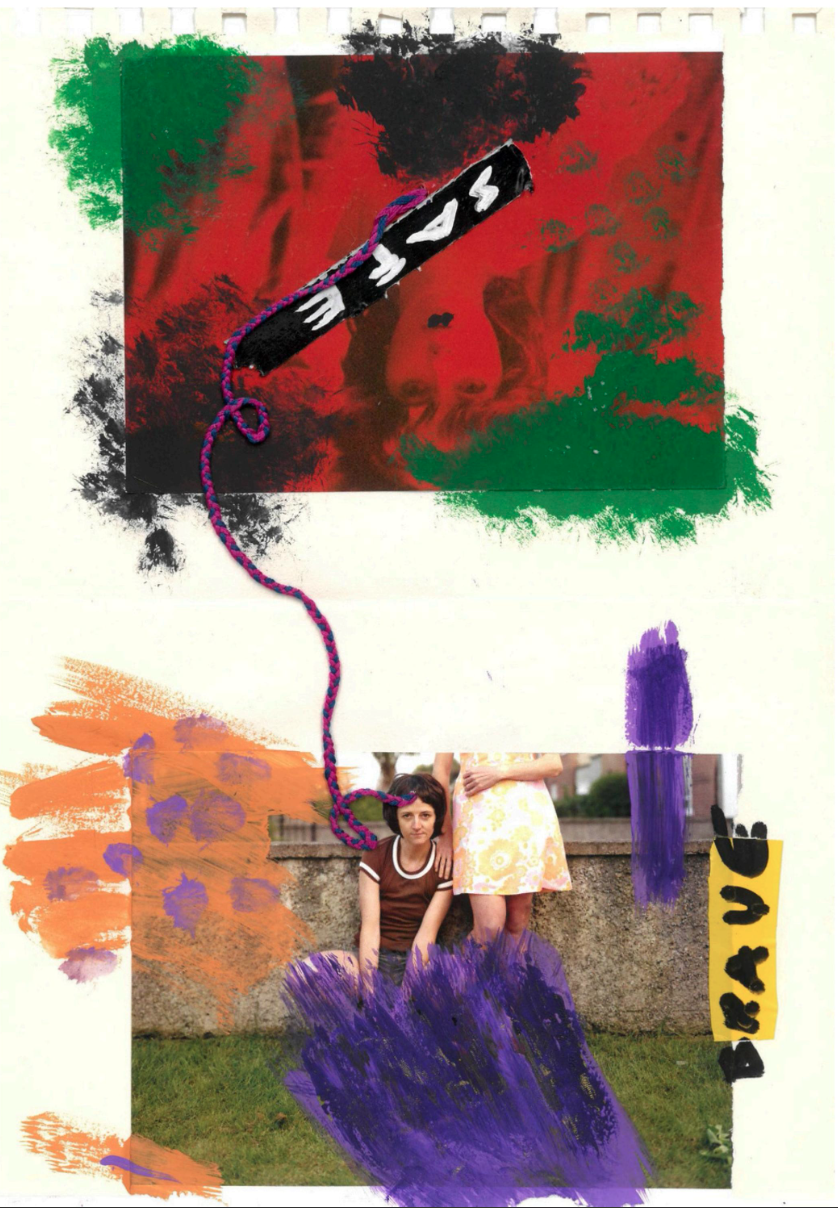
- @girlwithoutaruler aka judit csobod
I am a practice-based phd researcher at university college dublin, working within improvising across boundaries (sfi/irc). my work moves between improvisation, queer-feminist methodologies, and collective making — through zines, film, and sound. projects like no pain no gain and safe/brave explore shit craft as a method of refusal, care, and co-production. i’m interested in how failure, friction, and connection become spaces of study — and how we can make art and research that stay open, vulnerable, and unbound. Sometimes that looks like glue and glitter. sometimes it looks like nothing finished at all.
versions of this research will be presented at AR@K26 Oslo and women in punk conference in Nottingham.
Requirements
{Empty}
{Empty}
{Empty}
Yes
Judit Csobod